by in News

Serbia’s power utility to take no loans in 2025, fund coal projects on its own

For the first time, Elektroprivreda Srbije (EPS) will not take out loans this year, but will finance all investments from its own resources, according to General Manager Dušan Živković. However, it has affected the financial performance of Serbia’s state-owned power utility, with profit in the first half of 2025 coming in lower than in the same period last year.

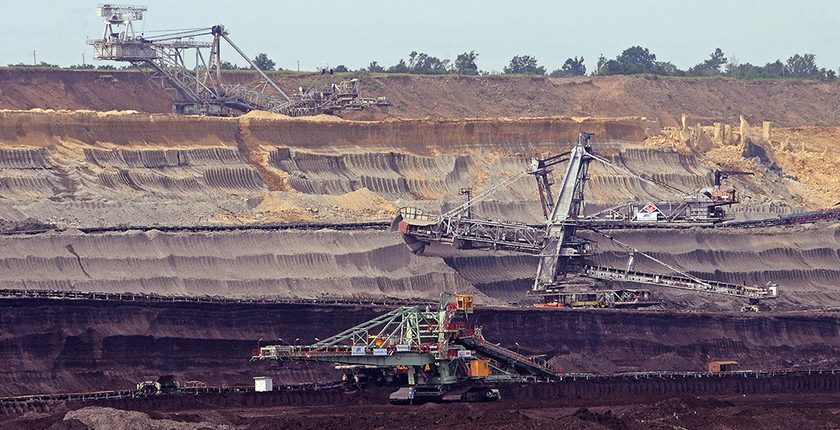
One of the major investments underway is in coal mining, including the construction of several systems needed to enable the opening of the Radljevo open pit mine in the Kolubara mining basin. However, since financial institutions are unwilling to finance fossil fuels, EPS must rely entirely on its own funds, Živković told national broadcaster RTS.

EPS is financing the coal mine on its own, as financial institutions are unwilling to invest in fossil fuels

To ensure sufficient coal supplies, EPS has contracted imports from Indonesia, which Živković explained as a strategy to diversify sources. He described it as the best way to ensure the security of supply.

He said that the installation of machinery at Radljevo is underway and that EPS expects the mine to start producing overburden and coal early next year.

EPS posted a RSD 27.4 billion (EUR 233.8 million) profit in the first half of 2025, compared to RSD 32.8 billion (EUR 280.3 million) in the same period last year.

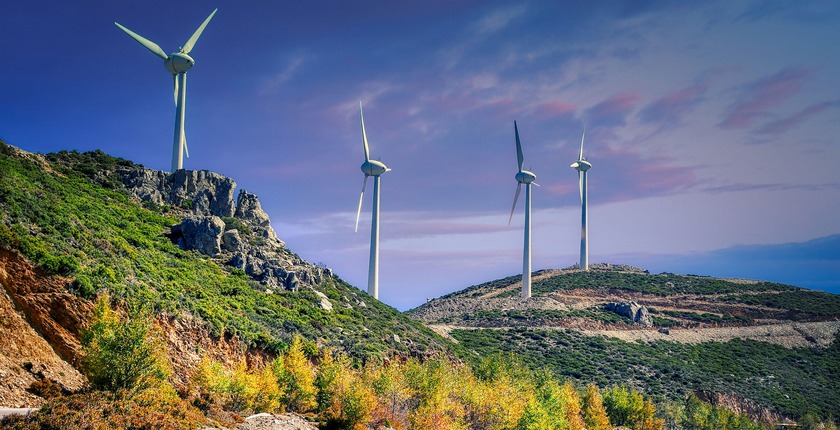
Kostolac wind farm set to begin operation

Speaking about other key projects, Živković revealed that the commissioning of the 66 MW Kostolac wind power plant is in the final phase and expressed hope that electricity production would begin within a month. He also recalled that the 10 MW Petka solar power plant, built at the tailings dump in the Kostolac coal complex, was put into trial operation about a month ago.

He also said pumped storage hydropower plant Bistrica and the planned 1 GW of solar facilities could come online in the medium term.

Commenting on the announced 7% electricity price increase in October, Živković stressed the process has been initiated and that he expects it to be completed within one to one-and-a-half months.

Electricity consumption during the summer is lower than last year

On the surge in electricity consumption during the summer months, he said the situation this year has been “calmer” than in 2024, with consumption at around 90 GWh, compared to 114 GWh in 2024. It means total demand can be covered from EPS’s own capacities, according to him.
by in News

Montenegro’s power utility gets EUR 25 million loan to expand Gvozd wind farm

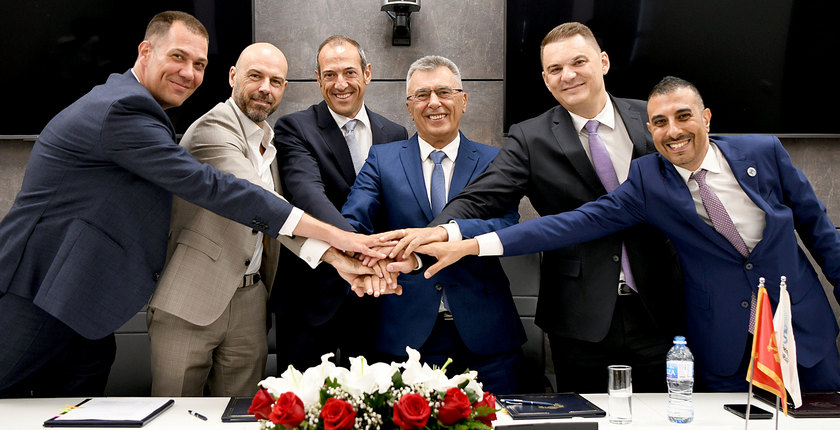
Montenegrin state-owned power utility Elektroprivreda Crne Gore (EPCG) said it signed a EUR 25 million loan contract with the European Bank for Reconstruction and Development (EBRD) for expanding the Gvozd wind farm to 75.6 MW. Once fully operational, it will be the largest wind farm in Montenegro.

The Gvozd 2 project involves the installation of three additional wind turbines, with a combined capacity of 21 MW. It will increase the wind farm’s total projected annual production to over 210 GWh, enough to cover the needs of about 36,000 households and reduce CO2 emissions by almost 137,000 tons a year, EPCG said following the signing of the loan agreement.

The expansion project involves three additional wind turbines with a combined capacity of 21 MW

An EUR 82 million loan for the first, 54.6 MW phase of the wind farm, including the grid connection infrastructure, was signed with the EBRD in June 2023. Gvozd will be EPCG’s first large-scale power generation facility built in more than 40 years.

Construction on the first phase, featuring eight turbines, began in November 2024. EPCG expects the power plant to enter trial operation by the end of this year, with a projected annual electricity output of 150 GWh.

Construction on the first, 54.6 MW phase of wind farm Gvozd was launched in late 2024

Commissioning of the full 75 MW capacity is expected by the end of 2026, according to a press release from the EBRD.

A key step in Montenegro’s energy transition

Milutin Đukanović, President of EPCG’s Board of Directors, described the expansion of Gvozd as a key step in Montenegro’s energy transition. In the press release, EPCG stated that the wind park would significantly contribute to achieving the European goal to produce electricity exclusively from clean sources by 2050 at the latest.

Minister of Energy and Mining Admir Šahmanović noted that the Gvozd project would strengthen Montenegro’s energy security, reduce CO2 emissions, and pave the way for sustainable development.

Francesco Corbo, the EBRD’s Regional Head of Energy for the Western Balkans and Croatia, recalled that the bank, through its Renewable Energy Market Accelerator (REMA) program, helped the Montenegrin authorities organize the country’s first renewable energy auction, for solar projects totaling 250 MW.

by in News

Kragujevac heating plant begins ash removal from disposal site in city center

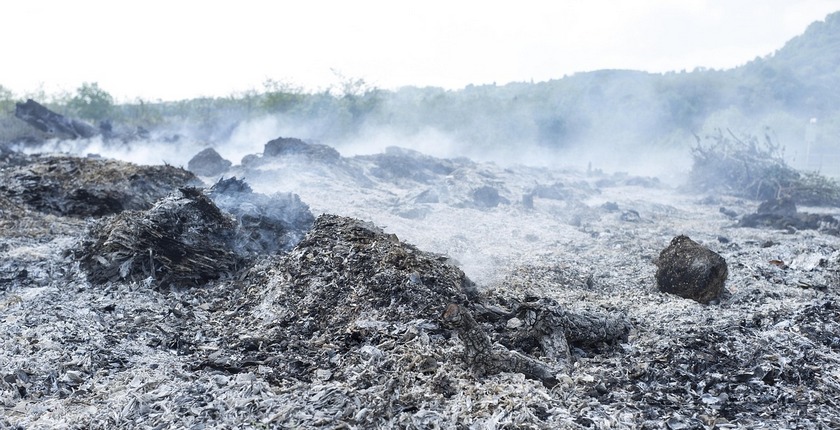
District heating plant Energetika has begun removing coal ash from an uncovered disposal site that has been polluting air and soil for years in the heart of Kragujevac, Serbia’s fourth-largest city. The effort is part of a project financed by an EUR 18 million loan from the European Bank for Reconstruction and Development (EBRD), to decarbonize the local district heating system.

The ash from Kragujevac is transported to cement plants in Kosjerić and Popovac to be used in the production of cement and construction materials, in line with circular economy principles, according to Serbian Minister of Environmental Protection Sara Pavkov.

On the first day, about 75 tons of ash was removed from the site, with plans to transport a total of 60,000 tons over 24 months.

The ash will be used in cement production in Kosjerić and Popovac

Ash removal is the second phase of the district heating decarbonization project in Kragujevac. In the first phase, old boilers were replaced with gas-fired units, significantly reducing air pollution, according to Dejan Ružić, deputy mayor of Kragujevac. This marked the end of coal use in the city’s district heating system.

The EBRD approved the loan for the project in 2021. Of the total amount, EUR 14 million was earmarked for boiler replacement, together with up to EUR 4 million for ash removal.

In the first phase, coal-fired boilers were replaced with gas-fired units

The bank said at the time that gas-fired boilers would have a capacity of 110 MW and that CO2 emissions from district heating would be cut by an estimated 66%, with sulfur dioxide and particulate matter (PM) emissions eliminated.

The Ministry of Environmental Protection has hired Novi Sad-based engineering and consultancy firm AG Institut to monitor the ash disposal services under a EUR 73.900 contract. The works are targeted for completion by July 15, 2027.

Aleksandar Lazović, general manager of the district heating plant, said the works would be carried out in line with the highest environmental standards, in a covered area, to prevent ash from dispersing into the environment.

District heating decarbonization in several Serbian cities

In June this year, Serbia and the EBRD signed a EUR 50 million loan to finance a series of air quality projects in Belgrade, Niš, Valjevo, Zaječar, Novi Pazar, and Smederevo, which had been mapped as cities with the largest excesses of harmful emissions.

The planned projects include replacing outdated boilers running on fuel oil, coal, and other air-polluting fuels with modern and sustainable heat energy sources, such as heat pumps, biomass, and industrial waste heat.

by in News

Montenegrin power utility to borrow EUR 25.6 million for phase 2 of Gvozd wind farm

Montenegro’s state-owned power utility Elektroprivreda Crne Gore (EPCG) plans to take out a EUR 25.6 million loan from the European Bank for Reconstruction and Development (EBRD) to finance the second phase of the Gvozd wind farm project, with an installed capacity of 21 MW. The first phase of wind farm Gvozd, which is under construction, will have a capacity of 54.6 MW.

Announcing its request for government consent, EPCG stated that the capacity increase through the second phase of Gvozd would improve the security of electricity supply, increase the share of renewable energy in the country’s energy mix, and help Montenegro meet its international climate policy commitments.

EPCG previously announced that it expected the start of construction of the Gvozd 2 wind farm in early 2026.

The new document also states that EPCG has submitted a viability assessment of the Gvozd 1 and Gvozd 2 projects, prepared by German consultancy Fichtner GmbH & Co. KG for the purpose of securing financing from the EBRD.

The first phase of wind farm Gvozd will cost EUR 82 million

The first phase of the Gvozd wind farm, with eight turbines, is financed by an EUR 82 million loan from the EBRD. The groundbreaking ceremony was held in November 2024, and EPCG expects the power plant to enter trial operation by the end of this year. Its planned annual electricity output is 150 GWh.

A contract for the design, procurement, supply, and installation of equipment, as well as the commissioning and long-term maintenance of the future wind power plant, was signed with German company Nordex. EPCG said at the time that wind farm Gvozd would be its first large-scale power generation facility built in more than 40 years.

SCADA and ADMS will be introduced through a EUR 35 million project

In the announcement, EPCG also says it signed an agreement with the EBRD in January on financing a project to introduce the SCADA and ADMS systems into Montenegro’s power system. The implementation of SCADA (supervisory control and data acquisition) and ADMS (advanced distribution management system) is a key step towards modernizing the electricity distribution network, the document states.

SCADA enables remote control, monitoring, and automation of electricity distribution, while ADMS supports the integration of renewable energy sources. Together, these systems significantly improve the reliability, efficiency, and security of the power system, EPCG explains.

by in News

North Macedonia in talks on project to build two hydropower plants

North Macedonia is negotiating a strategic project to build two hydropower plants, Čebren and Galište, in an investment estimated at EUR 1.2 to 1.3 billion, according to Prime Minister Hristijan Mickoski. A tender for building the Čebren pumped storage hydropower plant was annulled by the previous government in early 2024.

The country intends to finance the construction of the two hydropower plants with a loan from the United Kingdom, the prime minister said. He indicated that funding has been secured for several government projects, partly through loans and partly through private investments, according to a statement by the Government of North Macedonia.

The Čebren and Galište project could be financed from a British loan

In the previous tender, the Čebren hydroelectric project was planned to have a capacity of 333 MW, with an option for another unit and 458 MW in total.

In early 2024, the former government annulled the tender, in which Greece-based Public Power Corp. (PPC) and Archirodon were selected for the Čebren project. The authorities said at the time that they would analyze whether it would be more profitable to build Čebren with the state’s own funds or with the help of strategic investors.

A few months ago, Minister of Energy, Mining and Minerals Sanja Božinovska said projects were under development for battery energy storage systems (BESS) and pumped storage hydropower plants.

The project will last several decades, Mickoski says

Addressing the parliament today, Mickoski described the project as strategic, adding that it would not be completed during this government’s term of office. “This is a project that will last several decades,” he said. The funding will be provided through low-interest loans as a state investment, and the rest under market terms and through direct private investment, according to Mickoski.

The prime minister is also confident that the two proposed reservoirs could provide additional water for irrigation amid future climate change impacts and help boost tourism development in the area.