by in News

DRI secures financing for Vacaresti solar park in Romania

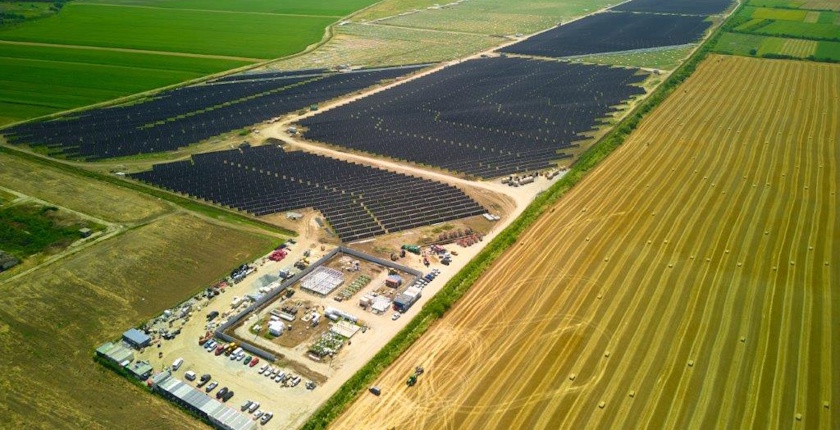
Renewable energy firm DRI has secured financing for the construction and operations of its Vacaresti solar park in Romania.

DRI, UniCredit and Garanti BBVA have signed an agreement for non-recourse loans of up to EUR 60 million to finance the construction and operations of the Vacaresti solar park in Romania.

DRI is Ukraine-based DTEK’s renewables subsidiary in the European Union.

The loan is inclusive of a long-term, fully amortizing construction and term loan, value-added tax, a debt service reserve facility, and the letter-of-credit facilities, according to the firm.

The project is expected to come online in the autumn

The loan structure is aligned with Green Loan Principles and the European Union’s Taxonomy Alignment Criteria, DRI added. It serves as a cornerstone of the EU’s sustainable finance framework and a key tool for market transparency, by providing clear guidelines for direct investments that support the green transition in line with the objectives of the European Green Deal, the press release reads.

The solar power plant will be located in the Văcărești area in Dâmbovița county. The project is for 126 MW in peak capacity, enough to power about 50,000 households and avoid 48,600 tonnes of carbon emissions per year. Construction kicked off in January 2025 and the project is expected to be online in the autumn.

The buyer of 50% of the electricity output is oil and gas company OMV Petrom. The deliveries will start in January 2027. It is a part of Romania’s largest physical solar power purchase agreement (PPA), signed last December, DRI noted.

Geliukh: DRI is demonstrating its capability to partner with globally renowned financial institutions

“With the signing of this project financing agreement, we have reached another important milestone: this is DRI’s first internationally led syndicated financing, our first certified green loan, and our first multi-currency loan,” DRI CEO Ivan Geliukh stressed.

In his words, it is an important achievement not only for DRI but also for Romania, contributing to the development of renewable energy in the country.

With the project, DRI is demonstrating its capability to partner with globally renowned financial institutions like UniCredit, and with Garanti BBVA, one of Romania’s leading local lenders, according to Geliukh.

DRI has three operational projects in Romania

In Romania, DRI has three operational projects with a total peak capacity of 173 MW. Solar parks Glodeni I and Glodeni II have a combined installed capacity of 113 MW. They are one of the largest renewable energy sites in the country, according to the company.

The 60 MW Ruginoasa wind farm was built in just 10 months. It was the first in the country after a decade, according to the firm.

DRI now has a 1.3 GW portfolio of projects in operation, construction and other stages of development. The company is also active in Croatia.
by in News

Nofar Energy set to secure financing for 515 MW of solar in Romania

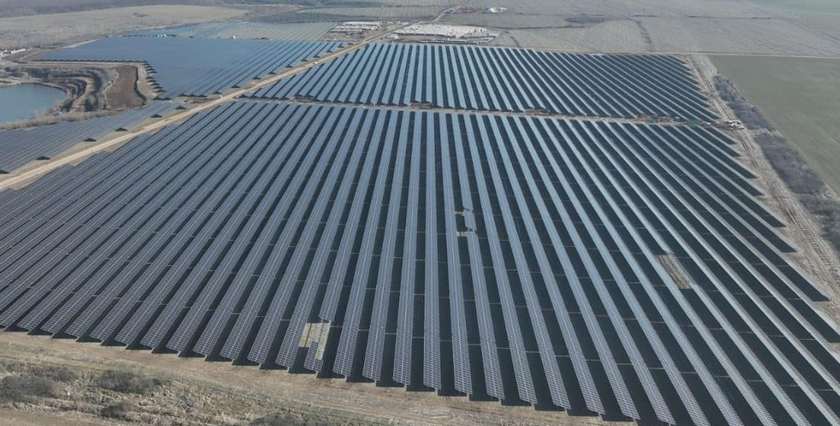
Israeli renewables company Nofar Energy is set to secure a EUR 68 million loan from the European Bank for Reconstruction and Development (EBRD) for three large-scale photovoltaic projects in Romania, with a combined capacity of 515 MW, including the 265.5 MW Corbii Mari solar park.

The EBRD’s loan, with an expected approval date of September 10, 2025, will be disbursed to Nofar’s three Romanian subsidiaries – Corbii Mari Solar Plant, Aviv Renewable Investment, and Slobozia Solar Plant.

Nofar’s firms intend to build a 175.7 MW solar farm in Iepurești, a 74 MW solar farm in Slobozia, both in Giurgiu county, and a 265.5 MW solar farm in Corbii Mari, Dâmboviţa county, according to the EBRD.

The three solar parks are expected to generate 676 GWh of electricity annually. Their operation is expected to reduce CO2 emissions by 280,000 tons annually, the bank noted.

The three solar parks are expected to produce 676 GWh a year

The Corbii Mari solar park, spanning a total of 290 hectares, would be located near the Romanian capital, Bucharest. Given its size, the project is divided into six lots, Romanian news portal Profit.ro reported.

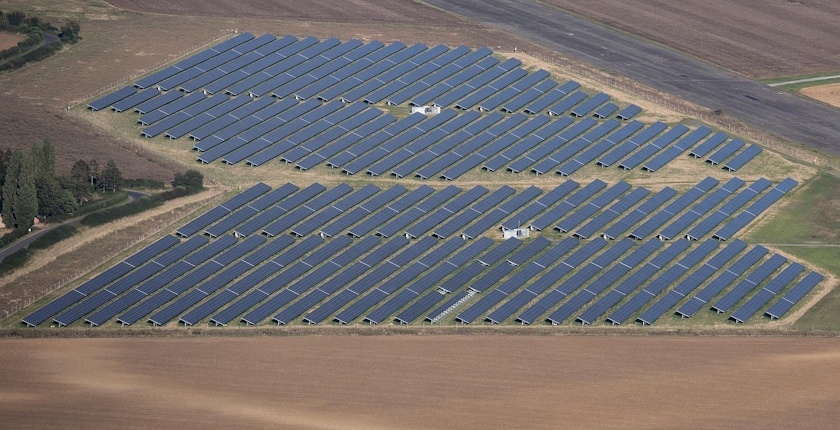
Nofar operates the largest existing photovoltaic park in Romania, of 155 MW, located in Rătești in Argeș county.

Nofar’s 155 MW solar park in Rătești is currently the largest in Romania

There are other major photovoltaic projects in Romania larger than Corbii Mari, in various stages of development, including one of over 1 GW, under development in Arad county by Czech company Rezolv Energy.

Ingka Investments, the investment division of Sweden-based Ingka Holding, the largest IKEA franchisee company, is building its first solar power plant in Romania. The Butimanu project is for 300 MW in peak capacity, it recently said.

Nofar is also developing the Ghimpați solar project near Bucharest, with an installed capacity of 146 MW. Earlier this year, the Israeli company said it had connected to the electricity grid its solar park in Ada, the largest such system in neighboring Serbia.

by in News

INVL fund secures loan for 71 MW of solar projects in Romania

INVL Renewable Energy Fund I has secured a EUR 29.3 million loan for the installation of solar power plants with a capacity of 71 MW in Romania.

INVL Renewable Energy Fund I, managed by INVL Asset Management, invests in renewable energy projects.

The new EUR 29.3 million loan agreement has been signed with Kommunalkredit Austria AG, the fund revealed.

It is its second loan to the fund. In November 2023, the bank approved EUR 25 million for the construction of solar power plants in Romania.

Kommunalkredit’s long-term support plays an important role in accelerating the transition to green energy in the region, according to Liudas Liutkevičius, Managing Partner at INVL Renewable Energy Fund I.

INVL Renewable Energy Fund I is focusing on the Polish and Romanian markets

Construction of the facilities of an overall 71 MW in Dolj County is scheduled for completion by the end of September next year, according to the update. It is the fund’s third large-scale solar energy project in Romania.

INVL Renewable Energy Fund I is focusing on the Polish and Romanian markets, having a combined portfolio of projects in development of 389 MW.

In Romania, the fund is planning eight photovoltaic units with a total capacity of 356 MW. Its future solar parks in Poland would have 32 MW overall. All are due to be completed by the end of 2027.

Ponomarenko: The bank is committed to enabling the energy transition in high-growth markets

Investments in Romania and Poland are expected to exceed EUR 250 million altogether, the fund added.

Konstantin Ponomarenko, a Senior Structurer at Kommunalkredit Austria, said the development of solar energy infrastructure in Romania reflects both the fund’s strategic vision and the bank’s commitment to enabling the energy transition in high-growth markets.

The transaction underlines Kommunalkredit’s dedication to delivering bespoke financing solutions that empower sustainable development across Europe, he added.

by in News

RP Global gets EUR 12.2 million loan for Novalja solar project

RP Global has secured a EUR 12.2 million loan to build its Novalja solar power plant in Croatia.

In late April, Austrian company RP Global began the construction of the Novalja photovoltaic plant at the Zaglava site on the island of Pag.

The European Bank for Reconstruction and Development (EBRD) said it approved a senior non-recourse project finance loan of up to EUR 12.2 million to RP Global Novalja d.o.o., owned by RP Global Energy GmbH, for the development and construction of the 21 MW Novalja PV plant in Croatia.

The project has been approved under the EBRD InvestEU Framework for Sustainable Transition.

The loan is divided into two tranches

The loan is split into two tranches: one amounting to a maximum of EUR 7.2 million, and the second of up to EUR 5 million, benefiting from a 20% first loss coverage under the EBRD InvestEU Framework for Sustainable Transition, the bank’s decision reads.

The total project cost is estimated at EUR 16.3 million.

The endeavor includes the installation of 35,776 photovoltaic panels. The expected annual electricity production is around 31,000 MWh, enough to supply about 12,000 households.

According to the EBRD, the project supports innovative offtake arrangements. It will combine a national renewables support with a merchant exposure in later years.

RP Global won premiums for its project at auctions

Last July, the Croatian Energy Market Operator (HROTE) awarded premiums for solar and hydropower plants with a total capacity of 420 MW. RP Global’s Novalja was among them, with 15 MW.

Back in 2022, the company said it intended to build wind farms and solar parks of 500 MW overall in Croatia over the next five years.

RP Global has completed two renewable energy projects in Croatia: the Danilo wind farm near Šibenik and the Rudine wind park near Dubrovnik.

Of note, the island town of Novalja could become one of the first in Croatia to begin the production of green hydrogen, and a rare example in the region. A project was launched in May.

by in News

Montenegro’s EPCG to take out EUR 50 million loan

Montenegro’s power utility Elektroprivreda Crne Gore will take out a loan of EUR 50 million to purchase electricity to supply consumers in the country.

The Government of Montenegro, upon the proposal of the Ministry of Finance, has issued an approval for Elektroprivreda Crne Gore (EPCG) to borrow EUR 50 million from Erste Bank to finance the purchase of the lacking quantities of electricity.

The loan is necessary to ensure the continuity of electricity supply while the Pljevlja thermal power plant is offline due to the ongoing ecological reconstruction project, the government said.

The investment aims to bring the power plant’s operation in line with EU emission standards

The works at Montenegro’s only coal-fired facility began in April 2022, and it has been offline since the end of March this year. The plant, which accounts for 40% of domestic electricity production, is scheduled to return to operations after seven and a half months. The investment is intended to reduce its emissions to align them with the European Union’s standards.

EPCG previously announced that it had already purchased about 75% of the electricity it required – 600 GWh, for which it paid around EUR 60 million. The remaining quantities needed for the third quarter, approximately 200 GWh, are planned to be purchased during the second quarter, the company said.

The company’s request was supported by the Ministry of Finance

According to the government’s new decision, the Ministry of Finance supported EPCG’s request.

It noted that EPCG achieved a net profit of EUR 10.2 million in 2024, which is 80.51%, or EUR 42.2 million, lower than in 2023, when it amounted to EUR 52.5 million. The projected profit for 2024 was EUR 3.4 million, the ministry recalled.

Of note, the company recently said it planned to take out a EUR 25.6 million loan from the European Bank for Reconstruction and Development (EBRD) to finance the second phase of the Gvozd wind farm project.

by in News

Montenegrin power utility to borrow EUR 25.6 million for phase 2 of Gvozd wind farm

Montenegro’s state-owned power utility Elektroprivreda Crne Gore (EPCG) plans to take out a EUR 25.6 million loan from the European Bank for Reconstruction and Development (EBRD) to finance the second phase of the Gvozd wind farm project, with an installed capacity of 21 MW. The first phase of wind farm Gvozd, which is under construction, will have a capacity of 54.6 MW.

Announcing its request for government consent, EPCG stated that the capacity increase through the second phase of Gvozd would improve the security of electricity supply, increase the share of renewable energy in the country’s energy mix, and help Montenegro meet its international climate policy commitments.

EPCG previously announced that it expected the start of construction of the Gvozd 2 wind farm in early 2026.

The new document also states that EPCG has submitted a viability assessment of the Gvozd 1 and Gvozd 2 projects, prepared by German consultancy Fichtner GmbH & Co. KG for the purpose of securing financing from the EBRD.

The first phase of wind farm Gvozd will cost EUR 82 million

The first phase of the Gvozd wind farm, with eight turbines, is financed by an EUR 82 million loan from the EBRD. The groundbreaking ceremony was held in November 2024, and EPCG expects the power plant to enter trial operation by the end of this year. Its planned annual electricity output is 150 GWh.

A contract for the design, procurement, supply, and installation of equipment, as well as the commissioning and long-term maintenance of the future wind power plant, was signed with German company Nordex. EPCG said at the time that wind farm Gvozd would be its first large-scale power generation facility built in more than 40 years.

SCADA and ADMS will be introduced through a EUR 35 million project

In the announcement, EPCG also says it signed an agreement with the EBRD in January on financing a project to introduce the SCADA and ADMS systems into Montenegro’s power system. The implementation of SCADA (supervisory control and data acquisition) and ADMS (advanced distribution management system) is a key step towards modernizing the electricity distribution network, the document states.

SCADA enables remote control, monitoring, and automation of electricity distribution, while ADMS supports the integration of renewable energy sources. Together, these systems significantly improve the reliability, efficiency, and security of the power system, EPCG explains.

by in News

Serbia secures EUR 50 million loan for air quality projects

The Government of Serbia has secured a EUR 50 million loan to fund a series of air quality projects across several cities. The funds will primarily go towards replacing coal- and fuel oil-fired boiler rooms in six cities.

For years, air pollution has been one of the biggest environmental issues in Serbia.

Minister of Environmental Protection Sara Pavkov and First Deputy Prime Minister and Minister of Finance Siniša Mali have signed two agreements with the European Bank for Reconstruction and Development (EBRD), which will soon lead to significant investments in air protection projects in multiple Serbian cities, the Ministry of Environmental Protection said.

Mali signed a EUR 50 million loan agreement, while Pavkov inked the project agreement. On behalf of the bank, both documents were signed by Matteo Colangeli, EBRD Regional Head of the Western Balkans.

EUR 50 million will be invested in cities with the highest levels of harmful emissions

Pavkov noted that based on these agreements, EUR 50 million would be invested in cities mapped as those with the largest excesses of harmful emissions. This is good news for residents of Belgrade, Niš, Valjevo, Zaječar, Novi Pazar, and Smederevo, where the projects will be implemented, she added.

In these cities, old, outdated boilers running on fuel oil, coal, and other fuels with an adverse impact on air quality will be replaced. Modern and sustainable heat energy sources, such as heat pumps, biomass, and industrial waste heat, will be installed, she stressed.

The projects will also include, where possible, connection to district heating systems or natural gas networks.

An air protection law is in the process of adoption

“These projects are the culmination of years of work. We have entered a phase where we can expect the launch of construction and intensification of the efforts for cleaner air, which remains one of our top priorities,” Pavkov stressed.

She recalled that an EBRD loan had helped replace 50-year-old coal boilers with state-of-the-art gas boilers at the Kragujevac district heating plant. The second phase, the remediation of the ash landfill, has also begun, she added.

From 2021 to 2024, the ministry has implemented projects to replace 169 boiler rooms in public institutions across 76 local authorities, according to Pavkov.

Under a public call, funds have been allocated for projects in 18 municipalities in 2025, with another call currently underway. An air protection bill is now before the National Assembly, intended to provide a new overarching framework and fresh momentum in the fight for better air quality, Pavkov noted.

by in News

Federation of BiH secures EUR 83 million for just transition of coal regions

Bosnia and Herzegovina has secured EUR 83 million for a just transition project, which includes installing renewable power plants, social protection measures, and skills development in coal regions.

The funds are for the Federation of BiH, one of the two entities constituting Bosnia and Herzegovina.

The Board of Executive Directors of the World Bank has approved a EUR 79.90 million loan and a EUR 2.89 million grant to support Bosnia and Herzegovina’s National Energy and Climate Plan, enhance energy independence, foster job opportunities, and strengthen local economies in former coal regions.

It explained that the Just Transition in Select Coal Regions of Bosnia and Herzegovina Project would help repurpose post-mining lands in Banovići, Zenica, and Kreka, and facilitate the closure of underground works in Zenica. The project entails support for the installation of renewable energy systems at Banovići and Kreka mines.

The project has four components

The measures also involve social protection and skills development for workers and communities seeking opportunities outside the coal sector, the international financing institution noted.

The project will be implemented by the Federal Ministry of Energy, Mining and Industry and the state-owned RMU Banovići coal mine operator and power utility Elektroprivreda Bosne i Hercegovine (EPBiH). It has four components.

The first focuses on enhancing the capacity of coal regions, their entities, and the state-level government to manage a just transition. It will support the Committee on Just Transition at the State Level, a state-level knowledge platform, and capacity building of the Interministerial Committee on Just Transition in the Federation of BiH.

The project includes the land repurposing master plans in Banovići, Zenica, and Kreka

Technical assistance to relevant FBiH ministries to enhance the existing regulatory laws on labor transitions will be provided.

Component 2 supports the repurposing of select post-mining lands in Banovići, Zenica, and Kreka, and closure of specific underground works in the Zenica mine. The segment includes implementing the land repurposing master plans in all three areas

The third part envisages the construction of new power plants. A photovoltaic system of 27 MW in peak capacity will be installed at two identified sites at the Banovići and Kreka mines. Annual power production is projected at over 30 GWh.

Sheldon: To make sure no one is left behind

Component 4 aims to mitigate the social and labor impacts of coal transition on workers and communities by covering the financial obligations toward the miners in Zenica, reskilling and retraining eligible workers in Banovići and Zenica, and supporting affected communities through community investment, the project reads.

According to the World Bank, BiH is developing a National Energy and Climate Plan (NECP). The lender intends to ensure that mine closure is environmentally and socially responsible, supporting new job opportunities and strengthening local economies in former coal regions.

“This new project is an opportunity to boost BiH’s energy security while supporting communities, making sure no one is left behind,” said Christopher Sheldon, World Bank Country Manager for BiH and Montenegro.

by in News

Montenegro’s CEDIS to invest EUR 30 million in distribution grid

Montenegrin electricity distribution system operator CEDIS plans to invest EUR 30 million this year or EUR 6 million more than in 2024.

The increase in investments demonstrates greater ambitions year after year and that grid works are becoming more intensive and demanding, according to CEDIS.

The country’s distribution system operator (DSO) said it would increase capacity for the integration of new users, improve voltage conditions, strengthen reliability and security of power supply, and reduce losses.

The investments include projects planned to be started this year as well as ones already in motion, such as the modernization of six 35/10 kV substations.

CEDIS is building two substations

CEDIS pointed to several significant endeavors within the primary grid. The most significant ones are the construction of 35/10 kV substations Tivat 3 and Rijeka Crnojevića, and the modernization of the systems Buljarica-Kufin (110/35 kV) and Podgorica 7 (110/10 kV).

Seven 35/10 kV substations are up for reconstruction – Tuzi, Unač, Ptič, Andrijevica, Velika Plaža 1, Velika Plaža 2 and Čanj. The plan includes procuring new equipment for existing 35 kV transmission lines, worth about EUR 1.4 million.

The company is introducing SCADA and ADMS systems

CEDIS will use a EUR 35 million loan from the European Bank for Reconstruction and Development (EBRD) to roll out SCADA and ADMS systems, and to purchase smart meters.

The company highlighted SCADA and ADMS as a key step towards the modernization of the distribution network and the improvement of reliability, efficiency, and security of the power system.

Investments envisaged by the project Decarbonization of the Energy Sector of Montenegro, financed with a loan from the World Bank, are kicking off this year. Its subproject for increasing the operational efficiency of the power distribution grid comprises the reconstruction and modernization of substations, and improvement in the visibility of the distribution network.

EUR 5 million for energy infrastructure on Jaz-Tivat Boulevard

One of the largest investments is the installation of power infrastructure within the construction of the Jaz-Tivat Boulevard. The investment is estimated at EUR 5 million.

Projects within the secondary distribution grid are the construction of 268 substations of 10/0.4 kV, modernization of 10 kV transmission lines, and reconstruction of existing 10/0.4 kV substations. The planned works are valued at more than EUR 6 million.

CEDIS is continuing with the revitalization of the middle- and low-voltage grid. It earmarked EUR 9 million for this year for the purpose. The project is for the renewal of four 10 kV transmission lines and 52 substations of 10/0.4 kV and replacing 1,500 poles.

The installation of new meters and the relocation of measuring points will also be continued. The plan is to start phase 4 of the advanced metering management (AMM) project. The investment is estimated at EUR 12 million.

by in News

Serbia’s first-ever tokenization in energy sector: Saraorci solar project yields 6% interest

The first tokenization in Serbia’s energy sector has been completed, with AVR Solar Park selling 80% of AVR Solar Tokens, worth EUR 600,300, out of EUR 725,000 on offer. The company emphasized that this innovative financing model has the potential to address the issue of unfavorable financing conditions in the Serbian market.

The recepits from the sale of AVR tokens will finance the expansion of the Saraorci solar power plant. The facility, with a capacity of 9,856 MW, was built by Power China and commissioned in May last year. Until a few days ago, along with the DeLasol plant, it was the largest photovoltaic plant in Serbia.

Marko Đurić, who is in charge of finance at AVR Solar Park, told Balkan Green Energy News that even during the construction of  Saraorci power plant, there was an idea to expand it and increase production by 10-12%. The annual output would rise from 15.1 GWh to 16.8 GWh, with the capacity remaining at 9.856 MW.

Đurić: The investors are struggling to meet financing requirements

“Our company had already invested significant funds in the preparatory works for the expansion. Among other things, we had already secured a building permit. With tokenization, we tried to raise the rest of the funding needed for the expansion,” he said, noting that the expansion has been completed.

According to Đurić, the construction of solar power plants in Serbia has slowed considerably. The demanding financing requirements, which investors find difficult to meet, are among the main contributors. In most cases, companies are required to have ten-year power purchase agreements (PPAs) at a fixed price.

However, PPAs on the Serbian market are signed for a maximum of five years, he noted.

In his words, a fixed price can be achieved through auctions, but this implies fixed income over 15 years, and there is no progress. Also, financial institutions cannot back a project unless the investors secure 60% of the cost from their own funds, which very few can do, according to Đurić.

Token buyers receive 6% interest

AVR Solar Park offered 7,250 tokens with a nominal value of EUR 100 apiece, payable in RSD. The initial offering of AVR Solar Tokens started on November 22, 2024, and ended on February 19.

Buyers of the token acquired the right to receive 10% of the principal at the end of each year and a fixed 6% interest. The minimum investment amount per investor was EUR 3,000. The tokenization was approved by the Securities Commission. The table below shows an example of an investment in 100 AVR Solar Tokens.

Digital tokens make it possible to bypass the bank as the chief intermediary in financing, and AVR Solar Park sees this as a benefit, especially for those who want to invest their money in a specific project – institutional investors or individual, small investors.

Đurić: the opportunity to be part of the green transition

The company has opted for tokenization as a way of financing, primarily because it enables transparency. “By purchasing AVR Solar Tokens, you not only ensure a stable financial return, but you also get the opportunity to be part of the green transition in the energy sector and thereby contribute to reducing pollution in our country and on our planet,” Đurić stressed.

Compared to other investment opportunities, investors in tokens could benefit from the fact that tokens are denominated in euros.

Also, the 6% interest is more than what any bank or bond offers, especially for such a long period, Đurić asserted. Another benefit for investors is the simplicity of investing in tokens as it can be done “from the comfort of one’s bed.”

How are token buyers protected?

Solar power plant Saraorci (photo: AVR Solar Park)

Đurić said there are various measures to reduce the risk for investors. First and foremost, the solar plant is fully operational, generating income.

“The return for investors is guaranteed based on a 10-year PPA signed with a licensed electricity trader. It could be annexed to add the output from the expanded facility. This contract is the biggest guarantee for the interest payments, enabling steady income,” Đurić pointed out.

In addition, the project also includes additional security measures. For example, if production is lower than projected, the contractor Boffetti Balcan, a subsidiary of Italy-based Boffetti SPA, is required to compensate for the difference. The project is also fully insured.

The construction of a new solar power plant is underway

AVR Solar Park said tokenization was a pilot project to test the market. The company also sees it as a crucial step toward the broader use of tokenization in Serbia and the region.

According to Đurić, the company aims to finance much larger projects in the future. Anyone who invested in this pilot project will have an advantage in investing in the next ones, he added.

The firm is currently building the Zvečka solar power plant, with a capacity of 9.95 MW, in the municipality of Obrenovac. The plan is to put it into operation by June 2026.