by in News

Bosnia and Croatia Advance Southern Gas Interconnection to Strengthen Regional Energy Security

Bosnia and Herzegovina and Croatia have formalized an intergovernmental agreement to advance the construction of the Southern Gas Interconnection, a strategic infrastructure project aimed at strengthening energy security and ensuring a more stable gas supply for Bosnia and Herzegovina.

The planned interconnection will provide Bosnia and Herzegovina with an alternative supply route via Croatia, reducing its current dependence on Russian natural gas delivered through Turkey, Bulgaria, and Serbia. By enabling access to new sources, the project is expected to significantly enhance supply resilience.

The agreement was signed in Dubrovnik during the Three Seas Initiative summit by Borjana Krišto, Chairwoman of the Council of Ministers of Bosnia and Herzegovina, and Croatian Prime Minister Andrej Plenković.

The pipeline network will span multiple routes, including Split–Zagvozd in Croatia, extending into Bosnia and Herzegovina through Posušje, and continuing across key locations such as Tomislavgrad, Kupres, Bugojno, and Travnik. Additional शाखing routes will connect areas including Mostar, Livno, Jajce, Tuzla, and Čapljina, creating a comprehensive distribution network.

According to the Council of Ministers of Bosnia and Herzegovina, the project will diversify both supply routes and energy sources, contributing to greater energy independence. The pipeline is expected to be supplied with gas from the liquefied natural gas (LNG) terminal on the Croatian island of Krk.

The signing ceremony was attended by US Energy Secretary Chris Wright and Vedran Lakić, Minister of Energy, Mining and Industry of the Federation of Bosnia and Herzegovina. US-based AAFS Infrastructure and Energy has been designated to manage the pipeline within Bosnia and Herzegovina.

Although the project has been under consideration for years, tangible progress accelerated recently. In January, authorities in Bosnia and Herzegovina indicated that AAFS Infrastructure and Energy would receive a 30-year concession. Subsequently, in late February, twelve countries from Central and Eastern Europe and the Balkans, including Bosnia and Herzegovina, reached an agreement with the United States to strengthen cooperation on LNG supply.

The Federation of Bosnia and Herzegovina, the entity through which the pipeline will pass, recently adopted a special legal framework (lex specialis) designating the US firm as the project investor. This decision has drawn criticism from the European Union, which warned of potential consequences.

Borjana Krišto emphasized that Bosnia and Herzegovina occupies a strategic position at the crossroads of energy flows in Southeast Europe. She noted that, beyond being a consumer, the country has the potential to play an active role in developing a more secure and resilient regional energy system. She also highlighted the importance of transatlantic cooperation in accelerating investment and improving market integration.

Prime Minister Andrej Plenković underscored that the agreement reinforces Croatia’s role as a regional energy hub, particularly by enabling the transport of gas from the Krk LNG terminal to Bosnia and Herzegovina. He also pointed to the broader significance of the Three Seas Initiative, which brings together 13 EU member states from Central and Eastern Europe to enhance connectivity between the Baltic, Black, and Adriatic seas, with a focus on infrastructure, transport, and energy integration.
by in News

US firm eyes construction of three gas-fired power plants in BiH

A US company is interested in building three gas-fired power plants in Bosnia and Herzegovina, according to Dragan Čović, First Deputy Speaker of the House of Peoples of the Parliamentary Assembly of BiH.

The natural gas power plants would be connected to the planned Southern Gas Interconnection and the liquefied natural gas (LNG) terminal in Krk, Croatia, Dragan Čović explained in an interview with Avaz.

The Southern Gas Interconnection is a project designed to provide BiH with an alternative natural gas supply. The country currently relies on Russian gas delivered via Serbia, while the new pipeline would secure imports from the Croatian LNG terminal. The interconnection has been in development for many years, but construction has yet to begin.

Čović revealed that the power plants would be built in the Mostar area, central Bosnia, and in Tuzla. He expressed the belief that the interconnection is crucial for BiH, arguing it would ensure the country’s long-term energy and political stability.

Čović spoke with Bechtel’s representatives

Because the pipeline passes through areas with a majority Croat population, the project is also of strategic interest to the Croat people in BiH, added Čović, who is also the president of the Croatian Democratic Union of Bosnia and Herzegovina (HDZ BiH).

Čović recently met with representatives of US construction company Bechtel and the United States Trade and Development Agency (USTDA), which provides financing and technical support for international projects. Bechtel is currently being considered as a potential contractor for the pipeline’s construction.

He met with Justin Siberell, Bechtel’s President for Regions and Corporate Relations, and Sam Kwon, the USTDA’s General Counsel.

AAFS Infrastructure and Energy also visited BiH

The guests from the US also met with Acting President of the Republic of Srpska Ana Trišić-Babić and Minister of Energy, Mining and Industry of the Federation of BiH Vedran Lakić. FBiH and the Republic of Srpska are the two entities making up BiH.

Earlier, representatives of US-based AAFS Infrastructure and Energy also visited the country. According to Čović, the company is expected to receive a 30-year concession to manage the gas pipeline through BiH.

He explained that the three proposed power plants were included in the letter of intent that the firm sent to BiH authorities. The US partners’ plans extend far beyond the construction of the pipeline, he added.

A broader geopolitical dimension

Čović expressed the belief that these investments would carry a significant geopolitical dimension, claiming that if the US invests somewhere, that region is protected. This is demonstrated by the policy of President Donald Trump around the world, he added.

Čović dismissed claims that HDZ BiH is hindering the construction of the gas pipeline due to disagreements with Bosniak officials about project details. It is in the strategic interest of the Croat people to implement it, he stressed.

Of note, the Republic of Srpska has also announced plans to build gas-fired power plants and a new gas interconnection with Serbia.

by in News

US firm eyes construction of three gas-fired power plants in BiH

A US company is interested in building three gas-fired power plants in Bosnia and Herzegovina, according to Dragan Čović, First Deputy Speaker of the House of Peoples of the Parliamentary Assembly of BiH.

The natural gas power plants would be connected to the planned Southern Gas Interconnection and the liquefied natural gas (LNG) terminal in Krk, Croatia, Dragan Čović explained in an interview with Avaz.

The Southern Gas Interconnection is a project designed to provide BiH with an alternative natural gas supply. The country currently relies on Russian gas delivered via Serbia, while the new pipeline would secure imports from the Croatian LNG terminal. The interconnection has been in development for many years, but construction has yet to begin.

Čović revealed that the power plants would be built in the Mostar area, central Bosnia, and in Tuzla. He expressed the belief that the interconnection is crucial for BiH, arguing it would ensure the country’s long-term energy and political stability.

Čović spoke with Bechtel’s representatives

Because the pipeline passes through areas with a majority Croat population, the project is also of strategic interest to the Croat people in BiH, added Čović, who is also the president of the Croatian Democratic Union of Bosnia and Herzegovina (HDZ BiH).

Čović recently met with representatives of US construction company Bechtel and the United States Trade and Development Agency (USTDA), which provides financing and technical support for international projects. Bechtel is currently being considered as a potential contractor for the pipeline’s construction.

He met with Justin Siberell, Bechtel’s President for Regions and Corporate Relations, and Sam Kwon, the USTDA’s General Counsel.

AAFS Infrastructure and Energy also visited BiH

The guests from the US also met with Acting President of the Republic of Srpska Ana Trišić-Babić and Minister of Energy, Mining and Industry of the Federation of BiH Vedran Lakić. FBiH and the Republic of Srpska are the two entities making up BiH.

Earlier, representatives of US-based AAFS Infrastructure and Energy also visited the country. According to Čović, the company is expected to receive a 30-year concession to manage the gas pipeline through BiH.

He explained that the three proposed power plants were included in the letter of intent that the firm sent to BiH authorities. The US partners’ plans extend far beyond the construction of the pipeline, he added.

A broader geopolitical dimension

Čović expressed the belief that these investments would carry a significant geopolitical dimension, claiming that if the US invests somewhere, that region is protected. This is demonstrated by the policy of President Donald Trump around the world, he added.

Čović dismissed claims that HDZ BiH is hindering the construction of the gas pipeline due to disagreements with Bosniak officials about project details. It is in the strategic interest of the Croat people to implement it, he stressed.

Of note, the Republic of Srpska has also announced plans to build gas-fired power plants and a new gas interconnection with Serbia.

by in News

Greek company Aktor sets up BESS subsidiary after entering LNG trade

Power storage services are the core activity of Aktor’s new subsidiary Aktor BESS, but it could also build and operate renewable electricity and natural gas–fired plants and enter trade and distribution. The company earlier formed a business with DEPA Trade for liquefied natural gas (LNG).

Greek infrastructure and renewable energy developer and operator Aktor Group has formally positioned itself in the rapidly growing sector of electricity storage. Last week it established a 100% subsidiary called Aktor BESS, with an initial EUR 80,000 in capital.

The firm operates under Aktor Renewables and the main activity is providing electricity storage services. Aktor is apparently aiming to tap into the rapidly growing demand for batteries in Greece amid crippling wind and solar power curtailments.

In addition, battery energy storage systems or BESS are becoming a necessity because of the strengthening cannibalization effect. Operators of photovoltaics and wind parks require more predictable production profiles to for cost-effective pricing. They need to bridge the gaps between peak production and peak demand as well, as subsidies are gradually expiring.

Aktor BESS can benefit from the rapidly growing demand for battery storage in Greece

The statute of Aktor BESS points to a range of possible secondary activities. They include the construction and operation of renewable electricity and natural gas–fired plants as well as power trade and distribution and the development of technical studies.

The BESS facilities can be of the standalone type or colocated with the parent company’s production assets. Aktor Group’s Chairman and Chief Executive Officer Alexandros Exarchou is also the head of the new firm’s three-member board.

The company earlier established a joint venture for LNG and gas trade with DEPA Commercial, which controls 40%. It is also known as DEPA Emporias (in Greek), DEPA Commerce and DEPA Trading.

by in News

European Commission: Russian gas ban doesn’t include transit to Serbia, BiH

The proposed ban on importing Russian natural gas to the European Union doesn’t apply to the transit of Russian gas, so it doesn’t affect the supply of Serbia and Bosnia and Herzegovina, the European Commission’s spokesperson Anna-Kaisa Itkonen told Balkan Green Energy News.

After the Council of the European Union on Monday adopted its negotiating position on the European Commission’s draft regulation to phase out imports of Russian natural gas by January 1, 2028, reports emerged that Bulgaria would halt the transit of Russian gas to Serbia from January 1, 2026. The council agreed with the initiative to prohibit imports of Russian gas, starting on January 1, 2026, while maintaining a transition period for existing contracts.

Notably, Bulgaria’s Prime Minister Rosen Zhelyazkov announced in late September that his country would suspend Russian gas transit for short-term contracts in 2026 as part of EU plans to cut off Russian gas imports completely, Reuters reported.

Serbia receives natural gas from Russia via the Balkan Stream. The pipeline is an extension of TurkStream that passes through Bulgaria and Serbia. TurkStream delivers gas from Russia across the Black Sea to Turkey.

Bosnia and Herzegovina and Hungary, Serbia’s neighbors, are also supplied via Balkan Stream.

With regards to transit via EU territory, the EU proposal only requires more transparency on transited volumes to third countries

Balkan Green Energy News asked the European Commission to clarify if the supply of Russian gas to Serbia and BiH via Bulgaria would be halted as of January 1, 2026, but also how the EU could assist Serbia and BiH in that case.

The European Commission’s spokesperson Anna-Kaisa Itkonen noted that its REPowerEU proposal foresees a prohibition of the import of Russian gas into the EU.

“The EU import prohibition doesn’t concern the transit of Russian gas through the EU territory to third countries – including to Serbia and BiH. It doesn’t therefore affect Serbia’s or BiH gas supply,” she stressed.

With regards to transit via EU territory, in her words, the EU proposal only requires more transparency on transited volumes to third countries.

EU candidate countries are expected to progressively align their legislation with the EU acquis and rules

However, EU candidate countries are expected to progressively align their legislation with the EU acquis and rules as part of the accession process, Itkonen pointed out and added that it includes REPowerEU regulation once it becomes EU law.

Of note, the draft regulation to phase out imports of Russian natural gas constitutes a central element of the EU’s REPowerEU roadmap to end the EU’s dependency on Russian energy.

According to Itkonen, as a way to ensure security of supply, candidate countries including Serbia should diversify away from unreliable energy suppliers such as Russia. Following Russia’s war of aggression on Ukraine, it became evident how important this is and what problems it can create for any European country, she asserted.

“The EU is supporting the WB countries for diversifying their energy supplies”

Anna-Kaisa Itkonen (photo: European Commission)

“The EU is supporting the Western Balkan countries for diversifying their energy supplies and for closer integration into the EU’s energy networks, both for electricity and gas, as well as through investments in renewable energy and decarbonization efforts,” Itkonen underlined.

After energy ministers in the Council of the EU have agreed on the institution’s negotiating position on the European Commission’s draft regulation, the next step is the adoption of the European Parliament’s position.

The council and the parliament would then start negotiations on the regulation. When the two institutions approve a regulation, it directly applies to all member states.

The meeting of the so-called Energy Council highlighted several issues and concerns among EU member states about the proposed ban on Russian natural gas.

by in News

Serbia warns of gas crisis as EU transit ban threatens Balkan Stream supply

Serbia is in a very difficult situation because, as of January 1, 2026, it won’t be able to receive Russian natural gas via Bulgaria, according to the Ministry of Mining and Energy.

Serbia receives natural gas from Russia via the Balkan Stream. The pipeline is an extension of TurkStream that passes through Bulgaria and Serbia. Bosnia and Herzegovina and Hungary, Serbia’s neighbors, are also supplied via Balkan Stream. TurkStream delivers gas from Russia across the Black Sea to Turkey.

Serbia is facing a very difficult and almost dead end situation due to the European Union’s ban on the transit of Russian gas through the EU to third countries, which will come into effect on January 1, 2026, according to Serbia’s Minister of Mining and Energy Dubravka Đedović Handanović.

Đedović Handanović: Bulgaria won’t allow the flow of Russian gas through the Balkan Stream

Bulgaria won’t allow the flow of Russian gas through Balkan Stream, which will negatively impact Serbia, she stressed.

The European Commission set out a plan in May to phase out the purchases of Russian natural gas, including in liquefied natural gas (LNG), and oil, by the end of 2027. The council now confirmed that imports of Russian gas will be prohibited from January 1, 2026, while maintaining a transition period for existing contracts.

Đedović Handanović: We are doing everything in our power, but the situation is almost hopeless, considering the current situation regarding NIS

Yesterday, the Council of the European Union agreed on its negotiating position on the European Commission’s draft regulation to phase out imports of Russian natural gas. When the European Parliament adopts its own position, it can start negotiating with the council.

When the two institutions approve a regulation, it directly applies to all member states.

Đedović Handanović expressed hope that a solution would be found due to, as she put it, President Aleksandar Vučić’s excellent relations with world leaders.

“We are doing everything in our power, but it is an almost dead end situation, considering the current situation regarding Naftna industrija Srbije [NIS]. Our country, which is not involved in any conflict, has found itself affected through no fault of its own. Despite everything, we will do our best, as we have so far, so that citizens don’t feel the problems we are facing,” Đedović Handanović underlined.

Namely, the United States imposed sanctions on October 9 against NIS, Serbia’s national oil importer, refiner, and operator of a chain of service stations.

by in News

Montenegro plans to develop LNG terminal with JERA

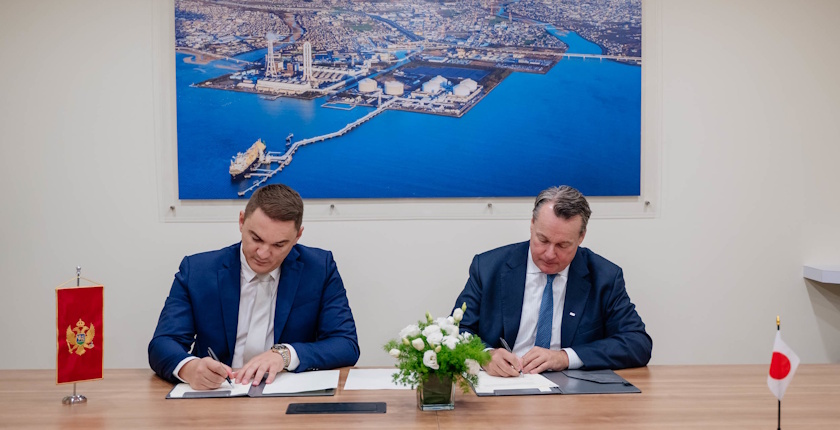
The Ministry of Energy and Mining of Montenegro and Japanese company JERA have signed a memorandum of cooperation in the development of projects for a liquefied natural gas (LNG) terminal and gas power plant.

The memorandum was signed at the Gastech 2025 conference in Italy by Minister of Energy and Mining Admir Šahmanović and Steve Winn, chief global strategist of JERA. They agreed to explore the possibilities for developing a project of an LNG terminal and associated gas power plant in Montenegro, according to the Ministry of Energy and Mining.

Within the strategic partnership, the government will use JERA’s extensive global experience to enhance its national energy mix, strengthen supply security, support decarbonization goals, and position Montenegro as an important energy hub in the Western Balkans.

The Japanese company and the ministry will conduct a feasibility study for the project

They will carry out a comprehensive feasibility study, covering the technical, commercial, and financial viability of the proposed LNG terminal and associated gas power plant, including an analysis of multiple potential locations.

According to the ministry’s press release, the study will provide detailed data on the cost-effectiveness and future expansion in the use of LNG in Montenegro, making a solid ground for strategic decisions beneficial to the country’s energy security and sustainable development.

Of note, in May 2023 Montenegro signed a cooperation memorandum on the planned LNG terminal and gas power plant with companies Enerflex Energy Systems and Wethington Energy Innovation, based in the United States. The European Union has also expressed its interest in the project.

Šahmanović: The study will provide data on the profitability of developing LNG in the country

Admir Šahmanović and Steve Winn (photo: Ministry of Energy and Mining of Montenegro)

Minister Admir Šahmanović said JERA is a renowned and credible global player in the areas of energy and LNG.

In his words, Japan is recognized for innovation and advanced technologies, and the cooperation will give Montenegro access to knowledge and experience necessary for the further development of its energy sector.

“The planned feasibility study will provide us with concrete data on potential locations and the profitability of developing liquefied natural gas in Montenegro, creating the basis for making strategic decisions in the interest of our country’s energy security and sustainable development,” Šahmanović underlined.

Winn: JERA is an ideal partner to support Montenegro in achieving its strategic energy goals

Steve Winn, JERA’s chief global strategist, said its extensive experience in LNG infrastructure and proven results in implementing complex international energy projects make it an ideal partner to support Montenegro in reaching its strategic energy objectives.

“We look forward to supporting Montenegro’s vision of strengthening energy security and decarbonization through practical and economically viable solutions,” he stressed.

by in News

EU outlines measures to end Russian gas, oil imports by end-2027

The European Commission set out a plan to phase out by the end of 2027 the purchases of Russian natural gas, including in the form of LNG, and oil. The package includes proposals aiming to replace Russian nuclear fuel and materials as well.

The European Union will end its dependency on Russian energy by stopping the import of Russian gas and oil and phasing out Russian nuclear energy, while ensuring stable energy supplies and prices, the European Commission said. Its new REPowerEU Roadmap targets full energy independence from Russia.

Since Russia’s invasion of Ukraine in 2022, the EU was lowering the share of Russian fossil fuels under the REPowerEU plan and via sanctions. However, Russian gas imports rebounded last year by 18%, led by Italy, Czechia and France. The commissioners argued that the “overdependency on Russian energy imports is a security threat” and called for new coordinated actions.

Von der Leyen: It is now time for Europe to completely cut off its energy ties with an unreliable supplier

“The war in Ukraine has brutally exposed the risks of blackmail, economic coercion and price shocks. With REPowerEU, we have diversified our energy supply and drastically reduced Europe’s former dependency on Russian fossil fuels. It is now time for Europe to completely cut off its energy ties with an unreliable supplier. And energy that comes to our continent should not pay for a war of aggression against Ukraine. We owe this to our citizens, to our companies and to our brave Ukrainian friends,” European Commission President Ursula von der Leyen stated.

The volumes of imported Russian gas fell to last year’s 52 billion cubic meters from 150 billion in 2021. The share of Russian gas imports dropped from 45% to 19%. All imports of the country’s coal have been banned by sanctions. Russian oil imports have shrunk from 27% at the beginning of 2022 to the current 3%.

Member states need to roll out national plans by end-2025

The new measures have been designed to preserve the security of energy supply while limiting any impact on prices and markets. They would be applied in parallel to advancing the energy transition.

“Last year we in the EU paid EUR 23 billion to Russia for our energy imports. That is EUR 1.8 billion per month. This needs to stop,” European Commissioner for Energy Dan Jørgensen stressed.

The administration in Brussels expects to replace up to 100 billion cubic meters of natural gas by 2030, which means a decrease in demand by 40-50 billion by 2027. It sees an increase in liquefied natural gas (LNG) capacities by 200 billion cubic meters by 2028, which is five times more than current EU imports of Russian gas. The EU still hasn’t imposed sanctions on Russian LNG.

Member states will be asked to prepare national plans by the end of this year, the announcement reveals. All the measures will be accompanied by continuous efforts to accelerate the energy transition and diversify energy supplies, including via the aggregation of gas demand and a better use of infrastructure, according to the document.

Administration in Brussels intends to tackle Russian shadow tanker fleet carrying oil

The European Commission said the proposed measures would improve the transparency, monitoring and traceability of Russian gas.

“Crucially, new contracts with suppliers of Russian gas (pipeline and LNG) will be prevented, and existing spot contracts will be stopped by the end of 2025. This measure will ensure that already by the end of this year, the EU will have slashed by one third remaining supplies of Russian gas. The commission will further propose to stop all remaining imports of Russian gas by the end of 2027,” the plan reads.

Under the roadmap, the commission will put forward new actions to address Russia’s shadow fleet transporting oil. It said the vessels are circumventing sanctions and the international oil price cap.

EU depends on Russia for quarter of its uranium conversion, enrichment needs

As regards nuclear, the proposals coming next month cover enriched uranium and supply contracts co-signed by the Euratom Supply Agency (ESA) for uranium, enriched uranium and other nuclear materials. The EU intends to increase its production of medical radioisotopes.

“While diversification efforts might create uranium and fuel price volatility over access to uranium supply on global markets, major impacts on electricity prices are unlikely as the price of nuclear fuel and related services represent only a small portion of the final cost of electricity from nuclear power plants,” the plan adds.

The EU intends to increase its production of medical radioisotopes

More than 14% of uranium was sourced in the EU from Russia in 2024. The commissioners highlighted the concentration of uranium conversion and enrichment services – needed to transform processed uranium into the material for nuclear fuel manufacturing – in a limited number of companies.

In 2024, around 23% of the whole EU demand for uranium conversion services and almost 24% of enrichment was covered by Russia.

While more than 85% of uranium is produced in Kazakhstan, Canada, Australia, Namibia, Niger and Russia, uranium mines currently operate in many countries and unmined deposits exist in some EU member states.

It will take years to make use of domestic, other Western resources

European enrichment companies have expansion plans but the first new enrichment installation is not expected earlier than 2027.

“Moreover, the global uranium conversion industry is facing obstacles in ramping up production due to technological complexity and market uncertainties, and new conversion capacities are currently announced only for early 2030s. The EU’s nuclear sector also continues to rely on Russia for some spare parts and maintenance services,” the European Commission said.

EEB: Replacing Russian gas with US gas is senselless

The European Environmental Bureau (EEB) noted that imports of Russian gas including LNG rose 18% in 2024 despite no growth in demand.

Numbers of shadow LNG tankers from Russia have also increased, as have indirect imports of Russian energy via third countries, it added. Plans to tackle the shadow fleet are vague, the organization claimed. It went on to label the United States a clearly unreliable trade partner.

“Phasing out Russian coal and gas only to replace it with a dependence on US fracking gas is not in the EU’s security or financial interests. EU countries should instead focus on accelerating their deployment of wind and solar energies. The technologies to move to 100% renewable energy are available,” EEB’s Policy Manager for Climate and Energy Luke Haywood underscored.

by in News

Italy mulls keeping its last coal plants on standby

After retiring the two remaining mainland coal power plants, scheduled for this year, Italy’s government intends to switch the facilities to standby instead of dismantling them. Two others are on the island of Sardinia, which is waiting for another subsea interconnection to complete the coal phaseout.

Italy has 4.7 GW in coal power capacity left, following the recent retirement of A2A’s plant in Monfalcone, on the border with Slovenia. The two facilities that remained on the mainland are only marginally active and they are officially set to be closed this year. However, Minister of the Environment and Energy Security Gilberto Pichetto Fratin expressed the belief that they should be kept on standby.

“Therefore, not producing, because it is not economically suitable. But the geopolitics are still in a state where no one can guarantee us that gas will not reach EUR 70 per MWh or that there will be no malfunctions in the pipelines that supply us,” he argued. The said facilities, already dormant as they are not cost-effective, should be kept just in case, in the view of the minister. He didn’t address the pollution issue.

Provisional data showed that coal power output nosedived 71% in 2024 to 3.5 TWh. It translated to a share of 1.3% in electricity production and 1.1% in consumption.

On the one hand, the capacities would be valuable in case of gas and power supply disturbances. But it comes at the cost of maintaining a complex system idle.

Sardinia may remain dependent on coal by 2029

The two mainland coal plants are Enel’s Torrevaldaliga Nord in Civitavecchia and Brindisi Sud.

There are two more, in Sardinia, scheduled to be phased out by January 2029. By then, the island’s interconnection with the main grid should be strengthened with the proposed Tyrrhenian Link. The Sulcis coal plant is also Enel’s, and the other one is EP Produzione’s Fiume Santo power plant. Together, they have 1.1 GW in nominal capacity.

Speaking at the same event, Chief Executive Officer of Enel Flavio Cattaneo warned of the expected surge in power consumption, suggesting the coal exit be reconsidered. The “perfectly functioning” plants, which “saved” Italy during the gas crisis, will be closed by August, he stressed. The company is open to selling its coal assets, Cattaneo said and hinted at the possibility that the government buys them.

AI, data centers bolstering demand for nuclear energy, gas, coal

Eni’s CEO Claudio Descalzi said it was “pure madness” to close coal-fired power plants “in a situation of high costs or low energy availability.” He cited the rise of artificial intelligence and data centers, boosting energy demand, and the need to keep costs low. “It is only possible with nuclear, gas and coal,” Descalzi claimed.

Closing coal plants is not in the country’s interest, said Deputy Prime Minister of Italy and Minister of Infrastructure and Transport Matteo Salvini.

A group of environmental organizations called it unacceptable in 2025 to propose coal to be part of the energy mix.

Italy is no longer buying Russian gas

Minister Pichetto Fratin also said Italy has stopped buying gas from Russia at the end of last year. It turned to alternatives like liquefied natural gas (LNG) from the United States, he added.

The country needs to rapidly deploy renewables, in his view, and decouple the prices of electricity and gas. Pichetto Fratin said gas accounts for 40% of power but that it determines 70% of the final price, and criticized the pricing system based on the Netherlands’ TTF benchmark.

The government is considering support for long-term power purchase agreements (PPAs) and contracts for difference (CfD), to stabilize prices and become competitive with Germany. It is also the European Union’s policy, under the latest electricity market redesign.

by in News

Alexandroupolis LNG Terminal to remain out of service at least until end-March

On the day when it was supposed to get the Alexandroupolis LNG Terminal in Greece back online, its operator Gastrade extended the outage by another month. The company never revealed the details of the malfunction.

Just as gas storage in the European Union slipped below 40% of capacity, the operator of the Alexandroupolis LNG Terminal substantially pushed back the target date of restarting operations. Located offshore northeastern Greece, the facility has major potential for boosting the market in other Southeastern European countries and providing ample supply.

After several shorter delays, Gastrade extended the outage by another month, until March 31. On January 23 it reported a technical issue. Then it announced that a limited regasification service would be available, but there were virtually no gas flows for a few days. On January 28, the company declared that the liquefied natural gas facility went offline.

Gastrade was supposed to bring Europe’s newest LNG terminal back to service on February 28. Instead, it prolonged the outage for a whole month that day, fueling concerns about the severity of the malfunction and speculation about the cause.

Operators association Gas Infrastructure Europe and the European Network of Transmission System Operators for Gas (ENTSOG) noted the update.

Capacity utilization of Alexandroupolis LNG Terminal was relatively low

Put into commercial operation at the beginning of October, the facility could regasify LNG to as much as 5.5 billion cubic meters per year. The capacity of the floating storage and regasification unit (FSRU), the LNG ship, is 153,500 cubic meters.

Gastrade’s update fueled concerns about the severity of the malfunction and speculation about the cause.

Importantly, the Alexandroupolis LNG terminal has only a handful of contracts. It means the controversial breakdown doesn’t directly jeopardize gas supply in the Balkans much. In addition, Bulgaria’s Bulgargaz secured a replacement from Turkey.

Founding shareholder Elmina Copelouzou, LNG carrier fleet owner and operator GasLog, DEPA Commercial, Bulgartransgaz and Greece’s National Natural Gas System Operator (DESFA) all control 20% each in the joint venture in Alexandroupolis.

Discussions are underway in the European Union to cut back the obligatory 90% gas storage level, on November 1 each year, to 80%. The measure obviously wouldn’t help next winter’s security of supply, but there would be less demand and upward pressure on prices.

Balkan Stream pipeline is currently only direct route for Russian gas

Just before the Alexandroupolis LNG Terminal crashed, an outage at Azerbaijan’s Shah Deniz gas field disrupted the deliveries to Europe through the Southern Gas Corridor, toward the Trans Adriatic Pipeline – TAP.

Ukraine declined to renew a contract with Russia, halting the flow of gas to Central Europe at the beginning of the year. The TurkStream and Balkan Stream pipelines remained the only direct and operating route for Russian gas.

Serbia, Hungary, Bosnia and Herzegovina and North Macedonia are counting on the Alexandroupolis LNG Terminal, the new interconnectors between Greece and Bulgaria (IGB) and Bulgaria and Serbia as well as on deliveries of gas from Azerbaijan. In addition, there are plans for gas pipelines connecting North Macedonia with Greece and Serbia.

Serbia and Romania intend to build a gas link of 1.6 billion cubic meters in annual capacity. Minister of Energy Sebastian Burduja said last year that Romania has become the biggest natural gas producer in the European Union. Moreover, its Neptun Deep offshore field is due to come online in 2027.