by in News

North Macedonia’s ESM needs investments of EUR 3 billion to replace coal power

Power utility Elektrani na Severna Makedonija estimated that it requires EUR 3 billion by 2040 to replace electricity from its lignite-fired power plants. According to member of the Board of Directors Ivan Stojanovski, the state-owned company is preparing investments in gas power plants, solar, wind, hydropower and energy storage. He highlighted its plans for a 300 MWh battery and the Bogdanci hybrid energy park.

North Macedonia’s utility Elektrani na Severna Makedonija (ESM), the country’s main electricity producer, generated 60% of the 2024 output in the Bitola and Oslomej coal plants.

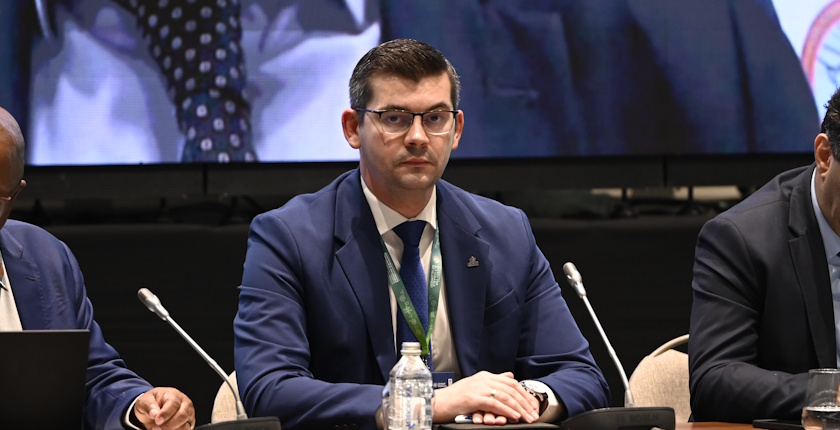
A rough estimate is that ESM would have to invest around EUR 3 billion in the next 15 years to replace its power production from lignite, which is baseload energy, Ivan Stojanovski, a member of the Board of Directors and the company’s Chief Financial Officer, told Balkan Green Energy News on the sidelines of the International Forum on Energy for Sustainable Development (IFESD-14).

He explained that the transition to green energy is quite expensive. ESM needs to replace the 840 MW in baseload production that the Bitola and Oslomej thermal power plants provide, the executive added.

Hydropower is a domestic electricity source, unlike natural gas

The company opted for investments in diverse energy sources to achieve it, Stojanovski stressed.

Gas power plants provide baseload energy, but at the same time, they turn the spotlight on national security as well as the security of supply, in his words.

Lignite is currently mined in North Macedonia while natural gas must be imported, so gas supply interruption is possible, ESM’s CFO added.

Gas power plants are required, but it is necessary to invest in hydropower as it is a domestic resource, Stojanovski said. On the other hand, hydroelectric plants are more expensive and it takes longer to build them, he noted.

ESM launched the Bitola 3 solar power project

ESM is developing wind and solar power projects as well. Stojanovski highlighted the planned expansion of its Bogdanci wind farm. The European Bank for Reconstruction and Development (EBRD) is participating in the development of the Miravci wind power project, of at least 100 MW, he recalled.

The company is working on solar power projects Oslomej 1 (10 MW), Oslomej 2 (10 MW), Bitola 1 (20 MW) and Bitola 2 (60 MW), Stojanovski asserted. Bitola 3 endeavor is underway, too, and the financing contract is expected to be signed by the end of the year, he revealed.

The photovoltaic system will have at least 100 MW, Stojanovski asserted.

“We plan to sign a contract next year with Agence Française de Développement (AFD) for a solar power plant in Bogdanci of at least 30 MW and to create a hybrid energy park there – wind, solar, and a battery,” he stated.

According to Stojanovski, the company is developing a battery energy storage project with the EBRD, for up to 300 MWh in capacity. The site is within the REK Bitola coal complex and the facility will be a systemic solution for all the solar power plants there, he explained.

Blended financing as a solution

“EUR 1 billion to EUR 1.3 billion is needed just for solar, wind and batteries. We will need between EUR 500 million and EUR 700 million for gas power plants. Another EUR 1 billion to EUR 1.3 billion would be for large hydropower plants such as Čebren and Vardar Valley, and some smaller projects,” Stojanovski explained.

Asked how the company plans to secure financing, he pointed to blended financing – own sources combined with some participation from international financial institutions. It is important to diversify the sources by opening cooperation with as many financial institutions as possible, in Stojanovski’s view.

ESM traditionally cooperates with the EBRD and KfW. Stojanovski announced that the company would diversify financing by launching cooperation with the World Bank, Italy’s development bank Cassa Depositi e Prestiti, and AFD.

“It will enable us to access more sources and complement them with financing from local banks. We also tend to obtain support from the state budget over a longer period, 10-15 years, and state guarantees, but also additional funds. This is a financial model that can secure long-term and sustainable financing of infrastructure projects,” Stojanovski said.
by in News

CE Oltenia to set up subsidiary to take over coal power plants slated for closure

Romanian state-controlled coal power utility Complexul Energetic Oltenia (CE Oltenia) is preparing to establish a subsidiary to take over its lignite-fired thermal power plants slated for closure and the coal mining operations that supply them.

CE Oltenia’s “lignite subsidiary” is envisaged under a restructuring and decarbonization plan approved by the European Commission, according to Profit.ro.

The subsidiary will incorporate and operate the existing lignite-based power generation units and related assets that are not planned to switch to natural gas or renewable energy sources, according to the European Commission’s decision from 2022 approving state aid for CE Oltenia’s restructuring.

The state aid Romania planned to grant CE Oltenia amounted to EUR 2.66 billion.

The subsidiary will operate coal-fired plants that are not planned to switch to gas or renewables

CE Oltenia’s decision to start the separation of lignite-related activities into a separate subsidiary was adopted as early as 2023, but nothing has been done since then.

Now, the company has launched a procedure to select a consultant and intends to award a contract by winter, with a deadline of about six months for the delivery of services.

The new firm is to be created before the end of CE Oltenia’s restructuring period, i.e. before the end of 2026, according to the commission’s decision. It further states that the lignite capacities in question should decrease over time and eventually be phased out, in accordance with the national coal phase-out timetable.

CE Oltenia is building 550 MW of solar power plants at former coal mines

Earlier this year, a joint venture between CE Oltenia and oil and gas company OMV Petrom signed an agreement with contractors to design and install four solar power plants at former coal mines, with a combined capacity of about 550 MW.

According to Profit.ro, Romanian Energy Minister Bogdan Ivan said last month that Romania was in talks with Brussels on a 5-year postponement of the deadline for closing lignite-fired power plants, envisaged by the country’s National Recovery and Resilience Plan.

by in News

Greek coal region of Megalopolis opens new chapter after lignite

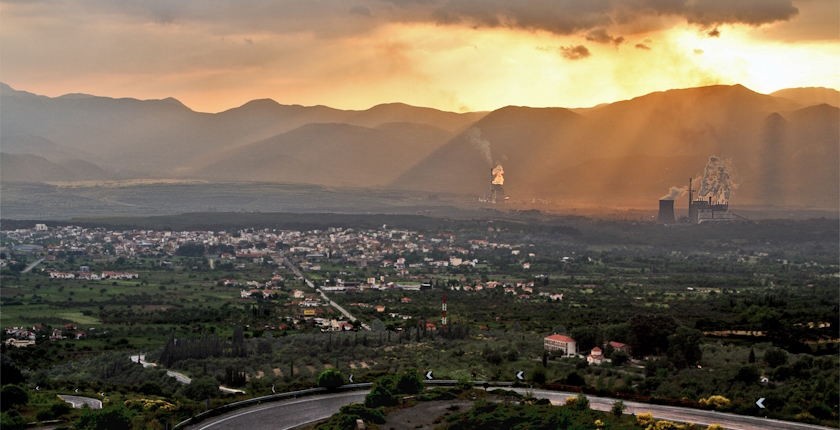
Last year, for the first time in decades, no smoke rose out of coal plants in the Peloponnese peninsula. The last two units had 500 MW together. Megalopolis is one of the two coal regions in Greece, along with Western Macedonia in the country’s north.

According to Public Power Corporation (PPC or DEI) the units Megalopolis-3 and Megalopolis-4 have now been permanently retired. Under the government-controlled utility’s plan to phase out coal completely next year, all such power plants stopped operating by now, with the exception of Ptolemaida 5, of 660 MW, which entered into operation last year. To maintain the security of supply, two units are kept in reserve, also in Western Macedonia in northern Greece.

PPC has produced a study for the reconstruction of the Megalopolis thermal power station, intending to accommodate other activities. Similar works are already underway in the local lignite mine.

New energy investments underway

The group’s investment plan involves various renewable energy and storage projects in Megalopolis to support the area’s energy transition. It is building two photovoltaic farms of 125 MW each, as part of a 490 MW cluster in the area.

The plan includes a 181 MW pumped storage hydropower station in the former lignite mine.

Based on the government’s Just Transition Development Program, Megalopolis will also host a battery factory, by Enercells, as well as two data centers, by Eunice and Kiefer, of 5 MW each. The investments have been approved by the Ministry of Economy and Finance, to seek funding from the European Union’s Just Transition Fund (JTF).

PPC expressed the belief that data centers are important for coal regions. Earlier this year, the group’s CEO George Stassis said they are ideal for such investments as the land and grid connections are already available. PPC is planning a 300 MW data center in Western Macedonia, but it hasn’t announced anything similar for Megalopolis yet.

by in News

Renewables keep top spot in Greece’s power mix despite surge in curtailments

Renewable energy sources continued to rank first in Greece’s electricity mix despite significant curtailments in the first half of 2025, which more than doubled against the same period a year earlier. At the same time, gas-fired power generation hit a 10-year high, while coal’s share in covering domestic demand fell to the lowest level in at least a decade, according to a recent analysis by the Green Tank.

In the year through June, curtailments totaled 1,327 GWh, equivalent to 9.6% of Greece’s overall renewables output, compared to 513 GWh in the same period last year and 899 GWh in the whole of 2024.

Curtailments in June 2025 reached 351.7 GWh, which means renewable energy generation could have been 12.3% higher. The level compares to only 59.5 GWh, or 2.5%, rejected in June 2024. Most curtailments in June occurred between 10 am and 3 pm, with the highest daily amount, of 32.7 GWh, recorded on June 1.

In May 2025, curtailments were 382.5 GWh, up from 127.3 GWh a year earlier, and in April they totaled 359.1 GWh, compared to 253.3 GWh in the same month of 2024. In March, the grid rejected 229 GWh of renewable electricity, up from 73.3 GWh in March 2024, while curtailments in February and January amounted to 3.4 GWh and 1.3 GWh, respectively, compared to zero in the first two months of 2024.

Renewables covered 46% of Greece’s electricity demand in H1 2025

Greece’s electricity demand in the first half of 2025 reached 27,038 GWh, with renewables covering 46%. The only equivalent period so far when the share was higher was last year. In June, electricity demand jumped 22% against May, to 5,094 GWh. The average market price remained low, at EUR 85.4 per MWh, the Green Tank noted.

Renewables ranked first in electricity generation in H1 2025, with a total of 12,435 GWh, a marginal increase from 12,354 GWh in H1 2024.

Gas-fired power generation reached 10,925 GWh in the first half of 2025 or 19.3% more than one year before, hitting a 10-year high. The rise was mostly driven by an increase in net exports and electricity demand. A drop in output in the segments of hydropower lignite and oil also contributed, together with an expansion of the gas power fleet.

Gas covered 40.4% of electricity demand in the first six months of the year, after 34.1% in the comparable period of 2024.

Coal power production fell steadily from January to June

Coal, on the other hand, covered just 5.2% of Greece’s power demand in H1 2025. It was the lowest share in at least a decade. Electricity production from lignite declined steadily in the first six months of the year, from 511 GWh in January to just 66 GWh in June.

by in News

PPC plans EUR 5.8 billion makeover of Western Macedonia coal region, including data centers

Public Power Corp. (PPC) presented a EUR 5.8 billion investment plan for the coal region of Western Macedonia in northern Greece. It held the ceremony in the retired Kardia 2 lignite-fired power plant.

According to PPC’s chairman and CEO George Stassis, the endeavor consists of the decommissioning of old assets and the rollout of new energy technologies.

Stassis: Western Macedonia can reinvent itself

PPC, or DEI in Greek, said it would return to the government 8,000 hectares of coal land that it no longer needs, after completely restoring it. All equipment, such as 400 kilometers of lignite conveyor belts, cooling towers and excavators, are planned to be recycled up to 95%.

According to the decarbonization timeframe, Ptolemaida 5 will be the last coal plant in the country, continuing to operate until the end of 2026. It is set to be converted to a gas power plant with a capacity of 350 MW. PPC is also open to upgrading it to 500 MW or even 1 GW.

New photovoltaics, storage underway

“Western Macedonia can reinvent itself using new technology,” said the CEO.

The group aims to install a total of 2.1 GW in photovoltaics across the region. A 550 MW solar power plant in the former lignite mine of Ptolemaida is almost complete. It will be the biggest in the Balkans. Separately, a group of clusters of 940 MW is under construction within the Meton joint venture with German RWE.

Energy storage is another major segment in PPC’s investment plan. Within the next three years, it aims to funnel EUR 940 million for a total capacity of 860 MW. It includes two pumped storage hydropower projects. The one in Kardia is for 320 MW and an eight-hour storage duration, and the other in the South Lignite Field – 240 MW and a 12-hour duration. The projects are worth EUR 430 million and EUR 310 million, respectively.

Equally important, battery storage units of 300 MW altogether would be installed in Amyndaio, Akrini, Meliti and Kardia in the country’s main coal region. The other one is Megalopolis in the Peloponnese.

PPC plans a 50 MW hydrogen production facility together with Motor Oil, as Hellenic Hydrogen, and a cogeneration plant to cover district heating needs from the end of 2026.

Large 300 MW data center

Last but not least, the Greek group aims to create a 300 MW data center, as part of an investment of EUR 2.3 billion. A subsidiary in fiber optic cables would upgrade the telecommunication links with Thessaloniki and Igoumenitsa to improve data flow in Greece and abroad.

If conditions are favorable, PPC would further upgrade the data center to 1 GW, increasing its investment by EUR 5.4 billion.

Greek Prime Minister Kyriakos Mitsotakis said at the event that existing infrastructure in Western Macedonia is a great advantage.