by in News

Montenegro’s landfill gas power plant entering electricity market

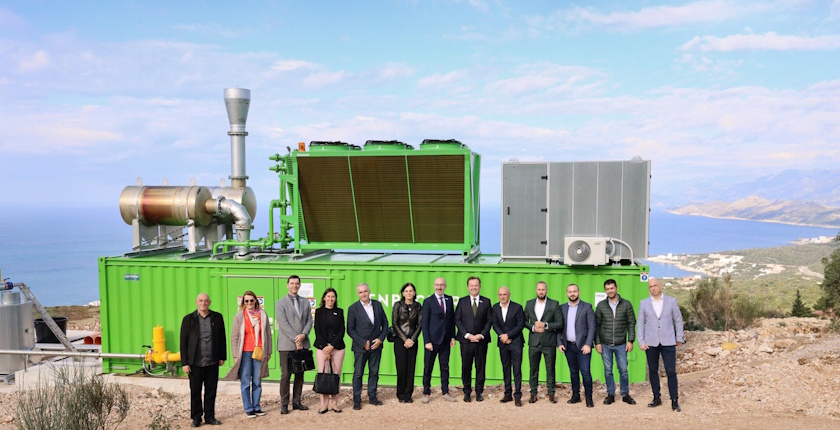
The first landfill gas power plant in the Western Balkans is in test operation, at the Možura landfill in Montenegro. The eponymous, municipally-owned operator has issued calls for maintenance and the selection of an intermediary for the sale of electricity.

The project in the Možura regional landfill for the power plant utilizing biogas from waste is worth EUR 1.8 million. Montenegro is conducting the investment in cooperation with the Centre for International Cooperation and Development (CMSR) of Slovenia. The 0.99 MW facility was built last year and put into trial operation in December. It is the first in the Western Balkans.

Municipal utility Možura has issued public calls for the maintenance of the power plant and the selection of an intermediary for the sale of electricity. The firm estimates annual output of 7.5 GWh and envisages a 95% uptime. The landfill is near the Adriatic coast in the country’s far south.

Deadline for maintenance tender expires on February 6

The maintenance tender is open until February 6. The public enterprise intends to sign a four-year framework agreement with the selected bidder. The first contract, lasting one year, is valued at EUR 149,900, with another EUR 31,479 for value-added tax. The entire allocated sum then translates to EUR 599,600 alongside EUR 125,916 in VAT.

The eligible applicant has built and commissioned at least one system for the production of electricity from landfill gas of at least 500 kW.

As for the entry into the market, the selected company will be an intermediary in the placement of the produced electricity at the organized market – the power exchange. The contract will last until the end of the year.

Every bidder must be a member of the exchange and have at least three active contracts of the same kind with renewable energy producers, according to the documentation. The conditions include a minimum income of EUR 800,000 in the previous business year. The intermediary assumes the balancing responsibility.

Bids will be received by January 26 at noon, when they will be opened, Možura said.

Slovenia covered third of expenses

The Slovenian Environmental Public Fund (Eco Fund or Eko sklad) has donated EUR 681,800 for the landfill gas power plant. The Environmental Protection Fund (Eco Fund) of Montenegro has paid EUR 50,000 for the project design and its revision.

Landfill gas is extracted from waste in so-called sanitary tubs. An earlier study showed that methane accounts for 50%. Austrian company Jenbacher supplied the equipment.

The power plant is connected to the power distribution system. Možura is the destination for municipal waste from Montenegro’s entire coastal area except for the city of Herceg Novi. Next to the landfill is an eponymous wind power plant.

Montenegrin Prime Minister Milojko Spajić said two weeks ago that Itochu from Japan was interested in the project for a municipal waste incinerator in the capital Podgorica, of up to 50 MW.

In the territory of Belgrade, the capital city of neighboring Serbia, concessionaire Beo čista energija is building a landfill gas power plant. According to the project, the facility in the Vinča complex will consist of two equal units totaling 3.2 MW in electricity capacity and 5.8 MW for thermal energy.
by in News

Slovenian company Talum to install solar power plants on waste landfills

Aluminium producer Talum plans to install solar power plants of up to 60 MW overall. The project could boost utility-scale solar in Slovenia, where small PV facilities installed by firms and households account for almost the entire operating capacity of 1.5 GW.

Currently the largest solar power plant in Slovenia has a capacity of 7.1 MW. Located near the village of Krvavi Potok, it started operating in July.

Notably, the expansion of the Prapretno photovoltaic plant is underway – from 6 MW to 9.8 MW. The largest project is for the Družmirje floating solar plant, for 140 MW.

Talum told state news agency STA it is developing a project to install large solar power plants on the area of its two closed waste landfills in Kidričevo that have valid environmental permits, public broadcaster RTV SLO reported. The endeavor is in accordance with the Law on the Introduction of Devices for the Production of Electricity from Renewable Energy Sources as well as with sustainable policies, it added.

Talum is awaiting response from the Ministry of Natural Resources and Spatial Planning

The company’s project design envisages the installation of solar power plants with a total capacity of up to 60 MW at the landfills.

The company initiated a project approval procedure in July at the Ministry of Natural Resources and Spatial Planning, including additional studies. It said it would proceed with preparing the necessary documentation and other activities for the construction, after receiving a response.

It isn’t the first solar project for Talum. In 2023, it installed solar panels of 3.78 MW altogether on five buildings. Additionally, the company hosts two battery energy storage systems (BESS) on its land. NGEN commissioned a 15 MW / 30 MWh unit in 2020, and GEN-I inaugurated a 12 MW / 24 MWh facility a month ago. NGEN has also announced it would install a 70 MW BESS on the site.

Red sludge danger

Local NGO Gibanje za Kidričevo has objected to the project in a letter to Prime Minister Robert Golob and the European Commission.

Solar power plants shouldn’t be built on such sites, according to the group.

It recalled that in 2014, the European Commission classified red mud as hazardous mining waste, following an accident in Hungary four years earlier.

Talum responded that the red mud landfill has a valid environmental permit as a non-hazardous waste landfill.

The project design for the solar power plants envisages the implementation of additional measures on the closed landfills aimed at improving the state of the environment, the company explained.

Of note, Talum used to produce aluminum, but after closing its electrolysis facility, it switched to recycled aluminum products.

by in News

City of Pirot in Serbia plans solar power plant on remediated unsanitary landfill

The City of Pirot plans to build a solar power plant on the site of a former unsanitary landfill when it is remediated. The move would strengthen its leadership position in Serbia regarding the use of renewable energy and environmental protection.

In 2013, Pirot opened a regional sanitary landfill, which cost EUR 11 million. It enabled the local authority to shut down an unsanitary landfill on the right bank of the Nišava river. However, the land still hasn’t been remediated and reclaimed.

Now the Ministry of Environmental Protection of Serbia has approved EUR 2 million for the works, Serbia’s public broadcaster RTS reported. With the completion of remediation, the possibility opens up for the six hectares of land in the country’s southeast to be repurposed.

Solar panels would be installed on three hectares

Mayor of Pirot Vladan Vasić said that the documentation for the remediation of the landfill is complete. The city intends to add EUR 500,000 to the EUR 2 million received from the government and complete the first phase. He plans for the second phase to be approved next year, to solve the decades-long issue in an environmentally acceptable way.

Vasić revealed one and a half to two hectares would be allocated for businesses, adding that the purpose of the remaining land is still under consideration.

A photovoltaic plant would be the most cost-effective solution

One idea is to install a 3 MW solar power plant that would supply electricity to the city authority, he pointed out.

Other ideas are a football stadium, a golf course, afforestation, and a park. The photovoltaic plant would be the most cost-effective solution, Vasić added.

Of note, there is a solar power plant on the roof of the building of public waste utility Regional Landfill Pirot. The 150 kW facility began operating in August last year. The city officials claim it is the largest PV plant in Pirot county.

The first cooperative solar power plants in Serbia are located on the Stara Planina mountain

Pirot is also developing a regional waste management center. In 2022, the city signed a contract for the construction of the second landfill body, a composting plant, and a biogas facility.

The additional segment would extend the operation of the sanitary landfill by 20 years, while the biogas collection system would enable the collection of methane from the landfill.

A system for treating construction waste to enable material recycling is planned as well.

As for solar energy, not far from the city, the Stara Planina mountain is the home of the first cooperative solar power plants in Serbia. The local authority participated in the project. They were put into operation last year.

In mid-2023, PV projects were under development for over 125 MW in total capacity on the city’s territory. Of note, this year Pirot became the 13th local authority to join the Clean Air Regions Initiative, initiated by the Energy Community Secretariat.

by in News

City of Osijek has highest waste separation rate in Croatia

Osijek has reached a 57.92% waste separation rate in 2024, the highest score among the four largest cities in the country.

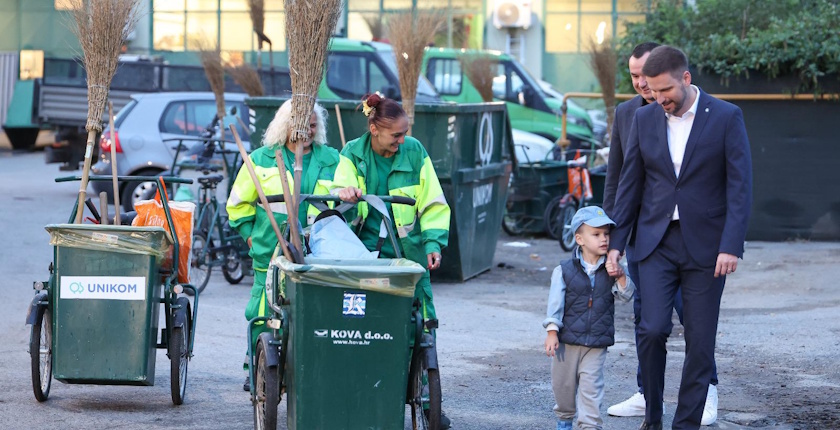
Osijek, with a share of 57.92% of separately collected waste, is again the best among large cities in Croatia, according to Mayor Ivan Radić. Because of the achievement, he visited the employees of the city’s waste utility Unikom in the early morning hours.

He stressed that the success is the result of responsible citizens who separate waste, the dedicated work of Unikom employees, and ongoing investments in infrastructure.

Osijek has four recycling yards, including a mobile one. They are able to separate 52 types of waste. There is also a composting facility. As the mayor pointed out, the local authority invests in consumer education, from kindergartens to its Eco City Waste Fest, because it aims to maintain and improve the achieved results.

Osijek is the only major Croatian city that doesn’t pay penalties for not achieving waste separation targets

Radić underlined that Osijek is the only large Croatian city that, thanks to waste separation above 50%, doesn’t pay penalties.

Municipal authorities in Croatia pay fines per ton of landfilled waste that was supposed to be separated and properly processed in line with waste management rules. The fine for 2025 was set at EUR 30 per ton. The obligatory separation rate for 2025 is 50%.

Unikom CEO Igor Pandžić highlighted that in 2024, a total of 36,000 tons of municipal waste were collected, of which nearly 21,000 tons were recyclable waste. The largest portion was biodegradable waste, thanks to the composting unit, into which the city continues to invest.

Osijek has maintained a waste separation rate above 57% for two consecutive years

Paper, plastic, glass, and metal accounted for over 9,000 tons, Pandžić said, and recalled that Osijek achieved a waste separation rate above 57% for two consecutive years.

He said more projects are underway, including the expansion of the composting facility and the establishment of a center for recycling bulky waste, which would further reduce the quantities ending up at the Lončarica Velika landfill.

In Pandžić’s words, they are important steps in terms of the circular economy. “What our fellow citizens separate, we process into a new product like compost, which then goes back into gardens and yards,” he explained.

At the meeting with the workers, the mayor and the CEO announced a 10% salary bonus as a reward for their work.

by in News

Germany supports Serbia in clean energy supply, environmental protection

The Republic of Serbia and Germany’s KfW Development Bank signed a loan agreement on July 18 for EUR 135 million for the second phase of the credit program Green Transition Development Policy Operation (DPO II).

The signatures underscore the joint activities by Germany and Serbia aimed at a climate-compliant and socially just energy transition, said Chargés d’Affaires ad interim Carsten Meyer-Wiefhausen from the Embassy of the Federal Republic of Germany in Serbia. “We will continue to be with Serbia on this path and support its reform efforts,” he stressed.

Within the financing for the reforms, the World Bank, French Development Agency (AFD) and the German KfW Development Bank are supporting the Republic of Serbia in conducting its ambitious reform agenda. The goal is to accelerate the transition to energy from clean sources and align with EU standards in environmental protection and climate.

Series of reforms through DPO II

Several successful reforms have been materialized within DPO II, among which:

  1. Promoting investments that are acceptable in environmental and climate terms: Public investments are graded under environmental criteria and with regard to the risk of natural disasters, and with models developed solely for the purpose. The citizens of Serbia benefit from the government’s more sustainable investment decisions.
  2. Enhanced transparency in the public budget: The Government of the Republic of Serbia has committed to publishing information on the execution of the public budget, not only at the end of the fiscal year, but also during the year. It improves the transparency of public expenditures, primarily concerning investments in environmental and climate protection.
  3. Affordable energy prices: The Government of the Republic of Serbia has rolled out temporary targeted subsidies for households with low income, like citizens with low pensions. The share of households receiving such aid has grown from 2.7%, registered in 2021, to last year’s 8%.
  4. Improvement in waste disposal: Aligning with EU standards brings a better approach to sanitary landfills, namely from 42% (2021) to last year’s 50%. The citizens of Serbia benefit from improved waste disposal and a cleaner environment.
  5. Prepared for CBAM: Since this year, large industrial facilities and power plants report their CO2 emissions in line with EU standards. That way Serbia is more prepared for the upcoming full implementation of the European Carbon Border Adjustment Mechanism (CBAM) for carbon prices. For instance, the country would be able to price CO2 emissions and charge them.

Financing reforms within climate partnership

Germany’s contribution to financing reforms is an integral part of Germany’s climate partnership with Serbia and the entire Western Balkans. The purpose of the partnership is to support Serbia’s work on achieving its national climate goals and adapting to climate change. The key goal of the partnerships is for the transformation that is necessary to meet climate goals, in the interest of Serbian citizens, to be socially just, a just transition.

This year, Serbia and Germany are celebrating the 25th anniversary of their development cooperation. In the meantime, KfW financed projects worth EUR 2.5 billion in Serbia.

by in News

Case of Struga illegal landfill in North Macedonia goes to Strasbourg court

The Macedonian Young Lawyers Association (MYLA or MZMP) from Skopje said the only hope for justice regarding the issue of the illegal landfill near Struga is now outside North Macedonia. Namely, judicial authorities have declared themselves incompetent for the nongovernmental organization’s 2021 lawsuit against local and state institutions. The landfill is jeopardizing a basic human right – to a healthy environment, the young lawyers pointed out.

North Macedonian environmental and civic activists have been trying to prove in court for years that the illegal landfill at the entrance of the town of Struga is poisoning people. It is the second-largest tourist center in the country, located on the shores of Lake Ohrid. Their struggle, which began in January 2021, has not yielded results.

The Macedonian Young Lawyers Association is suing the Municipality of Struga, the Public Utility Company of Struga, and the Ministry of Environment and Spatial Planning, claiming they have done nothing to solve the serious issue. They demanded that the court bans further waste dumping and that the area be cleaned and revitalized. But instead, thousands of tons of various waste are piling up at the landfill every year, polluting the environment, air, and agricultural land, thus negatively affecting the health of citizens.

Both the Basic Court in Struga and the Appellate Court in nearby Bitola declared that the courts in the country do not have the authority to rule on the issue. It is the first such lawsuit in the country.

Courts protect government even amid human rights violations

Now the landfill issue is moving to the Court of Human Rights in Strasbourg, after a failed attempt to prove that the landfill threatens a fundamental human right, to a healthy environment, but also the right to life, as the institutions did not take measures to prevent or reduce harmful consequences.

„I have an impression that Macedonian courts have a hard time getting out of this matrix, constantly protecting state and public authorities, even when we have a situation of violation of fundamental human rights and the constitutionally guaranteed right to a healthy environment,” Gligorie Kjatoski, from the civil initiative Enough is Enough, told Balkan Green Energy News. He is involved in the dispute as a lawyer.

The two courts in North Macedonia referred to the fact that there is not a single judgment yet against the government that they could apply

„If Strasbourg establishes a violation of one of the fundamental human rights, then that will be the basis for our request to repeat the procedure before the Macedonian courts,” Kjatoski said.

According to him, there are already examples when the European Court of Human Rights acknowledged its jurisdiction for similar cases.

„The practice in Strasbourg is very clear. That no one is responsible for an illegal landfill and enormous environmental pollution is not an option. During the procedure, we submitted several judgments to the European Court of Human Rights, where a violation was established in similar situations. The Appellate Court in Bitola and the court in Struga did not take into account the practice of the European Court, claiming there were no judgments against the Republic of Macedonia that could be directly applied. But I do not know how much that argument holds up,” Kjatoski added.

One 2022 judgment of Higher Court in Serbia is example of protection from illegal landfills

In neighboring Serbia, there are cases where the courts have ruled in favor of the citizens.

„The practice of the European Court of Human Rights is that resolving issues such as this one with the Struga landfill falls within the jurisdiction of regular courts. Unlike the domestic courts, which claim that civil courts do not have the jurisdiction to play a proactive role in protecting human rights in the context of protecting the environment from illegal landfills, courts in the region do rule in favor of citizens, Kjatoski stated. He pointed to a decision by the Higher Court in Belgrade in neighboring Serbia, from September 22, 2022.

Mayor of Struga Ramiz Merko from the Democratic Union for Integration, one of the parties representing the Albanian community in the country, has promised that the problem would be solved and the landfill moved to another location. The United States Department of State blacklisted him almost two years ago.

There are 54 illegal landfills in the Republic of North Macedonia

The Struga site is than 2,000 meters from Lake Ohrid, in a fertile agricultural plain. It covers an area the size of four football fields. According to estimates, more than 40,000 tons of waste are disposed of there annually.

The landfill was established in 2006, as a temporary solution. It is more than 18 meters high and about 10 meters deep.

It is located five hundred meters from the first houses in the city of Struga and the same distance from the Black Drim river. The United Nations Educational, Scientific and Cultural Organization (UNESCO) declared the area a world natural and cultural heritage.

According to data from the Ministry of Environment and Spatial Planning, there are 54 non-standard, illegal landfills in North Macedonia. The only one that meets such conditions is the Drisla near the capital Skopje.

The only solution to the problem is seen in the closure of local and construction of regional landfills, which public officials have been promising for years. But they cannot be built due to resistance from people residing around the proposed locations.

For the waste from Struga and several other settlements in the southwest and the Pelagonia area, there are plans to build a regional landfill in the small municipality of Novaci near Bitola.

by in News

Kosovo* gets EUR 12.6 million for waste management

Kosovo Landfill Management Company (KMDK) has signed a EUR 12.6 million grant agreement with Kosovo’s* Ministry of Finance, Labor and Transfers and Germany’s KfW Development Bank for waste management in Prishtina, Prizren and Gjilan.

The European Union provided the funding while the KfW would be in charge of the project implementation.

Kosovo Landfill Management Company (KMDK) CEO Dardan Velija said the project is essential for the company and Kosovo*. The activities would drastically change the condition of landfills operating without adequate permits, he added.

The sites would be transformed into sanitary ones with modern infrastructure in line with European standards and environmental regulations.

According to Minister Hekuran Murati, the project aims to improve the quality of life of citizens by securing a cleaner environment. It would provide adequate infrastructure for waste management, he noted.

Müller: It is urgent to take action in this sector

KfW’s director for Southeast Europe and Turkey Klaus Müller expressed the bank’s willingness to support the Government of Kosovo. It is urgent to take action in this sector, to overcome the problems with waste and to finish the project on time, he stressed.

The signing was attended by KfW’s director for Kosovo* and North Macedonia Moritz Remé, leader of the German Development Cooperation at the Embassy of Germany in Kosovo* Daniel Alker, and Deputy Head of Cooperation at the EU Office in Kosovo Alessandro Bianciardi.

Of note, in August last year, the EU suspended grants and investments in wastewater treatment systems in Kosovo* as part of sanctions against Prime Minister Albin Kurti and his government.

At the time, Mayor of Hani i Elezit Mehmet Ballazhi said the EU suspended a wastewater treatment project that was supposed to tackle pollution including asbestos. The town and municipality on the border with North Macedonia is also known as Elez Han and Đeneral Janković.

* This designation is without prejudice to positions onstatus and is in line with UNSCR 1244/99 and the ICJ Opinion on the Kosovo declaration of independence.