by in News

Serbia’s Vinča Institute, EDF to cooperate in nuclear energy

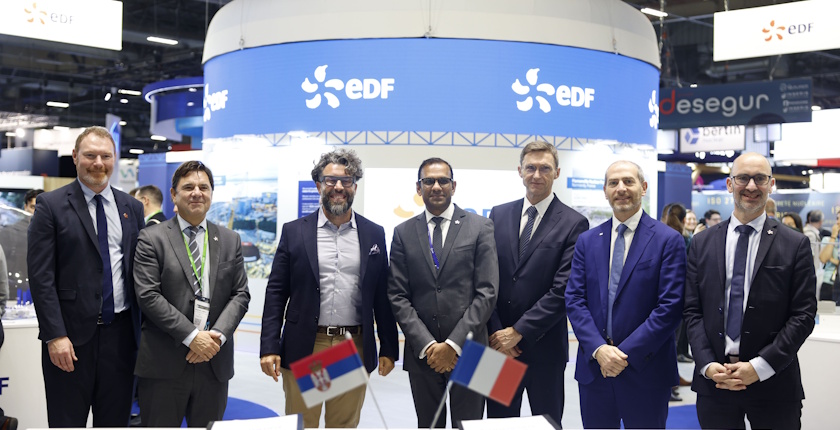
During the World Nuclear Exhibition in Paris 2025, the Vinča Institute of Nuclear Sciences signed a memorandum of cooperation with Électricité de France (EDF).

The Serbian Vinča Institute of Nuclear Sciences said its new memorandum of cooperation with French state-owned energy utility EDF establishes a framework for scientific, technological, and educational cooperation in the nuclear energy sector.

The document was signed by the Vinča Institute’s CEO Slavko Dimović and Vakisasai Ramany, EDF’s Senior Vice President for International Nuclear Development.

Four main sectors of cooperation

The deal envisages joint activities in the areas of scientific research cooperation, professional training and development of employees, international exchange, and public communication on nuclear topics, according to the institute.

The goal is to enhance knowledge, develop expertise, and promote informed public discussion about the potential role of nuclear energy in our country, the Vinča Institute revealed in a social network post.
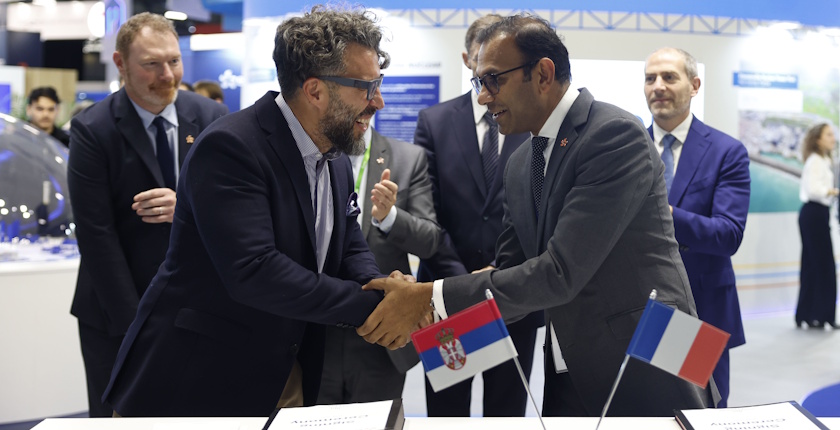
serbia edf france nuclear energy memoradnum dimovic paris
Slavko Dimović and Vakisasai Ramany (photo: Vinča)

The International Institute of Nuclear Energy I2EN, founded by EDF, will play a key role in implementing the educational programs. It will organize joint academic projects, student exchanges, and research visits.

Dimović: The memorandum is a pledge that we are going to support the growth of young scientists and engineers

The Vinča Institute’s CEO Slavko Dimović stressed that the memorandum represents a continuation of the Serbian-French friendship and an important step toward strengthening the institute’s international cooperation and the exchange of knowledge with one of the world’s leaders in the nuclear energy sector.

The Vinča Institute has long stood as a pillar of scientific and nuclear excellence in Serbia and the region, in his view. EDF brings expertise, experience, knowledge and strong commitment to innovation and the future, Dimović added.

“This memorandum is not just a document, it’s a pledge that we are going to learn from each other, to support the growth of young scientists and engineers, and to promote and help public acceptance of nuclear energy in Serbia,” he underlined.

EDF is active in the region

The Government of Serbia and EDF signed a memorandum of cooperation in April 2024. A few months later, in September, EDF and Egis Industries were awarded a contract for a preliminary technical study for considering the peaceful use of nuclear energy.

France and EDF are very active in the energy sector in the region. The company has established cooperation with the Government of Montenegro, and with the country’s power utility Elektroprivreda Crne Gore (EPCG). France and Slovenia recently signed a declaration on cooperation in the nuclear energy sector, while EDF is in the race to build the new Krško 2 nuclear power plant.

On a bilateral level, Serbia has established contacts or started cooperation in the nuclear energy sphere with China, France, Russia, Slovenia, the United States, and South Korea.
by in News

France, Slovenia sign declaration on nuclear energy

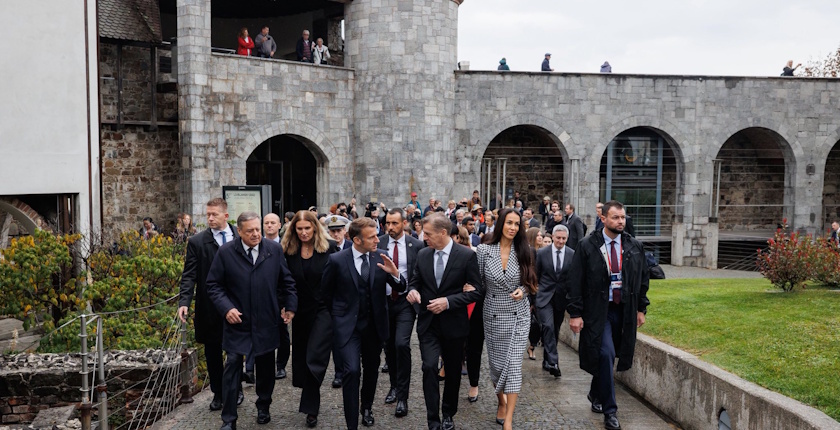
Slovenia and France have signed a declaration on cooperation in the nuclear energy sector. The document was signed during French President Emmanuel Macron’s visit to Slovenia.

Slovenia has been developing a project to build a new unit at the Krško nuclear power plant for several years. In early September, the project’s developer, GEN Energija, said that three reactor projects offered by EDF and Westinghouse had been assessed as technically feasible for the site of the future Krško 2 nuclear power plant.

According to the Slovenia Times, Macron and Slovenian Prime Minister Robert Golob committed to closer cooperation between the two countries, particularly in the economy and energy.

 Golob: France is a European nuclear power

The two countries signed an agreement on cooperation in the field of education and a declaration of intent to establish long-term cooperation in the nuclear energy sector.

According to Golob, France is a European nuclear power that is building its carbon-free future based on the development of this energy source. There is good cooperation between experts from the two countries, he recalled at a joint press conference in Slovenia’s capital, Ljubljana, stressing that the declaration opens up new opportunities.

Golob said he is convinced that between two equally qualified bidders for Krško 2, Slovenia will be able to choose the solution that best serves its long-term interests and that gives regional importance to the project.

The potential new power plant is not intended only for Slovenia

Krško 1 was built using US technology, but Golob also sees certain advantages in the French bidder, EDF. He revealed that the potential new power plant is not intended only for Slovenia, but would also enable Southeastern Europe to meet a significant portion of its electricity needs.

In October 2024, Slovenia canceled a referendum on building its second nuclear unit. However, GEN Energija continued to develop the project.

In July this year, the Ministry of Natural Resources and Spatial Planning initiated the preparation of a spatial plan for the second unit of the Krško nuclear power plant and invited the public to submit comments.

by in News

UPDATE: CEO Dejan Paravan leaving Slovenian state-owned GEN energija

CEO of Slovenian state-owned energy utility GEN energija Dejan Paravan has resigned. According to a news report, he is joining NGEN, but the company still didn’t comment on the speculation.

GEN energija, which is developing a project for Slovenia’s second nuclear power plant, is about to appoint a new CEO. After necenzurirano.si reported that Dejan Paravan, the current head of the government-controlled energy company, has quit, the supervisory board officially acknowledged that he submitted his resignation on October 10.

The news website also learned that he would assume a position at privately owned NGEN, which didn’t issue any statements yet on the matter. The same media outlet later wrote that Paravan has agreed to step down at the end of November.

Nada Drobne Popović and Bruno Glaser, the other two members of the board, allegedly offered their resignations and they were rejected.

Paravan has been a close associate of Prime Minister Robert Golob for two decades. The government appointed him as CEO in October 2022.

GEN energija holds the Slovenian half of the Krško nuclear power plant (NEK or, in Slovenian, JEK), and owns hydropower plant operators Savske elektrarne Ljubljana (SEL) and Hidroelektrarne na Spodnji Savi (HESS), and the Brestanica gas-fired power plant.

GEN-I, which was co-founded by Prime Minister Golob, is also part of GEN Group. He was the firm’s CEO until 2021.

As GEN energija’s chief, Paravan is responsible for the NEK 2 (JEK 2) project, for another nuclear power plant. The investment is valued at between EUR 9 billion and EUR 16 billion.

A referendum was scheduled about the proposal, but the National Assembly canceled the vote a year ago.

NGEN builds and operates battery energy storage systems (BESS), and develops software and hardware for running decentralized systems, cybersecurity and access to all segments of the energy market.

Of note, both Dejan Paravan and Co-Founder and CEO of NGEN Group Roman Bernard spoke at this year’s Belgrade Energy Forum (BEF 2025), organized by Balkan Green Energy News.

by in News

Slovenia denies sending offer to Croatia for joint construction of Krško 2 nuclear power plant

Slovenian authorities denied a report that they sent Croatia an offer for the joint construction of the Krško 2 nuclear power plant.

Earlier, Croatian Novi List reported that Slovenia has sent Croatia an official proposal to build a new unit in the existing nuclear power plant Krško.

The model is far less favorable for Croatia than the current management model of the Krško nuclear power plant, the media outlet noted.

However, the office of Slovenia’s Prime Minister Robert Golob, Minister of the Environment, Climate and Energy Bojan Kumer, and GEN Energija, the company in charge of the project, denied proposing such an offer.

Golob has recently informed Plenković about preparations for Krško 2

At the last bilateral meeting with Croatian Prime Minister Andrej Plenković in Vinica, Prime Minister Golob informed him about activities related to preparations for the decision on the construction of a new nuclear power plant in Krško, the prime minister’s office added.

Minister Kumer stressed that Slovenia hasn’t made any offer to Croatia. He noted that Slovenia has only just begun spatial planning for a potential new nuclear power plant.

Kumer: Slovenia must first do its homework

Slovenia first needs to do its homework and set a business model, and then it could begin talks about a joint venture, Kumer added.

According to Novi List, experts called the proposal inappropriate. The Slovenian side allegedly offered Croatia a 25% stake, compared to the current 50% in the Krško nuclear power plant.

Moreover, Croatia would only receive the profit from the sale of electricity equivalent to its ownership in the power plant, according to the article. The country now gets 50% of the electricity produced in the existing Krško nuclear power plant.

Slovenia’s state-owned power company GEN would control 25% of the project, while the Slovenian government would hold 51%, the news website learned.

​ Šušnjar: The country should build a nuclear power plant on its territory

Of note, Croatian Economy Minister Ante Šušnjar repeated last week that his country should build a nuclear power plant on its territory.

He noted that several sites were being considered, and recalled that when Croatia was part of the Socialist Federal Republic of Yugoslavia, which fell apart in the early 1990s, the authorities were examining locations in Ivanić Grad, Erdut, and Vir island.

Also, there is new speculation that the site of the Plomin coal-fired thermal power plant is a potential location for. Šušnjar confirmed that the facility is scheduled to be closed in 2032 or 2033.

by in News

Croatia considering nuclear power plant on its territory – minister

Croatia is considering the possibility of building a nuclear power plant on its territory, according to Minister of Economy Ante Šušnjar.

Experts will decide whether it will be small modular reactors (SMRs) or a conventional nuclear power plant, Ante Šušnjar stressed, as quoted by Novi List.

He opined that building a nuclear power plant is a geopolitical and security gain for a country. The minister suggested that Croatia could apply for funds from the European Union’s Multiannual Financial Framework – the seven-year budget.

Three locations were considered in former Yugoslavia

Šušnjar said multiple sites were being considered for the nuclear plant, but he wouldn’t reveal details. He recalled that when Croatia was part of the Socialist Federal Republic of Yugoslavia, which fell apart in the early 1990s, the authorities were examining locations in Ivanić Grad, Erdut, and Vir island. The last of the three was rejected due to tourism.

Croatia and Slovenia jointly operate the Krško nuclear power plant, and cooperation on building a second unit is also possible.

Meetings about cooperation have already taken place with the US

Šušnjar’s claims that everyone in the world and the EU considers nuclear energy a low-carbon source for the transition to renewables. He added it is baseload energy that can power the production of green hydrogen.

In February, the ministry established a working group for analysis and legislation that could enable the introduction of nuclear energy in the country Croatia has already held meetings with United States officials on possible cooperation in the nuclear energy sector.

Of note, just a week ago, Germany and France agreed to work together on shaping a common European energy policy that would include nuclear power as a low-carbon energy source.

by in News

Slovenia launches public consultation on spatial plan for second unit at Krško nuclear plant

The Slovenian Ministry of Natural Resources and Spatial Planning initiated the development of a spatial plan on the country level for the second unit of nuclear power plant Krško. It invited the public to submit comments and suggestions.

The initiative was announced at a press conference last week by representatives of GEN energija, the state-owned company developing the Krško 2 (NEK 2) project. The document has now been made public and will remain available for comments until the end of September.

The initiative will be available for comments until the end of September

To keep the public informed, GEN energija will open information offices in several locations across Slovenia – Krško, Ljubljana, Maribor, and Nova Gorica.

At the press conference, State Secretary at the Ministry of the Environment, Climate and Energy Tina Sršen described the document as a “milestone,” adding that the project was now moving into broader social and professional coordination.

Final decision on capacity and technology expected in 2028

GEN energija’s chief operating officer, Bruno Glaser, said the capacity of the proposed second unit and the technology to be used have yet to be determined, but that the initiative envisages a capacity of 1,000 MW to 1,650 MW.

He also said that the final investment decision should be made in 2028, along with decisions on the reactor’s capacity and the supplier.

Croatia is willing to participate in the Krško 2 project

Another issue to be resolved before a final investment decision is made is the possible participation of other investors. Croatia has repeatedly expressed its interest in taking part in the project, recalled Gen Energija CEO Dejan Paravan, noting that Croatia’s state-owned power utility Hrvatska Elektroprivreda (HEP) co-owns the existing power plant in Krško.

Slovenian Prime Minister Robert Golob and his Croatian counterpart, Andrej Plenkovič, discussed the topic at a recent meeting, according to Paravan.

by in News

Krško 2 nuclear project not profitable for private investors but state could find motive – study

Slovenian non-governmental organization Mladi za Podnebno Pravičnost (Youth for Climate Justice) has conducted what it claims to be the first independent economic study on the construction of a second unit of the Krško nuclear power plant.

The economic study on the Krško 2 project (JEK2) showed that the project would not be profitable for a private investor but could be viable for the Government of Slovenia. The authors recommended that, before making a final decision, studies should be produced under two nationwide scenarios: 100% renewable energy or a combination of renewable energy and Krško 2.

Youth for Climate Justice said the largest project in Slovenia’s history requires at least one independent, detailed economic study. It needs to set aside both the potential investors’ aspirations and the opposition to the construction of the second nuclear power plant, the NGO stressed.

The referendum fiasco opened the way for a different approach to the project, but politicians demonstrated no interest, so the organization took the initiative. The study and proposal for a comprehensive project management framework took over a year.

The organization presented four main findings from the study.

The state can go through with the project if it doesn’t count on a profit margin

First, the project is not economically viable for a private company, the authors said and added such a scenario is therefore unlikely. Under a common economic logic, the state would also decide against the endeavor as it wouldn’t be able to achieve the desired return on investment.

However, due to the project’s strategic importance, the state could opt for a version without a profit margin and define the price of electricity generated in Krško 2 at a breakeven level, the study reads.

In that case, there is a chance the project could be profitable after all, as such a price would still be a bit lower than the one that the operator would achieve in the market.

The state could also secure other benefits such as low-carbon, stable energy with minimal impact on biodiversity, the organization noted.

Two important recommendations

The study’s authors suggested establishing a new management framework, giving the project a chance of success and to avoid repeating the issues seen with the TEŠ 6 project, for the sixth unit of the Šoštanj coal-fired power plant.

Of note, there was much controversy over the decision to build it. TEŠ 6 began operating in 2016, but now it is facing closure. The construction cost exceeded the budget, raising suspicions of corruption.

There are two scenarios for the development of Slovenia’s power system

Finally, the NGO recommended reviewing two scenarios for the development of Slovenia’s power system before making a final decision: 100% renewable energy and renewable energy combined with Krško 2.

“Based on that, we will know whether it makes sense for the state to waive financial gains and build JEK 2 or if there are better alternatives for the development of the system,” Youth for Climate Justice underlined.

The study has been presented to the public, but stakeholders will have another opportunity to discuss it on Wednesday, June 18, in Ljubljana.

by in News

Decarbonization of Southeastern European region: both renewables and nuclear are speeding up

Energy transition in Southeastern Europe is accelerating, and the progress depends on individual countries’ strategies and legal frameworks. At the Belgrade Energy Forum (BEF 2025), representatives of state-owned power utilities and private producers discussed the different approaches to decarbonization. The domination of investments in renewable energy is unquestionable, but there are also ambitions to develop nuclear capacities, spearheaded by Slovenia. The country is already operating one nuclear reactor and is developing a project for another one.

The electricity sector in Southeast Europe still depends for a large part on thermal power plants that burn fossil fuels. In 2023, they accounted for 43% of overall output, of which two-thirds were from lignite and the rest from gas. There is a need for accelerated decarbonization, and the speed of the transition will depend on financial possibilities and the political will and decisions, said the panel’s moderator and Director of Zagreb-based Energy Institute Hrvoje Požar Dražen Jakšić.

The acceleration trend in decarbonization is also evident in the electricity market projections for the region until 2030. The plans for the period until the end of the decade include shutting down 6.2 GW of thermal power plant capacity and installing 42.3 GW from renewable sources. Greece, Romania, Serbia and Bulgaria are expected to add the most.

Top executives of state-owned utilities in Serbia, Slovenia and Montenegro and independent power producers that invest in renewables in the region gathered at a panel called Decarbonisation strategies for power generation in Southeast Europe 2040/2050 at Belgrade Energy Forum 2025.

They agreed that decarbonization is well underway and an unstoppable process already speeding up significantly. The participants in the discussion presented the different strategies their companies will act upon in the following years and decades, leading the process to fulfilment.

Among the messages that they shared is that they expect each government to promote investments and make the legal framework clear and certain, while the countries strengthen their ties and exchange experiences. Green energy is the pillar of the energy transition and decarbonization in the region, but several states are also interested in building their first nuclear power plants—conventional ones or small modular reactors (SMRs)—or expanding the existing capacity.

EPS’s Živković: Decarbonization requires energy storage, nuclear plants

Chief Executive Officer of Serbia’s Elektroprivreda Srbije (EPS) Dušan Živković pointed out that the state-controlled electricity producer is committed to its goals regarding green energy and emission reductions as well as to the country’s targets. “We will work on that, of course, believing in these objectives, but without compromising energy security and the energy sovereignty of Serbia. It was proven to be the only sustainable path,” he asserted.

The company particularly counts on the project for solar power plants with a total connection capacity of 1 GW, with batteries of 200 MW in combined capability. The investment is conducted through a strategic partnership with Hyundai Engineering and UGT Renewables (UGTR).

A study is underway in Serbia on the potential for the construction of large nuclear power plants and small modular reactors

The decarbonization process won’t be easily feasible without serious energy storage capacity, Živković warned and added that nuclear energy wouldn’t be unrealistic. A study is underway on the possibilities of building large nuclear plants and small modular reactors in Serbia.

The head of EPS expressed the belief that “the quality of that energy needs to be visualized” for citizens of every country and that they should be explained that it is necessary to provide energy for the economy and its security.

CEOs Dejan Paravan of GEN energija, Dušan Živković of EPS and Eric Scotto of Akuo

No dilemma in Serbia about energy transition

Country Manager of WV-International in Serbia Neda Lazendić highlighted the said strategic partnership for solar power plants with battery energy storage systems (BESS), saying Hyundai Engineering is a world-renowned company.

In her view, the endeavor will be a milestone for the entire region and it is exceptionally important for gaining experience at the domestic level.

The recent second round of auctions for electricity from renewable sources showed that Serbia opted for the energy transition “and there is not any dilemma about it anymore,” Lazendić stressed and said the country is an example for the region. The prices from the bidding that were accepted are appealing and they match European trends, she noted.

Country Manager of WV-International Neda Lazendić

Lignite is highly unprofitable

Slovenia and GEN energija, one of the state-owned power utilities, are relying on both renewable sources and nuclear energy in their decarbonization investments, the company’s CEO Dejan Paravan pointed out.

“We want to get rid of coal as soon as possible. And in the short term, renewables are the only option. Why get rid of coal? The current production of domestic lignite is highly unprofitable, and because of climate goals,” he explained.

Nevertheless, it is exceptionally complicated to get permits for renewables and place them in the environment, Paravan added. On the other hand, nuclear energy is emissions-free and very stable and reliable, he asserted. The technology takes up the least space and enables the production of huge amounts of electricity, the head of GEN energija said.

Nuclear power plant Krško 2 could come online in 2040

Paravan recalled that two years ago nuclear power plant Krško marked four decades since it was commissioned and that its operating life was extended by 20 years. GEN energija is working on the Krško 2 project. The chief executive expects construction to begin in 2022 or 2023 and that the reactor could be connected to the grid in 2040.

In parallel, the company is studying SMRs. Still, the development of the technology will take a long time and, importantly, such facilities won’t have the advantage of scale like large reactors, he said. One who expects electricity from SMRs to be cheaper than from big nuclear plants is wrong, in Paravan’s view.

As for the dilemma between renewable sources and nuclear energy, he expressed the belief that they are not mutually exclusive. “We need renewables and they can provide us a lot of CO2-free electricity in the short run. But let’s make it clear that once we come to 70%, 80%, 90% based on renewables, that we have a problem of seasonal storage, that things will get very difficult,” Paravan stated.

Batteries are ten times cheaper than ten years ago

Conversely, Akuo Energy’s CEO Eric Scotto pointed out that nuclear power is expensive. “It’s over. We won the race. Renewable is the cheapest way to produce energy,” he underscored.

The price of energy storage capacity is ten times lower than ten years ago, the head of the French company noted. Moreover, operating power of a battery system in a standard TEU container, twenty feet or 6.1 meters long, now reaches 6 MW, which is three times more than three years ago, according to Scotto.

To attract investments, stability is necessary, he stressed. Scotto went on to highlight some “simple things” that could help Akuo, which was one of the winners at the last auction round in Serbia, to materialize its projects for two wind parks. He mentioned the speed of permitting for telecommunication systems and road construction, for power plants.

Turning to the slowness of the energy transition in Balkan countries, he emphasized its positive side. “We are late. Then we will benefit from the cheapest resource, the cheapest way to produce energy,” Scotto concluded.

EPCG’s Solari project kicked off energy transition in Montenegro

Technical Director of Elektroprivreda Crne Gore (EPCG) Ljubiša Đurković called the state-owned power utility’s projects Solari 3000+ and Solari 500+ the start of the energy transition in Montenegro. Since the beginning of 2023 and including Solari 5000+, launched later, the company set up photovoltaic systems on 7,380 structures, he revealed.

Total peak capacity reached 76 MW and another 125 MW will be installed by the end of the year, EPCG’s official said.

Among its projects, the company is building the Gvozd wind farm, and the Kapino polje solar park near Nikšić.

Technical Director of EPCG Ljubiša Đurković

There is already 10 MW on roofs in the former Željezara steel plant in Nikšić, and before the end of the year another 15.5 MW will be connected to the grid, Đurković said. A contract has been signed for the construction of the eighth generator in the Perućica hydropower plant, of 58 MW. It is scheduled for completion in 2027.

Đurković: A realistic date for the closure of the Pljevlja thermal power plant is between 2045 and 2050

The energy transition is about a single and connected system, including storage capacities and measures to improve energy efficiency, he underscored. “You have to create the conditions for a swift integration of renewable energy sources into the distribution and transmission networks. We were supposed to do that already. We didn’t do it, particularly in the Western Balkans. We didn’t reconstruct the distribution and transmission networks,” he stated.

As for the current reconstruction of the coal-fired Pljevlja thermal power plant, the only one in Montenegro, Đurković said the project wouldn’t make sense if the facility were to keep operating only for a short while longer.

žAccording to the National Energy and Climate Plan (NECP), which is almost complete, it will remain active at least until 2041, although the realistic date for its closure is only between 2045 and 2050, in the opinion of EPCG’s technical director. The main phase of the reconstruction began at the end of March.

by in News

Croatia discusses installation of small modular reactors with US

Croatian and United States officials have discussed the possibilities for energy cooperation to diversify the energy supply in Central and Southeastern Europe. Croatia has expressed particular interest in joint work in the nuclear energy sector.

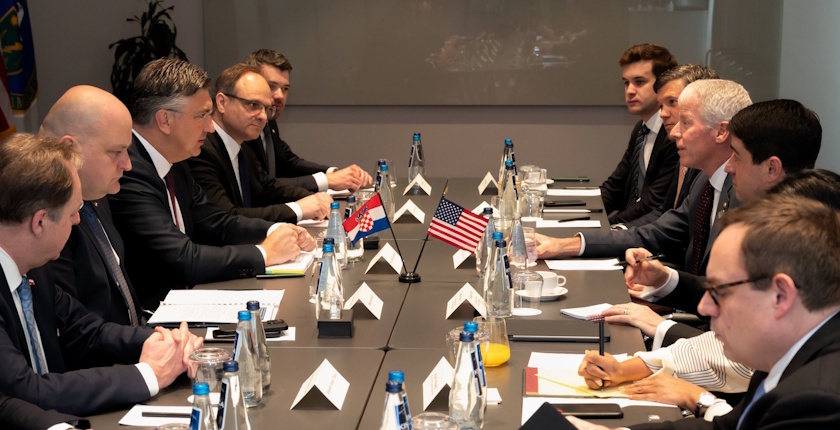
On the sidelines of the 10th summit meeting of the Three Seas Initiative, held in Warsaw, Croatian Prime Minister Andrej Plenković met with United States Secretary of Energy Chris Wright. Minister of Economy Ante Šušnjar attended the discussion as well and separately sat with a delegation from the Nuclear Energy Institute, based in Washington.

Of note, at the same event, Wright invited Central European countries to abandon the European Union’s energy and climate policy and join his country on “team energy freedom.”

Talks between the two delegations covered various topics, including the expansion of the liquefied natural gas (LNG) terminal on the island of Krk, development of gas infrastructure toward Hungary and Slovenia, and strengthening the security of energy supply in Central and Southeastern Europe.

The two sides have discussed the enhancement of energy independence for Croatia and Southeastern Europe

According to Croatia’s Ministry of Economy, representatives of the two countries exchanged views on further opportunities for US involvement in projects focused on diversifying energy sources and strengthening the region’s energy resilience.

Croatian officials highlighted the importance of ongoing cooperation with the US, particularly regarding the diversification of energy supply and the enhancement of energy independence for Croatia and Southeastern Europe, the ministry underlined.

Maria Korsnick and Ante Šušnjar (photo: Government of Croatia)

Minister Šušnjar and Maria Korsnick, CEO of the Nuclear Energy Institute, discussed potential cooperation in the development of nuclear energy, particularly the application of small modular reactor (SMR) technology.

Šušnjar: SMRs is an alternative to existing fossil fuel sources

Šušnjar noted that nuclear energy is increasingly vital for achieving decarbonization and ensuring a stable electricity supply. Croatia has established a workgroup to analyze the potential use of nuclear energy including SMRs as an alternative to existing fossil fuel sources, he added.

“We are interested in partnering with companies that offer advanced, safe, and cost-effective solutions. The Nuclear Energy Institute is a key partner in that process,” Šušnjar said.

Croatia has been expressing interest for the past several years in the Krško 2 nuclear power project in neighbouring Slovenia.

However, Minister Šušnjar recently said his country would focus on developing its own nuclear power capabilities including SMRs.

by in News

Belgrade Energy Forum 2025 – 50 speakers at eight panels to track pace of SEE energy transition

The agenda of the third Belgrade Energy Forum, taking place on May 14-15, has been finalized with the addition of further prominent energy experts and companies. The conference, organized by Southeast Europe’s leading energy news portal, Balkan Green Energy News, will feature eight panels covering key topics in the energy sector, with an impressive lineup of speakers. Make sure you register on time via this link.

The Belgrade Energy Forum will once again be a meeting place for representatives of regional and international institutions and organizations, as well as the business community from across the region, Europe, and the world.

Eight panels featuring more than 50 speakers will offer an overview of the current challenges in the energy sector. Conference participants will hear in-depth analyses of the current situation, but also projections for the future. The thread that connects everything at this year’s BEF is digitalization – it permeates energy production, consumption, and storage and allows enough flexibility for the stable functioning of the energy systems of the future, where renewable energy will dominate.

Chikán: Electricity knows no borders

One of the key speakers at the conference, Alteo Group CEO Chikán Attila, will lead the company’s high-level delegation. Alteo has recently launched a regional expansion drive, aiming to establish a green platform of up to 2 GW in energy production, including operation, software, maintenance, storage, and waste management.

The Hungarian company primarily targets its home market, Slovakia, Croatia, and Serbia.

“Electricity knows no borders, therefore partnerships and collaborations among energy market players are essential, even at the regional level. Such cooperation is vital to ensuring the security and reliability of electricity supply, facilitating the integration of renewable energy sources, and providing essential digital solutions, supported by expertise and professional know-how,” Chikán stressed.

Decarbonization strategies for power generation in Southeast Europe 2040/2050

  • Dejan Paravan, CEO, GEN Energija
  • Dušan Živković, CEO, EPS
  • Eric Scotto, CEO, AKUO
  • Milutin Đukanović, Chairman, EPCG Board of Directors
  • Neda Lazendić, Country Manager, WV-International

Although at the heart of national energy systems, state-owned power utilities are faced with an environment that has changed and continues to change rapidly. The key shift is the entry of private capital into electricity production through the construction of solar power plants and wind farms.

The energy transition, at this stage, requires cooperation between state power utilities and private companies. With decarbonization as the main objective, the key challenge lies in choosing appropriate strategies and electricity generation technologies.

Moderating the panel will be Dražen Jakšić, Director of the Energy Institute Hrvoje Požar (EIHP).

“The transition to a low-carbon energy system is a key challenge for our region, demanding innovation, investment, and cooperation. As a sponsor of the Belgrade Energy Forum, EIHP is committed to fostering dialogue and driving sustainable energy solutions. I look forward to an insightful discussion,” he stressed.

Jakšić: The transition to a low-carbon energy system is a key challenge for our region, demanding innovation, investment, and cooperation

In recent years, nuclear energy has emerged as a possible alternative. There is hardly a better interlocutor on this topic in the region than Dejan Paravan, the top man of GEN Energija, the Slovenian company developing the Krško 2 nuclear power plant project.

Dušan Živković, CEO of Elektroprivreda Srbije (EPS), will tell us about the Serbian power utility’s plans when it comes to nuclear energy.

Živković: Without decarbonization, the region’s energy sector has no future

“Without decarbonization, there is no future for the region’s energy sector, and that is the biggest challenge ahead of us. It is essential to accelerate decisions and ensure sustainable project financing mechanisms that will provide energy security for every country and power utility in the decades to come. By investing in existing capacities and new renewable energy projects, EPS, as the biggest utility in the region, will make its own contribution to energy security. That’s why we have initiated a transformation process – because we need to be more profitable, more efficient, and fully prepared to tackle any challenge,” Živković pointed out.

The energy transition, in his words, is the path EPS has chosen, and all its plans will align with that goal, based on the belief that the diversification of energy sources and new technologies are essential for achieving it. “These are just some of the key messages I will share with the participants of this year’s BEF,” said Živković.

Eric Scotto, co-founder and CEO of French company Akuo, will share the latest information on the energy transition from across the globe.

The company’s portfolio consists of 1.9 GW of power plants in operation and under construction, with a further 12 GW in the pipeline in more than 20 countries around the world, including a number of countries in the Southeast Europe region.

Integration of Western Balkans electricity markets into internal European market through market coupling

  • Anže Predovnik, Director, ADEX Group
  • Ivan Asanović, Executive Director, CGES
  • Marko Bislimoski, President, Energy, Water Services and Municipal Waste Management Services Regulatory Commission of the Republic of North Macedonia
  • Zoran Vujasinović, Policy Officer, ACER

The integration of the Western Balkans’ electricity markets with the European Union (EU) markets is a process that deserves much greater public attention than it currently receives. It is safe to say that its true importance will become evident only once it is completed.

Full integration will unlock significant synergies, maximizing the benefits of a unified market by enhancing supply security, accelerating the integration of renewable energy sources, and fostering greater competition and transparency.

Moderator Dejan Stojčevski, CTO of the SEEPEX power exchange, says the panel seeks to encourage dialogue on the importance of cross-border collaboration and market efficiency in bolstering energy security and sustainability in the region.

Bislimoski: The time for inspiring speeches is over. Geopolitical developments demand action – now!

Since market integration is largely the job of regulators, the challenges they face will be analyzed by Marko Bislimoski, president of North Macedonia’s Energy and Water Services Regulatory Commission (RKE).

He says that three things are essential for the regional integration of electricity markets into a single European market: investment, investment, and nothing but investment. In his words, the energy crisis demonstrated that limitations become a reality when governments fail to prioritize the implementation of key energy infrastructure capacities in their budgets.

“This past winter, the region faced the highest electricity prices compared to the rest of Europe. Why? Because the implementation of energy investments is not just a ribbon-cutting ceremony. Today, more than ever before, the countries of the former Yugoslavia must demonstrate maturity. These are the years when energy independence will be built through action. The time for inspiring speeches is over. Geopolitical developments demand action – now!” he stressed.

Energy revolution underway – uniting efforts to deliver green, intelligent and sustainable energy solutions

  • Aleš Prešern, VP, Head of Southeast Europe, Siemens Energy
  • Maja Turković, SVP, CWP Europe
  • Ann-Catherine de Tourtier, Managing Director Mediterranean, Nordex Group

As much as contesting the energy transition may be futile, there are still those who find such a view meaningful, especially in light of certain global political developments. That’s why it is important to give the floor to some of the transition leaders and let them testify that an energy revolution is indeed underway in the region.

The panel’s moderator Mirza Kušljugić – professor, energy expert, and one of the founders of Bosnia and Herzegovina’s Centre for Sustainable Energy Transition Centre (RESET) – goes one step further to show that change is not only happening but also accelerating.

“The key words are a new energy paradigm driven by the four Ds – decarbonization, digitalization, decentralization, and democratization. But now we also have another D: disruption, or radical change in the industry and market caused by technological innovation. Of course, we must focus the discussion – from global processes (China, the US, the EU, the Global South) to where the region stands in all of this,” Kušljugić points out, providing a perfect introduction to the panel.

Turković: It’s more important than ever to have open discussions about real solutions

Aleš Prešern, Vice President and Head of Southeast Europe at Siemens Energy, has worked in the energy sector for more than 20 years. He recalls that digitalization is key, along with grid resilience and electricity transmission.

With nearly 100,000 employees in more than 90 countries, Siemens Energy develops the energy systems of the future, ensuring that the growing energy demand of the global community is met reliably and sustainably. The technologies created in the company’s research departments and factories drive the energy transition and provide the base for one sixth of the world’s electricity generation.

As a leader in renewable energy development, CWP is actively working on several large-scale projects across the SEE region with a total capacity exceeding 7 GW, positioning the company at the forefront of the region’s energy transition. Given its global expertise and insights into the regional energy market, CWP’s contribution to this year’s conference will be invaluable.

Maja Turković, Executive Vice President of CWP Europe, says that BEF 2025 is a key gathering of leading experts driving the energy transition in Southeast Europe.

“As this shift gains momentum, it’s more important than ever to have open, action-driven discussions about real solutions to the challenges and opportunities ahead,” says Turković.

PPAs as a key to renewable energy growth in SEE

  • Nikola Gazdov, Chairman, Association for production, storage and trading of electricity – APSTE
  • Natalija Ljubić, Manager PPA & BESS Transactions, Pexapark
  • Ivana Đurović, Category Manager Renewable Energy, Knauf Group

Power Purchase Agreements (PPAs) are, like flexibility, a tool for fixing the imperfections of renewable energy sources, and they are recognized as a key mechanism within the new electricity market design. They ensure price stability, attract new investment, and accelerate the decarbonization of industry.

Is the region ready for PPAs? What are the dominant models? What is the current market practice? How are PPAs viewed by financial institutions? What do they offer to end consumers and what to investors in new power plants? Answers to these questions will be sought at the panel moderated by Mislav Slade-Šilović, Energy, Utilities & Resources Consulting Leader for Southeast Europe and member of the core PPA team at consultancy PwC.

Experience with PPAs for more than 500 GWh of electricity

Slade-Šilović’s experience in concluding PPAs for the production and consumption of over 500 GWh of electricity per year in the SEE region will certainly be of help.

Nikola Gazdov, Chairman of Bulgaria’s association for electricity production, storage, and trading (APSTE) and member of the Board of Directors of the European solar industry association SolarPower Europe, has no shortage of experience either. As CEO of three companies – Enery Element GmbH, Element Power Group, and Renergy – he is involved in the development of a large number of projects.

Pexapark, a company that provides logistics to businesses in the renewable energy market, is synonymous with PPAs in Europe. Natalija Ljubić is the Manager for PPA and BESS Transactions at Pexapark, which has helped conclude contracts for facilities with a combined capacity exceeding 35 GW.

The views of electricity buyers – without whom there would be no PPAs – will be conveyed by Ivana Đurović, Category Manager for Renewable Energy at Knauf Group.

Market flexibility: the backbone of a resilient energy system

  • Roman Bernard, CEO, NGEN
  • Luka Renko, COO, KOER
  • Alteo Group representative
  • Nikolaj Candellari, Project Manager and Market Intelligence, CyberGrid
  • Marko Zarić, EMS

Moderating the panel will be Elena Boškov Kovač, co-founder and CEO of Blueprint Energy Solutions, and a leading voice on market flexibility in Europe.

She will host representatives of the sector’s leading companies: NGEN, Alteo, KOER, CyberGrid, as well as Serbia’s transmission system operator Elektromreža Srbije (EMS).

“Excited to moderate a high-impact panel on ‘Market Flexibility: The Backbone of a Resilient Energy System’ at the Belgrade Energy Forum 2025,” says Boškov Kovač, whose work has shaped smart grid strategies and digitalization innovation agendas across the EU and under ETIP SNET.

As Europe accelerates its shift to renewables, market flexibility is emerging as the cornerstone of reliable, affordable, and decarbonized energy systems. With the European flexibility market promising to unlock over EUR 20 billion in savings, this session will explore how digital tools, flexible assets, and new market designs are unlocking value and resilience across the grid.

Slovenia’s NGEN is the technology sponsor of BEF 2025

Slovenian energy company NGEN, the technology sponsor of the conference, has managed to establish itself as a significant player in European markets in just five years of operation and is now ready to enter the Western Balkans’ markets.

Specializing in premium battery storage systems and smart energy solutions, the company is developing systems with a total capacity of 1.6 GWh in European countries. Its founder, Roman Bernard, will be speaking at the panel.

Also taking part in the panel will be Luka Renko, COO of KOER, a pioneer in virtual power plants in the region.

Rounding off the lineup of exceptional panelists will be Nikolaj Candellari, who is responsible for project management at CyberGrid. The software company was acquired a few years ago by Austria’s EVN, one of the first to demonstrate that greater integration of renewable energy sources, battery storage, and prosumers is not possible without digitalization and software solutions.

In a nutshell, this innovative company stands for the digitalization of the energy sector, with a focus on virtual power plants.