by in News

Hydrological Deficit: Albania’s KESH Sees 2025 Production Plummet 22% Below Historical Average

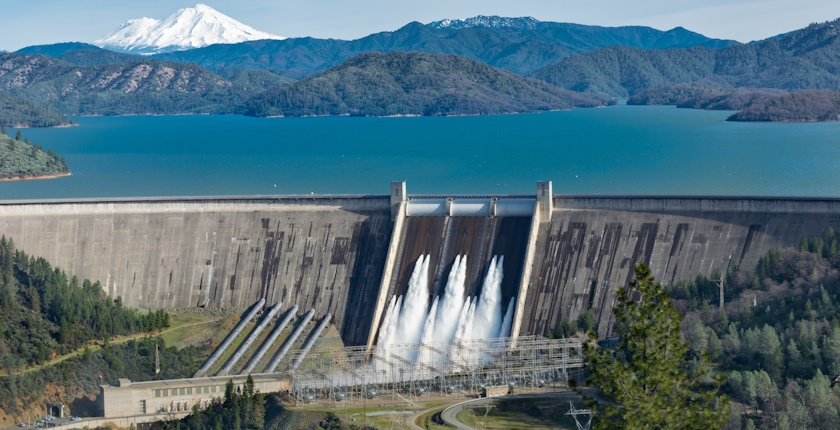
Albania’s state-owned power utility, the Albanian Power Corporation (KESH), is grappling with a significant production shortfall as 2025 emerges as one of the driest years in recent history. According to official data, electricity generation from the Drin River Cascade fell 22% below the historical average, forcing the country to rely heavily on costly imports to meet domestic demand.

Climate Volatility Tests Energy Resilience

The Drin River Cascade comprising the Fierza, Koman, and Vau i Dejës hydropower plants serves as the backbone of Albania’s energy system. However, its total reliance on hydrology remains a structural vulnerability.

The 22% drop against the multi-year average underscores the increasing impact of climate variability on the Balkan energy landscape. While the historical average production serves as the benchmark for national energy planning, the lack of significant precipitation throughout 2025 has depleted reservoir levels, leaving the state utility with limited maneuverability.

Market Exposure and Economic Implications

The production deficit has immediate financial consequences. To ensure an uninterrupted supply for regulated consumers, Albania has been forced to turn to the international open market. This shift exposes the state budget to price volatility, as KESH must purchase electricity at market rates while selling it to domestic distributors at fixed, regulated prices.

Energy experts note that such “dry years” highlight the urgent need for Albania to diversify its energy portfolio. While solar and wind projects are currently in the pipeline, the current 2025 figures serve as a stark reminder that the country remains at the mercy of the weather.

Operational Strategy

In response to the low inflows, KESH has implemented a conservation strategy for the Fierza reservoir the country’s primary energy reserve to maintain technical safety levels and ensure a baseline of stability for the winter peak. However, without a significant shift in meteorological conditions, the deficit is expected to weigh heavily on the sector’s year end financial performance.

This 22% contraction is more than just a statistical dip, it is a call for accelerated investment in storage and alternative renewables. For a country that prides itself on “green” energy through hydro, the 2025 data proves that “green” is not always synonymous with “reliable” in an era of climate extremes. The government’s ability to manage this deficit without passing costs onto the end consumer will be the defining fiscal challenge for the energy sector this year.

by in News

KESH partners with France’s EDF and AFD to develop Albania’s Energy Storage Roadmap

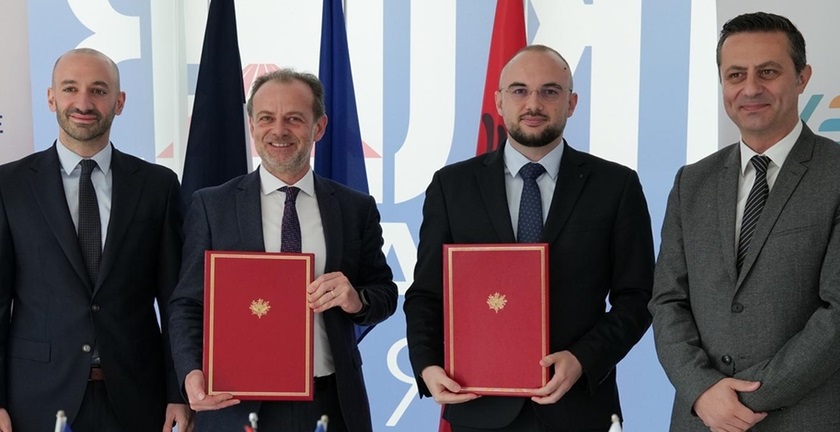
Tirana — In a decisive move toward modernizing its national grid, the Albanian state-owned power utility, KESH (Albanian Electric Power Corp), has finalized a strategic partnership with Électricité de France (EDF) and the French Development Agency (AFD). The collaboration focuses on the development of a comprehensive energy storage strategy, underpinned by a €400,000 grant earmarked by the AFD.

This initiative arrives at a critical juncture for Albania. While the country boasts a near-total reliance on renewable hydropower for domestic production, its lack of grid-scale energy storage remains a significant structural vulnerability. As the global energy transition demands higher flexibility, the partnership aims to bridge the gap between Albania’s current hydro-centric model and a diversified, resilient future.

Engineering Flexibility: The Scope of the Partnership

The primary objective of the agreement is to identify and evaluate the most effective storage technologies suited for Albania’s existing infrastructure. The resulting study will serve as a technical blueprint for the nation’s Energy Storage Strategy, focusing on several key pillars:

  • Renewable Integration: Facilitating the entry of solar and wind energy into a grid historically dominated by water power.

  • System Modernization: Increasing the security of supply and enhancing operational flexibility.

  • Climate Resilience: Improving the long-term sustainability and management of Albania’s vital water resources and assets.

The technical expertise for this transition will be provided by the French state-owned giant EDF, a global leader in low-carbon energy, while the AFD continues to expand its financial and developmental footprint across the Western Balkans.

High-Level Diplomatic Support

The signing ceremony was attended by Nicolas Forissier, the French Minister Delegate for Foreign Trade and Economic Attractiveness. Minister Forissier emphasized that this agreement underscores Albania’s status as a priority partner for France, reflecting Paris’s commitment to supporting the country’s integration into the European Union through the mobilization of technical and financial instruments.

Under the leadership of Viola Haxhiademi, who assumed the role of CEO in late December, KESH is positioning itself to manage significant future capacities. Currently, planned projects—including KESH’s pumped storage capacity in the Drin (Drim) cascade and Statkraft’s Moglica project—represent a potential 1.6 GW of storage capacity.

A Continuing Collaboration

This latest deal builds upon an existing relationship between KESH and the AFD. Last year, the two entities signed an agreement focused on the advanced management of the Drin River cascade, the backbone of Albania’s energy sector. By adding a formal storage strategy to this framework, Albania is taking a sophisticated step toward aligning its energy sector with EU standards and the exigencies of the green transition.

by in News

Albania gives green light to CWP Europe for 600 MW wind park

Prime Minister of Albania Edi Rama and Deputy Prime Minister and Minister of Infrastructure and Energy Belinda Balluku promoted CWP Europe’s wind power project Tropoja of 600 MW. After receiving the ministry’s preliminary approval at the event, the company’s CEO Dimitar Enchev highlighted the importance of local electricity production for a modern economy, including AI and data centers, and for energy independence. Albania still doesn’t host a single operational wind turbine.

CWP Europe will hopefully connect its future wind park Tropoja to the grid within 12 months, excluding the period of harsh winter, according to Albania’s Prime Minister Edi Rama. Speaking at the project’s presentation, he said the investment is a step toward the country’s ambition of becoming self-reliant in energy production.

“For a long time, we had complete dependence on water and rainfall. At the same time, we inherited a system with so many weaknesses that, when rainfall was lacking, we had to go to international markets and purchase large quantities at inflated prices. Meanwhile, when rainfall came in abundance, we often saw much of this potential value, water, go to waste and not only fail to be converted into energy, but at times also cause extraordinary damage,” Rama stated.

Namely, hydropower plants accounted for almost 100% of domestic electricity production until recently. By the end of the decade, the combined share of wind and solar power will reach 30%, Rama underscored.

Preparing final stages of Tropoja wind power project

CWP Global’s Co-founder and Chief Executive Officer for Europe Dimitar Enchev received a preliminary approval from the Ministry of Infrastructure and Energy at the event. He highlighted the importance of local electricity production for a modern economy and energy independence, especially with the expansion of artificial intelligence and data centers.

“The last time I was here was about three months ago, when we decided and signed a joint cooperation agreement with the EU. And now, after three months, we receive the permission that allows us to engage in preparing the final stages of our project,” Enchev stated, as quoted by CNA.

CWP Europe has more than 7 GW under development in Southeast Europe

CWP Europe has 900 MW in wind power projects under development in Albania, part of a portfolio of more than 6 GW across Southeast Europe plus more than 1 GW in photovoltaics.

The Tropoja area is in the country’s far north. Albania still doesn’t host a single operational wind turbine.

Support from European Commission

CWP Europe signed a joint declaration in October with the European Commission, the Albanian Investment Development Agency and the Montenegrin Investment Agency, in support of the Tropoja project and the Montechevo solar farm with battery storage in Montenegro, respectively.

In September, the company’s subsidiary Eralb Invest submitted its wind power project to the Ministry of Infrastructure and Energy, for 603.9 MW. It is not subject to concession and doesn’t benefit from state support measures.

In 2023, the firm sent a proposal to the Strategic Investment Committee (SIC or KIS) in which the project was for a wind and solar park of 826 MW in total capacity. It is an interministerial panel chaired by Prime Minister Edi Rama.

The entire designated area in Tropoja municipality reportedly spanned 385 hectares, encompassing the territories of the villages Viçidol, Berisha, Luzha and Pac, and the investment was valued at EUR 1.2 billion.

In October 2023, CWP and GE Vernova’s Onshore Wind business agreed to develop a large-scale hybrid wind and solar project in Albania. They estimated the investment at more than EUR 1 billion.

Fântânele-Cogealac-Gradina, the biggest onshore wind park in Southeastern Europe and, until recently, in entire Europe, has 600 MW in capacity. It is located in Romania. CWP developed the project and sold it in 2008.

Balluku: Diversification is strategic necessity

Albania is moving to a modern, balanced energy model, where diversification of sources is no longer a solution, but a strategic necessity, according to Deputy Prime Minister and Minister of Infrastructure and Energy Belinda Balluku.

“The Tropoja wind farm is not just an energy investment. It is a symbol of the transformation that Albania is experiencing, a transformation towards a sustainable, stronger and more innovation-friendly economy. This project proves that the Albanian energy sector is entering a new phase, where private investment and foreign direct investment are becoming engines of growth, thanks to serious partnerships and long-term visions,” she stated.

Wind and solar power projects totaling 1.5 GW are under development in Albania

In recent years, Albania added over 700 MW of photovoltaic capacity, and another 400 MW for self-supply, Balluku revealed. Wind and solar power projects totaling 1.5 GW are under development, she added. Future pumped storage hydropower capacity in the Drin (Drim) cascade and Statkraft’s project in Moglica amount to 1.6 GW, Balluku stressed.

Since 2013, losses in the power distribution network have dropped to 16.9% from more than 45%, while total electricity capacity increased by 1.5 GW, the deputy prime minister added. She said outages have been reduced to an all-time low and that they usually only last a few minutes.

The Special Court Against Corruption and Organized Crime suspended Balluku in late November amid an investigation, but the Constitutional Court soon reinstated her.

by in News

Albania gives green light to CWP Europe for 600 MW wind park

Prime Minister of Albania Edi Rama and Deputy Prime Minister and Minister of Infrastructure and Energy Belinda Balluku promoted CWP Europe’s wind power project Tropoja of 600 MW. After receiving the ministry’s preliminary approval at the event, the company’s CEO Dimitar Enchev highlighted the importance of local electricity production for a modern economy, including AI and data centers, and for energy independence. Albania still doesn’t host a single operational wind turbine.

CWP Europe will hopefully connect its future wind park Tropoja to the grid within 12 months, excluding the period of harsh winter, according to Albania’s Prime Minister Edi Rama. Speaking at the project’s presentation, he said the investment is a step toward the country’s ambition of becoming self-reliant in energy production.

“For a long time, we had complete dependence on water and rainfall. At the same time, we inherited a system with so many weaknesses that, when rainfall was lacking, we had to go to international markets and purchase large quantities at inflated prices. Meanwhile, when rainfall came in abundance, we often saw much of this potential value, water, go to waste and not only fail to be converted into energy, but at times also cause extraordinary damage,” Rama stated.

Namely, hydropower plants accounted for almost 100% of domestic electricity production until recently. By the end of the decade, the combined share of wind and solar power will reach 30%, Rama underscored.

Preparing final stages of Tropoja wind power project

CWP Global’s Co-founder and Chief Executive Officer for Europe Dimitar Enchev received a preliminary approval from the Ministry of Infrastructure and Energy at the event. He highlighted the importance of local electricity production for a modern economy and energy independence, especially with the expansion of artificial intelligence and data centers.

“The last time I was here was about three months ago, when we decided and signed a joint cooperation agreement with the EU, and now, after three months, we receive the permission that allows us to engage in preparing the final stages of our project,” he stated, as quoted by CNA.

CWP Europe has more than 7 GW under development in Southeast Europe

CWP Europe has 900 MW in wind power projects under development in Albania, part of a portfolio of more than 6 GW across Southeast Europe plus more than 1 GW in photovoltaics.

The Tropoja area is in the country’s far north. Albania still doesn’t host a single operational wind turbine.

Support from European Commission

CWP Europe signed a joint declaration in October with the European Commission, the Albanian Investment Development Agency and the Montenegrin Investment Agency, in support of the Tropoja project and the Montechevo solar farm with battery storage in Montenegro, respectively.

In September, the company’s subsidiary Eralb Invest submitted its wind power project to the Ministry of Infrastructure and Energy, for 603.9 MW. It is not subject to concession and doesn’t benefit from state support measures.

In 2023, the firm sent a proposal to the Strategic Investment Committee (SIC or KIS) in which the project was for a wind and solar park of 826 MW in total capacity. It is an interministerial panel chaired by Prime Minister Edi Rama.

The entire designated area in Tropoja municipality reportedly spanned 385 hectares, encompassing the territories of the villages Viçidol, Berisha, Luzha and Pac, and the investment was valued at EUR 1.2 billion.

In October 2023, CWP and GE Vernova’s Onshore Wind business agreed to develop a large-scale hybrid wind and solar project in Albania. They estimated the investment at more than EUR 1 billion.

Fântânele-Cogealac-Gradina, the biggest onshore wind park in Southeastern Europe and, until recently, in entire Europe, has 600 MW in capacity. It is located in Romania. CWP developed the project and sold it in 2008.

Balluku: Diversification is strategic necessity

Albania is moving to a modern, balanced energy model, where diversification of sources is no longer a solution, but a strategic necessity, according to Deputy Prime Minister and Minister of Infrastructure and Energy Belinda Balluku.

“The Tropoja wind farm is not just an energy investment. It is a symbol of the transformation that Albania is experiencing, a transformation towards a sustainable, stronger and more innovation-friendly economy. This project proves that the Albanian energy sector is entering a new phase, where private investment and foreign direct investment are becoming engines of growth, thanks to serious partnerships and long-term visions,” she stated.

Wind and solar power projects totaling 1.5 GW are under development in Albania

In recent years, Albania added over 700 MW of photovoltaic capacity, and another 400 MW for self-supply, Balluku revealed. Wind and solar power projects totaling 1.5 GW are under development, she added. Future pumped storage hydropower capacity in the Drin (Drim) cascade and Statkraft’s project in Moglica amount to 1.6 GW, Balluku stressed.

Since 2013, losses in the power distribution network have dropped to 16.9% from more than 45%, while total electricity capacity increased by 1.5 GW, the deputy prime minister added. She said outages have been reduced to an all-time low and that they usually only last a few minutes.

The Special Court Against Corruption and Organized Crime suspended Balluku in late November amid an investigation, but the Constitutional Court soon reinstated her.

by in News

Share of private power producers in Albania tops 50%

Since last year, there is more electricity generation capacity in private ownership in Albania than in the system under state-controlled utility KESH. Growth in the solar power segment is the biggest factor for the switch. Its share of capacity has reached 10%.

Government-owned KESH in Albania lost its monopoly in electricity production in 2007 with the introduction of hydropower concessions. According to the Energy Regulatory Authority (ERE), power plants in private ownership account for the majority of the capacity since last year, Monitor reported.

The total grew by 537 MW in 2024 to 3.21 GW, mainly due to a surge in the photovoltaic segment. KESH operated 1.56 GW or 48.6%, against 1.65 GW run by private companies. One year earlier, the state-owned utility held 56%, the article adds. Nevertheless, a hydropower plant usually generates three times more electricity than a PV plant of the same size.

Diversification into photovoltaics, wind, gas, storage

Albania is specific in the Western Balkans region for having no coal power plants and producing almost all its electricity in hydroelectric systems, which makes it vulnerable to droughts. KESH has dominated the sector mainly with its cascade on the Drin (Drim) river.

Private solar parks are leading the way in capacity additions in Albania, but a hydropower plant normally generates three times more electricity than a PV park of the same capacity

Norway-based Statkraft stands out among the largest private companies, with its projects on the Devoll, together with Turkish company Ayen Enerji’s endeavors in the Fan river basin and Austrian Verbund’s Ashta complex, also on the Drin.

Efforts are underway to diversify the country’s mix with solar and wind energy and introduce storage capacity. However, not a single wind turbine has been built yet. In addition, there is an opportunity for strengthening the electricity supply using gas from the Trans Adriatic Pipeline – TAP.

Two major solar power plants commissioned this year

ERE’s data show that in the first eight months of this year, Albania added two solar power plants of an overall 150 MW and a hydropower facility of 48.9 MW to its transmission grid.

The country hosts Karavasta, the biggest photovoltaic park in the region, at 140 MW in peak capacity. Its operator Voltalia, headquartered in France, is building Spitalla, a 100 MW facility. It won both projects at Albania’s renewable energy auctions.

Deputy Prime Minister and Minister of Infrastructure and Energy Belinda Balluku said today that solar power reached 10% of capacity.

In other recent news, CWP Europe recently signed a joint declaration with the European Commission and the Albanian Investment Development Agency in support of its Tropoja wind farm project.

by in News

Albania’s KESH, France’s AFD sign MoU on hydropower management, energy storage 

Albania’s state-owned power company, KESH, and France’s development agency, Agence Française de Développement (AFD), have signed a memorandum of understanding on the Drin river cascade management and advanced energy storage planning.

Albania’s three biggest hydropower plants, with a combined capacity of 1.35 GW, are located on the Drin (Drim) river. The Drin cascade consists of the Fierza Hydropower Plant (500 MW), the Koman Hydropower Plant (600 MW), and the Vau i Dejës Hydropower Plant (250 MW).

As part of French Minister for Europe Benjamin Haddad’s visit to Tirana, Albania and France have solidified their action-oriented partnership in the energy sector, agreeing on AFD’s support to KESH in line with Albania’s priorities under its Green Agenda and EU accession roadmap, according to AFD.

With EUR 800,000 in financial support, AFD will mobilize French technical expertise in hydropower infrastructure modernization and digitalization and initiate a peer-to-peer exchange between KESH and Electricité de France (EDF), its French counterpart.

The technical assistance will help upgrade and digitalize KESH’s discharge management

Cooperation between KESH and French hydropower experts sets the stage for cutting-edge cooperation in energy storage and digital modeling, reads the press release.

AFD explained that the technical assistance would support the improvement and digitalization of KESH’s discharge management.

This will optimize electricity generation, mitigate flooding risks in the lower part of the Drin cascade, and develop storage capacity through the assessment and identification of the most suitable energy storage technologies for integration within the existing infrastructure, the agency added.

Haddad: the MoU demonstrates that Albania is a priority for France

Haddad underlined that the MoU demonstrates that Albania is a priority for France, but also the French government’s willingness to mobilize all its operators and financing tools to help the country in its European convergence and EU integration process, he noted.

According to Albania’s Deputy Minister of Infrastructure and Energy, Ceno Klosi, France’s support in the energy sector has been steadily growing over the past five years. It already encompasses both structural reforms and flagship projects with different power utilities, he stressed.

The signing was attended by Erald Elezi, Administrator of KESH, Arnaud Dauphin, Director of AFD’s Western Balkans Regional Office, and Catherine Suard, France’s Ambassador to Albania.

In June 2023, Albania’s government signed a EUR 100 million loan agreement for energy sector reforms with AFD and German development bank KfW. Lately, AFD has been very active in the region. In November 2024, it signed agreements in Montenegro, and in August 2024 in Serbia.

by in News

Albania importing 80 percent of electricity..

Albania has to import around 80 percent of electricity to cover consumption due to the exceptionally dry period and high temperatures, according to the media.

The Albanian Power Corporation (KESH) has signed a contract to import 434,000 MWh of electricity in order to secure power for the month of August. The contract is worth EUR 30 million.

Albania has launched import procedure in late June. It purchased 285,000 MWh of electricity for the month of July.

The country is forced to import the electricity as it is highly dependent on hydropower plants (HPPs) production and the drought has caused the water level in Albanian rivers to drop. At the same time, the energy consumption has increased in the last weeks, mainly for air conditioning.

Albania produces almost 100 percent of its electricity from HHPs, most of it from three power plants along the Drin river. The Drin river, the largest river in the country, hosts  HPPs Fierza (500 MW), Komani (600 MW ) and Vau i Dejes (250 MW).

The water level at the HPP Fierza fell below the minimum level and it works with minimum capacities. The situation is similar when it comes to the other two HPPs.

KESH warned that if this severe weather condition continues the country could become fully dependent on the electricity import.

by in News

Energjia, duhen 50 milionë euro. Thatësira prek buxhetin e shtetit

Shqipërisë do t’i duhet të shpenzojë të paktën 50 milionë euro të tjera për të blerë energji elektrike nga importi gjatë dy muajve të ardhshëm.

Korporata Elektroenergjetike Shqiptare dhe Operatori i Shpërndarjes kanë bërë bilancin e situatës energjetike në vend, duke listuar dhe skenarët për muajt në vijim.

Sipas tyre, vendi është i detyruar të ruajë importet masive të energjisë, të paktën edhe për periudhën gusht-shtator, pasi rezerva hidrike është në nivele minimale.

Por edhe shifra prej 50 milionë euro mund të mos jetë e mjaftueshme. Nëse situata hidrike nuk përmirësohet, atëherë importet e mëdha do të vazhdojnë edhe për tetorin e ndoshta edhe më mbrapa.

Kjo do të ketë pasoja direkte për buxhetin. OSHE ka shpenzuar sakaq 18 milionë euro për të blerë energji në korrik. Fatura prej 50 milionë eurosh që duhet të shpenzojë për dy muajt e ardhshëm do të thante plotësisht buxhetin e saj, përfshirë atë të KESH.

Kjo do të thotë se dy kompanitë publike mund të sigurojnë energjinë elektrike me fondet e tyre deri në fund të shtatorit. Për çdo sasi që do të nevojitet pas kësaj periudhe kostoja do të paguhet nga buxheti i shtetit.

Të dhënat zyrtare tregojnë se në 6 muajt e parë të vitit prurjet energjetike kanë qenë 40 për qind më të ulëta se sa mesatarja 10-vjeçare.

Si rezultat, niveli i Fierzës gjendet aktualisht në kuotën 270 metra, ose mbi 15 metra më pak se e njëjta periudhë e një viti më parë.