by in News

Gramos Hashani appointed as permanent head of KEK in Kosovo

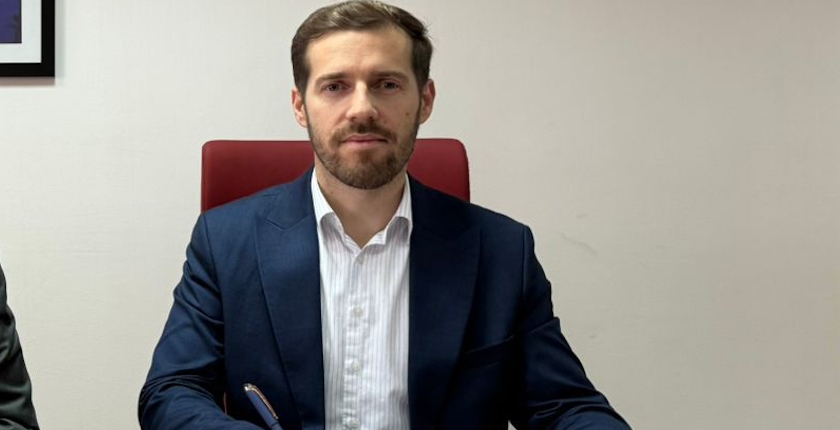
Kosovo Energy Corp. (KEK) has officially appointed Gramos Hashani as its Chief Executive Officer, following a fourteen-month period during which he served as interim head of the state-owned power utility. The decision was confirmed by the company’s Board of Directors after the completion of what it described as an open, transparent, and competitive selection process.

According to the board, the appointment procedure was conducted in full compliance with Kosovo’s Law on Public Enterprises and included the evaluation and interviewing of all candidates who satisfied the requirements outlined in the public vacancy announcement.

Hashani initially assumed the role of interim CEO in February last year, at a time when KEK was facing increasing pressure to improve operational efficiency, strengthen corporate governance, and accelerate modernization efforts within Kosovo’s electricity sector.

His permanent appointment is viewed as a move aimed at ensuring management continuity at one of the country’s most strategically important energy companies, particularly as Kosovo advances energy transition policies, regional market integration, and investment planning for generation and infrastructure upgrades.

Hashani graduated from the Faculty of Economics at the University of Prishtina – Hasan Prishtina and completed his master’s studies at the University of the Incarnate Word in San Antonio, Texas, in the United States.

His professional credentials include certification as an accountant and internal auditor through the Society of Certified Accountants and Auditors of Kosovo (SCAAK), while he is also a member of the United Kingdom-based Association of Chartered Certified Accountants (ACCA).

According to KEK’s Board of Directors, Hashani brings extensive expertise in strategic financial management, corporate governance, energy transition investments, and the implementation of international accounting standards, including IFRS and US GAAP.

The board also highlighted his professional experience across both the energy and financial sectors in Kosovo and the United States, where he has held senior management positions in international and domestic companies.

The appointment comes at a critical period for KEK and Kosovo’s broader energy sector, as authorities seek to modernize aging lignite-based generation assets, strengthen energy security, improve environmental performance, and attract investment into renewable energy and transmission infrastructure.

As Kosovo continues aligning its energy market framework with regional and European standards, KEK is expected to play a central role in balancing legacy thermal generation with the country’s long-term decarbonization and market reform objectives.
by in News

KEK seeks contractor for 100 MW solar power project near Prishtina

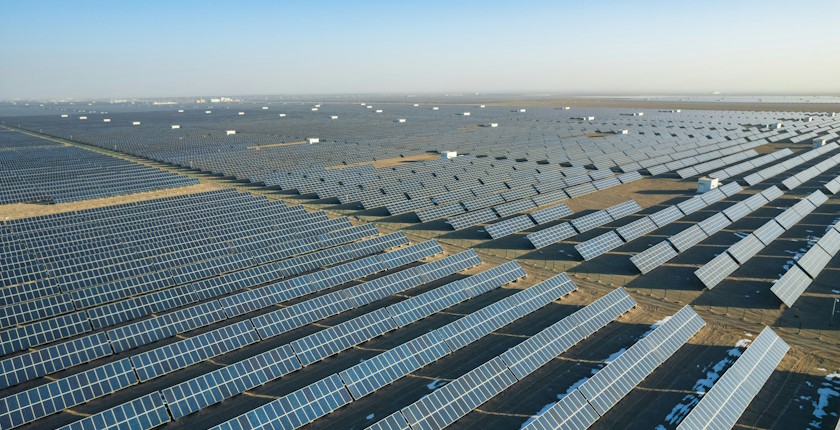
Government-controlled Kosovo Energy Corp. (KEK) launched the prequalifications call for its Solar4Kosovo photovoltaic project. The area is in the municipalities of Obiliq (Obilić) and Fushë Kosovë (Kosovo Polje), northwest of Prishtina.

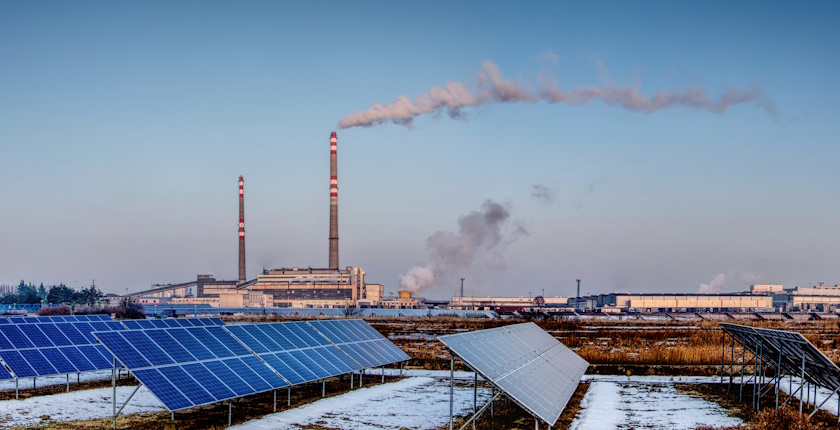
After more than four years of planning the project, KEK is receiving applications for the design and construction of its first solar power plant, on a former coal ash dump. The government-owned power utility operates coal plants Kosovo A and Kosovo B, which account for some 90% of domestic electricity.

The location for the first part of the Solar4Kosovo project is in the municipalities of Obiliq (Obilić) and Fushë Kosovë (Kosovo Polje). The area, northwest of Prishtina, is in the Sitnica river valley, near Kosovo A.

The facility is planned for a grid connection of at least 100 MW. It translates to 120 MW in peak capacity, according to earlier updates. It would be the biggest PV plant in Kosovo*.

KEK is receiving prequalification bids until January 22, within the process of selecting contractors for the project. Companies apply through the exficon (exfitender) platform. Three months ago, the utility said agricultural activities on the designated land weren’t allowed anymore.

KEK obtained EUR 32 million EU grant

The financing for the Solar4Kosovo facility is part of the European Union’s Economic and Investment Plan for the Western Balkans of EUR 9 billion in grants. The package is aimed at mobilizing a total of EUR 30 billion.

The European Investment Bank is providing a EUR 33 million loan. The EU has approved a EUR 32 million grant via its Western Balkans Investment Framework (WBIF), while Germany’s KfW Development Bank is lending EUR 29 million to KEK. The investment was earlier estimated at EUR 107 million overall.

Annual output estimated at 169 GWh

The proposed solar power plant is expected to produce 169 GWh per year. It would have an underground connection to the existing substation at the Kosovo A thermal power plant.

The other part of the Solar4Kosovo project is for a solar thermal facility of 30 MW for the capital city’s district heating system. The site is in the village of Shkabaj (Orlović) in Obiliq municipality. Another segment of the investment is for a further network extension of 20 MW with supply from Kosovo B.

* This designation is without prejudice to positions onstatus and is in line with UNSCR 1244/99 and the ICJ Opinion on the Kosovo declaration of independence.
by in News

Coal plant operator KEK to begin construction of Solar4Kosovo PV plant

Government-controlled Kosovo Energy Corp. (KEK) said it is preparing to start building its Solar4Kosovo 1 photovoltaic plant near Prishtina. It informed the local community that agricultural and other activities weren’t allowed anymore on the designated land.

After four years of planning. a former coal ash dump is about to be turned into the biggest solar power plant in Kosovo*. KEK is running the Solar4Kosovo 1 project at a site near its Kosovo A power plant near Prishtina.

The area is in the municipalities of Obiliq (Obilić) and Fushë Kosovë (Kosovo Polje). The government-owned power utility said it is preparing to begin construction works. The project is for 100 MW in connection capacity, translating to 120 MW in peak capacity.

The update mainly affects residents of Dardhishtë and Mërlak in Kryshevc (Kruševac) in Obiliq municipality. Agricultural and other activities aren’t allowed anymore, the company announced. It explained that so far it tolerated the use of its property there by the local community.

KEK obtained EUR 32 million EU grant

The financing for the Solar4Kosovo facility is part of the European Union’s Economic and Investment Plan for the Western Balkans of EUR 9 billion in grants. The package is aimed at mobilizing a total of EUR 30 billion.

The European Investment Bank is providing a EUR 33 million loan. The EU has approved a EUR 32 million grant via its Western Balkans Investment Framework (WBIF), while Germany’s KfW Development Bank is lending EUR 29 million to KEK. The investment was earlier estimated at EUR 107 million overall.

Annual output estimated at 169 GWh

The proposed solar power plant is expected to produce 169 GWh per year. It would have an underground connection to the existing substation at the Kosovo A thermal power plant.

Notably, Kosovo* is dependent on the obsolete Kosovo A and Kosovo B coal plants for almost all its electricity.

The other part of the Solar4Kosovo project is for a solar thermal facility for the capital city’s district heating system. The site is in the village of Shkabaj (Orlović) in Obiliq municipality. The investment includes a 20 MW network extension.

* This designation is without prejudice to positions onstatus and is in line with UNSCR 1244/99 and the ICJ Opinion on the Kosovo declaration of independence.
by in News

Court ruling brings risk of reversal of power market liberalization in Kosovo*

The Commercial Court in Kosovo* supported the claims filed by one company in a complaint, suspending its obligation to purchase electricity in the free market. The ruling follows protests against the controversial liberalization of the power market for larger firms, which came into force on June 1.

Two old coal-fired power plants in Kosovo* account for 92% of domestic production, which is the highest level in the world. Outages often prompt expensive emergency imports of electricity. Just last week, all operational coal units malfunctioned, while one in Kosovo B has been under reconstruction since last month.

Nevertheless, the authorities pushed through a controversial liberalization of the market for companies with more than 50 employees or an annual turnover of more than EUR 10 million. The measure, which came into force on June 1, led to two large protests. Almost 1,300 firms must purchase electricity in the free market.

However, the Commercial Court in Kosovo* suspended the obligation for REKS in a recent first-degree ruling. The company filed a complaint after it wasn’t allowed to use universal supply. It argued that it faced irreversible financial damage.

KEK signs few commercial power purchase contracts

The designated supplier of last resort is government-controlled Kosovo Energy Corp. (KEK). It is the operator of the Kosovo A and Kosovo B coal plants. Corporate consumers can opt for contracts of up to six months with the supplier of last resort.

KEK said a week ago that 360 such deals have been signed and that another 540 were coming. It only had 16 commercial contracts until that point.

Kosovo Chamber of Commerce claims KESCO is favored in liberalization

In the interpretation of the Kosovo Chamber of Commerce (KCC or OEK), the new court ruling means the entire power market liberalization needs to be suspended.

Conversely, the Energy Regulatory Office (ERO) said that last week the Basic Court of Prishtina rejected the motion that the chamber filed challenging the regulator’s public notice on the matter, which it issued in March.

KCC suggested that KESCO was favored in the switch, citing the lack of offers to consumers from other power suppliers. Dozens of other companies have also filed complaints, it added. The chamber called for a fair and feasible transitional phase and the creation of a clear plan that would ensure the stability for businesses and citizens.

Also of note, the Commercial Court said REKS’s gross income last year amounted to just EUR 6.5 million.

In other news, the opposition Democratic Party of Kosovo (PDK) said it would challenge ERO’s decision at the Basic Court because of the potential increase in electricity prices due to the liberalization.

* This designation is without prejudice to positions onstatus and is in line with UNSCR 1244/99 and the ICJ Opinion on the Kosovo declaration of independence.
by in News

CEO of Kosovo* TSO KOSTT dismissed amid allegations of abuse of office

The Board of Directors of Transmission, System and Market Operator (KOSTT) of Kosovo* fired Chief Executive Officer Evetar Zeqiri after a complaint that former board members sent to the Special Prosecutor’s Office surfaced in the media. The company appointed Shaban Neziri as acting CEO.

Evetar Zeqiri is dismissed from the top position in KOSTT, the transmission system operator (TSO) of Kosovo*, but also fired. The board deposed the CEO, who led the government-controlled company since October 2022, and replaced him with Shaban Neziri, in an acting capacity.

Just before the announcement, the Dukagjini television station showed criminal charges that former board members allegedly filed with the Special Prosecutor’s Office against Zeqiri for abuse of office. KOSTT denied the connection between its move and “the reports published in some media.”

Allegations of interfering in procurements

According to the document, the former CEO violated his obligations regarding finance, interfered in procurement, set discriminatory criteria and demanded that all technical specifications for the company’s projects be sent to him in advance. The allegations include influence to make illegal decisions and failing to properly inform the board, causing financial damages to the company. Zeqiri has asked legal entities to withdraw their bids, during evaluation, according to the report.

The authors of the complaint, who weren’t named, said they raised concerns several times, but that they were a minority within the board and that both its then-Chairman Jeton Mehmeti and CEO Zeqiri blocked them.

KOSTT cites poor personnel management, investment

The same media outlet obtained the decision to remove Zeqiri. The board said his personnel changes impacted the functioning of the enterprise’s operational structures and the motivation of the staff. It cited unsatisfactory capital investment and improper planning of projects in the budget.

Acting CEO Neziri is an electrical engineer, in KOSTT since its establishment.

From 2021 to 2024, Kosovo* imported electricity worth nearly EUR 590 million in total, according to Klan Kosova. One of the main importers is Noa Energy Trade, a company with an apparently unknown address and owner.

Notably, government-owned Kosovo Energy Corp. (KEK) has been led by acting CEOs for the past two years, since CEO Nagip Krasniqi was arrested. The current interim head is Gramos Hashani.

* This designation is without prejudice to positions onstatus and is in line with UNSCR 1244/99 and the ICJ Opinion on the Kosovo declaration of independence.
by in News

KEK issues call for reconstruction of Kosovo A3 coal plant unit

After 55 years of operation, a unit of KEK’s coal-fired power plant near Prishtina in Kosovo* is about to get a makeover, worth EUR 137.3 million. Firms can respond to the prequalification call for the facility’s rehabilitation and modernization by March 3.

Government-controlled Kosovo Energy Corp. (KEK) launched a project for boosting the capacity and efficiency of unit A3 in the Kosovo A thermal power plant. At the same time, emissions of pollutants must be reduced by 55% to 66% and brought in line with the European Union’s rules.

The unit was built in 1970 and now it would be reconstructed for the first time. The utility wrote in the call for prequalification that the investment is estimated at EUR 137.3 million.

The rehabilitation and modernization project aims to extend the operational life of A3 by 20 years. The capacity would be raised to 215 MW from the current range of 120 MW to 140 MW. The facility’s original capacity was 200 MW.

In addition, the selected contractor needs to raise the number of operating hours to 7,700 per year from 5,400. Kosovo A3 so far worked 260,000 hours. Annual output is seen more than doubling to 1.5 TWh.

Reconstructed, the facility will cut coal use in production to 1.15 tons per megawatt-hour from up to 1.6 tons now, according to the assignment.

The emissions of particulate matter – PM particles – need to drop to below 20 milligrams per cubic meter. According to the project, the upper limit for both nitrogen oxides (NOx) and sulfur dioxide (SO2) is 200 milligrams per cubic meter. The United States Agency for International Development (USAID) provided technical support.

* This designation is without prejudice to positions onstatus and is in line with UNSCR 1244/99 and the ICJ Opinion on the Kosovo declaration of independence.
by in News

Kosovo* power utility KEK replaces acting CEO

The Board of Directors of Kosovo Energy Corp. (KEK) appointed Bekir Gërguri as acting chief executive officer and Ramadan Budakova as his deputy, also in an acting capacity.

The change in leadership in Prishtina-based KEK has prompted controversy. Bekir Gërguri has been named acting CEO instead of Përparim Kabashi, who has returned to his previous position as secretary. Ramadan Budakova became acting deputy CEO of the government-controlled electricity producer.

The company runs the only two coal-fired power plants in Kosovo*, which account for more than 90% of domestic output. But KEK also has a major renewables project underway, backed by funding from the European Union.

Connections between the newly appointed CEO and Kosovo’s ruling party Lëvizja Vetëvendosje (LVV) surfaced immediately after the announcement. Gërguri’s previous affiliation with it, including his candidacy for the Municipal Assembly of Fushë Kosova (called Kosovo Polje in Serbian), has raised questions about potential political influence.

KEK generated 5.53 TWh of electricity last year

Additionally, there are concerns about reports that Budakova was accused of planting wheat over a decade ago on KEK land near coal mines without authorization, resulting in his demotion.

There were issues with earlier leadership as well. Police arrested former CEO Nagip Krasniqi last year over alleged tender manipulation. He was released from detention last September, but the legal proceedings against him are ongoing.

As Kosovo’s primary energy provider, KEK plays a vital role in the country’s infrastructure and economy. It remains to be seen how the new management will navigate the challenges ahead and address concerns about transparency, accountability, and political influence.

KEK generated 5.53 TWh of electricity last year. The Kosovo A thermal power plant contributed 2.29 TWh, while Kosovo B accounted for the remainder.

Separately, through the cogeneration project with Prishtina’s Termokos, over 327 GWh of thermal energy was generated for heating purposes. This significant output has been achieved through the combustion of coal, with a total of 6.92 million tons extracted during the year 2023.

* This designation is without prejudice to positions onstatus and is in line with UNSCR 1244/99 and the ICJ Opinion on the Kosovo declaration of independence.
by in News

Kosovo* receives financing for 120 MW solar power plant on coal ash dump

The European Investment Bank is providing a EUR 33 million loan for a solar power plant of 120 MW in peak capacity. Government-controlled power utility KEK plans to install it on its former coal ash dump near Prishtina.

The European Investment Bank (EIB) signed a EUR 33 million investment loan for the construction of a photovoltaic plant in Kosovo* with a connection to the grid of up to 100 MW, translated to 120 MW in peak capacity.

The financing package for the Solar4Kosovo project is part of the European Union’s Economic and Investment Plan for the Western Balkans of EUR 9 billion in grants. It is aimed at mobilizing a total of EUR 30 billion.

Solar power project involves EUR 32 million EU grant

The proposed facility is expected to produce 169 GWh per year, EIB said. The location, owned by government-controlled Kosovo Energy Corp. (KEK), is on the former ash dump of its Kosovo A power plant. The electricity producer is also getting a EUR 32 million grant via the EU’s Western Balkans Investment Framework.

“As one of the largest renewable energy developments in the region under Team Europe, this project will help Kosovo* achieve its energy security and renewable energy goals. Together with the European Commission and other partners, we are glad to be able to jointly help Kosovo* lay the groundwork for the decarbonisation of the local economy and diversification of the energy mix, in line with the EU Green Agenda,” said EIB’s Vice-President Kyriacos Kakouris.

Investment valued at EUR 107 million in total

Germany’s KfW Development bank is providing a EUR 29 million loan. The project’s total value, including KEK’s own funds, is estimated at EUR 107 million. The solar power plant between the towns of Obiliq/Obilić and Fushë Kosova (called Kosovo Polje in Serbian), near Prishtina, would have an underground connection to the existing substation at the Kosovo A thermal power plant.

“This project, the largest of its kind in the region, not only guarantees a sustainable energy production method but also accelerates Kosovo’s shift from conventional energy sources,” according to Kosovo’s Minister of Finance, Labour and Transfers Hekuran Murati.

Kosovo* is dependent on obsolete Kosovo A and Kosovo B coal plants for almost all its electricity. Renewables projects are gradually gaining traction.

The other part of the Solar4Kosovo project is for a solar thermal facility for the nearby capital city’s district heating system. The site is in the village of Shkabaj (Orlović) in Obiliq municipality.

In other news, the government in Prishtina established Energy Storage Corp. or ESCorp. It will manage the project for batteries with total operating power of 125 MW and 250 MWh in capacity. It is funded by the Millennium Challenge Corp. (MCC) of the United States.

The remaining 45 MW (90 MWh) is expected to be owned by Transmission, System and Market Operator (KOSTT). The battery systems are envisaged to store surplus electricity and stabilize the frequency in the transmission system. They are valued at USD 180 million altogether.

* This designation is without prejudice to positions onstatus and is in line with UNSCR 1244/99 and the ICJ Opinion on the Kosovo declaration of independence.