by in News

Bulgaria’s coal regions to get further EUR 808 million for just transition

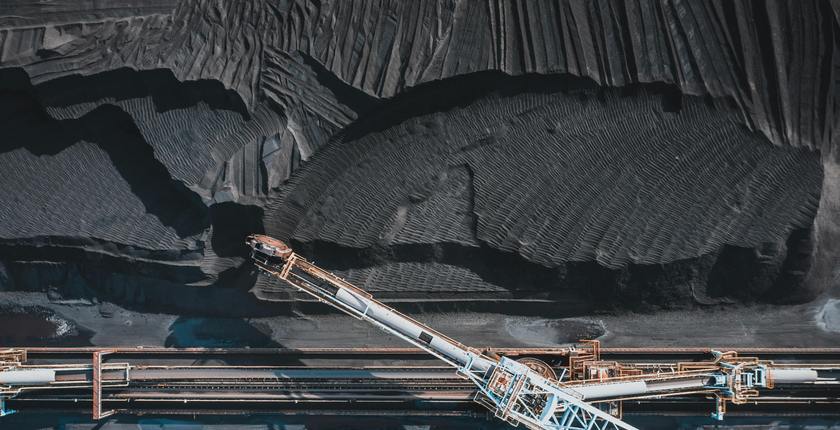
Bulgaria’s coal regions will receive BGN 1.58 billion (EUR 808 million) through the Just Transition program, under the European Union’s Just Transition Fund (JTF), for energy efficiency, renewable energy, and green hydrogen projects, as well as for converting mining areas for commercial use.

With a EUR 598 million program already underway, total investments in the economic transformation during and after the country’s coal phaseout would reach EUR 1.38 billion. They cover coal regions Stara Zagora, Kyustendil, and Pernik and the municipalities of Nova Zagora, Yambol, Simeonovgrad, Harmanli, Topolovgrad, Dimitrovgrad, Haskovo, Elhovo, Sliven and Tundzha.

Grants from the JTF are intended to help coal regions shut down mines and coal-fired power plants, rehabilitate land, switch to a circular and climate-neutral economy, and lift households out of energy poverty.

By the end of the year, the Bulgarian Ministry of Regional Development and Public Works will launch three new procedures for the allocation of grants, according to Deputy Minister Yura Vitanova.

One, worth EUR 153.4 million, will focus on energy communities and energy efficiency in public buildings. Another, worth EUR 72.6 million, will help small and medium-sized enterprises (SMEs) install solar panels and energy storage systems for both self-consumption and commercial use.

A third call, with a budget of EUR 242.9 million, will support the socio-economic transformation, including projects to convert mining areas into business and industrial zones.

Green hydrogen projects will be backed with EUR 134.5 million

Additionally, EUR 134.5 million will be used to fund the development of hydrogen production and transportation infrastructure in Stara Zagora. It includes the construction of a green hydrogen production complex and hydrogen charging stations, the procurement of hydrogen vehicles and hydrogen trailers, and the construction of supporting infrastructure, including photovoltaic systems and energy storage facilities.

The current JTF program in Bulgaria’s coal regions focuses on renovating residential buildings, supporting SMEs, and developing industrial and logistics parks. It also funds training and retraining programs for workers affected by the energy transition, as well as production investments in large enterprises.
by in News

Greek coal region of Megalopolis opens new chapter after lignite

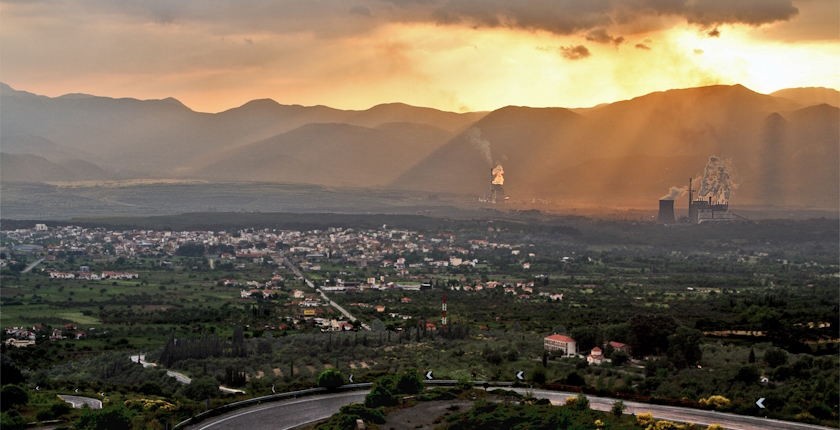
Last year, for the first time in decades, no smoke rose out of coal plants in the Peloponnese peninsula. The last two units had 500 MW together. Megalopolis is one of the two coal regions in Greece, along with Western Macedonia in the country’s north.

According to Public Power Corporation (PPC or DEI) the units Megalopolis-3 and Megalopolis-4 have now been permanently retired. Under the government-controlled utility’s plan to phase out coal completely next year, all such power plants stopped operating by now, with the exception of Ptolemaida 5, of 660 MW, which entered into operation last year. To maintain the security of supply, two units are kept in reserve, also in Western Macedonia in northern Greece.

PPC has produced a study for the reconstruction of the Megalopolis thermal power station, intending to accommodate other activities. Similar works are already underway in the local lignite mine.

New energy investments underway

The group’s investment plan involves various renewable energy and storage projects in Megalopolis to support the area’s energy transition. It is building two photovoltaic farms of 125 MW each, as part of a 490 MW cluster in the area.

The plan includes a 181 MW pumped storage hydropower station in the former lignite mine.

Based on the government’s Just Transition Development Program, Megalopolis will also host a battery factory, by Enercells, as well as two data centers, by Eunice and Kiefer, of 5 MW each. The investments have been approved by the Ministry of Economy and Finance, to seek funding from the European Union’s Just Transition Fund (JTF).

PPC expressed the belief that data centers are important for coal regions. Earlier this year, the group’s CEO George Stassis said they are ideal for such investments as the land and grid connections are already available. PPC is planning a 300 MW data center in Western Macedonia, but it hasn’t announced anything similar for Megalopolis yet.

by in News

Renewables equipment factory to contribute to just transition of coal region in Romania

Monsson Group is preparing to build a manufacturing facility in Petrila for renewable energy equipment, including robots that clean solar panels. The project received funding to contribute to the just transition of Romania’s coal region Jiu valley – Hunedoara.

An investment of nearly EUR 10 million in the first phase is underway in Transylvania, in the town of Petrila, economically devastated after the closure of a coal mine. The project is aimed at reviving the area with a factory for renewable energy equipment such as enclosures for battery energy storage systems, wiring and robots that clean photovoltaic panels.

Monsson Group revealed its facility would also manufacture gear for monitoring environmental parameters and tracking fauna in the area. The Sweden-based company has said 70% of the investment would be covered from Romania’s Just Transition Program which is in turn part of the European Union’s Just Transition Facility.

Romania is planning to prolong the operation of its coal power plants and mines for a smoother switch to renewable sources, in terms of electricity supply. However, such facilities are becoming less financially viable by the day all across the EU. Coal regions are facing economic blows from early shutdowns of power plants and mines.

First major private investment in Petrila

According to Monsson, the new factory would employ more than fifty people in the first phase. It expects to begin construction mid-year.

It is the first major private investment in Petrila, Mayor Vasile Jurca said. He said the project enables reskilling and sustainable development. The local authority provided the land for the factory. Romania has earmarked substantial funding for the construction of renewable energy equipment plants.

The second part of the plan is to install a 20 MWh battery energy storage system to provide system services to the national grid, followed by a 50 MWh unit.

Reskilling program underway

The group, which includes Wind Power Energy and its RenewAcad network of renewable energy training centers, established cooperation with the University of Petroșani in getting skilled workers. Monsson is one of the biggest renewable energy investors in the country.

Petrila is part of the Jiu Valley in Hunedoara county, Romania’s main coal region. It is located near Oltenia, the other coal complex, in the counties of Gorj and Dolj.

Notably, the Maritsa East 3 coal power plant in neighboring Bulgaria ceased operations yesterday again after it was briefly brought back online to maintain energy security.