by in News

Tender for new Porto Romano terminal fails after sole bidder withdraws

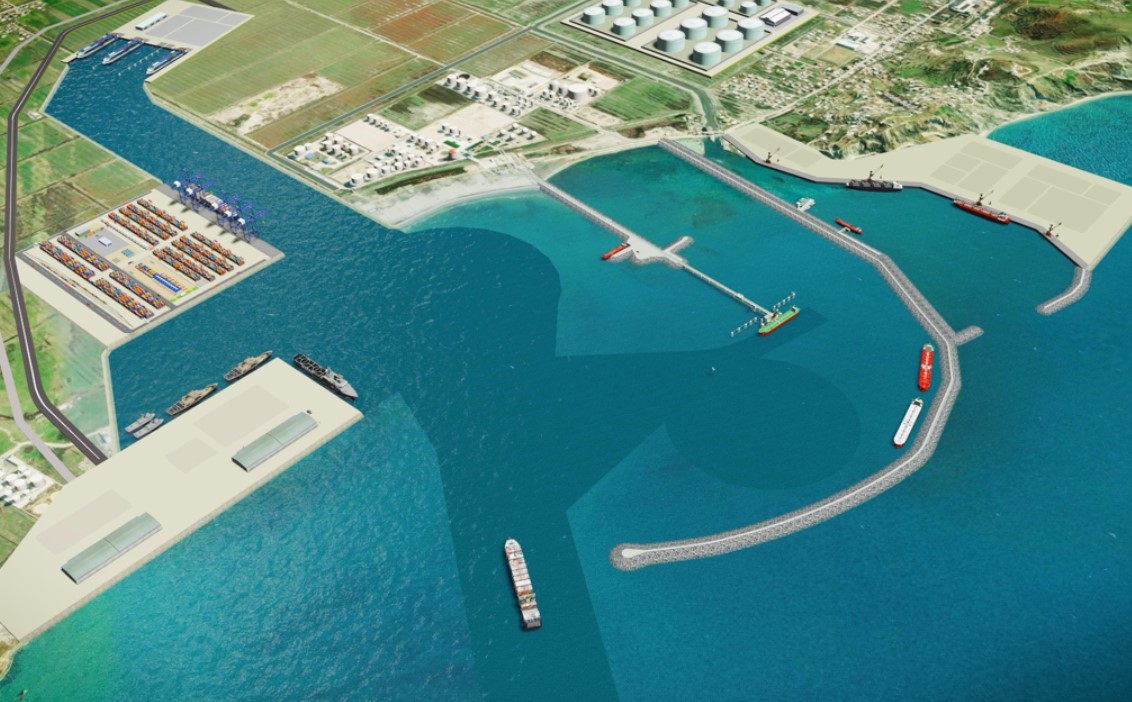
The public tender for the construction of Albania’s new commercial port in Porto Romano has collapsed after the single remaining bidder withdrew from the competition. Minister of Infrastructure and Energy Enea Karakaçi confirmed on Wednesday that the company pulled out of the project, citing escalating economic pressures.

“We are facing the withdrawal of the only bidder left in the race for purely economic reasons linked to rising costs,” Minister Karakaçi stated. “As a result of the current crisis, overall construction expenses have surged, and the bidder has used this to justify their exit. The commission will now proceed according to established protocols.”

Addressing the setback, Karakaçi echoed recent remarks by the Prime Minister, suggesting that external forces have actively sought to undermine the infrastructure initiative. “There are various actors attempting to stall and sabotage this critical national project for diverse reasons, including economic motives,” he noted. Despite the hurdle, he emphasized the government’s resolve: “We will devise an alternative strategy. No actor will be able to stop this project, as it is vital to the country’s economic development.”

The Minister also moved to assuage concerns over potential logistical disruptions, clarifying that the delay in selecting a new contractor will not affect daily operations at the existing Port of Durrës. The transition is inherently tied to the “Durrës Marina” real estate development—which will eventually occupy the current port’s territory under a state agreement—but that project is still only in its preliminary phase.

In the interim, the Albanian government is continuing its collaboration with international engineering consultancy Royal Haskoning to reassess the technical and financial criteria for prospective companies interested in taking over the new port’s development.

A Fraught Bidding Process

The ambitious project, officially titled the “New Integrated Commercial Port of Durrës in Porto Romano – Phase I,” was launched by the Durrës Port Authority in 2024 with an estimated budget limit of 39.3 billion Albanian Lek (ALL). The initial phase of construction was projected to span 1,220 days, or approximately three and a half years.

Porto Romano

However, the procurement process has been marked by strict filters and legal friction. In April 2025, the Bid Evaluation Commission announced that only two entities Archirodon Construction and Van Oord Dredging and Marine Contractors had passed the technical pre-qualification stage. Major industry players, including Webuild and a consortium led by Jan De Nul, were disqualified.

This led to a legal clash when the Jan De Nul consortium filed a formal complaint with the Public Procurement Commission (KPP). The KPP ultimately dismissed the appeal in late April 2025, allowing the contracting authority to move forward.

By September 2025, the competition had narrowed entirely. Open procurement data revealed that only one qualified economic offer remained to proceed to the contract signing a final step that has now been derailed by the company’s sudden withdrawal.
by in News

Montenegro’s EPCG signs contract for Otilovići small hydropower plant

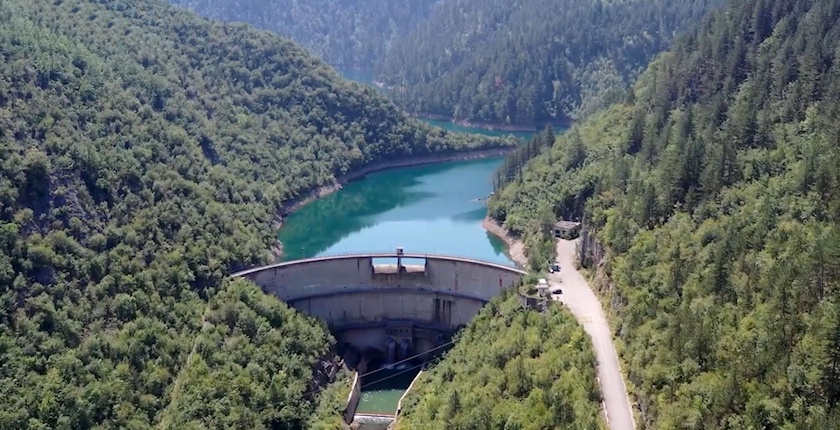
Montenegro’s Elektroprivreda Crne Gore signed a contract today with Vigoris Ecotech for the construction of the Otilovići small hydropower plant near Pljevlja, in the northern part of the country.

The agreement between state-owned power utility Elektroprivreda Crne Gore (EPCG) and Vigoris Ecotech is for project design, construction, the delivery and installation of electro-mechanical equipment, testing, and commissioning, on a turnkey basis.

The contract, worth EUR 6.8 million excluding VAT, was concluded following an open tender, according to the update. The project involves the installation of two units with horizontal Francis turbines, with a total installed capacity of 3.2 MW. The planned annual production is 11 GWh.

The Otilovići SHPP is a priority in hydropower development

In July 2023, EPCG obtained urban planning and technical requirements for the project. At the time, the company said it worked two years on the documentation and announced that it would soon launch a tender.

montenegro epcg vigoris shpp otilovici dragas visnjic dam
Photo: EPCG

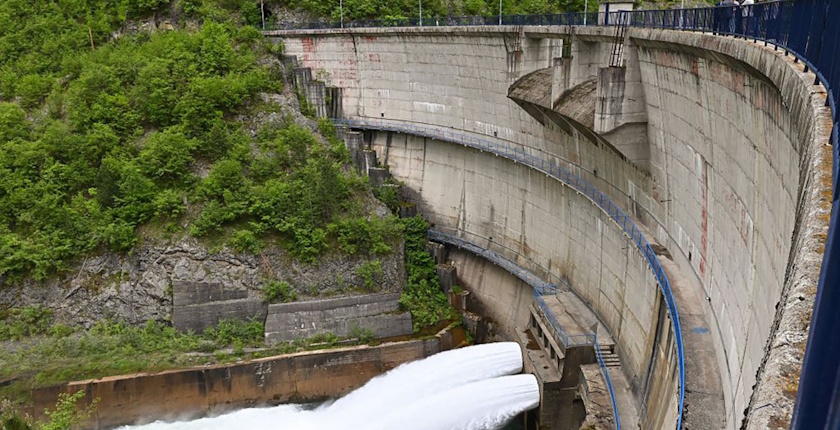
The small hydropower plant (SHPP) will utilize surplus water from an existing reservoir on the Ćehotina river. The facility is used for the needs of the Pljevlja thermal power plant and to supply drinking water to Pljevlja.

EPCG said Otilovići has been recognized as a priority hydropower project within the strategic plans of both the company and Montenegro.

Dragaš: Strengthening production stability and flexibility

EPCG CEO Zdravko Dragaš stressed that SHPP Otilovići represents another step in the company’s investment plan and the strengthening of domestic production capacities.

The contract confirms EPCG’s development orientation toward investing in reliable, sustainable, and domestic energy sources, with the full application of modern standards and procedures, he added.

“The Otilovići SHPP is a project that adds new value to Montenegro’s energy system and strengthens our overall production stability and flexibility,” Dragaš underscored.

Višnjić: We aim to deliver a solution that justifies trust

According to Vigoris Ecotech CEO Siniša Višnjić, the project’s implementation will be guided by high standards of quality and safety, with strictly defined deadlines and obligations.

“Our goal is to deliver a solution that justifies EPCG’s trust, from the main design to the final testing and commissioning,” Višnjić stressed.

by in News

Serbia’s EPS starts trial operation of its first wind park Kostolac

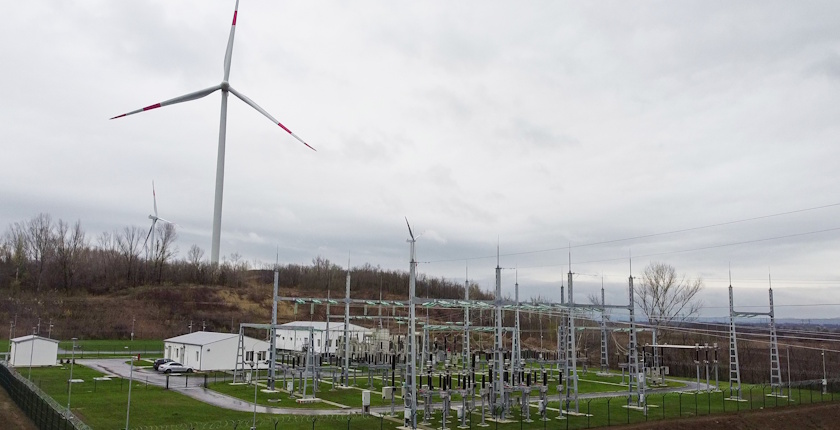
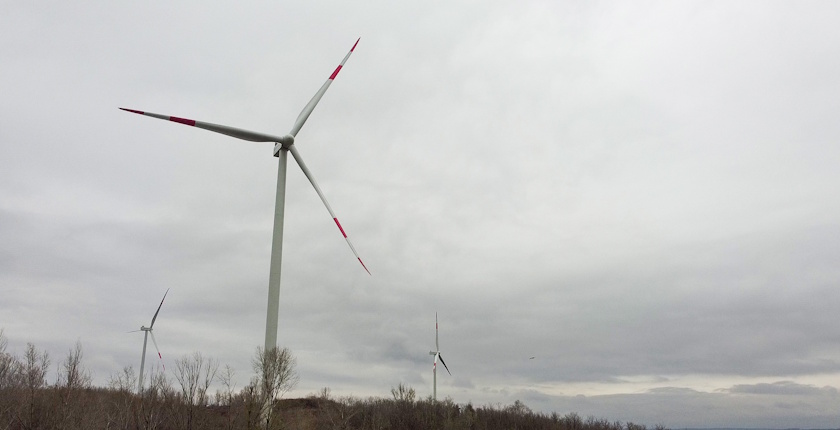
Serbia’s state-owned power utility Elektroprivreda Srbije put the 66 MW Kostolac wind farm into trial operation.

The construction of Kostolac is complete, and Elektroprivreda Srbije’s (EPS) first wind farm has generated its first megawatt-hours, EPS announced.

Upon receiving approval for connecting to the transmission system, the substation was energized and the blades of wind turbine 1 began to spin. It marked the start of the trial operation of the new generation capacity, the company said, and added that the kickoff of the remaining wind turbines is underway.

EPS’s first wind power plant, with 20 generators, is located at sites called Drmno, Petka, Ćirikovac and Klenovnik, at an area of closed open-pit mines of its subsidiary Termoelektrane i kopovi Kostolac (TE-KO Kostolac). It operates coal-fired power plants and open-pit coal mines.

Živković: It is a historic moment for EPS

Closed coal mines are ideal locations for installing wind farms and solar power plants, due to existing infrastructure. The concept has become widespread in Balkan countries.

“This is a historic moment for EPS. In addition to energy from water, coal, and the sun, now the first wind farm is online. This is a big step toward increasing the share of renewable energy and achieving sustainable energy development for EPS and the entire Serbian energy sector,” CEO Dušan Živković underlined.

He pointed out that the wind farm is just the beginning of future intensive development of new green capacities. It is very significant that it was built on the site of an old mining landfill and that the space has been given a completely new, sustainable purpose, he added.

The wind farm is expected to produce 187 million kWh annually

serbia eps wind farm Kostolac trial operation coal mine
Photo: EPS/Zoran Gavrilović

Živković recalled that the construction of the wind farm was a major challenge, but also a real opportunity for experienced engineers and young, new professionals at EPS to gain new knowledge and experience for future projects.

The planned annual production of the wind farm is 187 million kWh, which is enough to supply about 30,000 households with green electricity, according to EPS.

The project is financed by a EUR 110 million loan from Germany’s KfW Development Bank and a EUR 30 million grant from the European Union via the Western Balkans Investment Framework (WBIF), while the company provided a part of the needed funds, EPS said.

Serbia’s Minister of Mining and Energy, Dubravka Đedović Handanović said in January 2024, at the signing of an agreement with the EU for the EUR 30 million grant, that it has completed the financing of the project.

According to WBIF’s update from December 2024, the project was valued at EUR 145.1 million. It comprised EUR 81.8 million from a KfW loan and EUR 31 from WBIF in the form of a grant, while EPS provided EUR 32.3 million.

by in News

CWP Europe gets European Commission’s backing for renewables projects in Albania, Montenegro

CWP Europe has signed a joint declaration with the European Commission, the Albanian Investment Development Agency, and the Montenegrin Investment Agency in support of its two landmark renewable energy projects – the Tropoja wind farm in Albania and the Montechevo solar farm with battery storage in Montenegro.

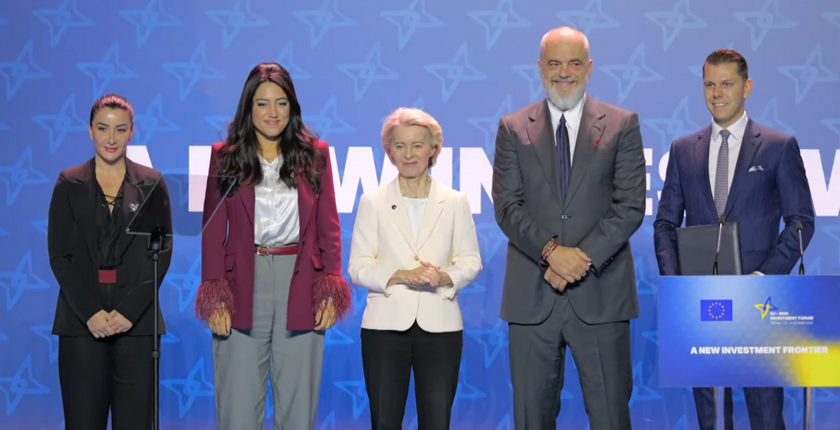
The declaration of support for CWP Europe’s projects was signed during the EU-Western Balkans Investment Forum in Albania’s capital, Tirana, in the presence of Albanian Prime Minister Edi Rama and European Commission President Ursula von der Leyen, according to a press release from CWP Europe, a leading renewable energy project developer in Southeast Europe.

The 600 MW Tropoja wind farm will advance Albania’s energy independence by providing clean, affordable electricity, supporting the country’s energy strategy, the company stressed.

The 600 MW Tropoja wind farm will boost Albania’s energy independence

In Montenegro, the 400 MW Montechevo solar farm will combine solar generation with battery storage directly connected to the country’s new 400 kV transmission grid. It will leverage Montenegro’s strategic interconnections – including the undersea power cable to Italy – to maximize the export of clean electricity and its integration into the European energy market.

A new energy backbone for the Western Balkans and Europe

Speaking at the signing ceremony, von der Leyen emphasized the Western Balkans’ increasing role in Europe’s clean energy transition.

“Today you are signing several investments that will do just that. From clean energy production in all six Western Balkan partners to energy storage in Montenegro. They will bring the cost of electricity down. And they will also contribute to our collective energy independence. You are building a new energy backbone not only for the Western Balkans. But for all of Europe,” said von der Leyen.

CWP Europe CEO Dimitar Enchev signed the declaration on behalf of the company, alongside Executive Vice Presidents Maja Turković and Viktor Garbev.

Enchev: We are unlocking the region’s immense renewable energy potential

“With Tropoja and Montechevo, we are unlocking the region’s immense renewable energy potential and strengthening cooperation across the Western Balkans. We greatly appreciate the support of the European Commission, the Albanian Investment Development Agency, and the Montenegro Investment Promotion Agency in advancing this shared vision for a clean, economically competitive and secure energy future of the region and Europe as a whole,” said Enchev.

Over the past 17 years, CWP has invested in sustainable development and the energy transition, successfully developing the largest wind farms in the region, including the largest one in Europe – the 600 MW Fântânele-Cogealac project in Romania. It is currently developing over 7 GW of renewable energy capacity, according to the statement.

by in News

Romania begins overhaul to extend operating life of Cernavodă nuclear reactor by 30 years

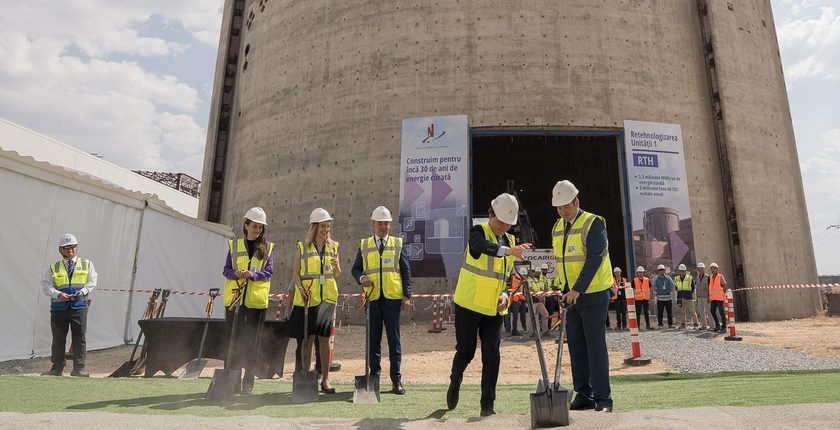
An international consortium led by South Korean state-owned Korea Hydro & Nuclear Power Co. (KHNP) has launched an overhaul of a reactor at Romania’s only nuclear power plant, Cernavodă. The refurbishment will extend the operating life of Cernavodă’s Unit 1 by 30 years.

The reactor, with a capacity of around 700 MW, has been in operation since 1996, and its 30-year license is set to expire in 2027. The reconstruction project is valued at about USD 2.01 billion, KHNP said following a groundbreaking ceremony.

Romania’s state-run Nuclearelectrica, the operator of the Cernavodă plant, signed an agreement with the consortium last December. The group of contractors includes KHNP, Canada’s AtkinsRealis, the Canadian Commercial Corporation, and Italy’s Ansaldo Nucleare, according to Romania-Insider.

The works, targeted for completion by 2030, include the complete replacement of the reactor systems and power-generating turbines, as well as the construction of new infrastructure, including radioactive waste storage facilities, said KHNP, a subsidiary of Korea Electric Power Corporation (KEPCO).

The overhaul is targeted for completion by 2030

KHNP said that four other South Korean firms – Kepco Plant Service & Engineering, Doosan Enerbility, Hyundai Engineering & Construction, and Samsung C&T- will participate as project partners.

At the groundbreaking ceremony, Romanian Minister of Energy Bogdan Ivan said the project would ensure another 30 years of on-grid, environmentally friendly electricity. According to him, it represents the future of Romania’s energy security, accoridng to a report by Profit.ro.

The overhaul will ensure another 30 years of environmentally friendly electricity

Over the last 10 years, Romania has shut down about 56% of its coal- and natural gas-fired capacity, resulting in the country now importing 22% of the electricity it consumes. According to Ivan, this has led Romania to look for alternatives, one of which is nuclear energy.

He recalled that the country was preparing to invest EUR 11 billion in the construction of Units 3 and 4 at the Cernavodă nuclear power plant, adding that “certain phases have already begun.” Ivan also said he believed that in seven years’ time, Romania could become a net exporter of electricity.

The two new reactors would each have a capacity of around 700 MW, according to earlier reports. Cernavodă’s Unit 2, which has been in operation since 2007, also has a capacity of around 700 MW.

by in News

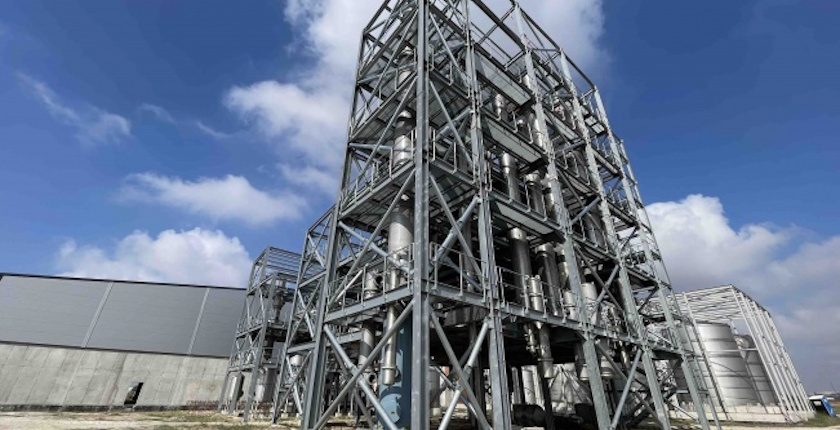
Insa Oil building Bulgaria’s first bioethanol plant

Bulgarian oil company Insa Oil plans to finish its bioethanol plant by the end of 2026. The company claims the plant under construction will be the country’s first to produce renewable fuel from biomass.

The construction of the Insa Spirit plant began in June 2022 and is already in an advanced phase, according to an announcement by Insa Oil. Bioethanol is a renewable fuel produced primarily from grains and often blended with gasoline.

The plant, estimated to cost EUR 56 million, spans about 45,000 square meters. It includes production facilities and a high-tech laboratory.

The biorefinery will produce ethyl alcohol, part of which will be converted into bioethanol for the Bulgarian energy market.

The plant’s capacity is 41,000 liters of ethyl alcohol per day

The plant’s capacity is 41,000 liters of ethyl alcohol per day, the company said, adding that the facility is expected to be operational in the second half of 2026.

Bulgaria has set the minimum required amount of bioethanol to be added to gasoline at 9%. It is regulated by the European Directive on the Promotion of the Use of Energy from Renewable Sources and the Renewable Energy Law, which came into force in the first half of this year.

“Our ambition is to turn Bulgaria into a regional factor for bioethanol production. We believe that this investment will be important for our economy and will increase our energy independence, while also taking care of environmental protection,” said Insa Oil manager Georgi Samuilov.

The plant uses technology from India

Following the launch of Insa Spirit, the company plans to develop technologies for second-generation bioethanol produced from biomass.

The technology for the plant was developed by India-based PRAJ.

The equipment was supplied by leading producers such as Bühler Group (Germany), Alfa Laval (Sweden), Bosch (Germany), Siemens (Germany), Hydro-Thermal (USA), and Solar Turbines (USA), according to Insa Oil.

by in News

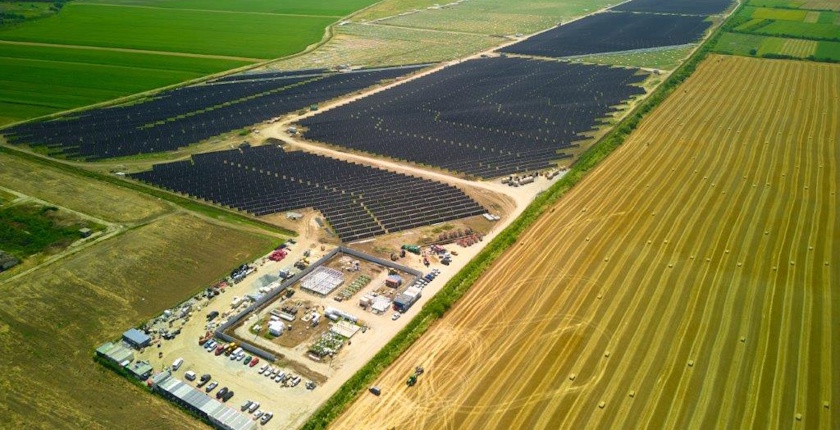
DRI secures financing for Vacaresti solar park in Romania

Renewable energy firm DRI has secured financing for the construction and operations of its Vacaresti solar park in Romania.

DRI, UniCredit and Garanti BBVA have signed an agreement for non-recourse loans of up to EUR 60 million to finance the construction and operations of the Vacaresti solar park in Romania.

DRI is Ukraine-based DTEK’s renewables subsidiary in the European Union.

The loan is inclusive of a long-term, fully amortizing construction and term loan, value-added tax, a debt service reserve facility, and the letter-of-credit facilities, according to the firm.

The project is expected to come online in the autumn

The loan structure is aligned with Green Loan Principles and the European Union’s Taxonomy Alignment Criteria, DRI added. It serves as a cornerstone of the EU’s sustainable finance framework and a key tool for market transparency, by providing clear guidelines for direct investments that support the green transition in line with the objectives of the European Green Deal, the press release reads.

The solar power plant will be located in the Văcărești area in Dâmbovița county. The project is for 126 MW in peak capacity, enough to power about 50,000 households and avoid 48,600 tonnes of carbon emissions per year. Construction kicked off in January 2025 and the project is expected to be online in the autumn.

The buyer of 50% of the electricity output is oil and gas company OMV Petrom. The deliveries will start in January 2027. It is a part of Romania’s largest physical solar power purchase agreement (PPA), signed last December, DRI noted.

Geliukh: DRI is demonstrating its capability to partner with globally renowned financial institutions

“With the signing of this project financing agreement, we have reached another important milestone: this is DRI’s first internationally led syndicated financing, our first certified green loan, and our first multi-currency loan,” DRI CEO Ivan Geliukh stressed.

In his words, it is an important achievement not only for DRI but also for Romania, contributing to the development of renewable energy in the country.

With the project, DRI is demonstrating its capability to partner with globally renowned financial institutions like UniCredit, and with Garanti BBVA, one of Romania’s leading local lenders, according to Geliukh.

DRI has three operational projects in Romania

In Romania, DRI has three operational projects with a total peak capacity of 173 MW. Solar parks Glodeni I and Glodeni II have a combined installed capacity of 113 MW. They are one of the largest renewable energy sites in the country, according to the company.

The 60 MW Ruginoasa wind farm was built in just 10 months. It was the first in the country after a decade, according to the firm.

DRI now has a 1.3 GW portfolio of projects in operation, construction and other stages of development. The company is also active in Croatia.

by in News

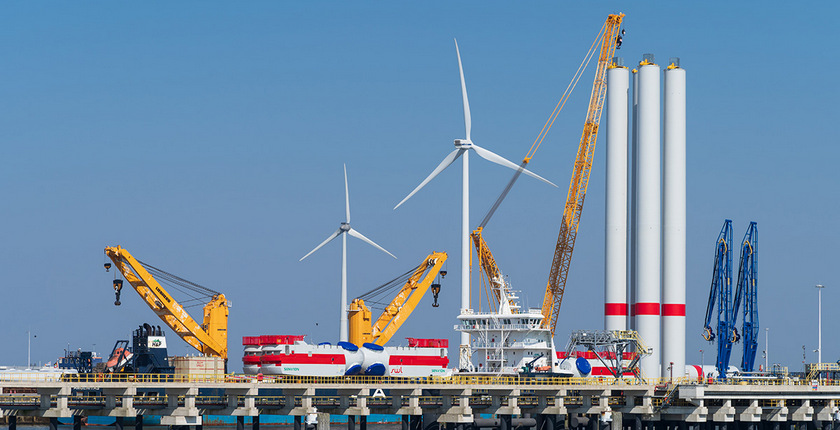
WindEurope: EU must boost investment in ports, ships to meet offshore wind targets

Europe needs to increase investment in ports and shipbuilding, which play a crucial role in offshore wind development, to achieve its goals in this energy segment, according to wind industry association WindEurope. The European Commission’s upcoming strategies for ports and the maritime industry are expected to create conditions for the necessary investment.

The European Union aims to increase its offshore wind capacity from 36.6 GW to 84 GW by 2030, but one of the most pressing challenges it faces is the lack of timely investment in vessel manufacturing and port infrastructure, WindEurope warns.

To meet its 2030 energy security targets, the EU must install at least 10 GW of offshore wind each year. After 2030, this figure will have to increase to 15 GW a year, says WindEurope, noting that robust and resilient port infrastructure and supply chain are key for the achievement of the offshore goals.

After 2030, the EU will have to install 15 GW of offshore wind a year

Over the past three years, over EUR 6.7 billion has been invested in port infrastructure and new vessels across the EU, but a further EUR 6.4 billion is required, the association explains, noting that the European Commission is now working on its EU Ports Strategy.

All offshore wind equipment is transported through ports, and they often serve as bases for the operation and maintenance of offshore wind farms. Ports also host local wind energy supply chains and offer space to store and, in the case of floating turbines, assemble large components, the association notes.

Investment in port infrastructure over the past three years has amounted to EUR 4.4 billion, which can ensure that the EU meets its offshore wind targets, but an additional EUR 2.4 billion is needed to put the bloc on track to achieve post-2030 offshore deployment goals, according to WindEurope.

To make this happen, the EU’s strategy must seek to mobilize additional funding, streamline permitting, and establish planning at the EU level, the association recommends.

A further EUR 4 billion in investment is needed for new ships to handle next-generation wind turbines

When it comes to vessels, they should be a key area of focus in the EU Industrial Maritime Strategy, which aims to enhance the competitiveness, sustainability, and resilience of Europe’s maritime manufacturing sector, WindEurope says.

In the past three years, the EU has invested at least EUR 2.3 billion in new vessels, but it will have to spend a further EUR 4 billion to keep pace with wind turbine technology innovation and handle the upcoming generation of turbines with capacities exceeding 15 MW, it explains.

The strategy should also enable the decarbonization of maritime operations by supporting the shift to clean fuels, such as electricity, ammonia, and hydrogen, and by providing funding for retrofitting vessels and building new zero-emission ships, according to WindEurope.

by in News

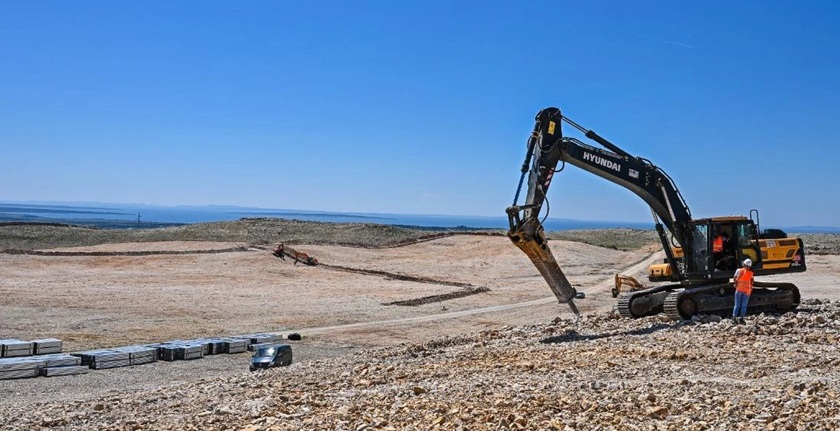
RP Global gets EUR 12.2 million loan for Novalja solar project

RP Global has secured a EUR 12.2 million loan to build its Novalja solar power plant in Croatia.

In late April, Austrian company RP Global began the construction of the Novalja photovoltaic plant at the Zaglava site on the island of Pag.

The European Bank for Reconstruction and Development (EBRD) said it approved a senior non-recourse project finance loan of up to EUR 12.2 million to RP Global Novalja d.o.o., owned by RP Global Energy GmbH, for the development and construction of the 21 MW Novalja PV plant in Croatia.

The project has been approved under the EBRD InvestEU Framework for Sustainable Transition.

The loan is divided into two tranches

The loan is split into two tranches: one amounting to a maximum of EUR 7.2 million, and the second of up to EUR 5 million, benefiting from a 20% first loss coverage under the EBRD InvestEU Framework for Sustainable Transition, the bank’s decision reads.

The total project cost is estimated at EUR 16.3 million.

The endeavor includes the installation of 35,776 photovoltaic panels. The expected annual electricity production is around 31,000 MWh, enough to supply about 12,000 households.

According to the EBRD, the project supports innovative offtake arrangements. It will combine a national renewables support with a merchant exposure in later years.

RP Global won premiums for its project at auctions

Last July, the Croatian Energy Market Operator (HROTE) awarded premiums for solar and hydropower plants with a total capacity of 420 MW. RP Global’s Novalja was among them, with 15 MW.

Back in 2022, the company said it intended to build wind farms and solar parks of 500 MW overall in Croatia over the next five years.

RP Global has completed two renewable energy projects in Croatia: the Danilo wind farm near Šibenik and the Rudine wind park near Dubrovnik.

Of note, the island town of Novalja could become one of the first in Croatia to begin the production of green hydrogen, and a rare example in the region. A project was launched in May.

by in News

Ex-Yugoslav hydrogen scientists call for funding research with real-world applications

A team of scientists from Slovenia, Serbia, and Bosnia and Herzegovina is working on a hydrogen project based on seawater electrolysis. Dalibor Karačić, Nejc Hodnik, Igor Pašti, and Sanjin Gutić believe their research can deliver a solution fit for commercial use, unlike many hydrogen technologies in development around the world. To unlock the sector’s potential, hydrogen funding schemes must shift the focus from complex and “elegant” solutions to those that can be applied outside the lab, according to the scientists.

Investment in hydrogen technologies worldwide exceeded USD 200 billion in 2023, but most of the research might never produce scalable solutions due to over-complexity and impracticability, according to the four scientists.

Investment in hydrogen research exceeded USD 200 billion in 2023

Karačić, Hodnik, Pašti, and Gutić are working on a NATO-funded project that integrates membrane technology with seawater electrolysis. They claim they are not chasing novelty but “building something that can leave the lab.”

In theory, producing one kilogram of hydrogen requires nine liters of water, and even more in fossil-based hydrogen extraction. On the other hand, their research is based on the assumption that electrolysis from seawater and even wastewater could deliver hydrogen with lower water intensity and without ultrapure inputs, offering significant infrastructure savings.

This is especially relevant for countries like Bosnia and Herzegovina and Serbia, which lack industrial hydrogen infrastructure but possess abundant natural water sources and technical talent, they claim.

Karačić: Balkan countries lack the political will to implement hydrogen solutions

Dalibor Karačić, lead researcher for energy conversion and storage systems at Sarajevo’s Center for Advanced Technologies (CNT), believes that the group’s project can deliver, but warns the region lacks the political will to implement the solution.

“We can deliver, but I don’t know who’s willing to receive it. Political will is lagging behind technical capability,” Karačić said in an interview with Energy News.

Some hydrogen uses do not require expensive high-pressure storage

When it comes to the issue of storage, Igor Pašti, Professor of Electrochemistry at the Faculty of Physical Chemistry of the University of Belgrade, claims that some industrial applications of hydrogen, such as ammonia production or steel processing, do not require expensive high-pressure storage. Tanks at 200 bars can hold hydrogen safely for two years, he explains.

One of the most cited barriers to turning lab success into industrial viability is the fact that many catalyst systems used in lab settings rely on rare metals or unrealistic environmental conditions. According to Nejc Hodnik, Head of Laboratory for Electrocatalysis at the National Institute of Chemistry in Ljubljana, Slovenia, 99% of existing research cannot be scaled because either the material is too unstable or the process cannot work outside the laboratory.

  • 1
  • 2