by in News

Why financial risk is the real challenge for battery storage in Europe

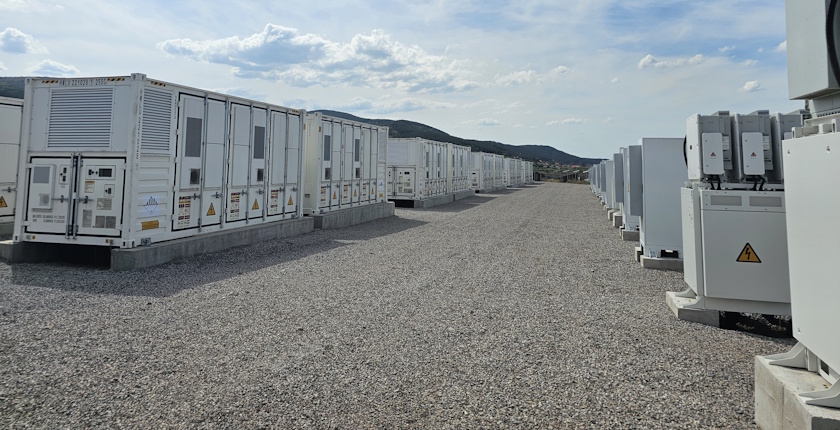
As battery energy storage systems (BESS) move from pilot projects to core infrastructure across Europe, the conversation is changing. Technology and costs still matter, but for investors and lenders the decisive question is increasingly financial: how resilient are BESS projects when revenue is delayed, disrupted, or degraded?

Across Central and Eastern Europe as well as mature Western markets, storage projects are entering a phase of tighter margins, more complex financing structures and lower tolerance for uncertainty. In this environment, insurance is no longer just about protecting equipment; it is becoming a central tool for managing financial risk and preserving bankability.

Financial continuity defines bankability

For storage projects, technical performance is only half the equation. The other half, the one that ultimately determines financing terms, is financial continuity. Every phase of a BESS or hybrid PV+BESS project carries exposure to income loss: during transportation, construction, commissioning, and operation.

Even short disruptions can have disproportionate consequences. A damaged transformer during shipping, a fire incident during testing or a commissioning delay before grid connection can postpone the start of revenues, while debt service, contractual obligations, and operating costs continue to accrue.

This is why Renewable Energy Insurance Broker (REIB) structures insurance programs around financial outcomes, not just physical damage. The objective is simple: ensure that delays or performance issues do not automatically escalate into financial stress.

ALOP: From overlooked add-on to financing safeguard

One of the most underestimated insurance covers in the BESS sector today is Advance Loss of Profit (ALOP). Traditionally seen as optional, ALOP is rapidly becoming essential, particularly for large-scale storage and hybrid projects with tight financing schedules.

ALOP protects expected revenues when construction or commissioning is delayed due to insured physical damage. In practice, it bridges the critical gap between construction risk and future cash flow. In 2025, REIB observed multiple projects where even short delays could have triggered penalty clauses, refinancing pressure, or delayed revenue start.

When structured correctly, ALOP ensures that delays do not automatically translate into financial crises. For lenders, it increasingly functions as a bankability safeguard, providing confidence that revenue projections remain protected even if timelines slip.

DSU and logistics: When delays start before construction

Financial risk does not begin on site. For BESS projects, it often starts much earlier – during transport. Batteries, inverters and transformers travel thousands of kilometers before installation, making logistics one of the most exposed phases of the project lifecycle.

A single cargo incident can delay commissioning by months, increasing financing costs and contractual exposure. REIB addresses this risk through Delay in Start-Up (DSU) insurance combined with Cargo coverage, ensuring that if a critical shipment is damaged, stolen, or delayed, the project is compensated not only for the physical loss but also for the income lost during the resulting downtime.

For investors and lenders, this closes one of the most dangerous financial gaps in project planning: the period before operations even begin.

Construction and commissioning: The most fragile phase

The construction and commissioning stage is where technical and financial risks converge. Fires, installation accidents or testing failures can delay grid connection, pushing revenue timelines back while expenses continue.

Many traditional insurance policies either exclude this phase or cover it only partially. REIB structures construction-phase DSU coverage that runs from installation through commissioning, responding not only with repair costs but also with compensation for lost income.

This transforms insurance from a reactive instrument into a strategic financial stabilizer, keeping debt service, investor expectations, and project schedules aligned even when delays occur.

Business Interruption: Insuring the ability to earn

Once operational, BESS and hybrid projects depend on consistent performance to meet financial models. Yet standard Business Interruption (BI) insurance often fails to reflect the complexity of storage revenues.

REIB structures BI coverage around the project’s actual revenue mechanism – whether tolling, profit-sharing or hybrid arrangements. The focus is on protecting total income, not just net profit, with coverage that includes partial degradation and extended indemnity periods of up to 18 months.

In short, insurance protects the project’s ability to earn, because that is what sustains investor confidence and lender support.

Design decisions are financial decisions

Across Europe, particularly in fast-evolving markets, investors often underestimate how deeply design choices affect bankability. Decisions related to battery suppliers, container layouts, or control-system design can materially influence insurance availability, scope and pricing.

REIB’s role is to ensure these risks are identified and addressed early, when corrections are technically simpler, financially cheaper, and far more effective. Projects that integrate insurance expertise from the outset consistently achieve broader coverage and more favorable financing terms. When insurance input comes too late, exclusions, higher deductibles, or gaps in ALOP protection are far more common.

Conclusion: Financial risk will shape Europe’s storage rollout

Battery storage is no longer a technical experiment; it has become a financial asset class. Its success now depends on how effectively revenue risks are managed across the entire project lifecycle.

As Europe accelerates BESS deployment, insurance is evolving from a compliance requirement into a core element of financial structuring. By focusing on income protection, early risk assessment, and coverage aligned with real revenue models, insurance is increasingly influencing which storage projects move forward, and which stall at the financing stage.

For BESS in Europe, managing financial risk is no longer optional; it is the foundation of bankability. In 2025 alone, REIB insured more than 8 GWh of BESS capacity across Europe, demonstrating how revenue-focused risk management can turn financial uncertainty into long-term resilience.

by in News

Why financial risk is the real challenge for battery storage in Europe

As battery energy storage systems (BESS) move from pilot projects to core infrastructure across Europe, the conversation is changing. Technology and costs still matter, but for investors and lenders the decisive question is increasingly financial: how resilient are BESS projects when revenue is delayed, disrupted, or degraded?

Across Central and Eastern Europe as well as mature Western markets, storage projects are entering a phase of tighter margins, more complex financing structures and lower tolerance for uncertainty. In this environment, insurance is no longer just about protecting equipment; it is becoming a central tool for managing financial risk and preserving bankability.

Financial continuity defines bankability

For storage projects, technical performance is only half the equation. The other half, the one that ultimately determines financing terms, is financial continuity. Every phase of a BESS or hybrid PV+BESS project carries exposure to income loss: during transportation, construction, commissioning, and operation.

Even short disruptions can have disproportionate consequences. A damaged transformer during shipping, a fire incident during testing or a commissioning delay before grid connection can postpone the start of revenues, while debt service, contractual obligations, and operating costs continue to accrue.

This is why Renewable Energy Insurance Broker (REIB) structures insurance programs around financial outcomes, not just physical damage. The objective is simple: ensure that delays or performance issues do not automatically escalate into financial stress.

ALOP: From overlooked add-on to financing safeguard

One of the most underestimated insurance covers in the BESS sector today is Advance Loss of Profit (ALOP). Traditionally seen as optional, ALOP is rapidly becoming essential, particularly for large-scale storage and hybrid projects with tight financing schedules.

ALOP protects expected revenues when construction or commissioning is delayed due to insured physical damage. In practice, it bridges the critical gap between construction risk and future cash flow. In 2025, REIB observed multiple projects where even short delays could have triggered penalty clauses, refinancing pressure, or delayed revenue start.

When structured correctly, ALOP ensures that delays do not automatically translate into financial crises. For lenders, it increasingly functions as a bankability safeguard, providing confidence that revenue projections remain protected even if timelines slip.

DSU and logistics: When delays start before construction

Financial risk does not begin on site. For BESS projects, it often starts much earlier – during transport. Batteries, inverters and transformers travel thousands of kilometers before installation, making logistics one of the most exposed phases of the project lifecycle.

A single cargo incident can delay commissioning by months, increasing financing costs and contractual exposure. REIB addresses this risk through Delay in Start-Up (DSU) insurance combined with Cargo coverage, ensuring that if a critical shipment is damaged, stolen, or delayed, the project is compensated not only for the physical loss but also for the income lost during the resulting downtime.

For investors and lenders, this closes one of the most dangerous financial gaps in project planning: the period before operations even begin.

Construction and commissioning: The most fragile phase

The construction and commissioning stage is where technical and financial risks converge. Fires, installation accidents or testing failures can delay grid connection, pushing revenue timelines back while expenses continue.

Many traditional insurance policies either exclude this phase or cover it only partially. REIB structures construction-phase DSU coverage that runs from installation through commissioning, responding not only with repair costs but also with compensation for lost income.

This transforms insurance from a reactive instrument into a strategic financial stabilizer, keeping debt service, investor expectations, and project schedules aligned even when delays occur.

Business Interruption: Insuring the ability to earn

Once operational, BESS and hybrid projects depend on consistent performance to meet financial models. Yet standard Business Interruption (BI) insurance often fails to reflect the complexity of storage revenues.

REIB structures BI coverage around the project’s actual revenue mechanism – whether tolling, profit-sharing or hybrid arrangements. The focus is on protecting total income, not just net profit, with coverage that includes partial degradation and extended indemnity periods of up to 18 months.

In short, insurance protects the project’s ability to earn, because that is what sustains investor confidence and lender support.

Design decisions are financial decisions

Across Europe, particularly in fast-evolving markets, investors often underestimate how deeply design choices affect bankability. Decisions related to battery suppliers, container layouts, or control-system design can materially influence insurance availability, scope and pricing.

REIB’s role is to ensure these risks are identified and addressed early, when corrections are technically simpler, financially cheaper, and far more effective. Projects that integrate insurance expertise from the outset consistently achieve broader coverage and more favorable financing terms. When insurance input comes too late, exclusions, higher deductibles, or gaps in ALOP protection are far more common.

Conclusion: Financial risk will shape Europe’s storage rollout

Battery storage is no longer a technical experiment; it has become a financial asset class. Its success now depends on how effectively revenue risks are managed across the entire project lifecycle.

As Europe accelerates BESS deployment, insurance is evolving from a compliance requirement into a core element of financial structuring. By focusing on income protection, early risk assessment, and coverage aligned with real revenue models, insurance is increasingly influencing which storage projects move forward, and which stall at the financing stage.

For BESS in Europe, managing financial risk is no longer optional; it is the foundation of bankability. In 2025 alone, REIB insured more than 8 GWh of BESS capacity across Europe, demonstrating how revenue-focused risk management can turn financial uncertainty into long-term resilience.
by in News

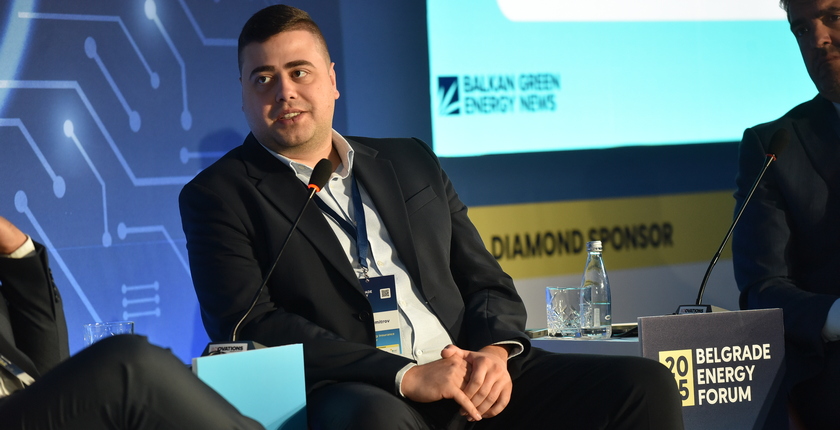
Dimitar Dimitrov: Battery developers should seek insurance in early project stages

Investors and developers of battery energy storage systems (BESS) should engage with insurers or specialized brokers as early as the development phase to effectively manage risks and ensure bankability, advised Dimitar Dimitrov, Business Development Manager at Renewable Energy Insurance Broker (REIB), during Belgrade Energy Forum 2025.

With over 4 GWh of energy storage systems across four continents, REIB offers bespoke insurance solutions tailored to the needs of utility-scale developments. Dimitrov emphasized that REIB’s portfolio includes dedicated products for BESS, covering business interruption, cyber threats, and technical malfunctions.

Speaking at the storage panel, Dimitrov underscored the importance of insuring against business interruption, especially due to outages that may compromise grid connections. He also highlighted the value of cargo insurance and robust fire protection strategies, noting these are key concerns from the insurer’s standpoint.

[wpcc-iframe title=”Dimitar Dimitrov, Business Development Manager, Renewable Energy Insurance Broker, at BEF 2025″ width=”500″ height=”281″ src=”https://www.youtube.com/embed/obGw8_zdj4U?feature=oembed” frameborder=”0″ allow=”accelerometer; autoplay; clipboard-write; encrypted-media; gyroscope; picture-in-picture; web-share” referrerpolicy=”strict-origin-when-cross-origin” allowfullscreen=””]

“As both a broker and an investor in renewable energy projects, we have first-hand knowledge of what developers go through,” said Dimitrov. “This dual perspective enables us to anticipate risk points during different phases and recommend solutions that align with actual project needs.”

REIB has developed specialized insurance products for BESS projects

REIB offers specialized insurance coverage for renewable energy and BESS projects, including tailor-made solutions for Business Interruption, Reduced Yield Coverage, Cyber Risk, and Third-Party Liability.

The company has more than 14 years of experience in renewable energy and currently insures over 60% of the PV market and more than 80% of BESS projects (installed and under construction) in Bulgaria, and cover more than 30% of the solar sector in Romania.

As an investor, REIB is familiar with all the requirements developers and contractors should meet

Having gone through the procedures of installing solar power plans and battery storage systems as an investor, REIB is familiar with all the requirements that developers, power producers, and contractors should meet. “In this way, we definitely can give the right recommendations to companies,” Dimitrov asserted.

REIB partners exclusively with A+ rated insurance companies, recognized as market leaders in both the US and Europe. This strategic approach ensures that all coverage options meet the highest standards of reliability and financial strength.

“The company also has strong exposure in the European Union market, which allows us to secure A-rated insurance policies that are fully aligned with bank requirements and enhance project bankability,” Dimitrov emphasized.

by in News

Battery storage market in SEE emerging, Western Balkans lagging behind with positive prospects

The deployment of battery energy storage systems (BESS) across Southeast Europe is progressing at an uneven pace. State subsidies and financing mechanisms have enabled the rapid implementation of BESS solutions in Greece, Romania and Bulgaria, while markets in the Western Balkans are lagging behind. However, the outlook remains positive, as experiences from neighboring markets and best practices from other parts of the European Union can help overcome initial challenges and streamline the deployment process. This was highlighted by participants of the panel dedicated to BESS at the Belgrade Energy Forum.

Among the technologies required for the energy transition, battery energy storage systems (BESS) stand out as a key factor for integrating electricity from intermittent renewable sources – wind and solar power – into the grid. There are few such facilities in Southeastern Europe and the segment is yet to even be fully regulated in the narrower Western Balkans region. The panelists at a session called Energy storage system market in SEE: trends and forecasts, at Belgrade Energy Forum (BEF 2025), outlined the trends in the budding market.

There are more and more cases of low and negative hourly prices in the wholesale electricity market in the region, providing a clear business case for BESS investments. In addition, the grid is often overloaded on weekends and holidays when solar and wind power production is high, given the weak demand.

Managing Director of Go2Power Consulting Goran Vukojević, who moderated the discussion, warned that negative prices may jeopardize system stability as well, if operators of power plants disconnect them from the grid at the same time, to avoid costs.

He highlighted the preparations in Serbia’s transmission system operator Elektromreža Srbije (EMS) for auctions for ancillary services and praised the company for transparency in regulating the competitive process. The other option for battery operators is to participate in the open market.

Managing Director of Go2Power Consulting Goran Vukojević moderated the panel discussion

Region seen with 9 GW of BESS operating power in 2030

Ioanna Barouni from Aurora Energy Research said a total of 40 GW of solar and wind power is expected to be online at the end of 2025 in the SEE region, comprising 12 countries, including Hungary. In 2030, the level is expected to reach 70 GW, which is expected to be doubled to 145 GW by mid-century. As for BESS, projections stand at 9 GW in 2030 and 25 GW in 2050.

Barouni: We miss flexibility and ancillary services for transmission and distribution system operators

The countries of the region are retiring power plants that use fossil fuels, a firm capacity, in Barouni’s words, while adding renewables. “It’s not very easy to predict how the generation profile is going to be during the day, so we miss flexibility and we miss ancillary services for TSOs and DSOs,” she said.

The gap between power prices for midday and the evening is gradually increasing. Barouni explained that batteries “create some artificial demand and absorb these low prices.” At peak demand and with less renewables, a battery can replace expensive fossil fuels, lowering the price.

Ioanna Barouni from Aurora Energy Research (pictured left) and Head of Specialized Lending at UniCredit Bank Serbia Svetlana Cerović

Serbia preparing auctions for ancillary services

Division Manager of transmission system operator (TSO) EMS Nikola Tošić acknowledged that Serbia is preparing auctions for ancillary services. He revealed that there would probably be one auction for 70% of the needed reserve in the first year. The next rounds would be more frequent, shifting toward daily auctions for balancing capacity.

In the verification process, EMS’s System Operation Department will first test the battery, Tošić added. State-owned power utility Elektroprivreda Srbije (EPS) already provides ancillary services to the TSO, so it won’t require tests, he asserted.

Serbian law defines ancillary services the same as European Union does

EMS drafted the new grid code, and it will publish the draft balancing market code for public discussion soon, according to Tošić. He said the domestic law defines ancillary services in the same way as the EU defines them in its legislation. One part is balancing services: frequency containment reserve (FCR, primary), automatic frequency restoration reserve (aFRR, secondary) and manual frequency restoration reserve (mFRR, tertiary). The other part are non-frequency services – energy.

“We think that it would be good to incentivize the periods of the year or periods of day when the needed amount of reserve is more attractive or more in demand,” Tošić said.

Market Division Manager of EMS Nikola Tošić

Fortis Energy moving ahead with battery investments regardless of government support schemes

Fortis Energy’s Chief Executive Officer for Eastern Europe Nikola Oklobdžija considers the lack of regulation to be the biggest challenge for developers. An investor can currently only focus on charging the batteries when the prices are low and sell when they are high, he underscored.

The Turkey-based company develops photovoltaic, wind power and BESS projects in the region. The first bigger investments in renewable electricity plants with energy storage are the ones that will break the ice, in Oklobdžija’s opinion.

“Of course, it helps if you have a CfD contract, so the banks will look at it more favorably,” he stated. Oklobdžija added that companies need to be able to present revenue to the lenders and what the fees are for renting the capacity or providing different services.

Bankability depends on state support and PPA contracts, cash flow models and insurance

In the meantime, Fortis is examining the experiences in Bulgaria and Greece, which have already held auctions for standalone batteries. Financing a project is easier with a CfD – contract for difference, but the company is determined to push ahead anyway, Oklobdžija stressed.

In North Macedonia it commissioned a solar power plant in Oslomej and recently contracted a BESS to be added to the facility. Oklobdžija said it wasn’t a requirement but that Fortis opted for energy storage because of market pressure with prices and occasional curtailments, like during Easter last month.

The introduction of ancillary services would facilitate the development for standalone battery systems, he explained.

Fortis Energy’s CEO for Eastern Europe Nikola Oklobdžija

Cerović: First there will be more projects for colocated BESS units than for standalone facilities

Head of Specialized Lending at UniCredit Bank Serbia Svetlana Cerović highlighted the intensive activity in Germany and Italy, for instance, but also in neighboring Romania. UniCredit is present in those markets and is analyzing the development of the battery storage market, she pointed out, arguing that the best practices in the EU are the best way for building and financing battery storage.

Cerović said there would first be more projects in the region for BESS colocated with renewable energy plants than standalone units.

She suggested that the proposed investments that include storage should be better pondered at the next renewable energy auction in Serbia. It is in the country’s interest to enable providing flexibility and to support the projects, she said.

There may be a rationale for subsidizing prosumers to add storage in Serbia, Cerović said. Turning to small-scale projects, she expressed the belief that power purchase agreements (PPAs) are “convenient” for them. She is recommending dedicating a certain capacity for the category at the next auction in the country.

The first projects in Serbia, conditioned by energy storage requirements for a grid connection, are in the process of negotiating financing, according to Cerović.

Fire protection is especially significant for insurers

Renewable Energy Insurance Broker (REIB) has insured some 4 GWh of energy storage capacity in Bulgaria and just as much elsewhere in the world, Business Development Manager Dimitar Dimitrov said. Developers should contact insurance companies when the design is done, as well as for cargo insurance, he suggested and added it is particularly important for projects that get subsidies.

“We’re not only insurance brokers, but we’re also investors, which helps us understand a bit more about the clients’ needs, and what we can definitely do more in cases of coverage. Understanding clients’ needs helps us also prevent risks that could occur during certain stages,” Dimitrov stated.

Most insurers prefer at least a six-meter distance between containers or rows of three to four containers holding batteries, he said. It is the most important factor in fire protection, in Dimitrov’s opinion. When the distance is shorter than three meters, a firewall is required for insurance, he explained.

REIB’s Business Development Manager Dimitar Dimitrov

The next segment is construction insurance. For insurance companies, it is not a higher risk profile, Dimitrov asserted. Next, he recommended operational risk insurance including coverage for business disruption, and insurance against cyberattacks. In such events, the grid connection can be damaged, the company’s representative pointed out. “Insurance policies are definitely bankable,” he added.

Bulgaria has completed its tenders for state support to BESS combined with renewable energy plants, and for standalone units. But even before subsidies, batteries have been delivered and facilities are under construction, Dimitrov stressed. Many photovoltaic projects in Bulgaria have emerged in the past few months and most of them include BESS, he said.