by in News

INOVA Launches €25m Green Grants for SMEs in North Macedonia

North Macedonia’s Agency for Innovation, Scientific and Technological Development and Entrepreneurship has launched a grant program to support small and medium-sized businesses investing in environmental protection and sustainability.

The green business support program for 2026–2030 is valued at €25 million, with €22 million earmarked for direct subsidies, according to the agency (INOVA). Eligible companies can receive between €5,000 and €300,000, provided they co-finance 20% to 50% of the investment, depending on the project type.

The European Union is providing €18 million, while the remaining funding will come from the Government of North Macedonia.

At least 300 companies expected to benefit

INOVA said it expects to support at least 300 companies, focusing primarily on micro, small, and medium-sized enterprises, particularly in manufacturing, while remaining open to applicants from other sectors. The program is designed to back projects that reduce CO₂ emissions and waste and increase the use of renewable energy, with a particular emphasis on solar power, the agency noted.

Through public calls, businesses will be able to apply for technical and advisory assistance, standardization support, and financial backing for the purchase of equipment, deployment of new technologies, and development of new products.

INOVA expects the first public call around mid-year.

Previously, the agency said the initiative would be implemented through three instruments: green startups (grants up to €40,000), green modernization (up to €150,000 per beneficiary), and transformation of industrial systems (subsidies of €300,000 per beneficiary).

Officials frame program as competitiveness and climate action measure

INOVA CEO Daniela Dimovska said the initiative offers both financial and expert support to companies investing in sustainable, environmentally friendly, and innovative solutions, describing it as a step toward an economy guided by long-term thinking and responsible action.

Daniela Dimovska, Hristijan Mickoski, and Michalis Rokas (photo: INOVA/Facebook)

Prime Minister Hristijan Mickoski said the program aims to help the country advance toward the climate neutrality goals set out in the Green Agenda for the Western Balkans, by strengthening the private sector and promoting sustainable business practices. He added that green transformation should be viewed not as a cost, but as an investment in economic resilience, environmental quality, and citizens’ well-being.

EU Ambassador to North Macedonia Michalis Rokas said the program is expected to stimulate innovation and the adoption of green technologies among SMEs, supporting a new stage of development that improves competitiveness and strengthens integration into EU value chains.
by in News

Cement maker Holcim gets EU grant for carbon capture project in Romania

A carbon capture and storage (CCS) project developed by cement maker Holcim Romania has been awarded financing under the European Union’s Innovation Fund. The European Commission has selected 61 cutting-edge net-zero technology projects across the EU to receive a total of EUR 2.9 billion in funding, covering sectors such as oil refining, hydrogen, transportation, chemicals, iron and steel, and the manufacture of components for renewable energy plants and batteries.

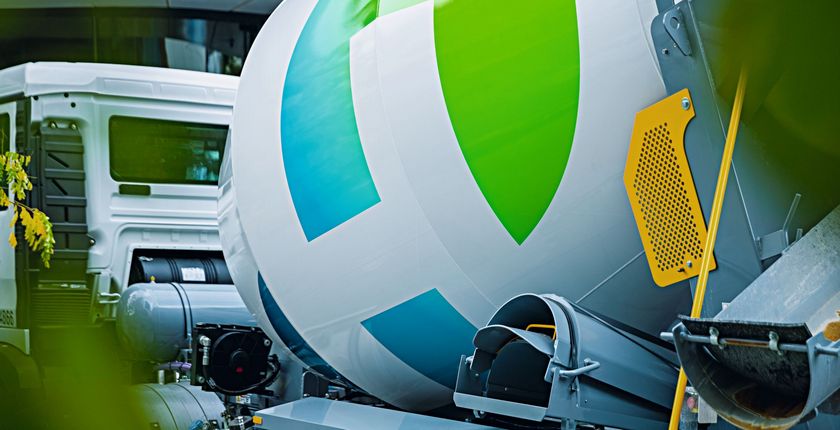
Holcim’s project at its plant in Câmpulung, Argeș county, involves capturing CO2 from cement and lime production and storing it underground. The first large-scale onshore CCS project of its kind in Eastern Europe is expected to produce an estimated two million tons of near-zero cement annually from 2032, according to a press release from Holcim.

The project will enable Holcim Romania to produce two million tons of near-zero cement annually

Carbon Hub CPT 01 will use proven carbon capture technology to separate CO2 from flue gases, which will then be compressed and transported for permanent, safe storage underground, the company said.

The Switzerland-based cement producer now has eight large-scale EU-supported carbon capture projects – in Germany, Poland, Belgium, France, Croatia, Greece, and Romania, according to the press release.

Decarbonizing energy-intensive industries across the EU

The European Commission said that the EUR 2.9 billion in grants follow its first call for net-zero technologies (IF24 Call), launched in December 2024, aiming to strengthen the EU’s technological leadership and accelerate the deployment of innovative decarbonization solutions.

The selected projects span 19 industrial sectors in 18 countries, focusing on energy-intensive industries, renewable energy and energy storage, net-zero mobility and buildings, cleantech manufacturing, and industrial carbon management.

The largest number of selected projects is in the cement and oil refining sectors

The largest number of awarded projects is in the refineries sector, with 11, followed by 10 in the cement and lime sector, 6 in the manufacturing of components for renewable energy, and 4 in the manufacturing of components for energy storage.

Other sectors on the list include chemicals, solar, maritime, road transportation, aviation, non-ferrous metals, hydrogen, buildings, construction materials, geothermal energy, and the manufacturing of components for energy-intensive industries.

The 61 selected projects have the potential to cut some 221 million tons of CO2 equivalent over their first decade of operation, supporting the EU’s objective of achieving climate neutrality by 2050, according to a press release from the European Commission.

by in News

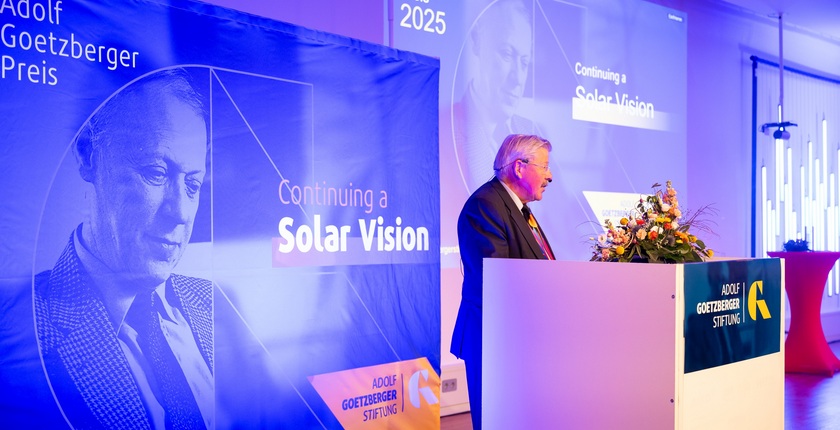
Adolf Goetzberger Award 2026: Apply with innovative solar solutions and win EUR 25,000

The Adolf Goetzberger Award, which recognizes innovation in solar, energy storage, smart grids, and power system efficiency, has invited applications for 2026, following a successful debut in 2025. The award once again spotlights developments that combine technological excellence with practical value and societal impact, according to the organizers.

The EUR 25,000 Adolf Goetzberger Award, named after German physicist and solar energy pioneer Adolf Goetzberger, honors individual contributions to forward-looking concepts, prototypes, or processes in photovoltaics, solar thermal energy, energy storage, smart grid integration, and system efficiency. Systemic and cross-disciplinary solutions are expressly welcome, the Adolf Goetzberger Foundation said.

The innovations should make a tangible contribution to sustainable energy system transformation

What matters is that the innovations address real-world technical and economic challenges and make a tangible contribution to the sustainable transformation of the energy system, reads a press release from the foundation, which is dedicated to promoting science and research, environmental protection, and climate action, with a particular focus on solar energy.

The inaugural Adolf Goetzberger Award was handed out in March 2025 to Heribert Schmidt for developing the HERIC® (highly efficient and reliable inverter concept) topology. The 2026 award ceremony will be held next spring.

Awarding innovation that makes the world a better place

“Innovation starts with a clear goal: making the world a better place. That’s the mission behind the Adolf Goetzberger Award. We aim to spotlight solutions that truly move the needle – technologically sound and socially relevant,” said Thomas Nordmann, Chair of the Adolf Goetzberger Foundation Board of Trustees.

This year’s award has an expanded scope

In addition to traditional entries from photovoltaics and solar thermal energy, the award now also invites cross-sectoral approaches, such as the smart combination of multiple technologies, advanced control and automation systems, innovative storage solutions (including power-to-X), the integration of heat pumps, or efficiency improvements in hybrid systems.

The award primarily targets applicants from Europe but is open to international individuals as well. In addition to the EUR 25,000 cash prize, recipients will receive a certificate recognizing their contribution to the energy transition. Applications can be submitted online at Goetzbergerstiftung.de.

by in News

BEF 2025: Technologies for energy transition are here, getting cheaper every day

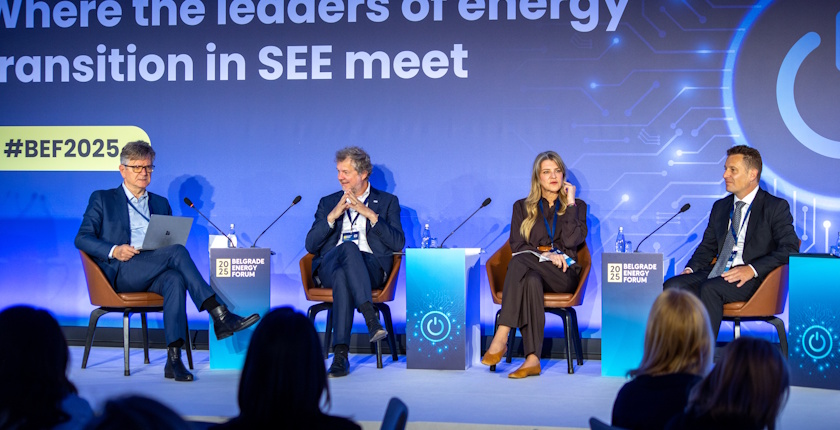
Technologies for the energy transition already exist, and their use is increasing thanks to falling costs. Investors and bankers claim they are ready to invest and that money isn’t an issue. The missing part are upgraded transmission grids, along with policies and regulations to integrate everything into a suitable environment, according to investors and lenders gathered at Belgrade Energy Forum 2025.

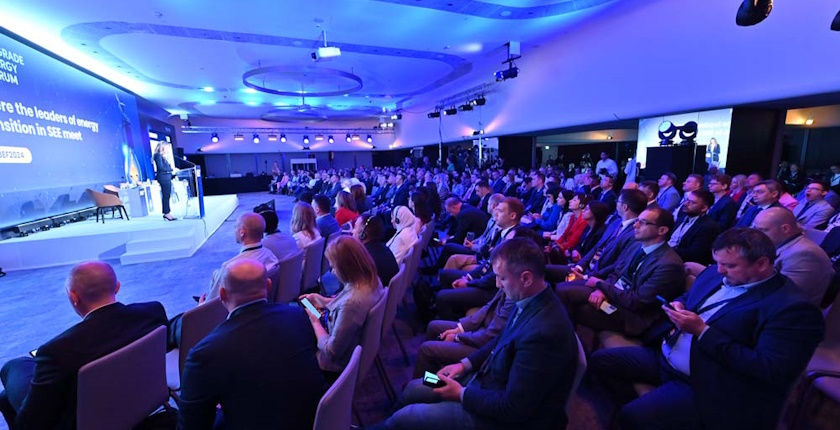
The third Belgrade Energy Forum, BEF 2025, welcomed four hundred participants from more than 30 countries from the region, Europe, and beyond. The two-day conference was organized by Balkan Green Energy News.

Participants in the panel Energy revolution underway – uniting efforts to deliver green, intelligent, and sustainable energy solutions were Maja Turković, Senior Vice President of CWP Europe, Aleš Prešern, Vice President and Head of Southeast Europe of Siemens Energy, and Christian Beynio, Head of Advisory of Kommunalkredit Austria AG.

According to panel moderator Mirza Kušljugić, a member of the Board of the Regional Center for Sustainable Energy Transition (RESET) from Bosnia and Herzegovina, the energy transition is actually a revolution, given the technological changes.

“The region is still burdened by tradition. We know the transition is inevitable, but we aren’t fully aware that it will be disruptive,” Kušljugić stated.

Technology is here, and so is financing

Mirza Kušljugić, Aleš Prešern and Maja Turković (photo: Balkan Green Energy News)

Maja Turković, Senior Vice President of CWP Europe, stressed that technology, currently undergoing a revolution, is the best card the world has in the transition. She even suggested that financing isn’t a problem and that there are more financial resources available than projects qualified to receive funding.

However, she is surprised by the rapid growth in solar power installations. Turković argued that market-based projects cannot achieve double-digit internal rates of return on equity. Part of the explanation may lie in the fact that panel prices have dropped by 60% over two years.

Battery prices have also fallen. The largest drop was last year, 40%, with a further 5% decline this year alone, according to Turković. Prices have slipped below EUR 100,000 per MWh.

Turković: Regarding CAPEX and technology, we’re ready

The latest trend is the integration of batteries with solar power plants. While transmission system operators in the region still don’t allow it, in some countries a grid connection approved for solar can also be used for batteries. “Regarding CAPEX and technology, we’re ready,” Turković underlined.

Aleš Prešern, Vice President and Head of Southeast Europe in Siemens Energy, is particularly impressed with the speed of change.

“We who are working in the energy sector are used to very slow changes. Energy was a conservative industry. In 2004, 1 GW of solar was built, but now data shows that it is how much is installed in one day. Batteries cost EUR 1 million per MWh not that long ago, and now they are ten times cheaper,” he noted.

Prešern: Transmission networks are the bottleneck of the transition

They are indeed dramatic changes, for which the existing power system wasn’t prepared. It is clear why Siemens Energy, as a technology company, considers transmission networks to be the bottleneck in the transition, Prešern said.

To illustrate the slowness of grid investments, he pointed to Austria, as one of the examples, where it took 10 years to build one important segment of the 400 kV network.

Both Turković and Prešern agree that nowadays the keyword is flexibility.

Maja Turković and Christian Beynio (photo: Balkan Green Energy News)

She explained there are operating battery management systems at low voltage levels that incorporate artificial intelligence and use market signals for activation when prices are low.

Prešern added that the required stability through balancing could be provided by gas power plants. Siemens Energy has never seen such high demand for gas turbines like today, he asserted.

Beynio: Don’t forget the non-banking institutions when looking in new financing

“If you ask about availability of financing, yes, it’s there,” Christian Beynio, Head of Advisory at Kommunalkredit Austria AG, confirmed. In his view, prices or, rather, the drop in prices of equipment, is the biggest innovation. Earlier, he said, it was a completely different game, heavily subsidized, while nowadays no subsidies are required per se.

The trend that Kommunalkredit Austria AG identified is the pooling of smaller assets, and a shift from financing projects toward financing developers and companies as corporates. It is yet to come to the region, he added.

Investment in grids, in his words, has to be initiated by the government. They have two solutions – go to the sovereign debt market or engage private investors. “Don’t forget the non-banking institutions when looking for new financing. This is a trend across Europe, and it will be relevant for the Balkans,” Beynio advised.

Battery projects won’t go so smoothly

Aleš Prešern (photo: Balkan Green Energy News)

Maja Turković expressed the belief that installing batteries won’t go as smoothly as solar. The main reason is the difficulty of securing a stable cash flow for batteries, unlike for production facilities. Cash flow enables financing, so batteries will likely need to be financed with internal funds, she underlined.

Turković noted that batteries are best monetized by providing system services and arbitrage, but pointed out they can also participate in capacity mechanisms, a scheme that could involve power purchase agreements (PPAs).

She said the development of the regulatory framework should be faster, to facilitate investments in batteries. Investors are ready to commit their funds to battery installation, and everyone in the market agrees that batteries are essential, Turković stressed.

Prešern: People and not technology are a guarantee that networks will exist and function properly

Amid the widespread discussions about technology and regulations, Aleš Prešern highlighted another issue. Energy, in his opinion, has always been an exciting sector, but the message hasn’t been getting through to young people in recent years. It was the case not only in the region but also in Europe, and beyond, leading to a shortage of skilled personnel.

However, he expressed the belief that things are changing and enthusiasm is returning. Prešern even suggested it could be a major advantage for the region, well known for its high-quality engineers.

Siemens Energy strives to employ as many good engineers as possible because, ultimately, people and not technology are a guarantee that networks will exist and function properly, he stressed.

The solution is also in using new technologies to better utilize existing grids

Christian Beynio (photo: Balkan Green Energy News)

The combination of rapid changes in the energy sector and slow investments in the grids threatens to put the transition to a standstill.

Better utilization of existing infrastructure could be the solution. Siemens Energy fits well there, as several years ago it established a division called Digital Grid. According to Prešern, the idea was to be quicker in data utilization, something that other sectors like automotive have long advanced, while energy has lagged.

The company recently acquired a Slovenian-Austrian firm that produces sensors installed directly on power lines, a technology called dynamic line rating. The devices provide real-time data about the conditions in power lines, potentially enabling their use beyond original design limits.

“With this technology, we believe we can increase the capacity of existing networks by an average of 30%,” Prešern revealed.

New technologies have changed bankers’ jobs as well

New technologies have changed bankers’ jobs as well, Christian Beynio admitted. He recalled that it was easy to finance wind farms in Serbia because they had feed-in tariffs from the government. The only risk element was the wind blowing or not blowing, Beynio said.

Nowadays there are merchant power producers that combine their facilities with batteries and use algorithms in electricity trading, he added. It means bankers need to sit with market consultants to identify all outcomes, he stressed.

“You won’t find singular cash flow streams. It’s going to be multi-dimensional and people simply need to adjust. It’s going to be more short term also on the lending side. It’s rather going to be corporate lending to people and companies who know what they are doing and can credibly demonstrate that with a track record. That is the digitalization impact we see”, Beynio said.

Maja Turković (photo: Balkan Green Energy News)
by in News

Belgrade Energy Forum 2025 – 50 speakers at eight panels to track pace of SEE energy transition

The agenda of the third Belgrade Energy Forum, taking place on May 14-15, has been finalized with the addition of further prominent energy experts and companies. The conference, organized by Southeast Europe’s leading energy news portal, Balkan Green Energy News, will feature eight panels covering key topics in the energy sector, with an impressive lineup of speakers. Make sure you register on time via this link.

The Belgrade Energy Forum will once again be a meeting place for representatives of regional and international institutions and organizations, as well as the business community from across the region, Europe, and the world.

Eight panels featuring more than 50 speakers will offer an overview of the current challenges in the energy sector. Conference participants will hear in-depth analyses of the current situation, but also projections for the future. The thread that connects everything at this year’s BEF is digitalization – it permeates energy production, consumption, and storage and allows enough flexibility for the stable functioning of the energy systems of the future, where renewable energy will dominate.

Chikán: Electricity knows no borders

One of the key speakers at the conference, Alteo Group CEO Chikán Attila, will lead the company’s high-level delegation. Alteo has recently launched a regional expansion drive, aiming to establish a green platform of up to 2 GW in energy production, including operation, software, maintenance, storage, and waste management.

The Hungarian company primarily targets its home market, Slovakia, Croatia, and Serbia.

“Electricity knows no borders, therefore partnerships and collaborations among energy market players are essential, even at the regional level. Such cooperation is vital to ensuring the security and reliability of electricity supply, facilitating the integration of renewable energy sources, and providing essential digital solutions, supported by expertise and professional know-how,” Chikán stressed.

Decarbonization strategies for power generation in Southeast Europe 2040/2050

  • Dejan Paravan, CEO, GEN Energija
  • Dušan Živković, CEO, EPS
  • Eric Scotto, CEO, AKUO
  • Milutin Đukanović, Chairman, EPCG Board of Directors
  • Neda Lazendić, Country Manager, WV-International

Although at the heart of national energy systems, state-owned power utilities are faced with an environment that has changed and continues to change rapidly. The key shift is the entry of private capital into electricity production through the construction of solar power plants and wind farms.

The energy transition, at this stage, requires cooperation between state power utilities and private companies. With decarbonization as the main objective, the key challenge lies in choosing appropriate strategies and electricity generation technologies.

Moderating the panel will be Dražen Jakšić, Director of the Energy Institute Hrvoje Požar (EIHP).

“The transition to a low-carbon energy system is a key challenge for our region, demanding innovation, investment, and cooperation. As a sponsor of the Belgrade Energy Forum, EIHP is committed to fostering dialogue and driving sustainable energy solutions. I look forward to an insightful discussion,” he stressed.

Jakšić: The transition to a low-carbon energy system is a key challenge for our region, demanding innovation, investment, and cooperation

In recent years, nuclear energy has emerged as a possible alternative. There is hardly a better interlocutor on this topic in the region than Dejan Paravan, the top man of GEN Energija, the Slovenian company developing the Krško 2 nuclear power plant project.

Dušan Živković, CEO of Elektroprivreda Srbije (EPS), will tell us about the Serbian power utility’s plans when it comes to nuclear energy.

Živković: Without decarbonization, the region’s energy sector has no future

“Without decarbonization, there is no future for the region’s energy sector, and that is the biggest challenge ahead of us. It is essential to accelerate decisions and ensure sustainable project financing mechanisms that will provide energy security for every country and power utility in the decades to come. By investing in existing capacities and new renewable energy projects, EPS, as the biggest utility in the region, will make its own contribution to energy security. That’s why we have initiated a transformation process – because we need to be more profitable, more efficient, and fully prepared to tackle any challenge,” Živković pointed out.

The energy transition, in his words, is the path EPS has chosen, and all its plans will align with that goal, based on the belief that the diversification of energy sources and new technologies are essential for achieving it. “These are just some of the key messages I will share with the participants of this year’s BEF,” said Živković.

Eric Scotto, co-founder and CEO of French company Akuo, will share the latest information on the energy transition from across the globe.

The company’s portfolio consists of 1.9 GW of power plants in operation and under construction, with a further 12 GW in the pipeline in more than 20 countries around the world, including a number of countries in the Southeast Europe region.

Integration of Western Balkans electricity markets into internal European market through market coupling

  • Anže Predovnik, Director, ADEX Group
  • Ivan Asanović, Executive Director, CGES
  • Marko Bislimoski, President, Energy, Water Services and Municipal Waste Management Services Regulatory Commission of the Republic of North Macedonia
  • Zoran Vujasinović, Policy Officer, ACER

The integration of the Western Balkans’ electricity markets with the European Union (EU) markets is a process that deserves much greater public attention than it currently receives. It is safe to say that its true importance will become evident only once it is completed.

Full integration will unlock significant synergies, maximizing the benefits of a unified market by enhancing supply security, accelerating the integration of renewable energy sources, and fostering greater competition and transparency.

Moderator Dejan Stojčevski, CTO of the SEEPEX power exchange, says the panel seeks to encourage dialogue on the importance of cross-border collaboration and market efficiency in bolstering energy security and sustainability in the region.

Bislimoski: The time for inspiring speeches is over. Geopolitical developments demand action – now!

Since market integration is largely the job of regulators, the challenges they face will be analyzed by Marko Bislimoski, president of North Macedonia’s Energy and Water Services Regulatory Commission (RKE).

He says that three things are essential for the regional integration of electricity markets into a single European market: investment, investment, and nothing but investment. In his words, the energy crisis demonstrated that limitations become a reality when governments fail to prioritize the implementation of key energy infrastructure capacities in their budgets.

“This past winter, the region faced the highest electricity prices compared to the rest of Europe. Why? Because the implementation of energy investments is not just a ribbon-cutting ceremony. Today, more than ever before, the countries of the former Yugoslavia must demonstrate maturity. These are the years when energy independence will be built through action. The time for inspiring speeches is over. Geopolitical developments demand action – now!” he stressed.

Energy revolution underway – uniting efforts to deliver green, intelligent and sustainable energy solutions

  • Aleš Prešern, VP, Head of Southeast Europe, Siemens Energy
  • Maja Turković, SVP, CWP Europe
  • Ann-Catherine de Tourtier, Managing Director Mediterranean, Nordex Group

As much as contesting the energy transition may be futile, there are still those who find such a view meaningful, especially in light of certain global political developments. That’s why it is important to give the floor to some of the transition leaders and let them testify that an energy revolution is indeed underway in the region.

The panel’s moderator Mirza Kušljugić – professor, energy expert, and one of the founders of Bosnia and Herzegovina’s Centre for Sustainable Energy Transition Centre (RESET) – goes one step further to show that change is not only happening but also accelerating.

“The key words are a new energy paradigm driven by the four Ds – decarbonization, digitalization, decentralization, and democratization. But now we also have another D: disruption, or radical change in the industry and market caused by technological innovation. Of course, we must focus the discussion – from global processes (China, the US, the EU, the Global South) to where the region stands in all of this,” Kušljugić points out, providing a perfect introduction to the panel.

Turković: It’s more important than ever to have open discussions about real solutions

Aleš Prešern, Vice President and Head of Southeast Europe at Siemens Energy, has worked in the energy sector for more than 20 years. He recalls that digitalization is key, along with grid resilience and electricity transmission.

With nearly 100,000 employees in more than 90 countries, Siemens Energy develops the energy systems of the future, ensuring that the growing energy demand of the global community is met reliably and sustainably. The technologies created in the company’s research departments and factories drive the energy transition and provide the base for one sixth of the world’s electricity generation.

As a leader in renewable energy development, CWP is actively working on several large-scale projects across the SEE region with a total capacity exceeding 7 GW, positioning the company at the forefront of the region’s energy transition. Given its global expertise and insights into the regional energy market, CWP’s contribution to this year’s conference will be invaluable.

Maja Turković, Executive Vice President of CWP Europe, says that BEF 2025 is a key gathering of leading experts driving the energy transition in Southeast Europe.

“As this shift gains momentum, it’s more important than ever to have open, action-driven discussions about real solutions to the challenges and opportunities ahead,” says Turković.

PPAs as a key to renewable energy growth in SEE

  • Nikola Gazdov, Chairman, Association for production, storage and trading of electricity – APSTE
  • Natalija Ljubić, Manager PPA & BESS Transactions, Pexapark
  • Ivana Đurović, Category Manager Renewable Energy, Knauf Group

Power Purchase Agreements (PPAs) are, like flexibility, a tool for fixing the imperfections of renewable energy sources, and they are recognized as a key mechanism within the new electricity market design. They ensure price stability, attract new investment, and accelerate the decarbonization of industry.

Is the region ready for PPAs? What are the dominant models? What is the current market practice? How are PPAs viewed by financial institutions? What do they offer to end consumers and what to investors in new power plants? Answers to these questions will be sought at the panel moderated by Mislav Slade-Šilović, Energy, Utilities & Resources Consulting Leader for Southeast Europe and member of the core PPA team at consultancy PwC.

Experience with PPAs for more than 500 GWh of electricity

Slade-Šilović’s experience in concluding PPAs for the production and consumption of over 500 GWh of electricity per year in the SEE region will certainly be of help.

Nikola Gazdov, Chairman of Bulgaria’s association for electricity production, storage, and trading (APSTE) and member of the Board of Directors of the European solar industry association SolarPower Europe, has no shortage of experience either. As CEO of three companies – Enery Element GmbH, Element Power Group, and Renergy – he is involved in the development of a large number of projects.

Pexapark, a company that provides logistics to businesses in the renewable energy market, is synonymous with PPAs in Europe. Natalija Ljubić is the Manager for PPA and BESS Transactions at Pexapark, which has helped conclude contracts for facilities with a combined capacity exceeding 35 GW.

The views of electricity buyers – without whom there would be no PPAs – will be conveyed by Ivana Đurović, Category Manager for Renewable Energy at Knauf Group.

Market flexibility: the backbone of a resilient energy system

  • Roman Bernard, CEO, NGEN
  • Luka Renko, COO, KOER
  • Alteo Group representative
  • Nikolaj Candellari, Project Manager and Market Intelligence, CyberGrid
  • Marko Zarić, EMS

Moderating the panel will be Elena Boškov Kovač, co-founder and CEO of Blueprint Energy Solutions, and a leading voice on market flexibility in Europe.

She will host representatives of the sector’s leading companies: NGEN, Alteo, KOER, CyberGrid, as well as Serbia’s transmission system operator Elektromreža Srbije (EMS).

“Excited to moderate a high-impact panel on ‘Market Flexibility: The Backbone of a Resilient Energy System’ at the Belgrade Energy Forum 2025,” says Boškov Kovač, whose work has shaped smart grid strategies and digitalization innovation agendas across the EU and under ETIP SNET.

As Europe accelerates its shift to renewables, market flexibility is emerging as the cornerstone of reliable, affordable, and decarbonized energy systems. With the European flexibility market promising to unlock over EUR 20 billion in savings, this session will explore how digital tools, flexible assets, and new market designs are unlocking value and resilience across the grid.

Slovenia’s NGEN is the technology sponsor of BEF 2025

Slovenian energy company NGEN, the technology sponsor of the conference, has managed to establish itself as a significant player in European markets in just five years of operation and is now ready to enter the Western Balkans’ markets.

Specializing in premium battery storage systems and smart energy solutions, the company is developing systems with a total capacity of 1.6 GWh in European countries. Its founder, Roman Bernard, will be speaking at the panel.

Also taking part in the panel will be Luka Renko, COO of KOER, a pioneer in virtual power plants in the region.

Rounding off the lineup of exceptional panelists will be Nikolaj Candellari, who is responsible for project management at CyberGrid. The software company was acquired a few years ago by Austria’s EVN, one of the first to demonstrate that greater integration of renewable energy sources, battery storage, and prosumers is not possible without digitalization and software solutions.

In a nutshell, this innovative company stands for the digitalization of the energy sector, with a focus on virtual power plants.

by in News

Heliup wins European Solar Startup Award 2025 with solar panels 60% lighter than conventional ones

France-based Heliup has been awarded the Gold European Solar Startup Award 2025 for its Stykon solar PV panels for flat rooftops.

Following a successful online pitch, Heliup, Aevy and suena were nominated by the expert panel as finalists.

Yannick Veschetti, President and Co-founder of Heliup, Gautier Moulin, Co-founder and Chief Operating Officer of Aevy, and Felix Heimke, Senior Product Manager at suena, presented their work on stage at the SolarPower Summit 2025.

Yannick Veschetti stressed there is over four billion square meters of available large rooftop space in the European Union. Heliup wants to harness the potential of this available rooftop space and fast-track solar installations across Europe, he added.

Veschetti: The startup is committed to revolutionizing solar energy with lightweight solutions manufactured in Europe

The startup is committed to revolutionizing solar energy with lightweight solutions manufactured in Europe that unlock the potential of commercial and industrial rooftops, Veschetti pointed out.

According to the startup, solar panels have considerable weight which, combined with around 15 kilograms per square meter for the fixing structures, is not compatible with a large proportion of existing building roofs.

To address the issue, Heliup uses a patented CEA technology developed for over three years at France-based Institut National de l’Energie Solaire (INES).

The unique technology is based on the conservation of thin glass and on an innovative installation concept, the startup said.

The solar panel is 60% lighter than conventional panels

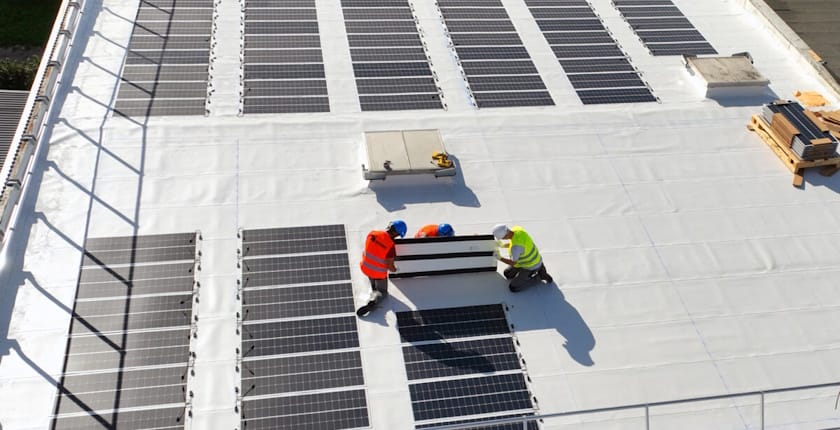
The Stykon range is intended for flat roofs, with an innovative, simple and quick installation system based on gluing the panel directly onto the roof’s waterproofing membrane. It is 60% lighter than conventional panels while maintaining the same level of performance and durability, Heliup added.

SolarPower Europe explained that Heliup’s panels are lightweight, at five kilos per square meter. They have an efficiency of 20% and are resistant to extreme weather conditions. The equipment is made in Europe and has an easy and fast installation process, the organization said.

“Only with these forward-thinking innovators can we strengthen Europe’s competitiveness and guarantee a swift energy transition,” SolarPower Europe CEO Walburga Hemetsberger stated.

The award jury panel comprised Jenny Chase, Solar Analyst at BloombergNEF; Stefan Müeller, Co-Founder, Shareholder and Board Member at Enerparc AG; Felix Krause, Managing Partner at Vireo Ventures; and Michael Schmela, Director of Market Intelligence at SolarPower Europe.