by in News

Bosnia and Croatia Advance Southern Gas Interconnection to Strengthen Regional Energy Security

Bosnia and Herzegovina and Croatia have formalized an intergovernmental agreement to advance the construction of the Southern Gas Interconnection, a strategic infrastructure project aimed at strengthening energy security and ensuring a more stable gas supply for Bosnia and Herzegovina.

The planned interconnection will provide Bosnia and Herzegovina with an alternative supply route via Croatia, reducing its current dependence on Russian natural gas delivered through Turkey, Bulgaria, and Serbia. By enabling access to new sources, the project is expected to significantly enhance supply resilience.

The agreement was signed in Dubrovnik during the Three Seas Initiative summit by Borjana Krišto, Chairwoman of the Council of Ministers of Bosnia and Herzegovina, and Croatian Prime Minister Andrej Plenković.

The pipeline network will span multiple routes, including Split–Zagvozd in Croatia, extending into Bosnia and Herzegovina through Posušje, and continuing across key locations such as Tomislavgrad, Kupres, Bugojno, and Travnik. Additional शाखing routes will connect areas including Mostar, Livno, Jajce, Tuzla, and Čapljina, creating a comprehensive distribution network.

According to the Council of Ministers of Bosnia and Herzegovina, the project will diversify both supply routes and energy sources, contributing to greater energy independence. The pipeline is expected to be supplied with gas from the liquefied natural gas (LNG) terminal on the Croatian island of Krk.

The signing ceremony was attended by US Energy Secretary Chris Wright and Vedran Lakić, Minister of Energy, Mining and Industry of the Federation of Bosnia and Herzegovina. US-based AAFS Infrastructure and Energy has been designated to manage the pipeline within Bosnia and Herzegovina.

Although the project has been under consideration for years, tangible progress accelerated recently. In January, authorities in Bosnia and Herzegovina indicated that AAFS Infrastructure and Energy would receive a 30-year concession. Subsequently, in late February, twelve countries from Central and Eastern Europe and the Balkans, including Bosnia and Herzegovina, reached an agreement with the United States to strengthen cooperation on LNG supply.

The Federation of Bosnia and Herzegovina, the entity through which the pipeline will pass, recently adopted a special legal framework (lex specialis) designating the US firm as the project investor. This decision has drawn criticism from the European Union, which warned of potential consequences.

Borjana Krišto emphasized that Bosnia and Herzegovina occupies a strategic position at the crossroads of energy flows in Southeast Europe. She noted that, beyond being a consumer, the country has the potential to play an active role in developing a more secure and resilient regional energy system. She also highlighted the importance of transatlantic cooperation in accelerating investment and improving market integration.

Prime Minister Andrej Plenković underscored that the agreement reinforces Croatia’s role as a regional energy hub, particularly by enabling the transport of gas from the Krk LNG terminal to Bosnia and Herzegovina. He also pointed to the broader significance of the Three Seas Initiative, which brings together 13 EU member states from Central and Eastern Europe to enhance connectivity between the Baltic, Black, and Adriatic seas, with a focus on infrastructure, transport, and energy integration.

by in News

Albania Government Subsidies for Water Utilities Reach €3.5 Million, Majority Spent on Electricity Costs

Water supply and sewerage companies received 350 million lek, or more than €3.5 million, in government subsidies last year. Official data show that most of this amount was used to pay for electricity. The share of this expense in total subsidies was 88.8%. The remainder was allocated to compensate vulnerable groups.

“For 2025, the Central Government has distributed subsidies totalling 350 million lek to twelve Regional Water Utilities, out of the fourteen established so far, as well as to the Vorë Water Utility.

The distribution of subsidies has been carried out in accordance with Instruction No. 1 of the Ministry of Infrastructure and Energy, dated 04.07.2025, ‘On the approval of the methodology, criteria, and procedures for the allocation and use of state subsidies for service providers in the water supply and sewerage sector for the 2025 budget year.’

Based on point 6(a) of this instruction, the subsidy fund is used to grant a 100% monthly discount on water supply and sewerage tariffs for vulnerable categories, as defined in point 3 of the methodology, to compensate for the consumption of the minimum vital quantity of up to 5 m³/month,” the document from the Water Regulatory Authority states.

For 2025, the amount used for vulnerable groups for the 12 Regional Water Utilities and the Vorë Water Utility is 39 million lek.

Meanwhile, the Authority clarifies that based on point 6(b) of the same instruction, the remaining part of the subsidy fund is used to settle electricity obligations for companies that have more than 75% of water production through mechanical pumping. This criterion has been applied to subsidize the Regional Water Utilities of Fier, Shkodër, Elbasan, Sarandë, Durrës, and the Vorë Water Utility.

“For companies that have not completed the regionalization process, according to the provisions of Council of Ministers Decision No. 302 specifically the Tirana and Kamëz Water Utilities, which are expected to be consolidated into the structure of the Tirana Regional Utility no subsidies were allocated in 2025 for covering electricity costs or supporting vulnerable groups.

This situation is linked to the strategic orientation of the central government to prioritize financial support for water utilities that have become part of the regionalization reform, in accordance with Decision No. 302, where the Ministry of Infrastructure and Energy/AKUK holds 51% of the shares. It also appears that during 2025, two regional water utilities, namely Gjirokastër and Dibër, did not benefit from subsidies,” the document states.

by in News

The Green Backbone: Albania and Western Balkan Partners Unveil Strategic Energy Projects for 2026 EU Funding

The Energy Community has officially opened the public consultation for the 2026 list of Projects of Energy Community Interest (PECI), marking a pivotal moment for the Western Balkans’ energy infrastructure. Running from March 16 to April 17, 2026, the consultation evaluates eight critical projects designed to dismantle cross-border bottlenecks and pave the way for a massive influx of renewable energy.

For Albania and its neighbours, Kosovo, North Macedonia, Montenegro, and Bosnia and Herzegovina the selected projects represent a shift from traditional hydroelectric production to a sophisticated, integrated system of large-scale storage and high-voltage transmission corridors. These projects are now positioned to seek diverse financing, including EU grants, Western Balkans Investment Framework (WBIF) funds, and favourable loans from international financial institutions.

Below is a detailed technical and strategic breakdown of the flagship projects currently in the PECI selection pipeline.

1. Project E12: Moglice Pumped-Storage – The Balkans’ “Giant Battery”

At the heart of Albania’s green transition is the Moglice Extension Pumped-Storage Hydropower Plant (PSH). Developed by Devoll Hydropower Sh.A. (part of the Statkraft Group), this project is set to become one of the largest flexibility assets in the region.

  • Technical Parameters:

    • Maximum Power (Pmax): 1,620 MW (with a dynamic operational range of -1,620 MW to +1,620 MW).

    • Storage Capacity: 30,000 MWh (approx. 30 GWh).

    • Voltage: 400 kV.

    • Efficiency: 77% roundtrip efficiency.

  • Strategic Role: The plant will function as a “green battery,” utilizing the existing Moglice reservoir (380 million m³) and a new upper reservoir (25 million m³). It is designed to store surplus energy during periods of high production and release it during peak demand, providing critical balancing services to Albania and neighboring EU markets like Greece and Italy.

  • Timeline: Currently in the economic feasibility stage, with the earliest commissioning targeted for 2033.

2. Project E04: The 220 kV Balkan Triangle Rehabilitation

To ensure the reliability of the “Balkan Triangle” (Albania, Montenegro, and Bosnia & Herzegovina), the rehabilitation of the aging 220 kV Trebinje–Vau i Dejës corridor has been prioritized. This line is a vital artery that has recently struggled with congestion due to new solar and hydro capacities.

  • Technical Parameters:

    • Voltage: 220 kV.

    • Length: 162.92 km.

    • Transmission Power: Upgraded to carry 1,500 A using specialized high-capacity conductors.

    • Promoters: NOS BiH, Elektroprijenos-Elektroprenos BiH, and CGES (Montenegro).

  • Strategic Role: The project addresses severe climatic challenges and infrastructure depreciation. By replacing OPGW, insulation, and conductors on existing poles without increasing mechanical load, the project will increase Net Transfer Capacity (NTC) and resolve long-standing congestions between BA–ME, ME–AL, and AL–BA.

  • Timeline: Currently in the Detail Design Study phase, with an expected commissioning date of 2030.

3. Project E05 & Regional Corridors: Integrating Wind and Strengthening East-West Links

The expansion of the 400 kV network is a two-pronged strategy: strengthening regional East-West ties and unlocking wind potential in Northeast Albania.

A. The East-West Western Section (Project E05)

Connecting Kosovo and North Macedonia, this 103 km interconnector is a key link in the regional transmission “rings.”

  • Technical Parameters: 400 kV; 1330 MW Pmax.

  • Objective: Connecting the upgraded Prizren (XK) substation to a new substation in Tetovo (MK). This project enhances the security of supply and supports the large-scale integration of Renewable Energy Sources (RES) across the corridor.

  • Timeline: Expected commissioning by 2035.

B. The Albania–Kosovo Interconnection (Strategic Link)

As highlighted by recent strategic filings, Albania is pushing for a new 400 kV interconnection between Fierza (AL) and Prizren (XK).

  • Strategic Role: This link is deemed essential to facilitate the integration of over 1 GW of planned wind energy capacity in Northeast Albania. It will alleviate existing 220 kV grid overloads and significantly boost regional energy trading.

Financing the Future

These PECI projects are governed by the revised EU TEN-E Regulation, which streamlines the path toward final approval in December 2026. Because these projects provide cross-border benefits, they are eligible for a “blended” financing model. This includes state budget allocations, private investment from promoters like Statkraft and KOSTT, and significant support from European Union grants and loans.

As the Western Balkans move away from coal and toward a renewable-heavy mix, these projects—Moglice’s storage, the 220 kV rehabilitation, and the 400 kV corridors—form the essential hardware of a modernized, secure, and decarbonized European energy market.

by in News

Slovenia Bolsters Energy Transition with €174 Million Grid Investments

Slovenia has taken a decisive step toward a decarbonized future, announcing a €174 million investment package dedicated to the comprehensive modernization of its national power transmission and distribution networks. This strategic initiative aims to bolster grid capacity, enhance supply reliability, and—most critically—facilitate the rapid integration of renewable energy sources into the national mix.

The project is supported by €59 million in co-funding from the European Union’s Modernisation Fund, a financial instrument fueled by the EU Emissions Trading System (ETS) designed to assist member states in meeting climate targets.

A Foundation for the Green Transition

Minister of the Environment, Climate and Energy, Bojan Kumer, formalized the initiative by signing four contracts and two strategic decisions with the CEOs of Slovenia’s six state-owned energy entities. The group includes the transmission system operator (TSO) ELES and five distribution system operators (DSOs).

“The energy transition actually begins with the grid,” Minister Kumer noted during the signing ceremony. “A strong, resilient network is the bedrock upon which our future energy autonomy and sustainability are built.”

Key Projects and Financial Breakdown

The modernization efforts are distributed across the country’s regional operators, focusing on infrastructure upgrades, digitalization, and increased transformer capacity.

Operator Project Focus Total Investment EU Support
Elektro Ljubljana Urban network upgrades, cabling, and digitalization €53.2 Million €19.6 Million
Elektro Gorenjska Upgrading Trata and Brnik substations €32.9 Million €14.9 Million
Elektro Maribor New 110 kV line (Murska Sobota – Lendava) €32.3 Million €11.1 Million
ELES (TSO) Upgrading 110 kV line (Dravograd–Velenje) €12.9 Million €5.7 Million
Elektro Celje Switchgear refurbishment & transformer replacement €11.0 Million €5.5 Million
Elektro Primorska Reconstruction of Vrtojba substation switchgear €3.5 Million €1.7 Million

The 2030 Vision: Scaling Smart Infrastructure

This current wave of investment is only the beginning of a broader strategic roadmap. Slovenia has secured over €300 million from the Modernisation Fund to be utilized through 2030, specifically earmarked for grid refurbishment, energy efficiency, and renewable deployments.

The Ministry is already preparing a subsequent public call, expected in April, which will allocate €69 million for smart electricity grid investments between 2026 and 2030. These funds will prioritize three pillars:

  1. Renewables Development: Strengthening the grid to handle intermittent wind and solar inputs.

  2. Electrification of Heating: Supporting the transition away from fossil-fuel boilers to heat pumps.

  3. E-Mobility: Building the infrastructure necessary for the widespread adoption of electric vehicles.

By reinforcing its electrical backbone today, Slovenia is ensuring that its infrastructure can meet the demands of a more electrified and sustainable tomorrow.

by in News

Albania’s Water Infrastructure Investments Surpass €150 Million in 2025

Investments in Albania’s water supply and sewerage sector reached a significant milestone in 2025, exceeding 15.6 billion ALL (approximately €156 million). This surge in funding reflects the government’s intensified efforts to modernize aging infrastructure and meet European Union environmental standards.

According to official data from the Ministry of Infrastructure and Energy, the 2025 budget execution for the Water Supply and Sewerage (WSS) sector underscores a strategic priority to ensure 24-hour water availability and drastically reduce technical and administrative losses.

Strategic Objectives and Financial Allocation

The total investment of 15.6 billion ALL was channeled through several key pillars. The primary focus remains the rehabilitation of distribution networks in major urban centers and the expansion of wastewater treatment capabilitiesa critical requirement for the country’s tourism-driven economy and its EU integration path.

Government officials noted that these investments are part of a broader master plan aimed at making the sector financially self-sufficient. Historically, the Albanian water sector has struggled with high levels of “Non-Revenue Water” (NRW)—water that is produced but “lost” before it reaches the customer through leaks or unauthorized consumption.

Institutional Reform and Aggregation

The 2025 investment peak coincides with the ongoing sector reform, which involves the “aggregation” or merging of municipal water utilities into larger regional entities. This consolidation is designed to improve management efficiency, optimize human resources, and create economies of scale that allow for better maintenance and service delivery.

By centralizing operations, the government aims to reduce the heavy reliance on state subsidies, directing more funds toward capital investments rather than covering the operational deficits of smaller, inefficient utilities.

International Support and Key Projects

A substantial portion of the €150 million investment portfolio is supported by international development partners. High-impact projects are currently being co-financed by:

  • KfW (German Development Bank): Focusing on the modernization of networks in coastal and northern regions.

  • The World Bank: Supporting the National Water Supply and Sanitation Sector Modernization Program.

  • The European Union (IPA Funds): Specifically targeting wastewater treatment plants to protect Albania’s coastline and rivers.

Key projects highlighted in the 2025 report include the ongoing overhaul of the Tirana water network, which seeks to secure a continuous supply for the capital’s growing population, and critical interventions in the Durrës and Vlora regions to support the booming hospitality sector.

Looking Ahead

While the €150 million figure represents a record high, experts suggest that sustained investment will be required over the next decade to fully modernize the national grid. The Ministry of Infrastructure and Energy emphasized that the focus for the remainder of the year will be on monitoring the performance of the newly aggregated regional utilities to ensure that the capital infusion translates into tangible improvements for Albanian citizens and businesses.

by in News

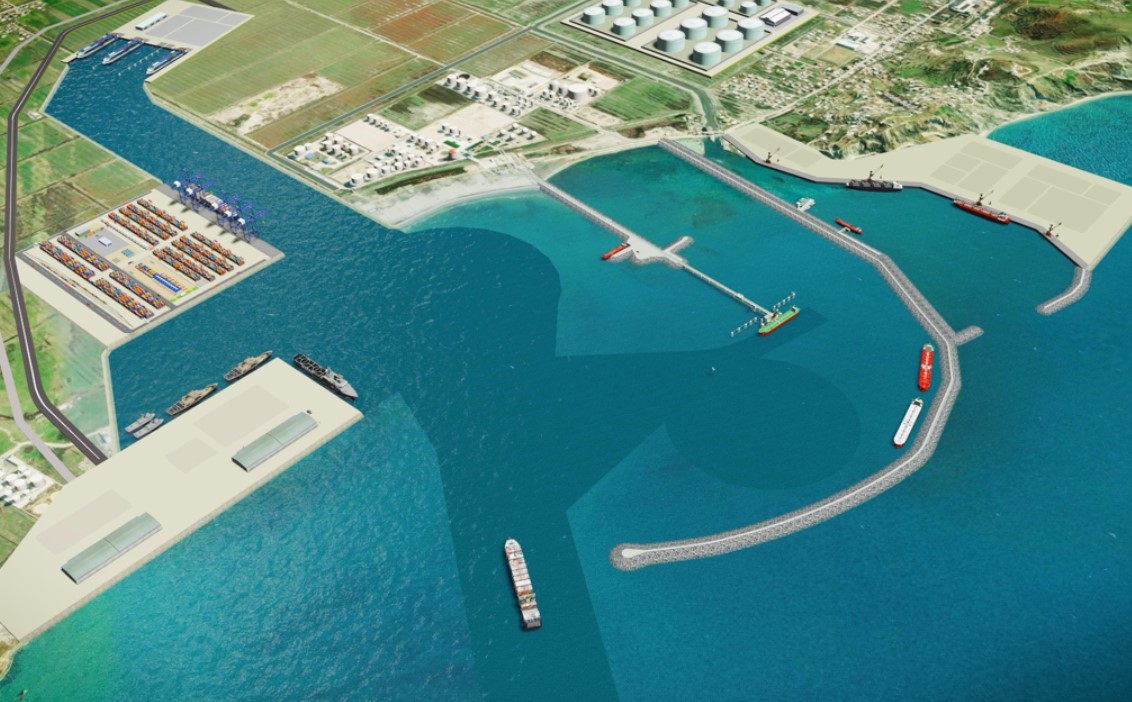
Tender for new Porto Romano terminal fails after sole bidder withdraws

The public tender for the construction of Albania’s new commercial port in Porto Romano has collapsed after the single remaining bidder withdrew from the competition. Minister of Infrastructure and Energy Enea Karakaçi confirmed on Wednesday that the company pulled out of the project, citing escalating economic pressures.

“We are facing the withdrawal of the only bidder left in the race for purely economic reasons linked to rising costs,” Minister Karakaçi stated. “As a result of the current crisis, overall construction expenses have surged, and the bidder has used this to justify their exit. The commission will now proceed according to established protocols.”

Addressing the setback, Karakaçi echoed recent remarks by the Prime Minister, suggesting that external forces have actively sought to undermine the infrastructure initiative. “There are various actors attempting to stall and sabotage this critical national project for diverse reasons, including economic motives,” he noted. Despite the hurdle, he emphasized the government’s resolve: “We will devise an alternative strategy. No actor will be able to stop this project, as it is vital to the country’s economic development.”

The Minister also moved to assuage concerns over potential logistical disruptions, clarifying that the delay in selecting a new contractor will not affect daily operations at the existing Port of Durrës. The transition is inherently tied to the “Durrës Marina” real estate development—which will eventually occupy the current port’s territory under a state agreement—but that project is still only in its preliminary phase.

In the interim, the Albanian government is continuing its collaboration with international engineering consultancy Royal Haskoning to reassess the technical and financial criteria for prospective companies interested in taking over the new port’s development.

A Fraught Bidding Process

The ambitious project, officially titled the “New Integrated Commercial Port of Durrës in Porto Romano – Phase I,” was launched by the Durrës Port Authority in 2024 with an estimated budget limit of 39.3 billion Albanian Lek (ALL). The initial phase of construction was projected to span 1,220 days, or approximately three and a half years.

Porto Romano

However, the procurement process has been marked by strict filters and legal friction. In April 2025, the Bid Evaluation Commission announced that only two entities Archirodon Construction and Van Oord Dredging and Marine Contractors had passed the technical pre-qualification stage. Major industry players, including Webuild and a consortium led by Jan De Nul, were disqualified.

This led to a legal clash when the Jan De Nul consortium filed a formal complaint with the Public Procurement Commission (KPP). The KPP ultimately dismissed the appeal in late April 2025, allowing the contracting authority to move forward.

By September 2025, the competition had narrowed entirely. Open procurement data revealed that only one qualified economic offer remained to proceed to the contract signing a final step that has now been derailed by the company’s sudden withdrawal.

by in News

The Asphalt Mirage: Corruption, Catastrophe, and the Cost of Albania’s Infrastructure

The investigation into Albania’s infrastructure sector reveals a systemic pattern where corrupt procurement, tailored tendering, and political nepotism directly cause structural failures and environmental catastrophes. Evidence suggests that billions in public funds are funnelled to a narrow circle of contractors through inflated contracts and non-transparent amendments, leaving a trail of collapsed bridges, sinking highways, and devastated river ecosystems. 

The Infrastructure Investment Boom: A Macroeconomic Mirage

Albania has recently undergone an unprecedented phase of capital expenditure, centered primarily on the expansion of its national road network and the modernization of urban infrastructure. This boom, however, has been built upon a foundation of Public-Private Partnerships (PPPs) and concessionary models that international financial institutions have repeatedly criticized for their lack of transparency and high fiscal risk. The mechanism of “unsolicited proposals” has effectively allowed private entities to dictate the government’s investment priorities, often resulting in projects that serve political interests rather than economic necessity.

The scale of this spending is vast, with the 2024 budget alone showing a projected increase in PPP contract payments from 13.1 billion ALL to 14.3 billion ALL. These payments are increasingly detached from physical progress; in several high-profile cases, the state continues to remunerate contractors for projects that are years past their delivery dates or which have suffered catastrophic structural failures before completion. The Department of State and the IMF have noted that these contracts are frequently awarded without genuine competition, a trend that has fostered a culture of impunity among politically connected companies.

The Librazhd–Prrenjas Collapse and Southeast Paralysis

The national road linking Librazhd to Prrenjas — a vital segment of Corridor VIII and the primary connection between Albania’s interior and the southeast — suffered a catastrophic collapse in mid-February 2026 that consigned the axis to full blockade for days. The collapse occurred near Arrat e Gurrës, where heavy rainfall, ground instability and riverbed pressure combined with ongoing works on the corridor.

Environmental and infrastructure failure:

  • Authorities and local media report that traffic on the Librazhd–Prrenjas national road was completely blocked, with only emergency vehicles allowed on the scene after a large landslide destabilised the carriageway.

  • A bridge immediately adjacent to the collapsed section reportedly continued to sink and shift even days after the initial failure measurements indicating an additional ~7 cm vertical displacement in a single morning — raising fears of full structural failure.

  • Alternative routes, such as the Maliq–Lozhan–Moglicë–Gramsh axis, were also impacted by secondary landslides blocking traffic and stranding motorists for 12 hours.

  • Gravel (inert) extraction deepens the channel and destabilises banks. Several academic and NGO reports and local investigative pieces  document how removal of gravels lowers the bed level, increases the river’s erosive power and causes lateral migration of the channel. For the Shkumbin and Vjosa basins, case studies and expert commentaries describe a direct linkage between large-scale extraction and increased flood and erosion risk.

    Shkumbin river bank

    Shkumbin river bank

  • Diverting small branches or altering floodplains without hydrological re-design undermines resilience. Journalistic reporting from Elbasan/Librazhd shows road alignments moved small tributaries and branches; experts quoted in coverage warned that ad hoc diversions, if not modelled, change sediment loads and scouring patterns downstream. An analysis by Citizens.al quotes hydrology and environmental experts who called the interventions “alarming.”
  • Inadequate protective works / as-built gaps. The World Bank / ARRSH environmental & social management documents for bridge and road resilience emphasize dikes, cross-drainage and designed retention structures. KLSH audits and field reporting noted that in several cases what was built on the ground did not match the originally planned protections, or supervision contracts were weak — a recipe for early degradation under flood conditions.

Local response and ongoing crisis:

A rural alternative rural road via Spathar–Antike Egnatia–Dardhë–Hotolisht quickly became the main lifeline for crossing to the southeast Albania after the collapse. However, heavy traffic revealed severe structural degradation on that route as well, with potholes, cracks and failing pavements undermining its reliability. Local users threatened to block the road unless urgent repairs were undertaken by responsible institutions.

Alternative secondary road Maliq-Gramsh collapses

Alternative secondary road Maliq-Gramsh collapses

Companies and works implicated:

The Librazhd–Prrenjas axis, before its collapse, was under maintenance and partial expansion activity by ANK sh.p.k.  the same company involved in other Corridor VIII lots while maintenance was previously under 2T sh.p.k.. Media accounts underscore that works were ongoing when the collapse occurred.

Journalistic field reporting described dredgers and heavy machinery operating in the Shkumbin River channel adjacent to the failed section even after the collapse, with interviews and video suggesting continuing erosion of the riverbed at that location.

The collapse effectively paralysed southeast Albania, halting passenger and freight transport for multiple days, forcing detours via less suitable rural roads, and incurring substantial economic disruption for cross-regional traffic. Emergency services, including ambulances and fire brigades, were at times not permitted to pass the blocked section due to safety concerns.

As of late February 2026 no official procurement or contractor statement responding specifically to the collapse had been widely disseminated in public reporting, though journalists repeatedly referenced previous tender histories and alleged links with political actors  , highlighting the need for direct replies from contractors and state agencies.

Qukës — Qafë Plloçë (Elbasan–Pogradec corridor) — long delays, amendments, maintenance tenders and infrastructure distress

A long-running mountain route linking Qukës to Qafë Plloçë, completed only after more than a decade of start–stop works and repeated contracts. It was presented as a major connectivity project when parts were inaugurated in 2025.

Deviation of the river

Deviation of the river

Procurement records & audits (selected):

  • ARRSH listings show “Mirëmbajtje me performancë e segmentit rrugor Qukës – Qafë Plloçë” (reference entries) with 2T sh.p.k. named as a winner for a maintenance contract (value reported ~29,359,200 ALL). Open procurement entries list the supervision and maintenance tenders with reference numbers (for example REF-62907-09-29-2025 for a supervision/maintenance notice).

  • The Supreme Audit (KLSH) produced a final audit report specifically on the Qukës–Qafë Plloçë road project; that audit documented contract delays, unconcluded milestones, and questionable contract modifications extending execution and funding beyond original schedules. The KLSH report is explicit: long time-lags, repeated addenda and inadequately justified time extensions.
  • Some lots were repeatedly modified and re-tendered, or winners were allowed to execute extensive “complementary” work after the original award. Journalists and auditors flagged the granting of addenda and follow-on maintenance tenders shortly after the road’s inauguration, raising questions about whether the original contract fully reflected the works required.

Technical failures & environmental consequences: within weeks of completion and inauguration, local journalists and watchdogs reported early settlement, need for new maintenance tenders, and concerns about whether river-bank protection and drainage had been implemented according to design — in other words: observed performance problems consistent with inadequate soil stabilization and river works in mountainous terrain. Expert commentary (below) links insufficient river protection and gravel extraction to downstream erosion risk.

New Roads Collapses in Albania

New Roads Collapses in Albania

Community impact & institutional posture: residents and local activists complained about recurring closures and the need for extra maintenance; ARRSH has issued routine statements saying the road is in operation and that maintenance tenders are normal post-completion actions. Auditors and watchdogs call those repeated tenders a sign of procurement and planning weakness.

The Rruga e Arbrit and the Murriz Tunnel Crisis

The Rruga e Arbrit (Arbri Road) was envisioned as a strategic corridor linking the capital, Tirana, with the eastern Dibër region and the border with North Macedonia. Instead, it has become the most prominent example of how geological negligence and financial expansionism coexist within Albanian public works. The project, which was initially promised to be completed by April 2021, remains a work in progress, mired in technical failures and escalating costs. 

The Murriz Tunnel Structural Failure

The primary bottleneck of the Arbri Road is the Murriz Tunnel. Technical assessments indicate that the choice of the tunnel’s path was made with insufficient geological data, leading to encounters with highly unstable soil and fragmented rock formations. As the contractor, Gjoka Konstruksion, attempted to drill through the mountain, the structure began to shift, threatening total collapse. 

Despite attempts to reinforce the tunnel with heavy piling and reinforced concrete, the movement remained uncontrollable. This led to a drastic and expensive pivot: the abandonment of the original path in favor of “Alternativa B,” a new tunnel bypass constructed in a different geological zone. This technical failure was not borne by the contractor but by the taxpayers, with the government approving an additional 20 million Euro payment to cover the redesign and new construction.

Financial Expansion through Secondary Tenders

The Arbri Road project demonstrates a sophisticated method of cost inflation known as the “secondary tender” or “revitalization” scheme. Once the initial PPP contract valued at approximately 40.3 billion ALL was locked in, the government began issuing secondary contracts to the same contractor for works that should have been covered by the original project’s risk assessment.

Specifically, a tender for the “revitalization of slopes” was awarded to Gjoka Konstruksion shpk, effectively serving as an addendum to the original contract. This mechanism allowed the project’s annual cost to rise from 2.8 billion ALL to 3.5 billion ALL in the 2024 budget. Critics argue that these “slope revitalization” works are merely a way to pay for repairs caused by the contractor’s own poor engineering and lack of environmental safeguards during the initial excavation.

The Korçë-Ersekë Highway and the Qafa e Qarrit Collapse

If the Arbri Road represents chronic failure, the Korçë-Ersekë highway represents acute disaster. In February 2024, a massive section of the newly built road at Qafa e Qarrit-Mollas collapsed into a deep ravine, leaving the asphalt suspended in mid-air. The collapse occurred on Loti 2, Part 1, a segment that had been touted as a masterpiece of modern engineering but which failed before its official inauguration. 

Procurement Irregularities and Political Connectivity

The contract for the construction of Loti 2 was awarded to A.N.K. sh.p.k., a company owned by Agim Kola. Investigative media have highlighted that Agim Kola is the brother of Ndue Kola, a former Member of Parliament for the ruling Socialist Party. The tendering process for this project (ID: REF-21837-03-11-2022) exhibited classic “red flag” symptoms: four companies participated, but three were disqualified for minor technicalities, leaving A.N.K. as the sole bidder with an offer just 0.03% below the government’s fund limit.  

The project’s costs have grown exponentially. What was originally discussed as a 1 million Euro per kilometre project eventually reached 5 million Euro per kilometre for specific segments. Despite this massive investment, the structural integrity of the road was compromised by what engineers describe as a “falsified project” that failed to account for soil drainage and the weight of the fill materials.   

The Role of the Project Supervisor

A&E Engineering shpk, owned by Entela Çano, was tasked with both designing and supervising the works on the Korçë-Ersekë road. This dual role created an inherent conflict of interest; the firm responsible for ensuring the quality of the construction was the same firm that had authored the potentially flawed design. SPAK has since taken Entela Çano and several officials from the Korçë and Kolonjë municipalities as defendants, alleging that they certified fictitious or substandard works that directly led to the collapse.

Unaza e Madhe and the “DH Albania” Scandal

The Tirana Outer Ring project, known as Unaza e Madhe, is perhaps the most egregious example of how the Albanian infrastructure sector has been exploited by “ghost” entities. The project’s cost, averaging 15 million Euro per kilometer is widely considered the highest in the region for a road of its class.   

Forgery and Institutional Failure

The scandal surrounding “DH Albania” exposed a profound lack of oversight within the Albanian Road Authority (ARRSH). In 2018, it was discovered that this company had secured an 18 million Euro contract for a segment of the ring road using forged documents from the Secretary of State in Delaware, USA. The documents falsely claimed the company had years of experience and significant capital, allowing it to bypass the vetting process. The fact that such a blatant forgery was accepted by the Ministry of Infrastructure suggested that the “checks and balances” were being bypassed by design rather than by error. 

Predetermined Tendering and Tailored Equipment

The procurement for Unaza e Madhe has frequently been characterized by “tailored criteria.” In one notable instance, a tender required participants to have a 450-ton crane in their inventory. Experts noted that such a crane was entirely unnecessary for the urban roadwork required, but its inclusion served as a mechanism to disqualify any firm that did not have that specific, rare piece of equipment, effectively narrowing the field to one or two favoured companies.  

Further investigations by SPAK into “Loti 4” of the ring road have focused on the communications of Evis Berberi, the former head of ARRSH. Messages retrieved from his phone allegedly show that the winners of these multi-million euro tenders were decided in private meetings long before the official bidding process began. 

Environmental Analysis: River Diversions and Infrastructure Destabilization

The degradation of Albania’s infrastructure cannot be separated from the unchecked manipulation of its river systems. To lower costs and maximize profits, contractors frequently divert rivers to facilitate road construction or to provide a convenient source of free aggregate materials (gravel and sand). These actions, often taken without valid Environmental Impact Assessments (EIAs), have catastrophic consequences for both the environment and the infrastructure itself.

New Roads Collapses in Albania

The Erzen River and the Sukth Flood Pattern

The Erzen River has been subject to numerous “embankment reinforcement” projects that have ultimately failed during peak rainfall. In the administrative units of Sukth and Katund i Ri, the river has repeatedly breached its banks, not due to the volume of water alone, but due to the poor quality of the man-made embankments.   

Investigative reports have documented cases where contractors, hired to build flood defenses, instead used the opportunity to dredge the riverbed, undermining the very banks they were paid to protect. When the embankments fail, the resulting floods do more than destroy crops; they cause road subsidence and the “scouring” of bridge foundations, creating a feedback loop of infrastructure destruction and emergency repair spending.  

New Roads Collapses in Albania

New Roads Collapses in Albania

Illegal Road Works in Protected Ecosystems

The case of the Mayor of Tropoja, Rexh Byberi, illustrates a broader trend of “rogue” infrastructure projects. SPAK’s investigation found that several road projects in the Tropoja region, including the “Palç-Guri i Lules” and “Qafë Murrizi-Qafë Agri” segments, were conducted in total violation of environmental laws. These projects lacked environmental impact reports and were initiated without the mandatory coordination with the National Environment Agency. The resulting landslides and erosion have not only damaged the new roads but have also permanently altered the hydrology of the surrounding slopes.

New Roads Collapses in Albania

The Procurement “Red Flag” Framework

A systematic review of the Albanian public procurement database reveals a consistent set of “red flags” that characterize high-risk infrastructure contracts. These mechanisms are designed to maintain a facade of legality while ensuring that the outcome of a tender is predetermined.

1. The Disqualification Tactic

The most common indicator of a rigged tender in Albania is the disqualification of all bidders except one. Often, these bidders are disqualified for failing to submit a single, non-essential document. This allows the remaining firm the pre-selected winner to secure the contract with a bid that is within 0.01% of the government’s maximum fund limit.   

2. The Use of Shell Companies and “Ghost” Partners

As seen with “DH Albania,” the use of offshore entities or newly formed shell companies allows the real owners (often political figures or their relatives) to shield themselves from public scrutiny.  

3. Systematic Addenda and “Unexpected” Costs

Contracts are frequently modified shortly after being signed. In the case of the Korçë-Ersekë road, a modification was approved for “project revisions” and “taban improvement” just months after the initial award, adding over 432 million ALL to the price tag. This is often used to circumvent the initial “fund limit” of the tender.

New Roads Collapses in Albania

New Roads Collapses in Albania

Tuneli i Llogarasë (Orikum–Himarë / SH8) — supervision contract, disputed procedures and a SPAK probe

Construction of a new Llogara tunnel as part of the SH8 coastal route. The works included an important supervision services contract (fee-based oversight of tunnelling works).

Procurement record (key facts): the supervision tender was issued with a ceiling (fund limit) of 196,240,667 ALL (approx. €1.6–2.0m depending on exchange) under REF REF-12982-11-24-2021; the winner announced was the joint offer Hill International N.V. & NetGroup sh.p.k., with a reported winning value of 194,700,000 ALL. Open procurement records list the tender and the reference number.

Media reporting and documents obtained by prosecutors say the tender’s selection criteria were allegedly adjusted in ways that narrowed the field (for example, lowering experience thresholds in some steps), and that lower monetary bids were disqualified on technical grounds. Investigative articles cite messages and evidence later seized in the SPAK probe.

SPAK opened an investigation into the tender and into a broader set of contracts connected to the same officials; the dossier includes seized documents from the winning supervision firm. Prosecutors have charged several officials linked with road authority decision-making. The public prosecution statements and extensive reporting show criminal inquiries are active.

Technical / environmental consequences: reporting raised questions about the quality and independent oversight of the tunnelling works, and whether supervision met the standard expected for a high-risk mountain tunnel. Local technical correspondence cited in reporting suggests site inspectors flagged deviations. At the time of writing SPAK’s indictments and the technical inspection reports remain the primary sources to verify whether any design or execution defects caused safety issues; these are part of the court file.

Community impact & official response: the tunnel was inaugurated and put into operation; nonetheless, the SPAK investigation and media reports prompted public debate about whether procurement shortcuts and the supervision contract’s selection undermined safety and value for money. The Ministry/ARRSH have provided routine project updates while SPAK holds the criminal file.

New Roads Collapses in Albania

The destruction and structural failure of Albania’s infrastructure are not isolated technical errors; they are the physical manifestations of a compromised procurement system. The evidence demonstrates a clear causal chain: tailored tenders lead to the selection of incompetent but politically connected contractors; these contractors, in turn, bypass environmental and engineering standards to maximize profit; and the resulting infrastructure—built on shifting soil and forged documentation inevitably collapses under the first pressure of nature.

The financial toll on the Albanian taxpayer is immense, with billions of ALL locked into 30-year PPP commitments for roads that may not survive a decade. Furthermore, the environmental damage—ranging from altered riverbeds to decimated forests represents a permanent loss for the nation. Until the “red flag” mechanisms of procurement are addressed through radical transparency and the removal of the “unsolicited proposal” loophole, Albania’s infrastructure will continue to be a façade of modernity masking a hollow core of systemic corruption.

by in News

Corridor VIII Emerges as a Strategic Pillar for Balkan Integration and NATO Security

TIRANA — High-level officials and international stakeholders gathered in the Albanian capital this week to chart the future of Pan-European Corridor VIII, a multi-billion euro infrastructure project designed to bridge the Adriatic and Black Seas. Billed as a modern successor to the ancient Roman Via Egnatia, the corridor is increasingly viewed by regional leaders and Western allies not merely as a transport route, but as a critical component of economic sovereignty and Euro-Atlantic security.

ECONOMIC FORUM: “Strategic Connectivity and Regional Economic Growth: The Economic Potential of Corridor VIII”

ECONOMIC FORUM: “Strategic Connectivity and Regional Economic Growth: The Economic Potential of Corridor VIII”

The forum, titled “Strategic Interconnectivity and Regional Economic Growth: The Economic Potential of Corridor VIII,” held on February 18, 2026, served as a platform for Albania and North Macedonia to reaffirm their commitment to the project. The discussions highlighted a shift in the corridor’s narrative, moving from a long-delayed logistical ambition to a certified strategic priority.

A Security Necessity: The NATO Dimension

In a significant development for the region’s geopolitical standing, Albanian Deputy Prime Minister and Minister of Infrastructure and Energy, Belinda Balluku, revealed that Corridor VIII has now received NATO certification. This designation elevates the project from a civilian transport initiative to a vital military and security asset for the alliance’s eastern flank.

“Corridor VIII is no longer just a road for the movement of goods and citizens,” Balluku stated during the forum. She characterized the project as a “safe infrastructure for Euro-Atlantic security,” noting that its completion would allow for the rapid deployment of resources between the Mediterranean and the Black Sea—a necessity brought into sharp focus by shifting security dynamics in Eastern Europe.

The certification ensures that the technical specifications of the roads and railways—connecting the port of Durrës in Albania to Varna and Burgas in Bulgaria—meet the rigorous standards required for military mobility, effectively integrating the Western Balkans into NATO’s logistical architecture.

Economic Integration and the EU Path

While security dominated the high-level briefings, the forum’s primary focus remained the economic transformation of the Balkan interior. For decades, the lack of east-west connectivity has been cited as a major bottleneck for regional trade.

ECONOMIC FORUM: “Strategic Connectivity and Regional Economic Growth: The Economic Potential of Corridor VIII”

ECONOMIC FORUM: “Strategic Connectivity and Regional Economic Growth: The Economic Potential of Corridor VIII”

Delina Ibrahimaj, Albania’s Minister of State for Local Government, described the corridor as a “key instrument for European integration and regional stability.” Ibrahimaj emphasized that the project is now a formal part of the Trans-European Transport Network (TEN-T), a status that unlocks significant funding from the European Union.

“The development of this corridor is synonymous with the development of our economies,” Ibrahimaj noted, arguing that the project will reduce transport costs, attract foreign investment, and foster a more unified regional market. Officials at the forum suggested that by linking the ports of Albania with the industrial hubs of North Macedonia and Bulgaria, the corridor would create a “short-circuit” for trade that currently relies on longer, more congested routes.

Strengthening the Balkan Backbone

Representing North Macedonia, Igor Hoxha echoed the sentiment of regional interdependence. He framed Corridor VIII as the “backbone of regional development,” essential for the landlocked nation’s access to international maritime routes.

The cooperation between Tirana and Skopje has intensified as both nations seek to synchronize their construction timelines. The project involves a complex mix of highway expansion and the modernization of ageing railway tracks, many of which have remained dormant since the end of the Cold War.

Corridor VIII connection.

Corridor VIII connection.

“From the Via Egnatia to Corridor VIII, the plan to connect East and West is finally making its definitive stop in Tirana,” noted reports from the forum, highlighting the historical weight of the project. By reviving this ancient trade artery, the participating nations aim to reverse a history of fragmentation and replace it with a corridor of “peace and prosperity.”

Challenges and the Road Ahead

Despite the diplomatic optimism, the path to completion remains fraught with logistical and financial hurdles. The rugged terrain of the Balkan interior requires extensive tunnelling and bridge construction, driving up costs. Furthermore, the synchronization of three different national bureaucracies—Albania, North Macedonia, and Bulgaria—remains a persistent challenge.

However, the consensus in Tirana was clear: the project has reached a point of no return. With the backing of the European Union’s Western Balkans Investment Framework and the newfound urgency of NATO’s security requirements, Corridor VIII is moving from a blueprint to a reality.

As the forum concluded, the message from the Albanian Ministry of Foreign Affairs was definitive: Corridor VIII is the strategic link that will finally anchor the Western Balkans into the broader European family, transforming the region from a “grey zone” of infrastructure into a modern hub of global connectivity.

by in News

Turkey, Romania and Croatia could face investment gaps in energy by 2040

Turkey, Romania and Croatia will have to invest more in the energy infrastructure if they want to avoid investment gaps in the sector by 2040, the new Global Infrastructure Hub report on infrastructure investment needs and gaps shows.

The GI Hub, established by the G20 to increase the flow and quality of infrastructure investment opportunities in the world, has recently launched Global Infrastructure Outlook, an analysis with Oxford Economics of infrastructure investment needs across 50 countries and 7 sectors to 2040.

The report analyses situation in three countries in the Southeast Europe, namely Turkey, Romania and Croatia.

Energy infrastructure forecasts

According to the report, Turkey needs to invest USD 242 billion (EUR 206 billion) in energy infrastructure by 2040, but it will invest only USD 194 billion (EUR 165 billion) based on the current trends. This colud lead to a gap of USD 48 billion (EUR 40.9 billion).

Romania should invest USD 62 billion (EUR 52.9 billion) in energy infrastructure while the current investment trends show that it is on the path to invest USD 57 billion (EUR 48 billion), which would lead to a gap of USD 5.8 billion (EUR 4.9 billion).

Croatia will, based on the current trends, invest USD 20 billion (EUR 17 billion) while the investments needed amount to 23 billion (EUR 19.6 billion) which means that it could face a gap of USD 2.8 billion (EUR 2.3 billion).

Water infrastructure forecasts

When it comes to the water infrastructure, Romania needs to invest USD 18 billion (EUR 15 billion) which concurs with current investment trends with a gap of USD 3,9 million (EUR 3.3 million).  The report forecasts similar trend Croatia – the current investment trend of 6.3 billion (EUR 5.3 billion) is similar to the investment needs by 2040 with a gap of USD 11 million (EUR 9.3 million).

By 2040, Turkey will need to invest USD 53 billion (EUR 45 billion) in water infrastructure but it will invest 51 billion (EUR 43 billion) based on the current tends leading to gap of USD 2,2 billion (EUR 1.8 billion).