by in News

Croatia pauses applications for residential solar subsidies

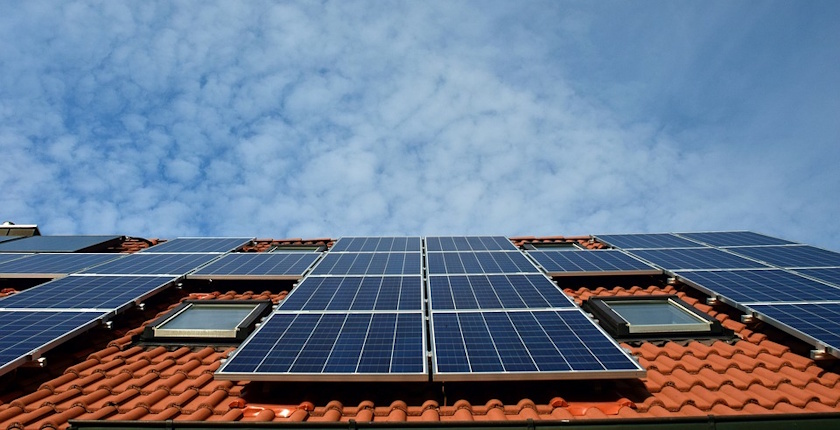
High interest among Croatian citizens in subsidies for installing solar power plants for self-consumption has prompted the Environmental Protection and Energy Efficiency Fund to pause the application process.

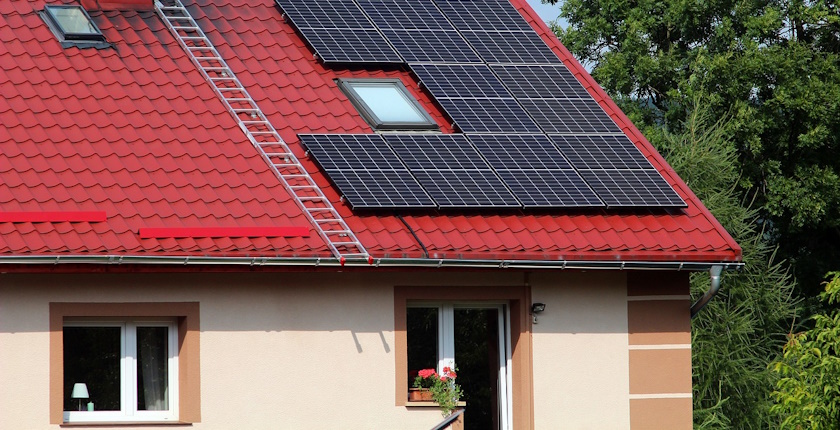
The Environmental Protection and Energy Efficiency Fund (FZOEU) has announced that it will temporarily close the ongoing public call for incentives to install photovoltaic plants in family homes, which was opened on June 6. In just over two months, about 4,100 project applications have been received and are currently being processed, the FZOEU noted.

By mid-last year, 21,000 rooftop PV systems at households and businesses, with a total capacity of 642 MW, had been connected to the distribution network.

The large number of applications confirms that investing in renewables is a financially sound long-term decision

According to the FZOEU, the financing program encourages citizens to use renewable energy sources, reduce greenhouse gas emissions, and increase the energy independence of households.

The strong interest in this program demonstrates that citizens are taking the energy transition more seriously and want to actively participate in producing green energy, the fund claims.

With subsidies, solar installations become more accessible to the general public, and the high volume of applications confirms that investing in renewable energy sources is a financially sound long-term decision for households, FZOEU added.

Citizens can receive up to 50% of eligible costs

Only individuals—owners or co-owners of houses—who had residency at the address at the time the power plant was commissioned were eligible to apply. The fund co-finances facilities installed and commissioned from January 1, 2025, and citizens can receive up to 50% of the eligible costs, or up to EUR 600 per kW of installed power capacity.

Depending on available funds and the success rate of applications, the FZOEU will consider the possibility of relaunching the call for future prosumers.

Over the past two years, the fund has co-financed the installation of around 5,600 rooftop solar power plants in households.

In the first six months of last year alone, households and companies installed 5,504 PV facilities, according to data from Croatia’s distribution system operator, HEP-Operator Distribucijskog Sustava (HEP-ODS).
by in News

Croatia earmarks EUR 1.6 billion for Social Plan for Climate Policy

Croatia plans to achieve an efficient and just green transition by implementing its EUR 1.6 billion Social Plan for Climate Policy.

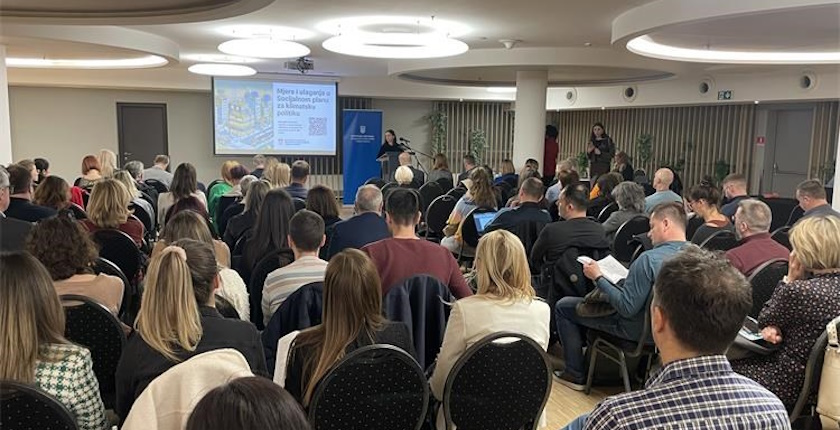
The Ministry of Environmental Protection and Green Transition has presented the Social Plan for Climate Policy and the European Union’s upcoming Emissions Trading System 2 (EU ETS 2) in Croatia’s capital Zagreb.

The event was organized as part of the process of developing the country’s Social Plan for Climate Policy. According to the ministry, the document outlines the green transition and includes measures and investments that would benefit vulnerable households, micro businesses, and users of transportation services.

The plan is being prepared within the framework of the Social Fund for Climate Policy, which is part of the EU’s Fit-for-55 legislative package. The aim is to reduce greenhouse gas emissions by 55% by 2030 from the 1990 level.

The social plan will be funded with proceeds from EU ETS 2

The new EU ETS 2 will cover CO2 emissions from buildings, road traffic, and small firms. Funding for the social plan will be secured from proceeds from the supplementary carbon pricing mechanism.

Minister Marija Vučković noted that after the public debate is over, the Social Plan for Climate Policy needs to be sent to the European Commission for adoption.

“With more than EUR 1.6 billion, our goal is to secure an efficient and just green transition that won’t leave behind the most vulnerable members of our society – households at risk of energy poverty, micro enterprises with limited adaptation capacities, but also the citizens that have difficulties accessing public transportation,” she pointed out.

The ministry is aware of the challenges that the transition carries, so it places special focus on mitigating socio-economic consequences and preventing risks affecting the most vulnerable people, as well as on education.

The plan defines various measures

The plan includes various measures. Some examples are renovating family houses with the worst energy performances, improving the availability of public transport in suburban, rural, and remote areas, subsidizing the purchase of vehicles with zero emissions, and providing direct financial incentives.

Representatives of the ministry Ana Juras and Predrag Božac described the operation and the establishment of the new part of the Emissions Trading System and presented the sectors that it would cover. They also spoke about the first round of measures and investments from the plan.

In another presentation, the audience learned the effect of EU ETS 2 on the prices of fossil fuels, the ministry said.

by in News

Croatia changing law on renewables – new rules for prosumers, decentralized power production

The Government of Croatia has adopted the amendments to the law on renewable energy sources and high-efficiency cogeneration. They change rules for consumers producing electricity for self-consumption, facilitate the establishment of citizen energy communities and regulate decentralized energy production.

The amendments align the Croatian legislation with the European Union’s Renewable Energy Directive and bring benefits to citizens, entrepreneurs, and investors, the Ministry of Economy said.

One of important innovations is a new scheme for the production of energy for self-consumption. Instead of the current net metering mechanism, the new law introduces net billing. It values more fairly the surplus electricity that prosumers deliver to the grid, according to the ministry.

The grid costs charged to prosumers will be aligned with the actual amount of electricity that they take from the grid

Consumers – citizens and entrepreneurs that produce energy for their own needs, will pay grid costs matching the amount of electricity they actually take from it, enabling a sustainable and fair system for all users, the ministry added.

Existing prosumers will have ten years for the transition to the new scheme.

The bill enables the production of electricity for self-consumption in remote locations, provided that all metering points are registered with the same consumer. The ministry expects the measure to pave the way for greater investments, flexibility, and decentralized energy production.

Waste separation is a condition for granting incentives for waste incineration

The rules for establishing citizen energy communities have been simplified, to further strengthen their role in the energy transition. The amendments stricten the criteria for the sustainability of biofuels and they prohibit incentivizing the incineration of waste not from a system of separate collection.

The upcoming law sets the basis for a plan for the development of electricity infrastructure and storage capacities. It will create the conditions for greater integration of renewable energy sources into the grid, the ministry stressed.

“With this law we are taking an important step forward in the energy transition, ensuring a balance between the interests of citizens, the economy, and the energy system, and creating the foundations for a sustainable development of the Croatian energy sector in the long term,” Minister Ante Šušnjar stated.