IAEA hosts landmark symposium: Nuclear, AI to forge Atoms for Algorithms alliance
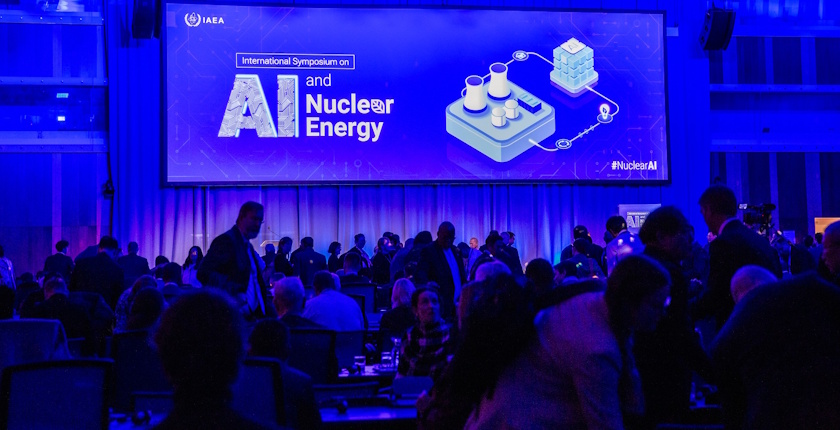
Global energy and technology leaders from over 250 organizations, including companies, nuclear operators, regulators, and research institutions, have gathered at the IAEA headquarters in Vienna for the first-ever International Symposium on Artificial Intelligence and Nuclear Energy.
The International Atomic Energy Agency (IAEA) said the two-day event brought together senior representatives from ministries, international organizations, the nuclear industry and major tech firms, including Google and Oracle.
They discussed how nuclear energy can help meet the surging electricity demand of AI data centres, and how AI can support nuclear technology development.
The first symposium on nuclear energy and AI provided a platform for governments, organizations and industry to discuss how to make the Atoms for Algorithms alliance happen, according to IAEA.
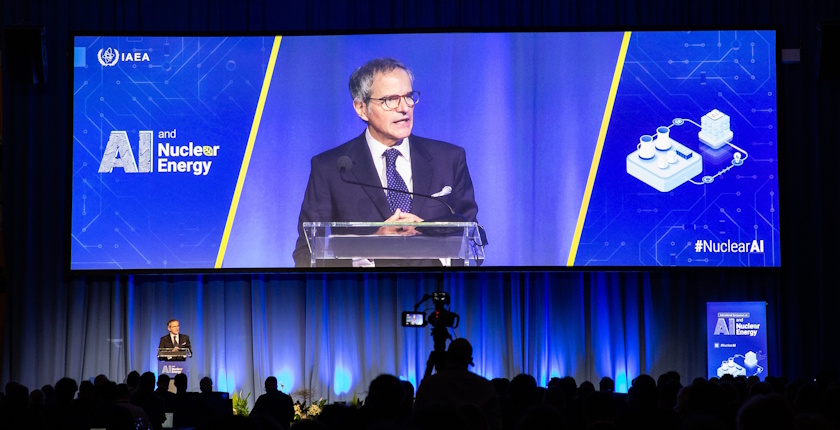
Grossi: I call it not just a partnership, but a structural alliance: Atoms for Algorithms
Director General Rafael Mariano Grossi said the two forces are reshaping humanity’s horizon at an unprecedented pace.
“The world’s energy map is being redrawn before our eyes. The essential point, our opportunity and our responsibility, is that these forces are not unfolding separately. They are converging and redefining the new global economy,” he stressed.
IAEA recalled that according to the International Energy Agency, data centres accounted for 1.5% of worldwide electricity demand in 2024 – a figure that could double by 2030.
“There is only one energy source that can meet combined demands of low-carbon generation, 24/7 reliability, massive power density, grid stability and genuine scalability: nuclear energy. This is why I call it not just a partnership, but a structural alliance: Atoms for Algorithms,” he stressed.
Greisinger: We are currently building the engine of the 21st century
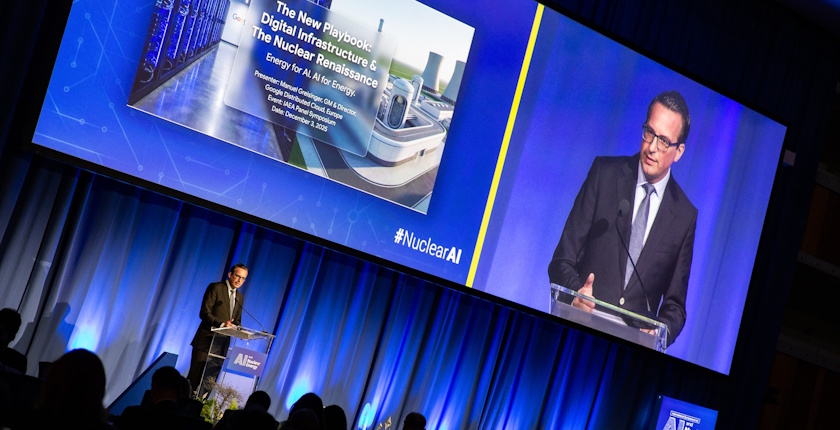
IAEA underlined that major tech companies are weighing in on the nuclear-AI conversation. Manuel Greisinger, Google Distributed Cloud Director, shared why hyperscalers are turning to nuclear energy to power their data centres.
“We are currently building the engine of the 21st century, which is artificial intelligence. But as everyone in this room knows, an engine is pretty much useless without fuel. So the digital infrastructure community is here at the symposium because we have crunched the numbers and we have realized that nuclear energy is not just an option. It is an essential, non-negotiable component of our future fuel mix,” he stressed.
Sama Bilbao y León, Director General of World Nuclear Association, pointed out that nuclear energy is a key piece of the puzzle to electrify the world, improve quality of life, and support AI’s need for 24/7 carbon-free electricity.
She welcomed the pledge by major tech companies to support the goal to triple global nuclear energy capacity by 2050, according to IAEA.