by in News

Croatia’s HEP to invest EUR 157 million in HPP Varaždin

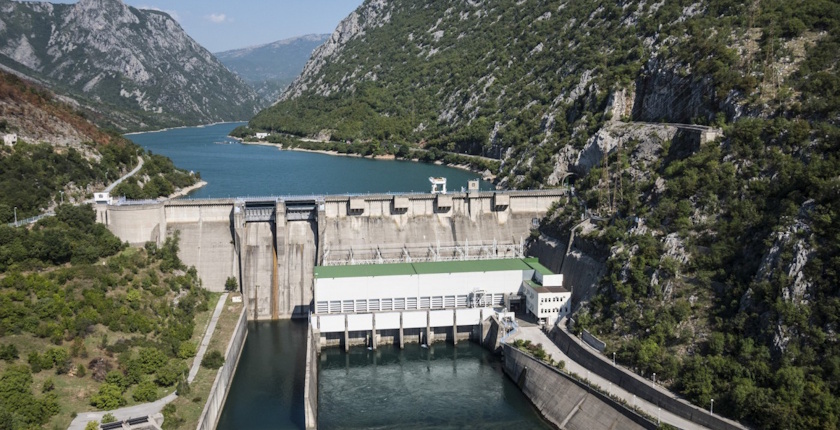
Croatian power utility Hrvatska Elektroprivreda (HEP) has contracted the reconstruction of its Varaždin hydropower plant. The project will increase the capacity of the 51-year-old facility by almost 20% and boost operational efficiency and annual production.

HEP’s power production arm HEP Proizvodnja selected Končar for the reconstruction of the generating units at the Varaždin hydropower plant. The contract was signed by the President of the Management Board of HEP Proizvodnja Šime Šimurina and Gordan Kolak, president of the Management Board of Končar.

The agreement is for the development of technical documentation, manufacturing the primary equipment and associated systems for two new generators, and delivering them. The agreed timeline for the works is 53 months, with completion expected in 2030, according to Končar.

In addition to replacing the generating units, covered by the new contract, the project entails the replacement or refurbishment of all other equipment in the machine room and dam, as well as the structures and infrastructure of HPP Varaždin, depending on their condition and in accordance with the current legal and technical requirements.
croatia hep koncar hpp varazdin contract paic kolak sipurina
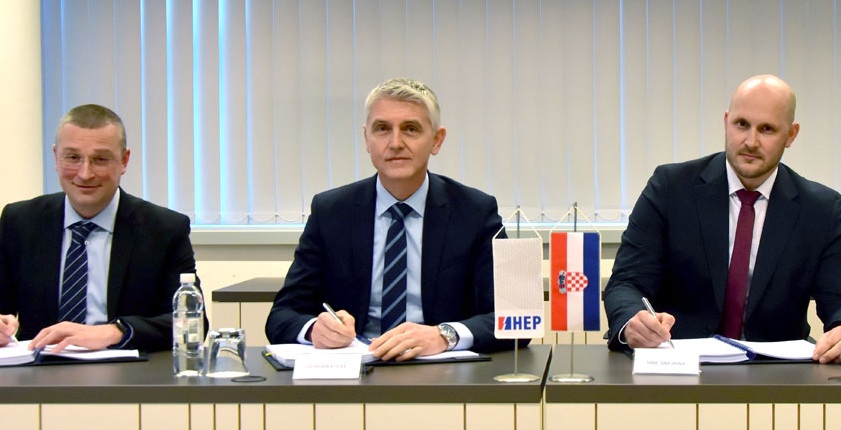
Ivan Paić, member of Končar’s management board, Gordan Kolak and Šime Šimurina (photo: HEP)

The reconstruction of the HPP is estimated at EUR 157 million, while the contract with Končar is worth EUR 95.2 million. The combined capacity of each unit would increase from 47 MW to 55 MW. The new turbines are expected to bolster operational efficiency from 86% to 93%.

The endeavor is also aimed at enhancing water flow from 250 cubic meters per second to 275 cubic meters. Together with a rise in total capacity from 94 MW to 110 MW, it is supposed to lift average annual production, currently at 450 GWh, by 6%.

HPP Varaždin’s lifespan to be extended by 50 years

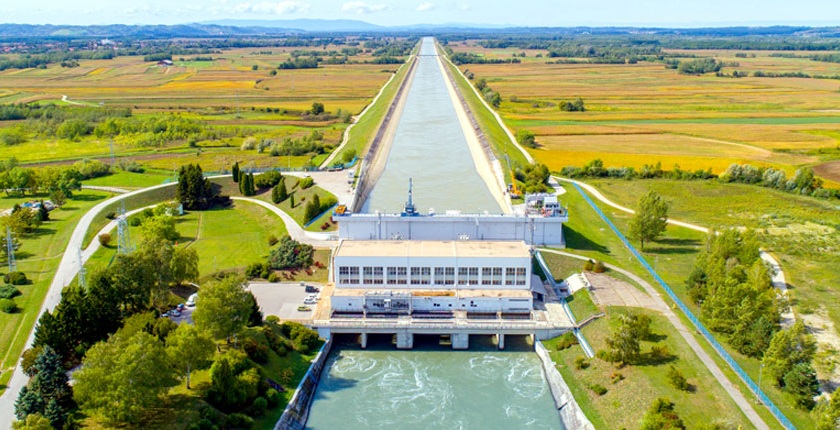
HPP Varaždin is near the city of Varaždin. Its current capacity of 94 MW is the sixth-highest among HEP’s 27 HPPs. Put into operation in 1975, it was the first hydropower plant on the Drava river in Croatia. The other two in cascade are Čakovec and Dubrava.

According to Končar, the reconstruction will extend the facility’s lifespan by at least 50 years.

by in News

Croatia’s HEP to invest EUR 157 million in HPP Varaždin

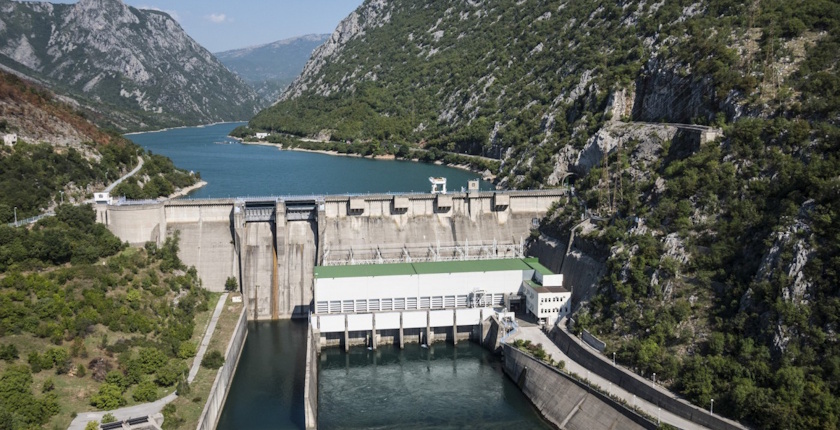
Croatia-based power utility Hrvatska Elektroprivreda (HEP) has contracted the reconstruction of its Varaždin hydropower plant. The project will increase the capacity of the 51-year-old facility by almost 20% and boost operational efficiency and annual production.

HEP’s power production arm HEP Proizvodnja selected Končar for the reconstruction of the generating units at the Varaždin hydropower plant. The contract was signed by the President of the Management Board of HEP Proizvodnja Šime Šimurina and Gordan Kolak, president of the Management Board of Končar.

The agreement is for the development of technical documentation, manufacturing the primary equipment and associated systems for two new generators, and delivering them. The agreed timeline for the works is 53 months, with completion expected in 2030, according to Končar.

In addition to replacing the generating units, covered by the new contract, the project entails the replacement or refurbishment of all other equipment in the machine room and dam, as well as the structures and infrastructure of HPP Varaždin, depending on their condition and in accordance with the current legal and technical requirements.

croatia hep koncar hpp varazdin contract paic kolak sipurina
Ivan Paić, member of Končar’s management board, Gordan Kolak and Šime Šimurina (photo: HEP)

The reconstruction of the HPP is estimated at EUR 157 million, while the contract with Končar is worth EUR 95.2 million. The combined capacity of each unit would increase from 47 MW to 55 MW. The new turbines are expected to bolster operational efficiency from 86% to 93%.

The endeavor is also aimed at enhancing water flow from 250 cubic meters per second to 275 cubic meters. Together with a rise in total capacity from 94 MW to 110 MW, it is supposed to lift average annual production, currently at 450 GWh, by 6%.

HPP Varaždin’s lifespan to be extended by 50 years

HPP Varaždin is near the city of Varaždin. Its current capacity of 94 MW is the sixth-highest among HEP’s 27 HPPs. Put into operation in 1975, it was the first hydropower plant on the Drava river in Croatia. The other two in cascade are Čakovec and Dubrava.

According to Končar, the reconstruction will extend the facility’s lifespan by at least 50 years.
by in News

Elektroprivreda BiH to invest EUR 885 million over next three years

Government-controlled power company Elektroprivreda BiH plans to invest BAM 1.73 billion (EUR 884.6 million) over the next three years, according to its 2026-2028 business plan.

The investments would be financed through loans, and BAM 538 million (EUR 275 million) from own funds of Elektroprivreda BiH (EPBiH), which operates in the Federation of BiH. Of note, it is one of the two entities making up Bosnia and Herzegovina. The other one is the Republic of Srpska.

In line with available funds and restructuring plans, the company intends to continue investing in coal mines within the EPBiH group over the three-year period.

The goal is a stable and sustainable coal production at the volume needed for the planned operation of the thermal power plants, the utility said.

The previous business plan, for the 2025-2027 period, provided for investments of BAM 2.1 billion (EUR 1.074 billion).

The three-year period should be marked by the construction of a large number of PV plants

EPBiH has highlighted the construction of new renewable energy power plants as a long-term strategic and priority goal. The construction of several solar power plants at already identified locations are particularly significant, the plan reads.

The upcoming three-year period should be marked by the construction of a large number of PV facilities at multiple locations on mining sites, company-owned land, on the roofs of its own facilities and those of its customers, EPBiH explained.

EPBiH also plans to acquire operational renewable energy facilities as well as projects in development. The plan envisages the purchase or lease of land suitable for the construction of solar power plants.

Positive business performance and maintaining the position as the dominant electricity supplier in BiH are also outlined in the business plan, adopted by the company’s assembly.

Desulfurization and denitrification of flue gases projects are planned for two thermal power plants

EPBiH has launched flue gas desulfurization and denitrification projects for its Tuzla and Kakanj coal-fired power plants. It would also upgrade unit 7 in Kakanj, unit 4 in Tuzla, and the Salakovac hydropower plant.

The document envisages the establishment of the distribution system operator (DSO), based on the provisions of the Law on Electricity of the Federation of BiH. It came into force in August 2023.

The law stipulates unbundling the distribution activity from EPBiH and establishing the DSO as a separate legal entity, a 100%-owned subsidiary, the company underlined.

by in News

Elektroprivreda BiH to invest EUR 885 million over next three years

Government-controlled power company Elektroprivreda BiH plans to invest BAM 1.73 billion (EUR 884.6 million) over the next three years, according to its 2026-2028 business plan.

The investments would be financed through loans, and BAM 538 million (EUR 275 million) from own funds of Elektroprivreda BiH (EPBiH), which operates in the Federation of BiH. Of note, it is one of the two entities making up Bosnia and Herzegovina. The other one is the Republic of Srpska.

In line with available funds and restructuring plans, the company intends to continue investing in coal mines within the EPBiH group over the three-year period.

The goal is a stable and sustainable coal production at the volume needed for the planned operation of the thermal power plants, the utility said.

The previous business plan, for the 2025-2027 period, provided for investments of BAM 2.1 billion (EUR 1.074 billion).

The three-year period should be marked by the construction of a large number of PV plants

EPBiH has highlighted the construction of new renewable energy power plants as a long-term strategic and priority goal. The construction of several solar power plants at already identified locations are particularly significant, the plan reads.

The upcoming three-year period should be marked by the construction of a large number of PV facilities at multiple locations on mining sites, company-owned land, on the roofs of its own facilities and those of its customers, EPBiH explained.

EPBiH also plans to acquire operational renewable energy facilities as well as projects in development. The plan envisages the purchase or lease of land suitable for the construction of solar power plants.

Positive business performance and maintaining the position as the dominant electricity supplier in BiH are also outlined in the business plan, adopted by the company’s assembly.

Desulfurization and denitrification of flue gases projects are planned for two thermal power plants

EPBiH has launched flue gas desulfurization and denitrification projects for its Tuzla and Kakanj coal-fired power plants. It would also upgrade unit 7 in Kakanj, unit 4 in Tuzla, and the Salakovac hydropower plant.

The document envisages the establishment of the distribution system operator (DSO), based on the provisions of the Law on Electricity of the Federation of BiH. It came into force in August 2023.

The law stipulates unbundling the distribution activity from EPBiH and establishing the DSO as a separate legal entity, a 100%-owned subsidiary, the company underlined.

by in News

Montenegro building two solar plants at hydropower dams

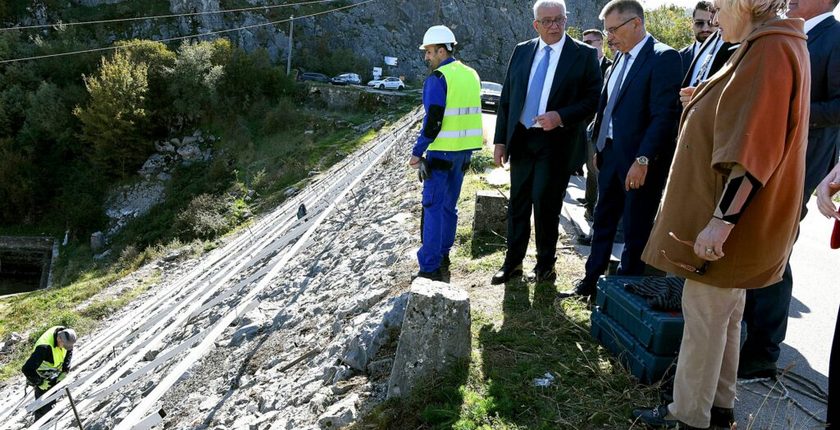
Montenegro’s state power utility, Elektroprivreda Crne Gore (EPCG), is installing a 2.5 MW solar plant at the Slano hydropower dam near Nikšić, while a photovoltaic plant is also being installed at the Vrtac dam. The project marks yet another step towards increasing the share of renewable sources and strengthening Montenegro’s energy independence, said EPCG-Solar gradnja, a subsidiary of EPCG.

The project is implemented by EPCG-Solar gradnja, which specializes in the procurement, design, installation, and maintenance of photovoltaic systems. Both dams belong to hydropower plant Perućica.

The works at the Slano dam are challenging, as the solar panels are being installed on very steep terrain, according to Marina Jočić, president of the board of EPCG-Solar gradnja. She was speaking during a tour of the site with EPCG management, Speaker of the Parliament of Montenegro Andrija Mandić, and Mayor of Nikšić Marko Kovačević.

The total planned capacity of the Slano and Vrtac solar plants is 3.7 MW

According to earlier announcements, the total installed capacity of the Slano and Vrtac solar power plants will be 3.7 MW. Works on the Vrtac power plant are in the final phase, said Miro Vračar, head of production at EPCG.

EPCG also plans to build the country’s first floating solar power plant at the Slano reservoir. Late last year, the investment valued at EUR 60 million was listed as one of 15 priority infrastructure projects in Montenegro’s energy sector.

EPCG also plans a floating solar plant at the Slano reservoir

Solar power plants on dams are also being built in other countries in the region. In Slovenia, one such facility was put into operation in June, installed on the reservoir wall of the Avče pumped storage hydropower plant.

When it comes to floating solar, North Macedonia plans to integrate such facilities into the national irrigation network.

by in News

Hydropower plant Dabar to be completed by end-2027

The Dabar hydropower plant is expected to be completed by the end of 2027, according to Petar Đokić, Minister of Energy and Mining of the Republic of Srpska.

The operation of the Dabar hydropower plant, the most complex hydropower facility, in which EUR 339.5 million has been invested, will bring benefits for the entire eastern Herzegovina area, Petar Đokić said during a visit to the construction site, Srna reported.

The works on the 160 MW hydropower plant, with an expected annual production of 500 GWh, began in June 2023.

Đokić noted that the project is located in four municipalities – Nevesinje, Bileća, Berkovići, and Ljubinje – spanning 40 kilometers. As a key part of the project, Đokić highlighted a 12-kilometer tunnel, which is nearly finished.

Đokić: It is an exceptional construction undertaking, the first of its kind in the world in the 21st century

It is an exceptional construction undertaking, the first of its kind in the world in the 21st century, the minister said and added that he is proud to be part of the project from the beginning of its implementation.

Photo: Ministry of Energy and Mining

He spoke with the representatives of China-based Gezhouba Group Co., the main contractor, and Integral and Elnos, its domestic subcontractors.

Đokić stressed that some issues regarding the construction were discussed. HPP Dabar is a financially demanding project, he noted.

Photo: Ministry of Energy and Mining

Wind farm Grebak will be completed by 2027

Minister Đokić recalled that projects for solar power plants and wind farms with a capacity of 680 MW are under development in the territory of Nevesinje municipality, with investments estimated at an overall EUR 409 million.

He underlined that one of the projects, the Grebak wind farm, has experienced delays. Numerous companies, including the investor in the Grebak project, are hostages to the European policies mistrustful of Bosnia and Herzegovina, Đokić claimed.

Of note, the Republic of Srpska is one of the two political entities of BiH. The concession for the Grebak wind farm was granted in April 2019.

The minister expressed hope that the investor would overcome the challenges, conclude a financing agreement, secure equipment, and start construction work, expected to be finished by late 2026 or early 2027.

Investors in solar projects in Nevesinje are currently preparing documentation and purchasing equipment, Đokić said.

by in News

Montenegro’s EPCG to install 200 MW of solar power plants

Power utility Elektroprivreda Crne Gore plans to install solar power plants with a total capacity of 200 MW over the next three years, CEO Ivan Bulatović announced.

State-owned power company Elektroprivreda Crne Gore (EPCG) intends to start production at the Gvozd wind farm by the end of the year and connect photovoltaic plants with a total capacity of 200 MW to the grid over the next three years.

With small rooftop solar systems of an overall 70 MW already online, Montenegro is a leader in the region in the development of the prosumer concept, Bulatović claimed and added that by the end of the year the capacity would reach 100 MW.

He also pointed to the importance of the Kruševo hydropower project, which is being developed in cooperation with French partners. In December last year, EPCG signed a contract for project design. The company’s partner in the endeavor is EDF.

Montenegro’s grid is relatively well developed thanks to the investments made in former Yugoslavia

Bulatović underlined that the problem of insufficient development of the transmission system is not a case only in Montenegro, but in the entire region and Europe. Simply, the grid wasn’t prepared for the sudden introduction of renewable energy, according to him.

The utility’s chief recalled that investors in Montenegro have the opportunity in the country’s legal framework to build a grid connection themselves.

The Montenegrin network, as he emphasized, is relatively well developed thanks to investments from former Yugoslavia, Bulatović noted.

Everything is ready for the installation of the second line of the submarine electricity interconnection to Italy

Turning to the undersea interconnection with Italy, he said the second cable is expected to be laid as the required infrastructure has been built on both sides. The first link has 600 MW.

Another cable to Italy and the planned new interconnections are creating transmission capacities enabling Montenegro and the entire region a better connection with the European electricity market, according to Bulatović.

The construction of the Trans-Balkan Corridor is underway and interconnectors with Albania and Bosnia and Herzegovina are in the pipeline, he stressed at the Trebinje Energy Summit.

The development of the transmission system will continue in line with the needs of investors and for electricity production, Bulatović asserted.

by in News

Albania’s “Shala” River is also granted concession, HPP 100 million USD investment.

Recently, some impressive photos from a river in North Albania can be seen on social networks, whose images are compared to those in Thailand. It is about the Shala River which has become the main tourist attraction of this year with an extraordinary increase in attendance. For all those who have visited the impressions left are the most impressive ones, while those who have not yet been have to do  as soon as the majority of this river will be overwhelmed by new hydro concessions. There is already a concrete project with three winning companies announced by the Ministry of Energy and Industry.

HEC-I over Shala 100 million USD investment

The Ministry of Energy and Industry yesterday announced the concession winners for the hydropower plant on the Shala River. Referring to the investment value but to the installed power it seems to be one of the biggest hydropower plants in the country. The winning company is a temporary merger of the companies “Çinar-San Hafriyat Nakliyat Insaat Turizm Sanayi Ve Ticaret LTD.STI”, “Shala Energy PLC” and “Falak Properties LLC”.

Data on HPP

The installed power specified by calculating the river flow, is expected to be 83,450 kW, with an electricity output of about 321,465,632 kWh. The amount of Fees offered for concessions is 2.1% (6.750.778 kWh) and the time of implementation of the works 36 months. Value excluding VAT is 11,239,204,263 Lek.

The interest for hydropower utilization is for the Shala River waters, between the quotas 486 meters above sea level up to 176.00 meters above sea level, which is also the maximum quota of the Komani reservoir, respecting the technical conditions of design and non-violation of objects that are planned to be built in this watershed.

The Shala River on which is planned to build the hydro power plant is one of the Drini River branches that supplies the Drina cascade, which is the most important energy project in the country, providing over 90% of the energy in the country.

There are also HEC-I Gojan and Bushtrica 1

The Ministry of Energy announced that it has announced the winners for the hydro power plant Bushtrica 1 which was more than two months appealed to the Public Procurement Commission. According to the winning announcement for this concession is the company “Doko” sh.pk with an investment value of 506 million ALL without VAT while the installed power will be 4220 Kw.

For the winning Gojani hydro power plant was announced “M.C. Inerte “sh.p.k. with an investment value of 1.9 billion Leks (ALL).

Winning companies for three HPPs should submit additional documents to the ministry to open the way for signing the final contract.

by in Publication

Streamlining renewable energy investment process in Macedonia

images (1)Due to significant political and economic support for renewable energy technologies in Germany, Spain and other countries over the last twenty years, huge progress in terms of cost effectiveness has been made, mainly in wind and photovoltaic, said Bojan Reščec, RP Global’s Country Manager for Croatia and Western Balkan.He stressed the two segments are proving to be the cheapest form of electricity generation in an increasing number of markets, besides being the cleanest.

RP Global has commissioned its wind park Rudine in the country’s south in April, becoming the largest wind energy investor in the market. It has been directing its focus on Chile, Peru and Georgia. It also has important segments in Austria, Poland, France, Portugal and Spain. “When it comes to our diversification strategy, emerging markets are key, as well as markets with a reliable and trustworthy political framework,” Reščec stated. The company achieved income of EUR 30.55 million last year, on revenues of EUR 38.92 million and total assets of EUR 383.1 million.

How is the company structured? What are the power generation and other assets and where are they located?

RP Global is made up of an operative arm and a development arm, each with respective subsidiaries that are holding individual projects. The company’s headquarters are in Vienna, Austria, as well as Madrid, Spain, and it has operating assets in Portugal (21.5 MW in hydro), Poland (120 MW in wind) and Croatia (78 MW in wind), as well as operations and maintenance (O&M) contracts for three wind farms in France, and a hybrid solar mini-grid in Tanzania. Currently we have wind farms under construction in France with an overall capacity of 49.5 MW, as well as small hydropower plants in Portugal of 10 MW and Chile, 2.9 MW. RP Global has about 100 employees.

What are RP Global’s projects in plan or pipeline and what is its general vision?

The main objective is the further expansion of its current portfolio of generating assets. From a project pipeline of about 1 GW, the company aims to develop an operating portfolio of 300 MW to 400 MW by 2017, which represents an overall investment of EUR 500 million to EUR 700 million. RP Global strives for geographical diversification, concentrating on Western Europe and selected countries in the Central and Eastern Europe, as well as Latin America. The main criterion is a stable legal environment, as well as general political support for renewable energy.

We are now implementing projects in countries without incentive schemes; therefore we need to be competitive in the market, with latest technologies and lowest generation cost.

Planned projects in an advanced stage of development include further electrification of Tanzania’s rural areas, hydropower projects in Chile, Peru and Georgia, as well as a wind power pipeline in France. We are also constantly prospecting new countries, especially in South America and Africa, and are currently looking at investment potential in the Balkan region.

Is there an established practice for segments of operations that are outsourced in the sector where your company works? If so, do you have any specific edge or policy?

A very simple policy is to bring generation cost down in all areas – optimize the structure which will secure the maximum production from the operating assets on a long-term basis, reduce the loss of production caused by failures etc. We have our own O&M management teams, in Croatia we are outsourcing maintenance of the wind energy converters (WECs) through long-term service agreements with producers, periodical inspections, where specific experts are occasionally required, and spare parts storage with a local company, which enables us to monitor the plants 24/7 and react quickly in case of a failure. One day without production can cost us EUR 100,000 so the main criterion is short response time when service is needed.

More on outsourcing in development of green power facilities – what adjoining industries can you see emerging or grouping?

Energy storage is something we will have to deal with; battery storage in the power sector can be employed in a variety of ways over multiple time periods. Decentralized generation (frequently based on photovoltaic) is another area RP Global is looking at. In general, we would also like to see more local content and products in the countries we are investing in to broaden the macroeconomic relevance of the sector in our markets.

Since renewables still depend on state incentives limited by time, how does RP Global envisage the viability for its portfolio or the overall sectors where it operates, beyond current power purchase agreements (PPAs)? Will sustainable energy become mainstream?

With generation cost decreasing rapidly, sustainable energy is becoming “mainstream” and we are adjusting our approach accordingly. RP Global has always strived to find the best sites and to get the very best from them using the most appropriate technology and optimizing the sites. We are now implementing projects in countries without incentive schemes; therefore we need to be competitive in the market, with latest technologies and lowest generation cost. This will be the target not only after PPAs or feed-in tariffs in operating plants expire, but also for our future projects. Our task is to find the technology and sites which will enable us to offer the produced electricity for a lower price. Croatia will adopt an auction system soon, so we have to be ready if we want to implement more projects in the future and we would certainly like to do so.

What is the life cycle like for a small hydropower plant and wind park?

Small hydropower plants have a significantly longer life span; current technology allows for over 50 years without the need for reconstruction. The life span of a wind power plant is usually calculated with 25 years, some producers even achieve beyond 25 years, but as long as the technology is being constantly improved, one might want to repower an existing wind farm sooner than originally foreseen. However, we are taking care of our operating assets, keeping them in good shape thus ensuring a long life cycle.

Did the endeavor of fulfilling procedural requirements simplify over time and what is the situation in the markets where you work? What existing or potential policies would you rate as prudent for the society or different levels of government?

Sadly, not really. Some procedures were simplified, but there is still more than enough room for significant improvements. A decision to give renewable energy the status of strategic interest for the country would be helpful in many ways.

In Croatia, we have been waiting to continue our activities for quite some time, because we have still not received a clear message from decision makers.

What are the effects of the new green energy legislation in Croatia? What is the situation with necessary by-laws?

As you know, the former government adopted the Law on Renewable Energy Sources and Highly Efficient Cogeneration in 2015 and drafted some necessary by-laws, but failed to sign them. The new government is determined to promote renewable energy, but we were recently informed that another public hearing will be held for the enactment on renewable energy sources so, as an investor in Croatia, we have been waiting to continue our activities for quite some time, because we have still not received a clear message from decision makers. We have now been invited to be involved in the procedures more than before, but still – we need answers to some vital questions. We would like to invest more in Croatia if the legal framework motivates us to do so.

 By Darko Janevski, Renewable Energy Specialist