by in News

Albania Proposes Strategic Shift: State to Take Over Emergency Oil Reserves from Private Sector

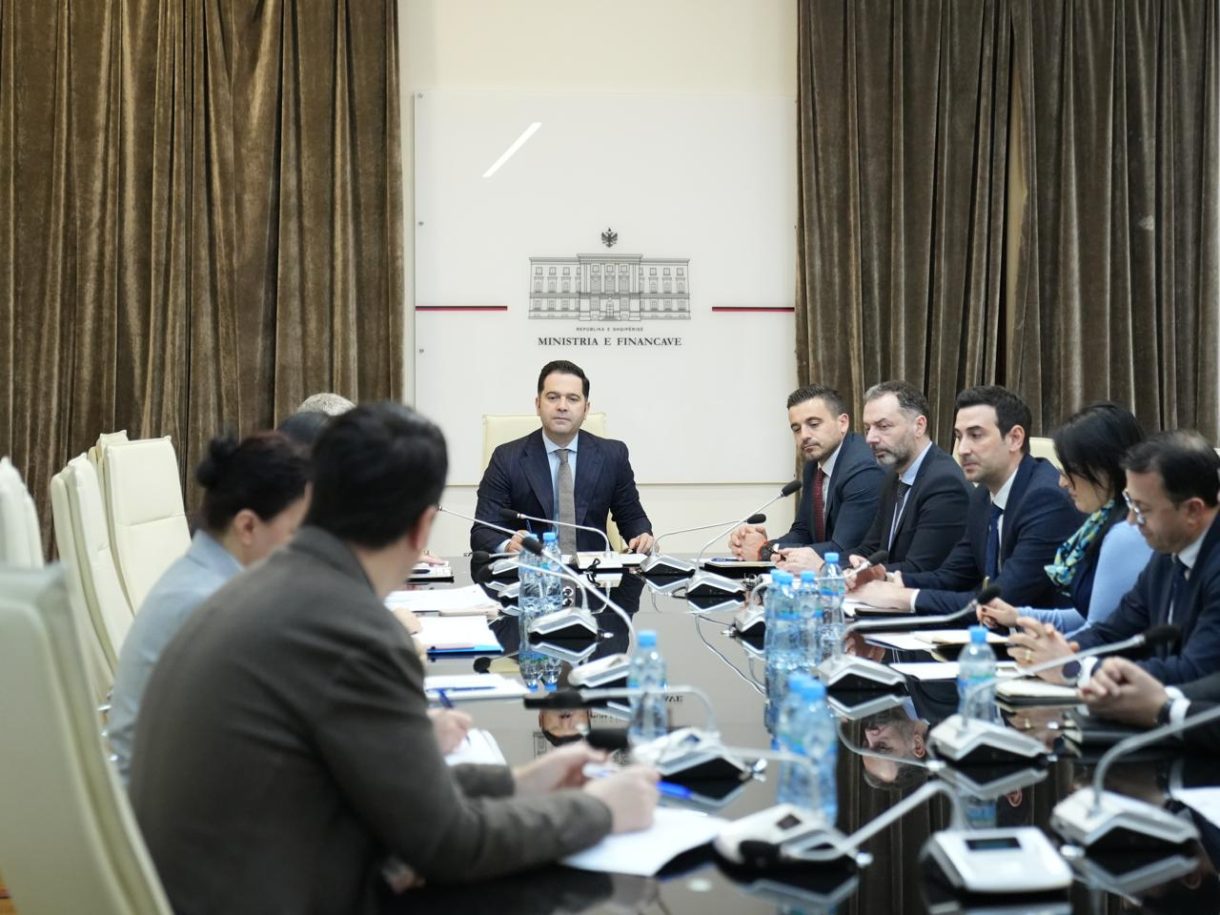
Enea Karakaçi, Minister of Infrastructure and Energy (Ministry of Infrastructure and Energy), stated that one of the ministry’s principal priorities remains ensuring the uninterrupted supply of fuel to the market.

Minister Karakaçi announced that a new draft law on the oil reserve, expected to be approved by the government within two to three weeks, will transfer physical custody of the reserve from private operators to a state agency for up to 90 days.

“With respect to the reserve obligation, which is calculated based on last year’s daily turnover, we have notified all operators that they are required to hold a 30-day reserve, with the remainder contracted by other means, to ensure there is no shortage of hydrocarbons.

The blockade of the Strait of Hormuz has not affected supplies to our country.

The new draft law on the oil reserve, prepared in accordance with the European Union directive, will be adopted by the government within two to three weeks. Under the draft law, oil reserves will no longer be held by companies but by a state agency that will ensure the physical availability of hydrocarbons for up to 90 days.”

Minister Karakaçi also reported that retail inspections indicate no abuse in fuel pricing, and that company profit margins ranging from 13 to 14 lekë per litre are acceptable.

“The final retail price in Albania is largely determined by import costs, which makes domestic prices volatile. A cost of 147 lekë excluding VAT reflected the real cost of the product. This indicates a gross profit of 13 to 14 lekë, which is an acceptable margin. We have not observed price abuse, and therefore did not find it justified to convene the board.”

Prime Minister Edi Rama added that Albania does not produce petroleum suitable for final retail use, because the oil we extract is heavy crude. Processing it for consumer-grade fuel would require a refinery and entail high costs for conversion to a usable product.

“As history has shown, this oil has not proven suitable for direct consumer use, except for certain industrial applications.”

by in News

Albania Ranks Highest in Europe for Fuel Costs Relative to Purchasing Power, Doubling Regional Averages

Albania currently has the most expensive automotive fuel in Europe when adjusted for purchasing power and citizen income, imposing a disproportionate economic burden on consumers and businesses alike.

An analysis conducted utilizing 2026 per capita income data from the International Monetary Fund’s (IMF) Global Economic Outlook and current spot prices from Global Petrol Price, reveals a stark disparity between Albanian fuel costs and domestic earning power.

According to the IMF, Albania’s average per capita income for 2026 is projected at $12,000 annually, equating to roughly $33 per day. With domestic retail diesel prices currently hovering around 200 Albanian Lek (ALL) per liter approximately $2.40 at the current exchange rate an average Albanian citizen must allocate a staggering 7.2% of their daily income to purchase a single liter of diesel.

A Stark Regional and European Divide

Data indicates that this 7.2% threshold is the highest financial burden for fuel among all analyzed European nations. When compared to neighboring Balkan states, the economic strain on Albanian consumers is at least twice as high.

For context, purchasing one liter of fuel requires:

  • 3.7% of daily income in Serbia

  • 3.6% in Montenegro

  • 2.8% in Romania

  • 2.5% in Greece (which, despite having one of Europe’s most expensive nominal fuel markets, presents a much lower relative burden due to higher median incomes).

In absolute nominal terms, regional neighbors boast fuel prices averaging 15% to 30% lower than Albania, particularly in Kosovo and North Macedonia.

The contrast is even more pronounced when benchmarked against advanced European economies. In nations like Italy, France, Germany, and Belgium, a liter of fuel typically consumes less than 2% of daily income. Notably, the Netherlands which holds the highest absolute nominal fuel price in Europe requires its citizens to spend only 1.1% of their daily income per liter. This means the relative burden on a Dutch consumer is nearly seven times lower than that of an Albanian.

Even stripping away purchasing power parity, Albania ranks fifth outright in Europe for the highest nominal fuel prices, trailing only the Netherlands, Denmark, Norway, and Switzerland countries where fuel is marginally more expensive by just 10 to 30 cents per liter.

Heavy Taxation and “Rocket and Feather” Pricing Dynamics

Because fuel is a foundational component of transport and logistics, this skewed cost-to-income ratio actively drives up broader commodity prices and exacerbates household expenses. Industry analysts point to two primary domestic drivers for this inflated market: aggressive taxation and asymmetrical price transmission by market operators.

1. The Tax Burden: State levies account for an estimated 60% of the final retail price at the pump. The taxation structure per liter includes:

  • Excise Tax: 37–38 ALL

  • Circulation (Turnover) Tax: 27 ALL

  • Carbon Tax: 3 ALL

  • Value Added Tax (VAT): 20% applied to the final cumulative price.

2. Asymmetrical Market Responses: The Albanian downstream market consistently exhibits the “rocket and feather” effect. Retail prices react rapidly to upward shocks in global crude and refined product benchmarks, yet reductions are passed on to consumers at a noticeably sluggish pace during global downturns.

During periods of falling international prices in 2019 and 2024, fuel importers and distributors capitalized on the lag in price reflection, expanding their profit margins by 0.5 to 1 percentage point. Market operators routinely exploit the delayed localized response to global price drops, structurally padding profit margins at the expense of end-users.

by in News

Albania Establishes Joint Task Force to Monitor Hydrocarbon Sector and Prevent Fuel Price hikes.

Albania’s General Directorate of Taxation and General Directorate of Customs are establishing a joint Task Force specifically designed to monitor the downstream hydrocarbon sector and prevent abusive fuel price increases.

Minister of Finance Petrit Malaj, during a recent summit with General Director of Taxation Ilir Binaj and General Director of Customs Besmir Beja, finalized an operational roadmap to launch this inter-agency initiative.

The Task Force is mandated to tighten tax and customs oversight and improve enforcement efficiency across both the wholesale and retail hydrocarbon markets. The primary objective is to shield Albanian consumers from unjustified, speculative fuel price hikes. Minister Malaj emphasized that this operational strategy is a direct response to recent geopolitical developments driving volatility in global energy markets.

“We initiated this operational group prompted by the recent conflict involving Iran, the US, and Israel, which has directly impacted global hydrocarbon prices,” Malaj stated. “Both institutions will rigorously monitor pricing to prevent any exploitative hikes within the wholesale and retail trade sectors.”

Key Operational Measures

The agencies have agreed on a comprehensive enforcement framework, which includes:

  • Operator Risk Assessments: Conducting targeted evaluations of market players to identify high-risk entities.

  • Market Intelligence: Gathering field data regarding potential market abuses and speculative pricing.

  • Physical and Desk Audits: Expanding enforcement beyond the routine review of tax and customs documentation to include physical inspections of fuel volumes at wholesale depots and retail stations.

Inter-Agency Coordination and Long-Term Goals

Minister Malaj reiterated the Ministry of Finance’s commitment to robust tax and customs administration in the public interest. Besmir Beja, General Director of Customs, confirmed that the inspections will be executed nationwide, explicitly targeting entities flagged during the risk assessment phase.

According to Beja, joint inspection units will ensure all market activity strictly complies with regulatory frameworks. This includes verifying that every transaction is fiscally recorded and that all distributed fuel satisfies statutory customs and tax obligations.

Ilir Binaj, General Director of Taxation, noted that the respective agencies have fully coordinated the operational plan and commenced preliminary risk analyses. He highlighted that intelligence gathered from previous enforcement operations has been instrumental in pinpointing specific vulnerabilities within the sector. The ultimate objective is to sustain this joint operation over the long term to drive comprehensive market formalization and ensure the orderly functioning of Albania’s domestic hydrocarbon market.

by in News

Greece Fast-tracks Strategic Hydrocarbon Agreements with Chevron and HelleniQ Energy

The Hellenic Parliament is set to ratify a series of landmark energy concessions this week, signaling Greece’s most decisive move in decades to unlock the hydrocarbon potential of the Eastern Mediterranean. The legislation authorizes exploration and exploitation contracts for high-prospect offshore blocks located south of Crete and the Peloponnese.

Designated by government officials as a “national priority” for energy security, the bills cleared their final committee review early this week. A plenary vote is scheduled for Thursday, which would formally greenlight a partnership between the Greek state and a powerful consortium led by global major Chevron and national champion HelleniQ Energy.

A Strategic Buffer Against Volatility

During a briefing before the Production and Trade Committee, Minister of Environment and Energy Stavros Papastavrou framed the development of domestic resources as a critical sovereign endeavor. In an era defined by regional energy instability, Papastavrou characterized the initiative as a “national affair” essential for long-term strategic autonomy.

The contractual framework is structured to insulate the Greek taxpayer from financial exposure:

  • Zero Public Risk: Private consortiums will bear 100% of the capital expenditure during the high-risk exploration phase.

  • State Revenue Sharing: If commercially viable deposits are discovered, the state is positioned to retain the vast majority of the economic benefits.

  • Technical Sovereignty: The projects represent the culmination of a 12-year national effort to map and tender Greece’s maritime wealth.

Technical Optimism Meets Industry Caution

Aristophanes Stefatos, CEO of the Hellenic Hydrocarbons Management Company (HEREMA), underscored that the state incurs no expenditure if exploration fails, while Anastasios Vlassopoulos, representing the Chevron-HelleniQ partnership, assured lawmakers that state-of-the-art seismic evaluations would maximize the chances of a successful find.

However, the ambitious timeline has drawn some scrutiny from industry experts. Konstantinos Stambolis, Executive Director of the Institute of Energy for Southeast Europe (IENE), welcomed the legislation but noted a potential regulatory gap. Stambolis raised concerns regarding the absence of mandatory drilling timelines within the current text, suggesting that stricter windows for physical exploration would better ensure rapid development.

Regional Implications

The ratification comes at a pivotal moment for European energy policy. As the continent continues to diversify away from Russian gas, Greece is positioning itself as a vital energy gateway for the Balkan corridor. Success in these offshore blocks could transform Greece from a transit hub into a significant primary producer, fundamentally altering the energy architecture of South East Europe.

by in News

Strategic Pivot: Greece Formalizes Offshore Exploration Agreements with Chevron and HELLENiQ Energy

Greece is signaling a decisive shift toward “energy realism” as the Ministry of Environment and Energy formalizes major concession agreements for hydrocarbon exploration. Minister Stavros Papastavrou announced the signing of deals with a consortium led by U.S. major Chevron (70%) and HELLENiQ Energy (30%), covering four offshore blocks.

The move is framed not just as an energy play, but as a pillar of national confidence. Minister Papastavrou emphasized that these agreements bolster Greece’s economic, energetic, and geopolitical standing, effectively positioning the nation as a potential natural gas producer for both domestic and European markets.

Geopolitics and the “New Era” of Energy

The government’s strategy aims to balance sustainable development with the country’s strategic advantages. This includes heavy investment in LNG terminals, cross-border interconnections, renewables, and grid digitalization. Notably, Greece has recently transitioned into a net electricity exporter for the first time in nearly 25 years.

The major pipeline projects in the area are the Trans-Adriatic Pipeline (red), the Trans- Anatolian Pipeline (orange) and the East Med pipeline (red arrows), this last currently under discussion.

The major pipeline projects in the area are the Trans-Adriatic Pipeline (red), the Trans- Anatolian Pipeline (orange) and the East Med pipeline (red arrows), this last currently under discussion.

Beyond the balance sheet, the entry of a global giant like Chevron carries significant geopolitical weight. Minister Papastavrou suggested that the partnership serves as a “de facto” counter-manoeuvre to the controversial maritime memorandum between Turkey and Libya, reinforcing Greece’s sovereignty and role in the Eastern Mediterranean.

Exploration Roadmap: Blocks and Timelines

The four lease agreements, which span a combined 47,000 square kilometers, are slated for parliamentary ratification next month.

  • Target Areas: The concessions include Lot A2 (bordering the South of Peloponnese block) and two blocks south of Crete (South of Crete 1 and 2).

  • Operational Schedule: Preliminary exploration activities are expected to commence in the second half of this year.

  • Deepwater Expertise: While monetizing deepwater resources remains capital-intensive, Chevron’s track record in technically challenging offshore environments is seen as a critical asset for the consortium.

Expanding the Footprint: Block 10 and Beyond

Industry insiders suggest the Chevron-HELLENiQ partnership may soon expand. Reports indicate the two companies are evaluating cooperation for Block 10 in the Gulf of Kyparissia. Currently held solely by HELLENiQ Energy, Block 10 borders Lot A2 and covers 2,400 square kilometers. Exploration drilling there is tentatively scheduled for the second quarter of 2028.

Greece’s offshore blocks

Greece’s offshore blocks

The strategy appears to favor the creation of large, unified exploration zones. By grouping these blocks, the consortium can manage the high costs and logistical complexities of deepwater extraction more efficiently.

Regional Upstream Activity

The broader Greek upstream sector is also gaining momentum:

  • ExxonMobil: Preparing for its first exploratory drilling in over 40 years, targeted for the first half of 2027.

  • Energean: Currently operating the Prinos, Prinos North, and Epsilon fields (Greece’s only active complex), the company is pivoting toward decarbonization. Its subsidiary, EnEarth, is progressing with plans to convert the Prinos field into a permanent carbon dioxide storage reservoir.