by in News

INOVA Launches €25m Green Grants for SMEs in North Macedonia

North Macedonia’s Agency for Innovation, Scientific and Technological Development and Entrepreneurship has launched a grant program to support small and medium-sized businesses investing in environmental protection and sustainability.

The green business support program for 2026–2030 is valued at €25 million, with €22 million earmarked for direct subsidies, according to the agency (INOVA). Eligible companies can receive between €5,000 and €300,000, provided they co-finance 20% to 50% of the investment, depending on the project type.

The European Union is providing €18 million, while the remaining funding will come from the Government of North Macedonia.

At least 300 companies expected to benefit

INOVA said it expects to support at least 300 companies, focusing primarily on micro, small, and medium-sized enterprises, particularly in manufacturing, while remaining open to applicants from other sectors. The program is designed to back projects that reduce CO₂ emissions and waste and increase the use of renewable energy, with a particular emphasis on solar power, the agency noted.

Through public calls, businesses will be able to apply for technical and advisory assistance, standardization support, and financial backing for the purchase of equipment, deployment of new technologies, and development of new products.

INOVA expects the first public call around mid-year.

Previously, the agency said the initiative would be implemented through three instruments: green startups (grants up to €40,000), green modernization (up to €150,000 per beneficiary), and transformation of industrial systems (subsidies of €300,000 per beneficiary).

Officials frame program as competitiveness and climate action measure

INOVA CEO Daniela Dimovska said the initiative offers both financial and expert support to companies investing in sustainable, environmentally friendly, and innovative solutions, describing it as a step toward an economy guided by long-term thinking and responsible action.

Daniela Dimovska, Hristijan Mickoski, and Michalis Rokas (photo: INOVA/Facebook)

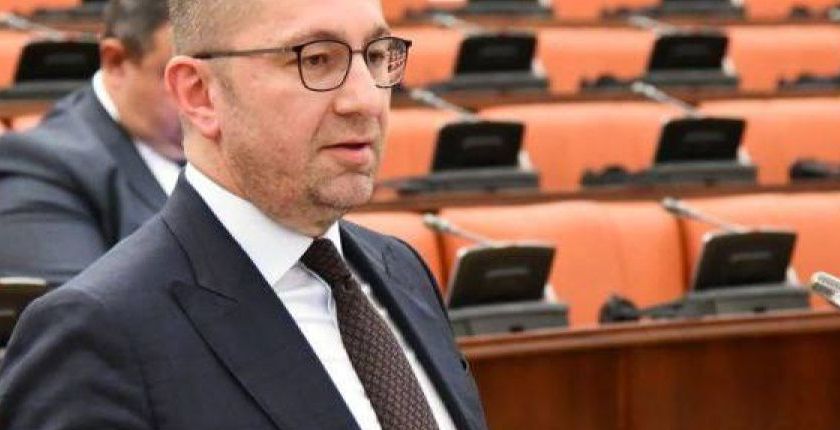
Prime Minister Hristijan Mickoski said the program aims to help the country advance toward the climate neutrality goals set out in the Green Agenda for the Western Balkans, by strengthening the private sector and promoting sustainable business practices. He added that green transformation should be viewed not as a cost, but as an investment in economic resilience, environmental quality, and citizens’ well-being.

EU Ambassador to North Macedonia Michalis Rokas said the program is expected to stimulate innovation and the adoption of green technologies among SMEs, supporting a new stage of development that improves competitiveness and strengthens integration into EU value chains.
by in News

North Macedonia’s ESM secures loans for investments in solar, hydro

North Macedonia’s power utility Elektrani na Severna Makedonija has secured EUR 97 million for the installation of the Bitola 3 solar power plant and revitalization of hydropower plants.

Elektrani na Severna Makedonija (ESM) said today it signed the contracts for a state guarantee and loans totaling EUR 97 million for two major energy projects.

This is an important step in strengthening North Macedonia’s energy transition, ESM added.

The company received EUR 87 million for the construction of the largest photovoltaic plant, Bitola 3. KfW allocated EUR 50 million, and the European Bank for Reconstruction and Development approved EUR 37 million.

The Hydropower Plants Revitalization Project is estimated at EUR 47.3 million

Another EUR 10 million from KfW will support the revitalization of ESM’s hydropower plants (HPPs), ESM explained.

According to the utility, the Hydropower Plants Revitalization Project, estimated at EUR 47.3 million and supported by a EUR 10 million EU grant, will increase annual hydropower generation by 50 GWh.

The agreements were signed by Minister of Finance Gordana Dimitrieska-Kochoska, EBRD representative Fatih Türkmenoğlu, KfW’s director for Kosovo* and North Macedonia Moritz Remé, and ESM CEO Lazo Uzunchev.

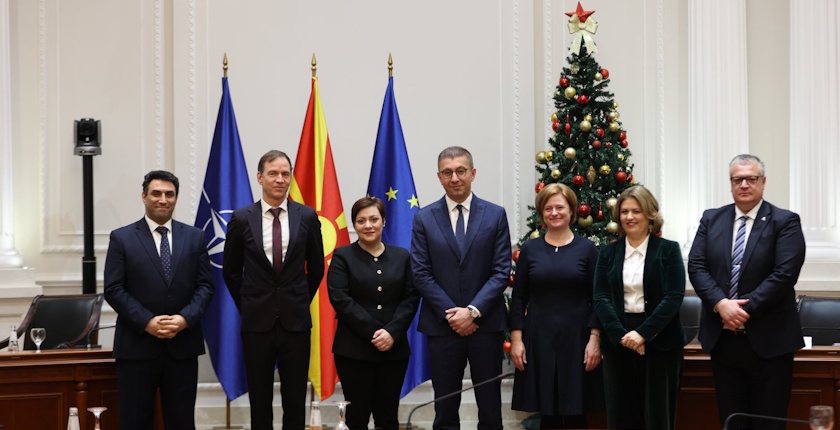
The ceremony was attended by Prime Minister Hristijan Mickoski and Minister of Energy, Mining and Mineral Resources Sanja Božinovska.

Uzunčev: We will increase domestic renewable capacity by over 200 MW

“With these capital investments, together with ESM, we are strengthening domestic energy production, ensuring stable electricity supply, and fostering sustainable economic development,” Gordana Dimitrieska-Kochoska underscored.

According to ESM CEO Lazo Uzunčev, the company’s strategic goals are being implemented with strong momentum.

“With ongoing solar and wind projects, including Bitola 3, we will increase domestic renewable capacity by over 200 MW in the next two to three years, while reducing CO₂ emissions by more than 260,000 tons annually,” he stressed.

Petra Drexler, Ambassador of Germany to North Macedonia, recalled that over the last years, Germany and the EU have continuously supported North Macedonia on its path toward a sustainable and resilient energy future.

* This designation is without prejudice to positions onstatus and is in line with UNSCR 1244/99 and the ICJ Opinion on the Kosovo declaration of independence.
by in News

International Forum on Energy for Sustainable Development kicks off in Skopje: reliance on single supplier is risk of past

Reliance on a single source or supplier is a risk of the past – the future belongs to diversified, sustainable, and safe energy solutions, Minister of Energy, Mining and Mineral Resources of North Macedonia Sanja Božinovska said at the opening of the 14th International Forum on Energy for Sustainable Development in Skopje.

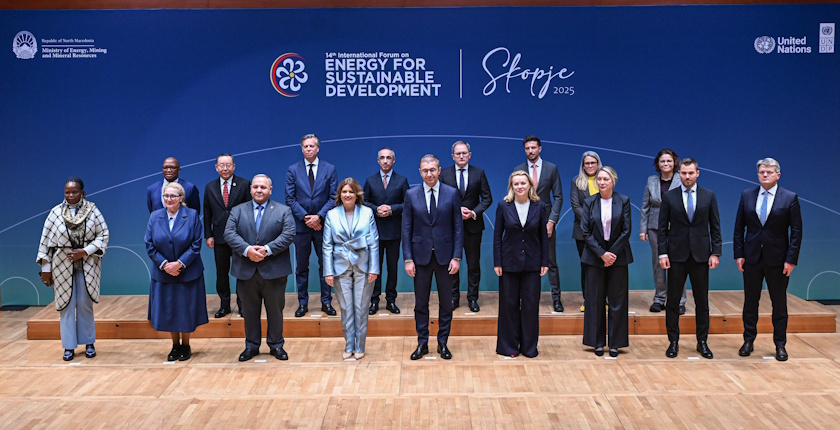
The three-day International Forum on Energy for Sustainable Development (IFESD-14), with the theme From Goals to Action: Powering the Future with Sustainable Energy, gathered more than 500 participants from more than 70 countries, including high-level representatives of international institutions, companies, as well as academics and experts.

The meeting is organized by the Ministry of Energy, Mining and Mineral Resources of North Macedonia, in cooperation with the United Nations Development Programme (UNDP) and the UN’s five regional commissions – UNECE, UNESCAP, UNECLAC, UNECA, and UNESCWA.

The Skopje Declaration will be signed at the forum. The document will remain as an important permanent record of the commitment of the participating countries to a sustainable, safe, and inclusive energy future, according to the ministry.

Sanja Božinovska, Minister of Energy, Mining and Mineral Resources, underlined that North Macedonia would be the center of the global energy dialogue for the next three days.

Božinovska: Energy transition is not a race between countries​

Energy resilience today is the ability of the system to withstand, adapt, and continue to function stably even in conditions of global uncertainty and geopolitical upheaval, she said.

“In this new era, technology and artificial intelligence are our allies, not a threat. They can help us forecast demand, optimize consumption, and improve energy accessibility. But energy must be used wisely, focusing on people, not just machines,” Božinovska stated.

Sanja Božinovska (photo: Ministry of Energy, Mining and Mineral Resources)​

​Energy transition is not a race between countries but a shared journey, in the minister’s view. No country, regardless of size, can handle climate challenges alone, she added.

“Our role, as ministers and leaders, is to create conditions for this transition to be fair, sustainable, and inclusive and to ensure that no one is left behind; no country, no community,” Božinovska stressed.

The actions of the Government of North Macedonia confirm the stance, she asserted and highlighted the construction of natural gas interconnectors with Greece and Serbia. The investment will enable supplying thousands of households and businesses and help Europe achieve better connectivity and security of gas supply, she explained.

Grid modernization and investments in digitalization and energy storage are the country’s policy as well, she added.

Mickoski: Energy is high on the government’s agenda

Hristijan Mickoski (photo: Ministry of Energy, Mining and Mineral Resources)

Prime Minister Hristijan Mickovski said the forum is an opportunity for North Macedonia to show that a small country can have a big impact – when it has a clear vision, determination, and leadership.

He highlighted the role and vision of Minister Božinovska, saying she is determined to move things forward even in the short term, to accelerate processes and not let Macedonia fall behind in the race against time.

“As someone who comes from the energy sector, I know very well how important that feeling of constant movement, change, and responsibility is. That’s why energy is high on the government agenda – not as a technical matter, but as a national priority and state strategy,” he asserted.

Every solar panel, every wind farm, every new power plant fueled by clean energy – this is part of the modern struggle for the independence of North Macedonia, he explained.

“Our vision is clear: to prepare the country for the future – for climate challenges, technological changes and global risks. To make an example in the region of a stable, clean and independent energy economy,” Mickoski said.

Molcean: The forum has developed into a leading global platform for the promotion of sustainable energy

Tatiana Molcean, United Nations Under-Secretary-General and Executive Secretary of the United Nations Economic Commission for Europe (UNECE), pointed out that the forum, which was launched in 2010, has evolved into a leading global platform for advancing sustainable energy.

“Today, we stand at a crossroads when it comes to multilateralism in energy. The global energy transition represents not only a historic opportunity for sustainable development but also a profound responsibility. We must build resilient energy systems that ensure a secure, affordable, and environmentally sustainable supply of energy,” she stressed and added: “None of us will succeed if we work in isolation.”

Tatiana Molcean (photo: Ministry of Energy, Mining and Mineral Resources)

​UNECE is here together with other UN partners to help make energy not only a driver of just transition and economic growth, but also a catalyst for sustainability and resilience, Molcean told the audience.

In the view of Resident Representative of UNDP in North Macedonia Armen Grigoryan, the forum’s theme, From Goals to Action: Powering the Future with Sustainable Energy, reflects urgency and growing consensus among nations that sustainable energy solutions are urgent.

Grigoryan: We have to move from commitments to concrete implementation

“Now we have to move from commitments to concrete implementation and steps. Sustainable energy stands as a cornerstone of our collective sustainable future. Around the world, the UNDP programme is deeply engaged in advancing this agenda,” he stressed.

Grigoryan recalled that the work of UNDP in North Macedonia, but also elsewhere, through the green finance facility and tackling air pollution initiatives, is about the people.

“By helping families heat their homes with green and affordable energy, enabling businesses to invest in green solutions, we are creating healthier communities and new opportunities for growth,” he asserted.

Photo: Ministry of Energy, Mining and Mineral Resources
by in News

Powering the Future with Sustainable Energy – North Macedonia to host 14-IFESD forum on October 28-30

Over 300 officials, policymakers, experts, business leaders, scholars and civil society representatives are gathering in Skopje on October 28 at the three-day International Forum on Energy for Sustainable Development (14-IFESD). Key topics include energy connectivity, energy security, a just energy transition and international energy cooperation.

The 14th International Forum on Energy for Sustainable Development (14-IFESD) will be held from October 28 to 30 at the Hotel Holiday Inn Skopje in North Macedonia. This year’s theme, From Goals to Action: Powering the Future with Sustainable Energy, will guide discussions among more than 300 participants, including officials, policymakers, energy experts, business leaders, scholars and civil society representatives.

They will discuss critical topics such as energy connectivity, energy security, just energy transition, international energy cooperation and collective efforts to accelerate the implementation of the United Nations 2030 Agenda for Sustainable Development.

The forum will serve as a platform for shaping actionable strategies to accelerate progress toward global sustainable energy goals

The Ministry of Energy, Mining and Mineral Resources is organizing the event in collaboration with the UN Development Programme (UNDP) Country Office in North Macedonia and the five regional commissions: UN Economic Commission for Europe (UNECE), UN Economic and Social Commission for Asia and the Pacific (UNESCAP), UN Economic Commission for Latin America and the Caribbean (UNECLAC), UN Economic Commission for Africa (UNECA) and Economic and Social Commission for Western Asia (ESCWA).

Last year’s IFESD was held in Bangkok.

The speakers list includes Prime Minister Hristijan Mickoski, Minister of Energy, Mining and Mineral Resources Sanja Božinovska, Energy Community Secretariat Director Artur Lorkowski and Minister of Energy and Mining of Montenegro Admir Šahmanović.

The forum will serve as a platform for shaping actionable strategies to accelerate progress toward global sustainable energy goals, the organizers said.

One of the segments on the first day of 14-IFESD is dedicated to opportunities for the mitigation of methane emissions from the coal sector. It will take place in a hybrid format – onsite and online.

by in News

North Macedonia kicks off project to replace taxis with electric vehicles

North Macedonia plans to subsidize the purchase of 200 electric vehicles for taxi drivers to improve urban transportation and reduce air pollution.

The country’s first move toward electrifying public transportation was announced last year by Prime Minister Hristijan Mickoski, who said 100-120 electric buses would be purchased.

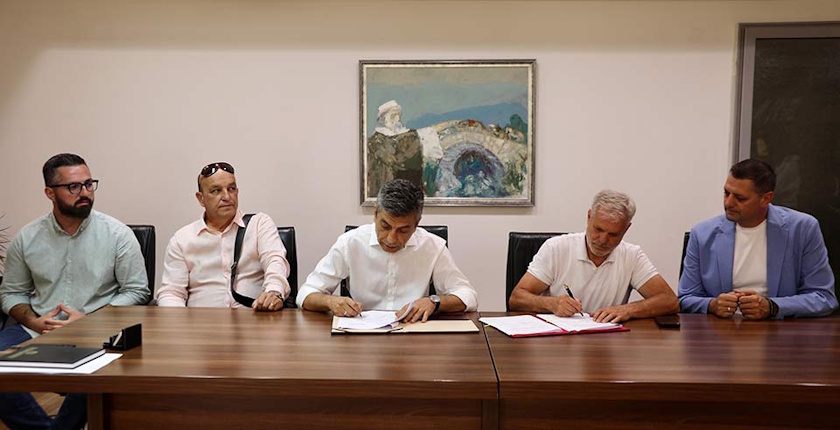
Now, in Skopje, the Ministry of Environment and Spatial Planning and an association of cab drivers have presented a project to subsidize the first 200 electric vehicles for them, as part of efforts for cleaner, quieter, and more efficient urban transportation for the citizens of Skopje and the entire country.

The two sides signed a memorandum of cooperation.

The average price of electric cars in the program would be EUR 28,000

Of note, Skopje is one of the cities with the most polluted air in the world.

According to Izet Mexhiti, First Deputy Prime Minister and Minister of Environment and Spatial Planning, the project represents a concrete and important step toward transforming urban transportation. He added it is part of the strategy to fight air pollution and improve the quality of life in urban areas.

Photo: Ministry of Environment and Spatial Planning

The ministry and the union presented an electric vehicle that meets high environmental standards – without polluting emissions or noise, and with high energy efficiency. Mexhiti stressed that such vehicles would, in several phases, replace the current diesel, petrol, or natural gas vehicles, bringing significant benefits to citizens, taxi drivers, and the environment.

The average price of the said electric cars is EUR 28,000, putting a total cost for 200 vehicles at about EUR 5.6 million. The ministry’s subsidy will be 15% or around EUR 840,000 in total.

There will be a significant reduction in noise pollution

Mexhiti asserted that the replacement of cabs would result in a reduction of more than 2,700 tons of CO2 emissions annually, an effect equivalent to planting over 120,000 trees. He claimed urban noise would be substantially decreased, especially in residential areas.

The official recalled that his ministry has launched a car-sharing system in Skopje with the first 100 electric vehicles and a public system for electric scooters and bicycles in several cities.

In cooperation with the European Union, through the EU for Clean Air program, six electric buses were donated to the City of Skopje, capacities to monitor air pollution have been increased, and tens of thousands of seedlings have been planted across the country, Mexhiti added.

According to Abdullah Rushiti, the president of the union, the greatest benefit of the project is the clean air for the citizens. Three to four thousand taxi drivers operate in Skopje every day, which adds significantly to pollution, he pointed out.

by in News

North Macedonia, Kazancı sign memorandum on gas power plants

The Government of North Macedonia and Kazancı Holding have signed a memorandum of understanding that paves the way for a EUR 1 billion investment in the country’s energy sector.

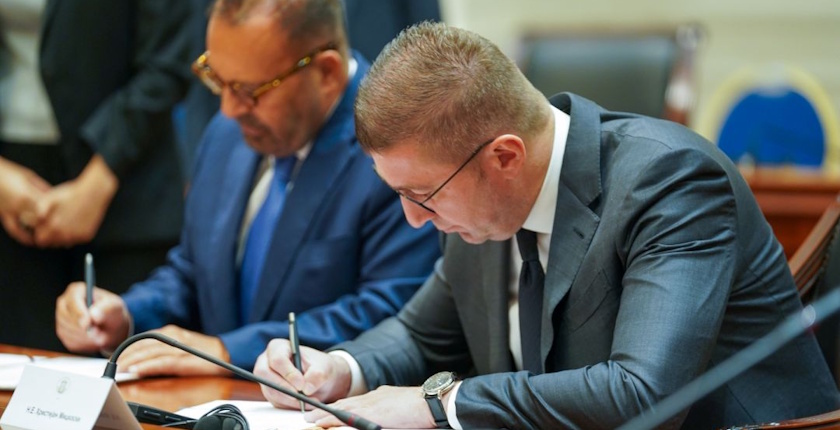
The memorandum of understanding was signed by Prime Minister Hristijan Mickoski and Cemil Kazancı, President of the Board of Directors of Kazancı Holding.

In February, Mickoski announced that the company would invest EUR 1 billion in gas power plants, gas and heat distribution grids.

Now he stressed that the memorandum demonstrates the country’s determination and plan to secure its energy sovereignty and protect its economic interests.

Mickoski: We are reducing import dependence and the impact of external price and political risks

According to the government, the document creates the conditions for a project with a long-term impact on the country’s energy sector.

It consists of three segments: development of new power production facilities, construction of natural gas and heat distribution grids, and implementation of measures to increase gas supply security, Mickoski explained.

Photo: Government of North Macedonia

In his view, a domestic energy source and a stable energy distribution system represent security, predictability, and control over one of the country’s most vital systems.

By developing domestic production facilities, North Macedonia is reducing its reliance on imports and minimizing exposure to external price and political shocks, the prime minister added.

Kazancı: The project is already prepared

Cemil Kazancı recalled that discussions about the investment began a long time ago. The project, in his words, is already prepared. Now research will be conducted, after which the implementation of the EUR 1 billion endeavor will start, he claimed.

It will be a strategic center in the Balkans, according to Kazancı. He expressed confidence that the project would be implemented shortly.

The government has not disclosed details of the memorandum with the company, which operates in the energy sector through its Aksa brand.

Earlier, Prime Minister Mickoski said the two sides were considering cogeneration facilities of 500 MW in combined capacity. They would produce 4.1 TWh of electricity and 720 GWh of heat per year.

The construction of a distribution grid for gas and heat would enable gas and heat to be distributed to as many citizens as possible.

by in News

Construction of largest wind farm in Western Balkans kicks off in Štip in North Macedonia

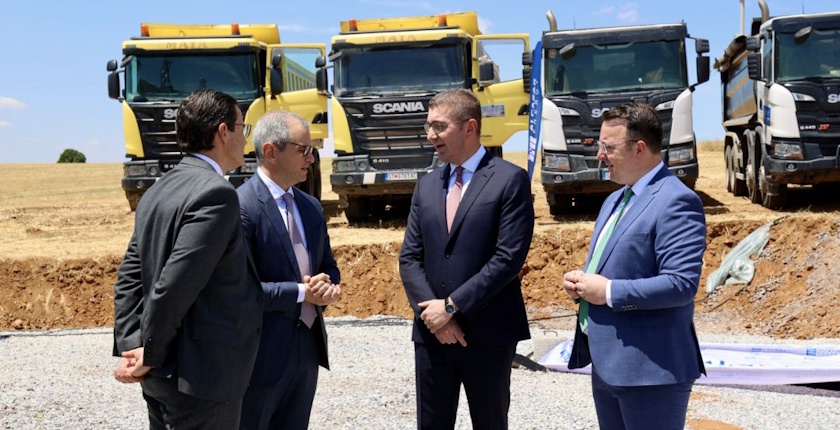
The construction of the largest wind farm in the Western Balkans region has begun in North Macedonia. The Government of North Macedonia and investor Alcazar Energy Partners held a groundbreaking ceremony near the city of Štip for the 400 MW facility.

The Štip wind farm will cover an area of 326 hectares in the municipalities of Karbinci, Radoviš, and Štip, southeast of the capital city of Skopje. Alcazar Energy Partners, which is developing the largest renewable energy platform in the Western Balkans, plans to invest USD 500 million and install 55 wind turbines, which would generate electricity equivalent to the needs of 100,000 households.

The largest operational wind farm in the Western Balkans is Čibuk 1, with a capacity of 158 MW, while the largest project in the pipeline is Maestrale Ring, also in Serbia, for 854 MW.

Co-Founder and Managing Partner of Alcazar Energy Daniel Calderon praised North Macedonia’s readiness to launch such a large-scale project.

The investment will create 600 jobs

The foundation is being laid for a project worth over USD 500 million, which will create 600 jobs, provide clean energy, and reduce carbon dioxide emissions, he stated.

Photo: Government of North Macedonia

Calderon also recalled that in a Bloomberg analysis, investments in renewable energy in the Western Balkans were estimated at USD 11 billion. Due to its advantages, including location, North Macedonia can expect to receive 30% to 40% of it.

North Macedonia’s Prime Minister Hristijan Mickoski noted that the ceremony represents the fulfillment of what the newly formed government promised and agreed with the investor a year ago. He added it is only the first phase.

The power plant will produce 1 TWh of electricity per year

There are many more ideas on how the investment can add even greater value and be more significant both for the investor and for North Macedonia, but it will be discussed at a later stage, according to Mickoski.

He added that the power plant would generate 1 TWh of electricity per year.

North Macedonia currently has two wind farms – Bogdanci, with a capacity of 36.8 MW and a 15 MW expansion underway, and Bogoslovec, of 36 MW, in which the Green Growth Fund (GGF) is a minority shareholder.

The largest wind farm in Europe has a capacity of 2,000 MW

In mid-April, Alcazar Energy Partners signed a development support agreement for the Štip project with the International Finance Corporation, a member of the World Bank Group. The company has a 1.6 GW pipeline of greenfield onshore wind and solar assets,

Of note, the largest operational wind farm in Europe is Markbygden in Sweden, with a capacity of 2,000 MW. Among the top ten, there is another wind farm in Sweden and one in Norway, while the others are in the United Kingdom. The list also includes the 600 MW Fântânele-Cogealac-Gradina wind park in Romania.

by in News

North Macedonia in talks on project to build two hydropower plants

North Macedonia is negotiating a strategic project to build two hydropower plants, Čebren and Galište, in an investment estimated at EUR 1.2 to 1.3 billion, according to Prime Minister Hristijan Mickoski. A tender for building the Čebren pumped storage hydropower plant was annulled by the previous government in early 2024.

The country intends to finance the construction of the two hydropower plants with a loan from the United Kingdom, the prime minister said. He indicated that funding has been secured for several government projects, partly through loans and partly through private investments, according to a statement by the Government of North Macedonia.

The Čebren and Galište project could be financed from a British loan

In the previous tender, the Čebren hydroelectric project was planned to have a capacity of 333 MW, with an option for another unit and 458 MW in total.

In early 2024, the former government annulled the tender, in which Greece-based Public Power Corp. (PPC) and Archirodon were selected for the Čebren project. The authorities said at the time that they would analyze whether it would be more profitable to build Čebren with the state’s own funds or with the help of strategic investors.

A few months ago, Minister of Energy, Mining and Minerals Sanja Božinovska said projects were under development for battery energy storage systems (BESS) and pumped storage hydropower plants.

The project will last several decades, Mickoski says

Addressing the parliament today, Mickoski described the project as strategic, adding that it would not be completed during this government’s term of office. “This is a project that will last several decades,” he said. The funding will be provided through low-interest loans as a state investment, and the rest under market terms and through direct private investment, according to Mickoski.

The prime minister is also confident that the two proposed reservoirs could provide additional water for irrigation amid future climate change impacts and help boost tourism development in the area.