by in News

Albania Licensed Electricity Generation Companies (HPP / TPP)

Licensed Electricity Generation Companies — HPP / TPP

Energy Regulatory Authority (ERE) of Albania  •  Hydropower & Thermal Power Plant Licensees
Series:
Loading…
No companies match your search.
No. Company NUIS License No. Series ERE Board Decision License
Validity
HPP / TPP Facility Capacity [MW] Location
No. Date
ⓘ Legend / Notes * Amendment  •  ** Transfer  •  *** Decision Review  •  **** Condition Linked to Start of Operations  •  ***** Renewal
Symbols preceding a date in the ERE Board Decision Date column indicate the type of modification applied to that decision.
by in News

Montenegro’s EPCG signs contract for Otilovići small hydropower plant

Montenegro’s Elektroprivreda Crne Gore signed a contract today with Vigoris Ecotech for the construction of the Otilovići small hydropower plant near Pljevlja, in the northern part of the country.

The agreement between state-owned power utility Elektroprivreda Crne Gore (EPCG) and Vigoris Ecotech is for project design, construction, the delivery and installation of electro-mechanical equipment, testing, and commissioning, on a turnkey basis.

The contract, worth EUR 6.8 million excluding VAT, was concluded following an open tender, according to the update. The project involves the installation of two units with horizontal Francis turbines, with a total installed capacity of 3.2 MW. The planned annual production is 11 GWh.

The Otilovići SHPP is a priority in hydropower development

In July 2023, EPCG obtained urban planning and technical requirements for the project. At the time, the company said it worked two years on the documentation and announced that it would soon launch a tender.
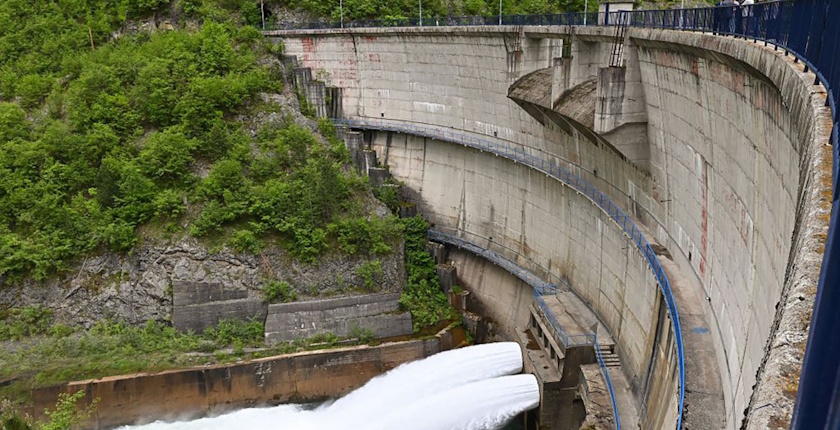
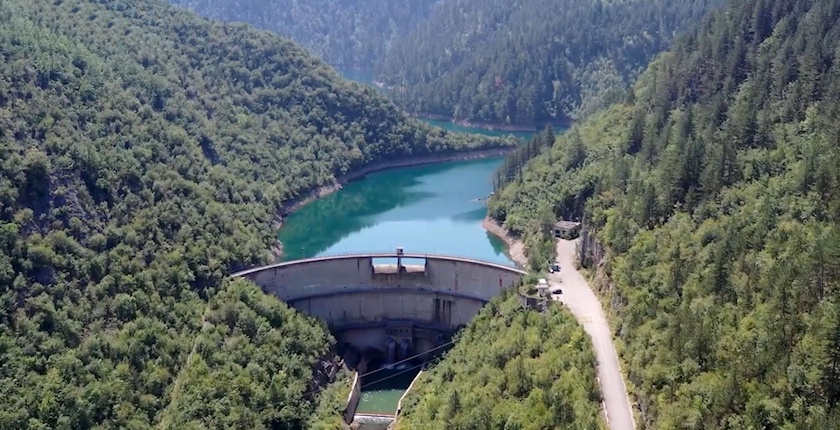
montenegro epcg vigoris shpp otilovici dragas visnjic dam
Photo: EPCG

The small hydropower plant (SHPP) will utilize surplus water from an existing reservoir on the Ćehotina river. The facility is used for the needs of the Pljevlja thermal power plant and to supply drinking water to Pljevlja.

EPCG said Otilovići has been recognized as a priority hydropower project within the strategic plans of both the company and Montenegro.

Dragaš: Strengthening production stability and flexibility

EPCG CEO Zdravko Dragaš stressed that SHPP Otilovići represents another step in the company’s investment plan and the strengthening of domestic production capacities.

The contract confirms EPCG’s development orientation toward investing in reliable, sustainable, and domestic energy sources, with the full application of modern standards and procedures, he added.

“The Otilovići SHPP is a project that adds new value to Montenegro’s energy system and strengthens our overall production stability and flexibility,” Dragaš underscored.

Višnjić: We aim to deliver a solution that justifies trust

According to Vigoris Ecotech CEO Siniša Višnjić, the project’s implementation will be guided by high standards of quality and safety, with strictly defined deadlines and obligations.

“Our goal is to deliver a solution that justifies EPCG’s trust, from the main design to the final testing and commissioning,” Višnjić stressed.
by in News

Croatia’s HEP to invest EUR 157 million in HPP Varaždin

Croatian power utility Hrvatska Elektroprivreda (HEP) has contracted the reconstruction of its Varaždin hydropower plant. The project will increase the capacity of the 51-year-old facility by almost 20% and boost operational efficiency and annual production.

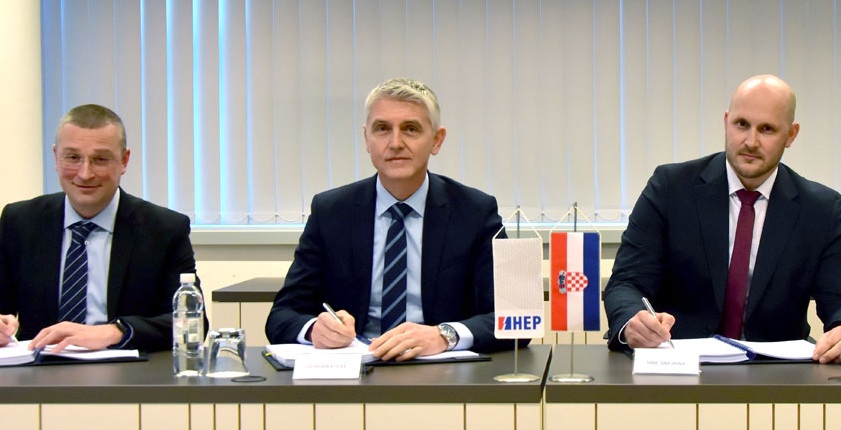
HEP’s power production arm HEP Proizvodnja selected Končar for the reconstruction of the generating units at the Varaždin hydropower plant. The contract was signed by the President of the Management Board of HEP Proizvodnja Šime Šimurina and Gordan Kolak, president of the Management Board of Končar.

The agreement is for the development of technical documentation, manufacturing the primary equipment and associated systems for two new generators, and delivering them. The agreed timeline for the works is 53 months, with completion expected in 2030, according to Končar.

In addition to replacing the generating units, covered by the new contract, the project entails the replacement or refurbishment of all other equipment in the machine room and dam, as well as the structures and infrastructure of HPP Varaždin, depending on their condition and in accordance with the current legal and technical requirements.

croatia hep koncar hpp varazdin contract paic kolak sipurina
Ivan Paić, member of Končar’s management board, Gordan Kolak and Šime Šimurina (photo: HEP)

The reconstruction of the HPP is estimated at EUR 157 million, while the contract with Končar is worth EUR 95.2 million. The combined capacity of each unit would increase from 47 MW to 55 MW. The new turbines are expected to bolster operational efficiency from 86% to 93%.

The endeavor is also aimed at enhancing water flow from 250 cubic meters per second to 275 cubic meters. Together with a rise in total capacity from 94 MW to 110 MW, it is supposed to lift average annual production, currently at 450 GWh, by 6%.

HPP Varaždin’s lifespan to be extended by 50 years

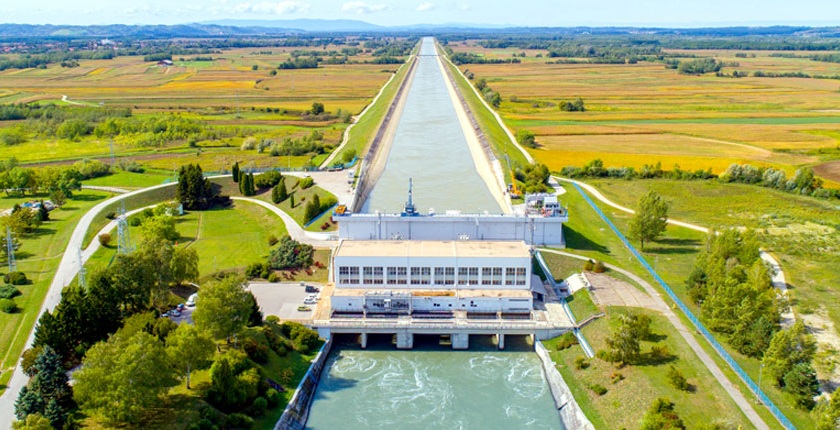
HPP Varaždin is near the city of Varaždin. Its current capacity of 94 MW is the sixth-highest among HEP’s 27 HPPs. Put into operation in 1975, it was the first hydropower plant on the Drava river in Croatia. The other two in cascade are Čakovec and Dubrava.

According to Končar, the reconstruction will extend the facility’s lifespan by at least 50 years.

by in News

Croatia’s HEP to invest EUR 157 million in HPP Varaždin

Croatia-based power utility Hrvatska Elektroprivreda (HEP) has contracted the reconstruction of its Varaždin hydropower plant. The project will increase the capacity of the 51-year-old facility by almost 20% and boost operational efficiency and annual production.

HEP’s power production arm HEP Proizvodnja selected Končar for the reconstruction of the generating units at the Varaždin hydropower plant. The contract was signed by the President of the Management Board of HEP Proizvodnja Šime Šimurina and Gordan Kolak, president of the Management Board of Končar.

The agreement is for the development of technical documentation, manufacturing the primary equipment and associated systems for two new generators, and delivering them. The agreed timeline for the works is 53 months, with completion expected in 2030, according to Končar.

In addition to replacing the generating units, covered by the new contract, the project entails the replacement or refurbishment of all other equipment in the machine room and dam, as well as the structures and infrastructure of HPP Varaždin, depending on their condition and in accordance with the current legal and technical requirements.

croatia hep koncar hpp varazdin contract paic kolak sipurina
Ivan Paić, member of Končar’s management board, Gordan Kolak and Šime Šimurina (photo: HEP)

The reconstruction of the HPP is estimated at EUR 157 million, while the contract with Končar is worth EUR 95.2 million. The combined capacity of each unit would increase from 47 MW to 55 MW. The new turbines are expected to bolster operational efficiency from 86% to 93%.

The endeavor is also aimed at enhancing water flow from 250 cubic meters per second to 275 cubic meters. Together with a rise in total capacity from 94 MW to 110 MW, it is supposed to lift average annual production, currently at 450 GWh, by 6%.

HPP Varaždin’s lifespan to be extended by 50 years

HPP Varaždin is near the city of Varaždin. Its current capacity of 94 MW is the sixth-highest among HEP’s 27 HPPs. Put into operation in 1975, it was the first hydropower plant on the Drava river in Croatia. The other two in cascade are Čakovec and Dubrava.

According to Končar, the reconstruction will extend the facility’s lifespan by at least 50 years.

by in News

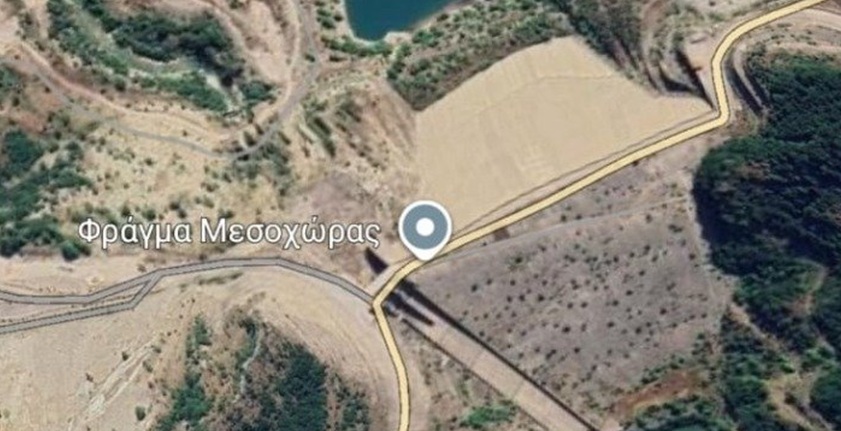
PPC receives funds for stalled Mesochora hydropower project 

Public Power Corporation has received funds to speed up its Mesochora hydropower project, stalled for 24 years.

The Greek Ministry of Environment and Energy announced that the procedures to complete the Mesochora hydropower plant (HPP) in Trikala would be significantly accelerated, ending a 24-year period of judicial deadlock and construction suspension.

Of note, the project was revived in 2021–2022.

The ministry said it signed an agreement with government-controlled Public Power Corporation (PPC or DEI), the project’s developer and operator, on the necessary studies required to finalize the 161.6 MW facility.

PPC is now responsible for commissioning the necessary relocation studies

The deal directly addresses the most sensitive issue: the relocation of residents from the affected settlement of Mesochora, the announcement revealed.

PPC is now responsible for commissioning the necessary relocation studies, with a budget of EUR 1,313,160.00, the update reads.

The ministry claimed that the government is committed to ensuring the safe relocation of the population with full compensation for property owners.

It recalled that the construction of the Mesochora HPP, located on the upper Acheloos River, started in 1986 and that the dam structure was largely finished by 2001. However, its operation was halted due to repeated appeals and long-standing legal battles at the Council of State, the country’s supreme administrative court, initiated by environmental groups and affected local communities.

Over EUR 300 million has already been invested in the project

Now a task force has been established to push forward the project and start the final construction activities by the end of 2026. The expropriation process for all necessary areas will also begin to ensure the safe and efficient functioning of the dam, the ministry underlined.

Of note, over EUR 300 million has already been invested in the project or EUR 500 million in current value.

Once operational, the plant is expected to generate approximately 360 GWh of renewable energy annually, contributing substantially to the country’s energy mix and the targets set by the revised National Energy and Climate Plan (NECP), according to the ministry.

The HPP would also provide balancing for renewable energy generation.

The meeting was attended by Minister of Environment and Energy Stavros Papastavrou, Minister of Digital Governance Dimitris Papastergiou, Mayor of Pyli Konstantinos Maravas, members of Parliament representing Trikala – Konstantinos Skrekas, Thanasis Lioutas and Katerina Papakosta-Palioura, the ministry’s General Secretary of Spatial Planning and Urban Environment Efthimios Bakogiannis and the PPC’s President and CEO Georgios Stassis and Deputy CEO Alexios Paizis.

greece Mesochora hydropower ppc relocation study
Photo: Ministry of Environment and Energy
by in News

Hydropower plant Dabar to be completed by end-2027

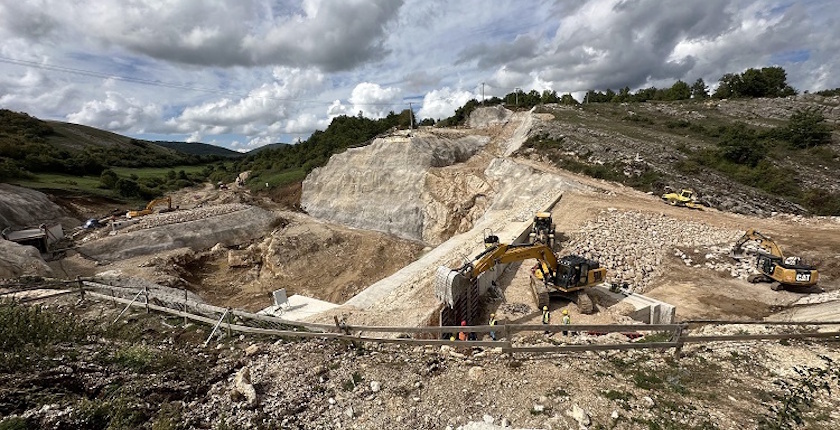
The Dabar hydropower plant is expected to be completed by the end of 2027, according to Petar Đokić, Minister of Energy and Mining of the Republic of Srpska.

The operation of the Dabar hydropower plant, the most complex hydropower facility, in which EUR 339.5 million has been invested, will bring benefits for the entire eastern Herzegovina area, Petar Đokić said during a visit to the construction site, Srna reported.

The works on the 160 MW hydropower plant, with an expected annual production of 500 GWh, began in June 2023.

Đokić noted that the project is located in four municipalities – Nevesinje, Bileća, Berkovići, and Ljubinje – spanning 40 kilometers. As a key part of the project, Đokić highlighted a 12-kilometer tunnel, which is nearly finished.

Đokić: It is an exceptional construction undertaking, the first of its kind in the world in the 21st century

It is an exceptional construction undertaking, the first of its kind in the world in the 21st century, the minister said and added that he is proud to be part of the project from the beginning of its implementation.

Photo: Ministry of Energy and Mining

He spoke with the representatives of China-based Gezhouba Group Co., the main contractor, and Integral and Elnos, its domestic subcontractors.

Đokić stressed that some issues regarding the construction were discussed. HPP Dabar is a financially demanding project, he noted.

Photo: Ministry of Energy and Mining

Wind farm Grebak will be completed by 2027

Minister Đokić recalled that projects for solar power plants and wind farms with a capacity of 680 MW are under development in the territory of Nevesinje municipality, with investments estimated at an overall EUR 409 million.

He underlined that one of the projects, the Grebak wind farm, has experienced delays. Numerous companies, including the investor in the Grebak project, are hostages to the European policies mistrustful of Bosnia and Herzegovina, Đokić claimed.

Of note, the Republic of Srpska is one of the two political entities of BiH. The concession for the Grebak wind farm was granted in April 2019.

The minister expressed hope that the investor would overcome the challenges, conclude a financing agreement, secure equipment, and start construction work, expected to be finished by late 2026 or early 2027.

Investors in solar projects in Nevesinje are currently preparing documentation and purchasing equipment, Đokić said.

by in News

Slovenia’s HESS inks 9.2 MW deal for two solar power plants near HPP Brežice

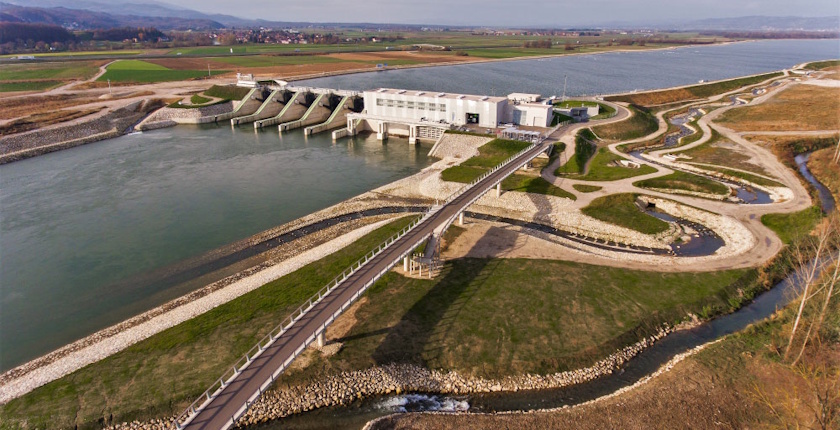
Hydropower plant operator Hidroelektrarne na Spodnji Savi will build two solar power plants with a combined capacity of 9.2 MW near its Brežice hydropower plant. It picked Končar as the contractor.

Two new photovoltaic facilities in the pipeline are the continuation of investments in solar near the Brežice hydropower plant. Hidroelektrarne na Spodnji Savi (HESS), owned by GEN and HSE, installed a 6 MW PV plant in May 2023 next to the reservoir of its HPP Brežice’s.

At the time, it was the largest in Slovenia, and it remains the largest hybrid system in the country.

The existing PV plant is FEBR-D3, while the two new ones are called FEBR-D1 and FEBR-D2.

“We’re excited to announce a new chapter in our collaboration with HESS,” Croatia-based Končar said.

Končar will install the two solar power plants

Končar, an engineering company, signed a contract in July for the construction of FEBR-D1 and FEBR-D2. It said the endeavor extends the partnership established at HPP Brežice. Of note, it supplied generators for the 47.4 MW HPP, which began operating in 2017.

Located just a few kilometers upstream from HPP Brežice, on the left bank of the Sava River, the two units will have a combined peak capacity of 9.2 MW, powered by 14,790 PV modules, Končar added.

The Croatian firm revealed that the contract is worth EUR 4.5 million. It sets an ambitious goal: both plants are scheduled to be fully operational and handed over to the client by the end of next year, according to Končar.

The largest solar power plant in Slovenia has a capacity of 7.1 MW

In late May, on World Sun Day, HESS announced that it obtained construction permits for the FEBR-D1 and FEBR-D2 solar plants. It is the continuation of the story within which, on June 21, 2023, Slovenia’s largest hybrid solar power plant FEBR-D3 began production, it added.

Of note, the largest solar power plant in Slovenia has a capacity of 7.1 MW. It came online last month on the border with Italy.

Hydropower and solar energy make an excellent combination, so numerous power utilities, including the ones in the Western Balkans, decided to invest. The latest example comes again from Slovenia, where Soške Elektrarne Nova Gorica (SENG), part of HSE, commissioned its first PV unit at its Avče pumped storage hydropower plant.

by in News

Montenegro’s EPCG, NTE Energy sign memorandum of understanding

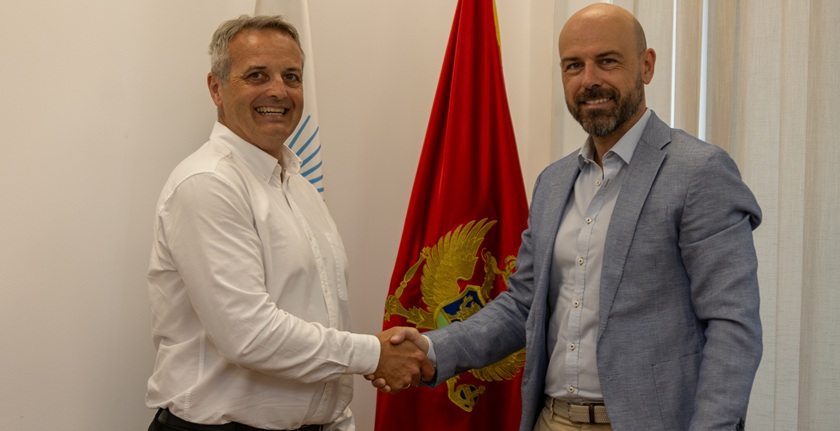
Power utility Elektroprivreda Crne Gore and Norwegian company NTE Energi AS have signed a memorandum of understanding confirming their mutual commitment to intensifying cooperation in the renewable energy sector in Montenegro.

The memorandum of understanding envisages the exchange of information, coordination of activities, and consideration of specific projects through joint venture Zeta Energy, established by state-owned Elektroprivreda Crne Gore (EPCG) and NTE Energi.

Zeta Energy operates small hydropower plants Glava Zete and Slap Zete, operational since 2021.

Bulatović: The MoU is an important step in EPCG’s ongoing transformation

The memorandum was signed by EPCG’s CEO Ivan Bulatović and NTE Energi’s CEO Inge Forseth.

According to Bulatović, the focus of the cooperation between the two companies will be the development of the hydropower potential of the rivers Ćehotina, Ibar, and Morača, with the possibility of expanding it to other renewable energy sources.

In the search for stable partnerships and the development of domestic renewable capacities, the memorandum represents a significant step forward in EPCG’s transformation, Bulatović asserted.

In his words, collaboration with a renowned company like NTE Energi aligns with EPCG’s goals.

Forseth: Zeta Energy provides a platform for implementing concrete projects

Inge Forseth, NTE Energi CEO, underlined that his company has an extensive track record in energy and decarbonization. He described Montenegro as an attractive market for sustainable energy development.

By signing the MoU, the two firms are opening a new chapter in their cooperation, he stressed.

Montenegro has enormous natural potential, and Zeta Energy serves as a platform to implement concrete projects for the benefit of the local community and partners, according to Forseth.

EPCG has four HPPs in the pipeline

EPCG recently said it planned to include an international partner in the development of the Komarnica hydropower project. The company cited the experiences of Norway, Austria, and France.

The company has four hydropower projects in the pipeline: Komarnica, Kruševo, Ćehotina, and Sutorina. The first two are the most advanced. Kruševo and Ćehotina could be implemented with EDF.