by in News

Turkish oil company Tüpraş to produce sustainable aviation fuel

Oil refiner Tüpraş is working on a technology for biofuel from algae and yeasts, using solar energy. The Sunfusion project involves processing into sustainable aviation fuel – kerosene – and green alternatives for vessels. It received EU support and includes partners from Greece, France, Germany, Norway and Serbia.

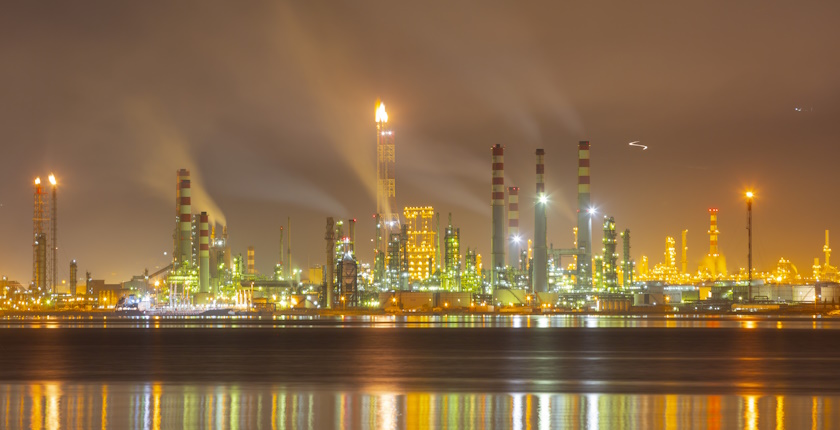
Istanbul-based Türkiye Petrol Rafinerileri AŞ (Tüpraş) has several decarbonization projects underway, counting on the expansion of green energy markets. One of the endeavors is Sunfusion – advancing biofuel production from purified microalgae and oleaginous yeasts by utilizing state-of-the-art solar technologies.

The project, which runs until the end of 2028, received EUR 3 million through the European Union’s Horizon Europe program. Centre for Research and Technology Hellas (CERTH), known also by its Greek acronym EKETA, is the coordinator.

Ten partners include the Middle East Technical University (METU/ODTÜ), located in Ankara, Aristotle University of Thessaloniki (AUTH) and Foodscale Hub (FSH), which is in Novi Sad, Serbia. The rest are from France, Germany and Norway.

Solar-to-biocrude efficiency must top 50%

Tüpraş, the largest oil refiner in Turkey, is majority-owned by Koç Holding and its related businesses. It launched Sunfusion to develop the conversion of microalgae and oleaginous yeasts using the hydrothermal liquefaction (HTL) method. Among the goals is to minimize costs, emissions and waste and achieve a solar-to-biocrude efficiency target of more than 50%.

The company and its partners intend to cultivate high-lipid, low-nitrogen microalgae and yeasts

The initiative involves photobioreactors, open raceway ponds and a solar thermal system supplying energy for the process. The company and its partners intend to cultivate high-lipid, low-nitrogen microalgae and yeasts.

Hydrotreatment units would have fractionation capabilities, for refining the biocrude into high-value fuels such as sustainable aviation fuel – kerosene – and alternative marine fuels.

First SAF supply deal in Turkey already in scope

In June, Tüpraş signed a letter of intent with Turkish Airlines for a sustainable aviation fuel (SAF) supply arrangement. They claimed that carbon emissions would be up to 87% lower than from conventional jet fuel.

“We will begin SAF production next year at our Izmir Refinery by leveraging our existing facilities. We aim to finalize the investment decision for a new unit that will increase our SAF production capacity to 300,000 tons by the end of this year. The use of SAF is becoming a necessity under both international and local regulations for the decarbonization of the aviation sector,” General Manager of Tüpraş Ibrahim Yelmenoğlu stated.

It would be both the first production and supply operations in Turkey. The company revealed at the time that it would make the SAF from bio-based feedstocks.

Tüpraş has seven projects with support from Horizon Europe

Tüpraş said it has completed 17 projects under Horizon 2020 and that seven are ongoing through Horizon Europe. The company updated its strategic transformation plan in April, placing the focus on sustainable refining, SAF, zero-carbon electricity and green hydrogen.

In the Horizon portfolio, it is conducting the Eastern Lights project for geological storage of carbon dioxide. ICO2nic is in the same segment, with carbon capture and electrochemical conversion of CO2, while the Hermes initiative is for the separation and purification of hydrogen with innovative membranes.

Also of note, one of the oil refiner’s subsidiaries took over a major solar power project in Romania early this year.
by in News

Clean transition, decarbonization among priorities in EU’s draft budget

Within the European Union’s proposed budget for the period from 2028 to 2034, the EUR 409 billion European Competitiveness Fund is for investments in strategic technologies, including for the clean transition and decarbonization. The new Connecting Europe Facility (CEF), worth EUR 81.4 billion, would finance the completion of Trans-European Networks and foster the EU’s green and clean transition in energy and transportation.

The European Commission proposed the next long-term budget of almost EUR 2 trillion, of which 35% would be earmarked for climate and environment. Energy infrastructure spending in the so-called Multiannual Financial Framework (MFF) for 2028-2034 will be EUR 29.5 billion, five times higher than in the previous seven-year period, it said, arguing it would reinforce energy independence and accelerate the clean transition.

The entire proposed sum amounts to 1.26% of the expected gross national income, on average. The framework is aimed at an independent, prosperous, secure, and thriving society and economy, the update adds.

“Europe faces an increasing number of challenges in numerous areas such as security, defence, competitiveness, migration, energy and climate resilience. These are not temporary but reflect systemic geopolitical and economic shifts that require a strong and forward-looking response,” the EU’s top executive body said.

Adapting to local needs

The European Commission pointed out that the budget would be tailored to local needs. National and regional partnership plans based on investments and reforms would be introduced, for targeted impact where it matters most and ensuring a faster and more flexible support for more economic, social and territorial cohesion across the union, according to the outlined measures.

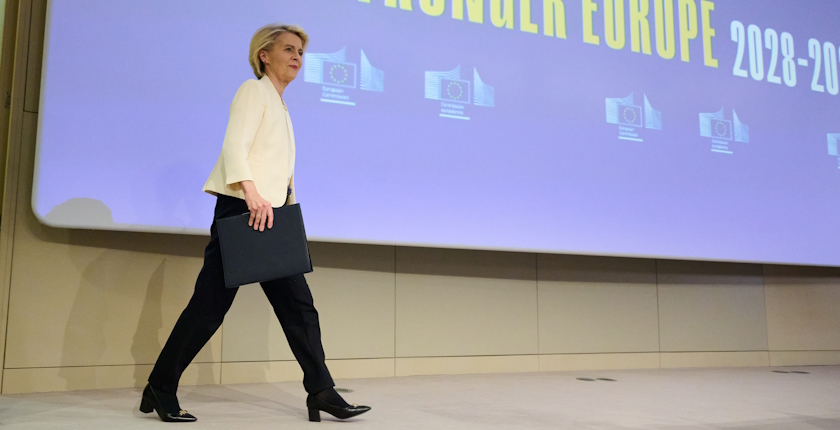
“Our new long-term budget will help protect European citizens, strengthen Europe’s social model and make our European industry thrive,” European Commission President Ursula von der Leyen stated.

For the first time, the spending plan would enable member states to invest more in the EU objectives, with loans of up to 150 billion EUR altogether. “We will call it Catalyst Europe. The loans are backed by the EU budget. It targets common European priorities. You can invest it – for example in defence industry or energy infrastructure or strategic technologies,” Von der Leyen said.

The budget plan includes a European Competitiveness Fund, worth EUR 409 billion, for investment in strategic technologies. Operating under one rulebook, and offering a single gateway to funding applicants, it aims to simplify and accelerate EU funding and catalyse private and public investment. The focus is on four areas:

  • clean transition and decarbonization,
  • digital transition,
  • health, biotech, agriculture and bioeconomy,
  • defense and space.

In close connection with the European Competitiveness Fund, the EU research framework, with its flagship Horizon Europe worth EUR 175 billion, will continue to finance world-class innovation, the commissioners revealed.

Commissioners line up EUR 81.4 billion in budget for next Connecting Europe Facility

The next Connecting Europe Facility (CEF), worth EUR 81.4 billion, would finance the completion of Trans-European Networks and foster the EU’s green and clean transition in energy and transportation. It covers cross-border projects for energy, transportation and military mobility that are essential for competitiveness and security and reducing strategic dependencies.

To simplify external action financing, the EU’s top executive body envisaged an item called Global Europe, of EUR 200 billion, to maximise impact on the ground and improve visibility of EU external action in partner countries. It would allow the EU budget to step up support to candidate countries and prepare for their accession.

Among other segments, the European Commission said it plans to direct 75% of revenues from the Carbon Border Adjustment Mechanism (CBAM) to the EU budget. It expects the resource to generate EUR 1.4 billion per year.