by in News

HEP plans to build 91 MW solar power plant on Adriatic coast

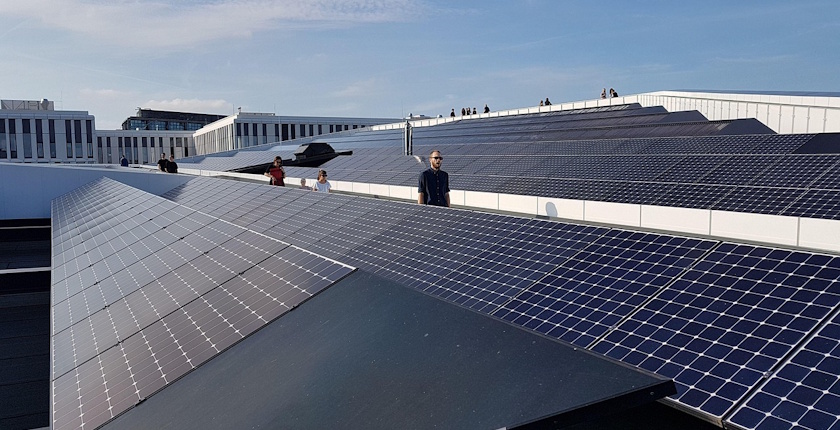
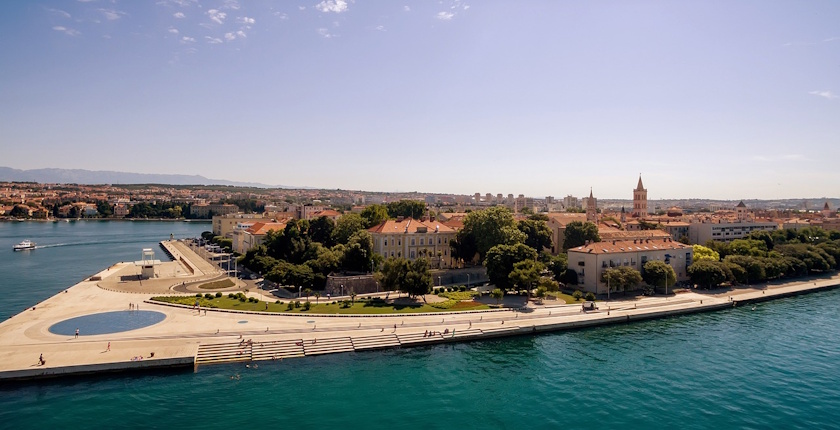
Croatian state-owned power utility Hrvatska Elektroprivreda (HEP) is planning to build a 91 MW solar power plant near the city of Zadar, on the Adriatic coast.

The photovoltaic facility will be slightly smaller than the 99 MW Korlat system – HEP’s largest, which it is building in nearby Benkovac. The company’s biggest two solar power plants will be located just a few dozen kilometers apart.

HEP plans to install the solar panels in the Crno area, eZadar reported. It is approximately six kilometers east of Zadar. The site is located within the planned Crno business zone.

Eleven solar power plants are planned near the Crno location

The power plant would span approximately 93 hectares. Its estimated annual electricity production is 119.8 GWh. HEP’s facility in Crno would consist of roughly 139,800 photovoltaic modules.

The news website pointed out that there are projects for 11 PV plants at locations within a ten-kilometer radius. They are intended to cover an area of about 483 hectares. None have been installed so far.

Neoen Renewables Croatia developed one of the projects, Vlaka, for 62.5 MW in peak capacity.

HEP is also planning 90 rooftop solar plants

The Korlat solar power plant, which will be the largest in Croatia, is being built by Chinese companies Shandong Electric Power Engineering Consulting Institute Corporation (SDEPCI) and Norinco International Cooperation.

Together with HEP’s first wind farm, commissioned in 2021, the Korlat solar plant is about to form the country’s first renewable hybrid energy park.

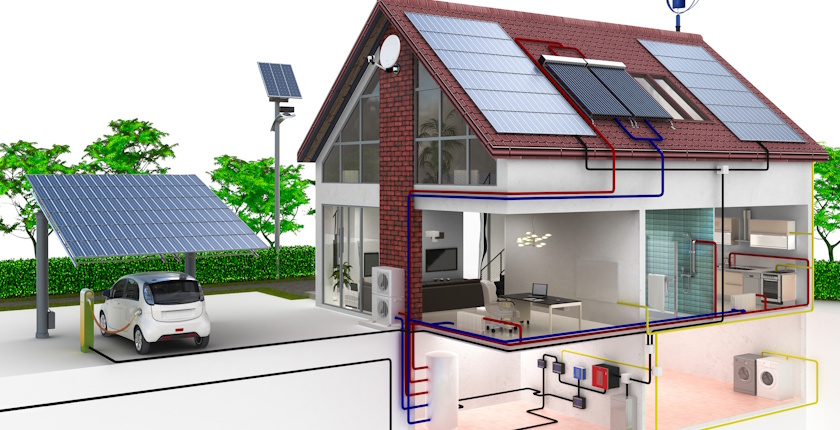
In addition to large ground-mounted PV facilities, HEP is planning to set up 90 solar power plants on its buildings across Croatia. Its subsidiary HEP ESCO is carrying out the project.
by in News

HEP plans to build 91 MW solar power plant on Adriatic coast

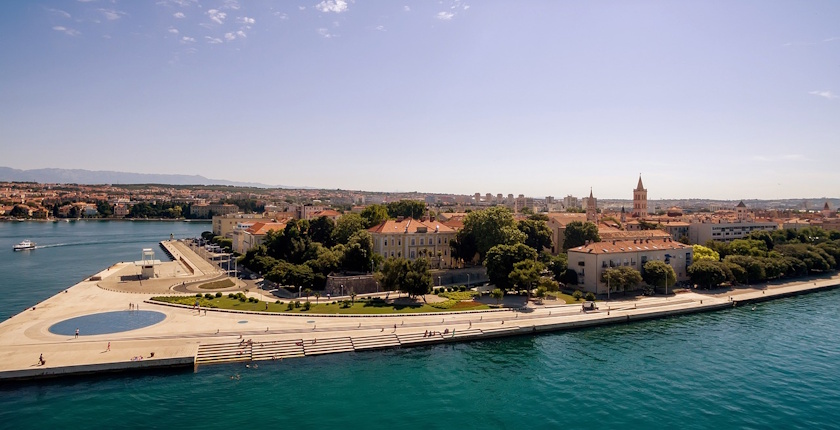
Croatian state-owned power utility Hrvatska Elektroprivreda (HEP) is planning to build a 91 MW solar power plant near the city of Zadar, on the Adriatic coast.

The photovoltaic facility will be slightly smaller than the 99 MW Korlat system – HEP’s largest, which it is building in nearby Benkovac. The company’s biggest two solar power plants will be located just a few dozen kilometers apart.

HEP plans to install the solar panels in the Crno area, eZadar reported. It is approximately six kilometers east of Zadar. The site is located within the planned Crno business zone.

Eleven solar power plants are planned near the Crno location

The power plant would span approximately 93 hectares. Its estimated annual electricity production is 119.8 GWh. HEP’s facility in Crno would consist of roughly 139,800 photovoltaic modules.

The news website pointed out that there are projects for 11 PV plants at locations within a ten-kilometer radius. They are intended to cover an area of about 483 hectares. None have been installed so far.

Neoen Renewables Croatia developed one of the projects, Vlaka, for 62.5 MW in peak capacity.

HEP is also planning 90 rooftop solar plants

The Korlat solar power plant, which will be the largest in Croatia, is being built by Chinese companies Shandong Electric Power Engineering Consulting Institute Corporation (SDEPCI) and Norinco International Cooperation.

Together with HEP’s first wind farm, commissioned in 2021, the Korlat solar plant is about to form the country’s first renewable hybrid energy park.

In addition to large ground-mounted PV facilities, HEP is planning to set up 90 solar power plants on its buildings across Croatia. Its subsidiary HEP ESCO is carrying out the project.
by in News

Croatia’s HEP to invest EUR 157 million in HPP Varaždin

Croatian power utility Hrvatska Elektroprivreda (HEP) has contracted the reconstruction of its Varaždin hydropower plant. The project will increase the capacity of the 51-year-old facility by almost 20% and boost operational efficiency and annual production.

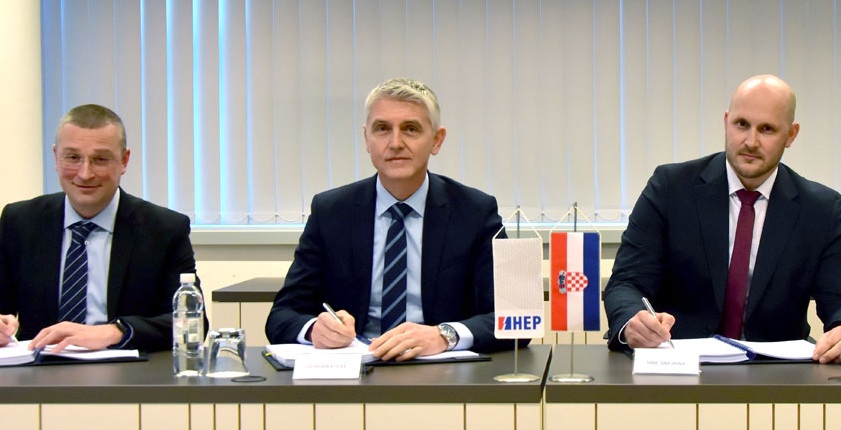
HEP’s power production arm HEP Proizvodnja selected Končar for the reconstruction of the generating units at the Varaždin hydropower plant. The contract was signed by the President of the Management Board of HEP Proizvodnja Šime Šimurina and Gordan Kolak, president of the Management Board of Končar.

The agreement is for the development of technical documentation, manufacturing the primary equipment and associated systems for two new generators, and delivering them. The agreed timeline for the works is 53 months, with completion expected in 2030, according to Končar.

In addition to replacing the generating units, covered by the new contract, the project entails the replacement or refurbishment of all other equipment in the machine room and dam, as well as the structures and infrastructure of HPP Varaždin, depending on their condition and in accordance with the current legal and technical requirements.

croatia hep koncar hpp varazdin contract paic kolak sipurina
Ivan Paić, member of Končar’s management board, Gordan Kolak and Šime Šimurina (photo: HEP)

The reconstruction of the HPP is estimated at EUR 157 million, while the contract with Končar is worth EUR 95.2 million. The combined capacity of each unit would increase from 47 MW to 55 MW. The new turbines are expected to bolster operational efficiency from 86% to 93%.

The endeavor is also aimed at enhancing water flow from 250 cubic meters per second to 275 cubic meters. Together with a rise in total capacity from 94 MW to 110 MW, it is supposed to lift average annual production, currently at 450 GWh, by 6%.

HPP Varaždin’s lifespan to be extended by 50 years

HPP Varaždin is near the city of Varaždin. Its current capacity of 94 MW is the sixth-highest among HEP’s 27 HPPs. Put into operation in 1975, it was the first hydropower plant on the Drava river in Croatia. The other two in cascade are Čakovec and Dubrava.

According to Končar, the reconstruction will extend the facility’s lifespan by at least 50 years.

by in News

Croatia’s HEP to invest EUR 157 million in HPP Varaždin

Croatia-based power utility Hrvatska Elektroprivreda (HEP) has contracted the reconstruction of its Varaždin hydropower plant. The project will increase the capacity of the 51-year-old facility by almost 20% and boost operational efficiency and annual production.

HEP’s power production arm HEP Proizvodnja selected Končar for the reconstruction of the generating units at the Varaždin hydropower plant. The contract was signed by the President of the Management Board of HEP Proizvodnja Šime Šimurina and Gordan Kolak, president of the Management Board of Končar.

The agreement is for the development of technical documentation, manufacturing the primary equipment and associated systems for two new generators, and delivering them. The agreed timeline for the works is 53 months, with completion expected in 2030, according to Končar.

In addition to replacing the generating units, covered by the new contract, the project entails the replacement or refurbishment of all other equipment in the machine room and dam, as well as the structures and infrastructure of HPP Varaždin, depending on their condition and in accordance with the current legal and technical requirements.

croatia hep koncar hpp varazdin contract paic kolak sipurina
Ivan Paić, member of Končar’s management board, Gordan Kolak and Šime Šimurina (photo: HEP)

The reconstruction of the HPP is estimated at EUR 157 million, while the contract with Končar is worth EUR 95.2 million. The combined capacity of each unit would increase from 47 MW to 55 MW. The new turbines are expected to bolster operational efficiency from 86% to 93%.

The endeavor is also aimed at enhancing water flow from 250 cubic meters per second to 275 cubic meters. Together with a rise in total capacity from 94 MW to 110 MW, it is supposed to lift average annual production, currently at 450 GWh, by 6%.

HPP Varaždin’s lifespan to be extended by 50 years

HPP Varaždin is near the city of Varaždin. Its current capacity of 94 MW is the sixth-highest among HEP’s 27 HPPs. Put into operation in 1975, it was the first hydropower plant on the Drava river in Croatia. The other two in cascade are Čakovec and Dubrava.

According to Končar, the reconstruction will extend the facility’s lifespan by at least 50 years.

by in News

Croatia’s HEP to install 90 solar power plants on rooftops of its facilities

Croatia’s power utility Hrvatska Elektroprivreda intends to install 90 solar power plants on its facilities across Croatia.

HEP ESCO, a subsidiary of Hrvatska Elektroprivreda (HEP), has launched a public procurement for the installation of 90 photovoltaic plants under a design-and-build model and on a turnkey basis.

The firm develops, implements, and finances energy efficiency projects based on the ESCO model.

The investment is estimated at EUR 5.3 million, and the deadline for submitting bids is November 3.

HEP ESCO plans to sign a contract with the best bidder within 90 days after selecting it. The deadline for the completion of works will be 18 months, according to the public call.

Five groups of solar power plants

The public call is divided into five geographical groups in Croatia.

Group 1 is for Zagreb and its surroundings. Solar panels would be installed at ten locations, with an estimated investment of EUR 1.2 million. Group 2 covers hydropower plants Zavrlje, Orlovac, Peruća, and Zakučaci in the coastal region of Dalmatia, as well as power distribution facilities. The works in the segment are valued at EUR 770,000, local media reported.

Four cities in the region of Slavonia make up the third group, with 20 locations. Solar panels would be installed for EUR 1.21 million in Virovitica, Požega, Vinkovci, and Vukovar.

HEP has over 50 solar power plants on the rooftops of its buildings and facilities

A total of 15 locations in the areas of Međimurje and Zagorje and the Sisak-Moslavina county, and including hydropower plant Ozalj, all in northwestern Croatia, are in the fourth group. The estimated value is EUR 1.1 million.

The value of the investment in Istria, Primorje, and Gorski Kotar is EUR 1.03 million. It entails the Fužine hydropower plant, Rijeka, Vinodol, and electricity distribution facilities.

Of note, HEP has more than 50 solar power plants on the rooftops of its buildings and facilities.

HEP Proizvodnja, HEP’s power production arm, has 12 PV plants on administrative buildings, thermal power plants and hydropower plants. The total capacity is about 1.5 MW. HEP ODS, the country’s distribution system operator, has another 44 solar power plants with a total capacity of 1.1 MW on its roofs.

by in News

RES Croatia to Brussels: Renewables have no future in Croatia

RES Croatia, together with SolarPower Europe and WindEurope, has sent a letter to the European Commission to raise concerns about the crisis in Croatia’s renewable energy sector.

The three associations emphasized that for several years, 60 projects for investments in solar, wind, geothermal, and batteries have been blocked, and that if nothing is done, many of them would soon be abandoned.

Without urgent deblocking of renewable energy projects, Croatia will lose investments, increase fossil fuel imports, which already exceed 25%, and miss the European Union’s and national target of at least 42.5% of energy consumption coming from renewables by 2030, according to Renewable Energy Sources of Croatia (RES Croatia), SolarPower Europe and WindEurope.

The national organization warned that the government is gradually phasing out subsidies for electricity prices for citizens and entrepreneurs. At the same time, the development of renewable energy sources as the only sustainable solution for lower bills and lowering imports is at a complete standstill, it added.

Projects with a total capacity of 3.5 GW and investments of EUR 3 billion are blocked

Croatia is currently subject to infringement proceedings due to delays in implementing the European Union’s RED II and RED III directive. They aren’t just a piece of paper, but a mechanism to ensure energy security and independence, which is of strategic interest for Croatia and its citizens, RES Croatia underscored.

The organizations are urging the European Commission to use its tools to demand from the government to determine the grid connection fee, but at EUR 0 per kWh, open up the balancing market for renewable energy producers, and integrate battery energy storage systems (BESS) and electrification into national planning.

Currently, 60 projects for solar power plants, wind farms, geothermal power plants, and batteries with a total capacity of 3.5 GW and investments of EUR 3 billion are blocked, according to the letter, accompanied by an annex.

The domestic industry is unable to sign long-term PPAs

For these projects, the state has already charged EUR 25 million through energy approvals— the first in a series of documents that requires payment to the state, which, due to the blockage, are beginning to expire at the end of this year.

Organizations stressed that these projects are permanently losing the paid money, while local communities are losing significant revenues that would have been allocated to them from the implementation of renewable energy projects.

They also drew attention to the domestic industry’s inability to sign long-term power purchase agreements (PPAs) with renewable energy producers, securing more favorable market conditions and thereby increasing its competitiveness in European and global markets.

Of note, the European Commission advised Croatia in June to speed up the installation of renewable energy capacities.

If nothing is done, projects of as much as 2.5 GW overall will be abandoned as early as next week

The associations pointed out that the development of new projects larger than 10 MW has stalled since 2022 because the Croatian Energy Regulatory Agency (HERA) has not set a transmission network connection fee for renewable power plants.

Instead, they added, Croatia’s transmission system operator (TSO) HOPS is trying to shift the costs of network modernization – planned over ten years ago and not related to new projects – to new renewable energy projects.

The minister of economy said in March that the upcoming connection fee would be EUR 0 per kW

It is increasing the project cost by 30% to 40%, making them unprofitable, RES Croatia said.

Such a model for financing the network is not from European practice, because 80% of member states rely on EU funds and their national budgets, rather than on producers.

They also recalled that the minister of economy announced in March that a connection fee would be set at EUR 0 per kW and that developers would be offered flexible contracts to encourage investment in battery storage. But that promise has not yet been fulfilled.

The three organizations warn that if nothing is done, projects of up to 2.5 GW altogether would be abandoned as early as next week after HOPS’s decision,. It means companies would withdraw from the Croatian market and lose millions in investments that would have permanently lowered energy prices in the country, RES Croatia claimed.

The balancing market is not functional

An additional problem is the non-functional balancing market, according to the letter.

HEP Proizvodnja, a subsidiary of state-owned utility Hrvatska Elektroprivreda (HEP), is the dominant provider of balancing services, and often the only one. HOPS is legally obliged to ensure market-based procurement of these services, yet it is itself a wholly owned subsidiary of HEP.

It creates an obvious conflict of interest and undermines market competition, the signatories underlined.

“Despite the demonstrated technical ability of solar and wind power plants to provide balancing services, HOPS doesn’t allow these plants to participate in balancing markets. As a result, HOPS frequently activates extremely expensive balancing resources, often at maximum regulated prices even during hours of high renewable generation and positive market prices,” the letter reads.

Croatia has no serious electrification plan

The organizations pointed out that such pricing constitutes a clear violation of the EU principle that balancing services must reflect only the actual costs incurred by the TSO.

They also stressed that Croatia lacks a concrete electrification plan. In 2022, renewable energy accounted for only 2.4% of final energy consumption in transport, with electricity from renewables contributing just 0.2%.

The target for renewable electricity in transport by 2030 is only 5.8%, reflecting limited ambition compared to the EU ambitions, according to the letter.

Electrification of railways could significantly reduce emissions and accelerate the transition, however, it remains an untapped potential, the signatories organizations noted.

by in News

Croatia installs one million smart meters, Serbia reaches 650,000

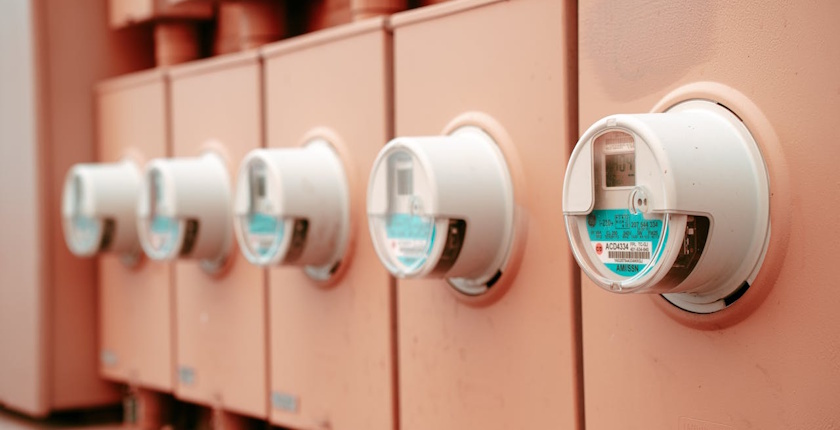
Croatia has so far installed one million smart meters, while Serbia has reached 650,000. They make up 40% of all power metering devices in Croatia, compared to a 17% level in Serbia.

Digital or smart meters offer numerous advantages for consumers and distribution system operators (DSOs). The devices are a cornerstone of future distribution networks – smart grids that will allow consumers, including many prosumers, to both draw electricity from the network and inject it. Smart grids also enable consumers to provide various flexibility and demand response services.

The smart meters rollout in Croatia is being implemented across the country, with about 40,000 new devices installed per month. Croatia’s DSO HEP-Operator Distribucijskog Sustava (HEP ODS), a subsidiary of state-owned power utility Hrvatska Elektroprivreda (HEP), has previously announced that it intends to replace all 2.5 million devices by the end of 2029.

Nearly all users in the business category have received new devices

Installation of new meters is completely free of charge for customers. It takes about twenty minutes. HEP underlined that smart meters offer a range of benefits – enabling simpler and remote reading of consumption, more precise consumption management, better planning, and savings.

Danijela Žaja, chief of the metering and market support sector of HEP ODS, told RTL that more than one million smart meters have been installed so far for households and firms. In the business category, almost all meters have already been replaced, she said, Poslovni Dnevnik reported.

In her words, new devices help consumption management.

Serbia is financing new meters with loans

According to Ana Pavlović, head of the electricity markets support sector of neighboring Serbia’s DSO Elektrodistribucija Srbije (EDS), so far the company has installed almost 650,000 smart meters.

EDS plans to set up another 200,000 units in the next round, financed by a loan from the European Bank for Reconstruction and Development (EBRD), she said at a conference organized by Energija Balkana.

Out of the 200,000 meters, the cities of Čačak and Kraljevo are earmarked for 30,000 each, and 140,000 are for consumers in Niš. The next project is the installation of 400,000 smart meters, to be financed by a loan from the European Investment Bank (EIB).

Niš will be one of the first cities in Serbia to be almost entirely covered by smart meters, Pavlović stressed, as quoted by Tanjug.

by in News

Slovenia tops EU list for most smart power meters, Croatia among laggards

Slovenia is very close to equipping all electricity consumers with smart meters, while Croatia is within reach of achieving it in the non-home segment, but far behind in the household category, according to the latest data from the EU Agency for the Cooperation of Energy Regulators (ACER).

At the top of the list of European Union member states with the highest share of smart meters, three countries are fully equipped with modern smart meters, Naš stik reported.

All consumers in Sweden, Denmark, and Italy have such devices installed. They are followed by Finland, Estonia, Latvia, Luxembourg, Spain, and Portugal, all with 99% of households and 100% of non-household consumers equipped.

Germany is at the bottom of the table, with a rollout of just 2%

Next is Slovenia, with 97% overall. France reached 94% among households and 95% in the other category, while Malta is at 93% and 87%, respectively. Slovenia is expected to complete the process by the end of the year, the article added.

The laggards are Lithuania (51%, 95%), Belgium (46%, 79%), Poland (36%, 65%), Croatia (34%, 95%), Romania (27%, 45%), and Greece (12% altogether). Germany is at the bottom of the list, with a combined total of only 2%, according to ACER’s data.

Smart meters are one of the main components of the distribution grid upgrade

Croatia’s state-owned power utility Hrvatska Elektroprivreda (HEP) launched a tender last August worth EUR 86.5 million, for the purchase of smart meters. The company said at the time that it planned to install them at all metering points in the country by the end of 2029.

Smart meters are a crucial factor for modernizing distribution networks. It is necessary for the future power system, where consumers will play a very different role, generating electricity for self-consumption and through demand response and flexibility services.

by in News

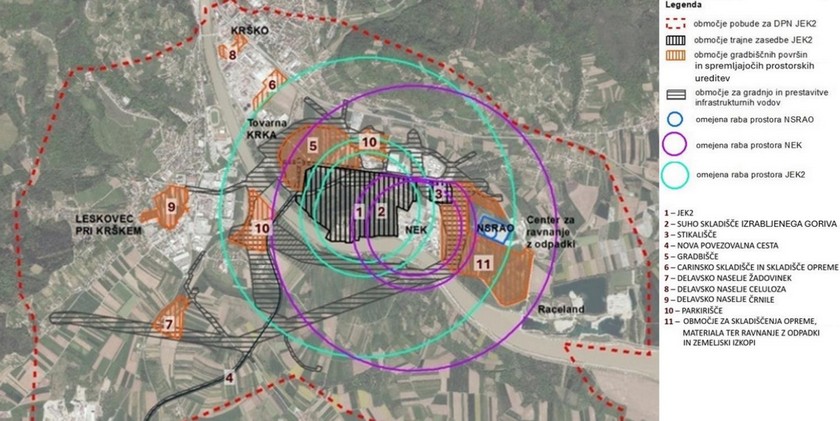
Slovenia launches public consultation on spatial plan for second unit at Krško nuclear plant

The Slovenian Ministry of Natural Resources and Spatial Planning initiated the development of a spatial plan on the country level for the second unit of nuclear power plant Krško. It invited the public to submit comments and suggestions.

The initiative was announced at a press conference last week by representatives of GEN energija, the state-owned company developing the Krško 2 (NEK 2) project. The document has now been made public and will remain available for comments until the end of September.

The initiative will be available for comments until the end of September

To keep the public informed, GEN energija will open information offices in several locations across Slovenia – Krško, Ljubljana, Maribor, and Nova Gorica.

At the press conference, State Secretary at the Ministry of the Environment, Climate and Energy Tina Sršen described the document as a “milestone,” adding that the project was now moving into broader social and professional coordination.

Final decision on capacity and technology expected in 2028

GEN energija’s chief operating officer, Bruno Glaser, said the capacity of the proposed second unit and the technology to be used have yet to be determined, but that the initiative envisages a capacity of 1,000 MW to 1,650 MW.

He also said that the final investment decision should be made in 2028, along with decisions on the reactor’s capacity and the supplier.

Croatia is willing to participate in the Krško 2 project

Another issue to be resolved before a final investment decision is made is the possible participation of other investors. Croatia has repeatedly expressed its interest in taking part in the project, recalled Gen Energija CEO Dejan Paravan, noting that Croatia’s state-owned power utility Hrvatska Elektroprivreda (HEP) co-owns the existing power plant in Krško.

Slovenian Prime Minister Robert Golob and his Croatian counterpart, Andrej Plenkovič, discussed the topic at a recent meeting, according to Paravan.

by in News

Croatia’s HEP to install first floating PV plant on reservoir of HPP Dubrava

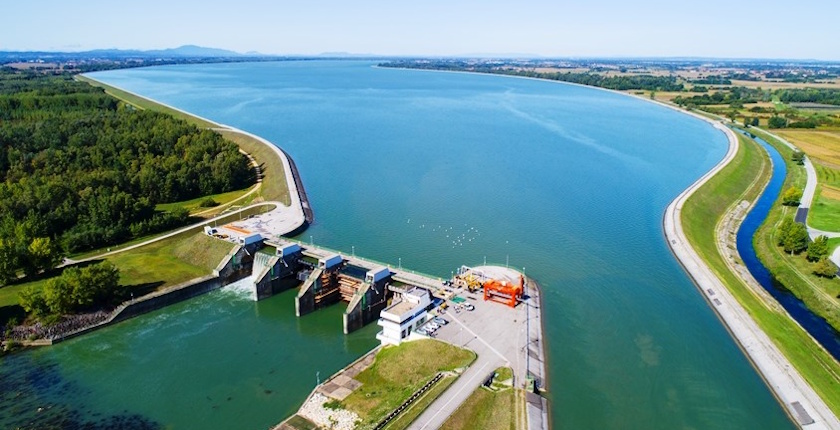
Hrvatska Elektroprivreda is preparing to build its first floating solar power plant, with a capacity of 12 MW. It will be installed on the reservoir of its Dubrava hydropower plant.

State-owned company Hrvatska Elektroprivreda (HEP) has already installed one photovoltaic facility near HPP Dubrava, but it was ground-mounted. The Donja Dubrava PV plant has a capacity of 9.9 MW.

Combining hydro with solar into hybrid power plants is an increasingly popular solution for power companies. HEP is already building a hybrid energy park, the first in the country. It is located near the town of Benkovac.

The floating photovoltaic plant would have a barrier against waves and waste

Back in 2023, the company presented plans to build a floating PV plant as part of HPP Dubrava, on the Drava river. It has a capacity of 79.78 MW, while the average production, which started in 1989, is 350 GWh.

It is located near the town of Prelog, in northern Croatia.

HPP Dubrava is the last on in a cascade three multi-purpose HPPs on the Drava river. In addition to producing electricity, they contribute to water supply, flood and soil erosion protection, irrigation and drainage, and host roads. Now they are set to add solar panels.

HEP has submitted an application to the Ministry of Environmental Protection and Green Transition for the evaluation of the need for an environmental impact assessment (EIA) for its floating solar project.

The facility will be attached to the lake bottom with 62 anchors

It would be installed on a floating platform consisting of a prefab structure, buoys filled with expanding polystyrene foam, and an anchoring structure, the request reads.

The power plant would also have a barrier against waves and floating waste. The floating platform and the barrier are planned to be attached by steel ropes to the bottom of the lake at 62 spots.

The project comprises 19,812 solar panels with a capacity of 615 W, spanning 8.9 hectares. More details on the project can be found in an environmental protection report issued in October 2024 and updated in March by the Hrvoje Požar Energy Institute.