by in News

Slovenia draws up first climate vulnerability, risks assessment for energy sector

In cooperation with the Jožef Stefan Institute, the Ministry of the Environment, Climate and Energy has issued the first national assessment of climate vulnerability and risks for the energy sector. The analysis shows that the sector is moderately vulnerable under current climate conditions.

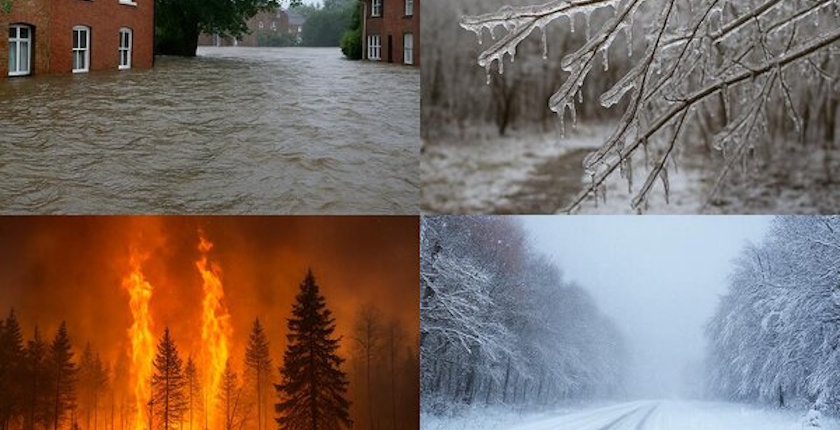
The main threats to the energy sector in Slovenia are floods, fires, storms, landslides, sleet and wet snow, heatwaves, and drought.

The assessment of climate vulnerability and risks for the energy sector was produced in line with the IPCC AR5 methodology and the national guidelines of the Faculty of Biotechnology.

The greatest threat to the energy sector are floods, which jeopardize fuel storage, substations, electricity distribution networks, and other elements of the supply chain, the ministry underscored.

The most important subsystem is liquid fuels

By using weighting and considering the current energy mix and the state of infrastructure, the most important subsystems for the functioning of the overall system are liquid fuels (34%) and electricity (33%), followed by natural gas (18%), solid fuels (10%), and heat (5%), the assessment reads.

This reflects a high dependence on imported liquid fuels and the key role of electricity in all consumption sectors, the ministry explained.
The overall weighted vulnerability score for the energy sector is 2.3 on a scale of one to five, with the electricity subsystem having the highest vulnerability, 2.6.

Electricity distribution grids, solar power plants, and fuel transport and logistic routes also show high vulnerability, according to the assessment.

Subsector ratings:

  • electricity subsector (2.6)
  • liquid fuel supply (2.2)
  • solid fuel supply (2.2)
  • natural gas supply (around 2.0)
  • heat supply (1.9)

Regarding individual elements of the sector, the most vulnerable are the electricity distribution network (3.5), electricity transmission system and imports (3), preparation of firewood, wood chips and pellets, and photovoltaic plants (3); vehicles/tanks for liquid fuels and vehicles/trucks for solid fuels, fuel stations, and other renewable energy sources (2.5).

The identified risks are expected to intensify in the future

The assessment reveals that Slovenia’s energy sector comprises critical elements whose failure could lead to significant supply disruptions.

It provides a technical basis and starting point for preparing a climate change adaptation strategy and for drafting measures such as strengthening infrastructure resilience, reviewing planning for new facilities, and incorporating climate risks into strategic documents and investment plans, according to the ministry.

Climate change scenarios indicate that the already identified risks will intensify in the future – especially floods, storms, and heatwaves.

The ministry said it would be necessary to implement adaptation measures to ensure a reliable energy supply.
by in News

Water shortages in Southeastern Europe point to desalination as strategic approach

Former Minister of Environment and Water of Bulgaria Borislav Sandov is urging the country’s authorities to deploy alternative water supply solutions, including desalination, to counter shortages. Greece is preparing a radical change in its water management model. Turkey got its first floating seawater purification platform, running on solar and wind power.

Southeastern Europe is among the most jeopardized regions in the world in the context of global warming. The lack of water has the most drastic effect on everything from wildlife to food production, energy and public health. Bulgaria’s former Minister of Environment and Water Borislav Sandov warned that over half a million people in the country are at risk of water shortages.

Eastern and northeastern Bulgaria have a persistent issue with droughts and lack of water, necessitating a switch toward alternative forms of supply in the next five to 10 years, including seawater desalination plants, he recently told bTV.

In addition to climatic factors, there are serious shortcomings in water management, together with theft and corruption, Sandov claimed. He pointed to an example where drastically undersized pipes of poor quality were installed in one area, resulting in constant breakdowns and supply interruptions.

Sandov attributed some of the water stress to fragmented management between different local, regional and national institutions. In his words, as much as 10% of all settlements in Bulgaria, though mostly small ones, aren’t covered by waterworks and sewerage systems. Moreover, 44% of the water in the network isn’t measured in volume terms at the entry point and 50% of the water sources don’t have a valid permit from the competent authority, he added.

Notably, a quarter of the population in neighboring Serbia occasionally or permanently lacks safe drinking water from waterworks systems.

Greece to radically change its water management system

Greece decided to get ahead of the droughts and heatwaves. The government has promised radical change in water management: a more functional system with more investments and new technologies, including desalination, but also recycling.

Tourism in the summer months exacerbates the water stress. On some islands, demand surges by up to 30 times. It creates conflict with the needs for irrigation for food production. Greek islands mostly use underground aquifers with easily exhaustible capacity.

Rainfall and snowfall in the country are gradually decreasing.

Similar to Bulgaria, water management is spread across hundreds of operators and institutions, lacking coordination. Losses in drinking water supply amount to as much as 40%, in comparison with up to a staggering 60% in irrigation.

The government in Athens promised water would remain a public good

According to a study by Deloitte with data from 2022, more than EUR 10 billion is necessary for investments in the two segments, excluding Attica. It is where Athens is located. Another EUR 500 million to EUR 700 million is needed for the peninsula.

Government-controlled power utility Public Power Corp. (PPC) will reportedly enter the game, not least because municipal water and sewerage firms owe it more than EUR 400 million. The company would convert debts into minority stakes in three centralized entities: for the regions of Athens and Thessaloniki and the rest of the country, the media learned.

PPC can contribute with its knowhow and experience in the construction and operation of dams and hydropower plants.

Importantly, the government vowed to keep water a public good.

Floating desalination platform with hybrid power plant put into operation in western Turkey

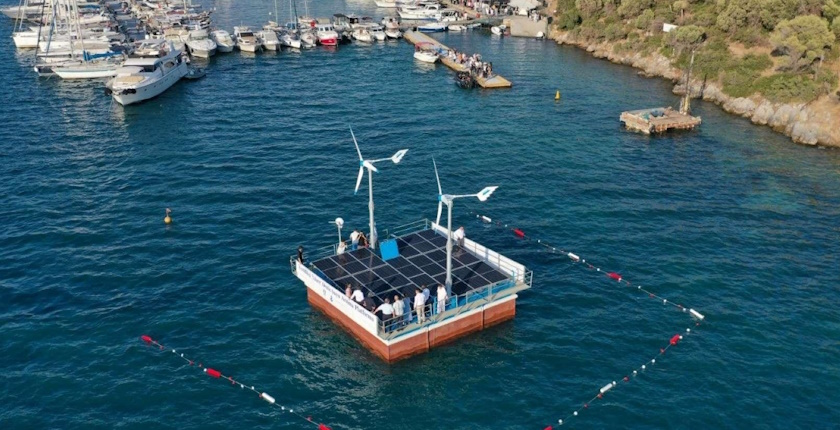
Right opposite the Greek island of Kos, offshore Bitez Marina, the Bodrum Municipality inaugurated Turkey’s first floating seawater purification platform. It runs entirely on renewable energy, producing 20 cubic metres of clean, non-potable water every day.

The project was developed in partnership with Istanbul-based company Blue Hybrid Solutions. The facility is powered by solar panels and two small wind turbines. It delivers water to an onshore tank for irrigation, emergency needs and, when required, public consumption, the local authority said.

Greece is already conducting a massive project for energy independence of numerous non-interconnected islands, including investments in desalination powered by renewables. It is also working to link other islands to the mainland grid.

[wpcc-iframe title=”BODRUM BELEDİYESİNDEN BİR İLK YÜZER DENİZ SUYU ARITMA PLATFORMU TANITILDI” width=”500″ height=”281″ src=”https://www.youtube.com/embed/KApvKHO8OS4?feature=oembed” frameborder=”0″ allow=”accelerometer; autoplay; clipboard-write; encrypted-media; gyroscope; picture-in-picture; web-share” referrerpolicy=”strict-origin-when-cross-origin” allowfullscreen=””]

by in News

Serbia’s power demand soars 20%

Electricity consumption in Serbia has increased by 15% to 20% over the past three weeks compared to the same period last year, according to Dragan Rakić, the head dispatcher of Serbia’s transmission system operator Elektromreža Srbije.

The main reason for the rise in electricity consumption is the increased use of air conditioning units due to the heat wave, which began as early as mid-June this summer.

Dragan Rakić, the head dispatcher of TSO Elektromreža Srbije (EMS), told public broadcaster RTS that the system remains stable despite high temperatures and the reduction of electricity production in hydropower plants.

The record high for summer electricity consumption was set on July 17 last year

Daily consumption in recent days has been 92 GWh to 95 GWh, with the peak of 98.5 GWh reached on June 26. Rakić recalled that the all-time summer consumption record was 105.8 GWh on July 17 last year.

The highest consumption occurs in major cities such as Belgrade, Novi Sad, and Niš. Air conditioners are on even at night, both at home and at work, he added.

Rakić stressed that the electricity supply situation is stable, although hydrological conditions are negatively affecting electricity production in hydropower plants, and partially coal-fired power plants, which require water for cooling.

He added that much of Europe was affected by the dry spell.

EMS is also prepared for extreme weather events

Meanwhile, European think tank Ember noted that record solar power production, backed by energy storage capacity, helped maintain the stability of the electricity system in Europe during the latest heatwave.

Temperatures across Europe jumped to more than 40 degrees Celsius, triggering an increase in electricity demand as the use of air conditioners soared. Daily electricity demand on July 1 was up to 6% higher in Germany, 9% in France, and 14% in Spain than on June 24.

Rakić claimed EMS is ready for extreme weather conditions as well as other emergencies. The company has emergency power line towers and crews on standby when a red weather alert is issued, he explained.

by in News

Heatwave strains European grid, brings profit to energy storage operators

Record solar power production, backed by yet insufficient energy storage capacity, helped maintain the stability of the electricity system in Europe during the latest heatwave, Ember said. Many nuclear and other thermal power plants reduced their activity as river water temperature wasn’t low enough for efficient cooling. Intraday price spreads at European power exchanges landed a windfall for owners of battery energy storage systems and pumped storage hydropower plants.

The heatwave since late June has caused stress for European power systems, driving electricity demand and doubling daily power prices. Yet grids remained stable, fueled by record volumes of solar, think tank Ember pointed out in a report.

Outside temperatures jumped to more than 40 degrees Celsius, triggering an increase in electricity demand as the use of air conditioners soared. Outages in nuclear and thermal power plants exacerbated the challenges.

Daily electricity demand on July 1 was by up to 6% higher in Germany, 9% in France and 14% in Spain than on June 24. As for peak demand, it jumped by 12% in France, 15% in Spain, and 5% in Germany and Poland.

A bigger electricity price spread within one day means higher income for operators of battery energy storage systems

The average daily price surged 15% in Spain, 106% in Poland, 108% in France and 175% in Germany.

“Despite the huge pressure, European grids passed the stress test, and solar electricity played a major role in keeping them running. The surplus of solar energy during the day helped prevent blackouts. However, the use of energy storage is still insufficient, leading to reduced energy supply after sunset. This translated into a sharp increase in electricity prices,” said Ember’s Europe Programme Director Paweł Czyżak.

Record EU solar generation helps keep power supply stable

June saw the highest solar generation on record in the European Union – 45 TWh, which kept the grid well-supplied during daytime hours. The result was 22% up from one year before.

“Heatwaves will not go away – they will only get more severe in the future. Solutions that can help mitigate their impacts, such as battery storage, interconnection, demand flexibility and dynamic tariffs, should become a key part of grid planning and power market design,” Czyżak added. The biggest opportunity is to store solar electricity, to help power air conditioning well into the evening, he stressed.

Outages limited but still posing concern

The overheating of cables is the likely cause of power outages in Italy on July 1. With rising air and water temperatures, the cooling of thermal power plants becomes more challenging as well. It led to forced reductions in electricity generation from nuclear power plants in France and Switzerland.

The French nuclear fleet has been impacted the most, with all but one of the 18 facilities experiencing some type of capacity reduction. According to the update, up to 15% of the capacity may have been impacted.

A blackout of several hours struck large parts of the Czech Republic including Prague on July 4. However, the authorities only blamed it on a transmission cable in the country’s northwest falling, and the resulting domino effect. Notably, the air temperature was much lower than in previous days.

Sun brings power alongside heat

In the peak days of the heatwave in Germany, solar delivered 50 GW and even more, generating 33% to 39% of Germany’s electricity. The country hosts 14 GW of battery energy storage systems (BESS) and 10 GW of pumped storage, which partly bridged the gap between the peaks of production and consumption.

The rallies in electricity prices in the evenings are getting passed on to consumers, so using air conditioners gets more expensive upon sunset. It is a business case for clean flexibility solutions. Due to a high supply of solar electricity during the day, and a cooling-related demand peak in the late afternoon hours, the daily electricity price spreads skyrocketed.

The spread in Poland in the day-ahead segment almost reached EUR 500 per MWh on July 1. Namely, the daily low was EUR 21.04 per MWh below zero, and the peak amounted to EUR 471 per MWh. In Germany, the benchmark went from EUR 0.16 per MWh in negative territory to EUR 404.91 per MWh.

Storage assets charge at low prices and discharge during peak time, reducing the need for costly imported fossil fuels in the evening, and supporting the balancing of the grid, the analysts underscored.

Interconnection played a role as well. The heatwave peaked in different countries on different days, so interconnectors moved electricity to where it was needed most, dissipating the price peaks in the process.