by in News

North Macedonia adopts Law on Energy

With a majority of votes, 62 out of 120, the Assembly of North Macedonia adopted the Law on Energy. The government’s representatives say it is systemic, comprehensive, and reform-oriented legislation laying the foundation for the country’s new energy policy. The act aligns the country’s legal framework with the European Union.

The new Law on Energy will bring numerous benefits to the country and its energy future, according to the Government of North Macedonia. They include a liberalized, transparent and competitive electricity market ensuring fairer prices and more choice for consumers, the introduction of smart meters for more accurate consumption measurement, and daily insight for consumers into their electricity usage.

The law is compatible with the reform agenda for the Western Balkans and with EU directives. Its pillars are:

  • A significant increase in the share of renewable energy sources in final consumption;
  • Greater energy efficiency and reduction of losses;
  • An open energy market in which citizens become active participants – producers, sellers, and members of energy communities.

The law supports new concepts such as citizen energy communities and demand-side management models, increased market liquidity, and broader access to energy sources for the economy, along with equal investment opportunities.

It addresses infrastructure stability through investments in storage systems and their digitalization, as well as providing a stable, transparent, and predictable framework for domestic and foreign investors. The law strengthens the capacities of regulators and operators, creates conditions for greater integration with regional and European energy networks, and enables new investments in solar, wind and other renewable sources, district heating, gasification, storage and digitalized grid infrastructure.

Božinovska: New law paving way for energy sovereignty for Macedonia

Minister of Energy, Mining and Mineral Resources Sanja Božinovska said in parliament ahead of the vote that the Law on Energy is the foundation of the national transformation toward a clean, sustainable and fair energy future.

„This is a law that creates opportunities but also demands responsibility. Energy is not just the engine of the economy; it is the basis for a quality life. With this law, we are opening the door to an energy sovereign, green and European Macedonia. This law is more than a normative act – it is a signpost for the future. A chance we must not miss,” she said.

Transparent, predictable investment framework

The law includes provisions for protecting vulnerable groups, supporting the fight against energy poverty and ensuring fair access to energy for all.

According to the ministry, the law provides a stable, transparent and predictable framework for domestic and foreign investors.

All EU energy directives have been implemented, said President of the Energy, Water Services and Municipal Waste Management Services Regulatory Commission (ERC or RKE) Marko Bislimoski. Of note, yesterday he spoke at the Belgrade Energy Forum – BEF 2025, organized by Balkan Green Energy News.

The drafting process involved institutions, experts, the business community, operators and the national regulator. A total of 61 amendments were adopted.

Unlike the ruling majority, the Left (Levica), an opposition party, claimed the Law on Energy does not protect consumers or national interests. Out of 11 amendments that it submitted, only four were adopted. They include provisions aimed at protecting consumers from unrealistically high electricity bills.
by in News

Turkey aims to become major lithium producer with its geothermal wells

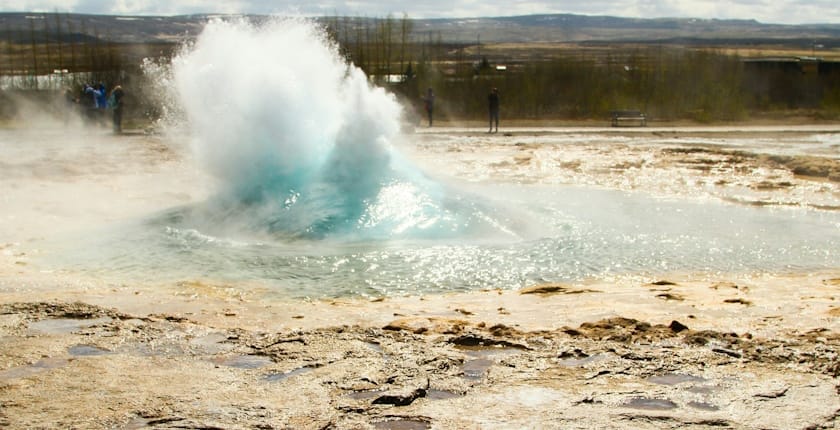
Turkey is using only 10% of its geothermal potential, according to Chairman of the Geothermal Power Plant Investors Association (JESDER) Ufuk Şentürk. He said existing wells alone could open the way for the country to become one of the world’s major producers of lithium.

Studies are underway to determine the accessibility of valuable minerals in Turkey’s geothermal waters. There are already some one thousand wells with 100,000 tons of water coming out every hour, Chairman of JESDER Ufuk Şentürk told Anadolu Agency Energy Terminal. He pointed to the potential for the extraction of lithium, cesium, selenium and silicon.

Turkey is utilizing only 10% of its geothermal potential, Şentürk stressed. An inventory is under development of wells that were drilled to find oil and left unused, he added. The temperatures are as high as 150 degrees Celsius and the said resources can provide heat for 5,000 hectares of greenhouses, the organization’s chief said.

Researchers have found a lithium source in Turkey of 20 parts per million in geothermal water

The İzmir Institute of Technology (İYTE) and Afyon Kocatepe University have been conducting studies for two years, within the Turkish-German Energy Partnership, on obtaining minerals, Şentürk noted. He said there are 100 parts per million of lithium in one geothermal source in Germany, while 20 parts per million were found in Turkey.

Investment costs are much lower without exploratory drilling, if lithium is extracted from geothermal water already coming to the surface. The head of JESDER, Geothermal Power Plant Investors Association, estimated that Turkey could produce 35,000 tons per year and said global production came in at 36,000 tons last year.

“Even if we obtain 10%, we will still be one of the countries with the largest lithium resources in the world,” he stated.

Volumes of lithium extracted from geothermal waters are still symbolic

As Şentürk didn’t elaborate, it remains unclear if he compared the country’s potential to the output from so-called direct lithium extraction (DLE) or perhaps evaporation from brine pumped from underground. They make up one tenth and one quarter, respectively, of the 240,000 tons of lithium produced last year in the world. The rest is mined.

A different benchmark, the lithium carbonate equivalent or LCE, is almost five times larger. Additionally, about 5% of lithium ion batteries are recycled. The volumes of lithium extracted from geothermal waters are still symbolic.

Investors are betting on the combination with geothermal energy, to make lithium production cost effective, as it is found in very small quantities in underground water. Direct extraction of the alkali metal from water has an immeasurably lower environmental impact than mining.

Existing geothermal power plants can provide heat to 4,000 hectares of greenhouses

Şentürk pointed out that Turkey hosts 65 geothermal power plants of 1.74 GW overall. They generated 11.2 TWh in 2024 of the total 350 TWh.

Geothermal energy currently heats 7,000 hectares of greenhouses in Turkey and 160,000 homes, Şentürk said. The Ministry of Agriculture and Forestry is providing incentives for greenhouse zones of 2,800 hectares in total. But existing geothermal power plants alone could, with such support, provide for 3,500 to 4,000 hectares of greenhouses, the association’s chief estimated.

On a global scale, Turkey trails only the United States, Indonesia and the Philippines in geothermal power. Nevertheless, after several years of rapid growth, it only added 120 MW in capacity since 2020.

A recent study, conducted within the project called Li+Fluids, showed geothermal waters in north Germany and its Thuringia state contain between 0.39 and 26.5 million tons of lithium. The country’s demand for 2030 is projected at 0.17 million tons.

by in News

Ember: Warming’s 2024 share of global power demand rise was covered with fossil fuels

According to Ember’s new figures, renewable energy sources met almost three quarters of last year’s increase in the world’s electricity demand. Together with nuclear energy, they would have covered almost the entire jump if it wasn’t for the share attributed to the annual increase in temperatures. Looking at it the other way around, the need for additional cooling accounted for the overwhelming part of the rise in fossil fuel use, and at the same time the resulting additional emissions contributed to the acceleration of global warming.

The share of low-carbon sources rose to a historic 40.9% of global output in 2024. Photovoltaics made up 55.2% of renewable electricity production growth. Hungary, Greece and Bulgaria are among the world’s strongest solar power producers while Turkey has one of the highest power demand growth rates.

Taken together, wind and solar power, hydroelectric plants, other renewables and nuclear energy amounted to 40.9% of global electricity generation in 2024. One year earlier, the level was 39.4%. Last year’s share was the highest since the 1940s, when the global electricity system was fifty times smaller, Ember said in its Global Electricity Review 2025. 

At the time, there was only hydropower and some biomass on the list. Solar power has been the main factor of change over the past several years, and so has China.

Global electricity demand jumped 4% last year or 1.17 PWh, amplified by heatwaves, and reached an all-time high of 30.9 PWh. Periods of higher temperatures in another hottest year ever drove up demand for cooling. The relative increase in 2023 was 2.6%.

Hydropower remained the largest source of low-carbon electricity (14.3%), followed by nuclear (9%). Wind (8.1%) and photovoltaics (6.9%)  are rapidly gaining ground and together they overtook hydro in 2024, while nuclear’s share reached a 45-year low.

Renewables meet 73.2% of growth in world power demand

Renewable power sources accounted for 858 TWh of added output. The previous record of 577 TWh was set two years earlier, as hydropower dropped in 2023, also mostly because of heat.

EVs, heat pumps, data centers and other new drivers of power demand more than doubled their share in annual growth in five years

Renewables met 73.2% of growth in demand and nuclear energy covered 5.9%. Together, they nearly accounted for all growth except the temperature effects, and the rest was from fossil fuels.

Interestingly, looking at it the other way around, the need for additional cooling accounted for the overwhelming part of the rise in fossil fuel use. Of course, the resulting additional emissions contributed to the acceleration of global warming.

Fossil fuel use would have remained almost unchanged if temperatures didn’t grow, the think tank claims. Global power sector emissions rose by 1.6% to a new all-time high of 14.6 billion tonnes of CO2.

But at least the demand for cooling during the day mostly runs in parallel to solar power production. Moreover, the pace of energy storage capacity increase still isn’t keeping up with the growing need to balance photovoltaics and wind power, as they depend on the weather.

However, the update focuses only on one indicator, within the annual growth in power demand. The system is much more complex and fossil fuels weren’t only and directly used for cooling. There is also the matter of distribution across segments from the entire output.

New drivers of demand such as electric vehicles, heat pumps and data centers contributed roughly the same to annual demand growth as the temperature effect, but more than twice as much as they did five years before.

China nearing one third of global electricity demand

China’s electricity demand surged 6.6% or by 623 TWh, which accounted for more than half of the global rise. Its 10.07 PWh in total was 32.6% of the overall figure. Five years before the country was at 28%. Renewables and nuclear energy covered 81% of its demand increase.

China’s per capita electricity use overtook France’s for the first time last year

The United States is number two overall, with 4.4 PWh in 2024 or 14.3% of the global level. China’s per capita electricity use overtook France’s for the first time, and was five times that of India’s.

Turkey’s growth rate, 5.6%, was among the highest on the planet. In absolute terms, demand jumped 18 TWh.

Photovoltaics beat coal power in 2024 in EU

Solar power production spiked by a stunning 29%, which was a six-year high, or by 474 TWh. Photovoltaics were the largest segment of new electricity for the third year in a row and grew the fastest for the 20th straight year. Total output reached 2.13 PWh.

Global solar power capacity reached 1 TW in 2022 after decades of growth, but it surpassed 2 TW only two years later. China amounted to 53% of the increase in PV generation in 2024.

Solar power topped coal power output in the European Union for the first time. As for the share of domestic production, Hungary tops the global list, with 25%. Chile is second at 22%, and Greece is third and best, with 22%, among the countries that Balkan Green Energy News mainly tracks.

Bulgaria is also in the main chart, coming in ninth on a global scale, with 14.4%.

As for solar power production per capita, Australia leads by far with 1.87 MWh, followed by the United Arab Emirates (1.29 MWh) and Greece, also at 1.29 MWh on a rounded basis. Hungary is seventh in the category, at 971 kWh per person.

In the rest of Southeastern Europe, Turkey sticks out as tenth on the planet in hydropower output, at 75 TWh. Albania has the fourth-highest share of domestic production, 97%.

Notably, Kosovo* tops the list of coal’s share in electricity production, with 92%. Bosnia and Herzegovina and Serbia still seem pretty much stuck with the technology. They are fifth and sixth, respectively, both at 63% on a rounded basis.

* This designation is without prejudice to positions onstatus and is in line with UNSCR 1244/99 and the ICJ Opinion on the Kosovo declaration of independence.
by in News

Romanian town Beiuș to boost geothermal distring heating to 100%

The local authority in Beiuș, a trailblazer in geothermal district heating in Romania, should apply for European funding to cover the entire area, according to a new study. The town already has the cheapest energy in the country.

Beiuș is the only town in Romania where geothermal energy accounts for more than 70% of the district heating of homes, institutions and firms. A new technical study is opening the way to a system upgrade by using European grants, state news agency Agerpres reported.

The project was funded by Innovation Norway, a state-owned development bank based in Oslo. Mayor of Beiuș Gabriel Popa said at a presentation marking its completion that his municipality aims to achieve 100% coverage. Iceland managed the endeavor and a company from the island country conducted the study on the geology of the local geothermal water reservoir.

The research covered possibilities to prevent losses in the geothermal district heating system. Beiuș, in Bihor county in northwestern Romania, has just under 10,000 inhabitants.

According to the authors, European development programs are accessible. A new guide is under public consultation.

Dozens of local authorities including capital Bucharest are developing geothermal heating projects.

EEA funding available to get full coverage

The speakers at the conference presented prospects for development using subsidies from the European Economic Area (EEA). The region consists of European Union member states and Iceland, Liechtenstein and Norway.

Engineer Horia Ban said heat pumps could save 30% to 50% of the energy of the water returned from the geothermal district heating system. He is the head of the Oradea-based SRG association, which promotes heat pump solutions for geothermal heating, ventilation and air conditioning (HVAC), and of local renewable energy company Termoline.

The European Commission and European Geothermal Energy Council (EGEC) funded complementary research into air conditioning from geothermal wastewater.

Agriculture can tap water from geothermal district heating system in Beiuș

To lower the losses, the study’s authors recommend insulated PE-Xa pipes and directing the exit flow from the geothermal district heating system to greenhouses, wood dryers and fish farms.

Transgex, based in the county’s capital Oradea, supplies the geothermal water in Beiuș. The reservoir was discovered in 1996 at a depth of 2.6 kilometers. The temperature is 85 degrees Celsius.

The prefeasibility study was funded in 2017 in partnership with Iceland, through EEA Grants. Beiuș is now a town with the cheapest energy in Romania, the article adds.

An EU project worth EUR 33.6 million began a year ago for the construction of an aquapark. It envisages a facility with eight outdoor pools of 6,691 square meters overall in Beiuș. The grant amounts to EUR 12.5 million.

Looking at entire Southeastern Europe, Turkey sticks out as one of the main global players in geothermal energy including power plants, a more complex technology. The potential in Romania and Greece is among the highest in the EU. Bulgaria is also working with EEA funds. Serbia only has small projects for now.

Croatia hosts one geothermal power plant, though is currently offline due to an ownership dispute. Numerous municipal and private projects are underway.

by in News

Kosovo* adopts Law on the Promotion of the Use of Renewable Energy Sources

Only after the first auction was held, lawmakers in Prishtina enabled subsidizing renewable electricity plants through contracts for difference (CfDs). Passing the Law on the Promotion of the Use of Renewable Energy Sources, they also cleared the way for the introduction of guarantees of origin, a renewable energy operator and support fund, energy communities and energy storage in Kosovo*. The legislation includes provisions on self-consumption.

Kosovo’s parliament adopted the Law on the Promotion of the Use of Renewable Energy Sources. It won praise from the Energy Community Secretariat for aligning the legal framework with the Renewable Energy Directive. The international organization based in Vienna also commended the move toward sustainable energy development.

“This law will bring benefits to the private sector, through new concepts of consumer involvement in the energy sector and through the definition of procedures that must be done competitively. In this way, all enterprises are treated equally, benefiting from their competition which leads to lower prices and affordable costs for citizens,” the Ministry of Energy said.

Provisions for green heating, cooling, transportation

Among the objectives are increasing the security of supply and protecting the environment. The Law on the Promotion of the Use of Renewable Energy Sources includes provisions on the combined generation of heat and power (CHP or cogeneration).

The legislation covers the electricity sector, heating and cooling and transportation. The law cleared the way for incentivizing consumers to produce, store and sell the surplus of renewable electricity.

A system for guarantees of origin of electricity is envisaged to be rolled out as well. Notably, the Energy Regulatory Office (ERO) expects to establish a registry in June. The law stipulates that a renewable energy operator would be founded. The entity would manage a renewable energy support fund.

Liquid day-ahead market was necessary to have reference prices for CfDs

In addition, the legislation defines energy communities, energy storage activities and behind-the-meter installations for renewables self-consumers. Such units wouldn’t be able to inject electricity into the grid.

The adoption of the law was apparently on hold until the Albanian Power Exchange (ALPEX) set up a liquid day-ahead market. Kosovo* and Albania jointly launched the bourse. The reference price set in trading is necessary for obligations determined in contracts for difference (CfDs). The subsidies are awarded in renewable energy auctions.

On the other hand, the first such competitive bidding process was completed late last month, before the Law on the Promotion of the Use of Renewable Energy Sources was passed.

The Government of North Macedonia sent a similar bill to the national assembly a month ago.

* This designation is without prejudice to positions onstatus and is in line with UNSCR 1244/99 and the ICJ Opinion on the Kosovo declaration of independence.
  • 1
  • 2