by in News

Federation of BiH to upgrade air quality monitoring with EUR 1.1 million

The Federation of Bosnia and Herzegovina is investing BAM 2.2 million to upgrade the air quality monitoring system.

Federal Minister of Environment and Tourism Nasiha Pozder has signed contracts worth BAM 2.19 million (EUR 1.1 million) for the procurement of up-to-date equipment to upgrade the measurement program of the stations in the Federal Air Quality Monitoring Network.

The units are managed by the Federal Hydrometeorological Institute (FHMZ).

The procurement of the equipment is financed by a loan from the International Bank for Reconstruction and Development (IBRD), as part of the Air Quality Improvement Project in Bosnia and Herzegovina. It is being implemented with the support of the World Bank.

The equipment will be supplied by two firms

The contracts envisage the purchase of air quality equipment worth BAM 1.8 million KM (about EUR 920,000) to be supplied by Sarajevo-based firm E3, and laboratory equipment worth BAM 142.422 KM (about EUR 73,000), to be delivered by Altium International, registered in Sarajevo. The third one – worth BAM 218,040 KM (EUR 111,500) – is for spare parts, and the supplier is also E3.

The equipment will enable the full implementation of the measurement program at all stations of the federal network, including all key parameters for assessing air quality, according to the Ministry of Environment and Tourism.

Mostar and Tuzla will get two stations

The system has been further expanded with the installation of two fixed stations in Mostar and Tuzla. FHMZ also received one mobile station for emergency field measurements in case of accidents.

The FHMZ laboratory has also been improved. Now it has the capacity to conduct analyses of polycyclic aromatic hydrocarbons (PAHs), important indicators of pollution and health risks to the population.

The equipment represents a significant step toward a more comprehensive, reliable, and modern air quality monitoring system in FBiH, the ministry underlined.

Pozder: Faster response to increases in air pollution

Minister Pozder stressed it is one of the most concrete steps toward strengthening the infrastructure for air quality monitoring.

She recalled that the public has the right to accurate information about the air it breathes and that institutions are obligated to provide reliable data and modern systems.

“Today, we are entering a new phase of modernization that will enable better planning and faster responses to increased air pollution,” Pozder said.

Almir Bijedić, director of FHMZ, pointed out that the new equipment and information system would significantly improve the accuracy and reliability of the institution’s work. It is the largest investment to date, he added.

Bijedić: It is very important that now we have the ability to analyze the concentration of PAHs

“FHMZ will be able to provide higher quality and faster information to citizens and institutions. It is very important that the new system enables the analysis of PAHs, allowing us for the first time to fully monitor the parameters critical for assessing health risks. This is a major step forward for the institute and the Federation of BiH,” Bijedić said.

The ministry noted it is completing the procurement of a new air quality information system, estimated at BAM 150,000 (EUR 77,000). It will significantly improve the digital capabilities of the monitoring system.

The new software will enable faster and more reliable validation and verification of data, real-time data display, centralized management, and more secure data storage, as well as more detailed trend analyses and automated reporting to the European Environment Agency (EEA), the Ministry of Environment and Tourism explained.

by in News

Tens of thousands of tons of waste motor oil unaccounted for in Serbia

Waste motor oil is classified as hazardous waste as it can contaminate soil, water, and air. Although Serbian regulations for its management are clear, tens of thousands of tons are unaccounted for every year. Auto repair shops, obliged to dispose of it, often sell the material to individuals who use it for heating. Burning used motor oil is extremely dangerous because of the release of substances similar to chemical warfare agents into the air, warns Dejan Lekić from the National Ecological Association.

Just one liter of used motor oil can pollute up to one million liters of drinking water, making it one of the most harmful pollutants.

UAS, a Serbian association of auto repair shops, pointed out after the public debate on the draft Law on Waste Management that Serbia does not need cosmetic legal changes, but solutions to prevent the country from being buried under all types of hazardous and non-hazardous waste.

According to the latest report by the Serbian Environmental Protection Agency (SEPA), about 40,311 tons of oil were placed on the Serbian market in 2023. Of the 40,311 tons, only 440 tons of waste motor oil were processed in Serbia, and 1,660 tons were exported. It means 38,000 tons likely ended up in soil, sewage systems, waterways, or household furnaces.

Burning waste motor oil releases toxic substances

Dejan Lekić from the National Ecological Association, the creator of the xEco app for real-time air pollution monitoring, warned that waste motor oil must never be used as fuel in household stoves, nor discharged into soil or sewage.

“The only correct approach is to collect it and hand it over to licensed operators. Once the operator takes it, the oil can follow two paths: regeneration or destruction. Ideally, it is regenerated – technologically purified to produce base oil for reuse,” he explained.

Waste oil can be regenerated or destroyed

Regenerating waste oil is an example of the circular economy. From one ton of crude oil, only 2% can be turned into base oil, while 65% of collected waste oil can be processed into base oil.

“The second option is using it as a fuel, but only in specialized industrial facilities such as cement plants, which have furnaces operating above 1,200 degrees Celsius and appropriate filtration systems. Such facilities are the only ones that can safely destroy hazardous substances and prevent their release into the atmosphere,” Lekić asserted.

Using waste oil as fuel in household stoves is extremely dangerous to health

As it is cheap and easily available, waste motor oil is often used for heating in Serbia. But when burned in ordinary stoves, it releases large amounts of carcinogenic gases and heavy metals. According to Dejan Lekić, using waste oil for heating poses a serious threat to human health.

He explained that waste motor oil contains heavy metals such as lead, mercury, and cadmium, along with various additives. Regular stoves cannot reach temperatures high enough to burn these substances safely, so they are released directly into the air.

Lekić warned that incomplete combustion also produces extremely toxic compounds, including dioxins and furans – substances known to cause cancer and linked to severe neurological damage, hormonal disorders, and fertility problems. “People who burn this oil are literally releasing chemical warfare agents into their surroundings,” he said.

Serbia is among the top European countries in premature deaths caused by air pollution

Serbia is among the top European countries in premature deaths caused by air pollution, and it ranks first in Europe for lung cancer mortality linked to pollution, according to the World Health Organization. UAS, the Serbian group of car repair shops, described the situation as a “silent ecological catastrophe” that has been ongoing for decades and added that the system remains unable to stop it.

During the recent public debate on the new Law on Waste Management, the relevant ministry rejected most of the association’s proposals for managing waste oils. UAS emphasized that these suggestions were based on the best practices for reducing hazardous waste in the European Union and the region.

by in News

Supreme Court of Federation of BiH annulls urban permit for Poklečani wind farm

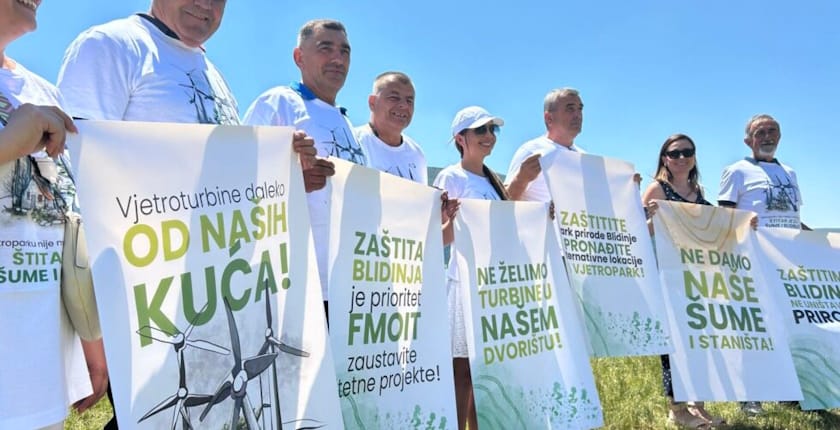
The Supreme Court of the Federation of Bosnia and Herzegovina has annulled the urban planning permit for the proposed Poklečani wind farm on Štitar mountain, located in the municipality of Posušje in Herzegovina. The project is being developed by Elektroprivreda HZHB, one of the three state-owned power utilities in Bosnia and Herzegovina.

Wind power investments in BiH are facing increasing opposition. For example, in November last year, the Orlovača project was halted.

The Supreme Court has ruled in favor of a complaint of local activist Iva Miličević, who challenged the urban planning permit for the project, according to Aarhus Centre in Bosnia and Herzegovina.

The plaintiff has raised concerns about the impact on the environment, cultural and historical heritage, and implications regarding human rights if the 132 MW wind farm were built. The investment is estimated at EUR 200 million.

The court has mandated a revision. The outcome creates an opportunity for further legal review of all aspects of the project to ensure environmental protection and compliance with legal standards, Aarhus said.

The process for awarding urban permit was illegal and irregular

According to the ruling, the Federal Ministry of Spatial Planning made procedural and legal errors when issuing the urban permit. It was the crucial reason to annul the decision and order a reevaluation of the case.

The Supreme Court did acknowledge that the approval issued to the investor, EPHZHB, contained numerous conditions regarding environmental protection, infrastructure safety, and other technical and administrative requirements.

The Aarhus Centre and residents of Poklečani have opposed the project from the start

Nevertheless, it determined that the process was conducted unlawfully and irregularly in some aspects, the organization added.

Aarhus Centre and the locals in Poklečani have opposed the project from the start, citing concerns about its impact on the environment, health, and the quality of life within the community.

The proposed wind farm’s location near a protected area has raised fears regarding its potential effects on biodiversity and the local economy.

Poklečani is the second wind project of EPHZHB. The company operates BiH’s first one – the 50.6 MW Mesihovina facility. The utility is also developing its first solar power project, Hodovo, for 150 MW.

Miličević: There is a possibility of balancing energy needs with nature conservation

Iva Miličević, the representative of a group of citizens in Poklečani, underlined that the court’s ruling demonstrates there are still institutions in BiH that uphold the law and protect citizens’ interests.

“We, the residents of Poklečani, ask for nothing else except to respect the law and rulebooks that protect our environment and resources. Green energy is, of course, important and necessary, but it shouldn’t cost the destruction of natural resources, forests, protected landscapes, and especially drinking water. There are values that, once lost, can never be regained. This ruling is a victory for us and for everyone who believes it is possible to balance energy needs with nature conservation,” Miličević stressed.

Emina Veljović, executive director of the Aarhus Center in BiH, pointed out that the judgment highlights the need for strict compliance with a law regulating the temporary prohibition of using state property.

“Currently, state property is being defended by activists and the judiciary. Other institutions are waiting for something, and we wonder what they are waiting for,” she stated.

by in News

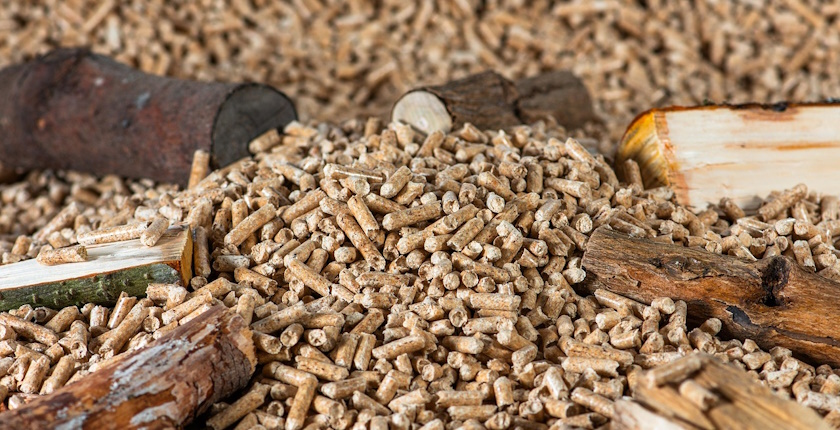
Serbia adopts first ever rulebook on standards for wood pellets

Serbia has adopted the rulebook on solid fuels from wood biomass, which for the first time regulates the quality of pellets and briquettes on the domestic market.

The rulebook on technical and other requirements for solid fuels from wood biomass sold on the Serbian market will enter into force in three months. In the meantime, an institution needs to be established for control, compliance, and corrective measures regarding the new requirements.

The rulebook introduces technical standards and mandatory laboratory analysis, defines rules for assessing compliance, and product labeling. It envisages oversight of the levels of substances affecting health and the environment, according to the Ministry of Mining and Energy.

Ministry: Only high-quality pellets will be sold on the Serbian market, in line with the standards set by the EU

“By adopting the rulebook we want to preserve the competitiveness of the pellet industry in Serbia. This document represents a fine example of the cooperation between the authorities and the businesses,” Minister Dubravka Đedović Handanović stated.

The ministry claims that the rulebook secures that only high-quality pellets can be sold on the Serbian market in line with the standards applicable in the European Union.

For the first time, the physical and chemical characteristics of wood pellets will be controlled

According to the Chamber of Commerce and Industry, only pellets with positive results from laboratory analysis and the kinds that meet strict standards on harmful substances will be allowed on the market in Serbia.

“For the first time our authorities would control physical and chemical characteristics of wood pellets such as size, shape, stability, caloric values, moisture, and ash level,” the association of Serbian firms added.

The same will apply to the substances affecting human health and the environment including heavy metals – arsenic, cadmium, chromium, copper, lead, mercury, nickel, zinc, sulfur, and nitrogen.

The association recalled that the ministry established the working group for the preparation of the rulebook upon its initiative.

by in News

Croatia among EU’s top three emitters of methane from oil, gas industry

Croatia is one of the three European Union member countries with the highest methane emissions from the oil and natural gas industry, according to research by Greenpeace Croatia and the Clean Air Task Force (CATF). Greenpeace Croatia noted that methane has 84 times greater global warming potential than carbon dioxide on a 20-year timescale.

Methane emissions from oil and gas infrastructure in Croatia have been comprehensively analyzed for the first time, according to Greenpeace Croatia.

“Methane hunter” Théophile Humann-Guilleminot from the international climate organization Clean Air Task Force (CATF) has examined more than 500 locations all around the world. He also recently visited 27 locations in Croatia, measuring methane emissions at all but one of them.

Greenpeace stressed it is an astonishing 96% of the investigated sites and the highest score by CATF in any EU member state.

Emissions were documented in detail by CATF at each site

The two organizations have visited several locations in Croatia with facilities for the production, transportation, and storage of oil and gas. The infrastructure is owned or operated by INA, Plinacro, and Okoli Underground Storage.

At 26 locations, methane emissions were documented in the form of gas release, venting, and flaring, which could also harm human health, Greenpeace underlined.

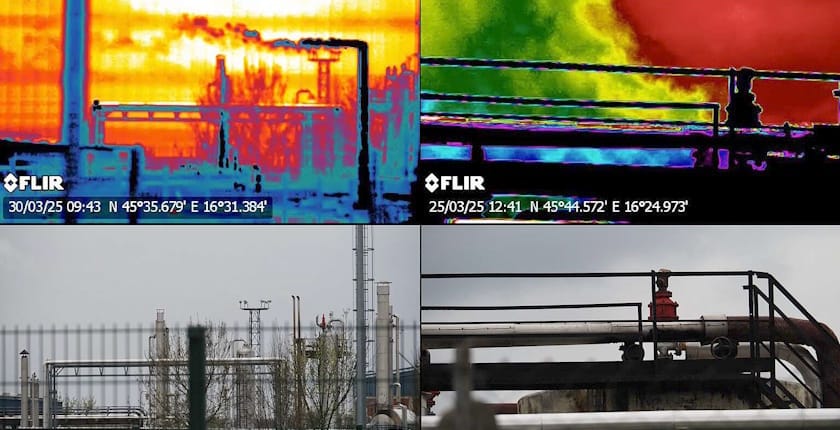
CATF carefully documented emissions at each location using infrared (IR) videos and IR and digital photos. The collected evidence is part of the group’s Cut Methane campaign in Europe and the world.

Humann-Guilleminot: Companies are releasing methane and accelerating climate change, all in pursuit of short-term profits

Théophile Humann-Guilleminot said the research strongly confirmed what scientists have been warning about for years – methane is leaking or being released along the entire oil and gas supply chain.

From the vast gas fields of Texas to Plinacro’s pipelines, companies are releasing methane and accelerating climate change, all in pursuit of short-term profits, he added. In his words, out of all the countries he visited, Croatia ranks amongst the worst three in terms of results.

“The scenes of methane gushing from open, rusted reservoirs in the Ivanić-Grad area, as well as leaks from wells at the Okoli location, are extremely worrying. During the energy crisis, this level of waste demonstrates a clear disregard for the climate and Croatian citizens,” Humann-Guilleminot stated.

Andrić: Greenpeace calls on the government to take seriously the implementation of new regulations on methane

Petra Andrić from Greenpeace Croatia pointed out the researchers could have assumed that methane emissions would be registered in some locations, but that they couldn’t have predicted such shocking results.

“Greenpeace is calling on the Government of the Republic of Croatia to take seriously the implementation of the new regulations on methane. In the long term, it is even more important to phase out fossil gas by 2035 and ban new gas and other fossil projects. The solutions are energy efficiency and renewable energy sources, in which Croatia has enormous potential, especially solar and wind,” she stressed.

Eszter Mátyás from Greenpeace Central and Eastern Europe said the new regulations would be much stricter for the operators in the fossil fuel industry. Therefore they will have to regularly carry out measurements and submit reports to regulatory bodies to prevent the release of methane from their infrastructure, she added.