by in News

Albania as a Regional Outlier: Diesel Dominance Persists Amid Europe’s Green Transition

New data from Eurostat reveals a significant divergence in automotive trends between Albania and the European Union. While the EU moves aggressively toward decarbonization, Albania has emerged as the country with the highest share of diesel-powered vehicles among first-time passenger car registrations in 2024.

This trend stands in sharp contrast to the broader European trajectory, where environmental regulations and technological shifts are rapidly phasing out internal combustion engines in favour of electric and hybrid alternatives.

The Data: A Stark Statistical Divide

According to Eurostat’s latest report on transportation, 66.2% of all passenger vehicles registered for the first time in Albania during 2024 were diesel-powered. To put this in perspective, the EU average for diesel registrations has plummeted to just 14.9%.

The regional comparison further highlights Albania’s unique position:

  • Albania: 66.2% diesel share

  • Moldova: 47.0%

  • Bosnia and Herzegovina: 34.5%

  • Other Balkan neighbors: Generally below 30% (excluding Kosovo and North Macedonia, for which data was unavailable).

In absolute numbers, out of the 85,700 passenger vehicles registered for the first time in Albania in 2024, approximately 56,700 were diesel. Conversely, gasoline vehicles accounted for only 17.6% of registrations—one of the lowest shares in Europe—while electric vehicles (EVs) represented a mere 3.3% of the total.

The European Shift Toward Electrification

The European landscape tells a completely different story. The transition to Battery Electric Vehicles (BEVs) is accelerating, driven by the EU’s ambitious climate goals to reduce the 27% of greenhouse gas emissions currently attributed to transport.

  • Denmark: Over half (51.3%) of new registrations are fully electric.

  • Sweden, Malta, and the Netherlands: EVs account for more than one-third of the market.

  • EU Average: Electric vehicle registrations reached 13.5% in 2024.

Looking back at the decade between 2014 and 2024, the shift is even more dramatic. In 20 representative EU countries, the registration of diesel vehicles fell by 67%, while registrations for fully electric cars grew by 45 times, moving from a negligible 0.3% share in 2014 to nearly 14% today.

Why is Albania Lagging Behind?

The dominance of diesel in Albania is not a matter of consumer preference alone but is rooted in several structural and economic factors:

  1. Second-Hand Market Dominance: The Albanian market is heavily reliant on imported used cars from Western Europe. As EU consumers sell off their older diesel models to switch to EVs, these vehicles often find a second life in the Albanian market.

  2. Initial Cost Barriers: The upfront cost of electric or hybrid vehicles remains high compared to older diesel models, making them less accessible to the average Albanian consumer.

  3. Infrastructure Gaps: The national charging network for electric vehicles is still in its infancy, leading to “range anxiety” and deterring potential EV buyers.

  4. Policy Incentives: There is a lack of robust fiscal incentives or subsidies to encourage the adoption of “green” vehicles compared to the aggressive tax breaks seen in EU member states.

Looking Ahead

While Albania remains a diesel stronghold for now, the European trend is inevitable. As EU emission standards tighten and the production of internal combustion engines scales down, the supply of diesel vehicles will eventually dwindle.

For Albania to bridge this gap, experts suggest a dual approach: investing in charging infrastructure and implementing fiscal policies that make cleaner alternatives more competitive. Without these interventions, Albania risks becoming a “parking lot” for Europe’s aging, high-emission fleet.

by in News

INOVA Launches €25m Green Grants for SMEs in North Macedonia

North Macedonia’s Agency for Innovation, Scientific and Technological Development and Entrepreneurship has launched a grant program to support small and medium-sized businesses investing in environmental protection and sustainability.

The green business support program for 2026–2030 is valued at €25 million, with €22 million earmarked for direct subsidies, according to the agency (INOVA). Eligible companies can receive between €5,000 and €300,000, provided they co-finance 20% to 50% of the investment, depending on the project type.

The European Union is providing €18 million, while the remaining funding will come from the Government of North Macedonia.

At least 300 companies expected to benefit

INOVA said it expects to support at least 300 companies, focusing primarily on micro, small, and medium-sized enterprises, particularly in manufacturing, while remaining open to applicants from other sectors. The program is designed to back projects that reduce CO₂ emissions and waste and increase the use of renewable energy, with a particular emphasis on solar power, the agency noted.

Through public calls, businesses will be able to apply for technical and advisory assistance, standardization support, and financial backing for the purchase of equipment, deployment of new technologies, and development of new products.

INOVA expects the first public call around mid-year.

Previously, the agency said the initiative would be implemented through three instruments: green startups (grants up to €40,000), green modernization (up to €150,000 per beneficiary), and transformation of industrial systems (subsidies of €300,000 per beneficiary).

Officials frame program as competitiveness and climate action measure

INOVA CEO Daniela Dimovska said the initiative offers both financial and expert support to companies investing in sustainable, environmentally friendly, and innovative solutions, describing it as a step toward an economy guided by long-term thinking and responsible action.

Daniela Dimovska, Hristijan Mickoski, and Michalis Rokas (photo: INOVA/Facebook)

Prime Minister Hristijan Mickoski said the program aims to help the country advance toward the climate neutrality goals set out in the Green Agenda for the Western Balkans, by strengthening the private sector and promoting sustainable business practices. He added that green transformation should be viewed not as a cost, but as an investment in economic resilience, environmental quality, and citizens’ well-being.

EU Ambassador to North Macedonia Michalis Rokas said the program is expected to stimulate innovation and the adoption of green technologies among SMEs, supporting a new stage of development that improves competitiveness and strengthens integration into EU value chains.

by in News

Serbia plans new mining law to align legislation with EU rules on critical raw materials

Serbia’s Ministry of Mining and Energy has launched a public consultation on a preliminary framework for a new law on mining and geological exploration. One of the goals of the new law is to align national legislation with European Union regulations on critical raw materials, sustainable development, and the circular economy.

The law will be harmonized with the EU’s Critical Raw Materials Act and the European Green Deal, to gradually align Serbia’s regulatory framework with the EU’s goals for sustainable mining, climate neutrality, and secure minerals supply, according to a document outlining the basis for the draft law.

Earlier this year, the European Commission included a lithium mining project in Serbia among the EU’s strategic projects for critical raw materials. Rio Tinto’s Jadar project is the only one on the list that involves the extraction of lithium and boron.

Lithium mining in Serbia is among the EU’s strategic projects for critical raw materials

Regarding harmonization with EU regulations, Serbia intends to introduce standardized reporting systems in line with the Pan-European Reserves and Resources Reporting Committee (PERC) standards, the UN Framework Classification for Resources (UNFC), and the Petroleum Resources Management System (PRMS), as well as implement ESG principles, which integrate environmental, social, and governance requirements into all phases of geological exploration and mining.

The main objective of the new law is to establish a modern, transparent, and efficient system for managing mineral and other geological resources in line with sustainable development standards, while strengthening the role of the state as the owner and steward of the country’s natural resources, according to the document.

It further highlights the need for more clearly defined mechanisms to ensure the application of sustainable mining principles and compliance with environmental standards, in line with advanced global practices. Investors’ obligations regarding environmental protection, land reclamation, and site remediation should be more precisely regulated during exploration and mining.

Investors’ obligations concerning environmental protection need to be more clearly defined

Improving the legal framework for granting exploration and mining rights is of particular importance, the document states. This would be done through models that ensure greater legal certainty, more efficient oversight, and consistent application of environmental and social standards, in line with sustainable mining principles.

The new law will also set clear criteria for identifying and protecting strategic mineral deposits, and ensure they are included in spatial and development plans. This would enable long-term protection of national interests in the field of mineral resources.

The law will digitalize permitting procedures for exploration and mining

The law will envisage digitalization and electronic processing in all administrative phases through a unified information system that enables electronic application and permitting, while allowing public access to data on exploration and mining fields.

The new law is also intended to ensure gradual alignment with European policies in the fields of green and digital transition.

The public consultation will be open until November 11, during which time citizens and organizations can submit proposals, comments, and suggestions.

by in News

North Macedonia launches decarbonization guide for small businesses

The Economic Chamber of North Macedonia has developed the country’s first decarbonization guide for small businesses. The digital tool is intended to help North Macedonia’s economy adapt to international climate rules, including the European Union’s carbon border tax (CBAM).

The decarbonization guide provides detailed instructions on the most effective ways for local companies to reduce their carbon footprint as part of the global fight against climate change, according to the Economic Chamber of North Macedonia.

The key feature is a carbon footprint calculator that covers nearly 60 different energy sources and refrigerants. Information is also available on EU and domestic climate regulations, as well as funding opportunities, such as subsidies.

The platform offers practical case studies and success stories of leading companies to highlight the benefits of clean energy, according to the chamber.

Božinovska: The decarbonization guide marks a turning point in the country’s green transition

The guide was developed in cooperation with the advisory team of the European Investment Bank (EIB) and the Delegation of the EU to North Macedonia.

The guide was presented in the country’s capital, Skopje, at a gathering attended by more than a hundred entrepreneurs from all sectors of the North Macedonian economy.

Sanja Božinovska (photo: Economic Chamber of North Macedonia)

“The decarbonization guide is a turning point in our country’s green transition, equipping businesses with the tools they need to act now,” said Sanja Božinovska, North Macedonia’s Minister of Energy, Mining and Mineral Resources.

The guide is designed to help companies reduce greenhouse gas emissions and adapt to international climate rules, while, as the chamber says, preserving competitiveness.

One of these rules is the EU’s tax on the import of carbon-intensive goods, the Carbon Border Adjustment Mechanism (CBAM), which is set to take effect on January 1, 2026.

The guide is available on the website of the Economic Chamber of North Macedonia

This digital tool will help North Macedonia move towards a low-carbon economy, the chamber added.

The guide is available on the chamber’s website in the form of an interactive platform. Its development was financed by EIB Global.

Björn Gabriel, Head of EIB Representation in North Macedonia, has said that the guide comes at a crucial time as North Macedonia advances its green transition and prepares for upcoming carbon regulations.

According to Head of the Delegation of the EU to North Macedonia Michalis Rokas, decarbonization, energy efficiency, and renewable energy sources are powerful tools for building a more innovative, resilient, and competitive economy.

If every small and medium-sized enterprise (SME) takes at least a few significant steps toward greener business practices, the combined impact on more than 68,000 firms will be truly transformative, claims Rokas.

Michalis Rokas (photo: Economic Chamber of North Macedonia)

by in News

Slovenia allocates EUR 375 million for sustainable mobility

Slovenia has allocated EUR 835 million from the Climate Fund for climate change mitigation and adaptation. The funds should be used over the period 2025-2028.

The Government of Slovenia has adopted a decree on the allocation plan for the Climate Fund for 2025-2028. The plan follows the key measures from the previous plan for the period 2023-2026 and adds funds for 2027 and 2028. The amount is determined based on expected revenues from emission allowance auctions.

Emission allowances are part of the European Union Emissions Trading System (EU ETS).

The funds will be directed to sectors addressing the main climate challenges, both in mitigation and adaptation to climate change. Measures supporting the green transition and increasing the country’s resilience to climate change will also be supported, according to the Government of Slovenia.

EUR 121 million was allocated for decarbonizing the economy

The largest chunk will go to sustainable mobility – EUR 375 million. The funds will be used for investments in public transport – purchase of new trains and buses, renovation of ticketing and information systems, co-financing of zero-emission vehicles and charging infrastructure, promotion of cycling and walking, and shifting freight transport from roads to rail.

EUR 121 million is designated for decarbonizing the economy. The government will co-finance successful European Union projects, support the introduction of a circular economy and sustainable reporting for small and medium-sized enterprises, as well as investments in industrial decarbonization.

Energy renovation of public and residential buildings, measures to reduce energy poverty, and the construction of nearly zero-energy buildings are also part of the allocation plan. There is EUR 111 million for such activities.

EUR 26 million is set for awareness raising and education

EUR 95 million is designated for renewable energy sources. The funds will be used to replace outdated household heating devices with modern ones and heat pumps, as well as for energy storage, geothermal energy, and measures to increase the energy self-sufficiency of buildings.

The Climate Fund will support additional climate change adaptation measures. The activities include reducing flood risks, preserving biodiversity, adaptation in forestry and agriculture, and strengthening the resilience of local communities. The allocated funds amount to EUR 49 million.

Slovenia has envisaged EUR 12 million for international climate change financing and EUR 26 million for awareness raising and education.

by in News

ELES, Hitachi Energy launch Next Generation Control System project

Slovenia’s transmission system operator ELES and Hitachi Energy have signed a strategic cooperation agreement for the implementation of their Next Generation Control System project.

ELES and Hitachi Energy plan to develop advanced digital solutions for transmission grid control centers, according to Slovenia’s TSO.

The Next Generation Control System project is a continuation of their cooperation within the internationally recognized and awarded NEDO project. The project has laid the foundation for collaboration between ELES and Hitachi, representing a key step in the said activities.

The companies will develop three key functionalities of the new generation

Within the project, the two companies intend to work on three core functionalities of the next generation.

An Enterprise Service Bus (ESB) is a software solution that connects various applications, enabling them to communicate and exchange data — even if they use different languages, protocols, or formats. In practice, it will be implemented for the system that determines operational limits.

Voltage Var Control is an upgrade to the existing voltage management system, introducing complex functions and advanced control methods.

The Common Information Model enhances the efficiency of network data models exchanged between different systems and organisations, particularly in the context of TSOs.

The project will last two years

The firms plan to implement and finance the two-year project by themselves. ELES would invest in improvements, while Hitachi Energy develops the agreed functions, to verify them together with the Slovenian state-owned company. Hitachi Energy intends to incorporate the new functionalities into its standard energy management system offering (Network Manager).

The agreement was signed by Aleksander Mervar, CEO of ELES, and Lars Wiklander, Business Operations Strategy & Planning Executive at Hitachi Energy. However, he was unable to attend the signing ceremony and conference.

The speakers at the event were Lazar Bizumić, Head of Product Management at Hitachi Energy; Jurij Klančnik, Transmission System Operation Director at ELES, and Janko Kosmač, Process Systems Manager at ELES, who is also the head of the technical part of the joint project.

Mervar: An important step in the digital transformation of the Slovenian electricity sector

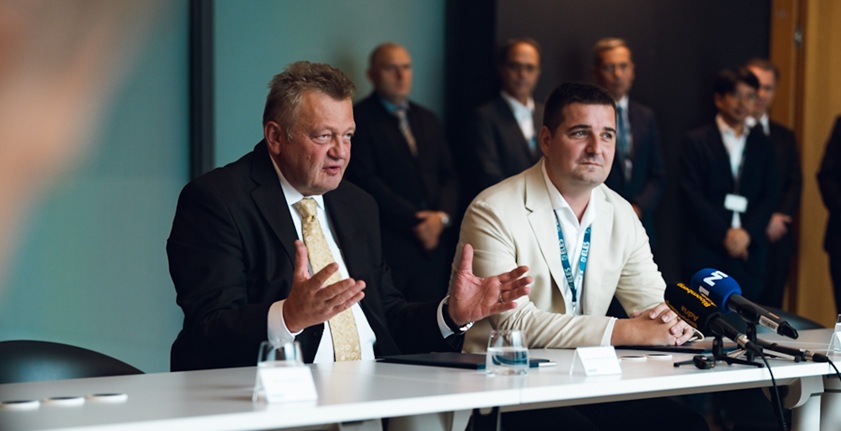
Janko Kosmač, Aleksander Mervar and Lazar Bizumić (photo: ELES)

Aleksander Mervar highlighted the agreement as a significant step in the digital transformation of Slovenia’s electricity sector. At the same time, in his words, it reinforces the role of ELES and Slovenia as an innovative environment for developing advanced energy solutions.

“New digital solutions will enable better integration of various systems, smarter voltage management in the grid, and more efficient and transparent data exchange. This is a technologically advanced project that will significantly contribute to the safer, more efficient, and sustainable operation of the Slovenian electricity system. It is an important step in Slovenia’s green transition,” Mervar added.

Wiklander: The grid management software and systems ecosystem of the future must be built on a flexible, modular architecture

The grid management software and systems ecosystem of the future must be built on flexible, modular architecture to give TSOs and utilities the scale they need to manage a changing and dynamic grid, the flexibility to integrate proprietary and third-party applications, and the control and visibility necessary to manage and deliver a reliable, resilient power supply, Lars Wiklander asserted.

“This collaboration with ELES is an important proof point in our strategy to deliver the leading grid management ecosystem with Network Manager,” he pointed out.

by in News

Croatian Bank for Reconstruction and Development secures EUR 50 million for firms for green investments

The Croatian Bank for Reconstruction and Development has secured EUR 150 million from the European Investment Bank, of which at least one third is dedicated to green investments by businesses in the country.

A new finance contract with the European Investment Bank (EIB) provides EUR 150 million to finance projects of mid-caps, large private companies and public entities in Croatia, the Croatian Bank for Reconstruction and Development (HBOR) said.

The loan particularly promotes green investments. It is the first tranche of a new EUR 350 million financing agreement between the EIB and HBOR to expand access to financing for Croatian companies.

The package will be deployed via direct lending by HBOR and through commercial banks and other financial intermediaries.

At least 30% of the financing is for projects contributing to green transition

At least 30% of the financing is for projects contributing to green transition, including investments in energy efficiency, renewable energy sources, sustainable construction and clean transport, Croatia’s bank noted.

According to EIB Vice-President Teresa Czerwińska, the initiative will expand financial support to a broad range of Croatian companies and public entities, with a strong emphasis on climate action and sustainability.

The operation is structured as a multi-beneficiary intermediated loan (MBIL). In addition to advancing the European Union‘s goals to promote climate action and environmental sustainability, it will help foster economic activity and social cohesion across Croatia, HBOR said.

The EIB and HBOR have concluded 28 finance contracts worth EUR 3.8 billion overall

HBOR will ensure, as it has so far in cooperation with EIB, that all end-beneficiaries comply with relevant national and EU legislation, with a special focus on preserving environmental, climate and social standards.

The new financing further reinforces HBOR’s role in supporting green and climate-resilient projects, contributing to the achievement of the strategic goals of Croatia and the European Union for the ​​green transition, according to Hrvoje Čuvalo, President of the Management Board of HBOR.

EIB and HBOR have concluded 28 finance contracts so far, worth EUR 3.8 billion, for financing more than 8,000 projects across Croatia.

by in News

Energy storage in focus: How custom insurance solutions are fueling Southeast Europe’s green transition

Battery energy storage is becoming increasingly central to the energy transition in Southeast Europe and beyond, thanks to its key role in enabling renewables integration while ensuring grid flexibility and resilience. However, as battery energy storage systems (BESS) become more advanced and technologically complex, the risks involved exceed those of traditional renewable energy projects, making tailor-made insurance vital to their bankability, safety, and profitability. We discuss the importance of energy storage for the region’s green transition, as well as the critical role of custom-made insurance solutions in the success of BESS projects, with Delyan Iliev, Managing Director of Renewable Energy Insurance Broker (REIB), a market leader in BESS insurance in Southeast Europe.

Why storage is becoming central to Europe’s energy strategy

As Europe accelerates its energy transition, solar is leading the charge. In 2024 alone, 21.9 GWh of new battery energy storage systems (BESS) were installed across the continent, marking a 15% year-on-year growth. With storage now considered essential for grid flexibility, market stability, and renewable integration, Southeast Europe is beginning to recognize its strategic value.

“Energy storage is not a side note anymore, it’s quickly becoming a pillar of the energy system,” says Delyan Iliev, Managing Director of Renewable Energy Insurance Broker (REIB). “We’re proud to help accelerate that shift. In the first half of 2025, we’ve already insured over 5 GWh of battery projects across Europe – including in Bulgaria, Germany, and the UK. That scale shows how far the market has come, and how much trust there is in high-quality insurance.”

In Serbia, solar deployment is gaining pace, and developers are preparing for large-scale projects. Regulatory frameworks are evolving to support hybrid models that combine generation with storage. BESS is no longer just a technical upgrade; it’s a strategic enabler for grid stability, revenue optimization, and investor confidence.

What makes BESS riskier than traditional energy projects?

As storage projects become more complex, so do the risks. Unlike conventional solar or wind installations, BESS introduces specific technical and operational challenges—from thermal runaway and fire risk to cyber threats, component failure, and yield degradation. These are real risks requiring serious attention from insurers and developers alike.

Poor system design, such as insufficient spacing between battery units and PV modules, can also trigger insurance exclusions or delay permitting. “In emerging markets like Serbia, where regulations are still catching up with technology, project design and compliance can make or break an investment,” says Iliev.

This is why traditional, off-the-shelf insurance is no longer adequate. Storage requires a more nuanced approach – one that aligns with each project’s structure, revenue model, and operational realities.

REIB’s approach: Insurance that mirrors project reality

Recognizing this need, Renewable Energy Insurance Broker has created tailor-made insurance solutions designed specifically for energy storage systems. A cornerstone of its model is Business Interruption (BI) insurance – not a standard add-on, but a fully customized product. Rather than applying generic compensation formulas, REIB designs the BI structure around how each project actually earns revenue, whether through tolling agreements, profit-share arrangements, or hybrid mechanisms.

This precision ensures fair and effective compensation, not only when a system completely fails, but also when partial degradation or performance issues occur. Furthermore, the BI coverage accounts for income loss, not just profit, delivering significantly higher payouts in case of disruption. Indemnity periods can be extended up to 18 months, supporting the financial stability of a project well beyond initial damage control.

Why early-stage insurance is so critical for BESS

One of the most critical features in REIB’s offering is early-stage protection. The company insures storage projects from the installation phase, well before grid connection. This phase, often excluded by traditional policies, is one of the riskiest stages in a project’s lifecycle. By covering this early gap, REIB offers peace of mind to both developers and investors.

In addition, REIB’s policies include protection against underperformance (reduced yield), cyber risk coverage for systems managed via EMS or SCADA, and third-party liability, including sudden environmental pollution, which is increasingly relevant for permitting and compliance in European markets.

Applicable to co-located and stand-alone storage

While co-located solar + storage projects dominate the market, stand-alone BESS is gaining traction in Serbia and other Southeast European countries. These projects play a crucial role in grid balancing, frequency regulation, and capacity markets, especially in areas where renewable generation is unevenly distributed.

REIB’s insurance framework applies to both co-located and stand-alone BESS systems, adjusting coverage parameters to meet the distinct operational and revenue profiles of each. Whether tied to a solar plant or operating independently, these assets face risks that must be managed holistically.

What gives REIB its unique market perspective?

REIB is more than a broker, it’s also an investor. The company is directly involved in PV+BESS projects like the 4.1 MWp solar plant with 4MW/8 MWh BESS in Nikolichevtsi and the 5 MWp + 6MW/12 MWh BESS in Bagrentsi. “We don’t just assess risk from a distance,” says Iliev. “We experience it firsthand, and that’s what helps us design smarter coverage.”

How insurance can drive the BESS market forward

For REIB, insurance is not just a regulatory requirement; it’s a strategic lever. “Well-structured insurance improves bankability, secures investor confidence, and unlocks access to financing,” says Iliev. “In a sector like BESS, that can be the difference between stalled progress and market leadership.”

As Serbia and its neighbors move toward a new energy reality, battery systems will be central to the equation. Making them bankable, and insurable is where REIB steps in, helping to turn risk into resilience and innovation into long-term value.

For more information about tailor-made insurance solutions for BESS projects, contact the REIB team to explore how they can support your next project.

by in News

Croatia earmarks EUR 1.6 billion for Social Plan for Climate Policy

Croatia plans to achieve an efficient and just green transition by implementing its EUR 1.6 billion Social Plan for Climate Policy.

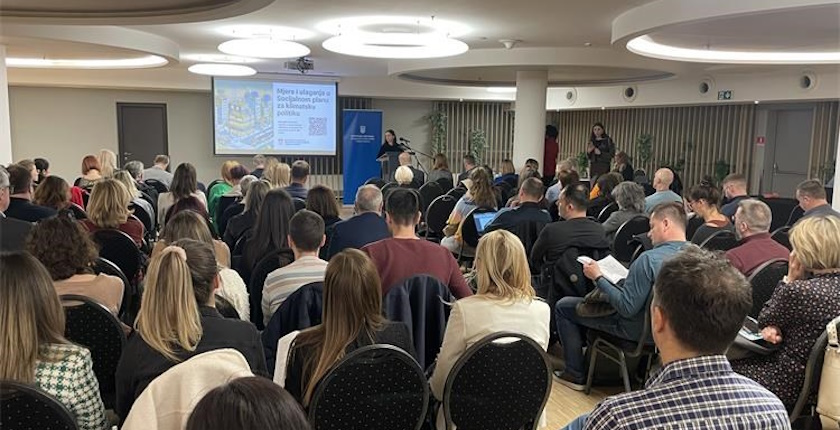
The Ministry of Environmental Protection and Green Transition has presented the Social Plan for Climate Policy and the European Union’s upcoming Emissions Trading System 2 (EU ETS 2) in Croatia’s capital Zagreb.

The event was organized as part of the process of developing the country’s Social Plan for Climate Policy. According to the ministry, the document outlines the green transition and includes measures and investments that would benefit vulnerable households, micro businesses, and users of transportation services.

The plan is being prepared within the framework of the Social Fund for Climate Policy, which is part of the EU’s Fit-for-55 legislative package. The aim is to reduce greenhouse gas emissions by 55% by 2030 from the 1990 level.

The social plan will be funded with proceeds from EU ETS 2

The new EU ETS 2 will cover CO2 emissions from buildings, road traffic, and small firms. Funding for the social plan will be secured from proceeds from the supplementary carbon pricing mechanism.

Minister Marija Vučković noted that after the public debate is over, the Social Plan for Climate Policy needs to be sent to the European Commission for adoption.

“With more than EUR 1.6 billion, our goal is to secure an efficient and just green transition that won’t leave behind the most vulnerable members of our society – households at risk of energy poverty, micro enterprises with limited adaptation capacities, but also the citizens that have difficulties accessing public transportation,” she pointed out.

The ministry is aware of the challenges that the transition carries, so it places special focus on mitigating socio-economic consequences and preventing risks affecting the most vulnerable people, as well as on education.

The plan defines various measures

The plan includes various measures. Some examples are renovating family houses with the worst energy performances, improving the availability of public transport in suburban, rural, and remote areas, subsidizing the purchase of vehicles with zero emissions, and providing direct financial incentives.

Representatives of the ministry Ana Juras and Predrag Božac described the operation and the establishment of the new part of the Emissions Trading System and presented the sectors that it would cover. They also spoke about the first round of measures and investments from the plan.

In another presentation, the audience learned the effect of EU ETS 2 on the prices of fossil fuels, the ministry said.

by in News

European Commission launches call for investment in green transition, critical raw materials in Western Balkans

As part of its Growth Plan for the Western Balkans, the European Commission has invited private businesses from the EU, the European Economic Area (EEA), and the region itself to express interest in investing in sectors including the green transition, critical raw materials, sustainable transportation, and digitalization.

The objective is to open a dialogue on concrete investment opportunities and identify ways to overcome related constraints in the Western Balkans region, according to the call for expressions of interest.

Although financial support is not guaranteed, the European Commission could potentially back some projects with its available policy, technical, and financial instruments. It may also facilitate contact with partner financial institutions for potential financial cooperation on eligible projects.

Financial support is not guaranteed, but some projects could be backed by the European Commission or referred to financial institutions

Proposed investments must take place in one or more of the following economies: Albania, Bosnia and Herzegovina, Kosovo*, North Macedonia, Montenegro, and Serbia. The minimum investment threshold is EUR 10 million, and the required participation by the project promoter is at least 15% of the total value of the investment project.

The deadline to submit expressions of interest is May 21

The first phase of the call is open for submissions until May 21, but it may be reopened for subsequent phases, depending on the number and scope of submissions received.

Investment in green transition, critical raw materials, sustainable transportation

The priority areas are based on the strategic priorities of the Growth Plan for the Western Balkans and the Western Balkans Investment Framework (WBIF), focusing on key economic sectors where foreign investment is needed.

In the area of the green transition, investments are required in renewable energy, energy efficiency, and innovative energy technologies in order to reduce dependence on fossil fuels, foster a circular economy, mitigate climate change, and modernize energy, water, wastewater treatment, and waste management infrastructure, according to the call.

Ensuring environmentally responsible access to critical raw materials

When it comes to critical raw materials, investments are needed to ensure reliable and environmentally responsible access to such materials, in order to support the development of key industries across all supply chain stages, according to the European Commission.

The other areas envisaged by the call are sustainable transportation, including urban mobility; the digital transition, including the roll-out of 5G; integration into the EU industrial supply chains; sustainable tourism; human capital development; and impact finance, including setting up private funds to invest in projects with a strong green and/or social impact.