by in News

Romania’s coal town Turceni starts EUR 380 million green energy transformation

Turceni is dependent on the local coal power plant, so the municipal authority is turning to agrivoltaics, energy storage and green hydrogen to replace it. The small town in southwestern Romania is kickstarting a EUR 380 million project.

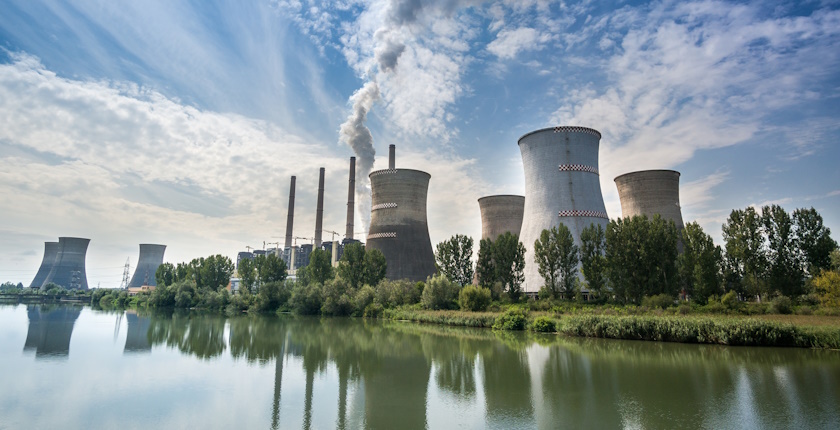
The coal plant in Turceni used to be one of the biggest in Europe, at 2.3 GW. Located next to the eponymous town in Romania’s Gorj coal region, only two units of 660 MW in total are still operational. At the same time, dozens of such facilities across Europe are shutting down ahead of schedule. The power plant and its associated mines within Complexul Energetic Turceni have been essential for the local economy, which is under threat of devastation amid the country’s coal phaseout.

As with other coal regions in the European Union, the solution is in green energy and new technologies. The town hall has signed a contract with the European Investment Bank for agrisolar parks, energy storage units and the production and storage of green hydrogen.

Turceni town hall secures municipal land for green energy projects

The project is worth a whopping EUR 380 million, Mayor Constantin Popescu revealed. Turceni and its administrative area have fewer than seven thousand inhabitants.

More than 123 hectares of municipal land (pastures) and more than 200 hectares of private land were designated for the renewable energy hub, the mayor stressed.

Bankwatch: The coal region is transitioning to a future based on innovation, sustainability and strong partnerships

Partners in the project are Bankwatch Romania and GAL Sudul Gorjului, the so-called local action group for southern Gorj. Bankwatch said over 370 hectares would be switched to clean and sustainable energy production.

“We are glad that we had an important role in developing the project plan and aligning it with European environmental policies, as well as in applying for technical assistance. For a region that has been, for decades, a pillar of coal-fired energy, this project marks a strategic transformation: a transition to a future based on innovation, sustainability and strong partnerships,” the organization added.

Investments to start in 2026

Implementation is scheduled to begin next year. The project will contribute to a just transition of the region by increasing the production of electricity from renewable energy sources, Popescu asserted. In his words, it will be complementary to the local authority’s other ongoing and future decarbonization investments.

The mayor also highlighted the plans to use geothermal energy for district heating and agriculture.

Complexul Energetic Turceni is part of state-owned Complexul Energetic Oltenia (CE Oltenia). According to the company’s restructuring and decarbonization plan, the coal business will be separated from green energy and other investments.

They include projects for CCGT (combined-cycle gas turbine) power plants of 475 MW in Turceni and 800 MW in nearby Ișalnița, as the main replacement for coal plants. Both are suffering heavy delays.

Minister of Energy Bogdan Ivan said last week that CE Oltenia’s Ișalnița coal plant in neighboring Dolj county would be closed on January 1. Romania has asked the European Commission to delay the closure of several coal plant units, scheduled for this year, until 2030.

Earlier this year, a joint venture between CE Oltenia and OMV Petrom hired contractors for four solar power plants at former coal land, with a combined capacity of about 550 MW. One of the sites is in Ișalnița.
by in News

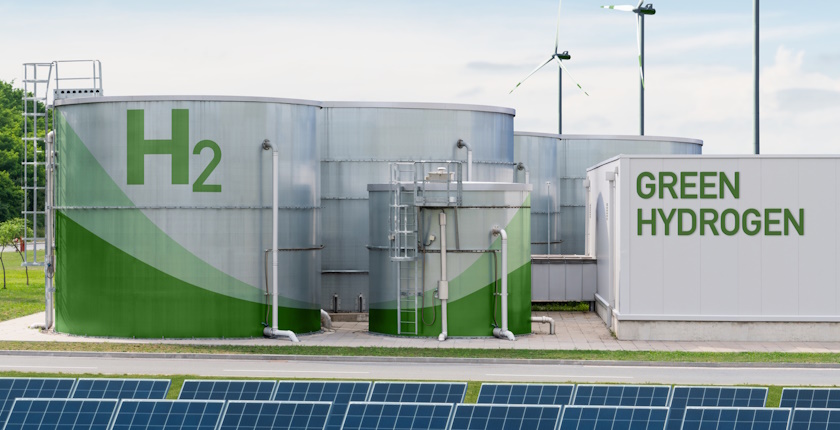
Half of EU auction-backed hydrogen projects pull out

Seven projects for 1.88 GW of total electrolyzer capacity turned out to be unfeasible even with grants won at the second European Hydrogen Bank auction, out of 2.34 GW overall. The developers withdrew, with some citing policy and infrastructure delays and uncertainty. A project from the first renewable hydrogen auction also pulled out.

The European Commission has invited ten projects from the reserve list of the second European Hydrogen Bank auction to start preparing documentation for signing grant agreements, after seven that were initially selected withdrew. The round, completed in May, resulted in 15 projects for renewable hydrogen winning support, for 2.34 GW of total electrolyzer capacity.

Five endeavors remained in the general category, for just 453.46 MW overall, and the remaining three are in the maritime segment. They account for 108.5 MW. The ten reserve projects envisage 774 MW, compared to the 1.88 GW that dropped out, including the three biggest proposed systems.

Stuck at completion guarantees

Some developers of the withdrawn proposals weren’t able to provide completion guarantees. Completion guarantees are worth 8% of the grant, S&P Global noted in a report. Companies cited policy and infrastructure delays and uncertainty.

Four sites are in Spain, two in Germany and the seventh one is in the Netherlands: the Zeevonk electrolyser, the largest of all. It would have 560 MW and produce 411,000 tons over ten years, receiving EUR 0.6 per kilogram.

Beneficiaries receive premiums from the European Hydrogen Bank budget that compensate for the difference between the production price and the amount that buyers offer.

European Hydrogen Bank mechanism designed to weed out unfeasible investments

Before the end of the year, the European Commission expects to publish the final list for the said IF24 auction. One project recently dropped out from the first round as well.

“The auction’s completion guarantee is working as expected in weeding out companies that have bid too low, or were forced to reassess their project maturity or financial viability between bidding and having to provide the completion guarantee,” EU Innovation Fund Policy Officer Johanna Schiele said.

The withdrawn projects could still head for implementation if they complete the financing structure.

Under the second round within the European Hydrogen Bank mechanism, EUR 1.2 billion was available, but only EUR 992 million rewarded.

by in News

China-based Envision opens world’s largest green hydrogen, ammonia plant

Green technology developer Envision Energy has commissioned the world’s largest and most advanced green hydrogen and ammonia plant. The Shanghai-based company said the production facility, developed in its hydrogen park in Chifeng, China, is also the first in the world delivering green ammonia at industrial scale and the first of its kind to be fully AI-enabled.

The plant can deliver 320,000 tons of green ammonia annually, with exports set to begin in the fourth quarter of this year, Envision said, adding that the facility represents a major leap forward in industrial decarbonization. By 2028, the output is projected to rise to 1.5 million tons a year.

Green ammonia output is expected to rise to 1.5 million tons a year by 2028

The project, powered by Envision’s proprietary off-grid renewable energy system, applies innovative energy storage and load flexibility. Surplus green power is stored in the form of liquid nitrogen, and electrolyzers intelligently respond to renewable power swings, dynamically optimizing energy absorption and ammonia production.

By leveraging green ammonia as a stable transportation and storage medium, Envision has unlocked a practical path to scaling hydrogen across heavy industries, reads the press release.

Zhang Lei, Envision’s founder and CEO, noted that scalable, green alternatives are now real and operational, adding that the world cannot reach net zero without green hydrogen.

The first offtake deal is accelerating green ammonia adoption in fertilizer production, chemicals, and shipping

Envision’s project has already concluded a long-term offtake agreement with Marubeni Corporation, one of Japan’s largest trading houses, which will accelerate green ammonia adoption in sectors including fertilizers, chemicals, and shipping.

The company announced that its Chifeng Hydrogen Net Zero Industrial Park is officially the world’s first green ammonia facility to receive the ISCC PLUS certification for green ammonia with a verified greenhouse gas footprint. Envision also noted that its plant has a replicable design that can be quickly deployed globally.

by in News

Ex-Yugoslav hydrogen scientists call for funding research with real-world applications

A team of scientists from Slovenia, Serbia, and Bosnia and Herzegovina is working on a hydrogen project based on seawater electrolysis. Dalibor Karačić, Nejc Hodnik, Igor Pašti, and Sanjin Gutić believe their research can deliver a solution fit for commercial use, unlike many hydrogen technologies in development around the world. To unlock the sector’s potential, hydrogen funding schemes must shift the focus from complex and “elegant” solutions to those that can be applied outside the lab, according to the scientists.

Investment in hydrogen technologies worldwide exceeded USD 200 billion in 2023, but most of the research might never produce scalable solutions due to over-complexity and impracticability, according to the four scientists.

Investment in hydrogen research exceeded USD 200 billion in 2023

Karačić, Hodnik, Pašti, and Gutić are working on a NATO-funded project that integrates membrane technology with seawater electrolysis. They claim they are not chasing novelty but “building something that can leave the lab.”

In theory, producing one kilogram of hydrogen requires nine liters of water, and even more in fossil-based hydrogen extraction. On the other hand, their research is based on the assumption that electrolysis from seawater and even wastewater could deliver hydrogen with lower water intensity and without ultrapure inputs, offering significant infrastructure savings.

This is especially relevant for countries like Bosnia and Herzegovina and Serbia, which lack industrial hydrogen infrastructure but possess abundant natural water sources and technical talent, they claim.

Karačić: Balkan countries lack the political will to implement hydrogen solutions

Dalibor Karačić, lead researcher for energy conversion and storage systems at Sarajevo’s Center for Advanced Technologies (CNT), believes that the group’s project can deliver, but warns the region lacks the political will to implement the solution.

“We can deliver, but I don’t know who’s willing to receive it. Political will is lagging behind technical capability,” Karačić said in an interview with Energy News.

Some hydrogen uses do not require expensive high-pressure storage

When it comes to the issue of storage, Igor Pašti, Professor of Electrochemistry at the Faculty of Physical Chemistry of the University of Belgrade, claims that some industrial applications of hydrogen, such as ammonia production or steel processing, do not require expensive high-pressure storage. Tanks at 200 bars can hold hydrogen safely for two years, he explains.

One of the most cited barriers to turning lab success into industrial viability is the fact that many catalyst systems used in lab settings rely on rare metals or unrealistic environmental conditions. According to Nejc Hodnik, Head of Laboratory for Electrocatalysis at the National Institute of Chemistry in Ljubljana, Slovenia, 99% of existing research cannot be scaled because either the material is too unstable or the process cannot work outside the laboratory.

by in News

Open call for green hydrogen high-efficiency CHP pilot plant in northern Greece

Greece’s Alternate Minister of Economy and Finance Nikos Papathanasis has launched an open call for the installation and operation of a high-efficiency combined heat and power (CHP) unit using fuel cells powered by green hydrogen. The site for the pilot project is in the Western Macedonia coal region in the country’s north. It is part of the government’s Just Development Transition Programme 2021–2027.

Western Macedonia is Greece’s main coal region, and the other one is Megalopolis in the Peloponnese. The country is transforming the economies of the two areas toward clean and smart technologies, largely with funding from the European Union and aiming at a just transition.

The open call signed by Alternate Minister Nikos Papathanasis for the installation and operation of a pilot unit for high-efficiency combined heat and power (CHP) facility, running on fuel cells, has a total budget of EUR 7.87 million. The facility would utilize green hydrogen produced in electrolyzers powered by renewable electricity.

The energy would be used to provide 24/7 power and heat to the Bodosakeio General Hospital of Ptolemaida, the Chemical Process & Energy Resources Institute (CPERI) in the same city and the Daycare Center for People with Disabilities in the municipality of Eordaia.

The deadline for proposal submission is October 31

The deadline for the submission of proposals is October 31, with immediate evaluation of applications.

The project is for the construction of a pilot CHP unit and a photovoltaic park on municipal land in Eordaia.

According to the announcement from the Ministry of Economy and Finance, the flagship initiative aims to showcase and implement cutting-edge energy and environmental technologies, contributing to the region’s energy transition and decarbonization efforts.

In April, Public Power Corp. (PPC) announced a EUR 5.8 billion investment plan to support the transition of Western Macedonia. The endeavor consists of the decommissioning of old assets and the rollout of new energy technologies.

According to the decarbonization timeframe, Ptolemaida 5 will be the last coal plant in the country, continuing to operate until the end of 2026. It is set to be converted to a gas power plant with a capacity of 350 MW. PPC is also open to upgrading it to 500 MW or even 1 GW.

The plan also includes: 2.1 GW of solar PV capacity, with one 550 MW project nearing completion in a former lignite mine, 860 MW of energy storage, including pumped hydro and battery systems, and a 300 MW data center, planned to be scaled up to 1 GW.

by in News

Greece to rely on carbon price, renewables potential in green hydrogen development

Despite early efforts to develop green hydrogen and its first regulatory framework, Greece finds itself on a steep curve.

The government has presented the first law on hydrogen and renewable gases in parliament. At the same time, refineries and other industries are working on projects that will determine green hydrogen’s cost-effectiveness.

However, a significant obstacle is the government’s unwillingness to support the new technology, either through subsidies or other financial instruments. The Ministry of Environment and Energy has specified that no upcoming technology would benefit from public funds. The goal is to maintain a low cost for the consumer during the energy transition.

According to Professor Pantelis Kapros from the National Technical University of Athens (NTUA), it means hydrogen will have to rely almost exclusively on the price of carbon. As the European Union’s European Trading System (EU ETS) is about to enter its second phase in 2026, the price of carbon allowances is projected to rise steeply.

Even so, market participants estimate that a ton of carbon dioxide equivalent would need to cost EUR 140, two times more than today, to make green hydrogen competitive against grey hydrogen, which is produced from natural gas.

Exports and power prices added to the equation

Regardless, Greece sees an opportunity to produce and export green hydrogen. The reason is its high renewables potential and production. The ever-increasing photovoltaic capacity has caused an overabundance of energy during the day. More demand is needed to balance the system and hydrogen can provide a way out.

Tsafos: We want to become a supplier

The hope is that the low renewable energy cost, combined with potential interest in shipping hydrogen abroad, will justify long-term investments.

“Our view is that as long as the market is interested, we want to become a supplier,” Deputy Minister of Environment and Energy Nikos Tsafos said at the Hydrogen & Green Gases Forum in Athens.

A potential problem is that green hydrogen plants are not expected to be viable if they only produce during the day, when renewable energy prices are usually lower. “Ten hours of operation are not enough to support producers and there are also technical issues to solve,” said Dimitris Kardomateas, head of the Center for Renewable Energy Sources and Saving (CRES).

He also pointed to the average daily wholesale power price, as it is higher in Greece than in most other European markets. It should be noted that electricity makes up about 70% of the total operating cost of electrolyzers.

Biomethane considered more mature

On the other hand, biomethane is considered much easier to develop.  The technology depends less on power prices and also faces fewer technical hurdles. “Biomethane has a clear role, especially through its ability to enter the gas network, and we want to utilize it”, said Tsafos.

Gas distribution company Enaon EDA emphasized its readiness to include biomethane in its network. Its CEO Barbara Morgante noted that a study is underway to pinpoint the various existing and planned biomethane production plants around the country, as well as their proximity to Enaon’s network.

Biomethane is usually obtained by processing biogas to get methane of the same purity as in fossil gas. The renewable fuel can also be produced from clean hydrogen and CO2.

by in News

Croatia’s Pag island to produce green hydrogen using wave energy

The island town of Novalja could become one of the first in Croatia to begin the production of green hydrogen, and a rare example in the region. Moreover, the local authority would utilize innovative technology.

Croatia adopted its national strategy for hydrogen until 2050 in March 2022. The first hydrogen production facility could be installed in Križevci, according to a report from last year.

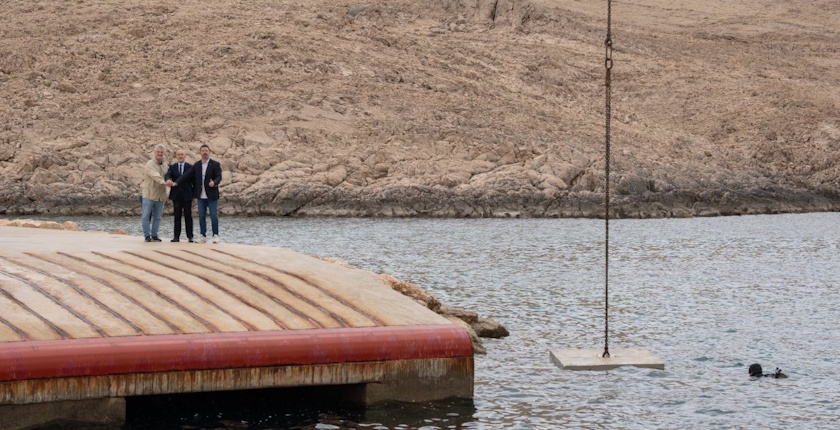
The local authority in Novalja on the island of Pag said it started its ambitious and innovative Zero Emission Corridor (ZEC) H2 project with the goal of establishing the production and distribution of green hydrogen – using only renewable energy.

The project represents a key step in the small town’s transition towards sustainable development and energy independence.

The construction of a pilot facility in the Žigljen port has already started

The preparations for the project included an analysis of suitable locations, including the ports of Novalja, Žigljen, and Tovarnele. As the first concrete step, the local authorities initiated the construction of a pilot plant in the port of Žigljen.

The facility would use innovative domestic technology for the generation of electricity from sea waves, the announcement reads. It would be used to power water electrolysis for the production of green hydrogen.

The facility is expected to become fully operational by 2027.

The ZEC H2 project would make Novalja an energy independent, emission-free town by 2030. The project’s main goals are to significantly reduce greenhouse gas emissions, increase energy efficiency, and encourage the use of renewables.

The construction of the pilot plant is financed through an EU program

The green hydrogen and excess energy would be used to power electric chargers, public transport and utility vehicles, public lighting, and city buildings.

The construction of the pilot plant is financed through the European Union’s Interregional Innovation Investments (I3) Instrument while substantial grants were secured from EU funds.

The ZEC H2 project confirms Novalja’s commitment to sustainable development, environmental protection, and the development of innovations in the green energy sector, the town’s leadership said.

According to data from August last year, there were 32 green hydrogen projects in Croatia. One of them was for the production of hydrogen using sewage sludge.

by in News

OMV opens Austria’s largest green hydrogen plant

OMV put into operation its green hydrogen plant in Schwechat near Vienna. The facility can produce 1,500 tons per year.

OMV is producing green hydrogen on a commercial scale for the first time. The Vienna-based fossil fuel and petrochemicals producer started up a 10 MW plant at its Schwechat refinery near Austria’s capital. It is the largest in the country.

The investment amounts to EUR 25 million. The electrolyzer system can produce up to 1,500 tons per annum. OMV said the green hydrogen would be used to make more sustainable fuels and chemicals including sustainable aviation fuel (SAF) and renewable diesel (HVO).

PEM electrolyzer uses wind power, hydropower, photovoltaics

The new 10 MW polymer electrolyte membrane (PEM, also called proton exchange membrane) electrolyzer is powered entirely by renewable electricity. It is generated by wind power, hydropower plants and photovoltaics.

The innovation enables annual savings of up to 15,000 metric tons of carbon dioxide emissions, according to the comparator from the European Union’s Renewable Energy Directive. It is equivalent to 2,000 persons per year, based on the EU’s 2024 average of 7.5 tons of CO2 equivalent per capita.

“With the start-up of Austria’s largest electrolysis plant, we are re-inventing how essentials we use in everyday life are produced sustainably. Green hydrogen is at the heart of this transformation, serving as a critical component in producing fuels and chemicals while advancing the decarbonization of our Schwechat site,” said board member Martijn van Koten, responsible for fuels, feedstock and chemicals.

Green hydrogen project is step toward making OMV carbon neutral

The majority owner of Romanian OMV Petrom aims to cut its net emissions to zero by 2050. Its transformation is based on projects including for geothermal energy and chemical recycling. Green hydrogen can be utilized in the production process in refineries.

The green hydrogen plant is certified for producing renewable fuels of non-biological origin (RFNBOs).

Making green hydrogen through PEM electrolysis involves splitting water into hydrogen and oxygen using renewable electricity. At the anode, oxygen and positively charged hydrogen protons are generated. The protons pass through the PEM, and at the cathode, they combine with electrons to form hydrogen gas.

by in News

Turkey to manufacture green hydrogen, nuclear, CCS equipment

The 2030 Industry and Technology Strategy includes setting up industrial facilities in Turkey for nuclear energy, green hydrogen, battery storage and carbon capture and storage (CCS). The country is planning to establish a value chain for critical raw materials. The government vowed to support the development of semiconductor technology, autonomous and flying vehicles and cybersecurity solutions, alongside innovations for electric vehicles and solar and wind power.

With its recently unveiled 2030 Industry and Technology Strategy, Turkey announced the ambition to upgrade its industrial production to one of the most advanced in the world. As Russia’s Rosatom is completing the country’s first nuclear reactor in Akkuyu, the government is planning to develop its own technology in the segment.

The strategy involves setting up industrial clusters for equipment and infrastructure. Among the possible technologies are molten salt reactors. The Scientific and Technological Research Council of Türkiye (TÜBİTAK), Turkish Energy, Nuclear and Mineral Research Agency (TENMAK) and Istanbul Technical University (İTÜ) are tasked with establishing a nuclear tech park.

Green hydrogen mostly needed for decarbonizing hard-to-abate industrial production

TÜBİTAK is responsible for developing domestic electrolyzers as well. The national hydrogen program is set to bring support for integrating the production of green hydrogen, storage, transportation and consumption. The last of the four is especially focused on energy-intensive industries such as steel, petrochemicals and fertilizers.

Another segment that would get incentives is the use of hydrogen in fuel cell vehicles including heavy vehicles. The strategy envisages setting up pilot zones for green hydrogen production, with electrolyzers powered by wind and solar energy.

Turkey has high ambitions for high-tech exports

Turkey has revealed the goal of tripling its high-tech exports to USD 30 billion by the end of the decade. It is part of an ambition to lift industrial exports to USD 400 billion from last year’s USD 247 billion. At the same time, the government’s target for the overall valuation of domestic tech startups is USD 100 billion.

The 2030 Industry and Technology Strategy has other chapters, too, like carbon capture, utilization and storage (CCUS or just CCS), access to critical raw materials, semiconductor and battery manufacturing and cybersecurity. Officials vowed to continue prioritizing domestic electric vehicles, but with investments in autonomous operation systems and even flying cars.

Cybersecurity solar and wind turbine technologies. Turkey apparently remains dedicated to expanding the industrial base for solar panels and wind turbines as well.

by in News

Europe must finance its clean future now

Author: Jorgo Chatzimarkakis, CEO of Hydrogen Europe, EUSEW’s partner organisation.

‘The best time to plant a tree was 20 years ago. The second-best time is now.’ In a world of short-term thinking and instant gratification, this old adage continues to hold true. In the context of the energy transition, and the race against time to offset the worst effects of climate change, it is even more relevant.

In fact, we in Europe can say that we did start investing properly in wind and solar power 20 years ago (although we would be in a much stronger position had we started 20 years before that, immediately after Professor James Hansen’s landmark testimony to the US Senate committee on energy in 1988).

But rather than look back in disappointment or despair at humanity’s delayed climate action, we can resolve not to make the same mistakes again. Hydrogen, one of the enablers of the energy transition, offers us a new solution with which to decarbonise.

Clean hydrogen is a versatile energy carrier with multiple applications across our society. You can use it to sustainably produce steel, fertilisers, and chemicals – hard-to-abate sectors which cannot be easily electrified – or fuels for road, maritime, or aviation mobility systems, where smaller size and longer ranges compared with batteries make fuel cell propulsion systems more desirable for long-haul journeys. You can also use it for long-term energy storage, grid balancing, and flexibility, which will grow in importance as we move to a fully renewable electricity grid. This is just a short summary of the vast potential held within this clean molecule.

Hydrogen is a helpful addition to electricity

Hydrogen is thus a complementary tool to electrification, reaching where electrons cannot. Already several projects around Europe are showing how. In Sweden, H2 Green Steel – Europe’s first greenfield steel mill in 50 years – replaced coal with green hydrogen to power the steelmaking process, cutting CO2 emissions by up to 95% compared to traditional steelmaking. In France, Lhyfe produces renewable hydrogen from wind energy and sells it to industrial end-users, as well as zero emission bus and freight fleets. In Italy, one of the world’s largest shipbuilders, Fincantieri, is designing hydrogen-based cruise and cargo ships.

These success stories can be built upon, and Europe could lead a global market based on the production, transport, and use of renewable hydrogen. But there is a risk that moving too slowly will see Europe lose out to global competitors, as seen in the solar and battery industries, where decades of European-led research and development could not prevent profits from going elsewhere once the technologies came to market.

Despite a substantial pipeline of projects up and down the hydrogen value chain, Final Investment Decisions (FID) have been comparatively rare – only 4% of global hydrogen projects reached FID last year, and most of those were in China. This is due in large part to the cost of producing renewable hydrogen in Europe still exceeding that of fossil fuel-based hydrogen. With a strong support system, we can make clean hydrogen a viable option for all those businesses looking to achieve emissions reduction.

We need to think more pragmatically. China has achieved massive success through state-led innovation and the development of clean technologies to the point that it is now a global market leader in most subsectors. And climate change means we do not have the time to simply wait for the economics to work out. These two facts show us that it is not only desirable but necessary, to spend in the short-term in order to reap the benefits in the long term. Sow the seeds. Plant the tree now.

More effort required to accelerate hydrogen market development in Europe

This is not to say that Europe has not already taken important steps to close the financing gap. The European Hydrogen Bank auctions, under the Innovation Fund call, are and will continue to be a successful endeavor to provide key support to hydrogen production projects. The Important Projects of Common European Interest (IPCEI) program has already awarded support to more than 120 projects involving nearly 100 European companies and should raise over €43 billion from a blend of public and private funds. This is positive, but more is needed both at the European and national level if we are to seriously get the hydrogen market moving here before it is too late to compete.

In the latest draft of the European Commission’s ‘Clean Industrial Deal’ regulatory package, the state aid framework introduces relevant capital expenditure (CAPEX) support, with aid intensities of up to 50% for hydrogen use in industry and 45% for renewable energy rollout, creating a strong foundation for hydrogen deployment. Europe wants to stake its claim as a clean technology leader, but to do so we must stop pulling the rug out from under our own feet.

Europe has repeatedly and publicly professed its support for hydrogen, and as a result, hundreds of companies have invested time and money into building up the sector. We have some existing, successful funding schemes in place and a mammoth pipeline of projects. But we must go further, for example by encouraging national governments to accelerate the transposition of EU legislation and to consider implementing their own funding mechanisms for hydrogen projects. By planting these trees now, we will be able to sit in the shade of a robust, competitive hydrogen market for years to come – with all the new jobs, decarbonization potential, added resilience, and global competitiveness that it will bring.

This opinion editorial is produced in co-operation with the European Sustainable Energy Week 2025. See ec.europa.eu/eusew for more details.