by in News

Brazil’s COP of Truth leaves out fossil fuels, deforestation from final deal

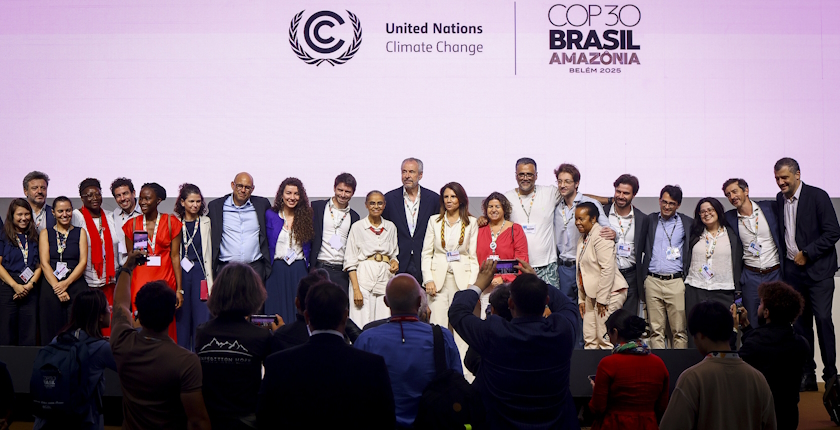
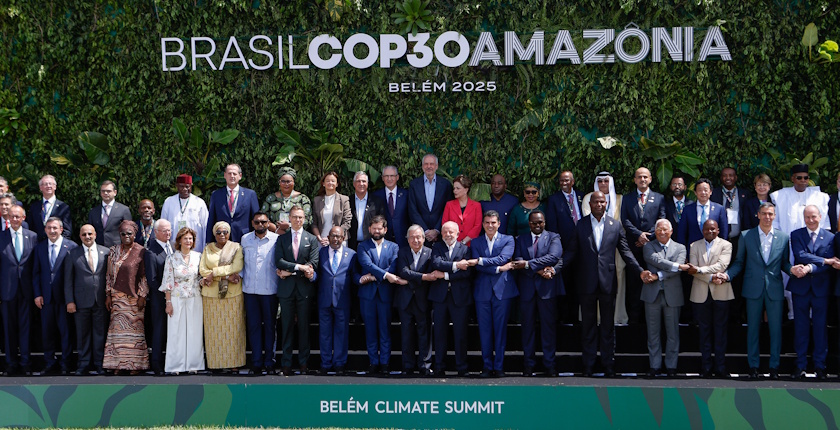
The United Nations Climate Change Conference COP30 was concluded with a deal to keep the world’s ambitions similar, after modest progress on some issues. In a last-minute compromise between the delegates of the wealthy, the poor and the countries most in jeopardy, the declaration from the so-called COP of Truth contains no explicit reference to fossil fuels and deforestation.

Participants at the Conference of the Parties of the UN Framework Convention on Climate Change (UNFCCC) in Belém, Brazil, acknowledged that the world is heading for a temporary overshoot above 1.5 degrees Celsius in warming, according to UN Secretary-General António Guterres.

“I cannot pretend that COP30 has delivered everything that is needed. The gap between where we are and what science demands remains dangerously wide. I understand many may feel disappointed – especially young people, indigenous peoples and those living through climate chaos. The reality of overshoot is a stark warning: we are approaching dangerous and irreversible tipping points,” he stated.

It’s difficult to reach a consensus in a period of deep geopolitical divide, Guterres pointed out. Nevertheless, he praised the final agreement for “delivering progress and showing that multilateralism works.”

Global Mutirão

The hosts nicknamed COP30, this year’s UN Climate Change Conference, the COP of Truth. Ironically, due to a last-minute compromise, or maybe consensus, the declaration contains no explicit reference to a fossil fuel phaseout and halting and reversing deforestation. They were left for separate roadmaps.

In the document, the signatories only refer to the COP28 decision, also known as the UAE Consensus, which called for transitioning away from fossil fuels.

The headline of the overarching deal adopted in Belém is Global Mutirão: Uniting humanity in a global mobilization against climate change. The Portuguese word mutirão originates from the indigenous Tupi-Guarani language and roughly means collective effort.

UN’s Stiell vows to keep up climate fight

All in all, delegates from all over the world, except the United States, left the desired decarbonization trajectory little changed. The countries most at risk of the climate disaster are generally poor. They depend on mitigation aid and investments from the wealthy part of the world.

“We knew this COP would take place in stormy political waters. Denial, division and geopolitics has dealt international cooperation some heavy blows this year,” UN Climate Change Executive Secretary Simon Stiell said at the closing.

Denial, division and geopolitics has dealt international cooperation some heavy blows this year, UN Climate Change Executive Secretary Simon Stiell said

In his view, nations chose solidarity, science, and economic common sense.

“COP30 showed that climate cooperation is alive and kicking, keeping humanity in the fight for a livable planet, with a firm resolve to keep 1.5 Celsius within reach. I’m not saying we’re winning the climate fight. But we are undeniably still in it, and we are fighting back,” Stiell stated.

The world’s top climate official noted that, for the first time, 194 countries agreed that the global transition to low greenhouse gas emissions and climate resilience is irreversible and the trend of the future, referring to a line from the deal.

COP30 pledges to triple adaptation funds by 2035

In the decision, the signatories kept the target USD 1.3 trillion per year that needs to be mobilized for climate action by 2035. USD 300 billion would be mostly grants and subsidized loans, while private financing and climate taxation dominate the rest.

The parties voted for a goal to provide three times more per year for climate adaptation from the smaller pot by 2035, instead of the initially proposed 2030 deadline. They failed to determine a figure, but it is mostly estimated at USD 120 billion per year.

One of the novelties is a pledge to promote information integrity regarding climate, which would also imply countering disinformation.
by in News

COP30 in Brazil: one decade after Paris Agreement, world is still far from its climate goals

The two-week United Nations Climate Change Conference COP30 is taking place in Brazil. It brought together delegations from more than 190 countries to discuss the challenges of climate change and measures for mitigation and adaptation. The current COP marks ten years since the Paris Agreement, at a time of significant hurdles on the path to achieving global climate goals.

According to preliminary data from the World Meteorological Organization, this year will be the second or third warmest ever recorded on the planet. The 30th Conference of the Parties (COP30) to the United Nations Framework Convention on Climate Change (UNFCCC) is being held in Belém, Brazil — a city situated in the heart of our planet’s lungs, the Amazon rainforest.

Brazil carries symbolic weight, as the UNFCCC was signed there in 1992.

Lula da Silva: Climate change is no longer a threat of the future, it is a tragedy of the present

In the decade following the adoption of the Paris Agreement at COP21, some progress has been made in the fight against climate change — but it remains insufficient. In his opening speech, Brazilian President Luiz Inácio Lula da Silva stressed that climate change is no longer a threat of the future but a tragedy of the present. He called this year’s summit a “moment of truth.”

When the Paris Agreement was signed, scientific projections were showing that without decisive climate action, global temperatures could rise by more than four degrees Celsius before the end of the 21st century. “We are moving in the right direction, but at the wrong speed,” Lula said, also pointing to climate misinformation as a major obstacle to planning and implementing effective measures.

Guterres: We have failed to stop global warming

United Nations Secretary-General António Guterres said in his address that the harsh truth is that the world has failed to keep global warming within 1.5 degrees Celsius.

Just days before the summit, the UN Environment Programme (UNEP) released its annual report showing that, under current policies, the 1.5-degree limit will be reached within the next decade – and the planet will warm by 2.8 degrees by the end of the century.

Guterres: This is moral failure – and deadly negligence

“Even a temporary overshoot will have dramatic consequences. It could push ecosystems past irreversible tipping points, expose billions to unlivable conditions, and amplify threats to peace and security. Every fraction of a degree means more hunger, displacement, and loss – especially for those least responsible. This is moral failure – and deadly negligence,” Guterres warned.

Still, he emphasized that the UN has not given up on the 1.5-degree goal. “We have never been better equipped to fight back,” he said, adding that the clean energy revolution is gaining unstoppable momentum.

In the first half of 2025, renewables overtook coal as the top source of global electricity. Renewable energy is now cheaper than fossil fuels, and the cost of electricity storage continues to decline.

The US will not participate in negotiations

One of the world’s largest greenhouse gas emitters – the United States – has sent representatives to the summit, but President Donald Trump’s administration announced it would not take part in negotiations. In January, he announced that his country would withdraw from the Paris Agreement, and later called climate change “the greatest con job ever perpetrated on the world” during a speech at the UN in September.

Focus on implementing existing commitments

The main focus of COP30 in Belém is the implementation of previously agreed commitments and the enforcement of the Paris Agreement. The reduction of greenhouse gas emissions remains a key topic, alongside the first Global Stocktake – a comprehensive assessment of progress toward the Paris goals, aimed at encouraging countries to submit more ambitious national climate plans.

Despite some progress, the latest nationally determined contributions (NDCs) remain far from sufficient to prevent the most severe effects of climate change.

Another central issue will be the establishment of a New Collective Quantified Goal on Climate Finance – determining the scale, timelines, and mechanisms for funding, as well as the share of resources that must go toward adaptation and support for the most vulnerable communities.

According to UNEP’s Adaptation Gap Report 2025, developing countries will need more than USD 310 billion annually by 2035 to adapt to climate impacts, yet they currently have access to only a fraction of that amount.

Toward a just transition and nature protection

Delegates will also discuss operationalizing the Global Goal on Adaptation, which aims to measure progress in building climate resilience.

Another key topic will be the concept of a just transition, with a proposal to establish the Belém Action Mechanism for Just Transition – a new framework to ensure that climate and economic transitions put people at the center. It would include job creation, retraining programs, and support for communities dependent on fossil fuel industries.

Given that COP30 is taking place in the heart of the Amazon, particular attention is dedicated to nature and forest conservation. Brazil plans to present the Tropical Forests Forever Facility, an initiative designed to secure long-term funding for the protection of tropical forests.

by in News

Earth would become 2.8 degrees warmer by 2100 without additional measures

The United Nations Environment Programme (UNEP) has released its annual Emissions Gap Report 2025: Off Target, assessing the state of global greenhouse gas emissions. The document outlines the gap between where global emissions are headed – based on announced national policies and pledges – and what is needed to meet international temperature targets.

Ten years after the adoption of the Paris Agreement, UNEP claims the accord has played a key role in lowering global temperature projections and spurring the development of renewable energy, policies, and targets. Due to countries’ slow progress in reducing emissions, the world is likely to exceed the Paris Agreement’s target of limiting warming to 1.5 degrees Celsius above pre-industrial levels, possibly within this decade.

Under the Paris Agreement, countries are required to submit their nationally determined contributions (NDCs) every five years — their plans for reducing emissions and adapting to climate change.

Implementation of current policies alone would lead to a warming of 2.8 degrees

The report states that by September 30, 2025, only 64 signatory countries, responsible for 63% of global emissions,  had submitted or announced NDC plans with mitigation targets for 2035. However, just 13 countries, accounting for less than 1% of global emissions, have updated their reduction targets.

In addition to the lack of progress in commitments, the report highlights a massive implementation gap. “In addition to the lack of progress in pledges, a huge implementation gap remains, with countries not on track to meet their 2030 NDCs, let alone new 2035 targets,” the report warns.

According to the report, full implementation of all NDCs would lead to a temperature rise of between 2.3 and 2.5 degrees Celsius by the end of the century, compared to last year’s projected range of 2.6 to 2.8 degrees. Implementation of current policies alone would result in a warming of 2.8 degrees, slightly lower than the 3.1 degrees that were projected in last year’s assessment.

Implementing all NDCs by 2035 would cut emissions by 12%-15% from the 2019 levels. However, if the United States withdraws from the Paris Agreement, the reduction would drop to between 9% and 11%.

It is far below the 35% reduction needed to limit warming to two degrees and the 55% required to stay within 1.5 degrees Celsius.

Greenhouse gas emissions continue to rise

Global emissions of greenhouse gases: carbon dioxide (CO2), methane (CH4), nitrous oxide (N2O), and fluorinated gases (F-gases), reached a record 57.7 billion tons of CO2 equivalent last year or 2.3% more than in 2023.

The largest share of emissions comes from the combustion of coal, oil, and gas, about 69% of the total. Combined emissions of CH4, N2O, and F-gases make up about 24%. In addition to fossil fuels, deforestation and land use change were key drivers of the sharp rise in emissions in 2024, according to the report.

Developed countries account for 77% of global emissions

The world’s most developed countries, the G20 group (Argentina, Australia, Brazil, Canada, China, France, Germany, India, Indonesia, Italy, Japan, Mexico, Russia, Saudi Arabia, South Africa, South Korea, Turkey, the United Kingdom, the United States, and the European Union), are responsible for 77% of global emissions, while the least developed countries contribute just 3%.

The largest emitters are China, the US, India, the EU, Russia, and Indonesia. The biggest absolute increase was recorded in India, followed by China and Indonesia, which is also among the world’s most populous nations. Meanwhile, emissions in the EU fell by 2.1%.

Paris Agreement goals are still achievable – but barely

“Urgent and stringent emission reductions” are essential to achieve the goals of the Paris Agreement, yet new NDCs and the current geopolitical context offer little reassurance that such reductions will be realized, the authors stressed.

UNEP Executive Director Inger Andersen emphasized that the pace of change is insufficient, pointing out that emission reductions are “still possible – just.”

“Proven solutions already exist. From the rapid growth in cheap renewable energy to tackling methane emissions, we know what needs to be done. Now is the time for countries to go all in and invest in their future with ambitious climate action – action that delivers faster economic growth, better human health, more jobs, energy security, and resilience,” she said.

To reverse every 0.1 degrees Celsius of warming, about 220 billion tons of CO2 must be removed

To offset every 0.1 degrees Celsius of global temperature rise, approximately 220 billion tons of CO2, equivalent to five years of global emissions, would need to be removed from the atmosphere. While many impacts cannot be fully reversed, UNEP underscores that the 1.5-degree target remains a legal, moral, and political obligation for all governments.

“Scientists tell us that a temporary overshoot above 1.5 degrees is now inevitable – starting, at the latest, in the early 2030s. And the path to a livable future gets steeper by the day. But this is no reason to surrender. It’s a reason to step up and speed up. 1.5 degrees by the end of the century remains our North Star. And the science is clear: this goal is still within reach. But only if we meaningfully increase our ambition,” UN Secretary-General António Guterres said in his message on the report.

by in News

Europe’s Environment 2025 report: Not good

Biodiversity is declining and water stress is affecting one third of Europe’s population and territory, while the frequency and magnitude of climate-related disasters are increasing. In short, this is the message from the report Europe’s Environment 2025.

​Europe’s Environment 2025 is the most comprehensive analysis on the current state and outlook for the continent’s environment, climate, and sustainability, building on data from across 38 countries, according to the European Environment Agency (EEA).

The outlook for most environmental trends is concerning and poses major risks to Europe’s economic prosperity, security, and quality of life, the authors warned. The agency said climate change and environmental degradation pose a direct threat to Europe’s competitiveness, pointing out that it depends on natural resources.

Progress on a range of factors that enable the shift towards sustainability – such as innovation, green employment, and sustainable finance – gives cause for hope, EEA added.

​More than 80% of protected habitats are in a poor or bad state

The report shows biodiversity is declining across terrestrial, freshwater, and marine ecosystems in Europe due to persistent pressures driven by unsustainable production and consumption patterns, demonstrated most notably in the food system.

More than 80% of protected habitats are in a poor or bad state, with 60% to 70% of soils degraded, the document reads.

On a positive note, the extent of protected areas increased over the past decade – by 2022, 26.1% of the European Union’s land and 12.3% of its seas were protected. However, designating protected areas alone does not guarantee that biodiversity is effectively protected, the authors wrote.

​Water stress is affecting one third of Europe’s population and territory

The report’s findings point to severe pressure on water resources: water stress is affecting one third of Europe’s population and territory.

Only 37% of surface water bodies had a good or high ecological status in 2021, with the degradation of aquatic ecosystems threatening Europe’s water resilience. Agriculture is responsible for the most significant pressure on both surface and groundwater, data revealed.

EEA recalled that Europe is the fastest-warming continent on the planet.

Weather- and climate-related extremes caused economic losses of assets estimated at EUR 738 billion in the EU’s 27 member states over the period 1980-2023, with over EUR 162 billion in costs from 2021 to 2023 alone, the report reads.

Over 70,000 people in Europe are estimated to have died from heat in 2022.

The average annual economic losses in the 2020‑2023 period were 2.5 times as high as in the preceding decade, from 2010 to 2019, according to the report.

Downpours are increasing in severity, with several regions subject to catastrophic floods in recent years, while extreme heat, once rare, is becoming more frequent, with deadly consequences: over 70,000 people in Europe are estimated to have died from heat in 2022.

The greatest challenges call for a need to rethink the links between the economy and the natural environment, land, water and natural resources, EEA underscored.

“We cannot afford to lower our climate, environment and sustainability ambitions. Our state of environment report, co-created with 38 countries, clearly sets out the science-based knowledge and demonstrates why we need to act. In the European Union, we have the policies, the tools and the knowledge, and decades of experience in working together towards our sustainability goals. What we do today will shape our future,” EEA Executive Director Leena Ylä-Mononen said.

Bright spots

The report also highlighted the good results of environmental protection policies in Europe.

The EU has cut its domestic greenhouse gas (GHG) emissions by 37% since 1990, largely driven by reducing fossil fuel use and doubling the share of renewables since 2005.

All member states have reduced their reliance on fossil fuels and shifted towards more sustainable energy sources over the last decade, while increased energy efficiency has brought down demand.

In 2023, renewable energy sources represented over 24% of the EU’s final energy use, a record high.

The bloc’s industrial system has managed to reduce emissions by more than 35% from 2005 to 2023, while emissions from buildings fell by more than 35% between 2005 and 2023.

Significant progress has been made in reducing pollution in Europe. EU policies led to improvements in air quality and reduced premature deaths attributable to fine particulate matter from 2005 to 2022 by 45%, according to the Europe’s Environment 2025 report.

by in News

Deep Adriatic temperatures already hit end-of-century estimates

For centuries, the Adriatic Sea has cooled the Mediterranean, but today it is sending warmer waters down south as it heats up much faster than projected. Deep water temperatures forecast for the end of the century are already being recorded, threatening ecosystems, the climate, and coastal communities, according to a study by scientists from Croatia, Italy, and Slovenia.

Data collected in the South Adriatic Pit, the deepest part of the Adriatic Sea, suggest the seawater temperature at a depth of 1,000 meters has increased 0.8°C over the past decade, with salinity rising by 0.2 PSU (Practical Salinity Units), according to Croatia’s Ruđer Bošković Institute (RBI).

This may signal a permanent shift in the region’s climate patterns, RBI said. Importantly, the trend is accelerating: deep-water warming rates were once around 0.2°C per century, but between 2012 and 2024 they jumped to 0.8°C per decade, it stressed.

The Adriatic drives currents that ensure stability and oxygen supply to the depths of the Mediterranean

RBI explains that the Adriatic Sea acts as a natural “thermostat,” regulating temperature patterns throughout the Mediterranean basin. In winter, cold, dense waters in the shallow northern Adriatic sink to the seafloor and then flow through the Strait of Otranto into the deep Mediterranean. This process drives currents that ensure stability and oxygen supply to the depths of the Mediterranean Sea.

Today, however, the traditionally cold water formed along the Croatian coast is becoming increasingly warm and salty before beginning its southward journey. Instead of cooling the deep Mediterranean, the Adriatic now sends warmer waters that further heat the entire system, RBI explains.

Warmer waters threaten deep-sea fish and attract species from the eastern Mediterranean

The changes are already affecting biodiversity, particularly species adapted to life in deep, cold waters. Unlike terrestrial animals that can migrate north as the climate warms, deep-sea species remain stuck on the seafloor, according to Dr. Ivica Vilibić, co-author of a study based on the international research project.

At the same time, the warmer waters are attracting tropical species from the eastern Mediterranean, altering the entire ecosystem, he warns.

The problem is not just local – it could affect all of Europe

Moreover, these changes are not just a local Adriatic issue. They could affect the entire European climate system while contributing an additional 3.3 millimeters of sea-level rise per year, scientists estimate.

“Nature is warning us that something significant is happening,” says Vilibić, adding that scientists’ task is to understand these processes and help society prepare for the changes ahead.

by in News

Water shortages in Southeastern Europe point to desalination as strategic approach

Former Minister of Environment and Water of Bulgaria Borislav Sandov is urging the country’s authorities to deploy alternative water supply solutions, including desalination, to counter shortages. Greece is preparing a radical change in its water management model. Turkey got its first floating seawater purification platform, running on solar and wind power.

Southeastern Europe is among the most jeopardized regions in the world in the context of global warming. The lack of water has the most drastic effect on everything from wildlife to food production, energy and public health. Bulgaria’s former Minister of Environment and Water Borislav Sandov warned that over half a million people in the country are at risk of water shortages.

Eastern and northeastern Bulgaria have a persistent issue with droughts and lack of water, necessitating a switch toward alternative forms of supply in the next five to 10 years, including seawater desalination plants, he recently told bTV.

In addition to climatic factors, there are serious shortcomings in water management, together with theft and corruption, Sandov claimed. He pointed to an example where drastically undersized pipes of poor quality were installed in one area, resulting in constant breakdowns and supply interruptions.

Sandov attributed some of the water stress to fragmented management between different local, regional and national institutions. In his words, as much as 10% of all settlements in Bulgaria, though mostly small ones, aren’t covered by waterworks and sewerage systems. Moreover, 44% of the water in the network isn’t measured in volume terms at the entry point and 50% of the water sources don’t have a valid permit from the competent authority, he added.

Notably, a quarter of the population in neighboring Serbia occasionally or permanently lacks safe drinking water from waterworks systems.

Greece to radically change its water management system

Greece decided to get ahead of the droughts and heatwaves. The government has promised radical change in water management: a more functional system with more investments and new technologies, including desalination, but also recycling.

Tourism in the summer months exacerbates the water stress. On some islands, demand surges by up to 30 times. It creates conflict with the needs for irrigation for food production. Greek islands mostly use underground aquifers with easily exhaustible capacity.

Rainfall and snowfall in the country are gradually decreasing.

Similar to Bulgaria, water management is spread across hundreds of operators and institutions, lacking coordination. Losses in drinking water supply amount to as much as 40%, in comparison with up to a staggering 60% in irrigation.

The government in Athens promised water would remain a public good

According to a study by Deloitte with data from 2022, more than EUR 10 billion is necessary for investments in the two segments, excluding Attica. It is where Athens is located. Another EUR 500 million to EUR 700 million is needed for the peninsula.

Government-controlled power utility Public Power Corp. (PPC) will reportedly enter the game, not least because municipal water and sewerage firms owe it more than EUR 400 million. The company would convert debts into minority stakes in three centralized entities: for the regions of Athens and Thessaloniki and the rest of the country, the media learned.

PPC can contribute with its knowhow and experience in the construction and operation of dams and hydropower plants.

Importantly, the government vowed to keep water a public good.

Floating desalination platform with hybrid power plant put into operation in western Turkey

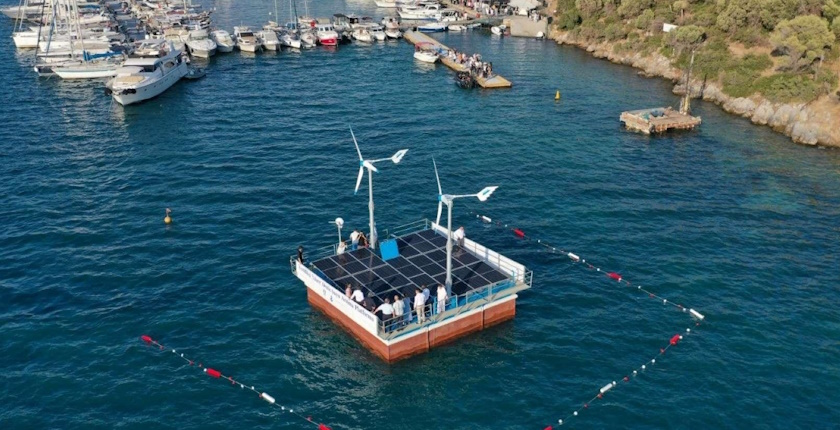
Right opposite the Greek island of Kos, offshore Bitez Marina, the Bodrum Municipality inaugurated Turkey’s first floating seawater purification platform. It runs entirely on renewable energy, producing 20 cubic metres of clean, non-potable water every day.

The project was developed in partnership with Istanbul-based company Blue Hybrid Solutions. The facility is powered by solar panels and two small wind turbines. It delivers water to an onshore tank for irrigation, emergency needs and, when required, public consumption, the local authority said.

Greece is already conducting a massive project for energy independence of numerous non-interconnected islands, including investments in desalination powered by renewables. It is also working to link other islands to the mainland grid.

[wpcc-iframe title=”BODRUM BELEDİYESİNDEN BİR İLK YÜZER DENİZ SUYU ARITMA PLATFORMU TANITILDI” width=”500″ height=”281″ src=”https://www.youtube.com/embed/KApvKHO8OS4?feature=oembed” frameborder=”0″ allow=”accelerometer; autoplay; clipboard-write; encrypted-media; gyroscope; picture-in-picture; web-share” referrerpolicy=”strict-origin-when-cross-origin” allowfullscreen=””]

by in News

Turkey’s renewables failing to cover power demand growth despite solar boom

Turkey switched in 2024 from a net electricity importer to net exporter, but renewables are still not growing fast enough to meet rising domestic power demand – one of the highest in the world, Ember found. The country has become Europe’s biggest coal power producer and there are plans for more such capacity.

Wind and solar generated 18% of electricity last year or 62 TWh, according to data from Ember’s Türkiye Electricity Review 2025. Together they were higher than domestic coal again, at 47 TWh, after surpassing it for the first time in 2023. But imports account for 61% of coal power production in the country.

Solar power growth spiked 39% in Turkey or by 7.3 TWh and the capacity reached 19.8 GW by the end of 2024. It compares to the global rise of 29% in output.

Photovoltaics had a 7.5% share, after 5.7% one year earlier. The wind power item advanced by only 0.1 percentage point, to 10.7%.

Government’s ambitions for renewables would result in 49% combined solar, wind power share in production

At 5.5%, Turkey had one of the highest increases in power demand last year in the world, mostly because of record meteorological heat pushing up cooling needs. The amount was 18 TWh and the total reached 342 TWh.

The rise in domestic electricity generation totaled 23 TWh and Turkey achieved a switch from a net power importer to net exporter. Nevertheless, wind and solar are still not growing fast enough to meet rising demand, translating to costly imported fossil fuel power generation, the report points out. The situation is similar on a worldwide scale.

The 7.3 TWh increase in solar accounted for 32% of the jump in electricity generation, compared to 40.2% on a global scale. The ambitious renewables targets for 2035 would result in a share of fossil fuels of 20%, and wind and solar at 49% in combination.

“Although demand growth has slowed in recent years, it is still outpacing the rate of new wind and solar additions. Demand increased by 42 TWh in the last five years, compared to 31 TWh of additional wind and solar. The rest of demand is met by imported coal and gas,” said Ufuk Alparslan, the report’s author and the energy think tank’s regional lead for Turkey and the Caucasus.

‍Romania beats Turkey in solar power production share

In the group of 20 countries with the highest electricity demand in Europe, Turkey surpassed Switzerland in solar electricity generation in 2024. On the other hand, it fell one position behind Romania, which is ranked 12th, as it doubled its solar power share to 7.8% in 2024.

The first in the list is Hungary, with 24.9%, followed by Greece (21.5%) and Spain (21.2%).

Adding solar to hydroelectric plants with dams mitigates drought impact

From 2020, solar power plants can be installed as an auxiliary source in power plants in Turkey, which creates hybrid power plants. Making more use of solar and wind power plants, which have a complementary generation profile to hydroelectricity, will play a key role in ensuring Türkiye’s energy security, the report reads.

Terrestrial and floating solar power plants as secondary sources to existing hydroelectric power plants reduce the risk of a shortfall from hydro in dry years, it added.

Although the amount of incoming water in 2024 was very close to the previous two years, hydroelectric power generation with dams increased by 29%. Total hydropower generation was 75 TWh or 17% more than in 2023 and it was the third-highest result so far.

Turkey is largest coal power producer in Europe

Despite a jump in electricity generation from coal by 3.4% to 122 TWh, its share in electricity mix declined from 36.9% to 35.6%. With coal-fired power generation continuing to decline across Europe, Turkey overtook Germany to become number one. Meanwhile, gas power fell by 4%. It brought the share of fossil fuels in production to 55% — the lowest level since 1993.

There are no coal-fired power plants under construction, but several projects remain. There is a plan to expand the largest facility in the fleet, Afşin Elbistan A (1.36 GW), by two units of an overall 688 MW.

Germany’s coal power output fell 17% to 104 TWh while in Poland, the third in the list, it declined 8% to 91 TWh. As for the share in domestic electricity production, Poland is first, with 53.6%, followed by Czechia (36.5%), Turkey (35.6%), Germany (21.8%), Bulgaria (21.6%), Romania (13%) and Greece, with just 5.7% last year.

As for the Western Balkans, Kosovo* is ranked the highest in the world, now at 92%. Serbia and Bosnia and Herzegovina are fifth and sixth, respectively, both at 63% on a rounded basis.

* This designation is without prejudice to positions onstatus and is in line with UNSCR 1244/99 and the ICJ Opinion on the Kosovo declaration of independence.
by in News

Ember: Warming’s 2024 share of global power demand rise was covered with fossil fuels

According to Ember’s new figures, renewable energy sources met almost three quarters of last year’s increase in the world’s electricity demand. Together with nuclear energy, they would have covered almost the entire jump if it wasn’t for the share attributed to the annual increase in temperatures. Looking at it the other way around, the need for additional cooling accounted for the overwhelming part of the rise in fossil fuel use, and at the same time the resulting additional emissions contributed to the acceleration of global warming.

The share of low-carbon sources rose to a historic 40.9% of global output in 2024. Photovoltaics made up 55.2% of renewable electricity production growth. Hungary, Greece and Bulgaria are among the world’s strongest solar power producers while Turkey has one of the highest power demand growth rates.

Taken together, wind and solar power, hydroelectric plants, other renewables and nuclear energy amounted to 40.9% of global electricity generation in 2024. One year earlier, the level was 39.4%. Last year’s share was the highest since the 1940s, when the global electricity system was fifty times smaller, Ember said in its Global Electricity Review 2025. 

At the time, there was only hydropower and some biomass on the list. Solar power has been the main factor of change over the past several years, and so has China.

Global electricity demand jumped 4% last year or 1.17 PWh, amplified by heatwaves, and reached an all-time high of 30.9 PWh. Periods of higher temperatures in another hottest year ever drove up demand for cooling. The relative increase in 2023 was 2.6%.

Hydropower remained the largest source of low-carbon electricity (14.3%), followed by nuclear (9%). Wind (8.1%) and photovoltaics (6.9%)  are rapidly gaining ground and together they overtook hydro in 2024, while nuclear’s share reached a 45-year low.

Renewables meet 73.2% of growth in world power demand

Renewable power sources accounted for 858 TWh of added output. The previous record of 577 TWh was set two years earlier, as hydropower dropped in 2023, also mostly because of heat.

EVs, heat pumps, data centers and other new drivers of power demand more than doubled their share in annual growth in five years

Renewables met 73.2% of growth in demand and nuclear energy covered 5.9%. Together, they nearly accounted for all growth except the temperature effects, and the rest was from fossil fuels.

Interestingly, looking at it the other way around, the need for additional cooling accounted for the overwhelming part of the rise in fossil fuel use. Of course, the resulting additional emissions contributed to the acceleration of global warming.

Fossil fuel use would have remained almost unchanged if temperatures didn’t grow, the think tank claims. Global power sector emissions rose by 1.6% to a new all-time high of 14.6 billion tonnes of CO2.

But at least the demand for cooling during the day mostly runs in parallel to solar power production. Moreover, the pace of energy storage capacity increase still isn’t keeping up with the growing need to balance photovoltaics and wind power, as they depend on the weather.

However, the update focuses only on one indicator, within the annual growth in power demand. The system is much more complex and fossil fuels weren’t only and directly used for cooling. There is also the matter of distribution across segments from the entire output.

New drivers of demand such as electric vehicles, heat pumps and data centers contributed roughly the same to annual demand growth as the temperature effect, but more than twice as much as they did five years before.

China nearing one third of global electricity demand

China’s electricity demand surged 6.6% or by 623 TWh, which accounted for more than half of the global rise. Its 10.07 PWh in total was 32.6% of the overall figure. Five years before the country was at 28%. Renewables and nuclear energy covered 81% of its demand increase.

China’s per capita electricity use overtook France’s for the first time last year

The United States is number two overall, with 4.4 PWh in 2024 or 14.3% of the global level. China’s per capita electricity use overtook France’s for the first time, and was five times that of India’s.

Turkey’s growth rate, 5.6%, was among the highest on the planet. In absolute terms, demand jumped 18 TWh.

Photovoltaics beat coal power in 2024 in EU

Solar power production spiked by a stunning 29%, which was a six-year high, or by 474 TWh. Photovoltaics were the largest segment of new electricity for the third year in a row and grew the fastest for the 20th straight year. Total output reached 2.13 PWh.

Global solar power capacity reached 1 TW in 2022 after decades of growth, but it surpassed 2 TW only two years later. China amounted to 53% of the increase in PV generation in 2024.

Solar power topped coal power output in the European Union for the first time. As for the share of domestic production, Hungary tops the global list, with 25%. Chile is second at 22%, and Greece is third and best, with 22%, among the countries that Balkan Green Energy News mainly tracks.

Bulgaria is also in the main chart, coming in ninth on a global scale, with 14.4%.

As for solar power production per capita, Australia leads by far with 1.87 MWh, followed by the United Arab Emirates (1.29 MWh) and Greece, also at 1.29 MWh on a rounded basis. Hungary is seventh in the category, at 971 kWh per person.

In the rest of Southeastern Europe, Turkey sticks out as tenth on the planet in hydropower output, at 75 TWh. Albania has the fourth-highest share of domestic production, 97%.

Notably, Kosovo* tops the list of coal’s share in electricity production, with 92%. Bosnia and Herzegovina and Serbia still seem pretty much stuck with the technology. They are fifth and sixth, respectively, both at 63% on a rounded basis.

* This designation is without prejudice to positions onstatus and is in line with UNSCR 1244/99 and the ICJ Opinion on the Kosovo declaration of independence.