by in News

Belgium’s former Ministry of Energy Tinne Van der Straeten to become CEO of WindEurope next month

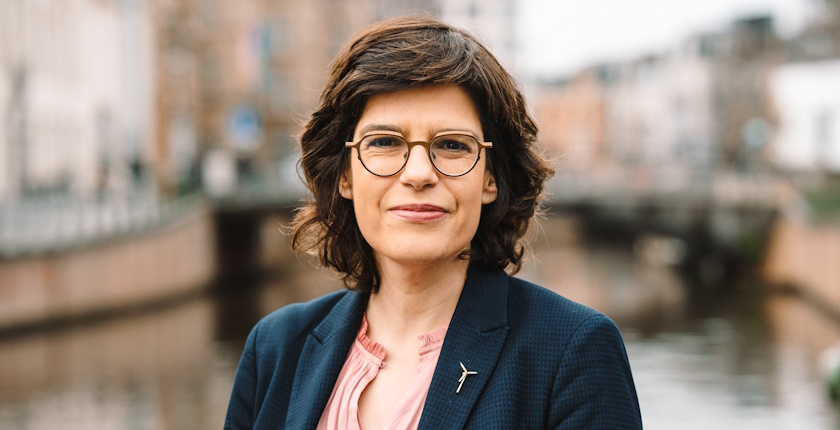
WindEurope’s new Chief Executive Officer Tinne Van der Straeten, member of the Chamber of Representatives of the Federal Parliament of Belgium and the country’s former minister of energy, will assume office on February 2. She is replacing Giles Dickson. The EU added 13 GW of wind capacity in 2025, less than half of what it requires.

WindEurope appointed Tinne Van der Straeten as its new CEO, effective on February 2. The organization pointed out that Belgium’s former minister of energy, from 2020 to 2025, is taking the helm at a critical time for Europe’s energy security, industrial competitiveness and climate commitments.

Tinne Van der Straeten oversaw Belgium’s wind energy expansion, including a broad consensus on Belgium’s response to the energy crisis in 2022, the announcement adds. She chaired the North Seas Energy Cooperation in 2020 and at the start of 2025 and the European Energy Council in 2024, and vice-chaired the ministerial meeting of the International Energy Agency (IEA) in 2022.

Most recently, the former minister served as a member of the Chamber of Representatives of the Federal Parliament of Belgium. She is a member of the Flemish Green Party – Groen.

Wind energy is central to Europe’s energy independence

Van der Straeten said she would take on her new responsibility with determination at a defining moment for Europe.

“Wind energy is central to Europe’s energy independence, industrial competitiveness and climate ambitions. Wind is a home-grown and scalable technology. It delivers affordable power, strengthens energy independence and sustains a competitive industrial base with high-quality jobs across Europe,” the incoming chief said.

Former CEO Giles Dickson served ten years

WindEurope’s Chairman Henrik Andersen praised Tinne Van der Straeten for passionately ensuring wind was kept high on the political agenda in her home country of Belgium and across the European Union.

“She has collaborated across industry and government to shape energy policy and build positive long-term investment frameworks that enable sustainable wind deployment. I look forward to working with Tinne as she leads WindEurope forward and supports Europe’s journey to a more competitive, homegrown energy system together with its members,” he stated.

The WindEurope Board thanked former CEO Giles Dickson for his 10 years of leadership and contribution to Europe’s wind industry.

Affordability, competitiveness, security

Van der Straeten will focus on ensuring Europe gets the most from wind to deliver affordability, industrial competitiveness and energy security, the organization said.

Faced with mounting geopolitical challenges, the continent must shake its dependence on imported fossil fuels, WindEurope stressed.

“Wind is uniquely placed to deliver that. A renewables-based energy system, with wind at its core, will save Europe up to EUR 1.6 trillion, even when counting the grid and backup costs. To reap these benefits, Europe must deliver on the Clean Industrial Deal, accelerate the buildout of homegrown and competitive renewables and ramp up the electrification of its economy,” the update reads.

Today wind energy generates 20% of all electricity consumed in Europe. With the right policies, the level will rise to 34% by 2030 and more than 50% by 2050, WindEurope estimated.

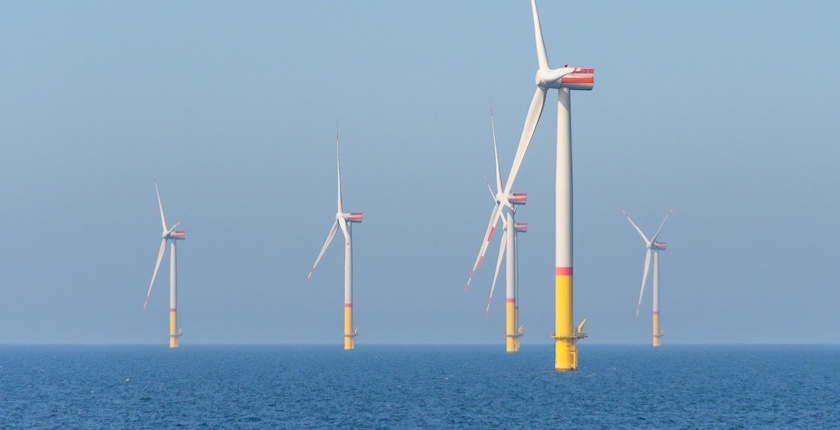
The EU installed 13 GW of new capacity in 2025. It is less than half of what Europe needs to deliver its 2030 energy security and climate targets.

“The wind sector is at a turning point. The industry is ready to accelerate and to provide more than 600,000 jobs by 2030. But it is held back by permitting issues and infrastructure delays,” said Tinne Van der Straeten.

by in News

Belgium’s former Ministry of Energy Tinne Van der Straeten to become CEO of WindEurope next month

WindEurope’s new Chief Executive Officer Tinne Van der Straeten, member of the Chamber of Representatives of the Federal Parliament of Belgium and the country’s former minister of energy, will assume office on February 2. She is replacing Giles Dickson. The EU added 13 GW of wind capacity in 2025, less than half of what it requires.

WindEurope appointed Tinne Van der Straeten as its new CEO, effective on February 2. The organization pointed out that Belgium’s former minister of energy, from 2020 to 2025, is taking the helm at a critical time for Europe’s energy security, industrial competitiveness and climate commitments.

Tinne Van der Straeten oversaw Belgium’s wind energy expansion, including a broad consensus on Belgium’s response to the energy crisis in 2022, the announcement adds. She chaired the North Seas Energy Cooperation in 2020 and at the start of 2025 and the European Energy Council in 2024, and vice-chaired the ministerial meeting of the International Energy Agency (IEA) in 2022.

Most recently, the former minister served as a member of the Chamber of Representatives of the Federal Parliament of Belgium. She is a member of the Flemish Green Party – Groen.

Wind energy is central to Europe’s energy independence

Van der Straeten said she would take on her new responsibility with determination at a defining moment for Europe.

“Wind energy is central to Europe’s energy independence, industrial competitiveness and climate ambitions. Wind is a home-grown and scalable technology. It delivers affordable power, strengthens energy independence and sustains a competitive industrial base with high-quality jobs across Europe,” the incoming chief said.

Former CEO Giles Dickson served ten years

WindEurope’s Chairman Henrik Andersen praised Tinne Van der Straeten for passionately ensuring wind was kept high on the political agenda in her home country of Belgium and across the European Union.

“She has collaborated across industry and government to shape energy policy and build positive long-term investment frameworks that enable sustainable wind deployment. I look forward to working with Tinne as she leads WindEurope forward and supports Europe’s journey to a more competitive, homegrown energy system together with its members,” he stated.

The WindEurope Board thanked former CEO Giles Dickson for his 10 years of leadership and contribution to Europe’s wind industry.

Affordability, competitiveness, security

Van der Straeten will focus on ensuring Europe gets the most from wind to deliver affordability, industrial competitiveness and energy security, the organization said.

Faced with mounting geopolitical challenges, the continent must shake its dependence on imported fossil fuels, WindEurope stressed.

“Wind is uniquely placed to deliver that. A renewables-based energy system, with wind at its core, will save Europe up to EUR 1.6 trillion, even when counting the grid and backup costs. To reap these benefits, Europe must deliver on the Clean Industrial Deal, accelerate the buildout of homegrown and competitive renewables and ramp up the electrification of its economy,” the update reads.

Today wind energy generates 20% of all electricity consumed in Europe. With the right policies, the level will rise to 34% by 2030 and more than 50% by 2050, WindEurope estimated.

The EU installed 13 GW of new capacity in 2025. It is less than half of what Europe needs to deliver its 2030 energy security and climate targets.

“The wind sector is at a turning point. The industry is ready to accelerate and to provide more than 600,000 jobs by 2030. But it is held back by permitting issues and infrastructure delays,” said Tinne Van der Straeten.
by in News

Europe’s wind installations in H1 2025 insufficient to meet EU’s 2030 targets – WindEurope

Europe installed 6.8 GW of new wind farms in the first six months of the year. According to WindEurope, it isn’t nearly enough to deliver the EU’s 2030 energy security and climate targets.

WindEurope has also reduced the 2025 outlook for wind investments. In its latest wind energy data for Europe, the organization highlighted the increase in turbine orders and investments as positive signals.

Out of 6.8 GW of new wind, 5.3 GW was in the European Union, and 89% was onshore wind. Europe now has a total of 291 GW of wind capacity – 254 GW on land and 37 GW at sea, according to the data.

In the first half of 2024, Europe installed 6.4 GW. To achieve the 2030 targets, the EU needs to install about 30 GW of wind power every year.

Germany is by far the most successful country in Europe. It is set to install 5 GW of onshore wind this year, nearly three times as much as it has been building over the last five years. WindEurope attributed the success to the fact that the country was the first to rigorously implement the EU’s excellent new permitting rules.

Germany permitted a record 15 GW of new onshore wind farms in 2024 and is on track to beat that in 2025, with 8 GW of onshore wind permits granted in the first half of 2025, the report revealed.

While on average German authorities grant permits within 18 months, none of the other 26 EU countries permits new wind farms within the REDIII deadline of 24 months. WindEurope highlighted slow expansion of electricity grids, stagnating efforts to electrify Europe’s economy, and suboptimal auction design as key obstacles for faster wind deployment.

Dickson: Governments must get their act together on wind energy

WindEurope CEO Giles Dickson said that governments must get their act together on wind energy.

“Wind is competitive – it brings down electricity costs for citizens and businesses. Wind is secure – home-grown wind turbines reduce costly and dangerous dependencies on fossil fuel imports. And wind is good for the economy – it creates jobs and tax income. Around 400,000 people in Europe work in wind already, and each new wind turbine contributes €16m to Europe’s GDP. But Governments are still failing to get wind permitted and built fast enough,” Dickson noted.

The organization stressed that Europe will build less new wind capacity in 2025 than it previously expected. At the start of the year, WindEurope estimated new wind installations at 22.5 GW, and now at 19 GW. The forecast for the EU is lowered from 17 GW to 14.5 GW.

It expects the EU to have 344 GW of wind energy capacity by 2030, compared to the 2030 target of 425 GW.

Two bright spots

Two bright spots are wind turbine orders and investments in new wind farms. Europe took EUR 34 billion worth of final investment decisions (FIDs) in new wind farms with a total capacity of 14 GW in the first half of 2025. It represented more than the total FIDs in 2024.

The majority of investments are for offshore wind, with six new projects, three of which in Poland, including the country’s largest-ever private investment, according to WindEurope.

Wind turbine orders have increased 19% and reached 11.3 GW.

According to Dickson, less new wind is bad news for Europe’s wider competitiveness. Industry in Europe is craving cheap electricity to compete with China and the US, he stressed.

“But too many governments remain half-hearted in their expansion of wind. This is not only threatening the wind sector. It’s also jeopardizing jobs and growth more widely – in steel, chemicals, and ICT. Doing business in Europe is so much harder for them if the EU can’t deliver on its energy targets”, Dickson underlined.

by in News

WindEurope seeks next CEO as Giles Dickson to depart

Chief Executive Officer of WindEurope Giles Dickson has decided to step down after 10 years, to become a school teacher. The Board of Directors of WindEurope has initiated the process of finding his successor.

Giles Dickson has been instrumental in the expansion of wind energy in Europe – onshore and offshore – and played a key role in the development of Europe’s ambitious renewable energy plans, the organization said. The board established a nomination committee to find the new CEO. The current chief executive of WindEurope is remaining in his post throughout this process, until he steps down during the second half of 2025, the update adds.

“I’m incredibly proud of the progress wind energy has made in Europe in the past 10 years. I thank everyone at WindEurope for their engagement and support and the many people who have helped take wind energy forward during my tenure. Having spent most of my working life outside the UK, I look forward to going home and trying to put something back into the society I came from. But wind is a fantastic industry that it is a privilege to serve,” Giles Dickson said.

The number of jobs in the wind industry is expected to reach 600,000 in 2030

Chair of the Board of Directors Henrik Andersen praised the outgoing CEO for his contribution to WindEurope and the expansion of wind across the continent.

“It is a testament to Giles’ passion for and dedication to the energy transition that he will now help ensure a smooth succession and leave a stronger WindEurope than when he arrived. Europe is facing a generational challenge of becoming competitive and secure again, which wind energy plays a key role in, and I’m therefore very pleased we’ll have a wind energy champion like Giles to educate our future generations,” he stated.

Wind energy accounts for 20% of the electricity Europe consumes, and thanks to wind, the European Union avoids 100 billion cubic meters of fossil fuel imports, WindEurope pointed out.

The industry provides 370,000 jobs and the number is projected to reach 600,000 in 2030. The wind power sector contributes EUR 52 billion to Europe’s gross domestic product, the organization added. On average, each new wind turbine adds EUR 16 million to the European economy and the industry’s 250+ factories are all over Europe, including in economically-deprived regions, it stressed.