by in News

Croatia discovers series of geothermal sources suitable for heating

The results of exploration at the Vinkovci GT-1 well have confirmed the area’s significant geothermal potential, Croatian Hydrocarbon Agency said. Maximum temperature is 131 degrees Celsius.

Vinkovci is the third location in Croatia with positive results, as reservoir temperatures exceeding 100 degrees were earlier confirmed in Velika Gorica and Osijek, Croatian Hydrocarbon Agency revealed. The activities are part of a wider project to develop geothermal potential for district heating for six cities and towns.

“The positive findings of the geothermal exploration in Vinkovci, after Velika Gorica and Osijek, are proof that Croatia has significant geothermal potential and the knowledge to use it. Croatian Hydrocarbon Agency is bringing concrete results through its systematic approach and exploration investment, creating the foundations for further projects for renewable energy sources. Namely, geothermal energy is not only a stable and clean source, but a strategic resource that can contribute to the security of energy supply in Croatia. The results show at the same time that Croatian experts can independently and effectively conduct complex energy projects,” President of the Management Board Marijan Krpan said.

Success at 2,700 meters below ground

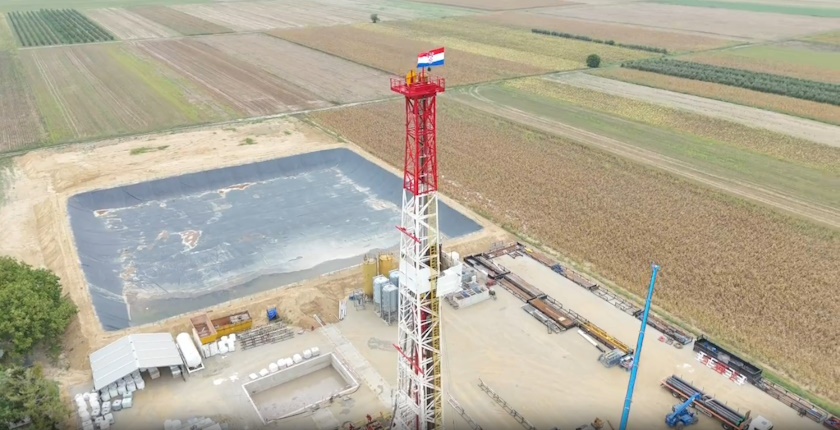
Crosco naftni servisi (Crosco Integrated Drilling and Well Services), a member of INA Group, ois conducting the works. At a depth of 2,700 meters in the Vinkovci GT-1 exploratory well, an expert team has measured a maximum temperature, 131 degrees, pointing to the possibility of commercial application of geothermal energy in the heating system.

The location is in Croatia’s northeast, in Slavonia area.

“The exploration in Vinkovci has been conducted in line with the highest technical standards and the project’s planned dynamic. Upon the completion of the exploration at the remaining location, in Zaprešić, Croatian Hydrocarbon Agency plans the development of additional wells at sites with confirmed potential. That way we will establish the production-injection pairs required for a secure and long-term geothermal energy use,” the geothermal energy sector’s Director Martina Tuschl stated.

Opportunity for improving local agriculture

Except for heating, access to heat opens up possibilities for companies. Geothermal potential could be used in agricultural production in the municipality of Jarmine, where the exploratory well is located.

The agency is conducting the project with funding from the National Recovery and Resilience Plan (NRRP or, in Croatian, NPOO), within which EUR 50.8 million was secured for exploration in four locations: in Velika Gorica, Osijek, Vinkovci and Zaprešić.

Works at the Zaprešić GT-1 (ZapGT-1) site are underway.
by in News

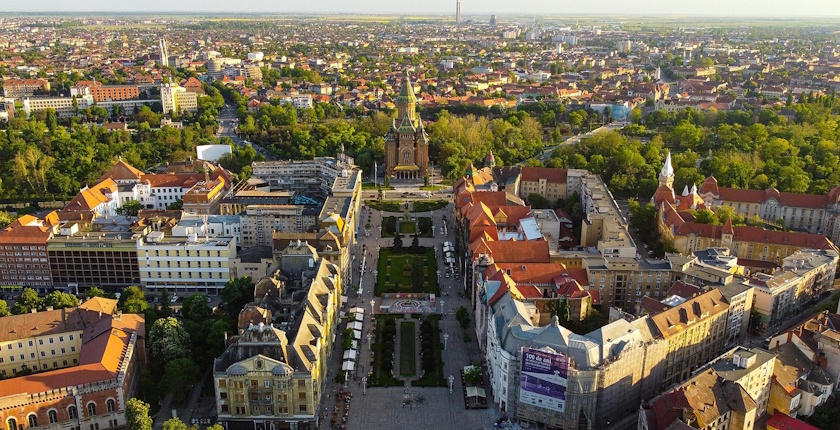
Romanian city of Timișoara nearing construction of its own solar park

Romania is experiencing strong growth in photovoltaic capacity, with 1.7 GW installed in 2024 alone. Local authorities are actively contributing to the energy transition. They include Timișoara, which will soon get its own solar power plant, of 5.6 MW.

According to data from the Romanian Photovoltaic Industry Association (RPIA), solar power plants with a total capacity of 1.7 GW were installed in Romania last year. The expansion is driven by accessible financing, legal reforms, simplified permitting procedures, and auctions for contracts for difference (CfD).

Local authorities, including counties, are one of the pillars of the country’s energy transition. For example, in the small town of Turceni in southwestern Romania, home to only about 7,000 residents, a EUR 380 million project was recently launched. The municipal authority signed an agreement with the European Investment Bank (EIB) for the construction of agrosolar parks, energy storage systems, and facilities for green hydrogen production and storage.

Timișoara is part of a growing group of local authorities developing solar power projects for their own needs

In northern Romania, the municipality of Târgu Lăpuș has established a public-private partnership with a company founded by Turkish and Romanian investors. The goal is to build a 200 MW solar power plant with an energy storage system. The investment is estimated at EUR 100 million.

Timișoara, the capital of Timiș county and the largest city in western Romania, has long been a part of the growing group of municipalities developing solar power projects for their own needs. Mayor Dominic Fritz and Minister of Environment Diana Buzoianu have signed a grant agreement for the construction of the city’s first solar park, of 5.6 MW, marking the start of the investment’s next phase.

The municipality will now launch the tender procedure for design and construction services. The solar power plant is expected to generate an average of 7.8 GWh of green energy annually.

Solar park to deliver direct benefits for the city

The total investment value is RON 32.2 million lei (EUR 6.3 million) including value-added tax. The project is conducted under the European Union’s Modernisation Fund, managed by the Ministry of Energy. The fund supports investments in renewable energy, energy efficiency, storage, grids, and just transition in 13 European Union member states with lower incomes. It uses the proceeds from the sale of greenhouse gas emission allowances under the EU Emissions Trading System (EU ETS).

“The solar park will bring direct benefits to the city – lower costs, reduced emissions, and more sustainable infrastructure. It is just one of the projects through which we are transforming Timișoara into a green and smart city, capable of producing a significant share of the energy it consumes from renewable sources,” said Fritz.

The solar power plant will cover two thirds of public lighting needs

PV panels will be installed near the wastewater treatment plant in the Freidorf district, on 20 hectares. The generated electricity will cover around two thirds of the city’s public lighting consumption. The facility would contribute to lowering greenhouse gas emissions with 4,800 tonnes of CO₂ equivalent annually.

The solar power plant is part of the local administration’s broader plan to switch to renewable energy sources and reduce pollution. Timișoara has also expressed interest in a state aid mechanism for the production and transport of geothermal energy for district heating and cooling systems, worth EUR 300 million, covered from the Modernisation Fund. Last year, the city signed a strategic partnership with OMV Petrom to utilize geothermal energy for district heating.

by in News

Romania’s coal town Turceni starts EUR 380 million green energy transformation

Turceni is dependent on the local coal power plant, so the municipal authority is turning to agrivoltaics, energy storage and green hydrogen to replace it. The small town in southwestern Romania is kickstarting a EUR 380 million project.

The coal plant in Turceni used to be one of the biggest in Europe, at 2.3 GW. Located next to the eponymous town in Romania’s Gorj coal region, only two units of 660 MW in total are still operational. At the same time, dozens of such facilities across Europe are shutting down ahead of schedule. The power plant and its associated mines within Complexul Energetic Turceni have been essential for the local economy, which is under threat of devastation amid the country’s coal phaseout.

As with other coal regions in the European Union, the solution is in green energy and new technologies. The town hall has signed a contract with the European Investment Bank for agrisolar parks, energy storage units and the production and storage of green hydrogen.

Turceni town hall secures municipal land for green energy projects

The project is worth a whopping EUR 380 million, Mayor Constantin Popescu revealed. Turceni and its administrative area have fewer than seven thousand inhabitants.

More than 123 hectares of municipal land (pastures) and more than 200 hectares of private land were designated for the renewable energy hub, the mayor stressed.

Bankwatch: The coal region is transitioning to a future based on innovation, sustainability and strong partnerships

Partners in the project are Bankwatch Romania and GAL Sudul Gorjului, the so-called local action group for southern Gorj. Bankwatch said over 370 hectares would be switched to clean and sustainable energy production.

“We are glad that we had an important role in developing the project plan and aligning it with European environmental policies, as well as in applying for technical assistance. For a region that has been, for decades, a pillar of coal-fired energy, this project marks a strategic transformation: a transition to a future based on innovation, sustainability and strong partnerships,” the organization added.

Investments to start in 2026

Implementation is scheduled to begin next year. The project will contribute to a just transition of the region by increasing the production of electricity from renewable energy sources, Popescu asserted. In his words, it will be complementary to the local authority’s other ongoing and future decarbonization investments.

The mayor also highlighted the plans to use geothermal energy for district heating and agriculture.

Complexul Energetic Turceni is part of state-owned Complexul Energetic Oltenia (CE Oltenia). According to the company’s restructuring and decarbonization plan, the coal business will be separated from green energy and other investments.

They include projects for CCGT (combined-cycle gas turbine) power plants of 475 MW in Turceni and 800 MW in nearby Ișalnița, as the main replacement for coal plants. Both are suffering heavy delays.

Minister of Energy Bogdan Ivan said last week that CE Oltenia’s Ișalnița coal plant in neighboring Dolj county would be closed on January 1. Romania has asked the European Commission to delay the closure of several coal plant units, scheduled for this year, until 2030.

Earlier this year, a joint venture between CE Oltenia and OMV Petrom hired contractors for four solar power plants at former coal land, with a combined capacity of about 550 MW. One of the sites is in Ișalnița.

by in News

Croatia identifies another city with geothermal potential for district heating

The testing of an exploratory well near the Croatian city of Osijek has confirmed the area’s geothermal potential, according to the Croatian Hydrocarbon Agency.

This marks the second successful completion of exploratory activities within a broader project aimed at developing geothermal potential for district heating in Croatia. At the end of June, good news came from an exploration site in Velika Gorica.

The exploratory activities in Osijek have cost an estimated EUR 8 million, with the funding secured from the National Recovery and Resilience Plan (NRRP).

Testing and measurements of the Osijek GT-1 (OsGT-1) well revealed a reservoir temperature exceeding 100 degrees Celsius, with an estimated thermal capacity of nearly 5 MW.

Temperatures are lower than in Velika Gorica

These results confirm that Osijek possesses significant geothermal resources with potential applications in district heating, agriculture, and the area’s economic development, according to the Croatian Hydrocarbon Agency.

“Geothermal energy is one of the most stable renewable energy sources, and our research confirmed the substantial potential of reservoirs in the Pannonian Basin and a strategic opportunity for achieving long-term supply security and decarbonization of the energy system,” stressed Marijan Krpan, president of the agency’s management board.

Exploratory activities continue in other locations

Due to local geological specifics and the shallower depth of the reservoir, temperatures in Osijek are lower than those in Velika Gorica. The agency noted that although the geological conditions and reservoir depths differ between Velika Gorica and Osijek, geothermal energy is flexible enough to be adapted to local needs and used efficiently and sustainably.

According to Osijek’s mayor, Ivan Radić, geothermal energy is becoming a locally available and sustainable heating source not only for Osijek residents but also for businesses.

Following Osijek and Velika Gorica, exploratory activities will continue in Vinkovci, and later in Zaprešić. After completing all exploratory activities, additional wells are planned at sites with confirmed geothermal potential.

In addition to the state-funded activities, private companies such as ENNA Geo are also engaged in geothermal research.

by in News

Romania preparing EUR 300 million in subsidies for geothermal heating, cooling

The Romanian Government has drafted a state aid mechanism for the production and transport of geothermal energy for district heating or cooling systems. The proposed scheme would be worth EUR 300 million, sourced from the European Union’s Modernisation Fund.

In addition to solar and wind energy, hydropower and battery energy storage systems, Romania is increasingly counting on geothermal potential for its energy transition and decarbonization efforts. The government in Bucharest is preparing EUR 300 million in subsidies for geothermal district heating or cooling systems, Profit.ro reported.

It drafted a state aid package that would be covered from the Modernisation Fund. It is a tool for supporting investments in renewables, energy efficiency, storage and networks and a just transition in 13 European Union member states with lower incomes. The funds are from the proceeds of the sales of greenhouse gas emission certificates within the EU Emissions Trading System (EU ETS).

The proposed subsidies are aimed at the production and transport of heat from geothermal energy, including modernization projects, to the points of connection with the district heating network, according to the document.

No need for auction as budget is sufficient for all mature projects

The budget would be divided into EUR 50 million per year through 2030. The funds are intended to cover the net additional costs of the projects – funding gaps. Typically, they are determined as the difference between the net present value of the factual scenario and the counterfactual scenario over the life of the project, the update reveals.

The government estimated that nine projects would split the available funds

There would be nine beneficiary projects, translating to EUR 33.3 million each, the government estimated. Eligible are thermal energy producers and municipal authorities and their units.

There won’t be a competitive bidding process for allocating the state aid, as the Ministry of Energy received too few mature proposals since 2023, within its exploratory public call, the document adds. The government has concluded the budget would cover the potential demand.

Bucharest, Timișoara among potential beneficiaries

State-owned Electrocentrale București (ELCEN), which produces thermal energy for the district heating system in the capital Bucharest, and National Company Bucharest Airports (CNAB), are among the entities interested in the subsidies.

Bucharest’s Sector 1 administrative authority and the Municipality of Timișoara are in the group as well. The latter, Romania’s fifth-largest city, established cooperation last year with OMV Petrom for district geothermal heating.

The article noted that Green Tech International, listed on the Bucharest Stock Exchange (BSE or BVB), is on the list. It operates geothermal wells in Călimănești-Căciulata in the country’s south. The company also supplies heat and sanitary hot water in Nădlac in Arad county in the northwest.

One other company interested in the state aid scheme is Transgex. The city of Oradea, where it is based, inaugurated an 18 MW geothermal district heating plant two months ago.

The government recently launched a EUR 56 million grant program for municipal authorities for geothermal energy projects.

In other relevant news from Southeastern Europe, Slovenia launched a EUR 51.2 million cofunding package for green district heating and cooling ten days ago, for companies and cooperatives.

by in News

Croatia confirms major geothermal resource for district heating

The Croatian Hydrocarbon Agency’s exploratory activities at a preliminary exploration site in Velika Gorica have confirmed significant geothermal potential. The output from this single geothermal well could meet nearly 60% of the thermal energy needs of the city’s district heating system, the agency said.

The recorded reservoir temperature exceeds 100 degrees Celsius, and the well’s capacity meets the projected targets in full, the agency stated. The exploratory activities in Velika Gorica are part of a wider project to develop geothermal potential for district heating in Croatia, covering six cities.

To fully realize the geothermal system’s potential for district heating in Velika Gorica, a second well is planned. This would create a so-called production-injection pair, allowing for the continuous and safe use of this natural resource, the agency said.

A second well is planned in Velika Gorica to fully utilize the geothermal potential

In addition to its application in district heating, the geothermal potential in the Velika Gorica area also holds promise for agricultural production, it added.

“This is one of the first concrete steps in the use of geothermal energy for heating in continental Croatia. The project is financed through the National Recovery and Resilience Plan (NRRP), and the works were carried out by CROSCO, a member of the INA Group,” the agency said.

The project to explore the geothermal potential in six cities – Vinkovci, Vukovar, Osijek, Sisak, Zaprešić, and Velika Gorica – was launched earlier this year, with a total budget of EUR 50 million. The agency plans to complete the project and determine the geothermal energy potential for all six cities by June next year.

by in News

Romanian town Beiuș to boost geothermal distring heating to 100%

The local authority in Beiuș, a trailblazer in geothermal district heating in Romania, should apply for European funding to cover the entire area, according to a new study. The town already has the cheapest energy in the country.

Beiuș is the only town in Romania where geothermal energy accounts for more than 70% of the district heating of homes, institutions and firms. A new technical study is opening the way to a system upgrade by using European grants, state news agency Agerpres reported.

The project was funded by Innovation Norway, a state-owned development bank based in Oslo. Mayor of Beiuș Gabriel Popa said at a presentation marking its completion that his municipality aims to achieve 100% coverage. Iceland managed the endeavor and a company from the island country conducted the study on the geology of the local geothermal water reservoir.

The research covered possibilities to prevent losses in the geothermal district heating system. Beiuș, in Bihor county in northwestern Romania, has just under 10,000 inhabitants.

According to the authors, European development programs are accessible. A new guide is under public consultation.

Dozens of local authorities including capital Bucharest are developing geothermal heating projects.

EEA funding available to get full coverage

The speakers at the conference presented prospects for development using subsidies from the European Economic Area (EEA). The region consists of European Union member states and Iceland, Liechtenstein and Norway.

Engineer Horia Ban said heat pumps could save 30% to 50% of the energy of the water returned from the geothermal district heating system. He is the head of the Oradea-based SRG association, which promotes heat pump solutions for geothermal heating, ventilation and air conditioning (HVAC), and of local renewable energy company Termoline.

The European Commission and European Geothermal Energy Council (EGEC) funded complementary research into air conditioning from geothermal wastewater.

Agriculture can tap water from geothermal district heating system in Beiuș

To lower the losses, the study’s authors recommend insulated PE-Xa pipes and directing the exit flow from the geothermal district heating system to greenhouses, wood dryers and fish farms.

Transgex, based in the county’s capital Oradea, supplies the geothermal water in Beiuș. The reservoir was discovered in 1996 at a depth of 2.6 kilometers. The temperature is 85 degrees Celsius.

The prefeasibility study was funded in 2017 in partnership with Iceland, through EEA Grants. Beiuș is now a town with the cheapest energy in Romania, the article adds.

An EU project worth EUR 33.6 million began a year ago for the construction of an aquapark. It envisages a facility with eight outdoor pools of 6,691 square meters overall in Beiuș. The grant amounts to EUR 12.5 million.

Looking at entire Southeastern Europe, Turkey sticks out as one of the main global players in geothermal energy including power plants, a more complex technology. The potential in Romania and Greece is among the highest in the EU. Bulgaria is also working with EEA funds. Serbia only has small projects for now.

Croatia hosts one geothermal power plant, though is currently offline due to an ownership dispute. Numerous municipal and private projects are underway.

by in News

Germany looks into underground heat storage to decarbonize heating

Germany is increasingly looking into geothermal energy storage as a way of decarbonizing its heating sector. The technology allows storing heated water in underground caverns and using it for warming homes and public and private buildings during winter, according to a report by Clean Energy Wire.

This thermal energy storage system, called Geotes, promises “the almost universal availability of cheap and practically inexhaustible storage capacities,” according to Peter Ruschhaupt from the think tank Future Cleantech Architects (FCA), German business daily Handelsblatt reported.

The process involves heating water and injecting it into underground caverns, where heat can be retained for months by the surrounding rock. The warm water can then be pumped back to the surface and used for district heating.

Heat can be retained underground for months

The cost of drilling is the main challenge in ensuring that the process is economically viable, but once the caverns are ready, the technology can be very cost effective, as heat can be stored for an entire season, according to Ruschhaupt.

Such systems already exist in northern Europe

One such research project is currently underway in former coal mines in Germany’s Ruhr valley, the daily wrote. In the Netherlands and Scandinavia, “there are already thousands of Geotes systems,” said Ruschhaupt.

According to the German geothermal association, geothermal energy could cover 40% of the country’s heating needs, Clean Energy Wire wrote, noting that Germany is seeking to phase out fossil-run heating boilers and requiring cities to prepare municipal heat plans by mid-2028 at the latest.

In Serbia, the district heating company in Novi Sad is developing a thermal energy storage project, as part of an innovative hybrid system that would combine solar collectors, seasonal thermal storage, and heat pumps. The investment is aimed at decarbonizing the Serbian city’s district heating and helping balance the power system.