by in News

Albania Establishes Joint Task Force to Monitor Hydrocarbon Sector and Prevent Fuel Price hikes.

Albania’s General Directorate of Taxation and General Directorate of Customs are establishing a joint Task Force specifically designed to monitor the downstream hydrocarbon sector and prevent abusive fuel price increases.

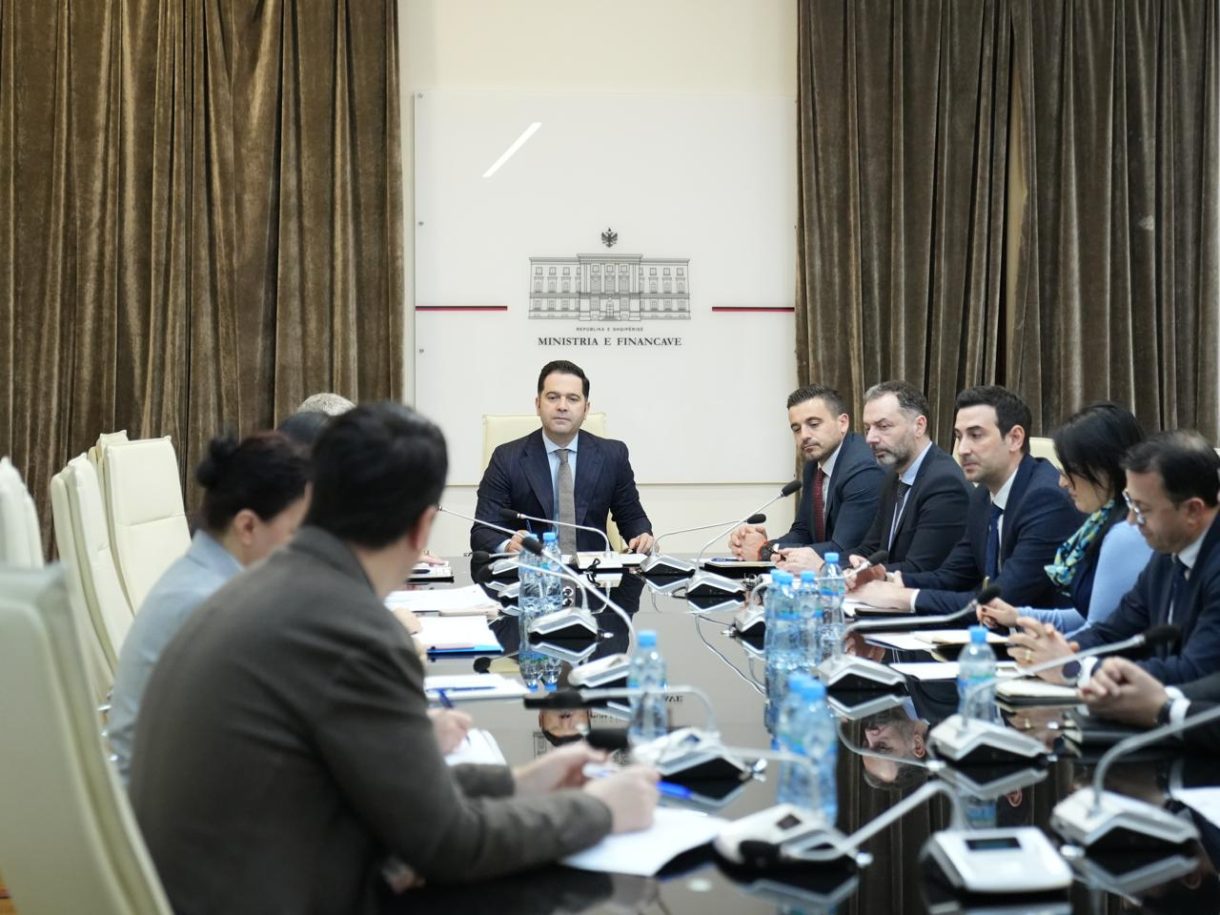
Minister of Finance Petrit Malaj, during a recent summit with General Director of Taxation Ilir Binaj and General Director of Customs Besmir Beja, finalized an operational roadmap to launch this inter-agency initiative.

The Task Force is mandated to tighten tax and customs oversight and improve enforcement efficiency across both the wholesale and retail hydrocarbon markets. The primary objective is to shield Albanian consumers from unjustified, speculative fuel price hikes. Minister Malaj emphasized that this operational strategy is a direct response to recent geopolitical developments driving volatility in global energy markets.

“We initiated this operational group prompted by the recent conflict involving Iran, the US, and Israel, which has directly impacted global hydrocarbon prices,” Malaj stated. “Both institutions will rigorously monitor pricing to prevent any exploitative hikes within the wholesale and retail trade sectors.”

Key Operational Measures

The agencies have agreed on a comprehensive enforcement framework, which includes:

  • Operator Risk Assessments: Conducting targeted evaluations of market players to identify high-risk entities.

  • Market Intelligence: Gathering field data regarding potential market abuses and speculative pricing.

  • Physical and Desk Audits: Expanding enforcement beyond the routine review of tax and customs documentation to include physical inspections of fuel volumes at wholesale depots and retail stations.

Inter-Agency Coordination and Long-Term Goals

Minister Malaj reiterated the Ministry of Finance’s commitment to robust tax and customs administration in the public interest. Besmir Beja, General Director of Customs, confirmed that the inspections will be executed nationwide, explicitly targeting entities flagged during the risk assessment phase.

According to Beja, joint inspection units will ensure all market activity strictly complies with regulatory frameworks. This includes verifying that every transaction is fiscally recorded and that all distributed fuel satisfies statutory customs and tax obligations.

Ilir Binaj, General Director of Taxation, noted that the respective agencies have fully coordinated the operational plan and commenced preliminary risk analyses. He highlighted that intelligence gathered from previous enforcement operations has been instrumental in pinpointing specific vulnerabilities within the sector. The ultimate objective is to sustain this joint operation over the long term to drive comprehensive market formalization and ensure the orderly functioning of Albania’s domestic hydrocarbon market.

by in News

Greece Fast-tracks Strategic Hydrocarbon Agreements with Chevron and HelleniQ Energy

The Hellenic Parliament is set to ratify a series of landmark energy concessions this week, signaling Greece’s most decisive move in decades to unlock the hydrocarbon potential of the Eastern Mediterranean. The legislation authorizes exploration and exploitation contracts for high-prospect offshore blocks located south of Crete and the Peloponnese.

Designated by government officials as a “national priority” for energy security, the bills cleared their final committee review early this week. A plenary vote is scheduled for Thursday, which would formally greenlight a partnership between the Greek state and a powerful consortium led by global major Chevron and national champion HelleniQ Energy.

A Strategic Buffer Against Volatility

During a briefing before the Production and Trade Committee, Minister of Environment and Energy Stavros Papastavrou framed the development of domestic resources as a critical sovereign endeavor. In an era defined by regional energy instability, Papastavrou characterized the initiative as a “national affair” essential for long-term strategic autonomy.

The contractual framework is structured to insulate the Greek taxpayer from financial exposure:

  • Zero Public Risk: Private consortiums will bear 100% of the capital expenditure during the high-risk exploration phase.

  • State Revenue Sharing: If commercially viable deposits are discovered, the state is positioned to retain the vast majority of the economic benefits.

  • Technical Sovereignty: The projects represent the culmination of a 12-year national effort to map and tender Greece’s maritime wealth.

Technical Optimism Meets Industry Caution

Aristophanes Stefatos, CEO of the Hellenic Hydrocarbons Management Company (HEREMA), underscored that the state incurs no expenditure if exploration fails, while Anastasios Vlassopoulos, representing the Chevron-HelleniQ partnership, assured lawmakers that state-of-the-art seismic evaluations would maximize the chances of a successful find.

However, the ambitious timeline has drawn some scrutiny from industry experts. Konstantinos Stambolis, Executive Director of the Institute of Energy for Southeast Europe (IENE), welcomed the legislation but noted a potential regulatory gap. Stambolis raised concerns regarding the absence of mandatory drilling timelines within the current text, suggesting that stricter windows for physical exploration would better ensure rapid development.

Regional Implications

The ratification comes at a pivotal moment for European energy policy. As the continent continues to diversify away from Russian gas, Greece is positioning itself as a vital energy gateway for the Balkan corridor. Success in these offshore blocks could transform Greece from a transit hub into a significant primary producer, fundamentally altering the energy architecture of South East Europe.

by in News

The Double Squeeze: Europe’s Energy Sovereignty in the Shadow of Two Fronts

The European energy landscape has reached a critical inflection point as of early March 2026, characterized by the simultaneous escalation of two major geopolitical crises that threaten the continent’s industrial foundation and long-term energy security. The recent outbreak of direct hostilities between the United States, Israel, and Iran has fundamentally altered the global energy calculus, compounding the existing stresses of the prolonged Russia-Ukraine conflict. As an expert observer of these markets, it is evident that Europe is no longer just managing a transition away from Russian fossil fuels; it is now navigating a systemic “supply-chain fragmentation” that challenges its strategic autonomy on every front.

The most immediate and destabilizing factor is the conflict in the Middle East, which has seen the effective closure of the Strait of Hormuz following retaliatory strikes and the reported death of the Iranian Supreme Leader. This maritime blockade has paralyzed nearly 20% of the world’s liquefied natural gas (LNG) and oil supplies, with Qatar—a cornerstone of Europe’s post-2022 diversification strategy—forced to halt its production entirely. The market reaction has been swift and severe, with European gas futures surging by approximately 50% in the final week of February and early March. While the European Commission and industry leaders like Statkraft’s CEO Birgitte Vartdal have noted that Europe has fortunately passed the peak of winter heating demand, the physical security of supply is less of a concern today than the economic reality of the coming months. The real danger lies in the summer injection season; without Qatari and Persian Gulf volumes, analysts warn that European storage levels may only reach 70-75% by next winter, far short of the 90% mandate. This structural deficit ensures that any future cold spell will translate directly into extreme price volatility and potential industrial demand destruction.

Russian President Vladimir Putin has moved quickly to weaponize this Middle Eastern instability, framing the global price surge as a consequence of Western aggression and “erroneous” European energy policies. In a calculated maneuver, Putin has signaled that Russia is considering an early halt to its remaining gas exports to Europe, citing “commercial reasons” and the EU’s own plans to phase out Russian pipeline gas by 2027. By suggesting that it is more profitable to redirect these volumes to emerging Asian markets now, Moscow is attempting to pre-emptively sever the final energy ties with the West on its own terms. Furthermore, the Kremlin has heightened the sense of insecurity by alleging Ukrainian-backed plots to sabotage the TurkStream and Blue Stream pipelines, which remain vital for energy flows into Southern Europe and Türkiye. This rhetoric serves a dual purpose: it pressures European nations to reconsider their support for Ukraine while simultaneously driving up the risk premiums that domestic industries must pay for energy.

The European response has shifted toward a more aggressive form of “strategic autonomy,” as seen in the launch of the European Industrial Maritime Strategy and the EU Ports Strategy on March 4, 2026. These initiatives represent a belated recognition that energy security is inseparable from maritime and industrial sovereignty. By prioritizing the “Made in Europe” provision and focusing on high-tech shipbuilding and offshore wind support, the EU is attempting to build an infrastructure that can withstand the decoupling of global trade routes. However, as trade unions and industrial groups have pointed out, these long-term structural changes do little to mitigate the immediate “price shock.” The reliance on the spot market to replace lost Middle Eastern and Russian volumes has left European utilities competing with Asian buyers at record-high premiums, a situation that Statkraft warns will erode the competitiveness of energy-intensive sectors like chemicals and steel.

Ultimately, the confluence of the Iran crisis and the Russia-Ukraine war has exposed the fragility of Europe’s “bridge” strategy, which relied on replacing Russian pipeline gas with global LNG. The current paralysis of the Strait of Hormuz demonstrates that LNG is not a risk-free alternative but is instead subject to the same geopolitical vulnerabilities as pipelines, albeit across different geographic chokepoints. For Europe, the path forward is increasingly narrow: it must accelerate its demand-side response and the deployment of renewables while simultaneously bracing for a prolonged period of high inflation and supply-chain uncertainty. The coming year will likely be defined by a shift from “just-in-time” energy procurement to a “security-first” model, where the cost of resilience is high, but the cost of continued dependence is now proving to be unsustainable.