by in News

Project pipeline in Greece for CO2 capture, storage nearing EUR 4 billion

Carbon capture and storage projects worth as much as EUR 3.6 billion are under development in Greece. Energean’s subsidiary EnEarth has launched a tender for drilling two wells for the Prinos site under the Aegean Sea, while DESFA won a EUR 169 million EU grant for a carbon dioxide liquefaction unit.

Investors in Greece are counting on demand from the domestic industry for carbon capture and storage (CCS), so that it can remain competitive with regard to carbon dioxide emission costs. Euro2day calculated that the project pipeline is worth up to EUR 3.6 billion as the endeavors are clearing major milestones.

The time for drilling in Prinos is approaching. EnEarth, a subsidiary of Energean, is working on the establishment of the storage facility offshore Kavala. Earlier this month it launched a tender for drilling two wells.

The Prinos project is valued at EUR 1.2 billion

Works are scheduled to begin in the first half of next year. The project is worth EUR 1.2 billion, of which the firm secured EUR 270 million in funding from the European Union. It is waiting for environmental terms (AEPO) from the Ministry of Environment and Energy, as well as for the storage permit.

Notably, a draft law covering the sector is reportedly complete.

DESFA seeks contractor to drill two wells in Prinos

Another step ahead was achieved with a project for a pipeline that would transport CO2 from energy-intensive industrial facilities to a liquefaction system in Revithoussa. The endeavor is called ApolloCO2. Greece’s National Natural Gas System Operator (DESFA) won EUR 169.3 million through the European Union’s Innovation Fund for the terminal.

The system would include temporary storage and transport by ships to permanent storage. The budget amounts to EUR 700 million in the first phase, with another EUR 60 million envisaged for an expansion.

ApolloCO2 is in a group of 61 projects in the Innovation Fund’s latest round for net zero technology, worth EUR 2.9 billion in total.

DESFA is working on the investment with Ecolog, a subsidiary of GasLog.

EU funding three major carbon capture projects that would be connected with Prinos storage site

AppoloCO2 would bring CO2 from three capture facilities also funded by the EU. There is a possibility to involve overseas customers as well.

Cement maker Heracles, part of Holcim Group, is developing the Olympus project worth EUR 400 million in Milaki, Aliveri. Its competitor Titan has a EUR 584 million endeavor underway in Kamari, Boeotia (Viotia). It is called Ifestos.

DESFA has applied for EUR 30 million from Connecting Europe Facility for the CO2 pipeline

Motor Oil Hellas aims to install a unit in its Agioi Theodoroi oil refinery costing EUR 300 million to EUR 400 million. The project is called IRIS – Innovative low caRbon hydrogen and methanol productIon by large Scale carbon capture. It is for the construction and operation of a CCUS and e-methanol production system that would cut the refinery’s CO2 emissions by a quarter. CCUS stands for carbon capture, utilization and storage.

DESFA is seeking EUR 30 million from the EU’s Connecting Europe Facility (CEF) for a 35-kilometer CO2 pipeline. The first part would go from Ifestos and branch out to HELLENiQ Energy’s oil refinery in Elefsina (Eleusis). In subsequent phases, pipelines would reach Heracles’ Olympus, Metlen’s aluminum complex in Aspra Spitia, Thisvi in Boeotia (for GEK Terna’s Heron and HELLENiQ’s subsidiary Elpedison), and eventually Motor Oil’s IRIS.

As capacities grow, larger ships would be required to lower transportation costs. According to the article, three such vessels would cost EUR 240 million overall.
by in News

Race against time to secure EU funding for waste-to-energy plants in Greece

Hostile reactions from citizens and the opposition by municipal authorities threaten to derail Greece’s efforts to build six waste-to-energy plants. Moreover, time is running out to secure EUR 800 million in European funding.

The Ministry of Environment and Energy is expected to publish a call for waste-to-energy projects planned in Attica, Western Macedonia, Rodopi, Peloponnese, Boeotia (Viotia) and Crete. Total investment would amount to EUR 1 billion, for 1.19 million tons in capacity. However, time is running out to secure EUR 800 million in European funding set aside for them and the accompanying recycling plants.

Greece has been warned several times by the European Commission and fined for failing to fulfil its obligations in waste management. The country still relies mostly on landfills to handle municipal waste, instead of modern solutions. Ideally, useful materials should be sorted for recycling before the waste gets burned in incinerators to produce energy.

Two of the proposed units, the ones in Rodopi and Western Macedonia, are expected to provide district heating. The Ptolemaida 5 lignite-fired plant supplies district heating in the coal region of Western Macedonia in the country’s north, but it is scheduled to be decommissioned by 2028 at the latest.

Its owner, Public Power Corporation (PPC or DEI) aims to complete a waste-to-energy plant by then. Other prospective investors include GEK Terna, Metlen, Aktor and Motor Oil Hellas, all big players in the country’s energy market.

High fees and pollution worry municipalities

Many local authorities have expressed their objections to hosting these plants, fearing a rise in municipal fees and pollution. A discussion is underway in numerous municipal councils. They could lodge appeals to the Supreme Court and delay the process.

Amanatidis: Cancel all waste-to-energy plans

The regional council of Western Macedonia recently voted overwhelmingly to reject the plan for PPC’s planned unit from the ministry’s strategic environmental assessment (SEA). Governor Giorgos Amanatidis called on the government to withdraw the study and cancel the project. Municipalities in the same region and other institutions are also against an incinerator.

European funding through the National Strategic Reference Framework (NSRF) ends in 2027. The government and investors have until mid-2026 for implementation, Newmoney reported, adding that waste-to-energy projects take two to three years to complete.

Recently, another initiative, the Apollo program, for investments in renewable energy to lower energy costs for vulnerable consumers, lost EUR 100 million from the EU’s Recovery and Resilience Facility (RRF).

by in News

Greece plans six waste-to-energy plants, set to meet EU landfilling limits

Large Greek companies, interested in the construction and operation of waste incinerators producing electricity and heat, are waiting for the government to complete the legal framework and launch tenders. Without the six planned facilities and accompanying infrastructure, the country would substantially lag behind the European Union’s targets for lowering the share of landfilled material.

Greece is transforming its waste management sector – dozens of units mechanically treating the material to feed six incinerators, covering all the regions. The Ministry of Environment and Energy is about to complete a strategic environmental assessment (SEA), after which its plan is to adopt a legal framework, before the end of the year.

Following a public consultation process, the general parameters would be determined including the details of a tender for the waste-to-energy plants. They are valued at EUR 1 billion in total. State-controlled Public Power Corp. (PPC or, in Greek, DEI) has expressed interest in entering the sector, alongside the conglomerates GEK Terna and Metlen, construction company Aktor, oil refinery operator Motor Oil and water, wastewater and waste processing operator Mesogeos.

The ministry intends to complete the competitive process in 2026, followed by a three-year construction period. The Greek media learned that public-private partnership is a favorable model for the investments.

At least two of six plants would provide district heating

In the central scenario, an incinerator in the Rhodope area would serve the wider region of East Macedonia and Thrace. One would be in Kozani, a coal region, for Central and Western Macedonia, Epirus, Thessaly and Corfu.

The government envisaged a unit in the Peloponnese to cover Western Greece, the Peloponnese peninsula itself and the Ionian Sea, excluding Corfu. One waste-to-energy plant is planned in Boeotia (Viotia), covering parts of Central Greece and the western part of Attica.

The waste incinerator in Kozani is likely to be built in the vicinity of Ptolemaida 5, Greece’s last coal power plant

In the same peninsula, where Athens is situated, a unit would also get shipments of waste from the north Aegean islands, one section of the Cyclades archipelago and the Dodecanese. An incineration plant in Heraklion (Iraklio) would be for Crete, Santorini, Karpathos and Rhodes.

The combined annual capacity of the six units is projected at 1.19 million tons. The largest ones are the Attica project (356,000 tons) and the Kozani plant (288,000 tons). The latter, which would probably be located near PPC’s Ptolemaida 5 coal power plant, is also seen providing up to 40% of the district heating needs in the area. The investment is valued at EUR 300 million.

Ptolemaida 5 is scheduled to be closed at the end of next year, marking the completion of Greece’s coal phaseout. The waste incinerator in Boeotia would provide district heating as well, the plan reads.

System for energy recovery clings on construction of mechanical treatment units, waste separation

On the logistics side, there are 13 waste treatment units in operation in Greece and 25 are under construction. The ministry expects all units to be complete by 2029, to feed the incinerators.

The capacity amounts to 1.45 million tons per year altogether, of which 651,000 tons of waste would be processed into solid recovered fuel (SRF), which is of higher quality. The energy-intensive industry would absorb 150,000 tons. The development of the treatment system requires substantial infrastructure including the selection of municipal waste selection at the source.

Up to 651,000 tons of SRF is expected to be produced per year in the waste treatment facilities

The estimated electricity production from 1.19 million tons of waste is 1.03 TWh, equivalent to 2% of the country’s total consumption. Notably, 57.5% of the projected output is considered renewable energy, in line with the portion of biodegradable waste.

In the study, the options to deploy pyrolysis or gasification technologies were rejected. The authors argued they are not viable in Europe. It left incineration as the only option to recover energy from waste.

If the incinerators aren’t built, but the energy-intensive industry receives the same amount of SRF, 22.7% of waste would be landfilled in 2030, projections showed. The European Union’s target is 10%. The share of landfilled waste rises to 29.2% in the same scenario.

by in News

Works beginning on North Macedonian side of gas interconnector with Greece

The North Macedonian section of the gas interconnector with Greece is expected to be completed by early 2027. The construction contract was signed by the Ministry of Energy, Mining and Mineral Resources, domestic contractor Rapid Build and the country’s gas transmission system operator Nomagas.

The construction of the gas pipeline connecting North Macedonia with Greece is set to begin in a month, according to officials. Land expropriation is 90% complete. The initial capacity of the interconnector would be 1.5 billion cubic meters per year, with a potential to double it. The works are expected to be completed within 22 months.

„With the signing of the contract for the construction of the Macedonian section of the gas interconnector with Greece, we are marking the beginning of the largest energy investment in North Macedonia in the last ten years. The interconnector is proof that when there is political will, regional trust, and professional dedication – the results are real and tangible,” said Minister of Energy, Mining and Mineral Resources Sanja Božinovska.

The contract was signed by the ministry, contractor Rapid bild, based in Kumanovo in North Macedonia, and the country’s gas transmission system operator Nomagas. The future pipeline would be able to carry both natural gas and hydrogen.

Repeated tender slashes price by EUR 12 million

The winning bid was EUR 59.9 million or EUR 12 million less than in the initial tender, which was annulled.

The project is worth over MKD 5.1 billion (EUR 82.9 million). It is financed by the European Investment Bank (EIB) and the European Bank for Reconstruction and Development (EBRD). It includes grants of EUR 2.5 million for technical assistance and another EUR 9.9 million via the Western Balkans Investment Framework (WBIF).

The project is financed by the EIB and EBRD

„This contract ensures diversification and access to a greater number of natural gas sources, enables economic development, progress and environmental protection, and contributes to the security of energy supply,” said Executive Director of Nomagas Muhamet Elmazi.

Gasification would significantly improve air quality, especially in areas where wood and fuel oil are currently used for heating.

Greek section of interconnector under construction since February

On the North Macedonian side, the interconnector route is 68 kilometers long, out of a total of 123 kilometers. It will run from Nea Mesimvria in Greece through Evzoni (Mačukovo) and Gevgelija at the border, to Negotino. The next phase involves building gas links from Gostivar to Kičevo (34 kilometers) and from Sveti Nikole to Veles (28 kilometers).

Greek company Terna began constructing its country’s section of the pipeline in February.

Nomagas and Greece’s National Natural Gas System Operator (DESFA) made their final investment decision a year and a half ago.

The companies leaned the investment on the project for the Alexandroupolis LNG Terminal. The liquefied natural gas facility in northeastern Greece was opened on October 1. However, due to a malfunction, it has been out of operation for more than three months. According to the latest update, gradual reactivation is expected to begin by the end of May.

by in News

Construction starting in second phase of giant PV plant in Peloponnese coal land

Terna won the contract for the construction of the second of the three parts of a 490 MW solar park in Megalopolis, on former lignite mines. Public Power Corp. – PPC Group said the third phase would begin next year.

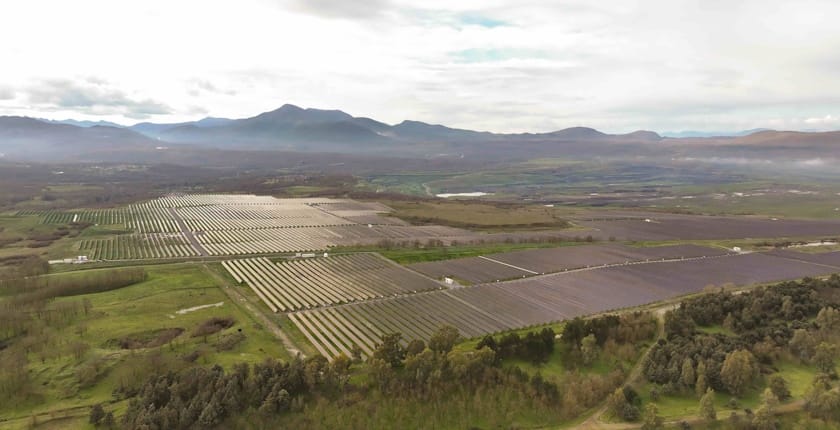
The second phase of the construction of a 490 MW photovoltaic plant in Megalopolis is beginning, transforming former lignite sites in the Peloponnese peninsula into a green energy hub. PPC Group’s subsidiary PPC Renewables signed an engineering, procurement and construction (EPC) contract for 125 MW on 49.4 hectares with Terna, part of the GEK Terna conglomerate.

The first phase, 125 MW, is under construction. PPC intends to complete it by the end of the year. It expects to begin building the third phase, 240 MW, in 2026.

Bifacial panels to be on fixed structures

The second part entails 215,000 bifacial solar panels on fixed structures. The facility would be connected to the Megalopoli Ultra High Voltage Substation via a new high voltage substation at the Neo Choremi site.

The entire 490 MW would generate an estimate 860 GWh per year, the announcement reads. It is equivalent to the electricity needs of 215,000 households. The projected output would prevent carbon dioxide emissions of 430,000 tons per year.

PPC already has a 50 MW photovoltaic plant in Megalopolis, the smaller of the two coal regions in Greece.

Replicating solar makeover from Western Macedonia

Deputy Chief Executive Officer of PPC Group and CEO of PPC Renewables Konstantinos Mavros compared the project in the Peloponnese to the ones in coal land in Western Macedonia in the country’s north. Just like in Ptolemaida, the Megalopoli photovoltaic plant is going to replace the the production of electricity from coal and ensure the historic continuity of the area’s role in energy supply, he pointed out.

The utility’s three-year strategic plan for the period through 2027 is to install 5.6 GW more from renewables in Greece and Southeastern Europe, reaching 11.8 GW in the segment. PPC said it is also looking to expand its portfolio with new technologies such as offshore wind power and floating photovoltaics, also known as floatovoltaics.

by in News

Project for first gas power plant in Albania enters next stage

In partnership with domestic company Gener 2, Greece-based GEK Terna and DEPA Commercial are preparing to build the first gas power plant in Albania. The current phase involves seeking financing. Separately, Azerbaijan’s SOCAR is expected to start installing the first gas distribution network in Albania, in the city of Korça.

Albania is almost 100% dependent on hydropower plants in domestic electricity production. Efforts are underway to diversify the mix with solar and wind energy and introduce storage capacities. Actually, not a single wind turbine has been built yet, but there is another opportunity for strengthening the energy supply: with gas from the Trans Adriatic Pipeline – TAP. Greek conglomerate GEK Terna and state-owned gas supplier, importer and trader DEPA Commercial intend to build the first gas power plant in Albania, with a local partner.

Late last year, the Council of Ministers, the country’s government, approved the project and determined a three-year deadline for completion. The site for the gas plant is in the municipality of Roskovec in Fier in western Albania. Notably, the county attracts most solar power projects in the country.

Gas facility in western Albania reportedly to have 147 MW in capacity

In the current project development phase, Fier Thermoelectric, the joint venture, is seeking financing, Insider.gr reported. The facility is envisaged to have 147 MW in capacity, according to the article. The government’s decision was for 170 MW.

DEPA Commercial, also known as DEPA Emporias (in Greek), DEPA Commerce and DEPA Trading, entered the project in 2023. It took over a 35% stake from GEK Terna and signed a seven-year gas supply contract for the proposed facility.

They have equal ownership, while Albanian company Gener 2 holds the remaining 30%. It is active in construction, infrastructure, civil works, energy, real estate development, telecommunications and retail in Albania and the broader region.

Both GEK Terna and Gener 2 have solar power projects in Albania as well

Gener 2 has submitted a 50 MW solar power project to the government a year ago. The location is in Bistrica in Finiq municipality, Vlora district.

The government’s approval is not for a concession, but the operator is obligated to either deliver 2% of electricity it produces, as royalty – royal right, or give an equivalent sum for the state budget. The permit is for 49 years since the entry of the decision into force. The firm also needs to sell a share of output to the public power supplier, in accordance with the country’s law.

A group of residents of surrounding villages has repeatedly protested against the investment, arguing that they weren’t consulted. The locals even filed a criminal complaint against Roskovec Mayor Majlinda Bufi.

They claim that the gas facility would pollute the area and jeopardize public health while exporting 90% of the produced electricity.

GEK Terna to benefit from synergies with its gas power plants in Greece

GEK Terna has three gas-fired power plants in Greece. The group’s other energy investment in Albania, through its subsidiary Heron, isn’t without controversy either.

The project is for a 93 MW photovoltaic plant in Libohova, near the Greek border, in Gjirokastër county. Project firm Faethon won approval from the Council of Ministers in Tirana in early 2024. It would be valid for up to 49 years.

GEK Terna’s solar power plant project in Gjirokastër was disrupted last year over fake documentation

Local press wrote last summer that some land documentation for the 122-hectare area was forged, prompting a raid and arrests in the cadastral office in Gjirokastër. The operator of the Libohova plant is obligated to deliver 2% of its electricity for free, too.

First gas distribution network in Albania about to be built in Korça

Albania aims to become a net electricity exporter before the end of the decade. There is also a project for a liquefied natural gas (LNG) terminal in the port city of Vlora, where a gas-fired power plant is planned to be built.

A long-awaited project called Nur, for the gasification of Korça, was presented last week. It would be the first city in Albania with gas.

The final investment decision is expected this year. State Oil Company of Azerbaijan (SOCAR) would be tasked with implementation, with financing from its government. The estimated cost is EUR 21 million. The idea is to then expand the local gas distribution network to nearby Pogradec and Erseka.

Fier and Elbasan are next on the schedule. Azerbaijan and its company are also interested in the project for the LNG terminal in Vlora and to connect the facility with TAP.

by in News

MORE puts 43.2 MW wind park in northern Greece into regular operation

Motor Oil Renewable Energy (MORE) received the operating license for its 43.2 MW wind power plant near the border with North Macedonia. The facility was in test operation since the fourth quarter of 2023.

MORE has 839 MW in renewable electricity plants in operation, aiming to reach 2 GW by 2030. There is already almost 3 GW in the project pipeline. The subsidiary of oil refiner Motor Oil Hellas recently received the operating license for its Kellas (Kella) wind park in Amyntaio in the Western Macedonia region.

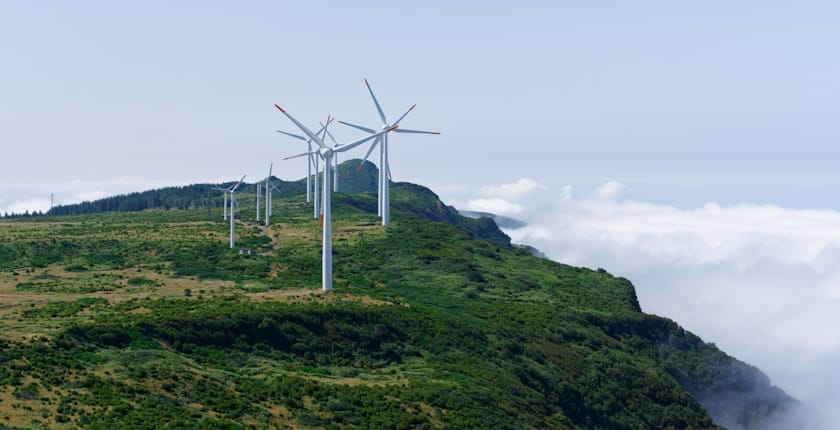
The facility was in test operation since the fourth quarter of 2023. It has 43.2 MW in nominal capacity, while the maximum is 40 MW. The wind power plant, consisting of nine Nordex N-149 turbines, is near the border with North Macedonia.

The parent company financed the endeavor by buying a EUR 41.3 million bond that a project firm issued. In 2023 it refinanced it with EUR 47 million. MORE said that it recently also completed a wind farm in Phocis (Fokida). The combined capacity with the one in Amyntaio is 65 MW.

Partnership with Terna Energy for Greece’s first offshore wind park

The renewable energy company is planning floating and conventional wind farms as well. Its joint venture with Masdar’s Terna Energy, called Aioliki Provata Traianoupoleos, is developing a 400 MW project for a site on the Ionian Sea between Alexandroupolis and the island of Samothrace. It would be Greece’s first offshore wind power plant.

MORE’s solar power joint venture with PPC Renewables, the green energy branch of government-controlled Public Power Corp., has received final connection offers earlier this month for 882.4 MW. Six locations, for 742.4 MW altogether, are in the Kozani region, a 92 MW project is in Kilkis and another one, of 48 MW, is in Serres, all in northern Greece.

The idea is to sell the electricity to the Greek industry through bilateral power purchase agreements (PPAs), as well as to support farmers participating in the GAIA program, with a special tariff.

The two renewable energy companies already have final connection offers for 300 MW and they expect another 311 MW soon. Separately, PPC and Motor Oil are planning a 50 MW hydrogen production facility, as Hellenic Hydrogen.

MORE invested over EUR 1.6 billion in past two years

MORE said it invested over EUR 1.6 billion in the past two years. It entered a partnership in 2024 in Romania with Premier Energy for solar power plants with storage. MORE’s battery projects are underway in Greece, too.

GEK Terna and Motor Oil have built an 877 MW gas power plant in Komotini, in the region of East Macedonia and Thrace. The facility is about to enter regular operation, Energypress reported.

by in News

Greece’s DEPA Commercial picks contractors for PV plants of 500 MW

Construction companies Terna and Aktor are about to start building a solar power plant of 400 MW in northern Greece and another 100 MW near Larissa, for state-owned DEPA Commercial, according to a new report. In its switch toward cleaner sources, the gas holding has also finished the construction of its biomethane plant.

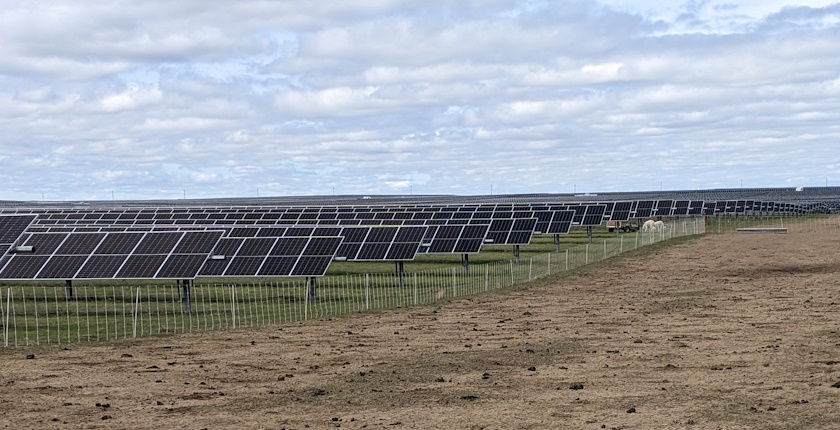
Greek state-controlled gas supplier, importer and trader DEPA Commercial has completed the tenders for photovoltaic parks of 500 MW overall, OT learned. The 400 MW facility in Kozani in the Western Macedonia province would currently be the largest in the country.

However, Lightsource bp, owned by BP, started the construction of a 560 MW solar park last summer in Central Greece and Thessaly. State-controlled Public Power Corp. (PPC or DEI) is about to finish a 550 MW photovoltaic facility in Ptolemaida, near Kozani.

DEPA Commercial is also known as DEPA Emporias (in Greek), DEPA Commerce and DEPA Trading. Both for the giant PV plant in northern Greece and another 100 MW in Farsala, Larissa, it selected the consortium of Terna, part of the GEK Terna conglomerate, and Ellaktor’s Aktor.

The turnkey deals are worth EUR 270 million in total

The turnkey agreements are worth a combined EUR 270 million. The company obtained a EUR 390 million loan in July from the European Investment Bank (EIB) for its photovoltaic projects. The portfolio amounted to 816 MW.

The projects, which are at various stages of maturity, are conducted under subsidiaries North Solar, North Solar 1 and New Spes Concept.

DEPA Commercial’s new move comes after the government bought a 35% stake from Helleniq Energy. The company is now fully owned by the Hellenic Republic Asset Development Fund (HRADF or TAIPED). The transaction was completed at the turn of the year, when the vehicle also integrated the so-called Superfund.

DEPA Commercial starts producing biomethane for its fuel stations

Within its energy transition efforts, the gas giant is entering biomethane production as well. DEPA Commercial said early this month that it produced Greece’s first quantities of the fuel.

The new pilot unit, Farma Hitas (Chitas) in Filippiada in the country’s west, makes 97% pure methane and compresses it. The bio-CNG goes to the company’s Fisikon gas stations, where it is mixed with natural (fossil) gas and sold as vehicle fuel.

Ownership stakes in Alexandroupolis gas complex, IGB pipeline

As for its conventional business operations, DEPA Commercial holds a 29% stake in special purpose firm Ilektroparagogi Alexandroupolis (Alexandroupolis Electricity Production). PPC is the majority partner, with 71%.

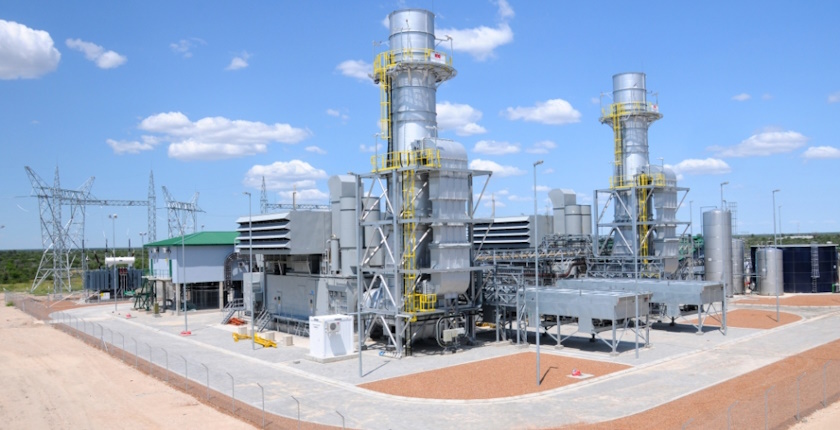
They are building a combined-cycle gas turbine (CCGT) of 840 MW. In addition, DEPA Commercial owns 20% of the Alexandroupolis LNG Terminal and 25% of ICGB, which operates the Interconnector Greece-Bulgaria (IGB) gas pipeline.

The company is participating in the Fier Thermoelectric project for a 174 MW gas power plant in Albania. DEPA Commercial intends to supply some of the renewable electricity that it generates to its wholly-owned subsidiary Fysiko Aerio – Hellenic Energy Co. The gas and electricity distributor has more than 530,000 customers.

Notably, DEPA Commercial already owns an aggregator license – FOSE, allowing it to trade in the wholesale power market on behalf of a group of producers.

by in News

Terna Energy to build solar power plant of 130 MW in Bulgaria

Terna Energy is developing a project for a 130 MW photovoltaic plant near Burgas in Bulgaria. The company, owned by Masdar, plans to connect it to the grid already by the end of next year. Recently it also reached landmark points in the development of wind power projects in Greece.

Abu Dhabi Future Energy Co. (Masdar), which has high ambitions for its expansion in Southeastern Europe, relies to a great extent on its recently acquired subsidiary Terna Energy. The Greek company revealed that it is preparing to install a 130 MW solar park near the village of Vratitsa in eastern Bulgaria.

The project in the municipality of Kameno in Burgas province includes design and procurement, as well as grid connection works including a new 33/110 kV substation. Terna Energy Group said it is targeting completion by the end of 2026.

As part of the strategic cooperation with the former parent company, GEK Terna, its construction arm Terna SA was selected as the contractor, the announcement reads.

Terna Energy operates two wind farms in Bulgaria, with 30 MW in overall capacity.

With its recent share purchases, Masdar boosted its stake in the Greek company to 97.6% from 87.9%. The green energy giant based in the United Arab Emirates acquired Terna Energy last year.

Wind power projects in Evia progressing

In other recent news, Terna Energy received operating licenses for four projects for a wind power complex. The sites are in Karystos in Greece’s second largest island – Evia, also known as Euboea. It is one of the country’s wind power hubs and an important area for the company.

The Terna Energy Omalies subsidiary is responsible for the said investments, of 78 MW in total. They are part of an endeavor consisting of 11 wind farms.

The location for the biggest of the four, at 36 MW and with 12 turbines, is called Praro. The company ordered 3 MW machines from Enercon for all the sites. Molizeza 1 and Kalamaki 2 are for 18 MW each, and Kalamaki would have 6 MW.

Joint venture with MORE for Greece’s first offshore wind farm

Of note, the construction of wind parks in the Balkans has mostly slowed down. Moreover, Bulgaria has been at a standstill since the first wave of investments died down more than a decade ago, while Romania is struggling to pick up pace. Greece added only 125 MW last year.

Terna Energy is counting on opportunities in the offshore wind domain. In January, it joined forces with Greek refiner Motor Oil in the pilot project for the country’s first facility of the kind.

Motor Oil Renewable Energy (MORE) now holds 50% of joint venture Aioliki Provata Traianoupoleos. The project firm is tasked with developing a 400 MW offshore wind power plant on the Ionnian Sea between Alexandroupolis and the island of Samothrace. The two companies aim to complete it by the end of the decade.