by in News

Government of Serbia interested in taking over Plandište wind project

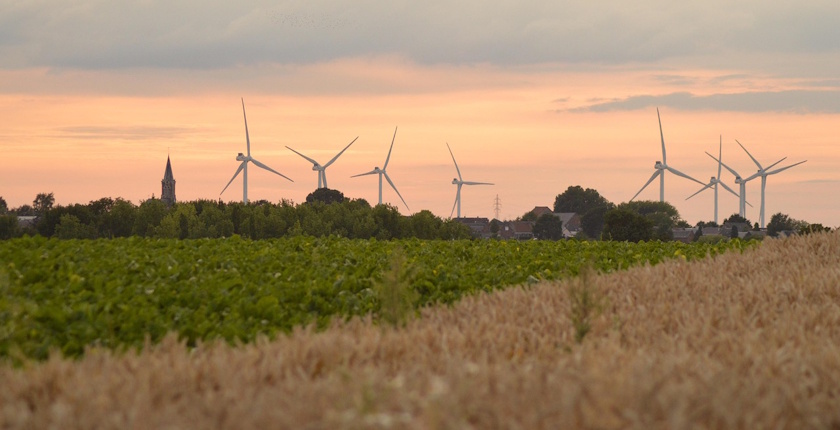
The Government of Serbia is interested in taking over the Plandište wind farm project from oil and gas company Naftna Industrija Srbije and renewable energy firm MET Renewables. They have been jointly developing the project for over ten years.

The Plandište project, with a capacity of 102 MW, was a topic at the latest meeting of the Board of Directors of Naftna Industrija Srbije (NIS), attended by Minister of Mining and Energy Dubravka Đedović Handanović and Chairman of Gazprom Neft’s Executive Board Alexander Dyukov.

Gazprom Neft holds a 44.85% share in NIS, while its parent company Gazprom has another 11.3%.

Alexey Urusov was elected as the new chairman of the NIS Board of Directors, while Dragutin Matanović was appointed vice chairman.

Serbia aims to increase its renewable energy capacity

During the meeting it was noted that there is interest by the state of Serbia in taking over the construction of the Plandište wind park together with Hungarian company MET, thereby increasing the capacities from renewable sources in line with the strategic energy transition goals, the ministry said.

It revealed no further details. The current owners of the project are NIS and Switzerland-based MET Renewables.

The Plandište wind farm was one of the projects that obtained feed-in tariffs from the ministry under the first quota of 500 MW for wind power plants in Serbia. All other projects, totaling 397 MW, have long been completed –  Čibuk 1, Kovačica, Košava 1, Alibunar, Kula, Malibunar, and La Piccolina.

The wind farm was initially scheduled for completion in 2014, then postponed to 2019

The project was originally owned by Energowind, a company founded in 2005 by private investors. In late 2012, NIS bought a 50% share, and the firm was renamed NIS Energowind. Energowind’s CEO Goran Novaković, who was earlier Serbia’s energy minister, has signed the contract with NIS’s then-CEO Kirill Kravchenko.

At the time, the wind farm was scheduled to be completed in 2014, and construction formally began in September 2013. However, there was no progress until March 2019, when MET Renewables, owned by Hungarian private investors, purchased the other 50% stake from the initial owners. The joint firm was named NIS MET Energowind.

The building permit was amended in 2023

Shortly afterward, it was announced that the wind farm would be completed by 2021.

Project firm Wind Park Plandište received the status of privileged renewable energy producer in 2015. It is a right to feed-in premiums, a fixed price for electricity, over a 12-year period. The status has been extended multiple times, most recently in 2018 until 2020, according to the registry of privileged producers on the ministry’s website.

The project firm said that the building permit, amended in 2023, envisages the construction of 17 wind turbines, each with a capacity of 6 MW. The detailed regulation plan, revised in 2022, enables the construction of up to 20 wind turbines with a capacity of up to 7 MW each, according to the firm’s website.

by in News

GETTING GAS OUT OF IRAN – NEW TRADING PATTERNS

Iran’s gas plans for Caucasus

Iran says it is preparing to triple gas exports to Armenia, start exports to Georgia and store its gas in Azerbaijan’s underground facilities.

For now, Iran barters about 1mn m3/d of gas with Armenian power at 1 m3 per 3kWh. Iran said this week that the volume of the gas-to-power deal would reach 3mn m³/d by late 2018 at the improved rate of 1m3 per 3.2kWh.

On the other hand, the managing director of the National Iranian Gas Company (NIGC) Ali Reza Kameli said August 1 that Iran has signed a deal with the Georgian International Energy Corporation to export 40mn m³ over a four-month period to test the feasibility of sealing a long term gas export agreement.

caucasus-railway-road-map-2_0He added that that the deal becomes operational once Armenia has issued the needed permissions by late 2016.

Georgia’s deputy energy minister Mariam Valishvili told Trend that the ministry has no information on the conclusion of contracts for the import of Iranian gas to the country. Valishvili added that the Georgian government has not concluded the contracts for such gas supply. “Theoretically, private companies can sign a contract like that,” she said.

For now, Georgia receives more than 87% of its 2.5bn m3/yr demands from  Azerbaijan (1.36bn m3/yr as commercial imports plus 5% of Azerbaijani gas transit to Turkey as fee) and takes 10% of Russian gas deliveries to Armenia as fee.

Iran also announced August 2 that it is willing to store its gas in Azerbaijan’s underground gas facilities. Azerbaijan has two gas storage facilities that can hold 5bn m3, of which a third is idle.

For now, two countries swap about 1mn m3/d of gas, while Iran has a 10% share in Azerbaijan’s Shah Deniz gas field.

Iran’s sole commercial buyer is Turkey. According to official statistics, Iran increased deliveries to Turkey in five months of 2016, while Azerbaijan and Russia cut gas deliveries to this country.

Iran aims to export 68bn m3/yr of gas by 2021 and is preparing to announce a joint tender with Oman for choosing a contractor to build a $1.5bn pipeline project in the Gulf of Oman, aimed to transit 10bn m3/yr of Iranian gas to Oman. Some of that gas could be liquefied as the Oman LNG terminal is not fully used.

Kameli said August 2 that “activities related to the gas pipeline project are being carried out rapidly as the marine survey has been completed and evaluation of the obtained information is being undertaken. After receiving the results of studies, we will decide with the Omani side who will be the contractor for the 200-km undersea pipeline.”

Iran is also preparing to start a restricted amount of gas supply to Baghdad this month at 5-7mn m3/d. This figure is to reach 25mn m3/d, based on agreements, in the coming years.

Iran has two agreements with Iraq to export 50mn m3/d of gas to Baghdad and Basra in total.

Iran also has a 22mn m3/d gas export agreement with Pakistan, projected to become operational in early 2015, but the pipelines are not completed in either country yet.

1-52

Iran is also looking for a contractor to resume building the Iran LNG project, which was half complete when it was hit by western sanctions. Gazprom is one of the companies to express an interest in taking part but it said August 2 that Iran hadn’t responded to its request yet.

Tehran has invested $2.5bn in this project which is hoped will produce 10.4mn mt/yr of LNG by late 2018.

Gazprom does not need extra gas but the Russian company most likely would like to suspend the growth of Iran’s gas exports,” said Mikhail Korchemkin, head of East European Gas Analysis. There is a threat of competition facing Iranian LNG projects, not from Russia but other players in the gas market although Iran’s LNG would have one of the world’s lowest feedstock prices.

Iran and Turkmenistan have also expanded their gas deals. Last year, Turkmenistan doubled deliveries to Iran to above 9bn m3/yr. Iran said June 27 that it will import gas worth $30bn from Turkmenistan over the next ten years and export engineering goods and services to Turkmenistan to an equivalent value.

TAP in progress

Turkmen gas is recognized as a potential source for feeding the Southern Gas Corridor (SGC), aimed to deliver 16bn m3/d of Azerbaijani gas to Turkey and EU by 2021. The volume would increase to 25bn m3/yr by 2025 and 31bn m3/yr in early 2030s.

The part from Azerbaijan to west Turkey is being built, while the European part of the SGC, Trans Adriatic Pipelinem (TAP), is being progressed. TAP said July 29 that 14,000 pipes have already been delivered to Greece and Albania for it. This amount accounts for about 30% of all pipes that will be used for the pipeline.

The 870-km TAP will be connected to the Trans Anatolian Pipeline (Tanap) on the Turkish-Greek border, run through Greece, Albania and the Adriatic Sea, before coming ashore in southern Italy. The Initial capacity will be 10bn m3/yr in 2021. The European Bank for Reconstruction and Development (EBRD) confirmed earlier that it started talks to provide direct financing of €500mn and attract €1bn from banks.

The current cost of the SGC from the Shah Deniz 2 reservoir to landfall in southern Italy, is now estimated at around $40bn, comprising $9.3bn for Tanap, $6bn for TAP and $23.8bn for developing SD2 as well as the expansion of the South Caucasus line (SCPX).

by in News

Gazprom Announces New Gas Supply Route under Black Sea

A Gazprom employee stands near to the new bitumen processor at the OAO Gazprom Neft oil refinery in Moscow, Russia, on Thursday, Sept. 20, 2012. OAO Gazprom Neft, the oil arm of Russia's state-run natural-gas producer, started operating a 3.2 billion-ruble ($100 million) bitumen processor at its Moscow refinery this month as it seeks to reduce pollution. Photographer: Andrey Rudakov/Bloomberg

Russian energy giant Gazprom has said it signed a memorandum with Italy’s Edison SpA and Greece’s DEPA SA on gas deliveries.

In a press statement, it has explained that according to the memorandum of understanding signed in Rome, gas will be delivered under the Black Sea “via third countries” to Greece and will be transported “from Greece to Italy with the ame of organizing the southern route of supplies of Russian natural gas from Europe.”

In practice, “third countries” could mean either Bulgaria or Turkey.

The announcement is a major development that follows the demise of the South Stream gas pipeline in December of 2014 and the deadlock of its alternative Turkish Stream caused by tensions between Ankara and Moscow.

Russian business daily RBC quotes Mikhail Korchemkin, who heads the East European Gas Analysis, as suggesting that the expression “third countries” in Gazprom’s statement means mostly “Bulgaria”.

It has opined the press statement by Gazprom means a new Black Sea pipeline is now in the planning stage.

“The agreement reflects the interest of countries along the route in deliveries of natural gas from Russia under the Black Sea bed via third countries to Greece and from Greece to Italy,” the statement also reads.

“The development of intra-European gas transport capacities is an important ingredient of the increase of reliability of gas supplies, including Russian ones, to consumers all across Europe,” Gazprom CEO Alexey Miller is quoted as saying.

Gazprom says it is intending to make “maximum use” of work done by Edison and DEPA under the so-called “ITGI Poseidon” project – one described by its own website as infrastructure completing the natural gas corridor through Turkey, Greece and Italy. The interconnection Turkey-Greece-Italy itself is called “ITGI” and is part of the Southern Gas Corridor project, aimed at transporting gas from places such as Azerbaijan to Italy via Turkey, Greece and Albania, untr the Adriatic.

This has given some media outlets ground to speculate on whether the new project will be named “Poseidon”.

  • 1
  • 2