by in News

Croatia pauses applications for residential solar subsidies

High interest among Croatian citizens in subsidies for installing solar power plants for self-consumption has prompted the Environmental Protection and Energy Efficiency Fund to pause the application process.

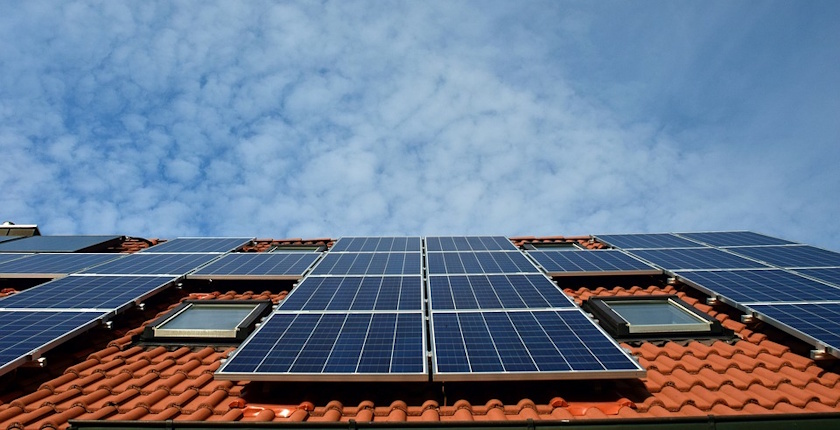
The Environmental Protection and Energy Efficiency Fund (FZOEU) has announced that it will temporarily close the ongoing public call for incentives to install photovoltaic plants in family homes, which was opened on June 6. In just over two months, about 4,100 project applications have been received and are currently being processed, the FZOEU noted.

By mid-last year, 21,000 rooftop PV systems at households and businesses, with a total capacity of 642 MW, had been connected to the distribution network.

The large number of applications confirms that investing in renewables is a financially sound long-term decision

According to the FZOEU, the financing program encourages citizens to use renewable energy sources, reduce greenhouse gas emissions, and increase the energy independence of households.

The strong interest in this program demonstrates that citizens are taking the energy transition more seriously and want to actively participate in producing green energy, the fund claims.

With subsidies, solar installations become more accessible to the general public, and the high volume of applications confirms that investing in renewable energy sources is a financially sound long-term decision for households, FZOEU added.

Citizens can receive up to 50% of eligible costs

Only individuals—owners or co-owners of houses—who had residency at the address at the time the power plant was commissioned were eligible to apply. The fund co-finances facilities installed and commissioned from January 1, 2025, and citizens can receive up to 50% of the eligible costs, or up to EUR 600 per kW of installed power capacity.

Depending on available funds and the success rate of applications, the FZOEU will consider the possibility of relaunching the call for future prosumers.

Over the past two years, the fund has co-financed the installation of around 5,600 rooftop solar power plants in households.

In the first six months of last year alone, households and companies installed 5,504 PV facilities, according to data from Croatia’s distribution system operator, HEP-Operator Distribucijskog Sustava (HEP-ODS).

by in News

Meet VIREAS: new AI-powered virtual assistant for energy

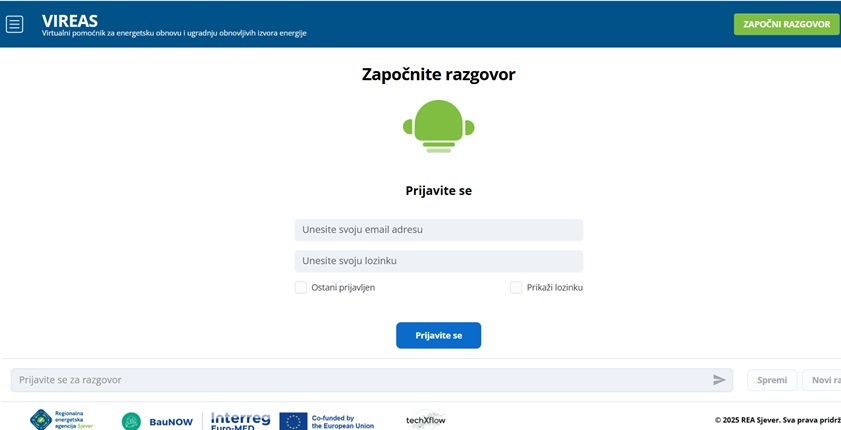
Croatia’s Regional Energy Agency North has launched VIREAS – a virtual energy assistant powered by artificial intelligence.

VIREAS answers users’ questions about energy renovation and renewable energy sources in real time, provides recommendations tailored to users’ homes and needs, helps identify opportunities to save energy and reduce costs, and explains technical concepts in simple terms, the Regional Energy Agency North (REA North) said.

The VIREAS app is an interactive platform that enables users to engage with an AI assistant on various topics related to energy efficiency and renewable energy.

VIREAS is designed for those who want to save energy and use renewables

The idea behind the chatbot is to help owners of houses and buildings improve energy efficiency or install facilities for the use of renewable energy sources. For example, it assists in renovating the facade, replacing the heating system, or installing a heat pump or solar power plant.

It enables faster, easier, and more secure decision-making processes related to energy renovation, without the need for expert knowledge, the agency claimed.

VIREAS can be used both by people with very little knowledge and by experts

Using VIREAS is simple and user-friendly for everyone, whether you have very little knowledge or you are an expert, according to REA North.

In addition to technical recommendations, VIREAS informs users about available subsidies and public calls from the Environmental Protection and Energy Efficiency Fund or FZOEU, making it easier to access public funds and further reduce investment costs.

The agency warned that VIREAS doesn’t replace a project designer or a certified energy consultant

REA North underlined that VIREAS uses official sources of information. It includes public calls launched by FZOEU, technical rules on thermal protection and heating and cooling systems, and energy certification rulebooks.

The agency stressed that although its chatbot provides useful information and tips, it doesn’t replace a project designer or authorized energy consultant. REA North advised citizens to consult experts to make a final decision and for the preparation of project documentation.

The design of the chatbot was co-financed by the BauNOW project under the Interreg Euro-MED program.

by in News

Croatia sets EUR 25 million in incentives for energy poor households

Croatia has earmarked EUR 25 million for households at risk of energy poverty. They will use the funds for the energy renovation.

The subsidies for households at risk of energy poverty are part of a EUR 652 million package for 2025 launched by the Ministry of Environmental Protection and Green Transition and the Environmental Protection and Energy Efficiency Fund (EPEEF or FZOEU). The incentives will be used for renewable energy sources, decarbonization of the district heating system and road traffic, and waste management.

The fund launched a public call for expressions of interest in using subsidies for energy efficiency measures.

Energy poverty is an increasingly important issue because the number of affected households is rising. They are struggling to cover the bills for electricity, gas and heating as the energy transition and energy crisis lifted prices.

Many governments have introduced measures to fix the issue. For example, Slovenia has adopted an action plan for the reduction of energy poverty, which foresees almost EUR 34 million for measures in the period 2024-2026.

Croatia adopted the definition of energy poverty this year

Until this year, Croatia had no official definition of energy poverty. It was included in the changes to the law on energy efficiency.

The legislation defines an energy-poor household as one that doesn’t have access to basic energy services to ensure a basic standard of living and health.

The requirements are suitable heating, hot water, cooling, lighting, and energy to power household appliances. There is a combination of causes of deficits in the said segments. Among them are weak purchasing power, insufficient income, high energy costs, poor energy performances of buildings, and low energy efficiency, according to the public call.

FZOEU invited citizens to fill out a questionnaire and send photos

A European household is said to be at risk of energy poverty if it spends more than 10% of its income on energy.

The funding scheme for natural persons is for measures and investments in energy efficiency and decarbonization of heating and cooling at family houses.

FZOEU seeks to receive information from citizens through questionnaires and photo documentation. The aim is to help the body define the details of a public call for granting subsidies, scheduled to be issued by mid-year.

by in News

Croatia grants EUR 30 million to firms for renewables, energy efficiency

The Croatian government has approved EUR 30 million in grants to businesses for investments in renewable energy production and energy efficiency measures.

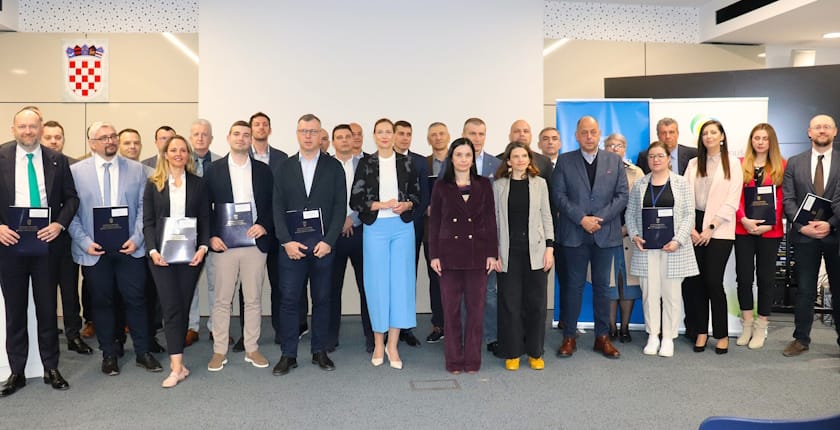
The Ministry of Environmental Protection and Green Transition and the Environmental Protection and Energy Efficiency Fund (EPEEF or FZOEU) have awarded 46 grant contracts to companies for projects focused on generating electricity from renewables and energy efficiency in the processing industry.

The proposals were selected via the European Union’s Modernisation Fund under the public calls ‘Production of electricity from renewable energy sources in the processing and heating industry’ and ‘Investment in energy efficiency measures and high-efficiency cogeneration in the processing industry’.

The ministry has received 141 applications

A total of 141 project proposals were submitted within the first call, with 103 involving photovoltaic plants and one for a biomass power facility. The second public call attracted 37 projects.

According to Luka Balen, manager of the Environmental Protection and Energy Efficiency Fund, the contracts should serve as business drivers for entrepreneurs promoting renewable energy production and supporting the green transition.

Energy self-sufficiency and renewable energy production are key priorities of the Government of Croatia, he argued.

Projects with a total value of almost EUR 90 million have received grants

Minister of Environmental Protection and Green Transition Marija Vučković revealed that EUR 30 million was allocated to the projects, with a total value exceeding EUR 87 million.

In her words, they are intended for the production of electricity from renewable sources and measures for energy efficiency and highly efficient cogeneration in the processing industry. Vučković pointed out the projects would result in significant electricity savings and a reduction in greenhouse gas emissions.

The companies will benefit from cost savings, opportunities to adopt new technologies, and a quick rise in income, the minister added.

Of note, the Modernisation Fund is an EU program financially supporting upgrades in energy systems and the improvement of energy efficiency in 13 lower-income member states.

Established in 2018 for the 2021-2030 period, it aims to help the beneficiary countries achieve their climate targets and the objectives of the European Green Deal. It is financed by revenues from the auctioning of emission allowances under the EU Emissions Trading System (EU ETS).