
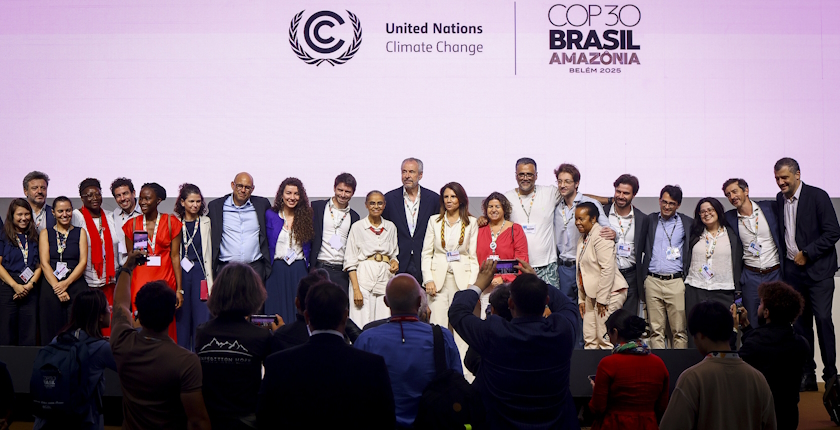
Brazil’s COP of Truth leaves out fossil fuels, deforestation from final deal
The United Nations Climate Change Conference COP30 was concluded with a deal to keep the world’s ambitions similar, after modest progress on some issues. In a last-minute compromise between the delegates of the wealthy, the poor and the countries most in jeopardy, the declaration from the so-called COP of Truth contains no explicit reference to fossil fuels and deforestation.
Participants at the Conference of the Parties of the UN Framework Convention on Climate Change (UNFCCC) in Belém, Brazil, acknowledged that the world is heading for a temporary overshoot above 1.5 degrees Celsius in warming, according to UN Secretary-General António Guterres.
“I cannot pretend that COP30 has delivered everything that is needed. The gap between where we are and what science demands remains dangerously wide. I understand many may feel disappointed – especially young people, indigenous peoples and those living through climate chaos. The reality of overshoot is a stark warning: we are approaching dangerous and irreversible tipping points,” he stated.
It’s difficult to reach a consensus in a period of deep geopolitical divide, Guterres pointed out. Nevertheless, he praised the final agreement for “delivering progress and showing that multilateralism works.”
Global Mutirão
The hosts nicknamed COP30, this year’s UN Climate Change Conference, the COP of Truth. Ironically, due to a last-minute compromise, or maybe consensus, the declaration contains no explicit reference to a fossil fuel phaseout and halting and reversing deforestation. They were left for separate roadmaps.
In the document, the signatories only refer to the COP28 decision, also known as the UAE Consensus, which called for transitioning away from fossil fuels.
The headline of the overarching deal adopted in Belém is Global Mutirão: Uniting humanity in a global mobilization against climate change. The Portuguese word mutirão originates from the indigenous Tupi-Guarani language and roughly means collective effort.
UN’s Stiell vows to keep up climate fight
All in all, delegates from all over the world, except the United States, left the desired decarbonization trajectory little changed. The countries most at risk of the climate disaster are generally poor. They depend on mitigation aid and investments from the wealthy part of the world.
“We knew this COP would take place in stormy political waters. Denial, division and geopolitics has dealt international cooperation some heavy blows this year,” UN Climate Change Executive Secretary Simon Stiell said at the closing.
Denial, division and geopolitics has dealt international cooperation some heavy blows this year, UN Climate Change Executive Secretary Simon Stiell said
In his view, nations chose solidarity, science, and economic common sense.
“COP30 showed that climate cooperation is alive and kicking, keeping humanity in the fight for a livable planet, with a firm resolve to keep 1.5 Celsius within reach. I’m not saying we’re winning the climate fight. But we are undeniably still in it, and we are fighting back,” Stiell stated.
The world’s top climate official noted that, for the first time, 194 countries agreed that the global transition to low greenhouse gas emissions and climate resilience is irreversible and the trend of the future, referring to a line from the deal.
COP30 pledges to triple adaptation funds by 2035
In the decision, the signatories kept the target USD 1.3 trillion per year that needs to be mobilized for climate action by 2035. USD 300 billion would be mostly grants and subsidized loans, while private financing and climate taxation dominate the rest.
The parties voted for a goal to provide three times more per year for climate adaptation from the smaller pot by 2035, instead of the initially proposed 2030 deadline. They failed to determine a figure, but it is mostly estimated at USD 120 billion per year.
One of the novelties is a pledge to promote information integrity regarding climate, which would also imply countering disinformation.
