by in News

North Seas region signs landmark offshore wind deal

Seven heads of state and government and energy ministers of nine countries gathered in Hamburg today to boost the expansion of offshore wind. Together with industry and transmission system operators, the countries launched the Offshore Wind Investment Pact for the North Seas. They envisage cross-border projects totaling 100 GW.

Nine European countries committed to building 15 GW of offshore wind per year over 2031-2040 and derisking offshore wind investments. The industry, in return, pledged cost reductions, 91,000 additional jobs and EUR 1 trillion of economic activity.

Europe is charting the massive offshore wind buildout it needs to deliver on its energy security and competitiveness objectives, WindEurope said.

At the North Sea Summit in Hamburg today, Belgium, Denmark, France, Germany, Ireland, Luxembourg, the Netherlands, Norway and the United Kingdom confirmed their ambition to build 300 GW of offshore wind in the so-called North Seas by 2050.

Over one hundred companies participate in offshore wind pact

Governments, the wind industry and transmission system operators (TSOs) signed the Offshore Wind Investment Pact for the North Seas. The agreement is underpinned by separate declarations of the heads of state, energy ministers and the industry. The last of the three is an undertaking by more than 100 offshore wind companies across the value chain, the update adds.

Offshore wind has been a European success story with 37 GW installed across 13 countries, WindEurope stressed.

“That’s more than 6,000 turbines providing homegrown, clean and competitive electricity at scale. But deployment has been dragged by suboptimal auction design, increased costs of capital and lack of visibility for the supply chain due to an uncertain project pipeline,” the organization pointed out.

Two-sided CfDs to be auction standard

In the Investment Pact, governments pledge to provide planning and investment security and derisk offshore wind projects. It involves two-sided contracts for difference (CfDs) as the standard for offshore wind auction design, for visibility on revenue. The countries agreed to remove any regulatory obstacles to power purchase agreements (PPAs) – direct agreements between electricity producers and corporate end-consumers.

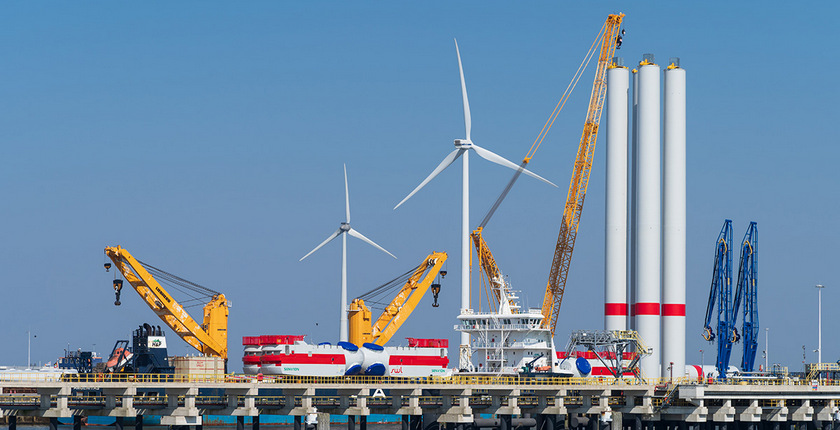
A steady pipeline of offshore wind projects will bring the needed confidence to invest in new capacity for manufacturing, ports infrastructure and vessels, according to WindEurope.

In return, Europe’s offshore wind industry pledges to drive down costs of offshore wind by 30% towards 2040 against the 2025 levels. The cost reduction would be driven by scale effects, lower costs of capital and further industrialization underpinned by clarity and visibility on the project pipeline.

The industry vowed to create lasting value for the economy, communities and consumers. It also said it would invest EUR 9.5 billion in the value chain including manufacturing, port infrastructure and vessels.

The TSOs intend to identify cost-effective cooperation opportunities and 20 GW of economically promising cross-border endeavors by 2027 for deployment in the 2030s. It includes offshore projects with interconnections to more than one country. The operators are about to develop cost-sharing principles.

The new partnership will secure 100 GW of joint offshore wind projects, Britain said.
by in News

Turkey to launch carbon market, sign deals for large renewables projects in 2026

Turkey will launch a national carbon trade market, sign intergovernmental agreements on large-scale renewable energy projects and connect 2,000 MW of energy storage to the grid in 2026. These moves will be accompanied by the historic start of electricity production at the country’s first nuclear power plant Akkuyu, and a doubling of domestic natural gas production from the Sakarya field.

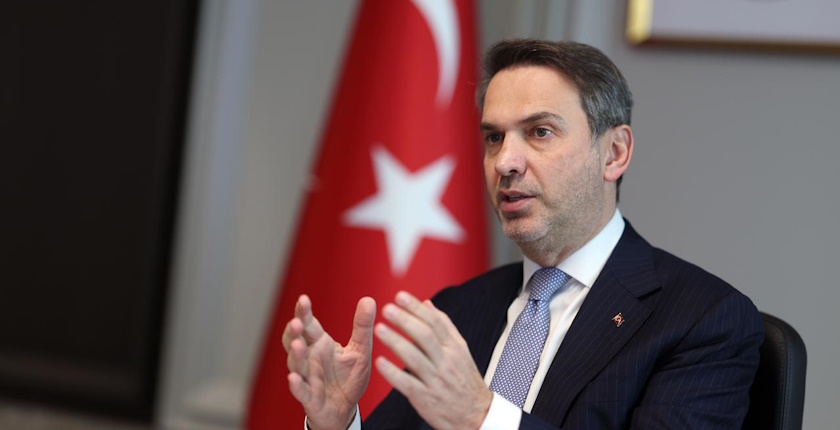
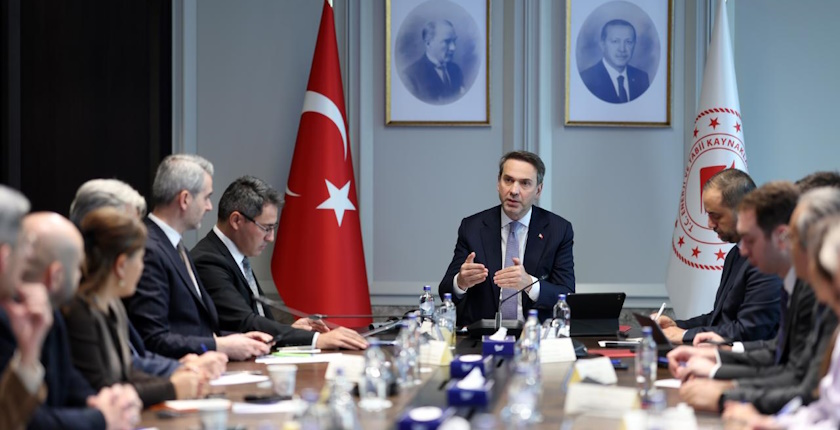
These developments represent the core of the 2026 vision for energy and mining in Turkey, revealed by Minister of Energy and Natural Resources Alparslan Bayraktar.

Large-scale projects will be launched next year through intergovernmental agreements, he stressed.

The deals include solar and other renewable energy technologies and storage, Bayraktar explained.

According to the minister, Turkey remains committed to its emission reduction targets. The government plans to launch a carbon trade center and market in 2026 within the Energy Exchange Istanbul (EXIST or EPİAŞ), he said.

Of note, Turkey’s imports of a group of goods and electricity to the European Union will be subject to the CBAM carbon border tax from January 1, 2026.

Energy storage facilities totaling 2,000 MW will be commissioned in 2026

Bayraktar recalled that the country issued permits for the installation of an overall 33,500 MW of energy storage. A very small portion has been implemented so far, but 2,000 MW will be commissioned in 2026, he underlined.

The minister said Turkey is considering the introduction of Storage Resources Zones or Depolama Alanları (DEKA) in 2026.

It would be similar to Renewable Energy Zones mechanism – REZ or YEKA – for support for solar and wind projects.

Bayraktar mentioned that a 5,000 MW solar power arrangement with Saudi Arabia-based ACWA is being discussed. Of note, it is equivalent to between 30% and 40% of Turkey’s current photovoltaic capacity.

Locations for the 2,000 MW solar project are in Sivas and Taşeli

He expressed belief that the agreement for the first phase, which envisages 2,000 MW, would be finalized in the first quarter of 2026. The plan is for 1,000 MW in Sivas and 1,000 MW in Taşeli.

A solar-plus-storage project with another company from a different country in the Persian Gulf is also under consideration, Bayraktar revealed. The investment is estimated at EUR 1.5 billion to EUR 2 billion.

A floating solar power plant of about 3,000 MW will be built as soon as possible, according to Bayraktar

In Bayraktar’s view, there is great potential in floating solar power plants. The country intends to implement a floating solar power plant of about 3,000 MW as soon as possible, the minister underlined.

The partners in this endeavour could be private companies or Turkish government-controlled Electricity Generation Corp. (EÜAŞ), the minister said. He claimed significant plans have been developed for offshore wind projects for 2026.

“We are considering a model similar to YEKA for offshore wind,” he added.

Russia to provide USD 9 billion for Akkuyu

turkey 2026 vision energy Alparslan Bayraktar brifing
Photo: Ministry of Energy and Natural Resources

The Akkuyu project is entering its final stages, according to the minister.

The country secured a USD 9 billion financing package from Russia for the investment, of which USD 4 billion to USD 5 billion is intended to be drawn in 2026.

Simultaneously, the ministry is in talks with South Korea, the US, China, and Russia for nuclear projects in Sinop and Thrace.

The Sakarya gas field is expected to double its current output in 2026, to 7.5 billion cubic meters, Bayraktar underscored.

This surge will prevent approximately USD 3.2 billion in energy imports, he explained.

by in News

Turkey to launch carbon market, sign deals for large renewables projects in 2026

Turkey will launch a national carbon trade market, sign intergovernmental agreements on large-scale renewable energy projects and connect 2,000 MW of energy storage to the grid in 2026. These moves will be accompanied by the historic start of electricity production at the country’s first nuclear power plant Akkuyu, and a doubling of domestic natural gas production from the Sakarya field.

These developments represent the core of the 2026 vision for energy and mining in Turkey, revealed by Minister of Energy and Natural Resources Alparslan Bayraktar.

Large-scale projects will be launched next year through intergovernmental agreements, he stressed.

The deals include solar and other renewable energy technologies and storage, Bayraktar explained.

According to the minister, Turkey remains committed to its emission reduction targets. The government plans to launch a carbon trade center and market in 2026 within the Energy Exchange Istanbul (EXIST or EPİAŞ), he said.

Of note, Turkey’s imports of a group of goods and electricity to the European Union will be subject to the CBAM carbon border tax from January 1, 2026.

Energy storage facilities totaling 2,000 MW will be commissioned in 2026

Bayraktar recalled that the country issued permits for the installation of an overall 33,500 MW of energy storage. A very small portion has been implemented so far, but 2,000 MW will be commissioned in 2026, he underlined.

The minister said Turkey is considering the introduction of Storage Resources Zones or Depolama Alanları (DEKA) in 2026.

It would be similar to Renewable Energy Zones mechanism – REZ or YEKA – for support for solar and wind projects.

Bayraktar mentioned that a 5,000 MW solar power arrangement with Saudi Arabia-based ACWA is being discussed. Of note, it is equivalent to between 30% and 40% of Turkey’s current photovoltaic capacity.

Locations for the 2,000 MW solar project are in Sivas and Taşeli

He expressed belief that the agreement for the first phase, which envisages 2,000 MW, would be finalized in the first quarter of 2026. The plan is for 1,000 MW in Sivas and 1,000 MW in Taşeli.

A solar-plus-storage project with another company from a different country in the Persian Gulf is also under consideration, Bayraktar revealed. The investment is estimated at EUR 1.5 billion to EUR 2 billion.

A floating solar power plant of about 3,000 MW will be built as soon as possible, according to Bayraktar

In Bayraktar’s view, there is great potential in floating solar power plants. The country intends to implement a floating solar power plant of about 3,000 MW as soon as possible, the minister underlined.

The partners in this endeavour could be private companies or Turkish government-controlled Electricity Generation Corp. (EÜAŞ), the minister said. He claimed significant plans have been developed for offshore wind projects for 2026.

“We are considering a model similar to YEKA for offshore wind,” he added.

Russia to provide USD 9 billion for Akkuyu

turkey 2026 vision energy Alparslan Bayraktar brifing
Photo: Ministry of Energy and Natural Resources

The Akkuyu project is entering its final stages, according to the minister.

The country secured a USD 9 billion financing package from Russia for the investment, of which USD 4 billion to USD 5 billion is intended to be drawn in 2026.

Simultaneously, the ministry is in talks with South Korea, the US, China, and Russia for nuclear projects in Sinop and Thrace.

The Sakarya gas field is expected to double its current output in 2026, to 7.5 billion cubic meters, Bayraktar underscored.

This surge will prevent approximately USD 3.2 billion in energy imports, he explained.

by in News

Mingyang presents ultralarge floating twin wind turbine concept

Within its OceanX platform for dual floating wind turbines, Ming Yang Smart Energy is designing a machine for 50 MW. It would be almost two times more than the currently strongest wind turbine.

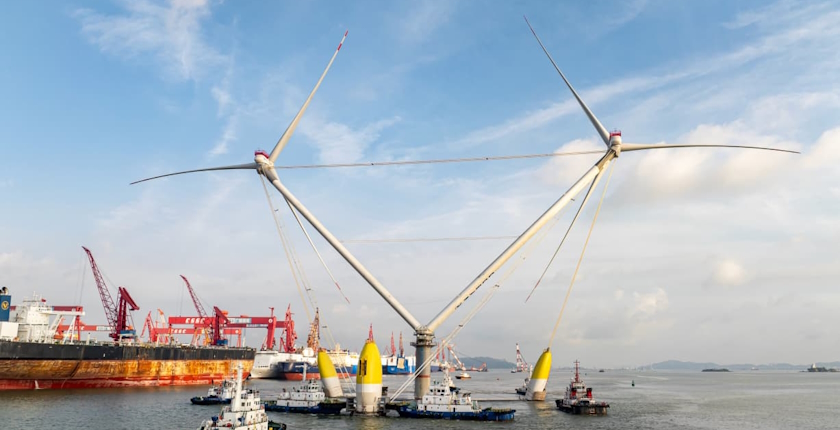
Manufacturers in China keep pushing the limits in renewable energy technology. Dongfang Electric installed the world’s largest wind turbine for testing just two months ago, and Ming Yang Smart Energy already revealed that it is developing a floating machine that would be almost two times stronger. The company, also known as Mingyang, presented the concept for a 50 MW unit, though it is actually a double turbine.

It is designing it within its OceanX platform for V-shaped floaters. The foundation for the dual rotor will be engineered for waters deeper than 40 meters, according to Mingyang.

Twin floating turbines could turn out to be the new frontier in renewable energy technology

The company said it would provide typhoon resistance, for up to 260 kilometers per hour, and open an entirely new solution for tapping deep sea wind potential. The ultralarge twin turbine is envisaged with 290-meter rotors.

Targeted cost is below USD 1,300 per kW, or almost five time less than the European average. It compares to between USD 3,000 per kW and USD 4,300 per kW in China. OceanX is currently available at 16.6 MW at most.

Mingyang recently said it would build a manufacturing facility in Scotland for floating technology. It valued the project at GBP 1.5 billion.

The largest floating wind power turbine so far has 20 MW. It was manufactured by China Railway Rolling Stock Corp. (CRRC).

by in News

Croatian company Brodosplit delivers equipment for French floating wind farm pilot project

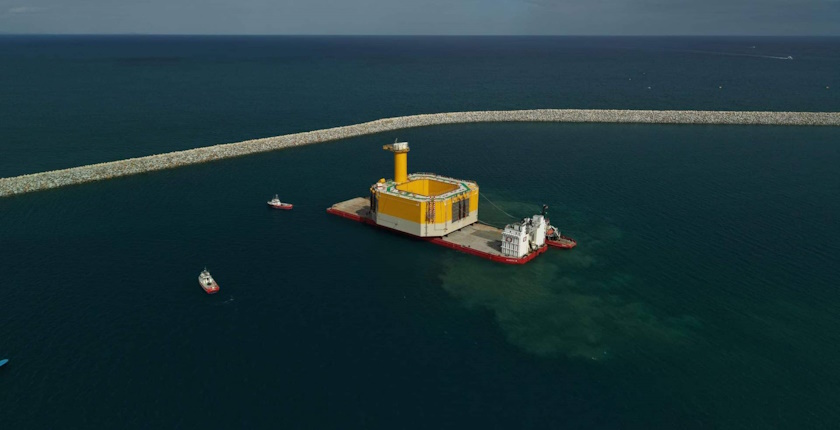
Croatian shipbuilding company Brodosplit has manufactured steel structures for the floating foundations of an offshore wind farm in one of the first such pilot projects in France.

The site for the EolMed project is approximately 18 kilometers from the coastal town of Gruissan in the Occitanie region of southern France.

Qair is leading the consortium, which includes oil and gas giant Total Energies and floating platform provider BW Ideol as its partners. The three 10 MW wind turbines, supplied by Vestas, are about to be installed at a spot where the sea is 55 meters deep.

According to Brodosplit, the project has entered its final phase after the successful launch of the three floating platforms in September.

It isn’t Brodosplit’s first floating wind farm project

The Croatian firm said it manufactured and delivered the metal structures for the floating foundations, in line with the highest quality and safety standards.

Before joining the EolMed project, it entered the floating wind farm segment through cooperation with Ocergie. Brodosplit has created an innovative measuring buoy, OCG-Data, for the France-based company’s Blue Oracle project.

The EolMed project received state support as part of the investments for the future program

The buoy is equipped with a LiDAR (light detection and ranging) system and advanced sensors for monitoring wind, waves, currents, and sea biodiversity, enabling the collection of crucial data for the development of floating wind farms and the preservation of the marine environment, Brodosplit pointed out.

Since EolMed’s initial design in 2016, it has been adjusted and adapted to incorporate the latest technologies. Initially comprising four wind turbines, the number has since been reduced to three for equivalent capacity.

The change also affected the choice of material for the floats – now steel instead of concrete. Construction began in April 2023, and completion is planned for this year.

The project received state support through the Investments for the Future Programme (Programme d’Investissements d’Avenir – PIA). The goal is to demonstrate the economic viability of floating wind farm technology.

Photo: Brodosplit
by in News

Water shortages in Southeastern Europe point to desalination as strategic approach

Former Minister of Environment and Water of Bulgaria Borislav Sandov is urging the country’s authorities to deploy alternative water supply solutions, including desalination, to counter shortages. Greece is preparing a radical change in its water management model. Turkey got its first floating seawater purification platform, running on solar and wind power.

Southeastern Europe is among the most jeopardized regions in the world in the context of global warming. The lack of water has the most drastic effect on everything from wildlife to food production, energy and public health. Bulgaria’s former Minister of Environment and Water Borislav Sandov warned that over half a million people in the country are at risk of water shortages.

Eastern and northeastern Bulgaria have a persistent issue with droughts and lack of water, necessitating a switch toward alternative forms of supply in the next five to 10 years, including seawater desalination plants, he recently told bTV.

In addition to climatic factors, there are serious shortcomings in water management, together with theft and corruption, Sandov claimed. He pointed to an example where drastically undersized pipes of poor quality were installed in one area, resulting in constant breakdowns and supply interruptions.

Sandov attributed some of the water stress to fragmented management between different local, regional and national institutions. In his words, as much as 10% of all settlements in Bulgaria, though mostly small ones, aren’t covered by waterworks and sewerage systems. Moreover, 44% of the water in the network isn’t measured in volume terms at the entry point and 50% of the water sources don’t have a valid permit from the competent authority, he added.

Notably, a quarter of the population in neighboring Serbia occasionally or permanently lacks safe drinking water from waterworks systems.

Greece to radically change its water management system

Greece decided to get ahead of the droughts and heatwaves. The government has promised radical change in water management: a more functional system with more investments and new technologies, including desalination, but also recycling.

Tourism in the summer months exacerbates the water stress. On some islands, demand surges by up to 30 times. It creates conflict with the needs for irrigation for food production. Greek islands mostly use underground aquifers with easily exhaustible capacity.

Rainfall and snowfall in the country are gradually decreasing.

Similar to Bulgaria, water management is spread across hundreds of operators and institutions, lacking coordination. Losses in drinking water supply amount to as much as 40%, in comparison with up to a staggering 60% in irrigation.

The government in Athens promised water would remain a public good

According to a study by Deloitte with data from 2022, more than EUR 10 billion is necessary for investments in the two segments, excluding Attica. It is where Athens is located. Another EUR 500 million to EUR 700 million is needed for the peninsula.

Government-controlled power utility Public Power Corp. (PPC) will reportedly enter the game, not least because municipal water and sewerage firms owe it more than EUR 400 million. The company would convert debts into minority stakes in three centralized entities: for the regions of Athens and Thessaloniki and the rest of the country, the media learned.

PPC can contribute with its knowhow and experience in the construction and operation of dams and hydropower plants.

Importantly, the government vowed to keep water a public good.

Floating desalination platform with hybrid power plant put into operation in western Turkey

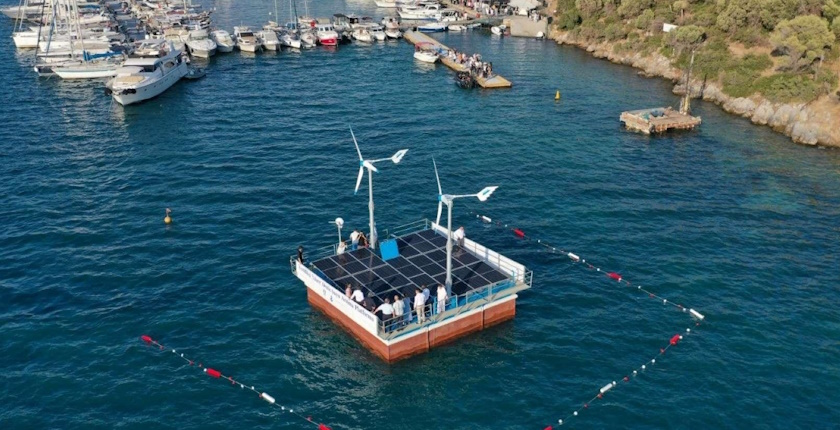
Right opposite the Greek island of Kos, offshore Bitez Marina, the Bodrum Municipality inaugurated Turkey’s first floating seawater purification platform. It runs entirely on renewable energy, producing 20 cubic metres of clean, non-potable water every day.

The project was developed in partnership with Istanbul-based company Blue Hybrid Solutions. The facility is powered by solar panels and two small wind turbines. It delivers water to an onshore tank for irrigation, emergency needs and, when required, public consumption, the local authority said.

Greece is already conducting a massive project for energy independence of numerous non-interconnected islands, including investments in desalination powered by renewables. It is also working to link other islands to the mainland grid.

[wpcc-iframe title=”BODRUM BELEDİYESİNDEN BİR İLK YÜZER DENİZ SUYU ARITMA PLATFORMU TANITILDI” width=”500″ height=”281″ src=”https://www.youtube.com/embed/KApvKHO8OS4?feature=oembed” frameborder=”0″ allow=”accelerometer; autoplay; clipboard-write; encrypted-media; gyroscope; picture-in-picture; web-share” referrerpolicy=”strict-origin-when-cross-origin” allowfullscreen=””]

by in News

WindEurope: EU must boost investment in ports, ships to meet offshore wind targets

Europe needs to increase investment in ports and shipbuilding, which play a crucial role in offshore wind development, to achieve its goals in this energy segment, according to wind industry association WindEurope. The European Commission’s upcoming strategies for ports and the maritime industry are expected to create conditions for the necessary investment.

The European Union aims to increase its offshore wind capacity from 36.6 GW to 84 GW by 2030, but one of the most pressing challenges it faces is the lack of timely investment in vessel manufacturing and port infrastructure, WindEurope warns.

To meet its 2030 energy security targets, the EU must install at least 10 GW of offshore wind each year. After 2030, this figure will have to increase to 15 GW a year, says WindEurope, noting that robust and resilient port infrastructure and supply chain are key for the achievement of the offshore goals.

After 2030, the EU will have to install 15 GW of offshore wind a year

Over the past three years, over EUR 6.7 billion has been invested in port infrastructure and new vessels across the EU, but a further EUR 6.4 billion is required, the association explains, noting that the European Commission is now working on its EU Ports Strategy.

All offshore wind equipment is transported through ports, and they often serve as bases for the operation and maintenance of offshore wind farms. Ports also host local wind energy supply chains and offer space to store and, in the case of floating turbines, assemble large components, the association notes.

Investment in port infrastructure over the past three years has amounted to EUR 4.4 billion, which can ensure that the EU meets its offshore wind targets, but an additional EUR 2.4 billion is needed to put the bloc on track to achieve post-2030 offshore deployment goals, according to WindEurope.

To make this happen, the EU’s strategy must seek to mobilize additional funding, streamline permitting, and establish planning at the EU level, the association recommends.

A further EUR 4 billion in investment is needed for new ships to handle next-generation wind turbines

When it comes to vessels, they should be a key area of focus in the EU Industrial Maritime Strategy, which aims to enhance the competitiveness, sustainability, and resilience of Europe’s maritime manufacturing sector, WindEurope says.

In the past three years, the EU has invested at least EUR 2.3 billion in new vessels, but it will have to spend a further EUR 4 billion to keep pace with wind turbine technology innovation and handle the upcoming generation of turbines with capacities exceeding 15 MW, it explains.

The strategy should also enable the decarbonization of maritime operations by supporting the shift to clean fuels, such as electricity, ammonia, and hydrogen, and by providing funding for retrofitting vessels and building new zero-emission ships, according to WindEurope.

by in News

MORE puts 43.2 MW wind park in northern Greece into regular operation

Motor Oil Renewable Energy (MORE) received the operating license for its 43.2 MW wind power plant near the border with North Macedonia. The facility was in test operation since the fourth quarter of 2023.

MORE has 839 MW in renewable electricity plants in operation, aiming to reach 2 GW by 2030. There is already almost 3 GW in the project pipeline. The subsidiary of oil refiner Motor Oil Hellas recently received the operating license for its Kellas (Kella) wind park in Amyntaio in the Western Macedonia region.

The facility was in test operation since the fourth quarter of 2023. It has 43.2 MW in nominal capacity, while the maximum is 40 MW. The wind power plant, consisting of nine Nordex N-149 turbines, is near the border with North Macedonia.

The parent company financed the endeavor by buying a EUR 41.3 million bond that a project firm issued. In 2023 it refinanced it with EUR 47 million. MORE said that it recently also completed a wind farm in Phocis (Fokida). The combined capacity with the one in Amyntaio is 65 MW.

Partnership with Terna Energy for Greece’s first offshore wind park

The renewable energy company is planning floating and conventional wind farms as well. Its joint venture with Masdar’s Terna Energy, called Aioliki Provata Traianoupoleos, is developing a 400 MW project for a site on the Ionian Sea between Alexandroupolis and the island of Samothrace. It would be Greece’s first offshore wind power plant.

MORE’s solar power joint venture with PPC Renewables, the green energy branch of government-controlled Public Power Corp., has received final connection offers earlier this month for 882.4 MW. Six locations, for 742.4 MW altogether, are in the Kozani region, a 92 MW project is in Kilkis and another one, of 48 MW, is in Serres, all in northern Greece.

The idea is to sell the electricity to the Greek industry through bilateral power purchase agreements (PPAs), as well as to support farmers participating in the GAIA program, with a special tariff.

The two renewable energy companies already have final connection offers for 300 MW and they expect another 311 MW soon. Separately, PPC and Motor Oil are planning a 50 MW hydrogen production facility, as Hellenic Hydrogen.

MORE invested over EUR 1.6 billion in past two years

MORE said it invested over EUR 1.6 billion in the past two years. It entered a partnership in 2024 in Romania with Premier Energy for solar power plants with storage. MORE’s battery projects are underway in Greece, too.

GEK Terna and Motor Oil have built an 877 MW gas power plant in Komotini, in the region of East Macedonia and Thrace. The facility is about to enter regular operation, Energypress reported.

by in News

GWEC: Record wind power capacity was installed globally in 2024

New wind turbine installations reached an all-time high 117 GW last year, slightly above the 2023 level, Global Wind Energy Council (GWEC) revealed in its annual report. According to its calculations, China’s share in the additions was 68.2%. At the end of December, the country hosted 45.8% of all wind power capacity, which climbed to 1.14 TW.

The Global Wind Energy Council’s flagship Global Wind Report showed that new capacity hit a record in 2024 for the second time in a row, following two years of declines. The additions came in at 117 GW, compared to 116.6 GW in 2023. Global wind power capacity grew to 1.14 TW, GWEC found.

On the other hand, new offshore wind, 8 GW, was down from the previous 10.8 GW. The segment amounted to 8.8 GW in 2022 and the record 21.1 GW was achieved one year earlier.

In the new outlook, this year’s total new capacities are seen at 138.2 GW, climbing each year to hit a whopping 194.1 GW in 2030.

The new capacities in the update for 2024 are slightly different than in the statistics that the International Renewable Energy Agency (IRENA) published a month ago. Namely, it deducts decommissioned facilities from the additions, while GWEC doesn’t. Still, IRENA’s total offshore wind capacity is 3.8 GW lower than GWEC’s 83.2 GW. The onshore figure is negligibly higher, by 1.1 GW – GWEC measured 1.05 TW.

Photo: GWEC

GWEC warns of from tariffs risk, ideologically driven attacks on wind and renewables

GWEC warned of increasing policy instability in some markets, and pointed to the need to improve permitting, grid transmission and auctioning mechanisms to keep pace with the global trend for electrification, meet countries’ energy and climate targets and lessen reliance on volatile fossil fuels, while fulfilling globally agreed ambitions to triple renewable energy capacity by 2030.

The council pointed out that the headline numbers mask big disparities, with the lion’s share of installations taking place in a small number of key mature markets, including China and Europe.

Blackwell: Halting projects that are under construction threatens investment certainty

“While wind energy continues to drive investment and jobs, improve energy security and lower consumer costs, we are seeing a more volatile policy environment in some parts of the world, including ideologically driven attacks on wind and renewables and the halting of under construction projects, threatening investment certainty,” said GWEC’s Chief Executive Officer Ben Backwell.

He stressed that the impact of the tariff wars has yet to be calculated, and urged decision makers to ensure a stable market and free and fair trade.

China’s share of global capacity nearing 50%

New installations were registered in 55 countries. China maintained its absolute dominance: it added 79.8 GW, translating to 68.2% of the total. Moreover, at the end of December it hosted 521 GW of wind power or a stunning 45.8% of global capacity. IRENA’s data shows the shares at 70.5% and 46.1%, respectively.

On the global scale, the United States is a distant second in wind power additions, at 4.1 GW, as well as the overall capacity: 154.3 GW. The following three are Germany (4 GW), India (3.4 GW) and Brazil (3.3 GW), which surpassed Spain.

The United States is a distant second in both wind power additions and overall capacity

Europe’s new installations in 2024 were 13.8 GW, after 14.5 GW in the previous year. The overall capacity advanced to 251 GW. The region includes Turkey, which surged by 1.31 GW to 13.7 GW. The country accounted for 1.1% of all new capacity last year, earning it a spot in the top ten in the category.

Excluding China, onshore wind volume awarded in auctions and other procurement mechanisms doubled in 2024 to a record 53.5 GW, GWEC said. In Europe, it jumped 24% to 17 GW. Germany accounted for 11 GW. The offshore segment also hit an all-time high, 56.3 GW. Europe led the way with 23.2 GW, against 17.4 GW in China.

Photo: GWEC

Last year’s auctions may boost dormant floating wind power market

The rise of the floating wind turbine technology is stalling, as only 41.8 MW was installed. The level is similar to the previous year.

However, floaters accounted for 1.9 GW of the awarded capacity, of which 750 MW for three projects in France, 750 MW in South Korea and 400 MW in the United Kingdom, for Green Volt. It is the world’s largest proposed floating wind power investment, at up to 560 MW.

The 25.2 MW Provence Grand Large facility of three SGRE turbines was commissioned offshore France. Mingyang installed its 16.6 MW V-shaped floating turbine OceanX near Guangdong. After that, early this year, China Railway Rolling Stock Corp. (CRRC) installed a 20 MW floating turbine at a testing site offshore Shandong.

One technological breakthrough after another in China

GWEC highlighted other technological breakthroughs in China as well. Some new offshore turbines of 18 MW to 20 MW were first deployed while a batch of 16 MW machines also came online.

Dongfang Electric presented the largest (offshore) wind turbine, of 26 MW, while Goldwind manufactured the first 22 MW unit in December. Onshore, 10 MW models are scaling up, and SANY installed a 15 MW prototype. Of note, the Chinese company is participating at the upcoming Belgrade Energy Forum (BEF) in Serbia, on May 14 and 15, where it will have a stand.

The world’s highest wind farm, at an altitude of 5,200 meters, was commissioned in Tibet.

CRRC started testing a 20 MW floating wind turbine early this year

Mingyang (also known as Ming Yang) introduced wind blades of 143 meters in February 2024. Next, Goldwind and Sinoma Blades passed the static load test with 147-meter pieces.

SANY commissioned the world’s largest wind turbine test bench, for 35 MW. A 40 MW platform is under construction in Shantou, Guangdong.