by in News

Greece to support 130 MW in agrivoltaics through tariffs

Greece aims to host a new batch of agrivoltaics, based on a bill of law that the Ministry of Environment and Energy submitted to Parliament. It includes subsidies.

Several proposed provisions concern carbon capture and storage (CCS), energy storage and renewable energy. Among them, a goal is set for the installation of 130 MW of agrivoltaics across the country.

Specifically, up to 10 MW would be allowed in each periphery (region), with individual projects at a maximum of 200 kW. The agrisosolar panels must be mounted at over 2.1 meters above the ground, in order to allow agricultural production below them. Alternatively, they can be installed on top of greenhouses.

Another interesting novelty is that agrivoltaics could be combined with battery storage unit. They would need to provide at least one hour of storage and wouldn’t be allowed to store energy from the grid, but only from the solar plant.

When it comes to the financial aspect, the agrivoltaic facilities would benefit from a EUR 65 per MWh tariff. It remains to be seen whether the sum is sufficient for support, as costs of photovoltaics raised at such height are higher than for traditional systems. The Panhellenic Association of Agricultural Photovolatics (PSAF) has warned that if the tariff is deemed too small, farmers will not invest in the technology and the entire program will be fruitless.

Applications to commence in February 2026

Eligible applicants are professional farmers or companies that have signed agreements with owners of cultivated fields and greenhouses. Each may install up to two agrivoltaic units.

Investors would be able to submit their applications for connection terms from February 2026. Consequently, the Hellenic Distribution Network Operator (HEDNO or DEDDIE) would decide on each project within two months, until the local limit of 10 MW is reached.
by in News

Renewables account turns red in Greece amid more low and negative power prices

Conditions in the Greek market have worsened in recent months for renewable energy producers, especially in the solar power segment, as a result of low and negative electricity prices.

So far in September, the total number of hours with a negative price in the day-ahead market (DAM) has reached 27. Prices usually fall slightly below zero, between EUR 0.01 per MWh and EUR 1, but for Sunday, September 21, they reached a negative EUR 14.8 per MWh.

In Greece, over 7 GW of renewable electricity plants with individual capacities above 400 kW operate under contracts for difference (CfDs).

Negative prices hurt producers. They receive no payment if the price is zero or below for two or more consecutive hours.

Low positive prices harm market operator

There is another issue, caused by a great number of barely positive prices during the day, when solar farms reach their maximum output. The so-called special purchase price for photovoltaics, determined once a month, has fallen steeply. In August it reached a record low of EUR 25 per MWh.

Namely, the Operator of Renewable Energy Sources & Guarantees of Origin (DAPEEP) pays a producer the difference between the special purchase price and the price in the CfD contract, which is much higher.

Therefore DAPEEP benefits from negative hourly prices, since it avoids some payments, but it loses much more from low positive prices.

Special renewables account swings back into red

The operator’s special renewables account reached a breakeven level at the beginning of this year, but turned steeply negative in recent months. The latest official data show a deficit of EUR 160 million for the period through July. Initially, a gap of EUR 173 million was projected for the end of 2025, so investors are worried.

Payments to producers remain unaffected so far and they continue in a timely fashion. Regardless, conditions in the market have made investments in solar energy less profitable. Certain players have chosen to abandon their projects. EDP Renewables and ABO Energy have decided to leave Greece altogether.

The trend has fueled demand for the purchase of solar farms benefiting from feed-in tariffs, as they are not affected by fluctuations in the wholesale market. According to information that Energypress obtained, such facilities are currently sold for around EUR 700,000 per MW.

by in News

First feed-in tariff auction in Federation of BiH draws strong interest

Ahead of a public call for the first auction for feed-in tariffs for solar power plants, the Federation of BiH’s renewable energy authority has launched a survey to assess interest among potential participants.

The auction covers feed-in tariffs (FIT) for small solar installations with an installed capacity of up to 150 kW, according to the Operator for Renewable Energy Sources and Efficient Cogeneration (Operator za OIEiEK).

The survey aims to estimate the number of applications for the upcoming auction and will run from August 22 to September 22.

The quotas for each technology and the amounts of electricity eligible for incentives are set in the decree on quotas for renewable energy sources and efficient cogeneration. The quota for the first auction is set at 12 MW of solar, of which 1.2 MW is reserved for renewable energy communities.

Under the Law on the Use of Renewable Energy Sources and Efficient Cogeneration and the auction rulebook, the first FIT auction is also open to all existing power plants that have not previously received any kind of incentive for electricity production, Operator za OIEiEK noted.

This, along with rising inquiries from investors and electricity producers, is one of the reasons for conducting the survey. Operator za OIEiEK added that its purpose is to gather information and that it will serve solely to estimate the potential number of applications.

The auction will be launched once the e-auction system is operational

Completing the survey doesn’t constitute an application to the public call, nor does it create any legal or formal obligation. Operator za OIEiEK encourages investors to participate in the survey by completing a six-question questionnaire.

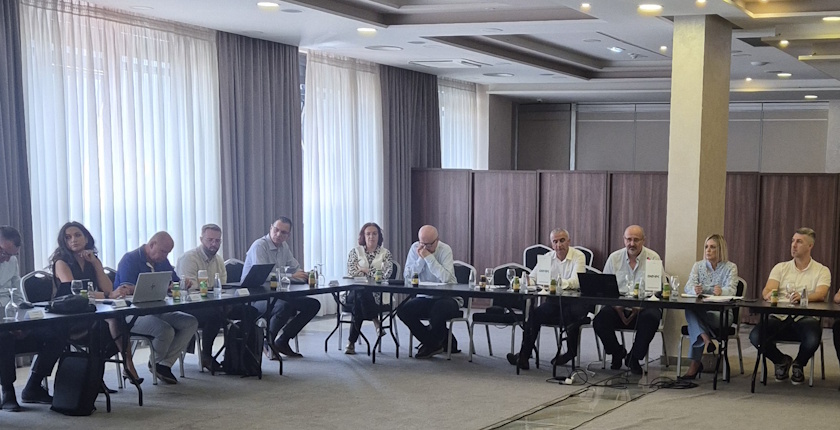
Meanwhile, in Mostar, Operator za OIEiEK organized a roundtable to present the auction rulebook.

According to the rulebook, the auction will be conducted through an e-auction system.

Currently, the e-auction system is in the trial phase, with training underway for Operator za OIEiEK staff. Once the system is operational, a public call for the first FIT auction will be launched, according to Operator za OIEiEK.


by in News

Government of Serbia interested in taking over Plandište wind project

The Government of Serbia is interested in taking over the Plandište wind farm project from oil and gas company Naftna Industrija Srbije and renewable energy firm MET Renewables. They have been jointly developing the project for over ten years.

The Plandište project, with a capacity of 102 MW, was a topic at the latest meeting of the Board of Directors of Naftna Industrija Srbije (NIS), attended by Minister of Mining and Energy Dubravka Đedović Handanović and Chairman of Gazprom Neft’s Executive Board Alexander Dyukov.

Gazprom Neft holds a 44.85% share in NIS, while its parent company Gazprom has another 11.3%.

Alexey Urusov was elected as the new chairman of the NIS Board of Directors, while Dragutin Matanović was appointed vice chairman.

Serbia aims to increase its renewable energy capacity

During the meeting it was noted that there is interest by the state of Serbia in taking over the construction of the Plandište wind park together with Hungarian company MET, thereby increasing the capacities from renewable sources in line with the strategic energy transition goals, the ministry said.

It revealed no further details. The current owners of the project are NIS and Switzerland-based MET Renewables.

The Plandište wind farm was one of the projects that obtained feed-in tariffs from the ministry under the first quota of 500 MW for wind power plants in Serbia. All other projects, totaling 397 MW, have long been completed –  Čibuk 1, Kovačica, Košava 1, Alibunar, Kula, Malibunar, and La Piccolina.

The wind farm was initially scheduled for completion in 2014, then postponed to 2019

The project was originally owned by Energowind, a company founded in 2005 by private investors. In late 2012, NIS bought a 50% share, and the firm was renamed NIS Energowind. Energowind’s CEO Goran Novaković, who was earlier Serbia’s energy minister, has signed the contract with NIS’s then-CEO Kirill Kravchenko.

At the time, the wind farm was scheduled to be completed in 2014, and construction formally began in September 2013. However, there was no progress until March 2019, when MET Renewables, owned by Hungarian private investors, purchased the other 50% stake from the initial owners. The joint firm was named NIS MET Energowind.

The building permit was amended in 2023

Shortly afterward, it was announced that the wind farm would be completed by 2021.

Project firm Wind Park Plandište received the status of privileged renewable energy producer in 2015. It is a right to feed-in premiums, a fixed price for electricity, over a 12-year period. The status has been extended multiple times, most recently in 2018 until 2020, according to the registry of privileged producers on the ministry’s website.

The project firm said that the building permit, amended in 2023, envisages the construction of 17 wind turbines, each with a capacity of 6 MW. The detailed regulation plan, revised in 2022, enables the construction of up to 20 wind turbines with a capacity of up to 7 MW each, according to the firm’s website.