by in News

Why nobody in Slovenia bothers to remove snow from solar panels

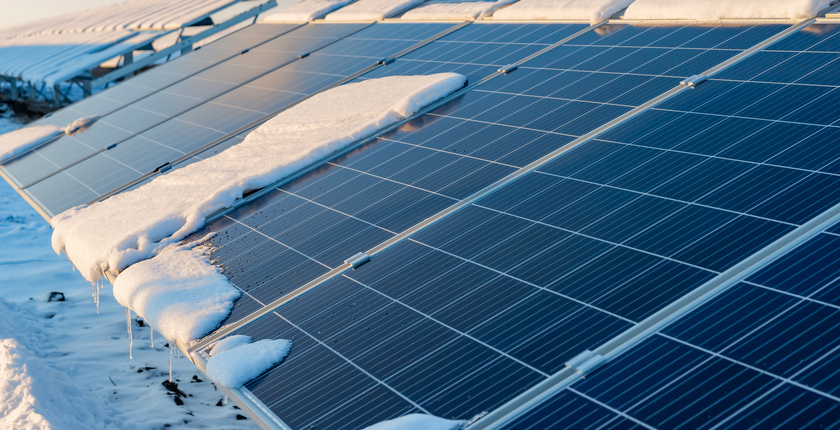
The snow that has blanketed much of Europe over the past few days has also covered solar panels, preventing the absorption of sunlight and, consequently, electricity production. However, Slovenian solar power plant operators are not attempting to remove the snow, as doing so would cause more harm than good.

The main reason for not clearing the snow is the risk of damage to solar panels. Primož Tručl, CEO of solar power plant operator Moja elektrarna and a member of the board of the Slovenian Photovoltaic Association (ZSFV), told Naš stik that removing snow from solar modules while avoiding scratching their surface would be time-consuming and expensive. It would outweigh the benefits of potential production given the low levels of sunshine in winter, according to him.

Removing snow without damaging solar panels would cost more than the electricity generated at this time of year

Stellar, the operator of a hybrid solar power plant near Črnomelj, also considers such an intervention economically unjustified, as production losses due to temporary snow cover are relatively small and short-lived.

In most cases, snow melts or slides off the surface quickly thanks to the inclination of the panels and the heating of the modules under sunlight, Naš stik was told at the company.

Snow slides off on its own very quickly and outages are short-lived

In addition, manually removing snow with shovels, brooms, scrapers, or other equipment can damage the glass on solar panels. Even softer tools can cause micro-scratches, reducing the efficiency of the panels.

“Any damage to the glass also means an increased risk of moisture ingress and, consequently, module failure,” the company explained.

State-owned energy utility GEN energija has told Naš stik that most of its solar power plants are built on slopes, allowing snow to slide off the modules relatively quickly when the sun shines.

Letting snow slide off on its own also has an upside, as it helps clean solar panels by carrying away most of the dirt accumulated on the surface, according to GEN energija.

by in News

Why nobody in Slovenia bothers to remove snow from solar panels

The snow that has blanketed much of Europe over the past few days has also covered solar panels, preventing the absorption of sunlight and, consequently, electricity production. However, Slovenian solar power plant operators are not attempting to remove the snow, as doing so would cause more harm than good.

The main reason for not clearing the snow is the risk of damage to solar panels. Primož Tručl, CEO of solar power plant operator Moja elektrarna and a member of the board of the Slovenian Photovoltaic Association (ZSFV), told Naš stik that removing snow from solar modules while avoiding scratching their surface would be time-consuming and expensive. It would outweigh the benefits of potential production given the low levels of sunshine in winter, according to him.

Removing snow without damaging solar panels would cost more than the electricity generated at this time of year

Stellar, the operator of a hybrid solar power plant near Črnomelj, also considers such an intervention economically unjustified, as production losses due to temporary snow cover are relatively small and short-lived.

In most cases, snow melts or slides off the surface quickly thanks to the inclination of the panels and the heating of the modules under sunlight, Naš stik was told at the company.

Snow slides off on its own very quickly and outages are short-lived

In addition, manually removing snow with shovels, brooms, scrapers, or other equipment can damage the glass on solar panels. Even softer tools can cause micro-scratches, reducing the efficiency of the panels.

“Any damage to the glass also means an increased risk of moisture ingress and, consequently, module failure,” the company explained.

State-owned energy utility GEN energija has told Naš stik that most of its solar power plants are built on slopes, allowing snow to slide off the modules relatively quickly when the sun shines.

Letting snow slide off on its own also has an upside, as it helps clean solar panels by carrying away most of the dirt accumulated on the surface, according to GEN energija.
by in News

Europe’s Environment 2025 report: Not good

Biodiversity is declining and water stress is affecting one third of Europe’s population and territory, while the frequency and magnitude of climate-related disasters are increasing. In short, this is the message from the report Europe’s Environment 2025.

​Europe’s Environment 2025 is the most comprehensive analysis on the current state and outlook for the continent’s environment, climate, and sustainability, building on data from across 38 countries, according to the European Environment Agency (EEA).

The outlook for most environmental trends is concerning and poses major risks to Europe’s economic prosperity, security, and quality of life, the authors warned. The agency said climate change and environmental degradation pose a direct threat to Europe’s competitiveness, pointing out that it depends on natural resources.

Progress on a range of factors that enable the shift towards sustainability – such as innovation, green employment, and sustainable finance – gives cause for hope, EEA added.

​More than 80% of protected habitats are in a poor or bad state

The report shows biodiversity is declining across terrestrial, freshwater, and marine ecosystems in Europe due to persistent pressures driven by unsustainable production and consumption patterns, demonstrated most notably in the food system.

More than 80% of protected habitats are in a poor or bad state, with 60% to 70% of soils degraded, the document reads.

On a positive note, the extent of protected areas increased over the past decade – by 2022, 26.1% of the European Union’s land and 12.3% of its seas were protected. However, designating protected areas alone does not guarantee that biodiversity is effectively protected, the authors wrote.

​Water stress is affecting one third of Europe’s population and territory

The report’s findings point to severe pressure on water resources: water stress is affecting one third of Europe’s population and territory.

Only 37% of surface water bodies had a good or high ecological status in 2021, with the degradation of aquatic ecosystems threatening Europe’s water resilience. Agriculture is responsible for the most significant pressure on both surface and groundwater, data revealed.

EEA recalled that Europe is the fastest-warming continent on the planet.

Weather- and climate-related extremes caused economic losses of assets estimated at EUR 738 billion in the EU’s 27 member states over the period 1980-2023, with over EUR 162 billion in costs from 2021 to 2023 alone, the report reads.

Over 70,000 people in Europe are estimated to have died from heat in 2022.

The average annual economic losses in the 2020‑2023 period were 2.5 times as high as in the preceding decade, from 2010 to 2019, according to the report.

Downpours are increasing in severity, with several regions subject to catastrophic floods in recent years, while extreme heat, once rare, is becoming more frequent, with deadly consequences: over 70,000 people in Europe are estimated to have died from heat in 2022.

The greatest challenges call for a need to rethink the links between the economy and the natural environment, land, water and natural resources, EEA underscored.

“We cannot afford to lower our climate, environment and sustainability ambitions. Our state of environment report, co-created with 38 countries, clearly sets out the science-based knowledge and demonstrates why we need to act. In the European Union, we have the policies, the tools and the knowledge, and decades of experience in working together towards our sustainability goals. What we do today will shape our future,” EEA Executive Director Leena Ylä-Mononen said.

Bright spots

The report also highlighted the good results of environmental protection policies in Europe.

The EU has cut its domestic greenhouse gas (GHG) emissions by 37% since 1990, largely driven by reducing fossil fuel use and doubling the share of renewables since 2005.

All member states have reduced their reliance on fossil fuels and shifted towards more sustainable energy sources over the last decade, while increased energy efficiency has brought down demand.

In 2023, renewable energy sources represented over 24% of the EU’s final energy use, a record high.

The bloc’s industrial system has managed to reduce emissions by more than 35% from 2005 to 2023, while emissions from buildings fell by more than 35% between 2005 and 2023.

Significant progress has been made in reducing pollution in Europe. EU policies led to improvements in air quality and reduced premature deaths attributable to fine particulate matter from 2005 to 2022 by 45%, according to the Europe’s Environment 2025 report.

by in News

Heliup wins European Solar Startup Award 2025 with solar panels 60% lighter than conventional ones

France-based Heliup has been awarded the Gold European Solar Startup Award 2025 for its Stykon solar PV panels for flat rooftops.

Following a successful online pitch, Heliup, Aevy and suena were nominated by the expert panel as finalists.

Yannick Veschetti, President and Co-founder of Heliup, Gautier Moulin, Co-founder and Chief Operating Officer of Aevy, and Felix Heimke, Senior Product Manager at suena, presented their work on stage at the SolarPower Summit 2025.

Yannick Veschetti stressed there is over four billion square meters of available large rooftop space in the European Union. Heliup wants to harness the potential of this available rooftop space and fast-track solar installations across Europe, he added.

Veschetti: The startup is committed to revolutionizing solar energy with lightweight solutions manufactured in Europe

The startup is committed to revolutionizing solar energy with lightweight solutions manufactured in Europe that unlock the potential of commercial and industrial rooftops, Veschetti pointed out.

According to the startup, solar panels have considerable weight which, combined with around 15 kilograms per square meter for the fixing structures, is not compatible with a large proportion of existing building roofs.

To address the issue, Heliup uses a patented CEA technology developed for over three years at France-based Institut National de l’Energie Solaire (INES).

The unique technology is based on the conservation of thin glass and on an innovative installation concept, the startup said.

The solar panel is 60% lighter than conventional panels

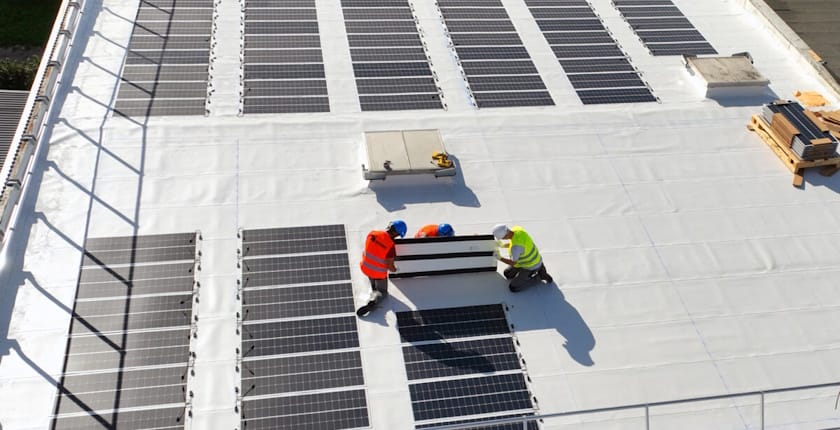
The Stykon range is intended for flat roofs, with an innovative, simple and quick installation system based on gluing the panel directly onto the roof’s waterproofing membrane. It is 60% lighter than conventional panels while maintaining the same level of performance and durability, Heliup added.

SolarPower Europe explained that Heliup’s panels are lightweight, at five kilos per square meter. They have an efficiency of 20% and are resistant to extreme weather conditions. The equipment is made in Europe and has an easy and fast installation process, the organization said.

“Only with these forward-thinking innovators can we strengthen Europe’s competitiveness and guarantee a swift energy transition,” SolarPower Europe CEO Walburga Hemetsberger stated.

The award jury panel comprised Jenny Chase, Solar Analyst at BloombergNEF; Stefan Müeller, Co-Founder, Shareholder and Board Member at Enerparc AG; Felix Krause, Managing Partner at Vireo Ventures; and Michael Schmela, Director of Market Intelligence at SolarPower Europe.

by in News

Seven cities, regions in Western Balkans to strengthen climate resilience with CLIMAAX

Seven cities and regions in the Western Balkans will receive financial and technical support to enhance their climate resilience.

Four local authorities in Albania and one each in Bosnia and Herzegovina, Montenegro, and Serbia are among the 69 in 23 countries selected within the CLIMAAX call for applications.

As a result of the two open calls, municipalities, cities and regions will receive more than EUR 12 million in total from the European Union’s Mission on Adaptation to Climate Change, the announcement reads.

The maximum amount of financial support within CLIMAAX ranges between EUR 115.227 and EUR 300.000.

The selected cities and regions will conduct multi-risk climate risk assessments

Tirana, Vlora, Belsh, and Libohova in Albania became beneficiaries together with the municipalities of Neum in BiH and Bijelo Polje in Montenegro and the Secretariat for Urban Planning and Environmental Protection in Serbia’s Autonomous Province of Vojvodina.

As for other countries tracked by Balkan Green Energy News, regions and cities in Bulgaria (7), Croatia (2), Cyprus (1), Greece (8), Romania (3), Slovenia (1), and Turkey (7) have also been selected, according to the List of selected beneficiaries 1 and List of selected beneficiaries 2.

The CLIMAAX program highlights the increasing frequency and intensity of extreme weather events, rising sea levels, and other climate-related hazards as significant risks to economies, societies, and ecosystems across the globe. Therefore it is critical to understand the risks and develop effective strategies to manage and adapt to them.

Sempere-Torres: We are building a collaborative network of communities committed to climate resilience across Europe

The main objective is to support the implementation of the EU Adaptation Strategy and especially the first objective of the Horizon Europe Mission Adaptation: preparing and planning for climate resilience.

Selected cities and regions will implement the proposed methodological framework and toolbox to conduct multi-risk climate risk assessments. The regions are eligible for support from the CLIMAAX consortium in their work on the assessments.

“With CLIMAAX expanding to more regions, we are enhancing our efforts to make climate risk assessment into a practical process that leads to real, impactful action. By empowering regions with the necessary tools and financial support, we are not just improving local adaptation strategies—we are building a collaborative network of communities committed to climate resilience across Europe,” said Daniel Sempere-Torres, project co-coordinator of CLIMAAX and director of the Center of Applied Research in Hydrometeorology of the Universitat Politècnica de Catalunya.