by in News

H-Bridges team from Belgrade returns to IFEC: students developing bidirectional EV charger

The H-Bridges student team from the School of Electrical Engineering (ETF) of the University of Belgrade, Serbia, is once again taking part in one of the world’s most prestigious university competitions in energy innovation – the International Future Energy Challenge (IFEC). This year’s challenge focuses on the design of a bidirectional onboard charger for electric vehicles, a solution that enables not only battery charging but also energy feedback to the power grid.

The IFEC competition is organized under the patronage of the Institute of Electrical and Electronics Engineers (IEEE). Each year, the organizers define a new task aligned with the latest technological trends, allowing participating students to work on state-of-the-art solutions in electrical engineering and computer science.

The competition is held in three phases. In the first stage, teams submit conceptual design proposals to the organizers and judges. Up to 20 teams from around the world are then invited to present preliminary experimental results at the IEEE Applied Power Electronics Conference (APEC) in the United States, one of the largest global conferences in applied electrical engineering.

In July, the top ten teams advance to the final round, where their solutions are tested in laboratory and real-world conditions. The final venue changes each year depending on the competition theme and the host university.

At the beginning of each season, new students join the H-Bridges team

At the beginning of each season, new students join the H-Bridges team, motivated to go beyond traditional education and gain hands-on experience. Team members independently handle all aspects of the project, from conceptual design to prototype development and testing, as well as securing the necessary components and funding for participation in the semifinal and final stages of the competition.

The H-Bridges team is supported by the University of Belgrade’s School of Electrical Engineering (ETF). In addition, numerous companies in Belgrade and abroad recognize the value of the competition and the team’s projects, providing sponsorships and donations in the form of materials, equipment, and financial support. This assistance enables the team to attend the semifinal and final rounds of IFEC and contributes to its continued success.

Those interested in supporting the H-Bridges team can find additional information on the team’s official website. Support from partners and donors plays an important role in the team’s ongoing activities.

The team also regularly participates in other international and national competitions.

H-Bridges preparing for IFEC 2026

The H-Bridges team is led by Aleksandar Milić from the Department of Power Converters and Drives at the School of Electrical Engineering. The team is organized into several subteams focusing on hardware and PCB design, software and control, and public relations and corporate cooperation. Members come from all study programs at the School of Electrical Engineering, as well as from other faculties.

H-Bridges has achieved notable results at IFEC over the years. In 2019, the team won first place with an electric bicycle drive system and an accompanying Android application for cyclist-vehicle communication. The team also secured second place in the 2020, 2022, and 2023 editions of the competition.

This year’s IFEC task focuses on the design of a bidirectional onboard charger for electric vehicles

This year’s IFEC task focuses on the design of a bidirectional onboard charger for electric vehicles. The project addresses the growing need for innovative solutions in renewable energy integration, electric mobility and energy storage systems.

Bidirectional chargers allow vehicles not only to draw energy from the grid but also to feed it back, offering potential benefits for vehicle efficiency and grid stability without the need for additional charging infrastructure. The system is designed to feature a compact form factor, reliable control, and high power quality at the point of connection.

The team is currently working on the conceptual design of the charger and plans to present its first results at the IEEE APEC conference in March 2026 in the United States. The final stage of the competition will take place in Belgium at KU Leuven, where student-developed chargers from around the world will be tested under both laboratory and real-world conditions.

by in News

Revolutionising retail: power of real-time energy visibility with SolarEdge ONE for C&I

As retail evolves, supermarkets are under pressure to boost efficiency and sustainability. The key enabler of this transformation is SolarEdge ONE for C&I – a comprehensive platform that delivers real-time energy visibility and management for commercial and industrial (C&I) environments.

SolarEdge ONE for C&I integrates advanced solar PV, storage, and energy analytics, providing retailers with a unified “single pane of glass” to monitor, control, and optimize energy flows across their entire estate. This platform enables supermarkets to harness solar energy during peak hours, store excess power, and intelligently manage consumption, reducing reliance on the grid and lowering operational costs.

With the rise of electric vehicles and increasing electrification, supermarkets face growing energy demands. SolarEdge ONE for C&I addresses this by combining real-time data from solar panels, refrigeration, lighting, HVAC, and EV chargers. The result is a holistic view of energy usage, allowing retailers to identify inefficiencies, prevent asset failures, and take targeted actions to reduce waste and costs.

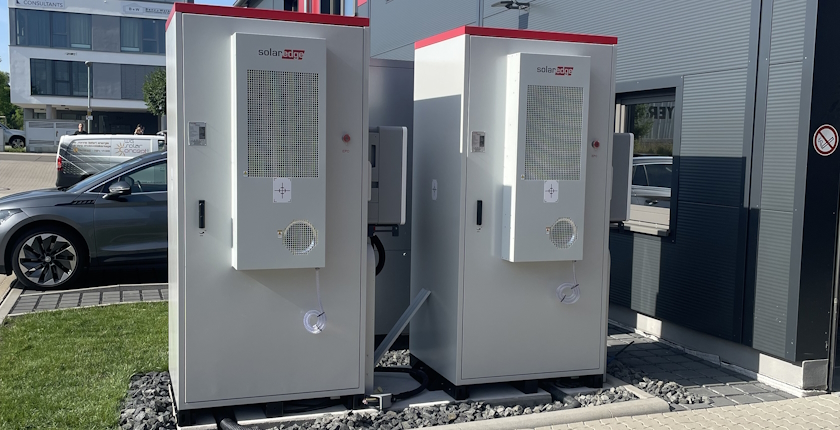
CSS-OD WG Solar Germany

Millions of sensor readings in real time

A standout feature of SolarEdge ONE for C&I is its edge-based computing, capable of processing millions of sensor readings in real time. This empowers retailers to visualize and analyze data instantly, even across hundreds of stores, warehouses, and logistics centers. The platform’s scalability means that even large retail chains can centralize energy management, ensuring consistent performance and rapid response to anomalies.

The financial benefits are significant: retailers using SolarEdge ONE for C&I have reported substantial reductions in energy costs – such as a 4.5% drop in lighting expenses – translating to millions in annual savings. The system also supports flexible energy pricing strategies, enabling retailers to shift consumption based on tariff changes, avoid penalties, and even participate in energy trading or arbitrage.

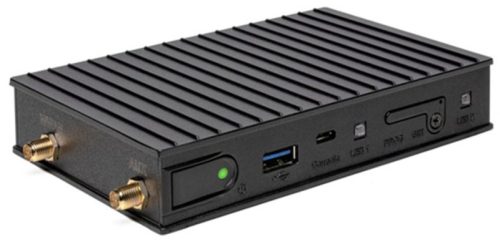
SolarEdge ONE Controller for C&I

SolarEdge ONE for C&I sets retailers on path to future

By leveraging SolarEdge ONE for C&I, supermarkets are not only meeting their sustainability goals but also gaining a competitive edge in a dynamic energy market. The platform’s advanced analytics and automation prepare retailers for the future, allowing them to optimize energy use, comply with carbon reduction targets, and unlock new revenue streams.

In summary, SolarEdge ONE for C&I is transforming retail energy management. Its real-time visibility, intelligent controls, and scalable architecture empower supermarkets to operate more efficiently, sustainably, and profitably – setting a new standard for the industry.

Find out more: SolarEdge ONE for C&I: optimizing all energy assets | SolarEdge

by in News

Energy communities reduce power bills for members, improve electricity market

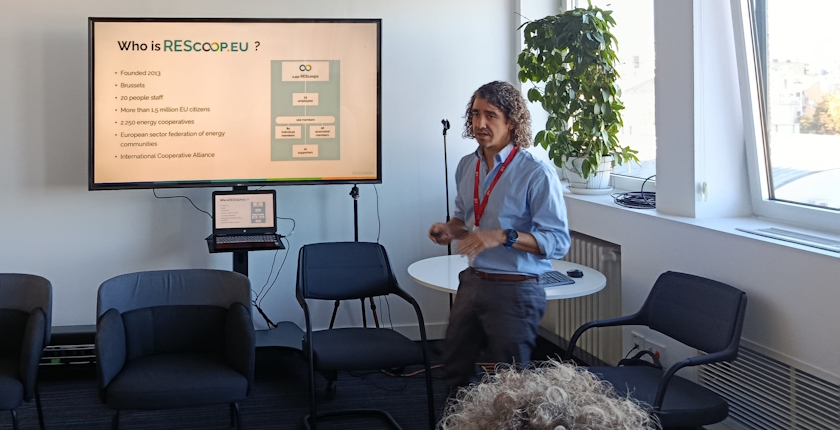
Citizen energy communities make the energy system greener and benefit society at a local level, Josh Roberts from European federation of energy communities REScoop said in his presentation, organized in Belgrade by Deutsche Gesellschaft für Internationale Zusammenarbeit (GIZ) GmbH. It is a form of association that also lowers costs for households, institutions and small firms and entrepreneurs, and contributes to the deployment of progressive technologies. Furthermore, it is a framework for democratic control.

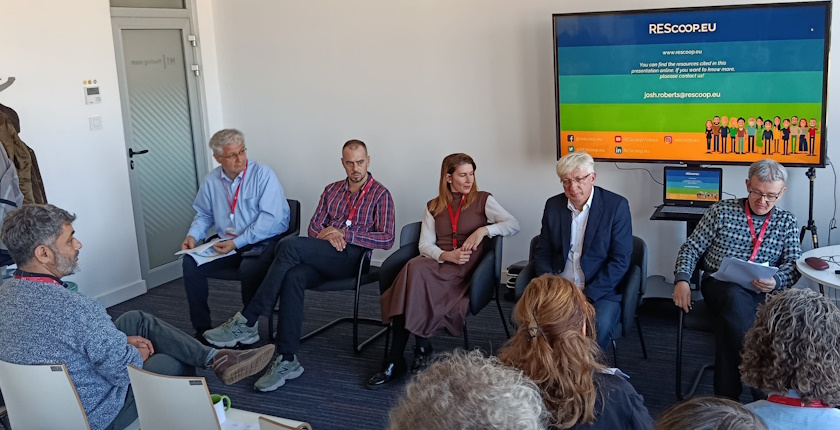
The event included developers from the emerging segment of energy communities and cooperatives in Serbia. They outlined the current initiatives and pointed to challenges regarding market entry, financing and policies.

The establishment and operation of energy communities is arranged through the European Union’s latest legislation, as well as in Serbia and other Western Balkan countries, but they are not a new concept. For instance, such entities still accounted for almost half of wind power output in Denmark in late 1990s, according to Senior Policy Advisor Josh Roberts from REScoop, the European federation of energy communities and cooperatives.

Speaking at a gathering that GIZ organized in Belgrade he pointed to the benefits for citizens, small firms and entrepreneurs and for institutions from setting up or joining energy communities. Initiatives in Serbia were also presented, and their progress in the same field, and the event included dialogue on the necessary technical solutions for connecting to the distribution grid.

Brussels-based REScoop was founded in 2013. In its membership are organizations from 22 European countries. They include Serbian energy cooperative Elektropionir. It gained the most ground regarding association and the implementation of projects.

One coal town has put up signpost for energy communities in Slovenia

Among other examples, Roberts highlighted Slovenia’s first energy community with a rooftop solar power plant for joint use. The facility is on the roof of an elementary school. The project involves aid for people living in energy poverty and it is free to join the group.

It is in the town of Hrastnik in a former coal industry area. The participants already lowered their power bills by 30%, and the gains will be even greater when they pay off the loan, Roberts said.

There are more than 1,600 energy communities in Austria

The representative of the REScoop federation stressed that municipalities in the Belgian region of Wallonia have succeeded in obtaining the right for citizens to participate in investments in green energy projects. It resulted in the foundation of a range of energy communities.

Roberts especially commended Austria’s legal framework with regard to enabling citizens to participate. The country hosts more than 1,600 energy communities.

Udruzivanje energetske zajednice smanjuje troskove trziste elektricne energije Dzos Roberts Josh REScoop GIZ

Energy community eases grid operator’s job

Energy communities are envisaged to return the invested funds to society at the local level. Subsidies are especially favorable for that, Roberts explained. Income is directed to education, infrastructure and aid against energy poverty.

The essence is that the community controls the distribution of the proceeds. In addition, grid operators can communicate more easily with one entity than with a hundred prosumers, Roberts underscored. Prosumers – or buyers-consumers, as they are formally called in Serbia, generate electricity for their own needs.

Pooling together enables providing services in the market, where energy communities can supply and store energy as well as conduct energy efficiency services, among other activities.

It means an entity of such type can ease the evening grid load, in moments of the highest demand, using energy from its batteries. That way, price peak shaving is achieved.

Registration process must be separate from defining activity

As for the procedure, Roberts said registration needs to be only for acknowledgement, rather than for approving specific activities.

“It’s about acknowledging the legal form and it’s about checking about how that legal form ensures compliance with the eligibility criteria. We have found very complex registration procedures. This does not work. It needs to be simple,” he stressed.

There are many activities that energy communities can undertake and they need to be able to enter them gradually, without complex procedures for licenses and permits

Conversely, in some jurisdictions there are simplified ways to get a supplier license. It enables an energy community to enter the activity gradually, instead of having to fulfill the requirements for all segments, even without having a comprehensive business model, the members or a business case, Roberts said.

He mentioned at the same time that one of the basic ideas is promoting inclusiveness.

“It’s already hard to set up an energy community, but it’s even harder to involve members who may have a hard time paying their bills, or have a lot less disposable income. So we found that the best models at the moment are for energy communities either to front the membership fees or for local authorities to pay for this upfront. And in energy sharing, we’re seeing more and more of energy donated to vulnerable households,” he stated.

Energy cooperatives helping improve rural areas from which people are leaving

Energy communities are giving people an opportunity for climate action and to contribute to their community, Roberts said. He added that such projects improve the area where they are conducted, stressing that it is especially important for rural areas from which many people are leaving.

A key point is that they enable participants to control their costs, production, consumption and energy sharing.

 The main challenge in Serbia is how to obtain a grid connection, alongside the matter of accessibility of incentives and loans

Importantly, energy communities are linked to the tradition of cooperatives, for which Serbia used to be known, but there is still much left to do around the legal framework.

There was word at the said gathering with representatives of institutions about the complexity of adjusting the electricity network to the production’s decentralization, as well as about the possibility to streamline the procedure for the establishment of energy communities and their operation.

Serbia is yet to address the accessibility of subsidies and financing, while currently the main issue is how to get grid connection approvals.

Energetsko zadrugarstvo smanjuje troskove trziste elektricne energije GIZ

Enterprise, association or cooperative

The speakers and other participants in the event agreed that the electricity market isn’t complete without energy communities, while that they modernize and democratize it.

When it comes to Serbian regulations, such legal entities have the right to conduct aggregation, but they need a license for it. Notably, aggregators have balancing responsibility, so they need to cover the deviations from the forecasted output.

Energy communities were introduced in the latest version of the Law on Energy. When they become regular in practice, the framework will need to be adjusted gradually to the situation. Citizens, firms and municipal authorities establish energy communities as enterprises, associations or cooperatives.

The bottom line is to enable citizens to take part in the clean energy transition and achieve local environmental, economic and social benefits, as opposed to prioritizing profits. It implies collective ownership, democratic control and reinvestment into the community with the goal of reducing energy poverty and promote energy independence.

The basic technical requirement for members is to have a smart electricity meter.

Elektropionir pioneering agrisolar in Serbia

The event’s organizers gathered the people who achieved the first steps in Serbia – from the Sunčani krovovi (Sunny Roofs) energy cooperative, created in 2019, to Platform for Energy Transition, which participated in uniting three residential buildings in Niš, which have a joint solar power plant and electric vehicle chargers. It is one of the first six prosumers in Serbia in the category of homeowner associations.

The Elektropionir energy cooperative managed through crowdfunding to install two cooperative-owned rooftop solar power systems on the territory of the City of Pirot, on the buildings of a local community council and a cultural center. As part of the Solarna Stara project, on Mt. Stara planina, the two villages receive the income from the sale of surplus electricity.

Srem is set to become the main region in Serbia for community energy

Next, the same organization built the first agrisolar power plant in Serbia. The 20 kV facility is at an organic farm, Organela, near the city of Valjevo.

Another recent undertaking is a rooftop photovoltaic unit on a school in the town of Ruma, envisaged to be the basis for an energy community. In the same area, Elektropionir is working on the installation of several prosumer power plants on house roofs and on aggregating them, inspired by the enthusiasm and the solar system of its member Nenad Maričić.

Owners and neighbors can jointly invest and they will be able to become an energy community and share energy among themselves.

Center for Sustainable Development to integrate string of energy systems of various technologies

Near Ruma, which is in the Srem (Syrmia) region, the City of Sremska Mitrovica and Regional Development Agency Srem have launched a major project. It is for the establishment of renewable energy communities (RECs), which are essentially a subset of citizen energy communities (CECs).

The local authority provided land for research and development. It is next to the regional waste landfill and a wastewater treatment plant. The plan is that the Center for Sustainable Development builds and integrates a string of energy systems.

They would include combined heat and power (CHP) production – cogeneration – from biomass, small wind turbines and a PV plant. The project also involves heat pumps and a storage facility assembled from old batteries.

There would be a facility running on biogas from the landfill within the center, and a magnet electric generator. Residents of the adjacent village of Jarak would be able to join the energy community.

Belgrade Energy Community is focused on equity, solidarity

Another group emerging in community energy is Belgrade Energy Community. It intends to apply a model of collective self-consumption in an urban area, with a focus on trust, equity and solidarity.

Its idea is to enable people to generate, share and use green energy. The plan is to map roofs and consumption and set up the first pilot installations.

According to the Belgrade Energy Community, it will donate 5% of the output to households affected by energy poverty. It consists of a cooperative, a civil society organization, two small enterprises, several prosumers and citizens.

by in News

EU preparing roadmap on digitalization, AI in energy

The European Commission has launched a public consultation to help shape its upcoming strategic roadmap for digitalization and artificial intelligence (AI) in the energy sector. The roadmap aims to support the rollout of digital solutions, including AI, in areas important for decarbonization.

The areas where the application of digital solutions and AI should be accelerated include electricity grid optimization, energy efficiency in buildings and industry, and demand-side flexibility, according to a press release from the commission.

The consultation should also address the increasingly heavy energy consumption of data centers and look at how they can be more sustainably integrated into the energy system.

The consultation should address the rising energy demand of data centers

Another area of interest is the need to implement safeguards to mitigate potential challenges linked to the large-scale deployment of AI solutions in the energy sector, according to the press release.

The initiative, part of the European Union’s Affordable Energy Action Plan, also aims to facilitate access to energy data via the Common Energy Data Space and unlock innovative services such as demand-side flexibility and bidirectional charging of electric vehicles, according to a LinkedIn post by former Smart Grids Team Leader at the European Commission Manuel Sánchez.

All individuals and organizations are welcome to contribute to the consultation, which is open until November 5. The adoption of the roadmap is planned for the first quarter of 2026.

The roadmap is expected to be adopted in Q1 2026

The target audience for the consultation and the accompanying call for evidence includes stakeholders from digital and energy value chains, such as grid operators, energy intensive industries, data center operators, building operators, car manufacturers, providers of e-mobility solutions, energy communities, aggregators, consumers, researchers, IT suppliers, digital solutions providers, cloud service providers, and appliance manufacturers.

by in News

PPC is installing 60 chargers for EVs in Romania, Greece

Public Power Corp. has received funds from the European Union for the installation of 60 chargers for electric vehicles.

Public Power Corp. (PPC) and PPC blue Romania have jointly secured up to EUR 2.76 million from the Connecting Europe Facility (CEF) funding mechanism for the installation and operation of the publicly accessible direct current (DC) fast chargers, the update reveals.

PPC blue is the e-mobility arm of PPC.

The funds for the e-chargers in Greece and Romania were obtained from the CEF’s Alternative Fuels Infrastructure Facility (AFIF) program.

Under the East Europe Electric Route (Blue Route 3E) joint project, 28 DC fast charging points, each with a minimum capacity of 150 kW, would be set up for light-duty vehicles (LDVs), while 32 ultra-fast charging points, of at least 350 kW apiece, are intended for heavy-duty vehicles (HDVs).

Babilis: We are strengthening the TEN-T in Greece and Romania

The installation at 29 locations along the Trans-European Transport Network (TEN-T) is well underway, the company revealed.

Out of the 60 units, 16 fast-charging points for electric LDVs, each with a minimum output power of 150 kW, will be installed across ten locations in Greece. The rest – 12 fast-charging points for LDVs and 32 ultra-fast charging points for HDVs – are planned in Romania.

According to Miltiades Babilis, Chief E-Mobility Officer at PPC, the infrastructure of the TEN-T in Greece and Romania is being strengthened through the Blue Route 3E project.

It is the second European funding package that PPC blue has secured through the CEF mechanism

“PPC blue is investing in the strategic development of its network by adding new hyperfast chargers at key points along the Greek road network, thus making EV travel more convenient,” he stated.

It is the second EU funding package that PPC blue has secured through the CEF mechanism, following the Electrifying South East Europe Road Transport (ESEERT) project. It is in an advanced stage of implementation and involves 34 fast-charging points for electric LDVs across 13 locations in Greece.

PPC blue has over 2,800 e-chargers in Greece and Romania.

by in News

Hitachi Energy: Game-changing solutions for a sustainable energy future

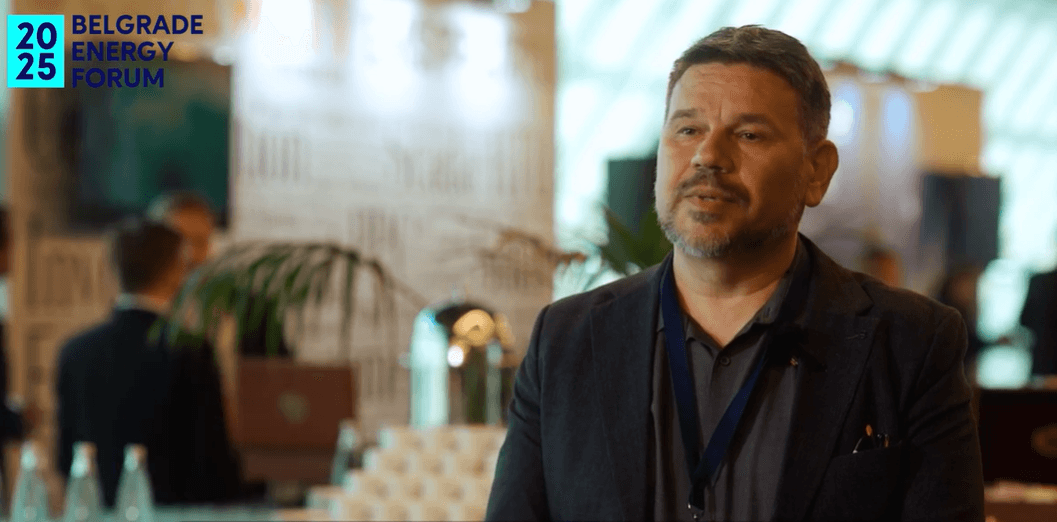
Hitachi Energy, a global leader in energy technology, develops system solutions and offers products and services that actively contribute to sustainable energy and a better future, Igor Anđelković, the company’s Country Marketing and Sales Leader in Serbia, said at Belgrade Energy Forum 2025. Game-changing technologies for high-voltage grids and transportation, along with solutions for renewables integration, support decarbonization efforts and deliver added value to both clients and local communities.

Multinational company Hitachi Energy, a silver sponsor of the BEF 2025 conference, is present in the Southeast Europe region through its Balkan Cluster, which covers seven markets – Albania, Bosnia and Herzegovina, Montenegro, Croatia, Kosovo*, North Macedonia, and Serbia.

[wpcc-iframe title=”Igor Andjelkovic, Country Lead Serbia, Hitachi Energy at the Belgrade Energy Forum 2025″ width=”500″ height=”281″ src=”https://www.youtube.com/embed/KVbO8HI5oLk?feature=oembed” frameborder=”0″ allow=”accelerometer; autoplay; clipboard-write; encrypted-media; gyroscope; picture-in-picture; web-share” referrerpolicy=”strict-origin-when-cross-origin” allowfullscreen=””]

Inspiring the next era of sustainable energy

Since 2010, Hitachi Energy has implemented eco-efficient solutions for high-voltage grids of up to 550kV. The company’s innovative and eco-efficient EconiQ® high-voltage portfolio applies revolutionary technology free of sulfur hexafluoride (SF6) and proven to significantly reduce carbon footprint throughout the life cycle.

The high-voltage EconiQ® roadmap demonstrates the scalability of this technology, which allows customers and industry to quickly transition to eco-efficient solutions.

Photo (Hitachi Energy): Hitachi Energy has implemented eco-efficient solutions for high-voltage grids of up to 550kV

Now more than ever, pioneering technologies like EconiQ are needed to advance a sustainable energy future, says Anđelkovic.

Efficient renewables integration

In the renewable energy segment, Hitachi Energy offers a range of substation solutions that help to efficiently integrate renewable energy into the transmission grid and distribution network. This includes grid connection solutions for all types of renewables power plants.

Hitachi solutions are used in a large number of wind projects in Southeast Europe

The major projects in Southeast Europe, completed or in the implementation phase, which use Hitachi Energy’s technology are wind farms Pupin and Crni Vrh in Serbia, Gvozd in Montenegro, Komanje Brdo and Ivan Sedlo in Bosnia and Herzegovina, and Pometeno Brdo and Korlat in Croatia.

Photo (Hitachi Energy): Hitachi Energy offers a range of substation solutions that help to efficiently integrate renewable energy into the transmission grid and distribution network

Driving transportation and energy towards carbon neutrality

Hitachi Energy is also committed to decarbonizing the transportation sector. Its revolutionary ‘grid-to-plug’ electric vehicle charging system, called Grid-eMotion® Fleet, is a smart mobility solution that enables operators to efficiently scale up their operations and is expected to contribute to sustainable society for millions living in urban areas.

Grid-eMotion® Fleet marks a game-changing shift from a charger-product based approach to a charging-system based approach, which helps to accelerate the future of smart mobility.

Hitachi Energy has been pioneering EV charging solutions since 2013, when it first introduced innovative flash-charging eBus solutions in Geneva and Nantes.

Advanced technologies for smart airports

With its innovative solutions, Hitachi Energy has made significant advancements in air traffic as well, with the development of smart airports being one of its key innovations. This includes advanced technologies such as artificial intelligence (AI), video analytics, and 3D LiDAR to improve the passenger experience and improve airport operational efficiency.

Hitachi Energy also helps airport to decarbonize and become more sustainable with its electrification and digitization solutions.

* This designation is without prejudice to positions onstatus and is in line with UNSCR 1244/99 and the ICJ Opinion on the Kosovo declaration of independence.