by in News

Eurowind Energy presents solar-wind hybrid project in Romania

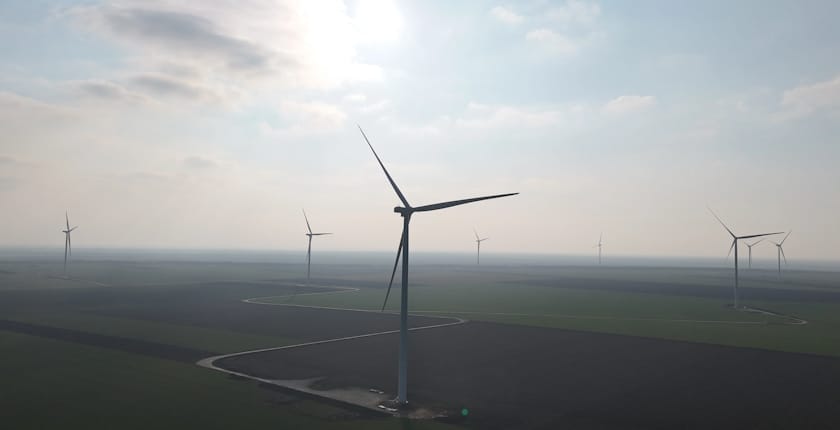
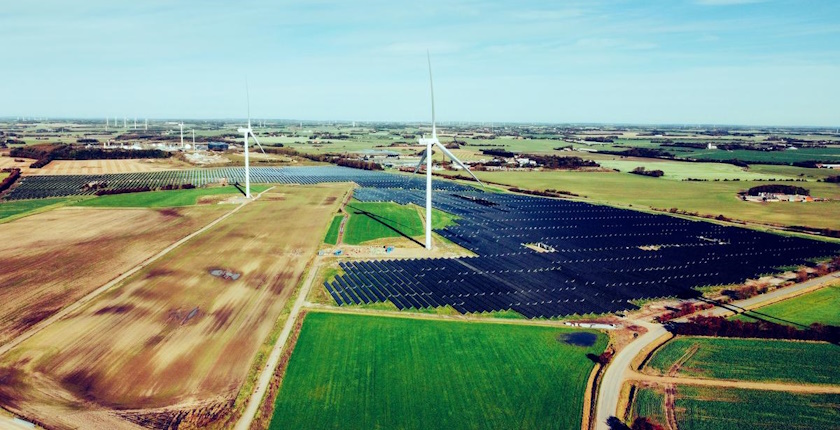
Eurowind Energy plans to build its Siminoc hybrid power plant in southeastern Romania by 2028. It would consist of 24.8 MW of wind power and a matching photovoltaic capacity. The company is considering battery storage as well.

Danish renewable energy developer and operator Eurowind Energy unveiled a EUR 65 million investment in Romania. The Siminoc wind and photovoltaic park project is for 49.6 MW in total.

The site for the hybrid power plant is in Constanța county in Dobruja (Dobrogea). The historical region is Romania’s wind power hub.

Eurowind Energy said it has obtained state support for the project through the country’s contracts-for-difference (CfD) mechanism.

Annual production estimated at 120 GWh

The wind and solar power segments of the future facility in the country’s southeast would each have 24.8 MW in capacity. Siminoc’s annual output is estimated at 120 GWh, equivalent to the consumption of over 50,000 households, the company said.

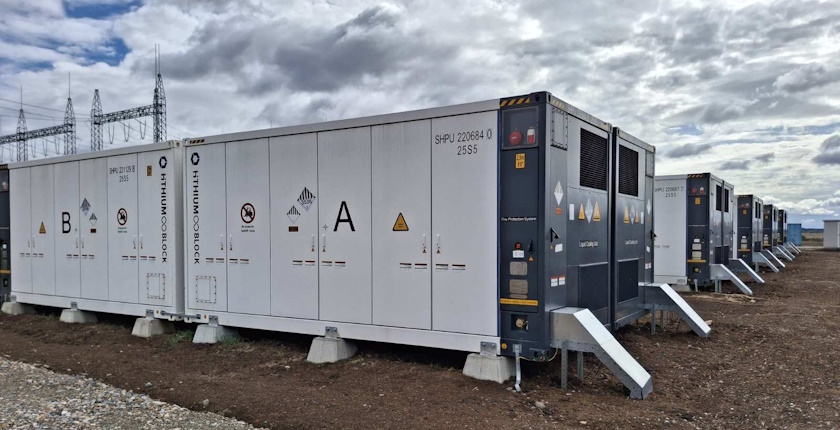
The company also plans to configure a BESS unit

In its portfolio, Eurowind Energy has wind, battery storage, solar, power-to-heat, hydrogen, biogas and hybrid power plants. Founded twenty years ago, it employs 700 people and is active in 16 markets in Europe, including Bulgaria, and the United States.

Completion date clings on grid connection

According to the schedule for Siminoc, it needs to obtain the construction permit in the first half of this year, and the start of works is planned for 2027. The hybrid power plant would be commissioned in 2028, though adjustments are possible, depending on administrative procedures and the grid connection.

Importantly, Eurowind Energy revealed that it would configure battery energy storage system (BESS) equipment at the procurement phase, when it also needs to select wind turbines and solar panels.

“Siminoc is our first hybrid park in Romania and marks an important step in the evolution of the local portfolio. We no longer view projects as mere production capacities, but as assets that provide real flexibility to the energy system. Combining wind with photovoltaics and, most likely, battery storage allows us to align production to demand, reduce local variability and contribute responsibly to the safe integration of renewable energies,” Country Manager Adrian Dobre said.

Eurowind Energy Romania began its activities in 2011. It has four operational solar parks – Hălchiu, Măgurele, Pufești and Teiuș. The project pipeline amounts to 7.5 GW in various stages of development. The company expects operational capacity to reach 124 MW by mid-year.
by in News

Eurowind Energy presents solar-wind hybrid project in Romania

Eurowind Energy plans to build its Siminoc hybrid power plant in southeastern Romania by 2028. It would consist of 24.8 MW of wind power and a matching photovoltaic capacity. The company is considering battery storage as well.

Danish renewable energy developer and operator Eurowind Energy unveiled a EUR 65 million investment in Romania. The Siminoc wind and photovoltaic park project is for 49.6 MW in total.

The site for the hybrid power plant is in Constanța county in Dobruja (Dobrogea). The historical region is Romania’s wind power hub.

Eurowind Energy said it has obtained state support for the project through the country’s contracts-for-difference (CfD) mechanism.

Annual production estimated at 120 GWh

The wind and solar power segments of the future facility in the country’s southeast would each have 24.8 MW in capacity. Siminoc’s annual output is estimated at 120 GWh, equivalent to the consumption of over 50,000 households, the company said.

The company also plans to configure a BESS unit

In its portfolio, Eurowind Energy has wind, battery storage, solar, power-to-heat, hydrogen, biogas and hybrid power plants. Founded twenty years ago, it employs 700 people and is active in 16 markets in Europe, including Bulgaria, and the United States.

Completion date clings on grid connection

According to the schedule for Siminoc, it needs to obtain the construction permit in the first half of this year, and the start of works is planned for 2027. The hybrid power plant would be commissioned in 2028, though adjustments are possible, depending on administrative procedures and the grid connection.

Importantly, Eurowind Energy revealed that it would configure battery energy storage system (BESS) equipment at the procurement phase, when it also needs to select wind turbines and solar panels.

“Siminoc is our first hybrid park in Romania and marks an important step in the evolution of the local portfolio. We no longer view projects as mere production capacities, but as assets that provide real flexibility to the energy system. Combining wind with photovoltaics and, most likely, battery storage allows us to align production to demand, reduce local variability and contribute responsibly to the safe integration of renewable energies,” Country Manager Adrian Dobre said.

Eurowind Energy Romania began its activities in 2011. It has four operational solar parks – Hălchiu, Măgurele, Pufești and Teiuș. The project pipeline amounts to 7.5 GW in various stages of development. The company expects operational capacity to reach 124 MW by mid-year.
by in News

Renalfa IPP expands its Tenevo, Kaolinovo PV plants in Bulgaria with batteries

Vienna-based Renalfa IPP commissioned a 65 MW / 260 MWh battery energy storage system within its hybrid power plant project in Tenevo. Also in Bulgaria, the joint venture expanded its Kaolinovo solar power plant to 33 MW and added a BESS of 33 MW in operating power and 110 MWh in capacity.

One of the biggest hybrid power plants in Southeastern Europe is gradually coming together. Renalfa IPP, which last year marked the start of the BESS boom in Bulgaria, said it added a battery system of 65 MW in capability and 110 MWh in capacity to the Tenevo solar power plant.

Project firm Tenevo Solar Technologies is a joint venture with Denmark-based Eurowind Energy. Renalfa IPP, headquartered in Austria’s capital city, is itself a joint venture, established by clean energy and e-mobility company Renalfa Solarpro Group and French renewable energy infrastructure fund manager RGreen Invest.

Ultimately, the plan is to build a 250 MW wind farm at the Tenevo site, in Yambol province in Bulgaria’s southeast. The first 69 MW in peak capacity of the solar power plant came online two months ago, within a 237.6 MW project.

Tenevo BESS to grow to 315 MW

Tenevo is one of the biggest co-located BESS projects in Europe to date, according to Renalfa IPP, which added that it surpassed 1 GWh of energy storage in operation.

The firm aims to increase the battery facility to 315 MW and 760 MWh by early next year, when it expects to complete the solar park as well.

Solarpro Bulgaria builds both battery storage facilities

The project manager for the Tenevo BESS is Solarpro Bulgaria, part of Renalfa Solarpro Group, while Hithium and Kehua supplied the equipment. Solarpro and Hithium established cooperation two years ago and recently expanded it.

The same affiliate was the project manager and engineering, procurement and construction (EPC) contractor for the expansion of the Kaolinovo photovoltaic park in northeastern Bulgaria. Renalfa IPP said it grew to 33 MW in peak capacity from 10 MW, while a BESS of 33 MW and 110 MWh was also added. The facility was built in 2012.

Renalfa IPP is also active in Hungary, Romania, and North Macedonia, where it is about to add batteries to its Oslomej PV plant. In the last update, it said it has 554 MW in operational generating assets, BESS of 455 MW and 1.01 GWh in total, and over 1 GW of projects in late-stage development.

by in News

Eurowind Energy’s solar power project in Romania gets CfD thanks to auction list dropouts

Eurowind Energy’s Ewe Solar Project in Romania, of 110 MW, is now eligible for government support in the form of a contract for difference (CfD), even though it landed just below the line in the last renewable energy auction. It got upgraded from the reserve list as the developer of two winning photovoltaic endeavors has decided to exclude some sections.

Depending on the policy framework and market conditions, renewable energy investors sometimes opt for power purchase agreements (PPAs) or the electricity exchange instead of locking in a fixed price for the long term in a government support scheme. Enery Element, which won CfDs in Romania’s last solar power auction, decided not to sign some of the contracts. It means Eurowind Energy, the first in the reserve list with its Ewe Solar Project, can now fill the quota instead of its competitor.

Enery Element has obtained the rights to the CfDs with two projects that it conveniently split into several sections each. It enabled it to withdraw only parts of the future photovoltaic plants.

Enery Element cancels three sections of 46 MW altogether

Enery Element pulled away two of the 11 lots that its subsidiary Baboia Solar Plant won for a facility in Ogrizeni in Giurgiu county.

They were the lowest strike prices in the entire auction: EUR 35.77 per MWh and EUR 36.33 per MWh. The proposed two sections, for a combined capacity of 25.9 MW, lowered the total to 324.2 MW.

According to an earlier update, the solar power plant would have 535 MW in peak capacity. The project firm also won a grant of EUR 6.1 million for a 121.9 MWh battery energy storage system.

Baboia Solar Plant, also known as Ogrizeni, would include a subsidized BESS of 121.9 MWh

Enery Element is a joint venture between Austrian renewable energy company Enery Development and its Bulgarian partner Element Power Group.

Conversely, with Siret Solar Plant, Enery Element canceled the part with the highest strike price of the four that were selected. The levels were from EUR 38.76 per MWh to EUR 38.79 per MWh.

It slashed the part of the capacity qualified for CfDs in the Dumbrava 2 project to 88.5 MW from 108.6 MW. The developer didn’t reveal the reason for its move.

Eurowind Energy lifts auction’s highest strike price to EUR 46 per MWh

The Ministry of Energy said it would replace the canceled capacity with Ewe Solar Project of 110 MW. It is a special purpose vehicle, working under Denmark-based Eurowind Energy.

The accepted price is EUR 46 per MWh, while the new lowest level on the list is EUR 36.69 per MWh, for a segment of the Baboia Solar Plant.

by in News

First part of Tenevo PV plant comes online, batteries are under construction

The largest hybrid power plant in Bulgaria is beginning to take shape – a joint venture of Eurowind Energy and Renalfa IPP commissioned the first segment of a solar park, and it is building a battery energy storage system (BESS). The Tenevo facility is planned to include a wind power plant as well.

Almost two years after the start of construction, a solar park in Yambol province in southeastern Bulgaria is now producing electricity. It has 69 MW in peak capacity. Project firm Tenevo Solar Technologies has a task to expand it to 237.6 MW, making it one of the biggest photovoltaic systems in the country.

Together with a battery system, of 315 MW in operating power and 760 MWh in capacity, and the planned wind farm of 250 MW, it would be the largest and most complex hybrid power plant in Bulgaria. At this moment, it would also be the first such green energy facility that doesn’t consist only of photovoltaics and batteries. The BESS part alone would probably be the biggest in Europe.

Tenevo will likely become the biggest hybrid power plant in Bulgaria and the first one with an additional source besides solar power and BESS

Tenevo operates under Eura IPP, incorporated in Bulgaria. It is an equally owned joint venture of Renalfa IPP and Eurowind Energy. The former of the two is itself a JV, founded by Vienna-based clean energy and e-mobility company Renalfa Solarpro Group, and French renewable energy infrastructure fund manager RGreen Invest.

Renalfa IPP said it has more than 650 MW in operation, over 1 GW of projects in late-stage development and a project pipeline of more than 3 GW. The company is active in Poland, Hungary, Romania, Bulgaria, and North Macedonia.

Eurowind Energy is a Danish investment and project development company in the field of renewable energy and an independent power producer. It has a global portfolio of over 60 GW, of which 1.3 GW in operation.

Second phase of Tenevo PV park to come online early next year

Together with the solar power plant, the 400 kV grid connection system started operating. The second phase of the Tenevo PV park will be put into operation in early 2026, as some of the panels were damaged by the extremely intense hailstorm in May, according to the update.

The BESS facility is under construction, Renalfa IPP revealed. EURA IPP secured a 320 MW connection to the transmission network, of which up to 213.7 MW is for the solar farm.

Raiffeisen, EBRD are main creditors

The European Bank for Reconstruction and Development (EBRD) has committed a senior secured loan of up to EUR 50 million. It includes a full or partial cover by a first loss guarantee under the EBRD InvestEU Framework, the lender’s first in Bulgaria. It valued the project at EUR 158.4 million.

Raiffeisen Bank International provided a financing facility of EUR 53 million.

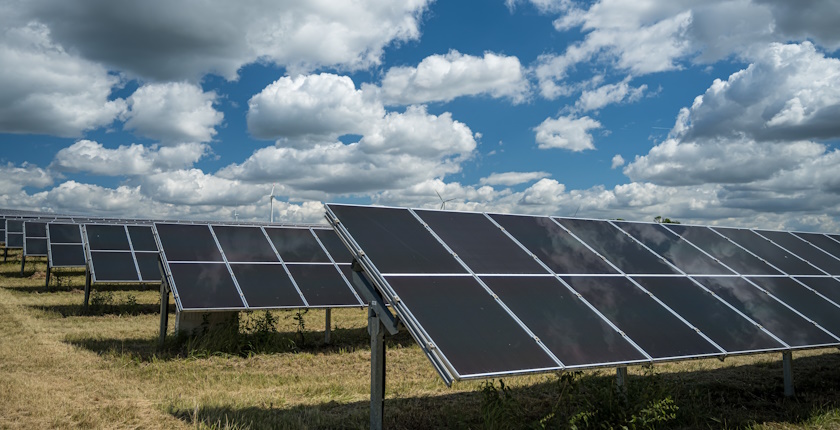
The entire solar power segment of the hybrid power plant is expected to generate 332 GWh per year. The PV panels are equipped with single-axis trackers, allowing them to turn toward the sun, which boosts efficiency.

Tenevo is on the site of a former airport near an eponymous village in the municipality of Tundzha.

by in News

Bulgaria on track to add 1.5 GW of solar power by mid-2026

The pace of large photovoltaic projects in Bulgaria indicates that total capacity can reach 6 GW by the middle of next year. The expansion isn’t slowing down.

Investors in large solar power plants in Bulgaria don’t seem intimidated by zero and negative wholesale electricity prices eating away at their revenues. One of the factors is a surge in the construction of battery energy storage systems (BESS), which iron out the gap between intraday peak production and the power demand curve. In a new analysis, Capital.bg estimated that the country’s photovoltaic capacity is set to increase by 1.5 GW by the end of the first half of next year, only accounting for big projects.

The total would reach 6 GW. The report lists 14 projects, of which some are benefitting from BESS grants from one of Bulgaria’s past tenders.

Chinese group building largest current PV project

The biggest solar park under construction is Simeonovgrad-Polyanovo, consisting of two units of 250 MW in total. It is located in the Haskovo region in the southern part of the country.

United Energy Group bought the two projects last year. It it the first significant Chinese investment in Bulgaria, the article reads. The PV plant is expected to be put into operation early next year.

The construction of the first phase of the Tenevo hybrid power plant began almost two years ago

Next on the list is Tenevo. Almost two years ago, Eurowind Energy and Renalfa IPP marked the start of the construction of the solar segment of a hybrid power plant near Yambol. The PV park is envisaged with 237.6 MW in peak capacity and a 213.7 MW grid connection.

The largest solar power plant in Bulgaria is called Apriltsi.

St. George coming online before year-end

Czech company Rezolv Energy bought the St. George project for 229 MW two years ago and broke ground at the construction site last autumn. According to the latest data, the investment is worth almost BGN 1 billion (EUR 511 million) and it is coming online by the end of the year. The developer secured a 199 MW connection.

Greek government-controlled utility Public Power Corp. (PPC) is commissionning its Colosseum (Kolizeum) facility of 165 MW in the coming months, the update reveals. The project in Chirpan has an approved network connection of 120 MW. The company is planning to add batteries of 25 MW in capability and a capacity of 55 MWh.

The company is also building an 88 MW in Vedrare near Plovdiv. The contractor for the facility in the municipality of Karlovo is Chint Green Energy of the Chint Group. The power plant is on track to become operational early next year.

A 123 MW system will be on 400 hectares between the villages of Knizhovnik and Dolno Vojvodino in Haskovo. Austria-based Enery said it would install a BESS of 180 MWh next to its solar park.

Electrohold is testing its Maglizh PV plant, the article adds. The project for 100 MW occupies 127 hectares and the estimated investment is almost EUR 90 million. The plan was changed along the way.

Top Energy Solutions has a construction permit for its Loznitsa project in northeastern Bulgaria. The project is for a peak capacity of 115 MW and a grid connection of 99.99 MW, spanning 82.4 hectares. It is located at the villages of Vesselina and Kamenar in the Loznitsa municipality, Razgrad district.

by in News

Danish Eurowind Energy to build 220 MW solar park in Romania

Denmark-based renewable energy company Eurowind Energy has announced plans to develop a 220 MW solar park in Romania in an investment valued at EUR 174.8 million. It would be its largest solar park in Romania and one of the biggest in the country. In addition, the company ordered wind turbines from Vestas for its three projects in Romania.

Eurowind’s future solar park, located in Vișina in Dâmbovița County, will span 345 hectares, comprising over 400,000 photovoltaic panels. Its projected annual electricity output is 400 GWh, equivalent to the consumption of around 150,000 Romanian households.

The Vișina solar park is the fifth photovoltaic project developed by Eurowind in Romania, following those in Hălchiu, Măgurele, Pufești, and Teiuș. By the end of 2025, the company plans to operate a local portfolio of 124 MW, alongside a pipeline of about 7.5 GW of solar, wind, hybrid, and storage solutions, according to its website.

Vișina is Eurowind’s fifth solar project in Romania

The Teiuș Solar Park, with a capacity of 60.2 MW, was commissioned in April this year. The EUR 55 million project was developed in collaboration with local firm Teiuș Solar. Its planned annual production is 103.59 GWh of electricity.

Also in April, Eurowind signed a 12-year virtual power purchase agreement (PPA) in Romania for the supply of electricity from its Pecineaga wind park. The contract was signed with Sweden-based automotive manufacturer Autoliv.

Eurowind has ordered 143 MW of Vestas wind turbines for its wind farms in Romania

Wind turbine manufacturer Vestas said yesterday that Eurowind Energy has placed a 143 MW order for its Frumușița, Vector, and Pecineaga Northeast (NordEst) wind power projects in Romania. The contract includes the supply and installation of 23 wind turbines from the EnVentus platform, Vestas added.

In addition to wind and solar, Eurowind Energy’s portfolio includes hydrogen, biogas, power-to-heat, and battery storage projects. It operates in 16 markets across Europe and the United States, according to the Danish company’s website.

by in News

Eurowind Energy completes its 60.2 MW solar park in Romania

Eurowind Energy’s 60.2 MW photovoltaic park in Transylvania will be put into operation in late April, Minister of Energy Sebastian Burduja said. The facility is joining the almost 600 MW in new capacity funded from the National Recovery and Resilience Plan. In addition, the ministry prepared a EUR 450 million package of grants for companies for energy efficiency and self-consumption.

After 14 years of doing business in Romania, Denmark-based European Energy is materializing its first major endeavors in the country. Minister of Energy Sebastian Burduja revealed that the company’s solar power plant in Teiuş would be commissioned by the end of the month.

The location is in the Transylvania region. Eurowind Energy received EUR 15 million from the government for the project. It costs EUR 47.2 million in total, or EUR 55 million with value-added tax. Construction began a year ago. The system in Alba county will generate an estimated 104 GWh per year.

Burduja said almost 600 MW of capacity has been commissioned within the projects that Romania funds through the National Recovery and Resilience (NRRP or, in Romanian, PNRR).

Eurowind Energy has major renewables projects lined up in Romania, Bulgaria

Eurowind Energy, based in Hobro, Denmark, is one of the biggest wind and solar power developers in Romania.

The Danish company recently signed a 12-year virtual power purchase agreement (PPA) with Autoliv in Romania, for the supply of electricity from the Pecineaga wind park. Eurowind Energy is preparing to put the facility into operation.

It is also building a 238 MW solar power plant in Yambol in neighboring Bulgaria, with Renalfa IPP. They plan to add wind turbines and batteries.

EUR 450 million available for firms for energy efficiency, self-consumption

At the same event, Burduja said the ministry is launching two calls worth EUR 450 million combined. They are intended for support to the energy-intensive industry.

The package for is for companies. It consists of EUR 150 million for energy efficiency – the replacement of outdated equipment – and more than EUR 300 million for the production of electricity for self-consumption.

The Ministry of Energy has set an extremely ambitious target of 2.5 GW of new capacity to be put into operation this year, Burduja stressed. It is two times more than in 2023. Active energy storage capacity is nearing 400 MWh, he added.

In the energy efficiency call, fims can receive as much as EUR 30 million each from the Modernisation Fund. The self-consumption segment is for the ones with available land and projects for photovoltaic parks or even wind farms and micro hydropower plants.

According to the International Renewable Energy Agency (IRENA), Romania increased its solar power capacity at the end of last year by 57% to 4.7 GW. Most of it is from prosumers. The wind power segment is picking up, but slowly, after a stagnation that began a decade ago.

by in News

Eurowind Energy signs virtual PPA in Romania with automotive manufacturer

Denmark-based Eurowind Energy signed a 12-year virtual power purchase agreement (PPA) with Autoliv in Romania, for the supply of electricity from the Pecineaga wind park. The automotive manufacturer headquartered in Stockholm also signed one such deal for a solar park in Finland.

The strongest wind turbines in Romania will generate electricity for Autoliv, which makes safety systems for vehicles including airbags and seatbelts, as well as steering wheels and other components. Eurowind Energy will supply the energy from its Pecineaga wind power plant for 12 years under a virtual PPA. In addition, the Swedish automotive manufacturer has another new contract in Finland.

Eurowind Energy recently completed the construction of all eight SG 6.6-170 turbines at the site in Northern Dobruja (Dobrogea in Romanian). However, the 48 MW wind farm is expected to become operational by 2027, according to an update from Autoliv.

PPAs essential for project development for Eurowind Energy

Estimated annual output is 176 GWh, equivalent to the electricity needs of 48,000 Romanian households. The investment is worth EUR 79 million. Eurowind Energy, based in Hobro, Denmark, is one of the biggest wind and solar power developers in Romania.

The company is also a partner in the construction of a giant photovoltaic plant in Bulgaria. The Tenevo facility is planned to be combined with a future wind park and a battery energy storage system into a hybrid power plant.

“PPAs are essential in developing new energy parks. Power purchase agreements with large, ambitious companies like Autoliv ensure the continuous development of new parks and a cleaner future for all of us,” Commercial Director Jesper Schaumburg-Düring said. Eurowind Energy is 50% owned by EWE Holding while Norlys Holding controls the other half.

Autoliv is combining wind with solar in different countries to optimize electricity production

Autoliv’s other new virtual PPA, also for 12 years, is with Alight, for a proposed solar power plant of 100 MW in peak capacity. The two deals are important for ensuring a consistent and reasonably priced energy supply for the manufacturer’s activities in Europe, reducing the risks associated with potential future energy price fluctuations, the announcement reads.

“The innovative approach of combining solar and wind technologies ensures optimal energy generation during both day and night. This approach and the fact that the facilities are located in two different European countries provides flexibility in Autoliv’s physical operations and electricity procurement,” the company added.

The PV park in Eurajoki, Finland is supposed to come online in 2026. Autoliv revealed that it intends to “contract a majority of the clean electricity produced.” Construction is set to start during the spring, the statement adds.

“Through these initiatives, we support our ability to supply customers seeking sustainable products and we take a significant step forward in achieving our climate targets for the European operations,” said Autoliv Europe’s President Magnus Jarlegren. The company aims to achieve carbon neutrality in own operations by 2030 and net zero emissions across the supply chain by 2040.