by in News

Croatia drafts EUR 1.68 billion Social Climate Plan

Croatia has prepared a Social Climate Plan for the period 2026-2032, worth EUR 1.68 billion. It would introduce measures for the buildings and road transport sectors aimed at supporting households and small businesses.

The draft of Croatia’s Social Climate Plan is under public discussion, which will last until December 22.

The process of adopting the most important national instrument for protecting citizens from the adverse effects of climate transition and the introduction of the European Union’s Emissions Trading System 2 (EU ETS 2) has begun, the Ministry of Environmental Protection and Green Transition stressed.

The plan will be financed with EUR 1.26 billion from the EU’s Social Climate Fund, and the remainder from Croatia’s national budget. Essentially, all the funds are coming from the auctions of emission allowances in the EU and Croatia under the EU ETS 2. It is an expansion of the EU ETS to the buildings sector (heating and cooling) and road transport.

The EU established the Social Climate Fund in May 2023 to protect households and small businesses

The expansion could increase the costs of heating, cooling, and transport. In May 2023, the EU established the Social Climate Fund to protect low-income households, micro enterprises, and transport users that could be affected by the cost increase.

The measures and investments also contribute to the implementation of the goals of the National Energy and Climate Plan (NECP).

The Social Climate Plan allocates EUR 658.1 million (39%) for the buildings sector, and EUR 958.4 million (57%) for road transport. Technical assistance is the third component, with EUR 42 million (2.5%).

The measures planned for the buildings sector include support for the establishment of energy communities and subsidies for the energy renovation of family homes. In the road transport sector, the plan envisages investments in cycling, on-demand mobility services, zero-emission vehicles, and railway infrastructure.

Vučković: Restoration planned for 180 kilometers of bike trails
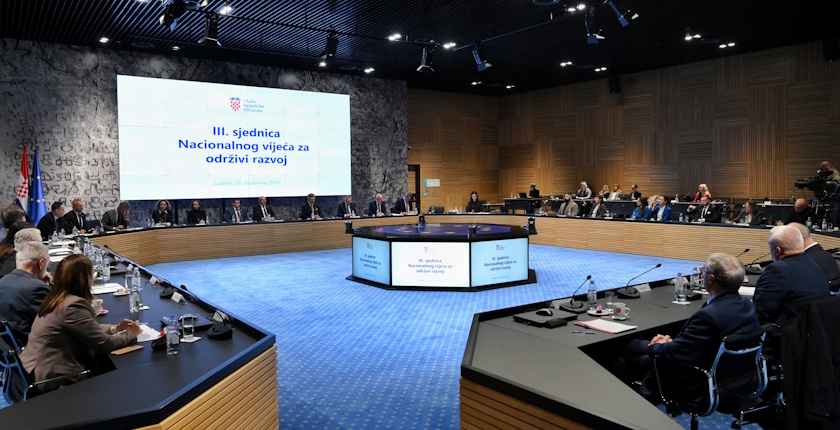
croatia social climate policy plan EU ets 2 marija vuckovic plenkovic
Photo: Government of Croatia

​While presenting the draft plan at a session of the National Council for Sustainable Development, Minister of Environmental Protection and Green Transition Marija Vučković said it identifies two groups: the energy poor or vulnerable, and transport poor or vulnerable.

“The plan provides for 10 measures, four of which relate to so-called stationary or energy poverty, and the remaining six to achieving affordable and favorable mobility and reducing the risk of transport poverty,” she explained.

According to the ministry, the plan provides for the renovation of 180 kilometers of bicycle paths, 80 kilometers of railway lines, as well as the procurement of 30 electric trains, 80 electric buses, and 3,000 electric cars.

Prime Minister Andrej Plenković stressed that the plan isn’t just a technical and administrative document, arguing that it determines what Croatia would become in ten, twenty, and fifty years.

“And we want a Croatia that is economically strong, socially just, and sovereign,” Plenković underlined.
by in News

EU waters down its 2040 climate target in runup to COP30 in Brazil

The Council of the European Union upheld the proposed 90% emissions cut target for 2040 ahead of the United Nations Climate Change Conference COP30 in Brazil, but with substantial workaround possibilities. In addition, the environment ministers failed to define the 2035 ambition, leaving the desired reduction in the amount of released greenhouse gases in a range of 66.25% to 72.5%.

Faced with declining competitiveness due to high energy prices and its strict climate and environmental standards, the EU is loosening its decarbonization goal. Following a marathon session in Brussels, the so-called Environment Council kept the desired greenhouse gas emissions reduction by 2040 at 90%, against the 1990 level, to take it to the COP30 event in Belém, Brazil. However, the competent ministers making up the body allowed several important flexibilities to avoid a last-minute stalemate.

Namely, the Council of the EU approved an updated nationally determined contribution (NDC) of the 27-member bloc and individual states to submit it at the Conference of the Parties of the UN Framework Convention on Climate Change (UNFCCC). Political leaders are gathering tomorrow, while COP30 formally lasts from November 10 to 21.

Following the 2020 NDC and its 2023 update, the new one covers the period up to 2035.

Outsourcing climate improvements instead of domestic decarbonization

On the path to eliminating net emissions by 2050, the EU is sticking with its nominal 2040 goal. On the other hand, in the latest version, the environment ministers allow “an adequate contribution of high-quality international credits in a manner that is both ambitious and cost-efficient.”

In particular, five percentage points of the 90% can be met via emission cuts promised outside the EU, and governments would be allowed to outsource a further five points, Greenpeace warned. It means they would buy carbon credits abroad as offsets.

EU is counting on purchases of other countries’ carbon credits for offsets

“The European Scientific Advisory Board on Climate Change [ESABCC] had called for emissions cuts of 90%-95% by 2040, and had stressed that this target must be for domestic reductions to climate pollution, not cuts outsourced to other countries. Environment ministers also agreed that the European Commission should reopen and water down the climate target in the case of high energy prices, a perceived negative economic impact or in light of technological advances. To reach a deal with reluctant countries, ministers also agreed to delay the start of the EU’s carbon market for pollution from cars and heating systems, extend pollution permits for heavy industry and exempt some ‘low-carbon’ fuels under the internal combustion engine phaseout,” the organization added.

The carbon market in question is the planned Emissions Trading System 2 (EU ETS 2). The Environment Council proposed to delay its establishment by a year, until 2028, and work on measures for a smooth launch.

“According to the ESABCC, only 16% of offsets have delivered genuine emissions reductions. But if they were high-quality offsets, they would be costly, and relying on them would divert investment from transforming the EU’s own industries, economy, and workers,” World Wide Fund For Nature (WWF) pointed out.

Indicative range for 2035 goal entirely below required efforts

The protracted discussions between the EU’s national governments also delayed the announcement of the EU’s indicative climate target for 2035, under the Paris Agreement. It is supposed to be submitted at the UN Climate Change Conference COP30.

“Ministers failed to agree a firm 2035 target, instead keeping a previously agreed range of 66.25% to 72.5% emission cuts, even the upper end of which is inconsistent with a credible pathway to the proposed 90% cut for five years later, undermining the EU’s position as a climate leader at COP30,” Greenpeace stressed.

Climate-competitiveness-independence tradeoff

The European Parliament’s Committee on Environment, Public Health and Food Safety (ENVI) is expected to discuss the matter soon. After a plenary vote, the institution would negotiate with the Council of the EU and European Commission.

“We need climate, competitiveness and independence. All three are crucial and going forward we need to ensure that one doesn’t come at the expense of the other. This morning, the environment and climate ministers of all member states reached a pragmatic, ambitious deal which ensures that,” said European Commissioner for Climate, Net-Zero and Clean Growth Wopke Hoekstra.

by in News

Romania preparing to include biomethane in gas grid

Romania has drafted a directive that would regulate the production, transportation and distribution of biomethane and its inclusion into the gas network. The change is aimed at limiting the increase in the prices of gas for household heating, expected from the upcoming introduction of the ETS 2 carbon allowance scheme in the European Union. Delaying the shift would also affect the costs of industrial production and for other non-household consumers of gas.

Biomethane produced from sustainable sources is carbon neutral under the EU Emissions Trading System (EU ETS), making it appropriate for buildings and transportation, the Romanian Ministry of Energy said in a new draft emergency ordinance. With the executive order, it intends to pave the way for utilizing the renewable fuel in the natural gas network, Profit.ro reported.

The document is set to amend several acts and regulate the production, transportation and distribution of biomethane. It would counter, to an extent, the increase in gas prices for households, which is expected from the expansion of the EU’s carbon pricing scheme to buildings and transportation, the ministry explained. Namely, ETS 2 is scheduled to be introduced in 2027.

Biomethane is usually obtained by processing biogas to get methane of the same purity as in fossil gas

Any delay in allowing biomethane in the existing grid draws a risk of increasing the costs of natural gas consumption, both for non-household and household customers, the accompanying note reads.

Biomethane is usually obtained by processing biogas to get methane of the same purity as in fossil gas. The gaseous biofuel can also be produced from clean hydrogen and carbon dioxide. The EU allows incentives for biomethane facilities. Some countries in Southeastern Europe, like Greece, are developing the legal framework for embracing the technology within their energy transition.

Share in gas network planned to reach 10% by 2050

Romania is planning a 5% share of biomethane in its natural gas network in 2030 and to double it by mid-century. The sectors of waste management and agriculture can produce an estimated 501,000 tons of oil equivalent in 2050.

The EU is imposing strict requirements on the removal of biodegradable organic matter from wastewater and the reduction of food waste, the ministry noted. Together with agricultural and organic municipal waste, they are the main raw materials for the production of biogas.

According to the proposal, publicly announced business plans can secure a share of renewable gases in the grid up to 1.5%. However, without an urgent legislative intervention, the investments can’t materialize, the Ministry of Energy warned. The draft directive would update the definitions of guarantees of origin, biogas, biomethane, natural gas, renewable gases and biomethane producers.

BSOG Energy, Engie Romania at forefront of upcoming biomethane investment wave

As for other developments in the segment, BSOG Energy (BSOGE), a subsidiary of Black Sea Oil and Gas, recently hired industrial services provider Bilfinger for a biomethane facility in Alba county in Transylvania.

Earlier, BSOGE said it would invest EUR 30 million in the construction of a biomethane plant. It has signed deals with milk producer DN Agrar Group for up to 15 MW in capacity, with the possibility of exceeding 20 MW in later stages.

In April, the firm partnered with Unigrains Trading in a project for a biomethane and organic fertilizer facility. They estimated the investment at EUR 65 million, for 57 MW of biomethane capacity and over 250,000 tons of organic fertilizers per year. Parent company BSOG is controlled by controlled by investment firm Carlyle.

Engie Romania launched plans a year ago with Heineken to build a biodigester for brewery waste

Last November, French-owned Engie Romania obtained the first license in the country for biogas and biomethane supply. Earlier it established a partnership with Heineken for decarbonization projects in three breweries in Romania, including heat pumps and one biodigestion system.

The firm is the largest supplier and distributor of natural gas in the country, as well as an electricity producer and supplier.

by in News

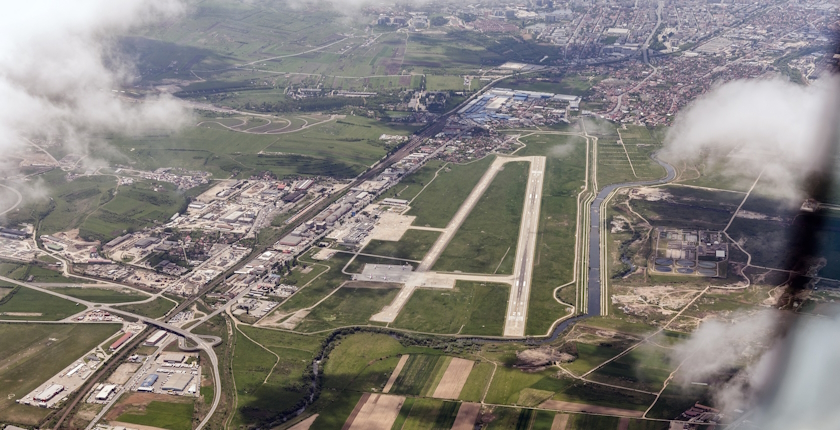
Airport in Cluj-Napoca secures grant for battery-backed solar park

International Airport Avram Iancu Cluj will cover more than half of the costs for a 5 MW solar power plant, with a battery energy storage system of 12 MW, from European funds. It expects the facility to cover more than 60% of its electricity needs.

Civilian airports throughout Southeastern Europe are building dozens of solar parks and rooftop photovoltaic systems to increase their energy autonomy and achieve cost savings. Some of the capacity is backed up by battery energy storage systems (BESS). International Airport Avram Iancu Cluj in Romania is set to join the group with a project worth EUR 10.7 million including value-added tax.

The Ministry of Transport and Infrastructure declared it eligible for EUR 6 million grant from the European Union’s Modernisation Fund. The operator is controlled by the Cluj County Council.

Cluj International Airport to save EUR 1 million per year

International Airport Avram Iancu Cluj in Transylvania serves Cluj-Napoca, Romania’s second-largest city. With the green light for EU funding, it can proceed with the PV project of 5 MW with an energy storage unit of 12 MW in operating power. The airport expects the facility to cover more than 60% of its electricity consumption.

The airport in northwestern Romania serves Cluj-Napoca, the country’s second-largest city

The system would span eight hectares and include more than 7,500 solar panels. It is intended only for self-consumption. Cost savings amount to an estimated EUR 1 million per year. The initially planned capacity of the solar park was 2 MW.

“In the context of rising energy prices and budgetary constraints, energy independence is one of the major objectives we are focusing on. The investment in a photovoltaic park at Cluj Airport, from non-reimbursable funds, is a notable achievement and creates the premises for financial stability and achieving energy independence,” said Cluj County Council President Alin Tișe.

Gearing up for rising emissions costs

The airport’s General Manager David Ciceo stressed that heat pumps are also part of the plan to decarbonize and increase energy autonomy. President of the Board of Directors Viorel Federiga noted it is an important step toward meeting new international requirements.

For instance, the EU plans to extend the EU Emissions Trading System (EU ETS) to all flights from the European Economic Area (EEA). Currently it only covers the flights within the region and toward the United Kingdom and Switzerland. A scheme called EU ETS 2, to be launched in 2027, will include buildings and road transportation.

Within its efforts to reduce carbon emissions, Cluj International Airport added another electric bus to its vehicle fleet, to take passengers to and from aircraft. It can carry 110 people. The bus, which cost EUR 830,000, features a battery that allows for an autonomy of over 300 kilometers.

The airport projected the number of its passengers this year at 3.4 million.

by in News

Heat pump sales in Europe plunge in 2024

The European Union has an ambitious goal to lift the number of heat pumps to 60 million by 2030. Still, total sales of the devices in 19 European countries fell by a combined 22% last year, according to the European Heat Pump Association (EHPA).

As part of its energy transition strategy, the EU aims to have 60 million heat pumps in operation by 2030 at the latest. It would allow at least half of European buildings to be heated, and partly cooled, using renewable energy sources. Gas consumption in buildings would be 40% lower than in 2022, saving EUR 60 billion in energy imports and significantly cutting CO₂ emissions.

More than 25 million heat pumps have already been installed in Europe

The intermediate target of 20 million by 2026 was surpassed before the end of 2024, EHPA data shows. Last year, Europe had more than 25 million heat pumps installed. However, reaching 60 million units in less than six years now appears increasingly challenging.

The report notes that after steady sales growth through 2022, the market declined in both 2023 and 2024. Last year, sales in the observed group of 19 countries fell by 22%. The steepest drops were recorded in the Czech Republic (64%) and Germany (48%).

Photo (EHPA): Number of heat pumps sold every year from 2012 to 2024

The report’s authors warned that if current trends continue, the EU could fall short by about 15 million units in 2030, or 25% below the target.

Leading markets and new data from Southeastern Europe

France and Italy had the strongest sales in 2024, with 546,000 and 348,000 units, respectively. However, looking at the share of households using heat pumps, Scandinavian countries are in the lead.

Scandinavian countries are in the lead in the household heat pump segment

Norway has 632 heat pumps per 1,000 households, followed by Finland, with 524. Sales remained strong in 2024, with 48 and 33 heat pumps per 1,000 households, the highest levels in Europe.

Photo (EHPA): Number of heat pumps sold per 1,000 households in 2024

EHPA published sales estimates for nine additional European countries for the first time, including some that Balkan Green Energy News tracks. Sales in Bulgaria and Croatia amounted to 8,000 units each last year. In Cyprus, 3,000 were bought, compared to 18,000 in Greece, 4,000 in Latvia, 1,000 in Luxembourg, 6,000 in Malta, 10,000 in Romania and 13,000 in Slovenia. There are no historical data for the countries in the group for comparison.

The estimates are based on 2023 sales figures from the EurObserv’ER Heat Pump Barometer 2024, supplemented with 2024 sales estimates provided by heat pump manufacturers.

UK records the largest growth in heat pump sales

The United Kingdom, Ireland, and Portugal were the only countries achieving growth last year. Although the total number of heat pumps in the UK remains relatively small, sales increased by 56% in 2024.

Photo (EHPA): The table shows the number of units sold in 2024, followed by the decrease or increase in sales from 2023 and the total number of heat pumps at the end of 2024 by country

According to EHPA, the progress was driven by a combination of clear and stable policy, the government’s Boiler Upgrade Scheme – offering up to GBP 7,500 per household to replace fossil fuel systems – as well as removing hybrid systems from subsidy schemes, raising public awareness, and increasing the number of trained installers.

Ireland also saw strong sales growth, 19%, underpinned by long-term policy stability and a clear commitment to renewable energy. It ranks fifth in Europe in the share of heat pumps among households. The market initially grew in the new-build sector, where heat pumps have become standard, while the renovation segment is expanding thanks to subsidies and a rising carbon tax.

Additional measures needed

EHPA pointed out that stronger strategic support at the EU level, along with stable legislation and regulations, is crucial for achieving the targets.

“More heat pumps is a win-win for Europe – and it must also be the smart choice for consumers. To get there, electricity prices must be made more competitive, good long-term support schemes put in place and installers trained up, so buying a heat pump is affordable and easy,” said EHPA Executive Director Paul Kenny.

by in News

EU outlines measures for 90% emissions cut by 2040

The European Commission proposed an amendment to the European Climate Law, setting a 2040 target of a 90% reduction in net greenhouse gas emissions from the 1990 level. The outlined measures would give certainty to investors, promote innovation and business competitiveness and increase energy security, according to the European Union’s executive body.

The EU is closing in on its 2030 goal to slash annual net emissions by 55% from the 1990 baseline, according to the European Commission’s recent report on national energy and climate plans (NECPs). It is part of the efforts to reach climate neutrality by mid-century. Today the EU’s top executive body formally outlined the proposal for the next intermediate target – 90% by 2040.

It is in the form of an amendment to the European Climate Law, which entered into force in July 2021. In the meantime, the 27-member bloc adopted a 2030 legislative package known as Fit for 55.

The European Parliament and the Council of the EU now need to discuss and adopt the amendment.

Nature-based and industrial carbon removals will play an increasingly important role in reaching the targets, the European Commission pointed out. It implies domestic permanent carbon removals within the Emissions Trading System (EU ETS) to compensate for residual emissions from hard-to-abate sectors. Such systems need to scale up significantly by 2040, the commissioners said.

More pragmatic, flexible trajectory toward 90% reduction in emissions by 2040

The proposal sets out a more pragmatic and flexible way to reach the milestone, the European Commission claimed.

“Aligned with the EU Competitiveness Compass, Clean Industrial Deal and Affordable Energy Action Plan, the proposed 2040 climate target takes fully into account the current economic, security and geopolitical landscape and gives investors and businesses the predictability and stability they need in the EU’s clean energy transition. By staying the course on decarbonisation, the EU will drive investment in innovation, create more jobs, growth, increase our resilience to impacts of climate change and become more energy independent,” the statement adds.

Von der Leyen said industry and investors require a predictable direction on the path to the climate goal

“As European citizens increasingly feel the impact of climate change, they expect Europe to act. Industry and investors look to us to set a predictable direction of travel,” said European Commission President Ursula von der Leyen.

Today’s proposal is based on an impact assessment and advice from the Intergovernmental Panel on Climate Change (IPCC) and the European Scientific Advisory Board on Climate Change. The adoption follows engagement with member states, the European Parliament, stakeholders, civil society and citizens since the commission’s recommendation in February 2024.

EU eyeing international carbon credits

The commission vowed to consider a limited role for high-quality international carbon credits, starting in 2036, and greater flexibility across sectors to help achieve targets in a cost-effective and socially fair way. For instance, a member state would have the possibility to compensate for a struggling land use sector with an overachievement in reducing emissions from waste and transportation.

Emphasis is also on the competitiveness of the European industry and a level playing field with international partners. Among the guidelines is technological neutrality.

Fiscal incentives are under consideration for clean tech and industrial decarbonization projects.

The commission highlighted its Clean Industrial Deal State Aid Framework, adopted last week, and the simplification of the Carbon Border Adjustment Mechanism (CBAM). It also issued a recommendation on tax incentives for investments in clean technologies and industrial decarbonization.

Measures on affordable energy to scale up manufacturing of grid components and support power purchase agreements, the pilot for the upcoming Industrial Decarbonisation Bank, the forthcoming Chemicals Industry Action Plan and the sectorial dialogues with stakeholders are among the actions that will help deliver the Clean Industrial Deal, the commissioners explained. Their draft seven-year budget, officially called Multiannual Financial Framework, is due to be unveiled next month.

WindEurope urges for annual targets for renewables

Reacting to the announcement, WindEurope said EU member states would need to translate the 90% ambition into clear annual goals for the deployment of wind and other renewables for the period 2031-40.

“Otherwise the 2040 target will remain academic,” the organization underscored.

by in News

Greece to rely on carbon price, renewables potential in green hydrogen development

Despite early efforts to develop green hydrogen and its first regulatory framework, Greece finds itself on a steep curve.

The government has presented the first law on hydrogen and renewable gases in parliament. At the same time, refineries and other industries are working on projects that will determine green hydrogen’s cost-effectiveness.

However, a significant obstacle is the government’s unwillingness to support the new technology, either through subsidies or other financial instruments. The Ministry of Environment and Energy has specified that no upcoming technology would benefit from public funds. The goal is to maintain a low cost for the consumer during the energy transition.

According to Professor Pantelis Kapros from the National Technical University of Athens (NTUA), it means hydrogen will have to rely almost exclusively on the price of carbon. As the European Union’s European Trading System (EU ETS) is about to enter its second phase in 2026, the price of carbon allowances is projected to rise steeply.

Even so, market participants estimate that a ton of carbon dioxide equivalent would need to cost EUR 140, two times more than today, to make green hydrogen competitive against grey hydrogen, which is produced from natural gas.

Exports and power prices added to the equation

Regardless, Greece sees an opportunity to produce and export green hydrogen. The reason is its high renewables potential and production. The ever-increasing photovoltaic capacity has caused an overabundance of energy during the day. More demand is needed to balance the system and hydrogen can provide a way out.

Tsafos: We want to become a supplier

The hope is that the low renewable energy cost, combined with potential interest in shipping hydrogen abroad, will justify long-term investments.

“Our view is that as long as the market is interested, we want to become a supplier,” Deputy Minister of Environment and Energy Nikos Tsafos said at the Hydrogen & Green Gases Forum in Athens.

A potential problem is that green hydrogen plants are not expected to be viable if they only produce during the day, when renewable energy prices are usually lower. “Ten hours of operation are not enough to support producers and there are also technical issues to solve,” said Dimitris Kardomateas, head of the Center for Renewable Energy Sources and Saving (CRES).

He also pointed to the average daily wholesale power price, as it is higher in Greece than in most other European markets. It should be noted that electricity makes up about 70% of the total operating cost of electrolyzers.

Biomethane considered more mature

On the other hand, biomethane is considered much easier to develop.  The technology depends less on power prices and also faces fewer technical hurdles. “Biomethane has a clear role, especially through its ability to enter the gas network, and we want to utilize it”, said Tsafos.

Gas distribution company Enaon EDA emphasized its readiness to include biomethane in its network. Its CEO Barbara Morgante noted that a study is underway to pinpoint the various existing and planned biomethane production plants around the country, as well as their proximity to Enaon’s network.

Biomethane is usually obtained by processing biogas to get methane of the same purity as in fossil gas. The renewable fuel can also be produced from clean hydrogen and CO2.

by in News

The cost of keeping warm: delivering a just clean heat and cooling transition for European citizens

Author: Delia Villagrasa, Director of the Cool Heating Coalition, EUSEW’s partner organisation, and Beatriz Yordi, Director, Carbon Markets and Clean Mobility, DG CLIMA, European Commission

Millions of people already struggle to pay energy bills in Europe. ETS2 – which will be launched in 2027 and will put a price on carbon emissions from buildings and transport – risks deepening the energy poverty problem. However, a significant share of ETS2 revenue will be directed to energy efficiency upgrades and clean heating solutions. Through the Social Climate Fund, vulnerable groups will also receive access to these benefits. With clean heat at its heart, the fund could mark a pivotal step in the EU’s journey to net-zero, tackle energy poverty, slash emissions, and finance a fair, fossil-free future.

In 2023, 47 million Europeans were unable to afford to heat their homes. Europe’s largely inefficient building stock relies heavily on fossil fuels for thermal comfort, subjecting citizens to volatile energy prices. Amidst high energy bills and other increases in the cost of living, it has never been more important to get the pricing right on fossil fuels.

Clean heat is the key to energy independence

​​​Following the onset of the energy crisis in 2021, gas prices experienced significant volatility, peaking on the Dutch TTF at more than 10 times current gas prices (340€/MWh in late 2022 vs 32€/MWh today). As Russia continued to wage war against Ukraine, citizens have had to ​ shoulder the burden of fossil fuel import costs to the tune of €427 billion in 2024. ​As long as Europe remains dependent on fossil fuels, citizens will continue to face soaring energy prices, whether through taxes which fund gas subsidies or through their rising energy bills. The way forward is through independence from fossil fuels.

Decarbonising heating and cooling, which together account for around half (47%) of the EU’s energy consumptionis a major step towards energy independence. Over 73% of EU household heating comes from fossil fuels. Households that are able and willing to invest in energy efficiency works and clean heat technologies face multiple barriers. Consumers across Europe are often not able to easily decarbonise their homes as they are battling high upfront costs and face a lack of skills and structural factors that make clean heating and cooling technologies more expensive to use, like a high electricity-to-gas price ratio and fiscalities. Markets are currently misaligned with our ambition for a fossil-free future, and need a clear policy steer towards decarbonisation.

Enabling Europe’s energy transformation

Starting in 2027, the Emissions Trading System 2 (ETS2) will put a price on carbon emissions from fossil fuel use within buildings. The policy incentivises the switch to efficient, low-carbon solutions by increasing the costs for fossil fuels. The roll-out of ETS2 could cause fossil fuels prices to rise, but it also provides funding opportunities for modern and clean heat technologies.

Instead of directing money from higher energy bills towards paying for Europe’s fossil fuel imports, ETS2 will raise money that Member States can use to invest in modernising their energy systems. Member States will collectively raise approximately €270 billion before 2032, generating an unprecedented amount of funds for investment in energy efficiency improvements, renewables, and bill assistance. While pricing out the fossil fuel status quo, which has long been upheld by subsidies, ETS2 will ensure a stream of investments that can transform our energy systems.

Fairness and fossil-free futures

For many consumers, well-designed programmes and investments will mean they have the freedom to choose cleaner, modern technologies. However, low-income households will likely have more difficulties absorbing the higher costs of fossil fuel use. Though responsible for the lowest amount of emissions, the poorest households are likely to feel the deepest effects of the rise in costs.

To shelter the vulnerable from rising prices, revenues from ETS2 will also provide at least €86.7 billion towards the Social Climate Fund (SCF). This instrument ensures that the distribution of revenues remains fair by earmarking a sizeable amount for direct support of those most in need. The five countries who will receive the largest amounts from the SCF pot will be Poland, France, Italy, Spain, and Romania. Relative to the number of vulnerable households, Greece, Bulgaria, Slovakia, and Romania will receive the most resources to provide assistance to those with the lowest income.

Copyright: Bruegel

For instance, a quarter of the Romanian population experienced some form of energy poverty in 2021. Romania is also one of the Member States with the highest percentage of households struggling with unpaid utility bills. The country stands to receive approximately €6 billion to enact its Social Climate Plan, supporting low-income and vulnerable households and SMEs to make green investments.

Beyond a new pricing system, ETS2 is a signal for the buildings and heating markets to decarbonise, a way of raising the capital needed to invest in renewables and energy efficiency, and an opportunity to foster solidarity between Member States and in society. Pricing fossil fuel use aligns global financial flows with our vision of the future: one where energy independence, warm homes, and thriving citizens are the norm.

This opinion editorial is produced in co-operation with the European Sustainable Energy Week (EUSEW) 2025. See ec.europa.eu/eusew for more details.

by in News

Croatia earmarks EUR 1.6 billion for Social Plan for Climate Policy

Croatia plans to achieve an efficient and just green transition by implementing its EUR 1.6 billion Social Plan for Climate Policy.

The Ministry of Environmental Protection and Green Transition has presented the Social Plan for Climate Policy and the European Union’s upcoming Emissions Trading System 2 (EU ETS 2) in Croatia’s capital Zagreb.

The event was organized as part of the process of developing the country’s Social Plan for Climate Policy. According to the ministry, the document outlines the green transition and includes measures and investments that would benefit vulnerable households, micro businesses, and users of transportation services.

The plan is being prepared within the framework of the Social Fund for Climate Policy, which is part of the EU’s Fit-for-55 legislative package. The aim is to reduce greenhouse gas emissions by 55% by 2030 from the 1990 level.

The social plan will be funded with proceeds from EU ETS 2

The new EU ETS 2 will cover CO2 emissions from buildings, road traffic, and small firms. Funding for the social plan will be secured from proceeds from the supplementary carbon pricing mechanism.

Minister Marija Vučković noted that after the public debate is over, the Social Plan for Climate Policy needs to be sent to the European Commission for adoption.

“With more than EUR 1.6 billion, our goal is to secure an efficient and just green transition that won’t leave behind the most vulnerable members of our society – households at risk of energy poverty, micro enterprises with limited adaptation capacities, but also the citizens that have difficulties accessing public transportation,” she pointed out.

The ministry is aware of the challenges that the transition carries, so it places special focus on mitigating socio-economic consequences and preventing risks affecting the most vulnerable people, as well as on education.

The plan defines various measures

The plan includes various measures. Some examples are renovating family houses with the worst energy performances, improving the availability of public transport in suburban, rural, and remote areas, subsidizing the purchase of vehicles with zero emissions, and providing direct financial incentives.

Representatives of the ministry Ana Juras and Predrag Božac described the operation and the establishment of the new part of the Emissions Trading System and presented the sectors that it would cover. They also spoke about the first round of measures and investments from the plan.

In another presentation, the audience learned the effect of EU ETS 2 on the prices of fossil fuels, the ministry said.