by in News

Major industrial polluters in Serbia continue to pollute air, soil, water without control

Around 150 companies in Serbia, potentially major polluters of water, air, and soil, have not obtained their integrated pollution prevention and control permits by December 31, 2024. It means they are violating the Law on Integrated Pollution Prevention and Control and, more importantly, that no one controls how much they pollute the environment, according to the analysis of the basic premises of the Draft Law on Integrated Pollution Prevention and Control, produced by the Renewables and Environmental Regulatory Institute (RERI).

About 220 operators are required to own an integrated pollution prevention and control (IPPC) permit for their industrial and intensive agricultural facilities, such as power plants, oil refineries, large chemical and metal facilities, as well as farms.

Ones that haven’t fulfilled their legal obligation include large and profitable companies such as power utility Elektroprivreda Srbije (EPS) and Serbia Zijin Copper.

The Law on Integrated Pollution Prevention and Control has been in force since 2004. Its aim was to introduce integrated pollution prevention and control, as well as to transpose the European Union’s Industrial Emissions Directive (IED).

The draft of the new law was recently published

The deadline for obtaining IPPC permits was initially the end of 2020, but it was then postponed to the end of 2024. The basic premises for the new law were published in February. The draft law, recently published as well, is in the public consultation phase.

Programme Director of RERI Mirko Popović stressed that citizens should be aware that there are major polluters and that they are the most profitable and wealthiest companies in Serbia. In his view, they are exempted from the application of the law, to the detriment of the citizens, because they pollute the environment – air, water, soil.

Popović: We want to protect people’s health, property, and rights

Citizens should be aware that when EPS emits 300,000 tons of sulfur dioxide (SO2), it goes into the atmosphere and partially turns into fine particulate matter that pollutes the air and enters the lungs, Popović noted. Some of it becomes acid rain that falls on the soil, making agricultural land less fertile, he added.

“Citizens are obliged to pay taxes, to obey the law, but these polluters aren’t,” Popović pointed out.

According to RERI’s programme director, citizens should know that RERI, an NGO dealing with these problems, doesn’t want to eliminate jobs, close factories, or hinder development.

“We want to protect the health, property, and rights of people,” Popović underscored.

Minić: Pollution reduces economic growth in the long term

serbia ippc permits reri report law
Photo: RERI

When a company has an IPPC permit, it means that it is obliged to implement best available techniques (BAT) while its operations are monitored for comprehensive reduction of air, water, and soil pollution and for compliance with strict emission limit values.

When a company doesn’t have one, the environment is exposed to greater, uncontrolled pollution, since the law doesn’t apply to it.
The legislation stipulates strict emission limit values, defined maximum levels of pollutants, including heavy metals, SO2 and nitrogen oxides (NOx) that a facility is allowed to emit into the air, water, or soil.

Pollution has a negative impact on GDP

According to Slobodan Minić, Senior Economist at Fiscal Council, everything regarding the IPPC law is based on the paradigm that investing in BAT, or technologies that minimize harm to the environment and human health, increases costs and slows growth.

“However, it has been overcome in the world at least a decade ago, because as data on air and environmental pollution became available, more and more research has been conducted on how it affects health. The public in Serbia now knows well what the impact is, between 10,000 and 15,000 premature deaths annually. According to economic literature, pollution also adversely affects GDP,” he stated.

We must think of this not as a cost, but as an investment

He recalled that an OECD study showed that an increase in the average concentration of PM2.5 by one microgram reduces GDP by 0.98%.

“If we want to break out of this vicious circle, we must think of this not as a cost, but as an investment. Not just in the production facility, but in human capital, because it contributes to economic growth, instead of hindering it. Otherwise, in the long term, society and the economy will suffer,” Minić concluded.

Vojvodić: The initial principles do not promise changes in the new law
serbia ippc permits reri report law popovic vojvodic minic
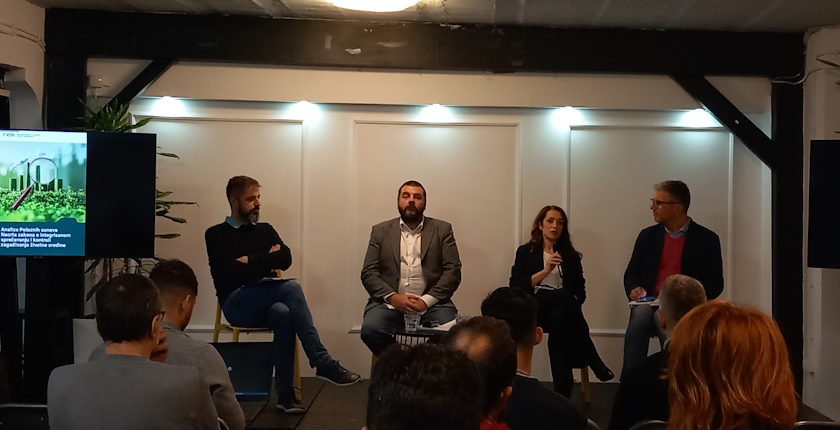
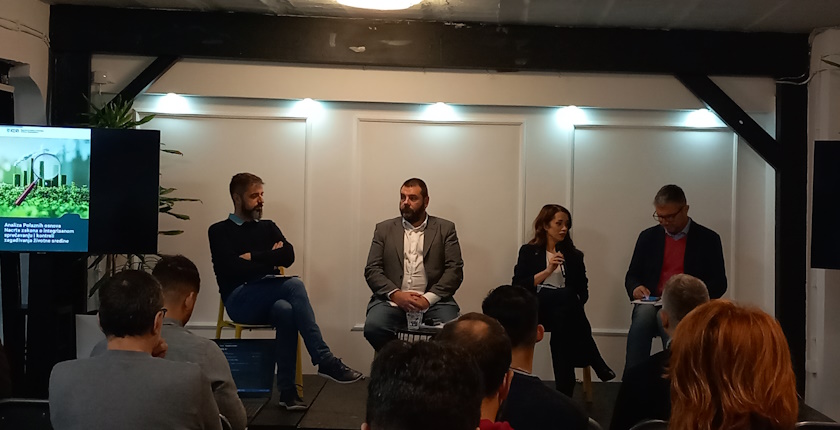
Slobodan Minić, Mirko Popović and Hristina Vojvodić (photo: RERI)

Public consultations on the draft law, which began on November 27, last until December 15.

Hristina Vojvodić, legal advisor in RERI, pointed out that core problems aren’t addressed.

The basic premises of the draft law should have identified the shortcomings of the existing law, based on the 20 years of its implementation, in her view. It isn’t good that these premises were defined without the participation of the members of the working group for the draft law, she explained.

This is a signal to the public, experts, members of the working group that the problems that have been identified were sidelined, Vojvodić asserted.

Of note, RERI produces reports on the implementation of IPPC law to help reduce pollution originating from industry. The organization also defines recommendations for improving the enforcement of regulations and sanctions for polluters.

According to RERI, the research for the latest analysis went beyond the scope of the basic premises. It decided to expand the report to include the issues in the implementation of the law and offer fact-based solutions.


by in News

Major industrial polluters in Serbia continue to pollute air, soil, water without control

Around 150 companies in Serbia, potentially major polluters of water, air, and soil, have not obtained their integrated pollution prevention and control permits by December 31, 2024. It means they are violating the Law on Integrated Pollution Prevention and Control and, more importantly, that no one controls how much they pollute the environment, according to the analysis of the basic premises of the Draft Law on Integrated Pollution Prevention and Control, produced by the Renewables and Environmental Regulatory Institute (RERI).

About 220 operators are required to own an integrated pollution prevention and control (IPPC) permit for their industrial and intensive agricultural facilities, such as power plants, oil refineries, large chemical and metal facilities, as well as farms.

Ones that haven’t fulfilled their legal obligation include large and profitable companies such as power utility Elektroprivreda Srbije (EPS) and Serbia Zijin Copper.

The Law on Integrated Pollution Prevention and Control has been in force since 2004. Its aim was to introduce integrated pollution prevention and control, as well as to transpose the European Union’s Industrial Emissions Directive (IED).

The draft of the new law was recently published

The deadline for obtaining IPPC permits was initially the end of 2020, but it was then postponed to the end of 2024. The basic premises for the new law were published in February. The draft law, recently published as well, is in the public consultation phase.

Programme Director of RERI Mirko Popović stressed that citizens should be aware that there are major polluters and that they are the most profitable and wealthiest companies in Serbia. In his view, they are exempted from the application of the law, to the detriment of the citizens, because they pollute the environment – air, water, soil.

Popović: We want to protect people’s health, property, and rights

Citizens should be aware that when EPS emits 300,000 tons of sulfur dioxide (SO2), it goes into the atmosphere and partially turns into fine particulate matter that pollutes the air and enters the lungs, Popović noted. Some of it becomes acid rain that falls on the soil, making agricultural land less fertile, he added.

“Citizens are obliged to pay taxes, to obey the law, but these polluters aren’t,” Popović pointed out.

According to RERI’s programme director, citizens should know that RERI, an NGO dealing with these problems, doesn’t want to eliminate jobs, close factories, or hinder development.

“We want to protect the health, property, and rights of people,” Popović underscored.

Minić: Pollution reduces economic growth in the long term

serbia ippc permits reri report law
Photo: RERI

When a company has an IPPC permit, it means that it is obliged to implement best available techniques (BAT) while its operations are monitored for comprehensive reduction of air, water, and soil pollution and for compliance with strict emission limit values.

When a company doesn’t have one, the environment is exposed to greater, uncontrolled pollution, since the law doesn’t apply to it.
The legislation stipulates strict emission limit values, defined maximum levels of pollutants, including heavy metals, SO2 and nitrogen oxides (NOx) that a facility is allowed to emit into the air, water, or soil.

Pollution has a negative impact on GDP

According to Slobodan Minić, Senior Economist at Fiscal Council, everything regarding the IPPC law is based on the paradigm that investing in BAT, or technologies that minimize harm to the environment and human health, increases costs and slows growth.

“However, it has been overcome in the world at least a decade ago, because as data on air and environmental pollution became available, more and more research has been conducted on how it affects health. The public in Serbia now knows well what the impact is, between 10,000 and 15,000 premature deaths annually. According to economic literature, pollution also adversely affects GDP,” he stated.

We must think of this not as a cost, but as an investment

He recalled that an OECD study showed that an increase in the average concentration of PM2.5 by one microgram reduces GDP by 0.98%.

“If we want to break out of this vicious circle, we must think of this not as a cost, but as an investment. Not just in the production facility, but in human capital, because it contributes to economic growth, instead of hindering it. Otherwise, in the long term, society and the economy will suffer,” Minić concluded.

Vojvodić: The initial principles do not promise changes in the new law

serbia ippc permits reri report law popovic vojvodic minic
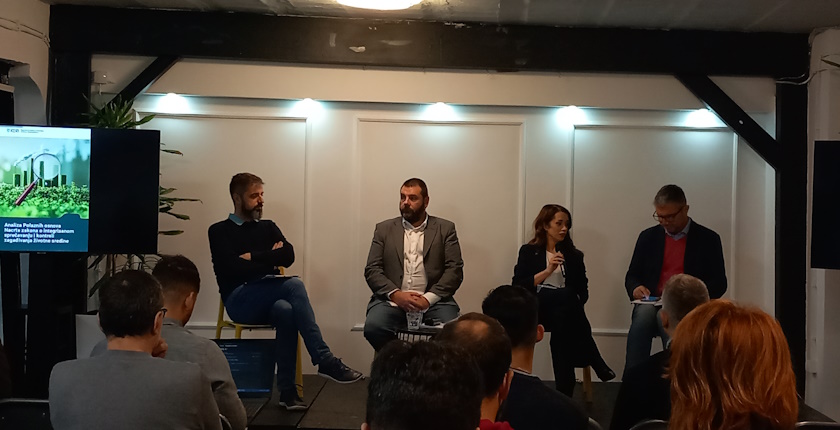
Slobodan Minić, Mirko Popović and Hristina Vojvodić (photo: RERI)

Public consultations on the draft law, which began on November 27, last until December 15.

Hristina Vojvodić, legal advisor in RERI, pointed out that core problems aren’t addressed.

The basic premises of the draft law should have identified the shortcomings of the existing law, based on the 20 years of its implementation, in her view. It isn’t good that these premises were defined without the participation of the members of the working group for the draft law, she explained.

This is a signal to the public, experts, members of the working group that the problems that have been identified were sidelined, Vojvodić asserted.

Of note, RERI produces reports on the implementation of IPPC law to help reduce pollution originating from industry. The organization also defines recommendations for improving the enforcement of regulations and sanctions for polluters.

According to RERI, the research for the latest analysis went beyond the scope of the basic premises. It decided to expand the report to include the issues in the implementation of the law and offer fact-based solutions.
by in News

Europe’s Environment 2025 report: Not good

Biodiversity is declining and water stress is affecting one third of Europe’s population and territory, while the frequency and magnitude of climate-related disasters are increasing. In short, this is the message from the report Europe’s Environment 2025.

​Europe’s Environment 2025 is the most comprehensive analysis on the current state and outlook for the continent’s environment, climate, and sustainability, building on data from across 38 countries, according to the European Environment Agency (EEA).

The outlook for most environmental trends is concerning and poses major risks to Europe’s economic prosperity, security, and quality of life, the authors warned. The agency said climate change and environmental degradation pose a direct threat to Europe’s competitiveness, pointing out that it depends on natural resources.

Progress on a range of factors that enable the shift towards sustainability – such as innovation, green employment, and sustainable finance – gives cause for hope, EEA added.

​More than 80% of protected habitats are in a poor or bad state

The report shows biodiversity is declining across terrestrial, freshwater, and marine ecosystems in Europe due to persistent pressures driven by unsustainable production and consumption patterns, demonstrated most notably in the food system.

More than 80% of protected habitats are in a poor or bad state, with 60% to 70% of soils degraded, the document reads.

On a positive note, the extent of protected areas increased over the past decade – by 2022, 26.1% of the European Union’s land and 12.3% of its seas were protected. However, designating protected areas alone does not guarantee that biodiversity is effectively protected, the authors wrote.

​Water stress is affecting one third of Europe’s population and territory

The report’s findings point to severe pressure on water resources: water stress is affecting one third of Europe’s population and territory.

Only 37% of surface water bodies had a good or high ecological status in 2021, with the degradation of aquatic ecosystems threatening Europe’s water resilience. Agriculture is responsible for the most significant pressure on both surface and groundwater, data revealed.

EEA recalled that Europe is the fastest-warming continent on the planet.

Weather- and climate-related extremes caused economic losses of assets estimated at EUR 738 billion in the EU’s 27 member states over the period 1980-2023, with over EUR 162 billion in costs from 2021 to 2023 alone, the report reads.

Over 70,000 people in Europe are estimated to have died from heat in 2022.

The average annual economic losses in the 2020‑2023 period were 2.5 times as high as in the preceding decade, from 2010 to 2019, according to the report.

Downpours are increasing in severity, with several regions subject to catastrophic floods in recent years, while extreme heat, once rare, is becoming more frequent, with deadly consequences: over 70,000 people in Europe are estimated to have died from heat in 2022.

The greatest challenges call for a need to rethink the links between the economy and the natural environment, land, water and natural resources, EEA underscored.

“We cannot afford to lower our climate, environment and sustainability ambitions. Our state of environment report, co-created with 38 countries, clearly sets out the science-based knowledge and demonstrates why we need to act. In the European Union, we have the policies, the tools and the knowledge, and decades of experience in working together towards our sustainability goals. What we do today will shape our future,” EEA Executive Director Leena Ylä-Mononen said.

Bright spots

The report also highlighted the good results of environmental protection policies in Europe.

The EU has cut its domestic greenhouse gas (GHG) emissions by 37% since 1990, largely driven by reducing fossil fuel use and doubling the share of renewables since 2005.

All member states have reduced their reliance on fossil fuels and shifted towards more sustainable energy sources over the last decade, while increased energy efficiency has brought down demand.

In 2023, renewable energy sources represented over 24% of the EU’s final energy use, a record high.

The bloc’s industrial system has managed to reduce emissions by more than 35% from 2005 to 2023, while emissions from buildings fell by more than 35% between 2005 and 2023.

Significant progress has been made in reducing pollution in Europe. EU policies led to improvements in air quality and reduced premature deaths attributable to fine particulate matter from 2005 to 2022 by 45%, according to the Europe’s Environment 2025 report.