by in News

Environmental monitoring in 2026 put to the test: Albania has 59 stations on paper, only 9 operational

The government-approved National Environmental Monitoring Program for 2026 promises a nationwide network of measurement stations for air, water, soil and biodiversity but the gap between design and reality is stark. On paper the plan foresees 59 urban air-quality monitoring stations; in practice only nine are currently functioning, concentrated mainly in Tirana and a handful of other major cities. That shortfall makes 2026 a decisive year for whether the monitoring system will deliver real, transparent environmental data to the public and policy-makers.

Map of the distribution of monitoring stations for environmental indicators in the territory of Albania

Under the Program, urban air monitoring is to cover the principal pollutants: PM10 and PM2.5 (particulate matter), benzene, nitrogen oxides, sulfur dioxide, ozone and carbon monoxide, along with priority heavy metals such as lead and arsenic. Noise monitoring is also a component: a planned national network of 67 noise-monitoring stations contrasts with current coverage of 43 stations across 11 urban centers; noise measurements will follow 14-day and continuous 24-hour cycles to assess daytime and nighttime population exposure.

Surface-water monitoring (rivers, lakes, lagoons, coastal waters) and groundwater are included in the Program with standard indicators — total suspended solids, dissolved oxygen, total phosphorus, heavy metals and other priority substances and a monitoring frequency calibrated to basin and water-type characteristics. The Program also calls for an annual emissions inventory by economic sector (industry, energy, transport, services) following international methodologies under the Convention on Long-Range Transboundary Air Pollution, plus greenhouse-gas emission tracking for 2020–2030. Biodiversity and forest monitoring components list systematic sampling plots for threatened species, migration monitoring for key bird species, wildlife surveillance in protected areas and targeted monitoring where chemical or heavy-metal concentrations are high.

Crucially, the Program states that collected data will be processed and incorporated into an annual State of the Environment Report to serve both national policy formulation and reporting obligations to the European Environment Agency. Whether the monitoring network can be brought up to its planned capacity and whether the resulting data will be published with full transparency and timely accessibility remains the central test for 2026
by in News

Air under pressure: new report monitoring finds pockets of hazardous air and chronic noise across Tirana

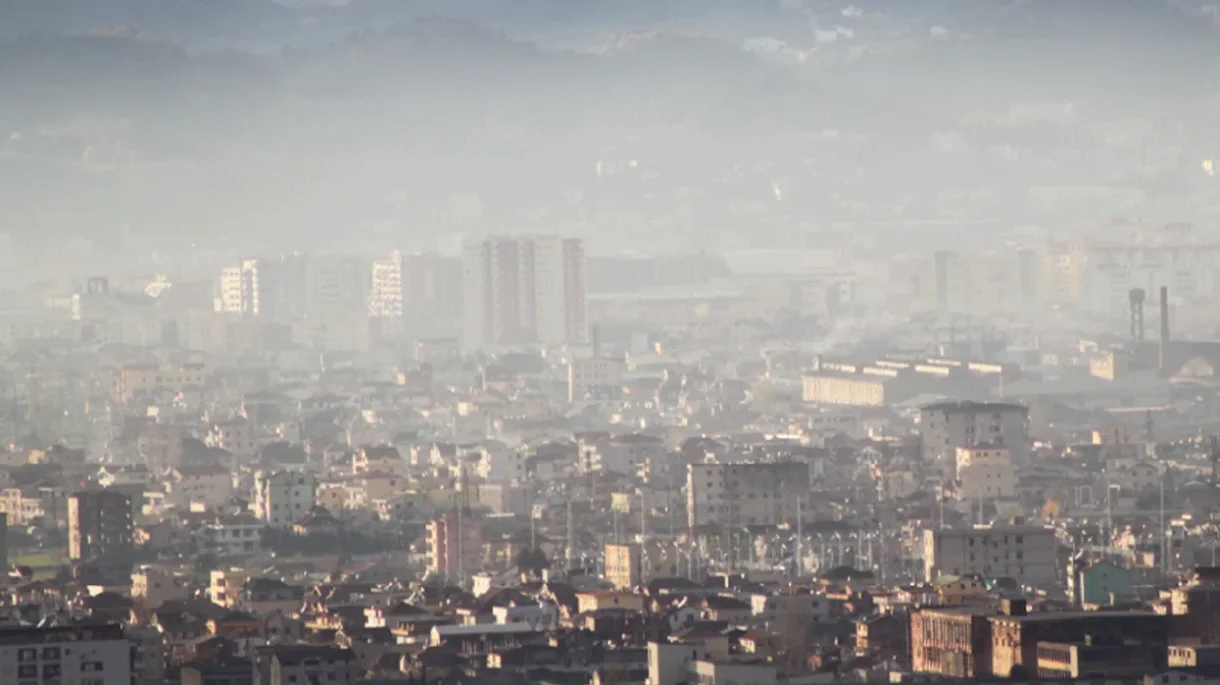
A new annual monitoring report produced by Co-PLAN under the GreenAL project paints a stark picture: parts of Tirana regularly record pollutant concentrations and noise levels that pose real risks to public health. The study, based on an “alternative” (low-cost, widely distributed) monitoring network, identifies clear hotspots tied to traffic, construction and dense urban activity and lays out a rapid expansion plan to scale monitoring across six municipalities.

What the data show

Distribution of CO₂ pollution in the first (left) and second (right) rounds of monitoring.

Distribution of CO₂ pollution in the first (left) and second (right) rounds of monitoring.

  • CO₂ and urban emissions remain problematic. The report notes stations where CO₂ is “above acceptable limits,” especially along major boulevards and compact urban corridors where vehicle combustion and lack of green space concentrate emissions. The authors link persistent high CO₂ to heavy traffic and limited vegetation for removal.

  • Fine and coarse particulates (PM₂.₅ and PM₁₀) exceed health guidelines in many locations. The monitoring finds repeated exceedances at arterial roads such as Rruga e Kavajës and at zones named “Zogu i Zi” and “Kryqëzimi i 21 Dhjetorit” — areas with intense traffic and construction activity. The report compares measured values against national, EU, US and WHO limits (Table 1).

  • Nitrogen dioxide (NO₂) spikes in traffic hotspots. High NO₂ concentrations were recorded near the Kryqëzimi i 21 Dhjetorit and Pazari i Ri intersections — locations directly tied to combustion emissions from vehicles and some industrial sources. The report flags chronic NO₂ exposure as linked to rising asthma and other respiratory illnesses.

  • Noise pollution is widespread and sometimes severe. Acoustic monitoring reveals daytime peaks and persistent high levels in market and major-road areas. Sheshi Italia registered the highest single measurement in round 1 (72.2 dB); Rruga e Kavajës and Shkolla M. Grameno recorded ~70–71 dB. Quieter residential spots such as Zogu i Zi measured ~61 dB. The report stresses that sustained exposure at these levels is linked to stress, sleep disruption and cardiovascular effects.

Context and method

GreenAL’s monitoring uses an “alternative” methodology of many low-cost sensors and mobile/portable stations to map pollution spatially and temporally across the city (the project builds on the Green Lungs initiative and is funded by Sida). The approach produces high-resolution snapshots across dozens to hundreds of points — useful for revealing local hotspots that fixed, sparse regulatory stations can miss. The report explicitly frames these data as complementary to official monitoring and as a basis for targeted interventions.

Notable numbers and comparisons

The report reproduces a comparative table of limit values used for reference: for example, Albania’s annual PM₂.₅ limit is listed as 20 µg/m³, while the EU reference is 10 µg/m³ and the WHO guideline 5 µg/m³ (the report uses these benchmarks when judging exceedances). It also notes earlier monitoring rounds where NO₂ reached roughly EU normative levels and CO₂ was reported as multiple times higher than benchmark values.

Hotspots and likely causes

The spatial maps and station lists in the report consistently point to the same drivers:

  • Traffic corridors (commuter boulevards, intersections) — engines and stop-and-go flow concentrate NO₂ and particulates.

  • Construction and material burning near roads — elevate PM₁₀/PM₂.₅ locally.

  • Dense urban fabric with little greenery — increases CO₂ retention and amplifies urban heat/island effects, which in turn can worsen pollutant chemistry and human exposure.

Stations with the highest PM₂.₅ and PM₁₀ pollution during the monitoring period

Public-health implications

GreenAL frames the findings in public-health terms: repeated exceedances of PM₂.₅/PM₁₀ and elevated NO₂ are associated with acute and chronic respiratory disease, cardiovascular risk and — for noise — sleep disturbance, cognitive impacts on children and increased stress. The most exposed populations are people living and working along the identified corridors, market workers, schoolchildren near busy roads, and residents adjacent to construction sites.

The report’s response plan 

Përmbledhje e shpërndarjes së ndotjes akustike gjatë periudhës së monitorimit

Përmbledhje e shpërndarjes së ndotjes akustike gjatë periudhës së monitorimit

GreenAL commits to scaling monitoring from the current network to ~800 monitoring points distributed across six municipalities (Tiranë 300; Shkodër, Elbasan, Korçë, Durrës and Fier  each 100). The plan emphasizes low-cost sensor deployment, community engagement, and an open Green-Lungs web/GIS platform for publishing data and increasing transparency. These steps should improve spatial coverage and public access to data — but the report also acknowledges that data alone do not reduce emissions without accompanying policy measures.

What the data imply for policy — investigative analysis

  1. Targeted traffic management now, structural change next. The strong concentration of pollution on boulevards and intersections implies that immediate gains could come from congestion-reduction (low-emission zones, targeted traffic calming, improving public transport frequency and reliability) while planning for structural shifts (modal shift to public and active transport).

  2. Construction controls and road dust mitigation. Frequent exceedances near construction sites point to a need for stricter dust control (water suppression, covered loads, restricted working hours) and enforcement of construction permits tied to pollution mitigation.

  3. Protect sensitive sites (schools, markets) quickly. Relocating high-exposure activities, installing protective vegetation buffers, or limiting heavy traffic during school hours can reduce exposure for vulnerable groups.

  4. Pair expanded monitoring with clear regulatory thresholds and action triggers. Low-cost networks are valuable for detection — but they must be tied to predefined response actions (e.g., temporary traffic restrictions, emissions inspections) so data lead to measurable reductions.

  5. Use open data to empower citizens and accountability. The planned Green-Lungs platform can increase transparency; civil society and local media should use these data to press municipal authorities for time-bound measures.

Caveats and further scrutiny

GreenAL’s methodology is explicitly described as “alternative” and complementary; low-cost sensors can have inter-sensor variability and need calibration against reference instruments for regulatory decisions. The report notes meteorology, diurnal variability and episodic activities (e.g., construction) as factors that affect readings  so trend assessments and seasonally robust datasets will be essential before assuming long-term averages. The authors plan deeper methodological analysis in subsequent reports.

by in News

Albania as a Regional Outlier: Diesel Dominance Persists Amid Europe’s Green Transition

New data from Eurostat reveals a significant divergence in automotive trends between Albania and the European Union. While the EU moves aggressively toward decarbonization, Albania has emerged as the country with the highest share of diesel-powered vehicles among first-time passenger car registrations in 2024.

This trend stands in sharp contrast to the broader European trajectory, where environmental regulations and technological shifts are rapidly phasing out internal combustion engines in favour of electric and hybrid alternatives.

The Data: A Stark Statistical Divide

According to Eurostat’s latest report on transportation, 66.2% of all passenger vehicles registered for the first time in Albania during 2024 were diesel-powered. To put this in perspective, the EU average for diesel registrations has plummeted to just 14.9%.

The regional comparison further highlights Albania’s unique position:

  • Albania: 66.2% diesel share

  • Moldova: 47.0%

  • Bosnia and Herzegovina: 34.5%

  • Other Balkan neighbors: Generally below 30% (excluding Kosovo and North Macedonia, for which data was unavailable).

In absolute numbers, out of the 85,700 passenger vehicles registered for the first time in Albania in 2024, approximately 56,700 were diesel. Conversely, gasoline vehicles accounted for only 17.6% of registrations—one of the lowest shares in Europe—while electric vehicles (EVs) represented a mere 3.3% of the total.

The European Shift Toward Electrification

The European landscape tells a completely different story. The transition to Battery Electric Vehicles (BEVs) is accelerating, driven by the EU’s ambitious climate goals to reduce the 27% of greenhouse gas emissions currently attributed to transport.

  • Denmark: Over half (51.3%) of new registrations are fully electric.

  • Sweden, Malta, and the Netherlands: EVs account for more than one-third of the market.

  • EU Average: Electric vehicle registrations reached 13.5% in 2024.

Looking back at the decade between 2014 and 2024, the shift is even more dramatic. In 20 representative EU countries, the registration of diesel vehicles fell by 67%, while registrations for fully electric cars grew by 45 times, moving from a negligible 0.3% share in 2014 to nearly 14% today.

Why is Albania Lagging Behind?

The dominance of diesel in Albania is not a matter of consumer preference alone but is rooted in several structural and economic factors:

  1. Second-Hand Market Dominance: The Albanian market is heavily reliant on imported used cars from Western Europe. As EU consumers sell off their older diesel models to switch to EVs, these vehicles often find a second life in the Albanian market.

  2. Initial Cost Barriers: The upfront cost of electric or hybrid vehicles remains high compared to older diesel models, making them less accessible to the average Albanian consumer.

  3. Infrastructure Gaps: The national charging network for electric vehicles is still in its infancy, leading to “range anxiety” and deterring potential EV buyers.

  4. Policy Incentives: There is a lack of robust fiscal incentives or subsidies to encourage the adoption of “green” vehicles compared to the aggressive tax breaks seen in EU member states.

Looking Ahead

While Albania remains a diesel stronghold for now, the European trend is inevitable. As EU emission standards tighten and the production of internal combustion engines scales down, the supply of diesel vehicles will eventually dwindle.

For Albania to bridge this gap, experts suggest a dual approach: investing in charging infrastructure and implementing fiscal policies that make cleaner alternatives more competitive. Without these interventions, Albania risks becoming a “parking lot” for Europe’s aging, high-emission fleet.