by in News

Montenegro Approves EIA for 118.8 MW Bijela Wind Farm and 110 kV Line

Montenegro’s Environmental Protection Agency has approved the environmental impact assessment (EIA) study for the construction of the Bijela wind farm, including a 110 kV transmission line. The project is planned at 118.8 MW, with Alcazar Energy Partners listed as the investor.

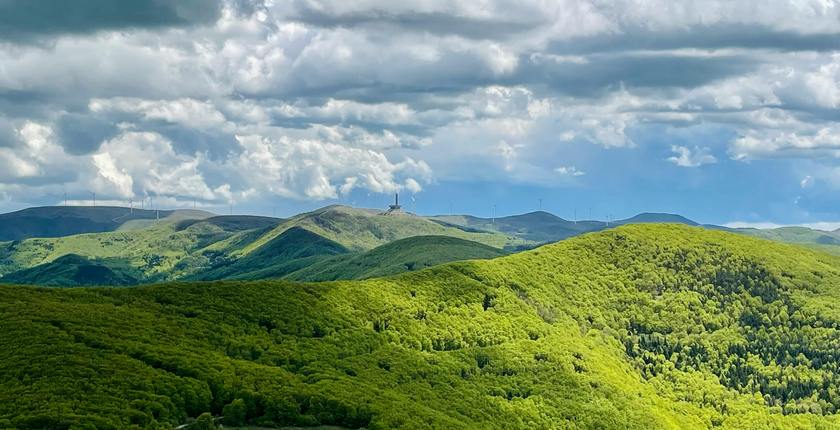
The Bijela wind project is located near the town of Šavnik in northern Montenegro. It envisages 17 wind turbines installed on hilly terrain across a mountain plateau, with total capacity reaching 118.8 MW.

Study sets mitigation measures for construction and operation

The approved EIA outlines protection and mitigation measures for environmental impacts that could arise during both construction and operation of the wind farm and the associated transmission line. The measures cover impacts on air quality, soil, and biodiversity, as well as noise and visual effects.

Grid and offtake steps already underway

Alcazar Energy signed a grid connection agreement with Montenegro’s transmission system operator CGES in September 2024. The company took over the Bijela project a year earlier, with total investment in the wind farm valued at $200 million.

On the commercial side, Alcazar Energy signed a memorandum of understanding in January 2025 with Montenegro’s state power utility Elektroprivreda Crne Gore (EPCG), launching negotiations on a power purchase agreement (PPA) for electricity from the Bijela project.

Wider expansion plans across the Western Balkans

In October 2025, Alcazar Energy said it would increase its investment in Montenegro from $200 million to $500 million. The plan was presented at the EU–Montenegro Investment Conference by the company’s Co-Founder and Managing Partner, Daniel Calderon.

Alcazar Energy’s Western Balkans portfolio also includes projects in North Macedonia and Serbia. In North Macedonia, the company is building what it describes as the region’s largest wind farm, a 400 MW project backed by a $500 million investment. In Serbia, Alcazar Energy is developing the 200 MW Celzijus 1 wind farm east of Belgrade.
by in News

Second phase of Gvozd wind farm gets green light from environment agency

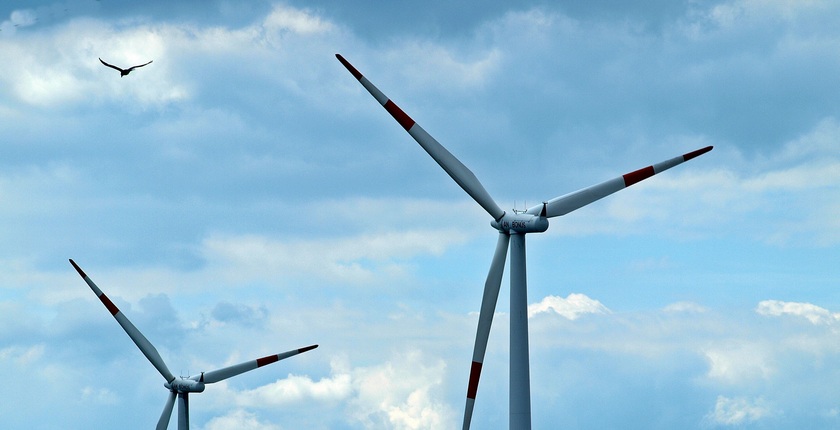
The Environmental Protection Agency of Montenegro has determined there is no need for an environmental impact assessment report for the second phase of the Gvozd wind farm, and allowed the project to proceed. It is for three additional wind turbines with a total capacity of 21 MW, bringing the wind farm’s overall capacity to 75.6 MW.

Within the same decision, the firm implementing the Gvozd 2 project is instructed to conduct a one-year survey of birds and bats at the project site by November 1, 2026, and to submit the findings to the Environmental Protection Agency, which reserves the right to order additional measures if necessary.

During construction, the project developers must take steps to reduce noise and use the existing road network to avoid the destruction of bird and bat habitats. It is also necessary to monitor bird nesting and take measures to protect nesting sites, while minimizing forest clearance and reducing the risk of vehicle collisions, according to the agency’s decision.

Special attention must be paid to bird and bat habitats

The second phase of the Gvozd wind farm project is financed by a EUR 25 million loan from the European Bank for Reconstruction and Development (EBRD), signed with Montenegro’s state-owned power utility Elektroprivreda Crne Gore (EPCG). Its subsidiary in charge of the project, Green Gvozd WPP Second Phase, is registered in Podgorica.

Once completed, Gvozd will be the largest of Montenegro’s three wind farms, with a capacity to generate over 210 GWh of electricity annually. It would be enough to supply around 36,000 households, with CO₂ emissions expected to be reduced by nearly 137,000 tons per year, EPCG said after signing the loan agreement.

The first phase should be completed by the end of this year, and the entire project before the end of 2026

The first phase of Gvozd will have eight wind turbines with a total capacity of 54.6 MW. Construction began in November 2024. EPCG expects the plant to be put into trial operation by the end of this year. Its annual electricity output is estimated at 150 GWh.

EBRD financed the first phase as well, with an EUR 82 million loan. Gvozd will be EPCG’s first large-scale power generation facility built in more than 40 years.

The EBRD previously announced that all 75.6 MW should be online before the end of 2026.

by in News

Montenegro’s capital Podgorica preparing feasibility study for waste incinerator

Municipal waste utility Deponija has made the first step towards building a waste-to-energy facility.

Deponija, the utility in charge of waste management in Montenegro’s capital, launched a public call for the production of a feasibility study for the construction of a municipal waste incinerator within the territory of the city of Podgorica.

The task should be implemented in line with the requirements of sustainable waste management, circular economy, and the European Union’s environmental standards, the call reads.

There is only one waste incinerator in the Western Balkans

Of note, in the Western Balkans region, there is only one waste-to-energy plant, located in Belgrade. Utilizing waste to generate energy is a legitimate component of waste management hierarchy. Incinerators are present all over Europe. Croatia and Slovenia are planning to build such facilities, though some citizens oppose it.

Deponija also listed several motives for preparing the study. They include modernization of the municipal waste management system in Podgorica, reduction of the amount of waste that ends up in the landfill, and the production of renewable energy from waste.

The enterprise also aims to align its operations with the European Union’s waste management directives and gather data for potential partners and investors to assess the project.

The main goal of the study is to establish a sustainable and economically justified system for thermal treatment of municipal waste that will contribute to solving waste management problems in Podgorica, the call reads.

Deponija requested an analysis of different thermal treatment technologies

Deponija said that the study would include technological options or comparative analysis of various waste thermal treatment technologies such as incineration, refuse-derived waste, gasification and pyrolysis.

A key part of the future document is the environmental impact assessment (EIA), which will identify potential impacts on air, water, and land, mitigation measures, and monitoring.

Mayor of Podgorica Saša Mujović supported last year the idea of building a waste-to-energy plant. At that time, he was the minister of energy.

by in News

Deanovec PV project near Zagreb conditionally passes environmental assessment

Croatia’s Ministry of Environmental Protection and Green Transition has decided that no environmental impact assessment study is required for the 65.7 MW Deanovec solar power plant project. The investment was initiated by Statkraft, which recently sold its entire business in the country to Resalta.

The project is planned on the territory of Ivanić-Grad in Zagreb county, with a peak capacity of 65.7 MW. The Deanovec site covers 73.2 hectares, of which photovoltaic modules would occupy around 28 hectares.

In May, Statkraft OIE, the project firm, submitted a request to the ministry to determine whether a full environmental impact assessment is necessary. It submitted the environmental study, produced by Zagreb-based Eko Invest, revealing that the plant would have a 59 MW grid connection.

The ministry concluded that a full environmental impact assessment is not necessary, but the investor must prevent potential harm.

The prescribed measures include coordination with the local hunting rights holder. Protection of watercourses involves preventing precipitation runoff from access roads into nearby streams. Wherever possible, cable lines must be placed within existing infrastructure corridors. The solar park needs to be divided into four fenced sections, with fencing designed to allow the passage of small animals.

Deanovec solar power project deemed environmentally acceptable

According to the decision, the investor must use anti-reflective PV modules, ensure sufficient spacing between them, and install eco-friendly lighting. Vegetation within the solar park must be mechanically maintained, without herbicides or chemicals, while the removal of invasive plant species is mandatory.

The ministry stated that the project is not expected to have significant negative impacts on biodiversity, soil, watercourses, agricultural land, landscape, or air quality, and that the defined mitigation measures are sufficient to avoid potential harm. All relevant authorities provided positive opinions, and the public consultation process did not result in major objections.

Furthermore, the ministry ruled that a comprehensive assessment under the procedure for the network of nature protection areas is not required. Its purpose is to determine whether a planned project could have a significant negative impact on protected areas, including those within the Natura 2000 network. It was concluded that the Deanovec solar power project does not affect or directly threaten these areas.

Norwegian energy giant Statkraft recently announced it was selling all its operations in Croatia to Resalta. However, it is still listed as the owner of the Deanovec project.

by in News

Project underway for 99 MW Bokšić solar plant with battery storage

The Croatian Ministry of Environmental Protection and Green Transition has initiated a procedure to determine the need for an environmental impact assessment for the planned 99 MW solar power project Bokšić, which includes a battery energy storage system.

The annual electricity production of the Bokšić solar power plant is estimated at just under 120 GWh. The facility, with a planned connection power of 89 MW, would be connected to the grid through a new 110/33 kV transformer station, and then to the existing 110 kV Našice-Slatina transmission line.

The annual electricity output is estimated at just under 120 GWh

The project also includes a battery energy storage system (BESS), according to the environmental impact assessment report prepared in February and updated in June. It would be designed for an operating power of 38 MW and a capacity of 70.8 MWh, with an expected lifespan of 20 years.

Solar power plant Bokšić will have a 70.8 MWh battery system

The assessment procedure is necessary because the developer, Zagreb-based Funicula, intends to build a stand-alone photovoltaic plant, according to the ministry. The project’s site is near Bokšić, in the Đurđenovac municipality in Osijek-Baranja County.

The solar power plant is planned to occupy ​​about 123.8 hectares of land, with photovoltaic panels covering about 46 hectares. The site will be enclosed by a protective masonry fence up to two meters high, raised at least 15 centimeters above the ground to allow small animals to pass underneath, according to the ministry.

Bokšić is among the largest solar projects in Croatia

Few solar projects in Croatia are for a larger capacity than Bokšić. State power utility Hrvatska elektroprivreda (HEP) is working on the Korlat endeavor, also of 99 MW. At an auction last year, two major solar power projects were awarded market premiums – Promina, with a planned installed capacity of around 189 MW, developed by Spain-based Acciona Energia, and Obrovac Sinjski, for 144 MW, to be built by Aurelis Solis.

by in News

Montenegro to bring in international partner for HPP Komarnica project

Montenegro’s state-owned power utility Elektroprivreda Crne Gore plans to include an international partner in the development of the Komarnica hydropower project. The company cited the experiences of Norway, Austria, and France. The plant, with a proposed capacity of 172 MW, is expected to have an annual production of around 213 GWh.

Elektroprivreda Crne Gore (EPCG) has four hydropower plants in the pipeline: Komarnica, Kruševo, Ćehotina, and Sutorina. The Komarnica and Kruševo projects have made the most progress, but challenges remain. Environmental organizations oppose the Komarnica project, while in September last year, President of EPCG’s Board of Directors Milutin Đukanović noted that the project has been on hold for two years.

Importantly, Kruševo and Ćehotina have been mentioned as investments that could be implemented within a partnership with French state-owned power utility EDF.

EPCG now told Vijesti that it has temporarily withdrawn the environmental impact assessment (EIA) for the Komarnica project because the Environmental Protection Agency of Montenegro set a short deadline to revise it.

EPCG  intends to prepare a study on the project’s impact on Durmitor National Park, a UNESCO site

The plan is to include a renowned international partner, in cooperation with the Government of Montenegro, to ensure transparent and professional project implementation, particularly considering the experiences and best practices of countries like Austria, France, and Norway, according to EPCG, which claimed the three countries have successfully aligned environmental standards with energy development.

In addition to supplementing the EIA report, the company plans to conduct a study on HPP Komarnica’s impact on Durmitor National Park, a UNESCO site, in line with the international organization’s methodology. EPCG also intends to prepare the required environmental studies in a way that would match the rules of one of international financial institutions.

EPCG expressed the belief that, due to the differing views on hydropower plant construction, not only in Montenegro but worldwide, the best solution is to implement the projects together with a reputable international partner, and in cooperation with the government. The utility said it would prove its commitment to transparency and adherence to all European Union standards.

If Austria, France, and Norway could achieve compromise, so can Montenegro

EPCG expects to make a decision on the project and continue the process later this year.

The company pointed out that countries such as Austria, France, and Norway succeeded in finding a compromise between environmental protection, development, and necessary investments. Since they did it, EPCG sees no reason why Montenegro could not do the same in cooperation with companies from these countries.

Turning to the benefits of HPPs, EPCG recalled that they ensure the technical reliability and stability of the power system and integration of a significant number of planned solar power plants and wind farms.

by in News

Croatia’s HEP to install first floating PV plant on reservoir of HPP Dubrava

Hrvatska Elektroprivreda is preparing to build its first floating solar power plant, with a capacity of 12 MW. It will be installed on the reservoir of its Dubrava hydropower plant.

State-owned company Hrvatska Elektroprivreda (HEP) has already installed one photovoltaic facility near HPP Dubrava, but it was ground-mounted. The Donja Dubrava PV plant has a capacity of 9.9 MW.

Combining hydro with solar into hybrid power plants is an increasingly popular solution for power companies. HEP is already building a hybrid energy park, the first in the country. It is located near the town of Benkovac.

The floating photovoltaic plant would have a barrier against waves and waste

Back in 2023, the company presented plans to build a floating PV plant as part of HPP Dubrava, on the Drava river. It has a capacity of 79.78 MW, while the average production, which started in 1989, is 350 GWh.

It is located near the town of Prelog, in northern Croatia.

HPP Dubrava is the last on in a cascade three multi-purpose HPPs on the Drava river. In addition to producing electricity, they contribute to water supply, flood and soil erosion protection, irrigation and drainage, and host roads. Now they are set to add solar panels.

HEP has submitted an application to the Ministry of Environmental Protection and Green Transition for the evaluation of the need for an environmental impact assessment (EIA) for its floating solar project.

The facility will be attached to the lake bottom with 62 anchors

It would be installed on a floating platform consisting of a prefab structure, buoys filled with expanding polystyrene foam, and an anchoring structure, the request reads.

The power plant would also have a barrier against waves and floating waste. The floating platform and the barrier are planned to be attached by steel ropes to the bottom of the lake at 62 spots.

The project comprises 19,812 solar panels with a capacity of 615 W, spanning 8.9 hectares. More details on the project can be found in an environmental protection report issued in October 2024 and updated in March by the Hrvoje Požar Energy Institute.

by in News

Court annuls environmental permits for EPBiH’s hydro projects Janjići, Vranduk

The Cantonal Court in Sarajevo overturned two decisions of the Federal Ministry of Environment and Tourism regarding the proposed Vranduk and Janjići hydropower plants.

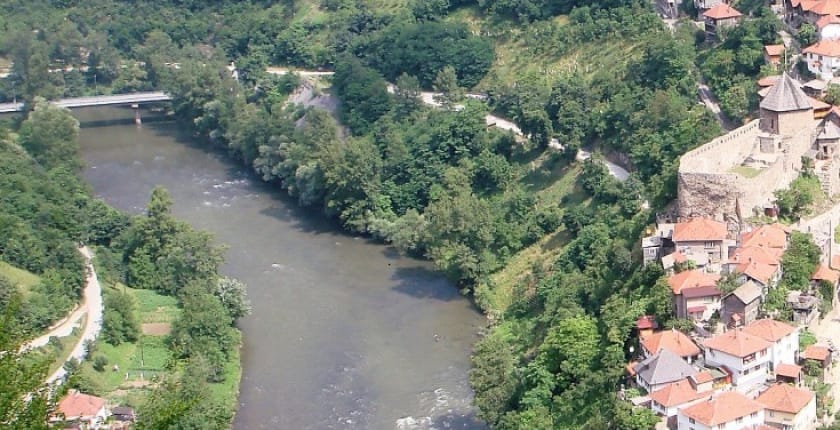
The Janjići and Vranduk hydropower projects, with a total capacity of 36 MW, are being developed by state-owned power company Elektroprivreda BiH. The sites are on the Bosna river near the city of Zenica.

The two decisions were challenged by the Aarhus Centre in Bosnia and Herzegovina.

The Cantonal Court in Sarajevo has ruled that the 16 MW Janjići project requires a new environmental permit to move forward, news website Zenit.ba reported. Namely, the Aarhus Centre in BiH disputed the ministry’s decision in December 2021 that the existing one was valid. According to the court, the explanation was legally unsubstantiated.

The ministry didn’t take into account the ecological sensitivity of the Janjići area

The ministry also failed to acknowledge the complexity of the planned hydropower facility and that, in line with the regulations, a new permit is necessary if the deadline expires, the ruling reads.

According to the court, the ministry didn’t take into account the ecological sensitivity of the Janjići area. The location is a habitat of protected plant and animal species, among which is the otter.

Of note, in January 2022, Germany’s KfW Development Bank said it canceled the plan to finance the Janjići hydropower project with EUR 30 million. Total investment was valued at EUR 55 million.

The loan agreement between KfW and EPBiH was signed in 2014. Environmental organizations opposed the project, arguing it would flood one of the most beautiful areas around the Bosna river.

The Aarhus Convention was violated in the case of HPP Vranduk

The court also annulled the ministry’s 2023 environmental permit for the HPP Vranduk project of 20 MW.

The ministry violated several provisions of an environmental protection law of the Federation of BiH, the court stressed. By issuing the permit, it violated the right of the public to access information and participate in the decision-making process, thereby also violating the Aarhus Convention.

The environmental impact assessment (EIA) was inadequate while the environmental risks determined earlier and comments from experts weren’t taken into account, the ruling reads.

In early 2022, Austria-based Strabag won at the International Court of Arbitration in Brussels in a case against EPBiH. The panel ordered the power utility to pay EUR 16.4 million to the company.

by in News

City of Tuzla seeks to block lithium mining on Mount Majevica

Two weeks after the local authorities and residents of the municipality of Lopare voiced their opposition to plans to open a lithium mine on Mount Majevica, the City of Tuzla sent a similar message. A few days ago, the Tuzla city council adopted a document requesting a ban on the mining of lithium and similar metals within a 40-kilometer radius over concerns for the environment and public health.

In the document, adopted on March 27, the local authorities express concern about the ongoing procedure to grant a concession for a lithium mine at Majevica to Arcore AG, as well as about the agreement between the Republic of Srpska and Hungary on rare earth mining, signed on March 3, 2025.

State authorities urged to initiate an environmental impact assessment

The city council demands an urgent review of the potential environmental impact of these projects on Tuzla and the wider area and calls on the Government of the Federation of Bosnia and Herzegovina and the Council of Ministers of Bosnia and Herzegovina to promptly initiate a procedure to assess their environmental impact, including the potential pollution of groundwater and rivers.

The City of Tuzla demands that the competent institutions of Bosnia and Herzegovina immediately launch an international environmental protection mechanism, including the implementation of the Aarhus Convention, to ensure public participation and prevent any harmful impacts of lithium mining. It also calls on the National Assembly and the Government of the Republic of Srpska to suspend the concession award process until an independent environmental study is conducted.

Neighboring municipalities invited to act together against lithium mining

In the document, Tuzla invites neighboring municipalities to join forces and create a joint plan to prevent lithium mining in the area of ​​Mount Majevica, while also recalling that in September 2024, Tuzla adopted a declaration strongly opposing the lithium mining plans.

The protest in Lopare in mid-March was attended by residents and activists from the neighboring towns and municipalities, including Bijeljina, Banjaluka, Šipovo, Brčko, Fojnica, Maglaj, and Tuzla.