by in News

North Macedonia’s May 2025 blackout was a voltage-control failure, and Europe should read it that way

ENTSO-E’s final report on the Grid Incident in North Macedonia on 18 May 2025 turns what could look like a local technical failure into a broader system warning. At 04:59 CEST, North Macedonia’s power system split between the 400 kV and 110 kV networks, leaving the 110 kV system in blackout while the 400 kV network stayed operational. MEPSO restored the system by 07:47, and the wider Continental Europe system saw no major disturbance. The report therefore matters not because it describes a large geographic event, but because it exposes how voltage stress can cascade into a full loss of supply in a part of the grid that planners had already marked as vulnerable.

The key point is that this was not a surprise in the narrow sense. The factual report says MEPSO had already identified recurring nighttime overvoltage during the spring and autumn low-load season and had introduced countermeasures, including transformer-protection optimisation and the disconnection of one internal 400 kV overhead line. Even so, some 400 kV substations were still operating above the normal band, with voltages reaching 430-437 kV and, in some places over the preceding months, peaking even higher. In other words, the network was already being managed at the edge of its voltage envelope before the incident occurred.

Topology of the transmission system of North Macedonia

Topology of the transmission system of North Macedonia

The report also shows that regional security tools did not flag an imminent crisis in the way operators would have liked. RCC analysis before the incident judged the grid secure based on the information available, yet it also detected that all 400 kV nodes in the MEPSO control area were expected to exceed acceptable voltage limits. At the same time, MEPSO did not deliver the individual grid model for 18 May, so the backup model used by the RCC relied on the last submission from 13 May. That combination – a system that was already voltage-stressed, plus imperfect visibility in the planning chain – is exactly the kind of operational blind spot the report is trying to highlight.

The final report’s diagnosis is structural, not accidental. Its root causes point to operating the system above defined voltage limits, reduced awareness of overvoltage risk in operational planning, insufficient reactive-power reserves with adequate activation time, and limited availability of effective voltage-control assets. That is an important distinction. The event was not simply about “too much generation” or “too little demand”; it was about a system that lacked enough fast, effective, and coordinated tools to absorb reactive power and hold voltage within bounds during a low-load operating regime.

That diagnosis is already driving a policy and investment response. The report points to three layers of recommendations: continuation of ENTSO-E work on voltage and reactive-power modelling quality and operationally useful KPIs; new regional SEE measures for monitoring voltage-limit violations and coordinating action among TSOs, RCCs and ENTSO-E; and MEPSO-specific changes to its System Defence Plan, including broader low-load and high-renewable scenarios and clearer coordination between TSOs and DSOs. The same logic is visible in the post-incident actions: MEPSO has moved to improve reactive-power support, including a 150 MVAr shunt reactor in SS Dubrovo, expected to be finalised by 2027.

For the wider European power sector, the lesson is straightforward. Security of supply in a more renewable, more dynamic grid is no longer only about enough megawatts and enough interconnection capacity. It also depends on voltage discipline, reactive-power capability, modelling quality, and the speed with which operators can see and correct abnormal conditions. North Macedonia’s blackout shows that a grid can remain “adequate” on paper and still fail in practice if voltage-control assumptions are too optimistic or if the operational toolkit is too thin. That is why this report should be read not as a post-mortem for one country, but as a warning for the entire South-East European system and, by extension, for any grid entering a lower-load, higher-renewables operating era.

by in News

Terna Energy Secures Environmental Approval for Major Pumped Storage Project in Northern Greece

Northern Greece is emerging as a critical hub for large-scale energy storage, with several twin pumped storage hydropower (PSH) systems moving through the regulatory pipeline. In the latest development, the Ministry of Environment and Energy has granted environmental clearance—specifically the Approval of Environmental Terms (AEPO)—for the first phase of the Vrohonera project.

The Vrohonera endeavor is being spearheaded by Terna Energy, a subsidiary of Masdar. This milestone follows closely on the heels of similar approvals granted to the Katselis family for their nearby Flampouro and Trani Vrachi twin PSH projects.

Pumped storage hydropower design

Pumped storage hydropower design

Strategic Location and Technical Specifications

Located southeast of Veria in the Imathia region of Central Macedonia, the Vrohonera complex will utilize the Agia Varvara artificial lake as its lower reservoir. This reservoir is situated on the Haliacmon (Aliakmonas) River, Greece’s longest waterway.

The project has seen significant scaling since its initial “producer certificates” were issued in 2021:

  • Vrohonera 1: The latest AEPO outlines a generation capacity of 450 MW via three turbines and a pumping capacity of 537 MW. This represents a substantial increase from the 2021 proposal of 401 MW and 372 MW, respectively.

  • Vrohonera 2: Initial proposals for the second phase included 131.5 MW in production and 217.8 MW in pumping capacity.

  • Storage & Efficiency: Integrated into the European Network of Transmission System Operators for Electricity (ENTSO-E) development plan, the combined Vrohonera complex is designed to provide 8 GWh of storage with an estimated cycle efficiency of 73% and an operational lifespan of 50 years.

The total investment for the Vrohonera complex is valued at €1.1 billion, with commissioning currently targeted for 2031.

Expanding the PSH Portfolio

Terna Energy’s commitment to Greek energy storage extends beyond Vrohonera. The company is currently executing several other high-stakes projects included in the ENTSO-E list:

  1. Amfilochia: This flagship PSH plant is nearing the finish line, with completion expected within the current year.

  2. Ladonas: A joint venture with the Public Power Corp. (PPC Group), this 220 MW generation (231 MW pumping) facility is slated for completion in 2032 and will provide 2 GWh of storage capacity.

  3. Amari: Located on Crete, this project represents a sophisticated hybrid PSH and wind power solution, further diversifying Greece’s largest island’s energy mix.

By advancing these projects, Terna Energy and Masdar are positioning themselves as primary architects of Greece’s energy transition, providing the long-duration storage essential for a renewables-heavy grid.

by in News

MEMO Analysis Links Solar Output to Lower Day-Ahead Power Prices in North Macedonia

Electricity generation from solar power plants tends to push prices down on the power exchange, while reduced solar output is associated with price increases, according to an analysis by Ana Angelova, a market operations specialist at the National Electricity Market Operator (MEMO).

The analysis aimed to identify seasonal trends and highlight the relationship between photovoltaic (PV) generation, electricity consumption, traded volumes, and day-ahead prices on the North Macedonian power exchange. MEMO noted that the day-ahead market operates in an isolated mode.

Angelova used official power exchange data for 2024, focusing on hours when PV plant efficiency exceeded 30%.

Consumption remains broadly stable across the year

The findings point to a clear seasonal pattern. Electricity consumption stays relatively steady throughout the year, with only minor declines during spring and summer. PV generation, however, shows a pronounced seasonal swing—peaking in summer and reaching its lowest levels in winter.

Angelova also stressed that higher PV output coincides with increased traded volumes on the day-ahead market.

Prices bottom out in April, rise toward winter

According to the analysis, day-ahead prices are lowest in April, a period linked to milder weather, lower demand, and stronger solar production. From summer onward—and particularly during winter—prices trend higher, peaking in November.

The November price peak aligns with a combination of weak PV generation and higher consumption.

“Increased electricity generation from photovoltaic plants is associated with lower prices, while low generation leads to higher market prices, emphasizing the impact of renewable energy availability on price formation. The trend indicates that energy policies should focus on addressing weaknesses during the winter period and harnessing the potential of solar energy in summer,” Angelova wrote.

Proposed measures to strengthen renewables integration

north macedonia solar analysis memo power exchange ana angelova

Photo: MEMO

Angelova outlined several options to improve the integration of renewables—especially solar—into the power system. The proposed mechanisms include:

  • Flexible market mechanisms: introduction of a 15-minute trading interval, creation of an intraday market, dynamic tariffs, and guarantees of origin.

  • Energy storage technologies: battery energy storage systems (BESS) and pumped-storage hydropower plants.

  • Alignment with the European energy framework: adoption of ENTSO-E grid codes, coupling with the single European electricity market, deployment of smart meters, and use of financial instruments such as contracts for difference (CfD) and power purchase agreements (PPA).

by in News

ENTSO-E proposes delaying CBAM on electricity by one year

The European Network of Transmission System Operators for Electricity suggested to the European Commission to prolong the transitional period of the Carbon Border Adjustment Mechanism (CBAM) for electricity by one year, to January 1, 2027. It recommended an additional impact assessment, an analysis of possible exemptions for third countries as well as to exempt transmission system operators (TSOs).

In its new position paper, ENTSO-E supported the general principles of CBAM, but it warned against creating disproportionate administrative burdens and costs for TSOs. The pan-European body recommended exempting TSO activities from the CBAM scope, arguing there is a minimal risk of carbon leakage and pointing to their role in keeping the lights on and ensuring the security of the power system.

Moreover, ENTSO-E said an additional impact assessment is needed before the completion of the transitional period for electricity overall. The European Commission should also review in depth the list of third countries eligible for exemption, pending their adjustment to the European Union’s Emissions Trading System (EU ETS), it added.

The current criteria to calculate the actual emissions embedded in electricity production are impossible for importers to implement

“ENTSO-E encourages policy makers to use the targeted revision of CBAM part of the Omnibus simplification package on sustainability to postpone the definitive period as of 1 January 2027. It should also be noted that in its current form, the application of the provisions under CBAM regulation would have a major impact on the Energy Community countries and the UK imports,” the update reads.

Carbon leakage occurs when companies based in the EU move carbon-intensive production to countries with less stringent climate policies, or when EU products get replaced by more carbon-intensive imports.

CBAM was devised to bring CO2 prices for imported cement, iron and steel, aluminum, fertilizers, hydrogen and electricity to the same level as in EU ETS. Under the current rules, the EU will start charging CBAM at the beginning of January next year and gradually increase the tariffs to reach 100% at the start of 2034.

No provisions regulating implicit electricity trading

ENTSO-E acknowledged the role of the carbon border tax in putting a fair price on carbon emissions from carbon-intensive goods entering the EU, and to promote cleaner industrial production globally. Nevertheless, there are still many questions even about the current reporting obligations, it pointed out.

“TSOs adjacent to EU external borders are the most exposed to the concerns raised in this paper. It concerns a significant number of ENTSO-E members, almost one third of the EU members of the association,” the paper adds. In specific cases, the measures may also lead to efficiency losses, reduce EU competitiveness and reduce incentives for building and connecting offshore wind, it underscored.

Obstacles to importing electricity from third countries could contradict the goal of efficiently importing cheap green electricity

CBAM only assumes that electricity is traded with third countries through explicit allocation, not taking into account implicit trading. Like implicit electricity trading within the internal electricity market, there is no nomination on the interconnectors, only anonymous trading between markets, ENTSO-E explained.

“These obstacles to importing electricity from third countries could contradict the goal of efficiently importing cheap green electricity into the EU if applied also to third countries with robust decarbonisation policies and renewable energy sources. The current criteria to calculate the actual emissions embedded in electricity production make it impossible for importers to implement, mainly due to impossibility to trace the origin of the electricity,” the TSO network stressed.

CBAM would tax historical instead of actual emissions

The current default CO2 levels are based upon the carbon intensity of the five-year average through 2020, even though third countries made tremendous efforts in decarbonising their energy mix in the meantime, according to ENTSO-E. It suggested allowing such countries to be exempted if they verify their progress through proper data platforms.

ENTSO-E invited the European Commission to envisage a revision aligned with the current delay in CBAM implementing acts, stressing that it is impossible for the market to digest them before the end of the year.

Energy Community contracting parties, including the Western Balkans, are eligible for exemption from CBAM on electricity until 2030. The condition for each one is to couple its electricity market with an EU neighbor.

by in News

Blackout in Spain, Portugal started with 2,200 MW power production loss

The recent blackout in Spain and Portugal started with the loss of electricity production in power plants with a total capacity of 2,200 MW in the south of Spain, according to an update from the European Network of Transmission System Operators for Electricity (ENTSO-E).

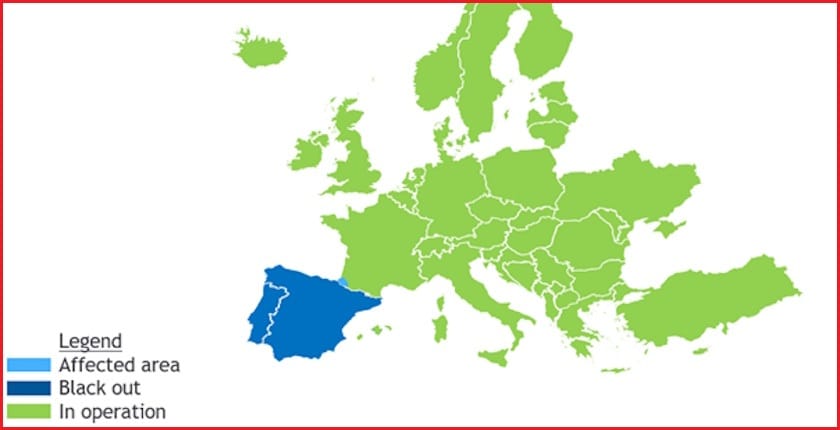
ENTSO-E published the sequence of relevant events from the incident on April 28, which caused a total blackout in Spain and Portugal. The system was fully restored after 16 hours. A small area in France, close to the border with Spain, was also affected by the incident, albeit for a very limited duration, the organization said.

At the end of 2024, Spain’s installed capacity for electricity production was 129 GW or 129,000 MW.

It was one of the most serious incidents so far, on a European scale, and the second one in just ten months in the Continental European Synchronous Area, formerly known as UCTE. It includes most of the European Union as well as Turkey and Southeastern Europe. The first blackout, in the Balkans, occurred on June 21 last year.

ENTSO-E and its member transmission system operators (TSOs), the EU Agency for the Cooperation of Energy Regulators (ACER), national regulatory authorities (NRAs), and regional coordination centers (RCCs) have set up a joint expert panel to investigate the event.

During the half hour before the incident, two periods of power and frequency swings were observed in the Continental European Synchronous Area

The blackout was the result of a complex sequence of events, ENTSO-E said. It published a preliminary chronology.

During the half hour before the incident, two periods of power and frequency swings were observed in the Continental European Synchronous Area, between 12:03 and 12:07 and between 12:19 and 12:21, respectively.

“The TSOs of Spain (Red Electrica) and France (RTE) took actions to mitigate these oscillations. At the moment of the incident, there were no oscillations and the power system variables were within normal operation range,” the update reads.

Data so far has yielded the following sequence of events during the incident:

  1. Starting at 12:32:57 and within 20 seconds afterwards, presumably a series of different generation trips were registered in the south of Spain, accounting for an initially estimated total of 2,200 MW. No generation trips were observed in Portugal and France. As a result, the frequency decreased and a voltage increase is observed in Spain and Portugal.
  2. Between 12:33:18 and 12:33:21, the frequency of the Iberian Peninsula power system continued to decrease, touching 48 hertz. The automatic load shedding defense plans of Spain and Portugal were activated.
  3. At 12:33:21, the alternating current overhead lines between France and Spain were disconnected by protection devices against loss of synchronism.
  4. At 12:33:24, the Iberian electricity system collapsed completely, and the high-voltage direct current (HVDC) lines between France and Spain stopped transmitting power.

As soon as the disruption of the electricity supply occurred, the affected TSOs worked together in a coordinated effort to restore power in the affected region of France, as well as in Spain and Portugal.

The restoration process in Spain was finished at 4:00 on April 29

The restoration process started at 12:44 on April 28 and finished at 4:00 the following night. The restoration of the system was initiated by a black start of hydropower plants in Spain and Portugal.

The restoration process of the transmission grid in Portugal was completed at 00:22, data showed.

According to ENTSO-E, the investigation will be split into two phases. First, the panel would collect and analyze all available data on the incident to reconstruct the events of April 28 and determine the causes of the blackout. The insights would be completed and published in a factual report.

In the second phase, for the final report, the panel is tasked with establishing recommendations to help prevent similar incidents.

ENTSO-E was also in charge of the investigation of the Balkans blackout. The organization published the final report in March.

by in News

Romania’s plan to install 2.15 GW of gas power plants isn’t viable

Romania’s plans for new combined cycle gas turbines with a total capacity of 2.15 GW isn’t economically viable and, if constructed, the facilities should be decommissioned by 2035, according to ENTSO-E’s annual assessment of Europe’s security of electricity supply for the ten years ahead.

ENTSO-E’s European Resource Adequacy Assessment 2024 (ERAA 2024) provides an integrated pan-European perspective for the years 2026, 2028, 2030 and 2035.

The document includes comments on individual countries, specific insights provided by transmission system operators (TSOs).

According to the entry about Romania, low adequacy concerns have been identified in ERAA 2024. The findings rely on assumptions from the National Energy and Climate Plan (NECP), in place on the date of the data collection, as well as from investment plans, permits, connection requests, and available inputs from market participants.

NECP’s central reference scenario reflects the coal phase-out process and further plans for the replacement of the decommissioned capacity with, mainly, combined cycle gas turbine (CCGT) power plants, the document reads.

The results of the economic viability assessment show 2.15 GW of CCGT capacity would not be economically viable by the 2035 horizon

The commissioning of envisioned gas CCGTs is, however, highly uncertain, and national analyses reveal that the validity of the adequacy indicators depends on the implementation of generation goals, the update showed.

Uncertainties related to the commissioning date of the new capacities may have an adverse impact on Romania and, potentially, on the region, the document underlines.

Moreover, results of the economic viability assessment (EVA), part of ERAA 2024, demonstrate that the 2.15 GW of envisaged CCGT capacity would not be economically viable by the 2035 horizon and should be decommissioned in target year 2035.

Considering it is not existing capacity, but rather assumed commissioned in the 2026-2030 period, it is most likely the investments will not materialize at all and thus, the correspondent capacity should be excluded from the analysis for the earlier target years, too, not only 2035, with a negative effect on loss-of-load-expectation (LOLE) results, the authors warned.

Goal in NECP is 2.6 GW of CCGT power plants

According to Romania’s NECP, the goal is 2030 to construct at least 2.6 GW of natural gas–powered CCGTs and around 900 MW of natural-gas-fired combined heat and power (CHP) plants.

The CCGT facilities are Iernut (430 MW), Mintia (at least 860 MW, with a possibility of reaching 1.700 MW), and Ișalnița and Turceni, of 1,325 MW in total.

Investments aren’t going as planned. In January, Minister of Energy Sebastian Burduja acknowledged that the addition of gas-fired units expected in line with the restructuring plan for Complexul Energetic Oltenia – CE Oltenia has been delayed.

Burduja: Mintia to be operational next year

Tenders were launched, such as the one for Ișalnița, but not a single offer was submitted, he added. In Burduja’s words, it is one of the reasons why the operation of coal power plants should be extended.

State-owned CE Oltenia is the largest producer of coal power and the third-largest producer of electricity in the country. Its restructuring plan envisages lignite-based electricity production to be replaced with natural gas, in Işalniţa and Turceni, and renewables.

The Mintia project got the construction permit in January. In March, Burduja said it would be commissioned next year, according to Romania Insider.

by in News

Greece’s IPTO connects to balancing energy platform PICASSO

The Independent Power Transmission Operator of Greece announced that it connected to PICASSO. It is the second transmission system operator or TSO in Southeastern Europe that joined the European platform, so now it can exchange balancing energy with its counterpart in Bulgaria. In addition, IPTO (or Admie, in Greek) has proposed the introduction of negative prices in the domestic balancing market.

The Platform for the International Coordination of Automated Frequency Restoration and Stable System Operation (PICASSO) optimizes balancing energy between control blocks in the Continental Europe synchronous area. Bulgaria’s Electricity System Operator (ESO) joined last month, but it was isolated as it didn’t share electrical borders with any other operational member. Neighboring Greece’s transmission system operator IPTO (or, in Greek, Admie), has just connected to the platform, so the two countries can now exchange balancing energy.

Denmark, Germany, Belgium, the Netherlands, Czech Republic, Slovakia, Austria and Italy are a geographically separate group within PICASSO. Lithuania’s Litgrid joined earlier this month.

Key step for common European energy market

By becoming the 14th operational member, IPTO made a key step in the process of formation of a resilient and efficient common European energy market, the statement adds. The PICASSO methodology and algorithm are intended primarily for the cross-border provision of secondary reserve so that the electricity grid’s operating frequency remains stable.

There are 29 TSOs from the European Network of Transmission System Operators for Electricity – ENTSO-E in the project. Additionally, North Macedonia’s MEPSO, which has electrical borders with both Bulgaria and Greece, is an observer in PICASSO. The platform doesn’t include the rest of the Western Balkans.

With the latest achievement, IPTO and ESO can jointly benefit from the automatic frequency restoration reserve (aFRR). Romania has been delaying its connection to PICASSO.

The platform collects and rates all available offers for balancing energy from aFRR according to their prices, placing them into a common merit order list – CMOL.

PICASSO helping reduce number of balancing price spike events

The new method for calculating cross-border marginal prices on PICASSO has greatly improved performance as the number of instances of electricity balancing price spikes dropped, according to European Union Agency for the Cooperation of Energy Regulators (ACER). Integrating balancing markets across borders lowers costs and improves efficiency by allowing TSOs to activate cheaper balancing energy bids, the body explained.

In other relevant news, IPTO has proposed the introduction of negative prices in the balancing market in Greece of EUR 50 per MWh at most for one year, Energypress reported. The change would enter into force on allocation day April 10, ahead of Easter, a critical moment for grid stability.

The TSO said the limit should be boosted to EUR 15,000 per MWh after joining PICASSO.