by in News

Enery secures EUR 250 million for hybrid power plants in four EU states

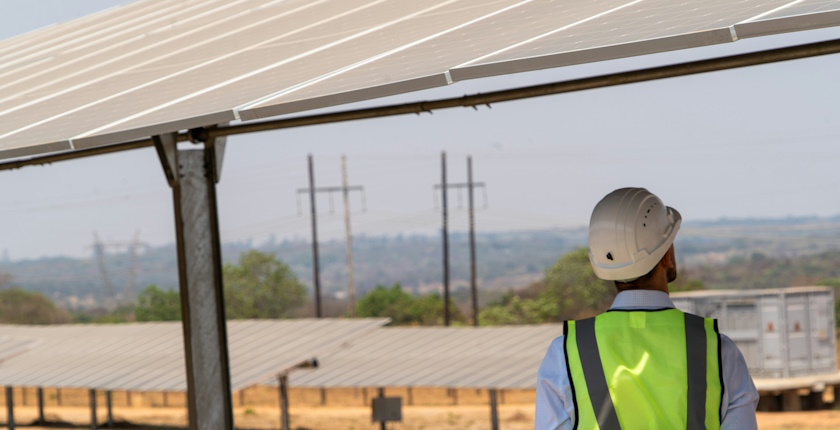
Austrian green energy producer Enery has secured financing for hybrid power plants in Czechia, Slovakia, Bulgaria, and Slovenia.

Enery said it has successfully raised more than EUR 250 million in long-term portfolio project financing.

Československá obchodní banka, a. s. (ČSOB) is acting as the sole lender, while United Bulgarian Bank AD and Československá obchodná banka, a.s. Slovakia are subparticipants. The financing has a tenor of 22 years.

The transaction is structured as portfolio project finance, featuring a single borrower and a single lender, and supported by several operating companies as guarantors, Enery explained.

Enery currently operates a portfolio with 566 MW of installed capacity

The financing will be used to support the development and operation of a cross-border renewable energy portfolio in Czechia, Slovakia, Bulgaria, and Slovenia, according to the announcement.

It includes 300 MW of solar capacity and 100 MW / 220 MWh of co-located battery energy storage systems (BESS) assets spanning four countries.

“Securing more than EUR 250 million through this long-term portfolio financing is another strong endorsement of our strategy and execution capabilities,” Enery CEO Richard König underscored.

König: Another strong endorsement of Enery’s strategy and execution capabilities

Teodor Filip, VP Financing at Enery, pointed to this long-term financing as a major milestone for the company. It strengthens its ability to scale renewable generation and storage solutions in the region and supports its contribution to long-term decarbonization goals, he added.

In early January, the company started the construction of one of the largest photovoltaic plants and hybrid power plants in Europe. The Ogrezeni facility will feature an installed peak capacity of 761 MW, coupled with a 1 GWh battery energy storage system.

Enery also intends to commission a four-hour battery storage system of 150 MW in central Bulgaria by the end of the first quarter.

The company currently operates a portfolio of 566 MW in installed capacity, 90% which is solar.
by in News

Enery obtains financing for 600 MWh battery project in Bulgaria

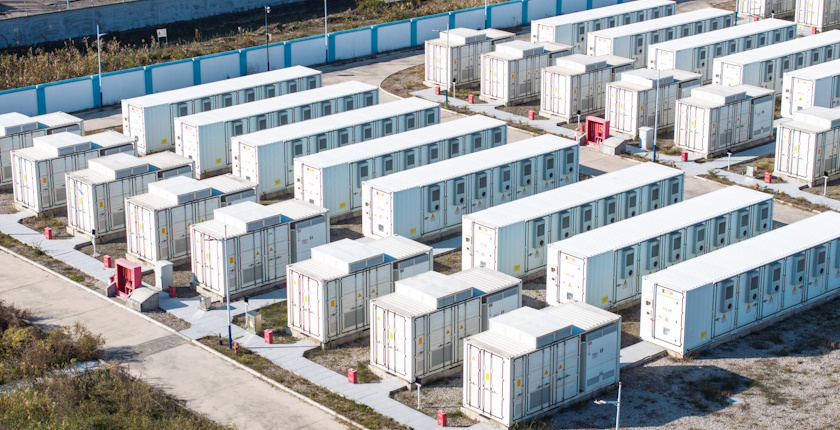
Austria-based Enery intends to commission a four-hour battery storage system of 150 MW in central Bulgaria by the end of the first quarter of next year. The project relies on a virtual power purchase agreement (PPA) with Vitol.

Enery said it has secured a green financing package from DSK Bank AD for its flagship 600 MWh battery energy storage system (BESS) in Nova Zagora, Bulgaria. It is one of the country’s most advanced storage financing deals to date, supporting its transition toward a more flexible and renewables-powered energy system, the update reads.

The facility would have 150 MW in capability, meaning it can operate at full power for four hours. It would be the biggest BESS in Bulgaria at this moment, according to available data, though there are larger projects underway as well.

The site is in a coal region centered on the Stara Zagora lignite basin, in the central part of the country.

Virtual PPAs, optimization services are key for bankability

Enery scheduled the commissioning for March. The BESS would feature its own substation, linked to a new 33/110 kV substation on the transmission grid.

The Austria-based independent power producer revealed that it has signed an innovative virtual power purchase agreement (PPA) with Vitol.

“Sophisticated instruments such as virtual financial deals, combined with Enery Portfolio Optimization’s best-in-class physical optimization services, are now key to unlocking bankable storage projects. This transaction demonstrates how innovative commercial structures, when paired with disciplined execution, can create long-term value for both lenders and project sponsors,” Chief Commercial Officer Severin Vartigov stated.

Vitol plans many more deals with Enery

Vitol expressed confidence that there would be many more deals with Enery. The global energy and commodity trader, headquartered in Geneva, has experience in developing, owning and optimizing BESS in Australia, Europe and the United States, the update adds.

Enery operates a diversified portfolio of 566 MW, generating 766 GWh of clean electricity per year. Its development pipeline is nearing 10
GW across 10 countries in Central and Eastern Europe.

The firm also manages more than 700 MWh of battery capacity across its own and third-party systems. In Bulgaria, it is present through its Enery Element joint venture as well.

by in News

Enery to start building Europe’s largest solar power plant in Romania

Austria-based Enery is preparing to begin construction works early next year on a photovoltaic facility of 750 MW in peak capacity just outside of Bucharest. It would currently be Europe’s largest solar power plant. A few other megaprojects are underway, too, but the Ogrezeni facility is planned with a battery energy storage system that would match its grid connection capacity.

Enery, which operates a range of wind, photovoltaic and small hydropower plants and battery storage across Romania, has only a few final steps before the start of construction of a giant solar farm in Giurgiu county, the company’s Head of Romania Liviu Gavrilă revealed to Profit.ro. The launch of the works is due early next year, he added.

With its 750 MW in peak capacity, the solar park in Ogrezeni, just west of the capital Bucharest, would be Europe’s largest at this moment. The company obtained a grid connection approval for 534 MW in 2023, the article adds.

Europe’s largest PV plant is Witznitz in Germany’s east. It has 650 MW in peak capacity. There is also an 850 MW cluster of 17 units in Spain, called Escatrón-Chiprana-Samper Solar Farm.

If the Asian part of Turkey is included, Kalyon Karapınar is at the top of the list. It has 1.35 GW in peak capacity and a 1 GW grid connection. Already one of the largest in the world outside China, the solar park is due for expansion into a complex of 1.85 GW in peak capacity.

Romania hosting two projects for Europe’s largest solar parks

Of note, Rezolv Energy and Monsson are about to build a solar farm in northwestern Romania of 1.04 GW in peak capacity. The site is in the communes of Pilu and Grăniceri in Arad. The Dama Solar system is envisaged with a battery energy storage system (BESS) of 500 MW.

But Austria-based Enery is planning a BESS with 534 MW in operating power, matching the grid connection. The unit would have a two-hour duration, translating to a storage capacity of 1.07 GWh.

Both Ogrezeni and Dama Solar are planned as hybrid power plants, with giant batteries

Both Dama Solar and Ogrezeni, also known as Baboia Solar Plant, won state support at Romania’s second solar power auction.

Spanish Iberdrola is preparing a bigger project, Fernando Pessoa in Portugal, though it has suffered delays over environmental concerns and disputed permits.

Enery to equip all its power plants in country with battery storage

Some negotiations remain to be completed before the groundbreaking, Gavrilă said. Enery is targeting a commercial operations date in the fourth quarter of 2027. In comparison, Dama Solar is scheduled to come online in the third quarter of 2028.

Enery has completed a PV plant of 54 MW in Titu, Dâmbovița county. The company is preparing it for a test run. It has 167 MW in operation in Romania, of which the Sărmășag solar park accounts for 51.4 MW in peak capacity.

“We want to install batteries for all our production capacities in Romania. But we are also active in the area of ​​stand-alone storage installations,” Gavrilă asserted.

In addition, the company manages electricity supply for others as a balance responsible party, using the SmartPulse platform.

by in News

Renewables investors are seeking tailored financing services as they add BESS, adapt to risks

Market conditions have become challenging for renewables in the CEE region, alongside uncertainties in the regulatory sphere, which calls for advanced and tailored financing solutions, according to participants in UniCredit Serbia’s workshop on navigating capital flows in the segment, including mergers and acquisitions (M&A). Investors, UniCredit’s clients, highlighted the growing importance of battery energy storage systems – and especially adding co-located storage to photovoltaics.

The renewable energy market is evolving in Central and Eastern Europe, as large players join the game and developers emerge as producers. With its surge in photovoltaic capacity and the revival in the construction of wind power plants, Romania has become a frontrunner. In neighboring Bulgaria, the first power purchase agreements (PPAs) are indicating a strong perspective, while Serbia might become more relevant soon, investors agreed at an event that UniCredit Bank Serbia organized in Belgrade.

M&A and financing trends in the region were the central topics. The idea was to have an open discussion with industry players active in the region about their investment strategies and the bank support, said the Head of Specialized Lending in UniCredit Serbia Svetlana Cerović, who moderated a panel within the conference.

A stable top line and a legal framework is the key driver for investments, with a particular emphasis on grid connections

Cerović pointed out that volatility has been on the rise for the last couple of years, after a huge wave of investments that followed the Paris Agreement and the European Green Deal. Sound and predictable regulatory framework along with stable revenues is key. To assure market flexibility and grid stability, new investments in western Europe and in the region are supported with the government programs including investments in battery energy storage systems (BESS). Thus, one of the prerequisites for the execution of future projects in local market will be certainty regarding the third auction timeline and availability of the longer term PPAs.

The participants at the workshop on navigating capital flows in renewables said a stable legal framework is the key driver for investments – grid connections especially, and permitting as a whole. On that note, developers will lean on the slowly maturing PPA market, though support from banks is necessary in the equation. Battery energy storage systems are a game changer, particularly colocated with solar parks for the optimization of the project returns.

UniCredit is strongest player in renewables financing in Serbia

UniCredit has a wide set of tailor-made project finance loans as well as a full range of services from advisory to various financing solutions, Head of Project and Structured Finance in Serbia Jelena Nestorović said.

The Italy-based bank has financed a string of major wind power and photovoltaic projects in the region, including facilities with colocated BESS, like Sunterra RE’s Galabovo in Bulgaria.

As for Serbia, it is the strongest player in the renewable energy segment. UniCredit financed six wind parks in the country, of 430 MW in total, and of which three as the sole lender. Notably, Čibuk 1 and 2 are the largest in Serbia.

UniCredit Bank Serbia is financing the country’s biggest wind power plants – Čibuk 1 and 2

Some of the participants and winners at the first two domestic auctions for contracts for difference (CfDs) are among the bank’s clients as well. Nestorović stressed that Bank is financing in total 30MW of smaller scale solar power plants .

She pointed to one of the largest industrial rooftop solar power plants in the region. UniCredit provided EUR 3.1 million facility and acts as a hedging and account bank for CWP Europe and Resalta’s project company. It built a PV system of 6 MW on a rooftop of Henkel Serbia facility in Kruševac, under an ESCO (energy service company) model.

Since 2019, the bank has participated in the financing of first waste-to-energy cogeneration plant,  located just outside of Belgrade. UniCredit is financing energy efficiency projects in the country, too.

Jelena Nestorovic UniCredit Renewables investors tailored financing services BESS adapt risks
Photo: UniCredit’s Jelena Nestorović presenting

Priority in Europe shifted from energy transition to energy security

Maria Vastola, Managing Director of UniCredit’s Energy Advisory Team covering Power & Utilities across the Group’s core countries, said valuations for renewable energy stocks on public markets are strongly down compared to 2021-2022 period and below the 3Y historical average. Independent power producers (IPPs) are factoring in a great uncertainty related to the permitting process, the regulatory framework in certain countries and the macroeconomic environment, she explained.

The bottom line is the shift in the European paradigm from the energy transition to energy security, due to geopolitical tensions, Vastola underscored. On the other hand, M&A still has good valuations, she said at the panel discussion.

Investors are focusing on operational quality, meaning high-quality assets, returns and value creation, as opposed to growing at any cost, Vastola added.

“There are more investors ready to put capital in projects and in the region. Private capital flow is a good bridge and a complementary tool for banks’ balance sheets,” she asserted and placed an emphasis on large corporations, private equity and M&A.

Scale creates efficiency, and efficiency and flexibility create value in a challenging market, Vastola stressed, highlighting investments in hybrid power plants that include battery storage. Over the past few years, corporates, traders and utilities are flocking into the renewables realm in “a big shift from big oil to big energy,” she said.

Actis to invest in infrastructure projects across region

Vice President for Energy Charles Lachapelle from Actis agreed with the other panelists about the significance of hybrid power plants and underscored that the sustainable infrastructure investment firm is mostly doing very large projects as they are much more competitive.

“Definitely, for solar, I think having a BESS is a must,” he said and added that “it goes without saying at this point.” As for batteries with wind parks, they enable flexibility for offtake, Lachapelle noted.

Actis is a growth market investor in the infrastructure and energy space, best known in the region for Rezolv Energy. In Romania, the company obtained a financing package for the first phase of its giant Vifor wind farm via PPAs with companies in the commercial and industrial (C&I) sector. The second part was secured thanks to the CfD from a renewable energy auction.

The next chapter for Actis could involve more than a billion euros

Among other investments in Romania, Rezolv has the Dama Solar project for 1.2 GW in peak capacity. It would currently be one of the biggest in Europe. The company is also active in Bulgaria.

Actis is looking at a pipeline of projects across the region, including in Serbia, Lachapelle revealed. Asked about the next auction that the country is planning, he said a wind power project in the 200 MW range would be suitable.

Lachapelle specified that the next chapter may involve over EUR 1 billion and that Actis would require support in financing.

On the subject of power purchase agreements, he said the optimal tenure is longer than ten years, with more than 70% of output contracted. “However, we’ve done cross-border PPAs. We’ve looked at solutions, in the past, combining wind, solar and BESS. We can be creative on that front,” Lachapelle stated.

Regulatory stability is essential for investor-friendly countries

While the PPAs of 70% and at least 10 years are necessary for non-EU countries, banks in the EU are more risk-hungry, according to CWP Europe’s General Counsel Jovana Rubežić.

One of the most important factors is how investor-friendly a country is, she added. “When I say investor-friendly, I mean the regulatory framework… The next thing we look at is whether we can connect our project and can the power markets absorb the power,” Rubežić said.

The rules have basically stayed the same in all of CWP Europe’s key markets, except with respect to grid connection, as transmission system operators are becoming stricter, she underscored. The company is transitioning from project development to the IPP sector, Rubežić said. She pointed to the need for support in regulatory matters, especially in sleeved PPAs, both from the government and government-owned utilities such as Elektroprivreda Srbije (EPS) in Serbia.

Structured portfolio transactions are facilitating growth for companies with multiple projects

Bankers generally seem to prefer co-located batteries to standalone ones, UniCredit’s Head of Infrastructure and Export Financing Lazar Nikolić said.

The main reason is the more diversified revenue stack, as a combination of BESS and a renewable electricity plant is effectively a single asset. With global battery storage capacity on a steep growth trajectory, banks and investors will need to look for bankable solutions to enable that.

Firstcomers in the standalone battery segment may have an extremely short payoff period ahead, but the bank needs a revenue stack

Nikolić stressed that developers need advanced capital solutions such as structured portfolio transactions, saying that they pave the way for renewables platforms to grow. Namely, firstcomers in the standalone battery segment may have an extremely short payoff period ahead, however a solid revenue stack remains key for the bank to take on risk. Countries with strong state support schemes will enable standalone BESS faster, he added.

In structured portfolio financing, the client company has different BESS, power plants and projects grouped.

“The assets can be different in terms of technology, they can be different in terms of location, they can be different in terms of offtake, in terms of also the cycle of the assets. We pack them together, bundle assets and structure debt solution on top of them, significantly enhancing portfolio diversification,” Nikolić said.

Lazar Nikolic UniCredit
Photo: UniCredit’s Lazar Nikolić presenting structured portfolio financing options

Battery storage is natural hedge for green power production

Enery, headquartered in Austria, decided at one point to add battery storage across its power plants as well as both mature and greenfield projects in Romania, Vice President for Financing Sebastian Staicu said. BESS is “a natural hedge” and it has become very cheap, he noted.

UniCredit acted as the lead bank for the company’s 230 MW portfolio of wind, photovoltaics and battery storage in the country. “That’s a smart structure where, instead of having to negotiate financing for each project, you have this wholesale facility and you just bring in new projects, which contribute to the diversification element,” Staicu said.

by in News

Enery, SmartPulse launch regional partnership for multi-market optimization

Austrian green energy producer Enery and Turkish software company SmartPulse have entered a strategic partnership to deliver advanced solutions for the management and trading of renewable energy and storage assets. The collaboration aims to amplify market results for renewable energy producers and battery owners, while strengthening integration into the regional energy markets.

Enery Portfolio Optimization (EPO) – the licensed power trader of Enery managing a portfolio of over 750 MW of renewables assets and 700 MWh of battery capacity, will enhance its services through SmartPulse’s multi-market optimization platform, which automates trading, delivers real-time dispatch, and provides analytics and forecasting. The Turkish software company’s services coupled with EPO’s market know-how accelerate revenue growth and strengthen financial outcomes, according to the announcement.

The combined offering will be available for standalone and co-located storage assets on the Romanian market as part of a wider regional partnership. The platform aims to ensure the highest profitability from day-ahead, intraday and ancillary services markets, while ensuring the optimal physical dispatch of the asset, the Austrian company pointed out.

Balancing group members gain access to market opportunities

The service captures the full spectrum of financial arbitrage opportunities, reserve and balancing energy market participation to maximize revenue potential, Enery added. By joining its balancing group, renewables producers and battery storage owners gain access to all markets opportunities, reduced balancing costs, and 24/7 monitoring and trading through an artificial intelligence–powered platform, the update reads.

The offering in Romania will be part of a wider regional partnership

“Our international expertise in storage and renewables optimisation combined with SmartPulse’s innovative platform allows us to be more flexible and deliver tailored solutions for each asset. This partnership ensures that our Romanian clients will receive the highest quality services and optimised profitability from their assets,” said Enery’s Head of Energy Trading Petya Dimova.

Romania is among most dynamic power markets in Europe

The two companies stressed that they are bringing international experience and know-how in optimizing the value of large-scale renewables and storage assets to the Romanian market. The joint approach ensures clients can focus on business development, operations, and maintenance, while entrusting the financial realization of their electricity to expert hands, they said.

“Romania is one of the most dynamic power markets in Europe, and we are proud to make it a priority in our growth journey. By partnering with Enery, we bring our technology together with their strong local expertise to deliver advanced optimization and trading solutions,” Head of Global Growth at SmartPulse Uygar Yörük stated.

Enery, an independent power producer, operates a diversified portfolio of 511 MW and has 212 MW under construction. Its development pipeline amounts to almost 10 GW across 10 countries in Central and Eastern Europe. In the region that Balkan Green Energy News covers, the company is active in Romania, Bulgaria and Slovenia.

SmartPulse, founded in 2018 in Istanbul, focuses on short-term power trading automation. The firm has just been acquired by Volue.

by in News

Eurowind Energy’s solar power project in Romania gets CfD thanks to auction list dropouts

Eurowind Energy’s Ewe Solar Project in Romania, of 110 MW, is now eligible for government support in the form of a contract for difference (CfD), even though it landed just below the line in the last renewable energy auction. It got upgraded from the reserve list as the developer of two winning photovoltaic endeavors has decided to exclude some sections.

Depending on the policy framework and market conditions, renewable energy investors sometimes opt for power purchase agreements (PPAs) or the electricity exchange instead of locking in a fixed price for the long term in a government support scheme. Enery Element, which won CfDs in Romania’s last solar power auction, decided not to sign some of the contracts. It means Eurowind Energy, the first in the reserve list with its Ewe Solar Project, can now fill the quota instead of its competitor.

Enery Element has obtained the rights to the CfDs with two projects that it conveniently split into several sections each. It enabled it to withdraw only parts of the future photovoltaic plants.

Enery Element cancels three sections of 46 MW altogether

Enery Element pulled away two of the 11 lots that its subsidiary Baboia Solar Plant won for a facility in Ogrizeni in Giurgiu county.

They were the lowest strike prices in the entire auction: EUR 35.77 per MWh and EUR 36.33 per MWh. The proposed two sections, for a combined capacity of 25.9 MW, lowered the total to 324.2 MW.

According to an earlier update, the solar power plant would have 535 MW in peak capacity. The project firm also won a grant of EUR 6.1 million for a 121.9 MWh battery energy storage system.

Baboia Solar Plant, also known as Ogrizeni, would include a subsidized BESS of 121.9 MWh

Enery Element is a joint venture between Austrian renewable energy company Enery Development and its Bulgarian partner Element Power Group.

Conversely, with Siret Solar Plant, Enery Element canceled the part with the highest strike price of the four that were selected. The levels were from EUR 38.76 per MWh to EUR 38.79 per MWh.

It slashed the part of the capacity qualified for CfDs in the Dumbrava 2 project to 88.5 MW from 108.6 MW. The developer didn’t reveal the reason for its move.

Eurowind Energy lifts auction’s highest strike price to EUR 46 per MWh

The Ministry of Energy said it would replace the canceled capacity with Ewe Solar Project of 110 MW. It is a special purpose vehicle, working under Denmark-based Eurowind Energy.

The accepted price is EUR 46 per MWh, while the new lowest level on the list is EUR 36.69 per MWh, for a segment of the Baboia Solar Plant.

by in News

Romania completes second round of renewable energy auctions – third of wind quota unallocated

Companies that participated in the second round of auctions in Romania for contracts for difference (CfDs) for wind and solar power projects received the ranking list. The target quota for photovoltaics was slightly surpassed, with 1.49 GW approved. Conversely, only 1.26 GW was allocated in the wind project segment, against the available 2 GW. Average winning prices were EUR 40.35 per MWh and EUR 73.89 per MWh, respectively.

Winners include Rezolv Energy’s Dama Solar, which at 1.04 GW in total would currently be by far the largest PV system in Europe, excluding Turkey.

Romania’s Ministry of Energy and transmission system operator Transelectrica have conducted the country’s second wind and solar power auctions for government support in the form of CfDs. They imply fixed prices for beneficiaries for 15 years. If the producer sells its electricity in the market at a higher price, the government receives the difference. It works the other way around as well. The average winning price for wind power was EUR 73.89 per MWh, compared to EUR 40.35 per MWh for photovoltaics.

There was 2 GW available for wind power projects, but the authorities selected only 1.26 GW, within 23 qualified projects. It means their bids were lower than the ceiling of EUR 80 per MWh. Romanian media learned most of the details, while the official report is yet to be issued.

Rezolv, OX2, OMV Petrom, among winners in wind power segment

In the wind power auction, the participants secured less than two thirds of the quota. There are 23 projects of 21 companies on the list, with 1.26 GW accepted overall of the available 2 GW.

Midmar Callatis passed with the lowest bid, EUR 65.17 per MWh, for the Dunărea East project in Constanța county. The entity, controlled by Rezolv Energy, is eligible for a CfD for 211.2 MW. It is the largest proposed capacity that participated in the auction. The Dunărea East and West project is for 600 MW altogether.

The firm signed the grid connection contract last year. It expects to complete the wind park in 2030, to meet the deadline, like almost all other auction winners in both segments.

OX2 has split its project and won three contracts

The second winner by size is the Cerchezu wind power project. The owner, OX2, has split it into chunks, so 128 MW, 25.6 MW and 25.6 MW earned entry into the market incentives scheme. The special purpose vehicle (SPV), called South Wind, has bid EUR 69.87 per MWh, EUR 74.5 per MWh and EUR 76.5 per MWh, respectively, for a combined capacity of 179.2 MW.

Coming in third in terms of selected capacity, with 111.6 MW, is the future Poiana wind power project. The developer is Green Labs, which operates under Electrocentrale Borzești, part of the Renovatio group, under OMV Petrom.

Through its project firm CEF Pelicanu, Renovatio also won a CfD for 103.7 MW for its Alexandru Odobescu project. It bid EUR 76.9 per MWh.

Winning prices in second wind power auction higher amid demand drop

Ecoener Carpatica’s Miroslovești project in Iași county can sign a contract for 54.4 MW, at a price of EUR 68.75 per MWh. The Urleasca project passed with EUR 71.93 per MWh for 31 MW.

Eurowind Energy’s Cheap Energy Company was successful with a bid of EUR 78.5 per MWh for the Pecineaga Northeast (Nord Est or NordEst) endeavor. It applied for 48 MW.

Engie Romania passed with its Falcon wind power project

Falcon Wind of Engie Romania secured a CfD for 52.4 MW with a price of EUR 72.7 per MWh. It was the first under the line in the first round, with a bid that was EUR 5 higher. The location is in Mereni in Constanța county.

The accepted prices in the wind power auction are between EUR 65.17 per MWh and EUR 79.5 per MWh, compared to a range of EUR 54.59 per MWh to EUR 77.33 per MWh in the first round.

Accepted bids for solar power projects significantly lower than in first round

Conversely, solar power prices were much lower than last time. They landed at EUR 35.77 per MWh to EUR 45.2 per MWh, against a range of EUR 45.05 per MWh to EUR 54.19 per MWh in December. This time, the ceiling was EUR 73 per MWh. The commission accepted 26 bids of 1.49 GW in total, extending the quota by 16 MW.

The largest capacity, 520 MW, was awarded to special purpose vehicle West Power Investments for its Dama Solar project. It is for 1.04 GW in total peak capacity, which would make it the biggest solar power plant in Europe excluding Turkey. Rezolv Energy developed the project, together with Monsson. It won the incentives through two equal lots, with bids of EUR 42.2 per MWh each, on a rounded basis.

Enery Element gets almost 460 MW for its two PV projects

Other companies also partitioned their projects for the auction. Enery Element won 11 out of the 26 contracts, for its proposed Baboia PV plant, also called Ogrezeni. The bids were between EUR 35.77 per MWh and EUR 42 per MWh.

In the previous round, it failed to make the quota with EUR 56.82 per MWh. The combined capacity is 350.1 MW. According to Economica.net, the developer may have opted for splitting the PV plant to avoid surpassing the 50-hectare threshold per lot. The Ogrezeni project in Giurgiu county is for more than 500 MW overall, the media outlet noted.

The company also succeeded with four lots of its Dumbrava 2 project. Enery Element’s subsidiary Siret Solar Plant has bid EUR 38.76 per MWh to EUR 38.79 per MWh. The combined capacity is 108.6 MW.

Engie Romania is now eligible for a CfD for 170 MW in peak capacity, for its proposed Cornățelu photovoltaic facility. Its bid was the highest on the list, EUR 45.2 per MWh. The site is in Dâmbovița county

Of note, the government has so far signed contracts with 21 firms that won in the first solar and wind power auctions.

by in News

Bulgaria on track to add 1.5 GW of solar power by mid-2026

The pace of large photovoltaic projects in Bulgaria indicates that total capacity can reach 6 GW by the middle of next year. The expansion isn’t slowing down.

Investors in large solar power plants in Bulgaria don’t seem intimidated by zero and negative wholesale electricity prices eating away at their revenues. One of the factors is a surge in the construction of battery energy storage systems (BESS), which iron out the gap between intraday peak production and the power demand curve. In a new analysis, Capital.bg estimated that the country’s photovoltaic capacity is set to increase by 1.5 GW by the end of the first half of next year, only accounting for big projects.

The total would reach 6 GW. The report lists 14 projects, of which some are benefitting from BESS grants from one of Bulgaria’s past tenders.

Chinese group building largest current PV project

The biggest solar park under construction is Simeonovgrad-Polyanovo, consisting of two units of 250 MW in total. It is located in the Haskovo region in the southern part of the country.

United Energy Group bought the two projects last year. It it the first significant Chinese investment in Bulgaria, the article reads. The PV plant is expected to be put into operation early next year.

The construction of the first phase of the Tenevo hybrid power plant began almost two years ago

Next on the list is Tenevo. Almost two years ago, Eurowind Energy and Renalfa IPP marked the start of the construction of the solar segment of a hybrid power plant near Yambol. The PV park is envisaged with 237.6 MW in peak capacity and a 213.7 MW grid connection.

The largest solar power plant in Bulgaria is called Apriltsi.

St. George coming online before year-end

Czech company Rezolv Energy bought the St. George project for 229 MW two years ago and broke ground at the construction site last autumn. According to the latest data, the investment is worth almost BGN 1 billion (EUR 511 million) and it is coming online by the end of the year. The developer secured a 199 MW connection.

Greek government-controlled utility Public Power Corp. (PPC) is commissionning its Colosseum (Kolizeum) facility of 165 MW in the coming months, the update reveals. The project in Chirpan has an approved network connection of 120 MW. The company is planning to add batteries of 25 MW in capability and a capacity of 55 MWh.

The company is also building an 88 MW in Vedrare near Plovdiv. The contractor for the facility in the municipality of Karlovo is Chint Green Energy of the Chint Group. The power plant is on track to become operational early next year.

A 123 MW system will be on 400 hectares between the villages of Knizhovnik and Dolno Vojvodino in Haskovo. Austria-based Enery said it would install a BESS of 180 MWh next to its solar park.

Electrohold is testing its Maglizh PV plant, the article adds. The project for 100 MW occupies 127 hectares and the estimated investment is almost EUR 90 million. The plan was changed along the way.

Top Energy Solutions has a construction permit for its Loznitsa project in northeastern Bulgaria. The project is for a peak capacity of 115 MW and a grid connection of 99.99 MW, spanning 82.4 hectares. It is located at the villages of Vesselina and Kamenar in the Loznitsa municipality, Razgrad district.

by in News

Foreign renewable energy investors remain committed to Romania as large plants coming online

Renewable energy companies from abroad aren’t intimidated by negative power prices in Romania, especially with the battery storage segment accelerating. Energy giants EDP Renewables and Engie have new solar power plants, and more renewable energy facilities are coming online, while the government is disbursing European grants.

The renewable energy market in Greece is consolidating and a number of foreign investors are leaving, but some other countries in the region that Balkan Green Energy News tracks remain attractive, especially Romania and Turkey. Big names from abroad keep coming, and the established ones are commissioning facilities and committing to more projects.

Like elsewhere in Europe and beyond, the increasing occurrence of low, zero and negative power prices are impacting the sentiment in Romania. But funding from the European Union, the government’s administrative support, renewable energy auctions and bets on battery storage seemingly outweigh the current risks.

EDPR’s new photovoltaic park Albina will generate 67 GWh per year

EDP Renewables (EDPR), subsidiary of Portuguese energy giant EDP, recently inaugurated its Albina photovoltaic plant. Located in western Romania, just outside of the city of Timisoara, the renewable energy unit came online late last year.

Albina has 60 MW in peak capacity and a 48.8 MW grid connection. The company expects it to generate 67 GWh per year. EDP said that with the new plant it reinforces its commitment to Romania. It operates wind and solar power plants in the country of over 570 MW in combined capacity.

Engie praises renewable energy potential in Romania

Engie Romania commissioned the sixth photovoltaic park in its portfolio. It is located in the commune of Ariceștii Rahtivani in Prahova county. Together with the new facility, of 37.2 MW in peak capacity, French Engie’s branch in Romania now has 248 MW in renewable energy in operation.

The site covers ​​57 hectares. Estimated annual output is 57 GWh. The firm owns three wind farms of 178 MW in total while its six PV systems have 70.3 MW in overall peak capacity. Last year it built one of the first hybrid power plants in the country.

Engie Romania said the new plant strengthened its position and praised the country’s “significant potential” in the renewable energy segment. The firm targets 1 GW in the country by 2030. It also distributes natural gas and supplies both gas and electricity, and offers energy services.

Rezolv building one of largest wind power plants in Europe

The Vifor wind farm in Buzău county, northeast of Bucharest, is almost half done. Rezolv Energy plans to finish it in 2027. The first phase is for 192 MW, with a planned expansion to a colossal 461 MW.

The company purchased Vestas turbines for the wind park, which is set to become the largest in Europe and the second-largest in Romania. The developer won a fixed electricity price for 15 years in the form of a contract for difference at the country’s renewable energy auction. The wind power plant will also benefit from a power purchase agreement (PPA).

Wind farm of 99.2 MW Galaţi in to launch operations next year

OX2 is building the Green Breeze wind farm, delivering the project as a turnkey construction project for the investor, Nala Renewables. The project involves 16 Vestas V162-6.2 MW turbines, or 99.2 MW altogether. Annual production at the future wind power plant in Galaţi in the eastern part of the country is 312 GWh, according to the estimate.

The facility is on schedule for the start of operations in the first half of next year. Together with Green Breeze, OX2 is working on 620 MW in five wind power projects. The Swedish company has said it intends to grow and diversify in the country.

Enery from Austria lining up renewable electricity plants in Romania

Romania-based Enevo announced that it started building a solar park of 54.2 MW in peak capacity for Enery Development.

Also in Dâmbovița county, Enery Element, the joint venture of the Austrian company with Element Power Group, has a project for a battery-backed PV park.

Total investment is some EUR 27.5 million, of which EUR 2.4 million is from the EU’s Modernisation Fund. The solar power component is 74 MW and the battery energy storage system (BESS) would provide 10.2 MWh in capacity. The location, formally run by project firm Gura Solar Plant, is in the Gura Ocniței commune.

Ecoener, headquartered in Spain, is developing an agrivoltaic project of 11 MW

A Spanish group with an annual turnover of almost EUR 100 million wants to build the first agrisolar park in Iași county, in the commune of Țibănești. Solar panels of 11 MW in total peak capacity would be placed 1.5 meters above ground. The investor, Ecoener, established a Romanian subsidiary for the endeavor: Ecoener Țibănești.

Greece’s PPC turning its wind, PV facilities into hybrid power plants with battery storage

Greek state-controlled Public Power Corp. (PPC) is developing a BESS investment through its firm Sun Challenge, which operates the Lumina solar power project in Călugăreni, Giurgiu county. The PV facility of 63 MW in peak capacity has been online for two years now. Lumina is PPC Renewables’ largest solar power unit in Romania.

It is one in a string of the Greek company’s energy storage projects. PPC plans BESS at its wind farms Topolog (27 MWh), Corugea (80 MWh) and Sălbatica (60 MWh) in Tulcea county. It slated another 120 MWh in total storage capacity at wind power plants Nicolae Bălcescu and Târgușor in Constanța county.

PPC operates wind, photovoltaic and hydropower capacity in Romania of 1.3 GW overall

The Fântânele-Cogealac-Gradina wind farm, which PPC took over from Macquarie Asset Management, already includes a BESS facility. The 600 MW facility is the largest in Romania of its kind.

In Prahova, PPC Renewables Romania plans a 10 MWh storage system at the Berceni 1 photovoltaic park, with an installed capacity of 9.8 MW. Another storage system, of 8 MWh, would be integrated with the Colibași photovoltaic park (7 MW) in Giurgiu county.

PPC operates wind, photovoltaic and hydropower capacity in Romania of 1.3 GW overall.

Turkey-based YEO Technologies, Danish company Eurowind Energy and Solarpro, a contractor from neighboring Bulgaria, all have new investment updates, too.

by in News

OMV Petrom enters Bulgarian solar power market as partner in one of biggest projects

As part of its decarbonization efforts, Romanian hydrocarbons producer OMV Petrom is strengthening its presence in neighboring Bulgaria. It agreed to buy 50% of the Gabare solar power project, of 400 MW, from its developer Enery Element.

The solar power investment frenzy in most of Southeastern Europe is continuing despite rising curtailments and the frequent occurrence of negative power prices. Major developers and operators are counting on battery storage to gradually close the still widening gap between intraday peak production and consumption in spring and autumn.

Romanian oil and gas company OMV Petrom – a subsidiary of OMV – is acquiring a 50% stake in Bulgarian firm Dunav Solar Plant. It is developing the 400 MW Gabare photovoltaic project in Byala Slatina near Sofia.

Until now, the sole owner was Enery Element, a joint venture between Austrian renewable energy company Enery Development and its Bulgarian partner Element Power Group. The two sides didn’t disclose the amount. They expect to close the transaction later this year, after fulfilling certain conditions.

Partners to invest EUR 200 million in total by production launch in 2027

The solar park is expected to enter commercial operation in 2027. By then, OMV Petrom and Enery plan to invest EUR 200 million, including from external financing. They are targeting their final investment decision before the end of 2025.

Solar trackers will maximize output, which will be equivalent to the consumption of 150,000 domestic households, the Romanian company pointed out. A battery energy storage system (BESS) of up to 600 MWh in capacity is an option for future consideration, OMV Petrom added.

Neel: Natural gas and renewables complement each other

“By investing in one of the largest photovoltaic projects in Bulgaria, we are strengthening our presence on this neighbouring market and are supporting the region’s energy transition. We believe that natural gas and renewables complement each other and play a key role in reducing emissions while ensuring energy stability,” said member of the Executive Board of OMV Petrom Franck Neel, responsible for the Gas and Power division.

He added that the company would also offtake 50% of the generated electricity, through a power purchase agreement (PPA), without revealing further details.

Enery currently generates almost 700 GWh of clean electricity per year from 490 MW in installed capacity. It has 8 GW in the project pipeline in 11 countries.

Permits for PV park secured

The construction permits and the grid connection have already been secured, according to the update. At 400 MW in peak capacity, Apriltsi is the largest solar power plant in the Balkans and Eastern Europe, excluding Turkey.

However, a PV system of 550 MW in Greece is about to be completed.

OMV Petrom is the largest integrated energy producer in Southeastern Europe, with an annual group hydrocarbon production of 40 million barrels of oil equivalent in 2024. In addition, it is expanding in the segments of wind power and photovoltaics, energy storage, alternative fuels including green hydrogen, and chargers for electric vehicles.

OMV earlier expressed interest in renewables in Serbia and Hungary as well

The group has a refining capacity of 4.5 million tons. It operates an 860 MW high-efficiency gas-fired power plant. The group is present in Romania and neighbouring countries through 780 filling stations under the brands OMV and Petrom, of which 93 in Bulgaria.

At the end of last year, Austrian energy giant OMV had a 51.2% stake in OMV Petrom. The Romanian Ministry of Energy controlled 20.7% and pension funds in the country participated with 23.7% in total.

In Bulgaria, OMV Petrom started supplying natural gas to business customers last year. Following the discovery of gas resources in Romania’s Neptun Deep block in the Black Sea, it is now exploring the gas potential in Bulgaria’s Han Asparuh block. In April, the company said it approved an investment budget of EUR 1.6 billion for 2025, or over 20% more than in 2024.

Pparent company OMV, headquartered in Vienna, expressed interest last summer in the wind and solar power potential of Romania, Serbia, Bulgaria and Hungary.

  • 1
  • 2