by in News

Aktor LNG USA–Albgaz Deal Signals Structural Shift in Western Balkans Gas Market

A landmark long-term gas supply agreement between Aktor LNG USA and Albania’s state-owned Albgaz marks a significant step in the transformation of Southeast Europe’s energy architecture, reinforcing both market diversification and geopolitical realignment.

The agreement, valued at approximately $6 billion, establishes a 20-year framework for the delivery of liquefied natural gas (LNG) sourced from the United States, with contracted volumes of around 1 billion cubic meters annually starting in 2030.

From Hydro Dependence to Gas Integration

For Albania, the deal represents a structural pivot away from near-total reliance on hydropower toward a more diversified energy mix. The introduction of long-term LNG supply contracts provides a stable foundation for baseload generation, system balancing, and regional trading capacity.

The agreement is not limited to commodity supply. It is complemented by a memorandum of understanding between Aktor Energy USA and the Albanian government to develop an integrated energy hub, including a planned gas-fired power plant with an estimated capacity of 380 MW.

This integrated approach reflects a broader transition strategy: linking fuel supply, infrastructure development, and power generation into a single investment framework.

Infrastructure First: Vlora and the Missing Gas System

A central component of the strategy is the planned development of LNG infrastructure in Vlora, which is expected to evolve into a key entry point for imported gas. Until domestic infrastructure is completed, supply will be routed through Greece, leveraging the Revythoussa LNG terminal and the Trans Adriatic Pipeline (TAP) for onward delivery into Albania.

This transitional routing underscores a critical reality: Albania’s gasification remains at an early stage, and the success of the agreement depends heavily on timely infrastructure deployment.

The Vlora energy hub concept—combining LNG import, regasification, and power generation—positions Albania not merely as a consumer, but as a potential transit and redistribution node for the Western Balkans.

The Vertical Gas Corridor: Strategic Context

The deal is embedded within the broader framework of the “Vertical Gas Corridor,” a US-backed initiative aimed at expanding north–south gas flows from Greece into Southeast and Central Europe.

According to Aktor leadership, the agreement is intended to unlock the corridor’s full potential, enabling the distribution of American LNG across multiple Balkan markets and reducing dependency on traditional supply routes.

The corridor concept is particularly relevant as Europe continues to recalibrate its gas supply strategy, with long-term LNG contracts increasingly viewed as essential for supply security beyond 2030.

Geopolitical and Market Implications

The presence of US and Greek stakeholders highlights the geopolitical dimension of the agreement. The United States is actively expanding its LNG footprint in Southeast Europe, using infrastructure and long-term contracts as instruments of strategic influence and market integration.

At the same time, Greece reinforces its role as a regional energy gateway, providing the initial infrastructure backbone for LNG imports and transmission into the Western Balkans.

The agreement also signals potential regional expansion. Discussions are already underway to extend LNG supply arrangements to additional Western Balkan markets, including Serbia and North Macedonia, as interconnection projects progress.

Commercial Structure and Market Significance

From a market perspective, the deal reflects several emerging trends:

  • Shift toward long-term LNG contracting as a hedge against future supply tightness and price volatility
  • Integration of infrastructure and supply agreements to de-risk investment in emerging gas markets
  • Growing role of private-sector intermediaries (such as Aktor LNG USA) in structuring cross-border energy flows

The estimated contract value—around $6 billion over 20 years—indicates a substantial commitment for a relatively small market, underscoring Albania’s ambition to scale beyond domestic demand and participate in regional gas trade.

Execution Risks and Critical Dependencies

Despite its strategic significance, the project faces several execution risks:

  • Infrastructure delivery risk, particularly the timely development of LNG import capacity and internal gas networks
  • Demand risk, given Albania’s currently limited gas consumption base
  • Regulatory and market integration challenges, especially in aligning with EU gas market frameworks

The reliance on interim routing through Greece also introduces transitional dependencies that must be carefully managed.

Conclusion: From Peripheral Market to Emerging Energy Node

The Aktor LNG USA–Albgaz agreement is more than a supply contract—it is a foundational step in repositioning Albania within the regional energy system.

If successfully implemented, it could transform the country from a hydropower-dependent system into a flexible, gas-integrated market with regional relevance. More broadly, it reinforces the Western Balkans’ gradual integration into European energy networks, underpinned by transatlantic LNG flows and new infrastructure corridors.

The real test, however, will lie not in the signing of the agreement, but in its execution—particularly the alignment of infrastructure, regulation, and market demand over the coming decade.

by in News

The Border Wall of Carbon: How CBAM Rewrote Balkan Power Trade in Q1 2026

Q1 2026 marked an abrupt break in Southeast Europe’s electricity market structure. Exceptional hydro output pushed WB6 prices down, but CBAM prevented the old price convergence mechanism from doing its job. The result was a wider-than-usual spread of more than €30/MWh between WB6 and EU benchmarks, a 25% drop in scheduled cross-border commercial exchanges, and a visible re-routing of trade toward CBAM-free corridors. The data suggest that CBAM did not merely tax imports; it changed the geography of trade.

Origin of imported electricity Default value (tCO2eq/MWh) CBAM cost per imported MWh (€)
Albania 0 0
Bosnia and Herzegovina 1.148 86.513
Kosovo* 0.984 74.154
Moldova 0.530 39.941
Montenegro 0.979 73.777
North Macedonia 0.887 66.844
Serbia 1.041 78.450
Ukraine 0.907 68.352

Table 1. CBAM default factors and implied import costs in Q1 2026

The Hydro Paradox

The irony of Q1 2026 is that the region’s own luck partly disguised CBAM’s first-quarter damage. Hydro generation surged across the WB6 and neighbouring markets, rising regionally by 33% year on year, with Albania alone up 70%. That flood of carbon-free output softened domestic prices and kept some markets liquid, which made the underlying CBAM shock look less severe than it would have in a normal hydrological quarter. The report itself warns that these results are preliminary and heavily shaped by exceptional water conditions, not just the new carbon border regime.

Figure 1. Hydro vs coal generation in Q1 2026 versus Q1 2025

Figure 1. Hydro vs coal generation in Q1 2026 versus Q1 2025

But the same hydro boom also exposed a second vulnerability: it showed how quickly the region can swing from shortage to surplus, which matters for solar and wind investment signals. The Energy Community Secretariat notes that growing solar capacity may generate renewed surplus conditions in spring and summer, even as hydro declines. That means renewable developers are now financing into a market where merchant upside can be sharply altered by a carbon border charge on exports, especially in systems that are not as clean as Albania.

Technical Deep-Dive: Trade Diverges from Physics

The most unsettling finding in the report is the widening gap between commercial schedules and physical reality. Commercially, WB6-EU trade contracted and transit-based trading weakened. Physically, however, electricity still moved according to network physics, not trader preferences. The report gives concrete examples: Albanian export schedules to Greece rose strongly, yet physical flows did not align proportionally; power continued to move through Albania toward Montenegro and Bosnia and Herzegovina and onward to EU border countries.

That divergence is not just a bookkeeping issue. It creates operational risk. The report links the pattern to unscheduled and loop flows, less efficient transmission capacity use, and a growing burden on balancing and security management. It also explicitly recalls the June 21, 2024 blackout, when near-simultaneous outages on 400 kV lines in Montenegro and Albania exposed the fragility of the South-North corridor and the costs of weak cross-border coordination. In the current setting, the same corridor could again become heavily loaded, but with less predictable commercial schedules to guide system operation.

Market Fragmentation: The Rise of CBAM-Free Routing

The report reads like a map of avoidance behaviour. Intra-WB6 exchanges intensified, while trade moved toward routes that do not trigger CBAM exposure. Albania’s zero default emission factor made it a natural winner, with export routes to Greece gaining importance. Greece then became a bridge to Bulgaria and Italy, effectively allowing some power to bypass the more exposed WB6 transit geography.

Figure 2. Average day-ahead prices across the region

Figure 2. Average day-ahead prices across the region

This is why the Secretariat’s “CBAM-free route” language matters. It suggests that the market is not simply shrinking; it is reorganising itself around carbon liability. Transit-based trading through the WB6 is becoming less attractive, and that is a structural problem for regional integration because the WB6 has historically functioned not only as a set of markets, but also as a corridor between larger EU systems.

Financial Outlook

For project finance, the message is straightforward: ETS-linked carbon costs are now a core merchant-risk variable in the Western Balkans. The report states that the relevant Q1 2026 CBAM certificate price was based on an EU ETS quarterly weighted average of €75.36/tCO2eq, and that this price fell sharply after an initial increase as political debate over ETS reform intensified. That level of volatility matters because it directly changes export economics quarter by quarter.

Figure 3. Scheduled commercial exchanges between the WB6 and the EU

For EBRD-style underwriting, this means more conservative assumptions are unavoidable. Revenue cases for new renewable projects in the WB6 should be stress-tested not only against power-price volatility and hydrology, but also against CBAM-induced basis risk on export routes. Projects that depend on merchant access to EU markets will need stronger carbon-risk sensitivity, more robust route diversification, and a clearer view of whether they are selling into a CBAM-exposed corridor or a CBAM-free one. The report’s core warning is that low-carbon systems may send stronger investment signals, while more carbon-intensive systems face a worsening structural handicap.

Strategic Recommendations

The Secretariat’s own policy direction is the right one: better clarity in CBAM electricity rules, stronger coordination between market participants and TSOs, and continued alignment of carbon pricing and market design across the region. Building on that, the practical priorities are clear. WB6 TSOs need tighter coordinated capacity calculation, stronger congestion management, and more transparent handling of transit flows. Policymakers should also close the information gap around proof of transit and improve rules that currently reward route avoidance over efficient system use.

The deeper objective is to stop the region from sliding into transit-based trading collapse. That means preserving market integration even as carbon policy changes the economics of exchange. If WB6 markets are left to fragment into isolated hydro winners and carbon-heavy losers, the region will not simply lose trade; it will lose the very interoperability that made its system valuable in the first place.

by in News

Albania’s Green Finance Push: A Strategic Step Toward Energy Transition and Financial Stability

Albania is taking a structured step toward aligning its financial system with climate and energy transition goals. The initiative led by the Bank of Albania reflects a broader shift underway across emerging European economies: embedding sustainability into financial architecture rather than treating it as a parallel policy track.

At the core of this effort is the development of a national Green Taxonomy, a classification system designed to define which economic activities can be considered environmentally sustainable. This is not merely a technical exercise. In energy terms, such taxonomies directly influence capital allocation—determining whether investments flow into renewable energy, grid modernization, energy efficiency, or continue supporting carbon-intensive assets.

The article emphasizes that the central bank, in cooperation with the European Investment Bank, is working on a first draft of this taxonomy through an inclusive consultation process involving ministries, regulators, financial institutions, and private-sector stakeholders. This multi-layered approach is critical. Green finance frameworks fail when they are designed in isolation; success depends on alignment between policy, regulation, and market implementation.

From an energy expert perspective, one of the most important elements highlighted is the role of the taxonomy in building a climate information architecture. This is often underestimated. Reliable data on emissions, energy use, and climate risks is the backbone of any credible transition strategy. Without it, financial institutions cannot price risk properly, and investors cannot differentiate between genuinely green projects and “greenwashed” ones.

The initiative is also explicitly linked to financial stability, which is a notable shift in central banking priorities. Climate risks—whether physical (extreme weather affecting hydropower, for example) or transition-related (stranded fossil assets)—are increasingly seen as systemic financial risks. By promoting green financing, the central bank is not only supporting environmental goals but also preemptively managing future balance-sheet vulnerabilities in the banking sector.

Another key dimension is EU alignment. The taxonomy is being designed to approximate European Union standards, which is essential for Albania’s accession process. In practical terms, this alignment lowers barriers for international capital, particularly from EU-based investors who are already bound by sustainability disclosure regulations. It also creates a common language for cross-border energy investments, especially in renewable generation and regional interconnection projects.

The consultation process described in the article—bringing together institutions such as finance, energy, agriculture, and environmental ministries, alongside banks and corporations—signals recognition that the green transition is inherently cross-sectoral. For the energy sector specifically, this is crucial. Decarbonization pathways depend not only on energy policy but also on financing conditions, industrial policy, and infrastructure planning.

Importantly, the article notes that the next step will be the formalization of cooperation through a memorandum of understanding and the finalization of the taxonomy framework. This institutionalization phase will determine whether the initiative translates into real investment flows. Many countries develop green taxonomies, but only a subset manage to operationalize them effectively within lending practices and capital markets.

From a broader energy transition standpoint, Albania’s move reflects three structural realities:

First, finance is becoming the primary lever of the energy transition. Regulatory signals alone are insufficient; capital must be directed at scale toward low-carbon assets.

Second, emerging markets face a dual challenge—they must expand energy systems to support growth while simultaneously decarbonizing them. This makes efficient capital allocation even more critical.

Third, regional integration matters. Aligning with EU frameworks is not just about compliance; it is about accessing larger pools of capital and integrating into a wider low-carbon energy system.

In conclusion, the Bank of Albania’s initiative is more than a policy announcement—it is a foundational step toward reshaping how capital flows into the Albanian economy. If effectively implemented, the Green Taxonomy could accelerate investment in sustainable energy infrastructure, improve risk management in the financial sector, and strengthen Albania’s position within the European energy transition landscape.

by in News

Strengthening Europe’s Energy Sovereignty: The Imperative of a Clean Heat Transition

While often framed as a macroeconomic abstraction, Europe’s reliance on fossil fuel imports carries direct, tangible consequences for millions of households. Domestic energy security is fundamentally tied to the home; space and water heating account for 77.6% of the average EU household’s energy consumption, with approximately one-third of these homes relying on gas. By 2025, 90% of the EU’s gas supply was sourced from third countries, creating a strategic vulnerability to energy coercion that endangers the stability of millions of residences.

Diversification vs. Decarbonization: The REPowerEU Challenge

Historically, Russia served as the primary architect of Europe’s gas supply. In the wake of the full-scale invasion of Ukraine, the EU successfully pivoted, slashing Russian imports from 45% to 12%. This shift was codified through the REPowerEU Regulation, which aims to secure energy independence by permanently banning Russian fossil gas.

However, the broader imperative is not merely to swap suppliers, but to reduce gas demand entirely. This requires equal commitment to the other two pillars of the 2022 REPowerEU Plan: energy conservation and an accelerated clean energy transition. Current projections are sobering:

  • Heat Pump Shortfall: Europe is currently on track to meet only half of its deployment targets.

  • Demand Impact: This lag means fossil gas demand will likely only decrease by 60% of 2024 Russian import levels, rather than the intended 120%.

Bridging the €78 Billion Funding Gap

Achieving a clean heat transition requires significant capital. A study by LCP Delta for the Cool Heating Coalition identifies an annual investment gap of €78 billion through 2050. At present, combined public and private sector contributions cover only half of this requirement.

To close this disparity, Europe must look toward smarter fiscal reallocation:

  • Subsidy Realignment: The EU currently directs approximately €111 billion per year toward fossil fuel subsidies. Redirecting this capital toward renewable solutions would effectively bridge the clean heat funding gap.

  • Innovative Business Models: Policymakers should incentivize “social leasing” frameworks. This requires updating the Consumer Credit Directive to ensure these schemes are covered by robust consumer protection laws.

  • The Role of ETS2: The upcoming ETS2—which prices emissions from buildings and road transport—will be a pivotal market driver. When paired with the Social Climate Fund, it provides a mechanism to finance the transition while shielding the most vulnerable consumers.

The Path to Strategic Autonomy

The postponement of ETS2 for one year in December 2025 sent a confusing signal to the clean heat market. There is no longer room for delay. Member States must utilize this additional window to aggressively support the shift to decarbonized heating, remediate housing inadequacies, and reduce the energy load of the continent’s worst-performing buildings.

Since 2022, the EU has demonstrated remarkable resilience in reducing its dependence on Russian energy. However, as new geopolitical shocks emerge, Europe must prioritize the elimination of all strategic vulnerabilities. The legal framework exists; the transition now requires the political resolve to see it through.

by in News

Albania to Launch New Renewable Energy Auction in Q3 2026

Albania is preparing to launch a new renewable energy auction in the third quarter of 2026, as the focus of its energy policy increasingly shifts toward strengthening the transmission grid and international interconnections.

Speaking at an event with foreign investors, the Minister of Energy and Infrastructure, Enea Karakaçi, emphasized that geopolitical developments have rendered the sector one of the most exposed to external shocks. “Dealing with global crises has now become routine; today, once again, due to a war far from our borders, the energy sector is being placed in a stressful and difficult situation,” he stated.

According to the Minister, this situation requires a rapid response and stronger institutional coordination to guarantee energy security. In this regard, the government has undertaken reforms to build a more resilient system and attract investment, moving beyond the standard obligations of European integration. “This is not only a result of the need for EU alignment but also a necessity to attract investments,” the Minister added.

Diversification and Private Investment

One of the primary pillars of this transformation remains the diversification of energy sources. Since 2019, Albania has built a more balanced energy portfolio, where solar energy is steadily gaining ground. “Approximately 10 percent of domestic production now comes from solar energy, reducing our dependence on hydropower plants,” he underlined.

The sector’s development has been increasingly supported by private investments that extend beyond state support schemes. According to the Minister, the market now includes both projects realized through formal auctions and independent private investments.

Strengthening the Transmission Grid

However, recent developments in Europe have highlighted a structural vulnerability: the critical importance of the transmission network. “Energy security is not only about production but also about transmission. If we build generation capacities, we must simultaneously build the corresponding transmission infrastructure,” he said.

In this framework, Albania is accelerating regional interconnection projects, including the link with North Macedonia, the doubling of capacity with Greece, and a strategic project with Italy. These investments aim to increase flexibility and enable more efficient utilization of production resources.

Strategic Goals for 2030

Another strategic objective remains the country’s transformation from a net importer to a net exporter of energy by 2030. “Our goal is for Albania to become a net exporter of energy,” the Minister declared.

In parallel, the government aims to increase energy efficiency through dedicated financial instruments. “We will create a financing fund for energy efficiency,” he said, noting that approximately 400 MW of self-production capacity has already been installed by businesses and households.

Investments will not be limited to infrastructure alone. The Minister emphasized the need for human capital development, announcing the creation of an Energy Academy with international support. Simultaneously, major public projects are being planned, including the development of dams and storage technologies such as “pumped storage,” aimed at increasing overall system flexibility.

The upcoming 2026 renewable energy auction is expected to be a significant step toward market consolidation and capacity growth, reflecting an integrated approach between energy production and transmission.

by in News

Tariff Methodologies in the Energy Community: Convergence, Cost Recovery, and Albania’s Reform Trajectory (ECRB 2025–2026 Analysis)

The Energy Community was created to extend EU electricity and gas market rules to the Western Balkans, Moldova, Georgia, and Ukraine through a legally binding framework. Within that system, the Energy Community Regulatory Board (ECRB) serves as the regional voice of regulators and, under Article 18 of the Electricity Regulation, prepares a biannual best-practice report on transmission and distribution tariff methodologies. The March 2026 report is the second such exercise and is explicitly designed to reduce market fragmentation by comparing how Contracting Parties set, update, and structure network tariffs.

That matters because tariff methodology is not just a technical exercise. It determines whether TSOs and DSOs recover efficient costs, whether users see price signals that reward efficiency and flexibility, and whether the network can absorb renewables, storage, EV charging, and other new uses without shifting hidden costs onto captive customers. The report frames tariff design around cost reflectivity, transparency, security of supply, and system efficiency, which is exactly where electricity-market reform and energy transition policy intersect.

Regional overview: nine Contracting Parties, one broad direction, uneven speed

Across the nine Contracting Parties—Albania, Bosnia and Herzegovina, Georgia, Kosovo*, Moldova, Montenegro, North Macedonia, Serbia, and Ukraine—the strongest common trend is not full harmonization but gradual convergence toward more incentive-based regulation. Since 2022, almost all regulators have introduced some form of change to improve cost reflectivity, investment incentives, or quality-of-service regulation; the most notable reforms are in Moldova, North Macedonia, Montenegro, Kosovo*, and Ukraine.

A useful way to read the region is by regulatory “maturity” rather than by simple tariff levels. Albania is the clearest price-cap case; Georgia has a sophisticated hybrid “building-blocks” design; Moldova and Kosovo* are moving toward more explicit EIP-aligned frameworks; North Macedonia and Montenegro are actively redesigning components of the charge to reflect flexibility, quality, and capacity; Bosnia and Herzegovina and Serbia remain more conservative and largely cost-plus on transmission; and Ukraine sits between emergency constraints and structural reform, with a major unbundling of renewable-support costs underway.

Table 1. Regional regulatory snapshot by country

Country Transmission regulation Distribution regulation Update cycle / tariff revision Transparency / stakeholder involvement Main reform direction
Albania Price-cap oriented, incentive-based Price-cap oriented, with quality factor 3-year D-cycle; T updates mostly at end of period or via extraordinary review Public consultations; tariffs and methodology publicly available Incremental updates, quality, cost-reflectivity
Bosnia and Herzegovina Cost-plus Cost-plus / regulatory methodologies by entity No fixed regulatory period; revisions when justified Public and specific consultations; info public, incl. English Stability, modest modernization
Georgia Hybrid cost-plus + revenue-cap “building blocks” Hybrid 5-year regulatory period Public/specific consultations; info public incl. English Fixed/capacity elements under review
Kosovo* Allowed-revenue, annual approval under ex-ante regulation New principles adopted in 2024; full methodology expected in 2026 5-year regulatory period Public consultations New users, injection tariffs, capacity signals
Moldova Incentive-based revenue cap Incentive-based, new methodology in 2025 Methodology indefinite; tariff updates annual Public + specific consultations; multi-authority review EIP alignment and innovation
Montenegro Hybrid incentive/performance-based Hybrid; now includes power-based distribution injection charge Flexible multi-year practice; current period 2023–2025 Public consultations Quality, storage, AIT/SAIDI, cost reflectivity
North Macedonia Revenue cap; t-2 base year Revenue cap; t-2 and lump sum access fee 3-year cycle Public and specific consultations Time-of-use, locational and flexibility signals
Serbia Cost-plus Cost-plus / mixed user basis 1-year cycle Public consultations Flexibility services under new by-laws
Ukraine Cost-plus transitional; incentive-based not fully applied Mostly incentive-based for most DSOs 1-year cycle for cost-plus DSOs; special periods for incentive regulation Public and specific consultations Separate RES-support costs; new connection logic

Deep dive: Albania

Albania is the report’s most important “special case” because it combines a comparatively mature regulatory philosophy with a relatively static formal methodology. The transmission methodology, approved in 2017, has not been materially amended since then. The report describes Albania’s transmission regime as price-cap oriented and incentive-based, with allowed revenue built from forecast OPEX and CAPEX, and with cost recovery limited to transmission-related items such as metering, maintenance, losses, ancillary services, third-party services, and taxes.

The distribution methodology is also rooted in a 2017 framework, but unlike transmission it has been incrementally adjusted since 2022 to reflect operational costs, investment plans, and, importantly, quality-of-service indicators. ERE now adds a performance-improvement factor to the D tariff formula, which is a meaningful step toward incentive regulation that is closer to EU practice. The report also notes that Albanian transmission tariffs are updated mainly at the end of the regulatory period unless extraordinary circumstances justify re-evaluation.

That said, Albania is not the most modern tariff system in the region. It remains strongly volumetric on the demand side, with no major transmission-methodology overhaul since 2017 and no reported planned reform program in the report. Compared with peers, Albania is ahead on the clarity of its price-cap logic and on the integration of quality signals, but behind Georgia, Moldova, Montenegro, and North Macedonia in methodological renewal and in preparing for capacity-based and flexibility-related network use.

Table 2. Albania in regional context

Dimension Albania Regional comparison
Transmission framework 2017 methodology, price-cap oriented Less updated than Moldova, Kosovo*, North Macedonia, Montenegro
Distribution framework 2017 methodology, gradually refined More advanced than purely static systems because of quality factor
Quality incentives Yes, D tariff includes performance-improvement factor In line with Georgia, Kosovo*, Montenegro, Ukraine
Injection charges No transmission/distribution injection charges More conservative than Montenegro, and ahead of countries that have not introduced them
Modernization pace Incremental, not transformational Middle of the pack: prudent but not frontrunner

Cost structure and cost recovery: the region still relies on the classic network model

Across the Energy Community, the default cost model remains the “average cost” approach: allowed revenue is divided by forecast volumes of energy or capacity. The report does not find meaningful adoption of incremental or fully forward-looking cost models. That means most systems still recover costs in a way that is structurally familiar, but not always well suited to emerging flexibility services or highly dynamic network use.

On the cost side, all Contracting Parties recover CAPEX, OPEX, and distribution losses through D tariffs, while TSOs also recover losses and ancillary services through T tariffs in most systems. The main divergence lies in “extra” categories: costs for data hubs, redispatching, market coupling, ENTSO-E contributions, R&D, and support schemes are only partially recognized or not recognized at all in many countries. The report is explicit that network charges should not absorb unrelated policy costs, and Ukraine is the clearest example of moving to separate renewable-support costs from the transmission tariff.

Investment treatment is also uneven. Loans are broadly recognized in tariffs and/or RAB, while grants are usually excluded from return. Anticipatory investments are rare in distribution and still selective in transmission, but Kosovo*, Moldova, Montenegro, and North Macedonia are already using forward-looking logic for strategic projects. That is a significant marker of policy maturity because it shows the region is beginning to treat network tariff design as an infrastructure-planning tool, not only a cost-pass-through mechanism.

Table 3. 2024 average transmission tariffs and 2020–2024 change

Country 2024 transmission tariff (EUR/MWh) 2020 tariff Change 2020–2024
Albania 8.44 6.06 +39.3%
Bosnia and Herzegovina 5.25 4.97 +5.7%
Georgia 7.07 5.85 +20.8%
Kosovo* 9.58 5.37 +78.4%
Moldova 9.48 7.43 +27.6%
Montenegro* 27.97 29.99 -6.7%
North Macedonia 4.77 2.86 +66.8%
Serbia 5.21 4.25 +22.6%
Ukraine 12.16 6.46 +88.2%

* Montenegro’s figure is not directly comparable to all others because distribution-connected consumers are charged capacity fees without a clean T/D breakdown.

The tariff series show three striking facts. First, Ukraine and Kosovo* experienced the fastest transmission tariff growth, and by 2024 Ukraine had the highest clearly comparable T tariff among the nine CPs. Second, North Macedonia, Albania, and Moldova also show strong upward movement, reflecting reform and/or cost pressure. Third, Montenegro is a structural outlier because of its capacity-fee design and very high reported average transmission-related value.

Table 4. 2024 household and non-household distribution tariffs

Country HH D tariff 2024 (EUR/MWh) 2020 Change Non-HH D tariff 2024 (EUR/MWh) 2020 Change
Albania 58.21 38.69 +50.5% N/A N/A N/A
Bosnia and Herzegovina 30.20 28.75 +5.0% 21.24 15.66 +35.6%
Georgia 30.99 19.54 +58.6% 30.99 12.80 +142.1%
Kosovo* 25.49 25.24 +1.0% 22.54 22.32 +1.0%
Moldova 33.22 27.00 +23.0% 33.22 27.00 +23.0%
Montenegro* 30.60 35.76 -14.4% 27.10 31.25 -13.3%
North Macedonia 38.96 25.03 +55.7% 38.96 25.03 +55.7%
Serbia 36.64 30.19 +21.4% 22.92 20.35 +12.6%
Ukraine 37.00 22.00 +68.2% 29.00 16.00 +81.3%

The distribution data show that Albania, North Macedonia, and Ukraine have seen especially strong growth in household distribution tariffs, while Georgia’s non-household tariff rose sharply. In contrast, Montenegro is the only country with a clear decline in both household and non-household distribution values over the 2020–2024 period. The cross-country average in 2024 is about EUR 35.7/MWh for household D tariffs and EUR 28.2/MWh for non-household D tariffs, underscoring how distribution still dominates the final network bill.

Tariff design and charges: the region is still dominated by withdrawal charges

All Contracting Parties apply withdrawal tariffs on both transmission and distribution. Injection charges are the exception, not the rule: they exist on transmission only in Bosnia and Herzegovina, Montenegro, and Ukraine, and on distribution only in Montenegro. Kosovo* and Georgia are explicitly preparing reforms in this direction.

The tariff base is also revealing. Transmission withdrawal tariffs are energy-only in Albania, Georgia, Moldova, and Ukraine, but energy-plus-power in Bosnia and Herzegovina, Kosovo*, Montenegro, North Macedonia, and Serbia. Distribution withdrawal tariffs are energy-only in Albania, Georgia, Kosovo*, Moldova, and Ukraine; energy-plus-power in Bosnia and Herzegovina, Montenegro, North Macedonia, and Serbia; and lump-sum elements are now visible in Bosnia and Herzegovina, Montenegro, and North Macedonia. That makes the latter three countries the most structurally diversified on D-tariff design.

Injection charges are particularly important because they show whether a country is moving away from the historic assumption that only consumers cause network costs. Montenegro is the clearest example of a system where producers share transmission and distribution costs in a measurable way: 34% of transmission costs are allocated to producers, and 0.16% of DSO costs are recovered from distribution-connected producers. Bosnia and Herzegovina and Kosovo* also recover part of transmission costs through injection charges, but Ukraine uses its dispatch tariff primarily to recover system-operation and ancillary-service costs.

Connection charges are another area where the region is differentiating. Albania and Montenegro use shallow connection charges at transmission and Albania uses a detailed multi-component D connection fee. Bosnia and Herzegovina and Ukraine use deep connection logic in several cases, while Georgia and Kosovo* are moving toward more detailed and differentiated rules for producers, small generators, EV charging, and storage. The policy message is clear: connection methodology is becoming a central instrument for shaping the next wave of grid users.

Table 5. Tariff-design signals and network-user treatment

Feature Leaders / current practice Where it is still limited
Injection charges Montenegro; parts of BiH and Ukraine; future plans in Georgia and Kosovo* Most CPs still have none
Time-of-use T tariffs Montenegro and Serbia Not widely applied elsewhere
Time-of-use D tariffs Bosnia and Herzegovina, Montenegro, Serbia No broader rollout yet
Locational signals None currently applied All CPs
Reactive charges Widely used on D level; selective on T level Many are administrative, not cost-based
New users (storage, EVs, prosumers) Kosovo*, North Macedonia, Ukraine, Georgia moving fastest Most systems still adapting

Energy transition and future trends

The report’s most important forward-looking conclusion is that tariff methodology is now being pulled into the energy-transition agenda. The EIP requires tariffs to reflect new users and new services, including flexibility, storage, distributed generation, smart grids, and renewable-energy communities. On that criterion, North Macedonia, Montenegro, Moldova, Serbia, Ukraine, Georgia, and Kosovo* are all in active reform mode, though with different starting points.

Ukraine is the clearest case of structural transition: renewable-support costs are being separated from the transmission tariff under a roadmap extending to 2030, which is the right direction if the goal is to remove unrelated policy costs from network charges. North Macedonia is preparing to empower time-of-use tariffs and locational signals under its new Energy Law. Montenegro plans AIT- and SAIDI-based incentives from 2027, while Moldova and Serbia are tasked to develop new EIP-aligned methodologies in 2025–2026. Georgia is considering fixed and/or power-based components in future regulatory periods, and Kosovo* has already adopted the principles that will underpin a new distribution-use-of-system methodology.

Comparative insights

The best-performing systems are not necessarily the cheapest. They are the ones that combine transparency, incentive compatibility, and room for new network users. On that basis, Georgia, Moldova, Montenegro, and North Macedonia are the most dynamic reformers; Albania is strong on regulatory clarity and quality signals; Kosovo* is making a significant methodological leap; and Ukraine is undertaking the most consequential structural separation of non-network costs.

The lagging systems are those where the methodology is still heavily cost-plus, the revision process is relatively static, and the tariff structure has not yet been redesigned for storage, EVs, distributed generation, or flexibility. Bosnia and Herzegovina and Serbia are the clearest examples on transmission; Albania is the clearest example of a system that is stable but too static; and Ukraine, while reform-minded, remains constrained by wartime conditions and transitional cost recovery.

There is also a visible convergence trend. Most CPs now publicly disclose tariff-related information, consult stakeholders, and use incentive-based language even where the practical model remains cost-plus. But there is still divergence in three areas: the share of cost recovered from producers, the treatment of losses, and the introduction of capacity-based or time-differentiated charges. Those are likely to be the decisive battlegrounds of the 2025–2027 reform cycle.

Conclusions and recommendations

The report shows a region that is no longer debating whether tariff methodology should change, but how fast and in what direction. The best systems are moving from simple volumetric pass-through toward more nuanced designs that reward efficient use of the grid, preserve cost recovery, and prepare for flexibility, storage, and electrification. The most important policy lesson is that network tariffs must stop carrying unrelated policy costs and must begin sending clearer signals to both consumers and producers.

For the region, the priority should be to widen the use of capacity-based and time-differentiated charges where smart metering and system conditions justify them; to standardize transparent treatment of losses and investment recovery; and to ensure that injection charges, where used, are designed around clear cost causation rather than purely administrative objectives. Regulators should also accelerate methodology updates so that storage, EV charging, demand response, and renewable-energy communities are not forced into legacy tariff rules.

For Albania specifically, the recommendation is not radical deregulation but methodological modernization. ERE should preserve the strengths of its price-cap framework and quality factor, but update the transmission methodology so it can explicitly accommodate new cost categories, emerging users, and possibly limited capacity-based or time-differentiated elements. Albania should also improve the linkage between tariff design and network modernization, because its current framework is credible but comparatively static beside Moldova, North Macedonia, Montenegro, and Kosovo*.

If Albania uses the next reform cycle to combine price-cap discipline with a more explicit treatment of flexibility, data, and new users, it can remain one of the region’s clearest regulatory references while closing the gap with the most dynamic reformers. That would align well with the Energy Community acquis and with the report’s central message: tariff methodology is now a core instrument of energy-transition governance, not a back-office accounting exercise.

by in News

Albania Proposes Strategic Shift: State to Take Over Emergency Oil Reserves from Private Sector

Enea Karakaçi, Minister of Infrastructure and Energy (Ministry of Infrastructure and Energy), stated that one of the ministry’s principal priorities remains ensuring the uninterrupted supply of fuel to the market.

Minister Karakaçi announced that a new draft law on the oil reserve, expected to be approved by the government within two to three weeks, will transfer physical custody of the reserve from private operators to a state agency for up to 90 days.

“With respect to the reserve obligation, which is calculated based on last year’s daily turnover, we have notified all operators that they are required to hold a 30-day reserve, with the remainder contracted by other means, to ensure there is no shortage of hydrocarbons.

The blockade of the Strait of Hormuz has not affected supplies to our country.

The new draft law on the oil reserve, prepared in accordance with the European Union directive, will be adopted by the government within two to three weeks. Under the draft law, oil reserves will no longer be held by companies but by a state agency that will ensure the physical availability of hydrocarbons for up to 90 days.”

Minister Karakaçi also reported that retail inspections indicate no abuse in fuel pricing, and that company profit margins ranging from 13 to 14 lekë per litre are acceptable.

“The final retail price in Albania is largely determined by import costs, which makes domestic prices volatile. A cost of 147 lekë excluding VAT reflected the real cost of the product. This indicates a gross profit of 13 to 14 lekë, which is an acceptable margin. We have not observed price abuse, and therefore did not find it justified to convene the board.”

Prime Minister Edi Rama added that Albania does not produce petroleum suitable for final retail use, because the oil we extract is heavy crude. Processing it for consumer-grade fuel would require a refinery and entail high costs for conversion to a usable product.

“As history has shown, this oil has not proven suitable for direct consumer use, except for certain industrial applications.”

by in News

EU Eyes Urgent Gas Price Cap as Geopolitical Tensions Destabilize Energy Markets

The European Commission is weighing aggressive interventions in the energy market—including a potential cap on natural gas prices—to shield consumers and industries from a sharp spike in electricity costs. Speaking at a European Parliament plenary debate, Commission President Ursula von der Leyen signaled that the executive branch is preparing a suite of emergency measures to decouple gas prices from broader power bills.

Geopolitical Volatility Hits the Grid

The move comes as energy markets face renewed turbulence driven by the armed conflict involving the US and Israel against Iran. The escalation has severely disrupted shipping lanes in the Strait of Hormuz, a vital chokepoint for global oil and liquefied natural gas (LNG) supplies.

The impact on European benchmarks has been immediate and severe:

  • Late February: TTF gas traded at a relatively stable €31 per MWh.

  • Peak Surge: Following the escalation, prices spiked by 100%, briefly eclipsing €62 per MWh.

  • Current Standing: Prices have leveled off slightly but remain elevated at over €51 per MWh.

The “Merit Order” Dilemma

Under the EU’s current “merit order” system, electricity prices are determined by the most expensive power plant required to meet total demand. Because natural gas plants are frequently the final resources called upon to balance the grid, they effectively set the price for the entire market—even when cheaper renewables are available.

“It is crucial that we reduce the cost impact when gas sets the electricity price,” von der Leyen stated. “We are exploring better use of Power Purchase Agreements (PPAs), Contracts for Difference (CfDs), and direct gas price caps to break this link.”

Breakdown of the Average EU Electricity Bill

To address the crisis holistically, the Commission is analyzing the four primary drivers of consumer costs:

Component Share of Bill Commission Strategy
Energy Generation 56% Gas price caps, subsidies, and state aid.
Grid Charges 18% Increasing grid productivity to reduce waste.
Taxes & Levies 15% Encouraging member states to lower local burdens.
Carbon Costs (ETS) 11% Modernizing the Emissions Trading System.

Beyond Price Caps: A Long-Term Overhaul

While a gas cap serves as a “firebreak,” the Commission’s strategy extends to structural reforms. Von der Leyen emphasized that increasing the productivity of existing grids is a priority to ensure that renewable energy is not “wasted” during periods of peak production. Furthermore, the Commission aims to modernize the EU Emissions Trading System (EU ETS) to ensure carbon pricing remains a tool for transition rather than a prohibitive burden during supply shocks.

By targeting every component of the power bill—from the raw commodity cost to the underlying taxes Brussels hopes to stabilize a continent currently caught in the crosshairs of global conflict.

by in News

Designing Renewable Energy Auctions for Smart Risk Allocation – IRENA findings

The global energy transition has entered a critical phase of accelerated deployment, yet the financial architecture underpinning this expansion remains profoundly unequal. As governments worldwide race to decarbonize their power grids, competitive procurement mechanisms—specifically renewable energy auctions—have emerged as the undisputed engine of capacity growth. Historically celebrated for driving down the levelized cost of electricity (LCOE) for wind and solar, auctions are now facing intense scrutiny regarding their long-term macroeconomic impacts, particularly in emerging markets.

In its landmark January 2026 report, Renewable Energy Auctions: Design for Risk Allocation, the International Renewable Energy Agency (IRENA), in collaboration with the Sustainable Renewables Risk Mitigation Initiative (SRMI) and major multilateral development banks, delivers a sobering assessment of the current paradigm. The report argues that while contemporary auction models successfully deliver low-cost electrons, they often do so by enforcing a structural asymmetry that disproportionately burdens developing nations. For policymakers, investors, and energy professionals, understanding this shift from a purely price-driven model to a more holistic, risk-equitable framework is absolutely essential for navigating the next decade of global energy finance.

Key Drivers and Context

The imperative to reform auction design is driven by a confluence of economic, geopolitical, and developmental factors. At the core is the staggering disparity in global climate finance. While global energy transition investments reached a record $2.4 trillion in 2024, the distribution of this capital was starkly concentrated. Advanced economies and China captured more than 90% of these funds, leaving the Global South drastically undercapitalized despite possessing some of the world’s most abundant renewable resources.

To bridge this financing gap, developing nations have increasingly relied on competitive auctions to signal market readiness and attract international developers. However, the prevailing geopolitical and economic environment characterized by fluctuating inflation, currency volatility, and rising debt distress has exposed the fragility of these mechanisms. The standard blueprint for renewable energy auctions was largely forged in mature, low-risk markets. Exporting this blueprint to developing economies without tailoring it to local realities has created a systemic bottleneck, hampering the very sustainable development these projects are meant to catalyze.

Market Trends and Data

Over the past decade, auctions have universally replaced fixed feed-in tariffs as the primary tool for renewable energy procurement. Their core strength lies in price discovery and transparency, which has driven solar and wind prices to historic lows. Yet, recent market trends indicate that the era of relentless price declines may be plateauing, giving way to a more complex calculus.

Data from recent procurement cycles reveals a troubling trend: a hyper-focus on securing the absolute lowest bid price has frequently resulted in “underbidding,” where developers submit unviable financial proposals to win contracts, ultimately leading to project delays or outright cancellations. Furthermore, to secure rock-bottom prices from international developers in emerging markets, host countries have been forced into rigid financial concessions. This typically includes Power Purchase Agreements (PPAs) denominated entirely in hard currencies (such as USD or EUR) and sweeping sovereign guarantees. While these terms successfully de-risk projects for private capital and foreign lenders, they inadvertently transfer massive macroeconomic liabilities onto host governments.

Challenges and Risks

The most profound insights from the IRENA report center on the hidden systemic risks embedded in traditional auction architectures. Under current norms, the allocation of risk is highly asymmetrical. Private developers and financiers are heavily shielded by host government guarantees, leaving developing states to shoulder severe macroeconomic vulnerabilities.

First, the reliance on hard-currency PPAs exposes host nations to crippling foreign exchange risks. If the local currency depreciates against the dollar, the cost of servicing the PPA spikes, threatening to deplete national currency reserves and plunging utilities and by extension, governments deeper into debt distress.

Second, traditional auctions overwhelmingly prioritize the lowest tariff, effectively penalizing developers who might otherwise invest in local supply chains. Consequently, projects are frequently constructed using entirely imported equipment and foreign labor. This dynamic transforms the energy transition into an extractive process for developing nations, stripping them of the socio-economic dividends—such as job creation, industrial capacity building, and technology transfer—that should accompany multibillion-dollar infrastructure investments. For investors, this lack of local integration creates a secondary risk: fragile social license to operate, which can lead to regulatory backlash or political instability over the lifespan of a 20-year asset.

Opportunities and Innovation

Recognizing these pitfalls, IRENA and its partners including the World Bank, the European Bank for Reconstruction and Development (EBRD), and transform advocate for a paradigm shift toward “value-centric” auction designs. This evolution presents significant opportunities to restructure global energy finance.

The foremost innovation is the transition to multi-criteria auctions. Rather than awarding contracts based solely on price, forward-thinking governments are beginning to integrate qualitative metrics into their clearing mechanisms. By rewarding bids that commit to local content requirements, community ownership models, and environmental circularity, auctions can serve as powerful levers for green industrialization.

Equally critical is the reimagining of risk allocation. The report provides actionable blueprints for moving away from blanket sovereign guarantees toward more nuanced, targeted risk mitigation instruments. Innovations such as hybrid contract indexation where a PPA is partially pegged to local inflation and partially to foreign exchange rates can help distribute currency risks more equitably between the state and the developer. Furthermore, Multilateral Development Banks (MDBs) have a pivotal role to play in providing credit enhancements, blended finance, and liquidity guarantees that reduce the cost of capital for developers without bankrupting the host country’s treasury.

Future Outlook

Looking ahead to the next 5–10 years, the global energy sector will likely witness the widespread adoption of “Auctions 2.0.” As developing countries become increasingly wary of debt traps, they will demand procurement frameworks that prioritize economic resilience alongside decarbonization. We can expect a surge in tailored auction designs that factor in grid integration costs, energy storage requirements, and strict socio-economic deliverables.

For major international developers and energy companies, this signifies a strategic pivot. Firms that can localize their supply chains, partner effectively with domestic enterprises, and navigate complex, multi-criteria bidding environments will hold a distinct competitive advantage. Meanwhile, the role of international financial institutions will shift from merely funding projects to structurally enabling local markets, offering “auctions-as-a-service” and standardized, equitable PPA templates that protect both investor returns and sovereign balance sheets.

Conclusion

The 2026 IRENA report, Renewable Energy Auctions: Design for Risk Allocation, serves as both a warning and a vital roadmap. While competitive procurement has been instrumental in making renewable energy the cheapest source of bulk electricity globally, its current financial architecture is structurally unsustainable for much of the developing world. By shifting the focus from the lowest possible tariff to equitable risk-sharing and local value creation, policymakers can transform renewable energy auctions from mere procurement exercises into catalysts for holistic economic development. Ultimately, the success of the global energy transition will not be measured solely in gigawatts deployed, but in the financial resilience and industrial equity it brings to the nations powering it.

by in News

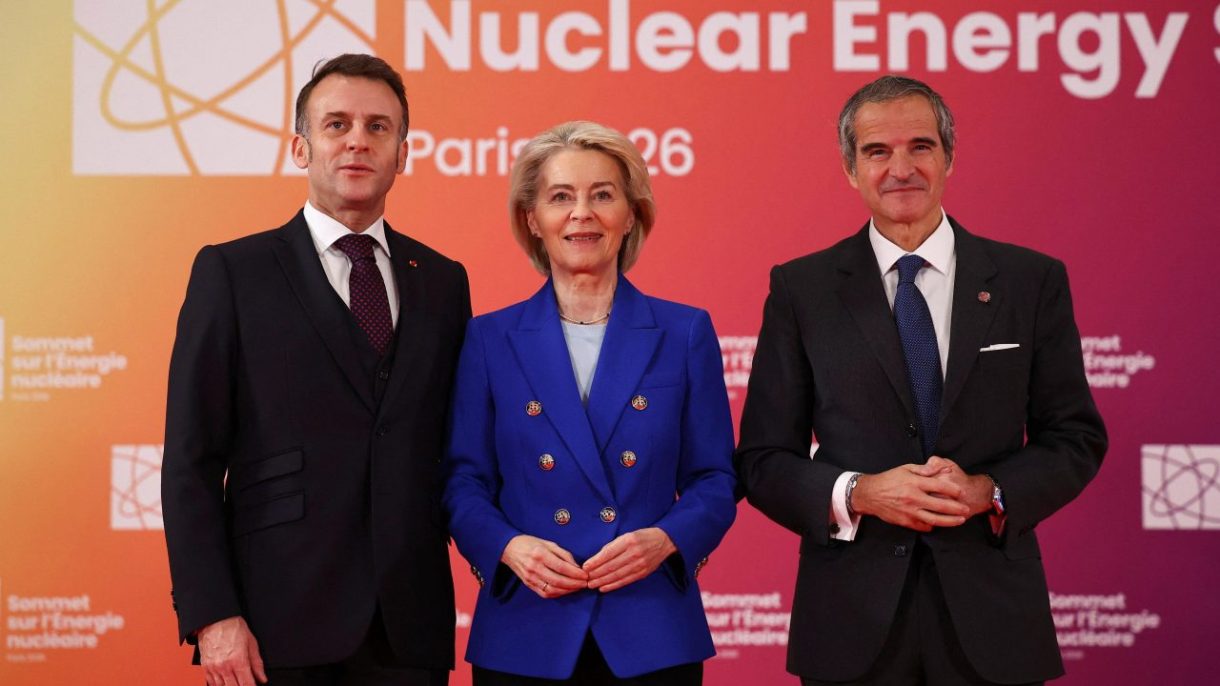
The Great Atomic Pivot: EU Reclaims Nuclear Power as a Strategic Pillar for Energy Security

In a significant rhetorical shift for the European Union’s energy policy, Commission President Ursula von der Leyen characterized the continent’s historical move away from nuclear power as a “strategic mistake.” Speaking at the Nuclear Energy Summit in Paris, hosted by the International Atomic Energy Agency (IAEA), von der Leyen argued that turning away from the atom left Europe dangerously exposed to the volatility of global fossil fuel markets.

A Continent Re-evaluating its Baseload

The President noted a stark decline in nuclear’s contribution to the European grid, falling from one-third of total electricity generation in 1990 to approximately 15% today. This retreat, she argued, exacerbated Europe’s dependence on expensive, imported oil and gas—a vulnerability underscored by ongoing instability in the Middle East.

“I believe it was a strategic mistake for Europe to turn its back on a reliable, affordable source of low-emissions power,” von der Leyen stated.

She outlined a vision for a modernized energy system where nuclear works in tandem with renewables, supported by robust storage and smart grids.

The Rise of Small Modular Reactors (SMRs)

The EU’s strategy is increasingly focused on the next generation of nuclear technology. Key initiatives include:

  • Regulatory Reform: Recent changes to state aid rules now allow for expanded support for nuclear fission and fuel cycles.

  • Industrial Alliance: The launch of the world’s first industrial alliance dedicated to Small Modular Reactors (SMRs).

  • Financial Backing: Proposed investments of over €5 billion in fusion research and an additional €200 million in guarantees through 2028 to support the first commercial units of innovative nuclear technologies.

The goal is to have SMRs operational across Europe by the early 2030s to complement existing traditional plants.

Regional Expansion: Greece, Romania, and Serbia

The shift in sentiment at the Commission level is mirrored by renewed interest among member states and neighboring nations:

  • Greece: Prime Minister Kyriakos Mitsotakis echoed von der Leyen’s sentiments, noting that it is time for Greece to explore how SMRs could be integrated into the domestic grid. While Greece remains committed to renewables and gas as a bridge, a new committee will officially study nuclear integration.

  • Romania: Energy Minister Bogdan Ivan announced plans to triple the nation’s nuclear capacity over the next decade. This includes the modernization of the Cernavodă plant and the development of a pioneering SMR project in Doicești.

  • Serbia: Minister of Mining and Energy Dubravka Đedović Handanović signaled Serbia’s intent to join the “nuclear revival.” To support a growing economy and AI infrastructure, Serbia aims to select a technology by 2032, with the goal of bringing a plant online by approximately 2040.

As Europe seeks to reconcile its climate goals with energy security, the message from Paris was clear: the nuclear option is no longer on the sidelines—it is back at the center of the strategy.

  • 1
  • 2