by in News

Greece’s first municipal energy community to be launched in its coal capital Kozani

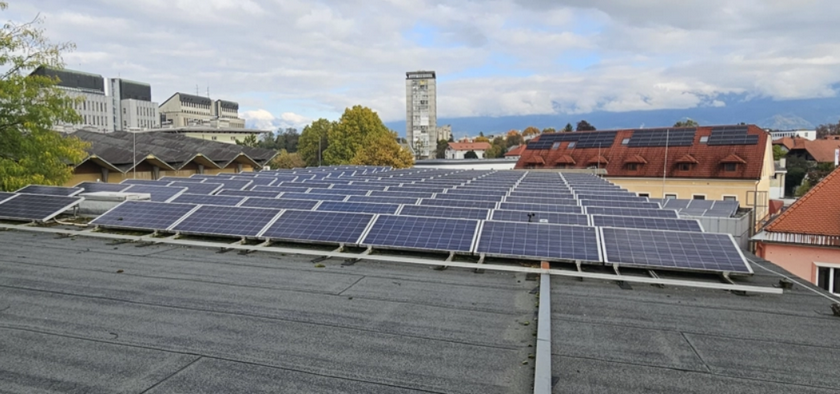
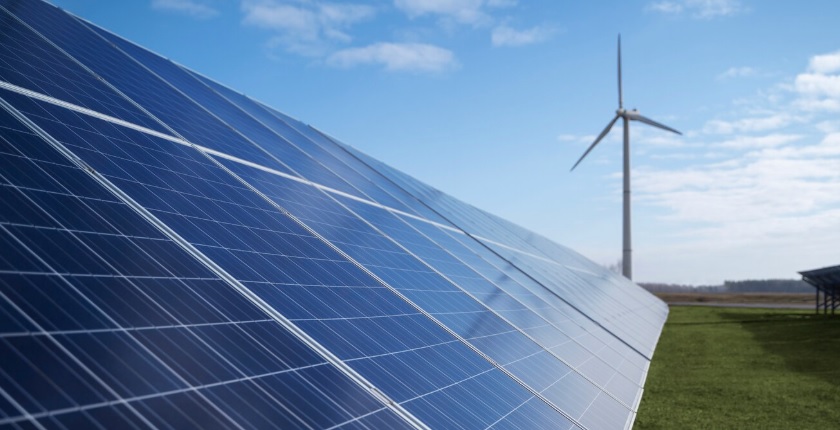
The city of Kozani in northern Greece, home of the country’s dwindling lignite industry, is seeking a contractor for seven photovoltaic systems of 7 MW overall. The municipality said the power plants would supply its buildings, public lighting, pumps and drilling rigs as part of the country’s first energy community led by a local authority. Under a virtual net metering scheme, the facilities are also intended for combating energy poverty.

Energy communities are present all over Greece, but private capital is dominant – instead of individuals, local institutions and small firms. The concept can be especially beneficial for local authorities in coal regions, which are undergoing rapid decarbonization and turning toward cutting-edge technologies.

Job losses and a lack of skills jeopardize communities in such areas. The Municipality of Kozani, the capital of Greece’s coal land, the region of Western Macedonia, is one of them. It was among the first in the country that launched initiatives for energy communities led by local authorities.

Deadline for applications is January 12

Kozani has opened a tender for the selection of a contractor that would build seven photovoltaic plants. The municipal solar power units would operate under a virtual net metering scheme.

It would enable supplying municipal buildings, street lighting, schools, sports facilities, pumps and drilling rigs, but also the means to fight against energy poverty. The municipality received funding via the European Union for the project, under a just development and transition program.

The city claimed that it would be the country’s first energy community of its kind. Prospective candidates can apply by January 12, and the selection is scheduled for January 16. The budget amounts to EUR 6.25 million including value-added tax, and the local authority participates with 20%.

Kozani already invested EUR 650,000 in its energy community

The project is placing the Municipality of Kozani in the lead in energy self-sufficiency and autonomy in the country, Mayor Yiannis Kokkaliaris said.

He revealed that the local authority managed to secure grid connection terms in time not to lose the EUR 650,000 that it spent so far for the purpose.

The Kozani area is already hosting some of Greece’s largest photovoltaic plants and projects. It is envisaged for one of six waste incinerators in the country. Government-controlled Public Power Corp. (PPC Group) plans to build pumped storage hydropower plants on its depleted open pit coal mines in the region.

Of note, Greece recently lost EUR 100 million from the European Union’s Recovery and Resilience Facility (RRF) for the Apollo program. It was aimed for self-consumption for vulnerable households through forming an energy community.

by in News

Energy communities reduce power bills for members, improve electricity market

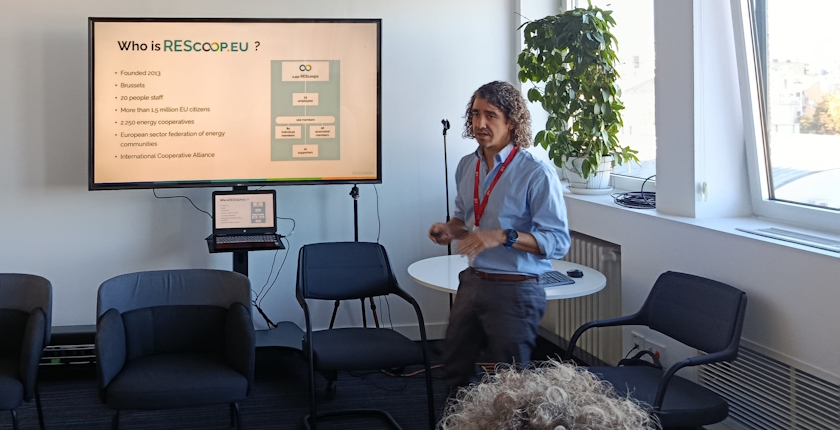
Citizen energy communities make the energy system greener and benefit society at a local level, Josh Roberts from European federation of energy communities REScoop said in his presentation, organized in Belgrade by Deutsche Gesellschaft für Internationale Zusammenarbeit (GIZ) GmbH. It is a form of association that also lowers costs for households, institutions and small firms and entrepreneurs, and contributes to the deployment of progressive technologies. Furthermore, it is a framework for democratic control.

The event included developers from the emerging segment of energy communities and cooperatives in Serbia. They outlined the current initiatives and pointed to challenges regarding market entry, financing and policies.

The establishment and operation of energy communities is arranged through the European Union’s latest legislation, as well as in Serbia and other Western Balkan countries, but they are not a new concept. For instance, such entities still accounted for almost half of wind power output in Denmark in late 1990s, according to Senior Policy Advisor Josh Roberts from REScoop, the European federation of energy communities and cooperatives.

Speaking at a gathering that GIZ organized in Belgrade he pointed to the benefits for citizens, small firms and entrepreneurs and for institutions from setting up or joining energy communities. Initiatives in Serbia were also presented, and their progress in the same field, and the event included dialogue on the necessary technical solutions for connecting to the distribution grid.

Brussels-based REScoop was founded in 2013. In its membership are organizations from 22 European countries. They include Serbian energy cooperative Elektropionir. It gained the most ground regarding association and the implementation of projects.

One coal town has put up signpost for energy communities in Slovenia

Among other examples, Roberts highlighted Slovenia’s first energy community with a rooftop solar power plant for joint use. The facility is on the roof of an elementary school. The project involves aid for people living in energy poverty and it is free to join the group.

It is in the town of Hrastnik in a former coal industry area. The participants already lowered their power bills by 30%, and the gains will be even greater when they pay off the loan, Roberts said.

There are more than 1,600 energy communities in Austria

The representative of the REScoop federation stressed that municipalities in the Belgian region of Wallonia have succeeded in obtaining the right for citizens to participate in investments in green energy projects. It resulted in the foundation of a range of energy communities.

Roberts especially commended Austria’s legal framework with regard to enabling citizens to participate. The country hosts more than 1,600 energy communities.

Udruzivanje energetske zajednice smanjuje troskove trziste elektricne energije Dzos Roberts Josh REScoop GIZ

Energy community eases grid operator’s job

Energy communities are envisaged to return the invested funds to society at the local level. Subsidies are especially favorable for that, Roberts explained. Income is directed to education, infrastructure and aid against energy poverty.

The essence is that the community controls the distribution of the proceeds. In addition, grid operators can communicate more easily with one entity than with a hundred prosumers, Roberts underscored. Prosumers – or buyers-consumers, as they are formally called in Serbia, generate electricity for their own needs.

Pooling together enables providing services in the market, where energy communities can supply and store energy as well as conduct energy efficiency services, among other activities.

It means an entity of such type can ease the evening grid load, in moments of the highest demand, using energy from its batteries. That way, price peak shaving is achieved.

Registration process must be separate from defining activity

As for the procedure, Roberts said registration needs to be only for acknowledgement, rather than for approving specific activities.

“It’s about acknowledging the legal form and it’s about checking about how that legal form ensures compliance with the eligibility criteria. We have found very complex registration procedures. This does not work. It needs to be simple,” he stressed.

There are many activities that energy communities can undertake and they need to be able to enter them gradually, without complex procedures for licenses and permits

Conversely, in some jurisdictions there are simplified ways to get a supplier license. It enables an energy community to enter the activity gradually, instead of having to fulfill the requirements for all segments, even without having a comprehensive business model, the members or a business case, Roberts said.

He mentioned at the same time that one of the basic ideas is promoting inclusiveness.

“It’s already hard to set up an energy community, but it’s even harder to involve members who may have a hard time paying their bills, or have a lot less disposable income. So we found that the best models at the moment are for energy communities either to front the membership fees or for local authorities to pay for this upfront. And in energy sharing, we’re seeing more and more of energy donated to vulnerable households,” he stated.

Energy cooperatives helping improve rural areas from which people are leaving

Energy communities are giving people an opportunity for climate action and to contribute to their community, Roberts said. He added that such projects improve the area where they are conducted, stressing that it is especially important for rural areas from which many people are leaving.

A key point is that they enable participants to control their costs, production, consumption and energy sharing.

 The main challenge in Serbia is how to obtain a grid connection, alongside the matter of accessibility of incentives and loans

Importantly, energy communities are linked to the tradition of cooperatives, for which Serbia used to be known, but there is still much left to do around the legal framework.

There was word at the said gathering with representatives of institutions about the complexity of adjusting the electricity network to the production’s decentralization, as well as about the possibility to streamline the procedure for the establishment of energy communities and their operation.

Serbia is yet to address the accessibility of subsidies and financing, while currently the main issue is how to get grid connection approvals.

Energetsko zadrugarstvo smanjuje troskove trziste elektricne energije GIZ

Enterprise, association or cooperative

The speakers and other participants in the event agreed that the electricity market isn’t complete without energy communities, while that they modernize and democratize it.

When it comes to Serbian regulations, such legal entities have the right to conduct aggregation, but they need a license for it. Notably, aggregators have balancing responsibility, so they need to cover the deviations from the forecasted output.

Energy communities were introduced in the latest version of the Law on Energy. When they become regular in practice, the framework will need to be adjusted gradually to the situation. Citizens, firms and municipal authorities establish energy communities as enterprises, associations or cooperatives.

The bottom line is to enable citizens to take part in the clean energy transition and achieve local environmental, economic and social benefits, as opposed to prioritizing profits. It implies collective ownership, democratic control and reinvestment into the community with the goal of reducing energy poverty and promote energy independence.

The basic technical requirement for members is to have a smart electricity meter.

Elektropionir pioneering agrisolar in Serbia

The event’s organizers gathered the people who achieved the first steps in Serbia – from the Sunčani krovovi (Sunny Roofs) energy cooperative, created in 2019, to Platform for Energy Transition, which participated in uniting three residential buildings in Niš, which have a joint solar power plant and electric vehicle chargers. It is one of the first six prosumers in Serbia in the category of homeowner associations.

The Elektropionir energy cooperative managed through crowdfunding to install two cooperative-owned rooftop solar power systems on the territory of the City of Pirot, on the buildings of a local community council and a cultural center. As part of the Solarna Stara project, on Mt. Stara planina, the two villages receive the income from the sale of surplus electricity.

Srem is set to become the main region in Serbia for community energy

Next, the same organization built the first agrisolar power plant in Serbia. The 20 kV facility is at an organic farm, Organela, near the city of Valjevo.

Another recent undertaking is a rooftop photovoltaic unit on a school in the town of Ruma, envisaged to be the basis for an energy community. In the same area, Elektropionir is working on the installation of several prosumer power plants on house roofs and on aggregating them, inspired by the enthusiasm and the solar system of its member Nenad Maričić.

Owners and neighbors can jointly invest and they will be able to become an energy community and share energy among themselves.

Center for Sustainable Development to integrate string of energy systems of various technologies

Near Ruma, which is in the Srem (Syrmia) region, the City of Sremska Mitrovica and Regional Development Agency Srem have launched a major project. It is for the establishment of renewable energy communities (RECs), which are essentially a subset of citizen energy communities (CECs).

The local authority provided land for research and development. It is next to the regional waste landfill and a wastewater treatment plant. The plan is that the Center for Sustainable Development builds and integrates a string of energy systems.

They would include combined heat and power (CHP) production – cogeneration – from biomass, small wind turbines and a PV plant. The project also involves heat pumps and a storage facility assembled from old batteries.

There would be a facility running on biogas from the landfill within the center, and a magnet electric generator. Residents of the adjacent village of Jarak would be able to join the energy community.

Belgrade Energy Community is focused on equity, solidarity

Another group emerging in community energy is Belgrade Energy Community. It intends to apply a model of collective self-consumption in an urban area, with a focus on trust, equity and solidarity.

Its idea is to enable people to generate, share and use green energy. The plan is to map roofs and consumption and set up the first pilot installations.

According to the Belgrade Energy Community, it will donate 5% of the output to households affected by energy poverty. It consists of a cooperative, a civil society organization, two small enterprises, several prosumers and citizens.

by in News

Rooftop solar on public buildings gains momentum in Slovenia

The trend of installing rooftop solar on public buildings to create energy communities is gaining momentum in Slovenia, with two more cities, Velenje and Kranj, joining the initiative. Similar projects were recently announced in Celje, Šoštanj, and Novo Mesto.

Velenje plans to install solar power plants on 13 public buildings in cooperation with ECE, a subsidiary of state power utility Holding Slovenske Elektrarne (HSE). The total capacity of the proposed installations is about 1.97 MW, with an estimated annual electricity output of more than 2.1 GWh.

The project, valued at EUR 1.97 million, is expected to save the municipality over EUR 157,000 in electricity costs annually. Financing is provided through the European Union’s Recovery and Resilience Facility (RRF) and the National Recovery and Resilience Plan. The municipality itself is contributing EUR 530,755.

This model involves the internal exchange of produced electricity, enabling municipalities to optimize consumption and reduce dependence on the market. Photovoltaic plants are installed on the roofs of structures such as sports facilities, administrative buildings, health centers, bus stations, schools, and kindergartens.

Energy communities help municipalities increase energy independence

In Kranj, 16 rooftop solar power plants, with a total capacity of 2 MW, will be installed on public buildings, in a EUR 1.5 million public-private partnership project carried out in cooperation with GEN-I. The municipality has obtained a state subsidy of EUR 700,000, while the remaining amount will be provided by the private partner.

The new solar power plants should be installed by next summer. They are expected to provide electricity for a total of 22 public buildings, cutting their electricity bills in half, according to a statement from the local authority. Kranj already has two rooftop solar plants on public buildings, installed in 2012 and 2013 respectively, it recalled.

In September, contracts were signed in Celje, Šoštanj, and Novo Mesto to install rooftop solar power plants on public facilities.

The project in Celje involves 11 installations with a total capacity of 1.4 MW, which is expected to bring about EUR 200,000 in annual savings. The contract in Šoštanj is for power plants at four public facilities, totaling 500 kW, with expected annual savings of EUR 70,000. In Novo Mesto, a private partner plans to build and operate ten new solar power plants on municipal land and structures.

by in News

Greek regulator steps in to prevent energy communities misuse

Legitimate energy communities have suffered in Greece, as private investors have been taking advantage of the status to promote disguised commercial projects.

Normally, energy communities are set up to help citizens, businesses and other special consumer groups to benefit from lower energy costs using renewable energy.

There are two categories: renewable energy communities (RECs) and citizens energy communities (CECs). They have priority in obtaining licenses compared to commercial investments. They are exempt from letters of guarantee and have access to national and European funding and a higher feed-in tariff.

A law was adopted in 2023 to restrict production licenses for energy communities. It also had the goal of excluding other market actors from participating. However, it appears that the attempt was unsuccessful.

A gap in the regulatory framework allowed private companies and individuals to create energy communities and benefit from the various licensing and financial benefits to promote projects that would otherwise not be eligible. In short, such investors appear as legitimate small participants, while actually representing larger private companies.

Psomas: Just 2.8% of installations are for self-consumption

By April 2025, energy communities installed facilities totaling 2.24 GW, of which just 62 MW (or 2.8%) for self-consumption. They also held about 22% of total licensed capacity for photovoltaics in the country, according to energy consultant Stelios Psomas.

The law stipulates that legal entities participating in REC and CEC management boards must be mutually independent and not connected directly or indirectly through other businesses or natural persons.

According to the Regulatory Authority for Energy, Waste and Water (RAAEY or RAEWW), the minimum of 15 legal entities to set up a community refers to 15 independent entities. Otherwise, there is no guarantee they would act towards the benefit of local communities and not as a vehicle to promote the commercial interests of individuals or business groups, it pointed out.

RAAEY said it would intervene to enforce the essence of the law more aggressively. It added that if irregularities are discovered, an energy community may lose its production license. The regulator revealed it would conduct investigations both due to complaints and on its own.

Greece downgraded because of lost EU funds

The government recently lost of EUR 100 million from the European Union’s Recovery and Resilience Facility (RRF), aimed at promoting self-consumption for vulnerable households through forming an energy community.
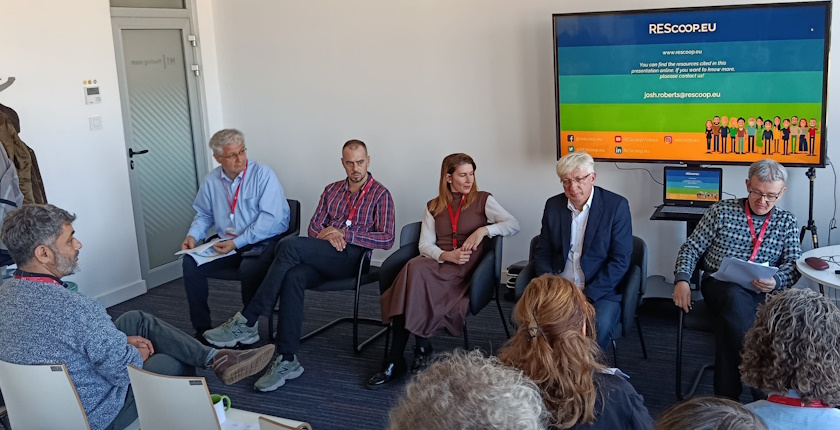
The loss of funds for the Apollo program triggered a downgrade by REScoop, the European federation of energy communities. It said there were no more dedicated European funds to support energy communities in Greece.

EECF to provide a second chance

Greek energy communities may gain another source of European funding through the European Energy Communities Facility (EECF).

More than 140 of them across Europe will be supported through the program with EUR 45,000 per project. Greece submitted 29 proposals in the recent first call that took place at the end of September. The final list of beneficiaries will be announced in December, with a second call expected in May 2026.

by in News

City of Pirot in Serbia plans solar power plant on remediated unsanitary landfill

The City of Pirot plans to build a solar power plant on the site of a former unsanitary landfill when it is remediated. The move would strengthen its leadership position in Serbia regarding the use of renewable energy and environmental protection.

In 2013, Pirot opened a regional sanitary landfill, which cost EUR 11 million. It enabled the local authority to shut down an unsanitary landfill on the right bank of the Nišava river. However, the land still hasn’t been remediated and reclaimed.

Now the Ministry of Environmental Protection of Serbia has approved EUR 2 million for the works, Serbia’s public broadcaster RTS reported. With the completion of remediation, the possibility opens up for the six hectares of land in the country’s southeast to be repurposed.

Solar panels would be installed on three hectares

Mayor of Pirot Vladan Vasić said that the documentation for the remediation of the landfill is complete. The city intends to add EUR 500,000 to the EUR 2 million received from the government and complete the first phase. He plans for the second phase to be approved next year, to solve the decades-long issue in an environmentally acceptable way.

Vasić revealed one and a half to two hectares would be allocated for businesses, adding that the purpose of the remaining land is still under consideration.

A photovoltaic plant would be the most cost-effective solution

One idea is to install a 3 MW solar power plant that would supply electricity to the city authority, he pointed out.

Other ideas are a football stadium, a golf course, afforestation, and a park. The photovoltaic plant would be the most cost-effective solution, Vasić added.

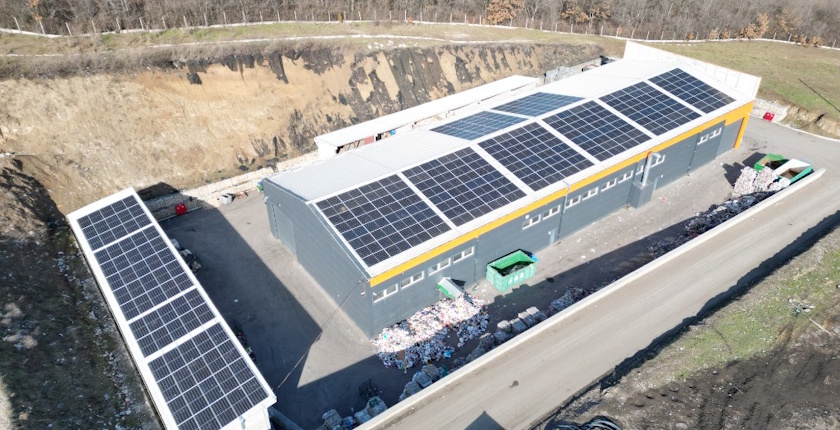
Of note, there is a solar power plant on the roof of the building of public waste utility Regional Landfill Pirot. The 150 kW facility began operating in August last year. The city officials claim it is the largest PV plant in Pirot county.

The first cooperative solar power plants in Serbia are located on the Stara Planina mountain

Pirot is also developing a regional waste management center. In 2022, the city signed a contract for the construction of the second landfill body, a composting plant, and a biogas facility.

The additional segment would extend the operation of the sanitary landfill by 20 years, while the biogas collection system would enable the collection of methane from the landfill.

A system for treating construction waste to enable material recycling is planned as well.

As for solar energy, not far from the city, the Stara Planina mountain is the home of the first cooperative solar power plants in Serbia. The local authority participated in the project. They were put into operation last year.

In mid-2023, PV projects were under development for over 125 MW in total capacity on the city’s territory. Of note, this year Pirot became the 13th local authority to join the Clean Air Regions Initiative, initiated by the Energy Community Secretariat.

by in News

Bulgarian capital Sofia to create its first energy community in Vitosha district

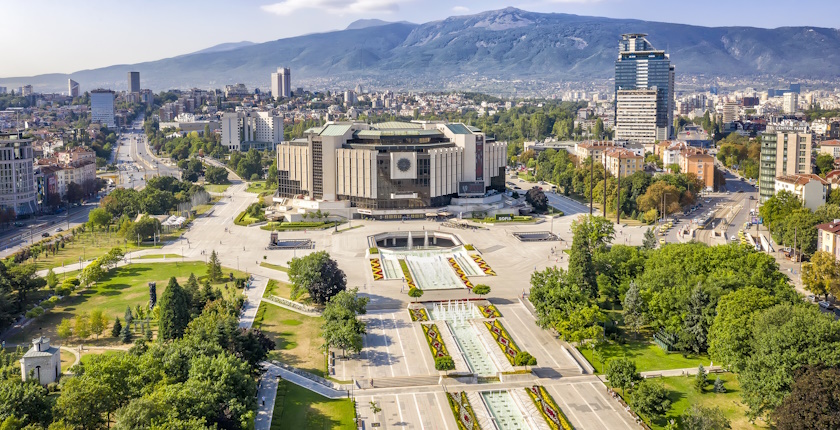
Citizens and businesses in Sofia will be able to invest in a photovoltaic system on a school rooftop as part of the first energy community. It would be a partnership between the city’s Vitosha District, individuals and legal entities.

Following a few early initiatives in Bulgaria, the capital city decided to establish its first energy community. The Sofia Municipal Council voted to call on individuals and firms to invest in the installation of a rooftop solar power plant of 74.8 kW in peak capacity.

The system, expected to become operational within a few months, would be on the Acad. Emilian Stanev secondary school in the district of Vitosha. The plan is to use the electricity for the building’s needs and for other municipal facilities.

Participants can invest EUR 260 to EUR 2,600 each

The project is worth BGN 90,000 (EUR 46,000), including value-added tax, according to the local authority. The Vitosha District has earmarked just over EUR 1,000 for the endeavor. Citizens and businesses in Sofia would be invited to invest between EUR 260 and EUR 2,600 per participant in the energy cooperative.

Dzhambazov: I believe that local government should be the driver for decentralized energy

“I believe that local government should be the driver for decentralized energy,” Deputy District Mayor Krasimir Dzhambazov said. There are 24 districts under the Sofia Municipality, also known as Stolichna (capital) Municipality. It provided the school roof free of charge.

After ten years, the city administration becomes the owner of the PV system. It unveiled the project almost a year ago. Bulgarian-Austrian Consulting Co. (BACC) and the Sofia Energy Agency (SOFENA) are consultants in the endeavor.

Vitosha energy community may integrate planned PV self-consumption systems for kindergartens

As 11 more units are about to be installed in Vitosha for self-consumption for kindergartens, including them in the energy community is under consideration, the update reveals.

Earlier this year, the Ministry of Energy, Electricity System Operator (ESO) and the Bulgarian Development Bank (BDB) agreed to introduce a solar power program for municipalities, schools, kindergartens, hospitals and small businesses, without any upfront costs. Minister of Energy Zhecho Stankov said the aim was to create the largest energy community in Europe.

Gabrovo and Burgas have launched the most notable municipal energy community initiatives in Bulgaria. The concept is gaining popularity across the European Union and beyond as an essential segment of the energy transition. In addition, households, small firms and local authorities, utilities and institutions can benefit from energy sharing or becoming prosumers.

Moreover, municipal and regional administrations have the opportunity to strengthen their energy self-sufficiency and achieve savings without burdening their public finances.

by in News

Greece loses EU grant intended for renewable electricity for vulnerable consumers

The ambitious Apollo program, which the Greek government outlined in late 2023, is losing EUR 100 million. The European Union earlier approved the grant for investments in renewable energy and storage, intended to lower energy costs for vulnerable consumers through self-consumption.

The first phase of the Apollo program was envisaged to help vulnerable households. It aimed to support renewable energy projects, through auctions, of 400 MW to 500 MW overall, combined with battery systems.

Each of Greece’s 13 regions, also known as peripheries, would get a green power plant, and eligible consumers who join a local energy community get discounted electricity bills. Therefore, the program is in the form of virtual self-consumption. It is the first of its kind in the region that Balkan Green Energy News tracks.

Apollo fails to take off on time

The scheme was supposed to benefit from an EUR 100 million grant from the European Union’s Recovery and Resilience Facility (RRF). It is implemented via the National Recovery and Resilience Plan Greece 2.0.

However, Apollo was significantly delayed and now the deadlines are considered impossible to achieve, even if they are extended. It means RRF funds are going to be lost. Energypress reported that they have already been removed from the budget.

Namely, the issue is with the batteries. Now their costs would have to be covered entirely by the producers. In turn, they are expected to lock higher prices in Apollo’s auctions, possibly passing them on to end consumers and making the whole initiative less effective at combating energy poverty.

It should be noted that the rest of Apollo remains intact for the time being, despite the setback. The loss of funds concerns household consumers with special tariff A. Funding is still available, in theory, for the other category of vulnerable households, defined by different income criteria.

The entire initiative also aims to lower energy costs for municipal authorities, water utilities and irrigation associations. They haven’t been affected so far.

Standalone battery plants also at risk

Another Greek initiative, for subsidized standalone battery plants, faces very short deadlines. It is eligible for EUR 341 million in RRF funding. In total, projects for 900 MW overall have been selected through three auctions.

The first wave of investors should declare connection readiness this month, so their facilities can become operational by the end of 2025.

HAESS: Selected projects may not receive support

They have complained of a lengthy licensing process and logistical difficulties. The investors asked the Ministry of Environment and Energy for an extension.

In July, the Ministry of Finance submitted a request for the sixth RRF tranche, EUR 2.1 billion in grants, after completing 39 more targets. If it is approved by the administration in Brussels, Greece will have secured EUR 23.4 billion overall, or 65% of allotted funds.

by in News

North Macedonia’s draft law envisages renewable energy auctions for CfDs

North Macedonia drafted the Law on the Use of Energy from Renewable Sources to facilitate a decrease in fossil fuel consumption and a rise in the share of green energy. The legislation introduces market premiums under two-way contracts for difference (CfDs), which would be approved through renewable energy auctions. It also regulates net metering and net billing for prosumers and defines renewable energy communities.

The Ministry of Energy, Mining and Minerals of North Macedonia called on citizens, experts and stakeholders to submit opinions and proposals for the draft Law on the Use of Energy from Renewable Sources. It will regulate the segment separately for the first time, “following the example of a large number of countries in the region and the EU,” the statement adds.

The public debate lasts until August 30. According to the ministry, the most significant novelty is the two-way contract for difference (CfD). It is defined in Macedonian as contract for market settlement of the price difference. The bill envisages awarding such market premiums through renewable energy auctions.

It is a mechanism that guarantees financial stability for renewable energy producers and protects consumers from extreme price fluctuations, the ministry argued. The draft is fully aligned with the European Union’s energy legislation including the Renewable Energy Directive (RED3), the update adds.

Basis for renewables deployment in heating, cooling, transportation

The proposed measures aim to lower the use of fossil fuels and grow the share of renewables in gross energy consumption, the ministry added. They facilitate support for long-term investments and faster deployment of renewable energy in heating, cooling and transportation, it underscored.

Guarantees of origin of electricity are included in the bill, together with a framework for international cooperation and energy markets.

The draft establishes the basis for the establishment of renewable energy communities of citizens and companies and other legal entities such as local authorities. The scope also involves net metering and net billing for prosumers – “consumers-producers.”

Multiapartment structures can become prosumers with units up to 50 kW

While the ministry earlier said it would raise the upper capacity limit for prosumers in the segment of households to 10 kW, the ceiling in the draft law is 10.8 kW for individual homes and 50 kW for multiapartment structures. The draft also introduces the collective prosumer, a group of citizens and commercial entities residing in the same building or apartment complex.

Prosumers with units up to 16 kW would be in the net metering mechanism. Net billing is for 16 kW to 50 kW, and larger facilities are envisaged for a commercial supply scheme.

Notably, prosumers operating power plants of over 300 kW are obligated to cover the balancing expenses, the text reads.

by in News

European Energy Communities Facility to award EUR 45,000 per project

The European Energy Communities Facility has launched its first call for proposals to support the development of comprehensive business plans for community energy projects. Emerging energy communities in 27 European Union member states, Iceland, Moldova, North Macedonia, and Ukraine can apply for a lump sum grant of EUR 45,000 per beneficiary.

The European Energy Communities Facility grants are intended to support the development of comprehensive business plans for community energy projects in 31 countries. A total budget of over EUR 3 million will be distributed among 73 selected initiatives to empower citizens to drive a fair, democratic, and sustainable energy transition. The application deadline is September 30.

The application deadline is September 30

The funding will cover all preparatory steps needed to develop a sound, viable, and bankable business plan, from technical and financial assessments to legal and administrative procedures, including feasibility studies.

In addition to financial support, successful applicants will gain access to peer-to-peer exchanges and a capacity-building programme, tailored to help them develop and implement their business plans.

Existing communities also can apply

While the call is primarily aimed at emerging energy communities, existing communities exploring new services or business models are also eligible to apply.

To qualify, the applicant must be registered as a legal entity and comply with one of the EU definitions for energy communities, be based in an eligible country (EU27, Iceland, Moldova, North Macedonia, and Ukraine), and commit to fulfilling all grant obligations.

To ensure fairness, applications will be assessed within two regional categories, based on the legal framework for energy communities of each country. This approach guarantees that initiatives developed in countries facing more challenging conditions for community energy will not be in competition with those emerging from countries with more favorable conditions.

Independent experts will evaluate proposals based on project ambition, readiness, quality, and local impact. The evaluation results are expected to be communicated by December.

by in News

Public call for funding for energy communities in Western Balkans

The Emilia-Romagna Region in northern Italy is supporting the creation and strengthening of renewable energy communities (RECs) in five countries in the Western Balkans. Ten projects can receive up to EUR 200,000 each, alongside technical and other support.

For-profit and non-profit entities in Albania, Bosnia and Herzegovina, Montenegro, North Macedonia and Serbia are eligible for an open call for the setup, empowerment and potential investment in renewable energy communities (RECs). Within a project funded by the European Commission’s Directorate-General for Regional and Urban Policy (DG Regio), the Emilia-Romagna Region invited expressions of interest.

The initiative is called Better Cohesion through Development of Energy Communities in the Western Balkans. The administration of the northern Italian region is conducting the activity with the support of its consortium ART-ER Attractiveness Research Territory. It includes universities, research institutions, the regional chamber of commerce, local authorities and other stakeholders.

Up to 10 projects, or two per country, would receive a maximum of EUR 200,000, together with support in financial planning and community governance, technical assistance and mentoring and access to a digital energy management tool.

Phase 2 is for existing renewable energy communities

Eligible applicants in phase 1 include municipalities, nongovernmental organizations, associations, cooperatives, small and medium-sized enterprises and informal citizen groups with the capacity to formalize. All project activities must be carried out on a not-for-profit basis, meaning any surplus must be reinvested in the community.

Cross-border projects with partners in Croatia, Greece, Slovenia and Italy are eligible

Phase 1 is for candidates looking to activate a new energy community from the ground up — from stakeholder mobilisation to legal establishment. Existing renewable energy communities can enter in phase 2, to assess feasibility and conduct small-scale energy infrastructure investment.

The Emilia-Romagna Region pointed out that the call is also open for cross-border projects with partners in Croatia, Greece, Slovenia, and Italy – the European Union member states within the EU Strategy for the Adriatic and Ionian Region (EUSAIR).

Second deadline to submit drafts is October 20

Applicants are encouraged to engage with the process even at an early or conceptual stage of their initiative, as technical support and guidance will be provided to strengthen and finalize proposals, according to the documentation. The call will consist of two rounds.

The first draft proposal submission deadline is July 16, followed by the negotiation phase until August 22 and a deadline for final proposals on September 8. The respective dates for the second round are October 20, November 21 and December 5.

Applicants that are not yet ready can participate in the second round. It is also the opportunity to fulfill the quota of two projects per country.

Members of RECs must be located near their projects

The Western Balkans are introducing the legal framework for citizen energy communities (CECs) and renewable energy communities (RECs).

Shareholders or members of a renewable energy community are located in the proximity of the renewable energy project that it owns and develops. They are natural persons, small and medium-sized enterprises and local authorities.

A private enterprise can participate in RECs if it isn’t its primary commercial or professional activity

RECs utilize technology for energy production only from renewable sources, encompassing electricity, gas and heat. Private enterprises can participate in such a community only if it isn’t their primary commercial or professional activity.

CECs are limited to electricity but they can use fossil fuels

Citizen energy communities gather individuals, local authorities including municipalities and small enterprises. They engage in generation, distribution, supply, consumption, aggregation, energy storage, energy efficiency services and charging services for electric vehicles. CECs can also provide other energy services to its members or shareholders.

They can operate on a national scale and have the flexibility to employ both fossil fuel– and renewables-based technologies, but solely for electricity production. The range of activities of CECs is broader than for RECs.

  • 1
  • 2