by in News

Austrian EET rolls out AI-powered device to simplify home electricity metering

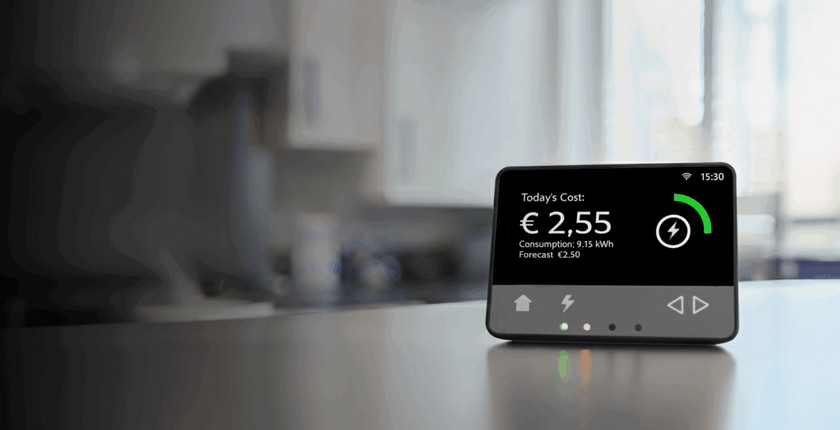
Austrian startup Efficient Energy Technology (EET) has developed an electricity metering solution called the Virtual Meter, which measures residential electricity consumption through a single connection within the home’s power network. The device, powered by artificial intelligence (AI), eliminates the need for a conventional hardwired meter, reduces system complexity for home energy storage and heat pumps, and provides real-time consumption data, the company claims.

The Virtual Meter, which can be integrated directly into any home energy device through a standard socket or any point on the home’s power network, deduces the total energy consumption accurately, reliably, and in real time, according to EET.

AI-powered Virtual Meter derives and delivers consumption data in under one second

The device uses AI-powered load identification to measure the total net electrical load of the entire home on single-phase or three-phase residential grid connections, with data delivered in under one second. It can be plugged in anywhere via a standard earthed wall socket or a wired connection, requiring a physical link to only one phase.

Instead of directly measuring current, the Virtual Meter continuously observes the voltage of one phase and detects the tiny changes that occur whenever a device switches on or off on any of the three phases of a household, the company explains. In this way, it infers the home’s total consumption.

The solution reduces the costs and complexity of home batteries and heat pumps

The Virtual Meter reduces system complexity and installation and component costs for manufacturers of devices such as home batteries, EV chargers, heat pumps, home energy management systems (HEMS), and other residential energy products, delivering a smoother, more transparent experience for end-customers.

The solution is compatible with all common grid configurations and utility meter types, and its design ensures interruption-free data availability, EET says, adding that the Virtual Meter can be integrated directly into other energy products or used as a standalone solution.
by in News

Austrian EET rolls out AI-powered device to simplify home electricity metering

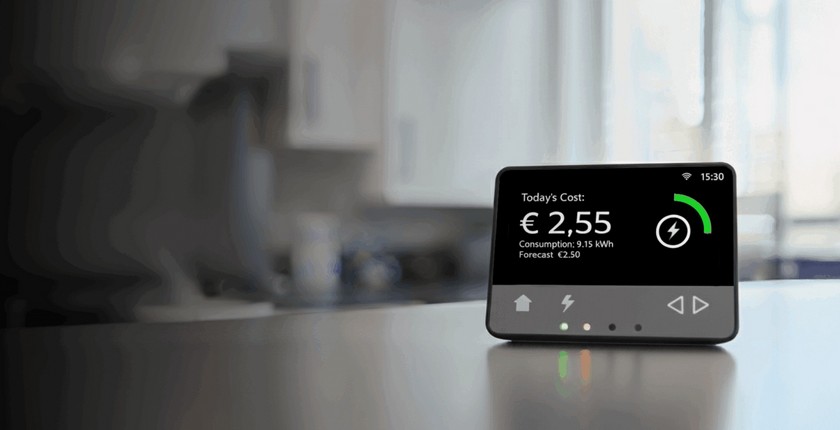
Austrian startup Efficient Energy Technology (EET) has developed an electricity metering solution called the Virtual Meter, which measures residential electricity consumption through a single connection within the home’s power network. The device, powered by artificial intelligence (AI), eliminates the need for a conventional hardwired meter, reduces system complexity for home energy storage and heat pumps, and provides real-time consumption data, the company claims.

The Virtual Meter, which can be integrated directly into any home energy device through a standard socket or any point on the home’s power network, deduces the total energy consumption accurately, reliably, and in real time, according to EET.

AI-powered Virtual Meter derives and delivers consumption data in under one second

The device uses AI-powered load identification to measure the total net electrical load of the entire home on single-phase or three-phase residential grid connections, with data delivered in under one second. It can be plugged in anywhere via a standard earthed wall socket or a wired connection, requiring a physical link to only one phase.

Instead of directly measuring current, the Virtual Meter continuously observes the voltage of one phase and detects the tiny changes that occur whenever a device switches on or off on any of the three phases of a household, the company explains. In this way, it infers the home’s total consumption.

The solution reduces the costs and complexity of home batteries and heat pumps

The Virtual Meter reduces system complexity and installation and component costs for manufacturers of devices such as home batteries, EV chargers, heat pumps, home energy management systems (HEMS), and other residential energy products, delivering a smoother, more transparent experience for end-customers.

The solution is compatible with all common grid configurations and utility meter types, and its design ensures interruption-free data availability, EET says, adding that the Virtual Meter can be integrated directly into other energy products or used as a standalone solution.
by in News

Greece reboots Apollo program against energy poverty

The Greek government has redesigned and rebooted the Apollo self-consumption program, aimed at reducing energy costs for vulnerable consumers.

Initially, Apollo was introduced to support households, municipalities, water utilities and local irrigation organizations. Each of Greece’s 13 regions, also known as peripheries, would have a green power plant, and eligible consumers who join a local energy community get discounted electricity bills.

However, the first part, which included households, was not realized in time to draw EUR 100 million from the European Union’s Recovery and Resilience Facility (RRF). It expires in June 2026.

Tsafos: Both segments set for completion

“Apollo was one of the plans that we could not carry out in time, therefore we excluded it from RRF and increased funding to other initiatives, such as energy efficiency in houses,” Deputy Minister of Environment and Energy Nikos Tsafos explained earlier in December.

Now the government announced that the first phase would be continued using different funding sources, according to the new joint ministerial decree. In fact, the number of beneficiaries is higher than in the original version. A second phase would follow to support remaining consumer categories, based on a different decree.

“Our goal remains to complete both segments and we are trying to find new funding tools”, Tsafos added.

New auctions and deadlines

Based on the new plan, auctions will take place for 400 MW in wind farms and 200 MW in solar farms, with the second category being combined with battery storage. Selected wind power projects must be completed by September 30, 2028, and the ones for photovoltaics have until the end of 2027.

The decree also stipulates that auction participants may not be selected for more than 25% of total capacity offered in each auction. Every project must be mature, with final connection terms from a network operator.

Last but not least, solar farms without storage may also participate in the auction, as long as they include a battery afterwards in their license.

by in News

Greece reboots Apollo program against energy poverty

The Greek government has redesigned and rebooted the Apollo self-consumption program, aimed at reducing energy costs for vulnerable consumers.

Initially, Apollo was introduced to support households, municipalities, water utilities and local irrigation organizations. Each of Greece’s 13 regions, also known as peripheries, would have a green power plant, and eligible consumers who join a local energy community get discounted electricity bills.

However, the first part, which included households, was not realized in time to draw EUR 100 million from the European Union’s Recovery and Resilience Facility (RRF). It expires in June 2026.

Tsafos: Both segments set for completion

“Apollo was one of the plans that we could not carry out in time, therefore we excluded it from RRF and increased funding to other initiatives, such as energy efficiency in houses,” Deputy Minister of Environment and Energy Nikos Tsafos explained earlier in December.

Now the government announced that the first phase would be continued using different funding sources, according to the new joint ministerial decree. In fact, the number of beneficiaries is higher than in the original version. A second phase would follow to support remaining consumer categories, based on a different decree.

“Our goal remains to complete both segments and we are trying to find new funding tools”, Tsafos added.

New auctions and deadlines

Based on the new plan, auctions will take place for 400 MW in wind farms and 200 MW in solar farms, with the second category being combined with battery storage. Selected wind power projects must be completed by September 30, 2028, and the ones for photovoltaics have until the end of 2027.

The decree also stipulates that auction participants may not be selected for more than 25% of total capacity offered in each auction. Every project must be mature, with final connection terms from a network operator.

Last but not least, solar farms without storage may also participate in the auction, as long as they include a battery afterwards in their license.

by in News

Greek distribution operator slammed for wrongful power theft accusations

The Hellenic Distribution Network Operator (HEDNO or DEDDIE) has drawn severe criticism because of imposing fines for power theft in cases where no such wrongdoing took place.

Last year, HEDNO was asked by the government to step up its efforts to fight power theft, a major issue in the Greek market. In recent years, the phenomenon has worsened and is estimated to cost law-abiding consumers EUR 400 million per year. In 2022, 18% of the supplied energy was lost as a result of power theft or network losses in distribution. The number has remained high ever since.

However, the distribution system operator’s overzealous crews went over the top, fining consumers with thousands of euros, with little or no justification. In fact, there were cases where a drop in consumption as a result of irrelevant factors was considered power theft.

Households and businesses were obliged to pay, otherwise their supply would be cut off. Consequently, they must go to court to claim back the money, leading to a lengthy and costly process.

HEDNO fined by the regulator

The Regulatory Authority for Energy, Waste and Water (RAEWW or RAAEY) has stepped in to fix the problem. Ruling on a specific consumer’s complaint against HEDNO, it determined that the operator acted illegally and against provisions set by the Metering Code.

In fact, RAAEY accused HEDNO of enforcing power theft rules that it wanted added in the code, but which the regulator has not accepted. Based on the ruling, HEDNO was fined EUR 120,000.

It remains to be seen whether RAAEY will impose more fines, as the receiver of many such complaints. The body said it is not responsible for solving disputes between the operator and consumers. However, through the recent ruling it set a proper regulatory framework going forward.

by in News

Apple signs PPAs in Greece, Romania as part of drive to green its devices’ consumption

As part of efforts to ensure that all electricity consumed by Apple devices is matched with green energy, the United States–based tech giant is facilitating 650 MW of renewables projects across Europe, including through power purchase agreements (PPA). By 2030, wind and solar power plants in Spain, Greece, Italy, Latvia, Poland, and Romania are expected to generate over 1 TWh of clean electricity on behalf of Apple users, the company said.

“By 2030, we want our users to know that all the energy it takes to charge their iPhone or power their Mac is matched with clean electricity,” said Lisa Jackson, Apple’s vice president of environment, policy, and social initiatives.

In Greece, Apple has signed a long-term PPA to procure power from a 110 MW solar project owned by HELLENiQ Energy. The plant, which is already fully operational, is located in Kozani in northern Greece.

Apple has signed a long-term power purchase agreement for a 110 MW solar plant in Greece

In Romania, the company plans to procure power from the 99 MW Green Breeze wind farm, located in Galați County, through a long-term virtual power purchase agreement (vPPA). The facility, which is scheduled to start operations in the first half of 2026, was initiated by Sweden-based OX2 and later sold to Nala Renewables.

In Italy, Apple is supporting the development of a 129 MW portfolio of solar and wind projects. The first of the facilities, a photovoltaic plant in Sicily, is expected to come online this month.

The project backed by Apple in Poland is for Econergy’s 40 MW solar array, which is expected to be operational later this year. In Latvia, the tech giant has signed one of the country’s first corporate PPAs. It will procure electricity from European Energy’s 110 MW solar power plant, set to be one of the largest in Latvia once completed.

The 131 MW Castaño solar farm in Spain came online earlier this year

The 131 MW Castaño solar farm in Segovia in Spain, operated by ib vogt, became operational earlier this year.

by in News

Serbia’s power utility to take no loans in 2025, fund coal projects on its own

For the first time, Elektroprivreda Srbije (EPS) will not take out loans this year, but will finance all investments from its own resources, according to General Manager Dušan Živković. However, it has affected the financial performance of Serbia’s state-owned power utility, with profit in the first half of 2025 coming in lower than in the same period last year.

One of the major investments underway is in coal mining, including the construction of several systems needed to enable the opening of the Radljevo open pit mine in the Kolubara mining basin. However, since financial institutions are unwilling to finance fossil fuels, EPS must rely entirely on its own funds, Živković told national broadcaster RTS.

EPS is financing the coal mine on its own, as financial institutions are unwilling to invest in fossil fuels

To ensure sufficient coal supplies, EPS has contracted imports from Indonesia, which Živković explained as a strategy to diversify sources. He described it as the best way to ensure the security of supply.

He said that the installation of machinery at Radljevo is underway and that EPS expects the mine to start producing overburden and coal early next year.

EPS posted a RSD 27.4 billion (EUR 233.8 million) profit in the first half of 2025, compared to RSD 32.8 billion (EUR 280.3 million) in the same period last year.

Kostolac wind farm set to begin operation

Speaking about other key projects, Živković revealed that the commissioning of the 66 MW Kostolac wind power plant is in the final phase and expressed hope that electricity production would begin within a month. He also recalled that the 10 MW Petka solar power plant, built at the tailings dump in the Kostolac coal complex, was put into trial operation about a month ago.

He also said pumped storage hydropower plant Bistrica and the planned 1 GW of solar facilities could come online in the medium term.

Commenting on the announced 7% electricity price increase in October, Živković stressed the process has been initiated and that he expects it to be completed within one to one-and-a-half months.

Electricity consumption during the summer is lower than last year

On the surge in electricity consumption during the summer months, he said the situation this year has been “calmer” than in 2024, with consumption at around 90 GWh, compared to 114 GWh in 2024. It means total demand can be covered from EPS’s own capacities, according to him.

by in News

Google secures 50 MW of nuclear power for data centers

Google has secured a new source of clean energy for its data centers in the US states of Tennessee and Alabama through collaboration with nuclear technology company Kairos Power and public power utility Tennessee Valley Authority (TVA). The deal involves a 50 MW advanced nuclear reactor to feed TVA’s grid, which supplies the tech giant’s data centers.

Kairos Power’s advanced nuclear facility Hermes 2, which is set to go online in 2030, will supply electricity to the grid under a power purchase agreement (PPA) with TVA. It is the first-ever offtake agreement in the United States for a generation IV reactor.

Hermes 2, located in Oak Ridge, is the first facility under Kairos Power’s broader deal with Google to enable 500 MW of new, advanced nuclear capacity to come online by 2035, aimed at supporting Google’s growing energy needs. The long-term agreement, signed in October 2024, involves the deployment of multiple small modular reactors (SMRs), Google recalled.

Google’s long-term deal with Kairos involves deploying 500 MW of nuclear capacity by 2035

Amanda Peterson Corio, Google’s Global Head of Data Center Energy, said the collaboration would speed up the deployment of innovative nuclear technologies and help support the needs of the growing digital economy while also bringing firm carbon-free energy to the electricity system.

As part of efforts to meet its growing energy needs, Google recently signed the world’s largest corporate PPA for hydropower. The agreement, signed with global investment firm Brookfield, involves developing 3 GW of hydropower capacity in the United States.

Google has signed similar deals for hydropower, geothermal, and fusion energy

Google has also signed similar agreements for next-generation geothermal energy as well as for fusion energy. The company recently revealed plans to invest over USD 25 billion in data center and AI infrastructure in the next two years.

Rapid AI development and digitalization are making power supply crucial for tech companies. Goldman Sachs Research forecasts that global power demand from data centers will increase by 165% by 2030 from the 2023 level.

by in News

Google signs world’s largest corporate power purchase agreement for hydropower

Global investment firm Brookfield and tech giant Google signed an agreement to deliver up to 3,000 MW of carbon-free hydropower capacity in the United States.

Brookfield said the Hydro Framework Agreement (HFA) is the first of its kind and “the world’s largest corporate clean power deal for hydroelectricity.”

Brookfield Asset Management, together with Brookfield Renewable, and Google said the deal is for 3,000 MW of carbon-free hydroelectric capacity across the US.

Fast development of AI and digitalization is making power supply crucial for tech companies. Goldman Sachs Research forecasted that global power demand from data centers would increase 165% by 2030 from the 2023 level.

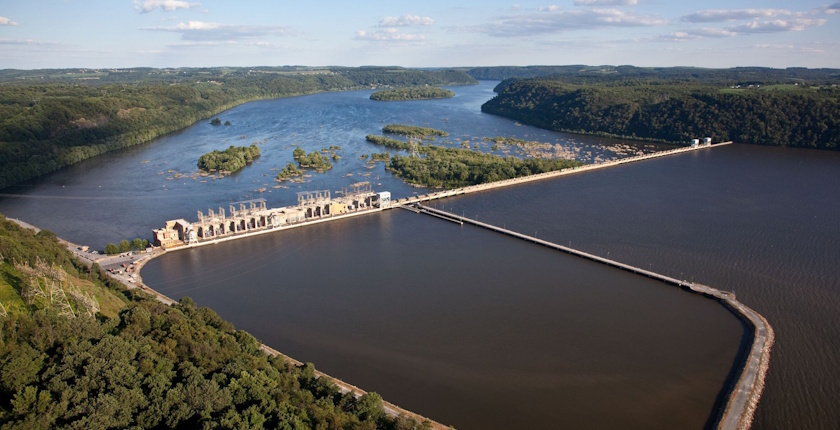
The first contracts include Brookfield’s Holtwood and Safe Harbor hydropower plants in Pennsylvania

Google has recently signed similar first-of-kind agreements for advanced nuclear and next-generation geothermal energy as well as for fusion energy.

Under HFA, the first contracts are for Brookfield’s Holtwood and Safe Harbor hydropower plants in Pennsylvania, representing more than USD 3 billion of power and 670 MW of capacity.

The 20-year power purchase agreements (PPAs) for the two facilities will support Google’s operations across PJM. The transaction structure allows Brookfield to maintain existing commitments to power consumers, such as Amtrak, from the Safe Harbor facility.

Brookfield said HFA is a significant step forward in its strategy to deliver flexible, dispatchable clean energy solutions to the technology sector and that the deal supports Google’s ambition to power its operations with 24/7 carbon-free energy.

Google can procure carbon-free electricity from up to 3,000 MW of HPPs

According to Brookfield, under the HFA, Google can procure electricity from up to 3,000 MW of hydropower assets that will be relicensed, overhauled, or upgraded to extend their useful life and continue adding power to the grid.

Amanda Peterson Corio, Google’s Head of Data Center Energy, said the collaboration with Brookfield is a significant step forward, ensuring clean energy supply in the PJM region (parts of 13 states and the District of Columbia) where her company operates. Hydropower is a proven low-cost technology, offering dependable, homegrown, carbon-free electricity that creates jobs and builds a stronger grid for all, she added.

According to Connor Teskey, President of Brookfield Asset Management, the partnership with Google demonstrates the critical role that hydropower can play in helping hyperscale customers meet their energy goals.

Delivering power at scale and from a range of sources will be required to meet the growing electricity demands from digitalization and artificial intelligence, he pointed out.

Of note, Brookfield owns power plants with a combined capacity of almost 46,000 MW.

Google to invest over USD 25 billion in data center and AI infrastructure

The deal is part of Google’s planned investments in the area in data center and artificial intelligence (AI) infrastructure. At the Pennsylvania Energy & Innovation Summit in Pittsburgh, the company revealed that it earmarked more than USD 25 billion for the next two years.

President and Chief Investment Officer of Alphabet and Google Ruth Porat joined President Donald Trump, Senator Dave McCormick and government and business leaders at the summit.

To support the investment, Google is expanding energy capacity and innovation in three ways, the company said.