by in News

Energy Community invites applications for 10th Summer School

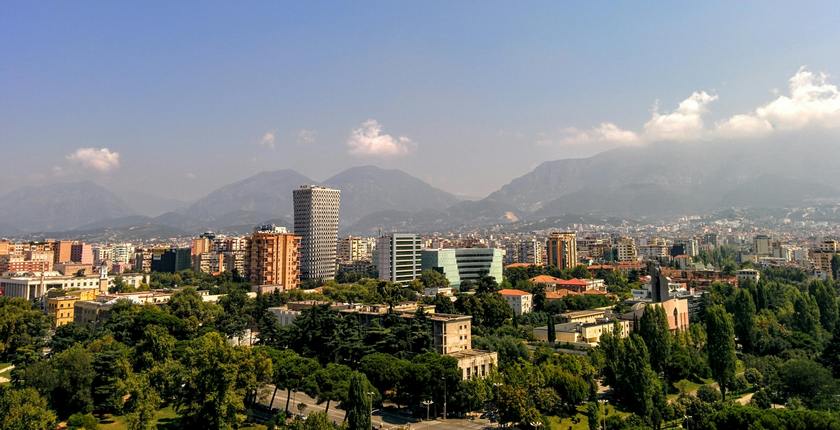
The Energy Community Secretariat has invited postgraduates, researchers, and young professionals to apply for the 10th edition of the Energy Community Summer School, taking place at Polis University in Tirana, Albania, between August 22 and 29 this year. The program focuses on energy sectors in transition, in particular in South Eastern and Eastern Europe, according to the announcement.

The Energy Community Summer School, designed for postgraduate students, researchers, and early-career professionals, provides an in-depth exploration of the technical, economic, legal, political, and sustainability dimensions of the energy transition, including energy systems, markets, and geopolitics.

The course explores various aspects of the energy transition in the region

The academic program is complemented by a strong cultural component, offering first-hand insight into the energy realities of Albania and the wider Energy Community, the announcement reads.

“The strength of the Energy Community Summer School lies in bringing together the next generation of energy leaders,” stated Adrian Jasimi, who has led the Summer School since its inception. “It is a space where ideas mature, collaborations emerge, and the future of energy takes shape,” he stressed.

Jasimi: The Summer School brings together the next generation of energy leaders

The Summer School is a platform that offers cutting-edge insights and opportunities to build lasting professional connections. Many of its alumni now hold influential roles in business, policymaking, and academia, the Energy Community noted.

This year’s summer school is organized in cooperation with the he International Visegrad Fund (IVF) and Deutsche Gesellschaft für Internationale Zusammenarbeit (GIZ), within the framework of the Regional Climate Partnership (RCP) between Germany and the Western Balkans.

Applications are open until March 31

The deadline to apply is March 31. The Energy Community Secretariat covers all program-related costs, including lectures, accommodation, excursions, and most meals, while participants only need to cover the travel cost to and from Tirana, according to the Energy Community’s LinkedIn post.
by in News

Energy Community invites applications for 10th Summer School

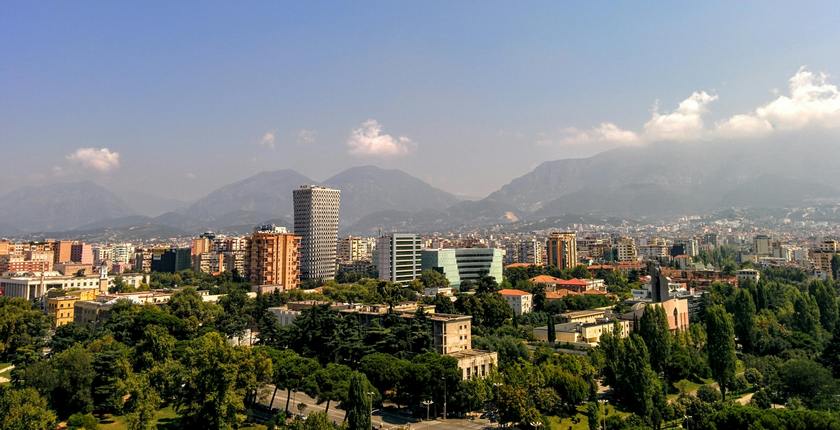
The Energy Community Secretariat has invited postgraduates, researchers, and young professionals to apply for the 10th edition of the Energy Community Summer School, taking place at Polis University in Tirana, Albania, between August 22 and 29 this year. The program focuses on energy sectors in transition, in particular in South Eastern and Eastern Europe, according to the announcement.

The Energy Community Summer School, designed for postgraduate students, researchers, and early-career professionals, provides an in-depth exploration of the technical, economic, legal, political, and sustainability dimensions of the energy transition, including energy systems, markets, and geopolitics.

The course explores various aspects of the energy transition in the region

The academic program is complemented by a strong cultural component, offering first-hand insight into the energy realities of Albania and the wider Energy Community, the announcement reads.

“The strength of the Energy Community Summer School lies in bringing together the next generation of energy leaders,” stated Adrian Jasimi, who has led the Summer School since its inception. “It is a space where ideas mature, collaborations emerge, and the future of energy takes shape,” he stressed.

Jasimi: The Summer School brings together the next generation of energy leaders

The Summer School is a platform that offers cutting-edge insights and opportunities to build lasting professional connections. Many of its alumni now hold influential roles in business, policymaking, and academia, the Energy Community noted.

This year’s summer school is organized in cooperation with the he International Visegrad Fund (IVF) and Deutsche Gesellschaft für Internationale Zusammenarbeit (GIZ), within the framework of the Regional Climate Partnership (RCP) between Germany and the Western Balkans.

Applications are open until March 31

The deadline to apply is March 31. The Energy Community Secretariat covers all program-related costs, including lectures, accommodation, excursions, and most meals, while participants only need to cover the travel cost to and from Tirana, according to the Energy Community’s LinkedIn post.

by in News

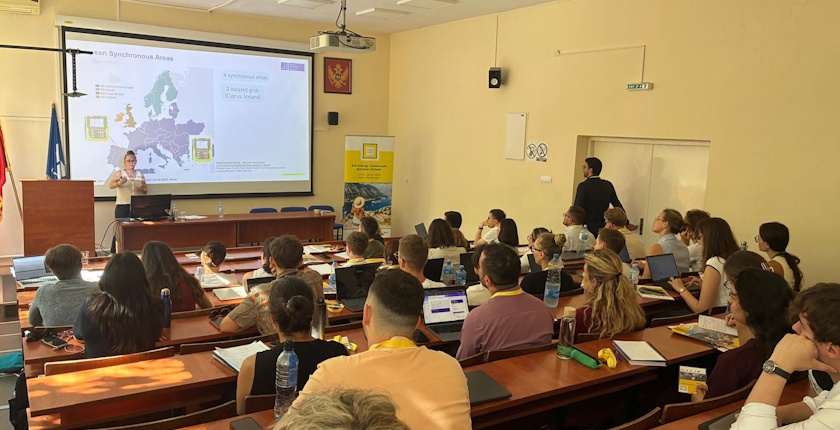
Ninth Energy Community Summer School gathers 40 participants in Montenegro from 28 countries

The ninth Energy Community Summer School has kicked off in Montenegro, gathering 40 participants from 28 countries.

On July 19, forty young professionals and researchers from 28 countries convened at the Faculty of Maritime Studies in Kotor, Montenegro, to dive deep into the pressing technical, political, and economic issues driving the energy transition, according to the Energy Community Secretariat.

“The energy transition is no longer a distant goal—it’s happening now, shaped by technology, driven by policy, and tested by crises,” Artur Lorkowski, Director of the Energy Community Secretariat, said in his welcoming address.

Lorkowski: A successful and just transition depends on bringing together diverse people and perspectives

A successful and just transition depends on bringing together diverse people and perspectives to learn and exchange ideas—just as the secretariat does each year at this summer school, and as it has done for two decades across the Energy Community: building connections, aligning energy rules, and driving the shift to cleaner, more secure energy systems in our region, according to Lorkowski.

The 2025 edition attracted 242 applications from 58 countries. At the end of the selection procedure, 40 participants representing 28 countries were selected: 18 from Energy Community contracting parties, one from an observer country, 18 from EU member states (including seven from the Visegrád Group), and the remainder from Switzerland, South Africa, and the United States.

Among them, 27 hold a master’s degree and 13 have a PhD.

The seven-day program is organized by the Energy Community Secretariat, in collaboration with the International Visegrad Fund, Friedrich-Ebert-Stiftung – Dialogue Southeast Europe (FES-SOE), and Montenegro’s state-owned companies – power utility Elektroprivreda Crne Gore (EPCG), and distribution system operator Crnogorski Elektrodistributivni Sistem (CEDIS).

The Energy Community’s long-standing commitment to building the next generation of leaders

Since its launch in 2016, the initiative has also been supported by Polis University (Tirana), Comenius University (Bratislava), Jagiellonian University (Krakow), Masaryk University (Brno), and REKK (Budapest).

The Summer School reflects the Energy Community’s long-standing commitment to building the   next generation of leaders—those who will drive long-term integration, cooperation, and sustainable energy transformation across the region, the secretariat pointed out.

Throughout the week, participants will work closely with leading experts from academia, industry, and policymaking circles to examine real-world approaches to transforming energy systems.

Through lectures, case studies, and collaborative discussions, they will explore how innovation, cross-border cooperation, and policy reform can drive decarbonization while supporting economic development and regional stability, according to the secreatariat.

by in News

Applications open for ninth Energy Community Summer School in Kotor

The Energy Community Secretariat is organizing its ninth Energy Community Summer School for young professionals in the energy sector. It will be held from July 19 to 26 in Kotor, at the Faculty of Maritime Studies of the University of Montenegro.

The Energy Community Summer School focuses on energy sectors in transition, particularly in Southeast and Eastern Europe. It offers young people a unique opportunity to explore the technical, economic, political, legal, and other aspects of energy transition.

The goal is to enable participants to understand the energy sector and promote skill development in all energy-related topics. The program includes a combination of courses, guest lectures, social, and cultural activities. Alongside theoretical elements, it provides practical training through case studies and mock cases.

The application deadline is March 31

The application process involves filling out a form that includes a CV and a short paper of up to five pages. In it, each candidate should present and briefly analyze current issues in energy policy related to economic implications, technical aspects of energy production, political implications and energy diplomacy, legal aspects, or sustainability of energy systems.

Postgraduate students (master’s and PhD), researchers from various fields, and professionals from government institutions, energy companies, and NGOs under 35 years of age are eligible to apply. Successful candidates will be selected by the Energy Community Secretariat in consultation with a network of academic and research institutions from participating countries. A total of 40 participants will be chosen.

The Energy Community Summer School is accredited, and participating students  can earn three ECTS credits.

Adrian Jasimi, the organizer of the Summer School, said its success lies in its ability to unite future leaders in the energy sector, encourage diverse perspectives, and inspire lasting connections. “It’s not just about knowledge; it’s about shaping the future of energy together,” he said.

The Energy Community Secretariat covers all costs

The Energy Community Secretariat covers all program-related expenses, including lectures, accommodation, excursions, and most meals. In addition to European Union citizens, participation is free for citizens of Albania, Armenia, Azerbaijan, Bosnia and Herzegovina, Georgia, Kosovo*, Moldova, Montenegro, North Macedonia, Norway, Serbia, Ukraine, the United Kingdom, and Turkey.

Energy Community contracting parties take turns hosting the Summer School each year. Last year it was held in Chișinău, the capital of Moldova.

* This designation is without prejudice to positions onstatus and is in line with UNSCR 1244/99 and the ICJ Opinion on the Kosovo declaration of independence.