by in News

GCL Moves Knjaževac Solar Project Forward as Serbia’s Large-Scale PV Pipeline Expands

Chinese energy group GCL has advanced its plans for the Knjaževac solar power plant, a major photovoltaic project proposed for eastern Serbia and among the country’s largest developments currently in the pipeline.

The Municipal Council of Knjaževac has launched the process to draft a detailed regulation plan for the facility. A public consultation on the draft decision was held from February 3 to 5. Once the decision to prepare the plan is formally adopted, authorities will open a second public discussion lasting 15 days.

According to the draft decision, the initiative was filed by the prospective investor, Central Europe Energy Company, a Belgrade-registered entity. The company is 90% owned by China’s GCL Intelligent Energy (Suzhou), with the remaining 10% held by Central Europe Consulting Company, also based in Belgrade.

The project has already cleared an important grid-related milestone. In May 2025, Central Europe Energy Company signed a grid connection agreement with Serbia’s transmission system operator, Elektromreža Srbije (EMS). The signing was part of a broader package of 11 renewable energy projects contracted by EMS at the time. EMS said that, among nine solar projects included in that round, the Knjaževac photovoltaic plant carried the highest proposed capacity at 136 MW.

Municipality head Milan Đokić described the development as the largest investment in Knjaževac’s history, estimating its value at EUR 200 million, as reported by local outlet Knjaževačke Novine.

Planning documentation will cover roughly 267 hectares, spanning parts of the cadastral municipalities of Krenta, Ponor, Mučibaba, and Miljkovac within the municipality of Knjaževac. The preparation deadline for the detailed regulation plan is set at 12 months, and the decision also предусматривает a strategic environmental assessment.

Serbia’s solar market is growing from a relatively low base. The country’s largest operating solar park is currently the 27 MW facility installed by Nofar Energy, while the biggest project by planned capacity is CWP Europe’s 150 MW Solarina development.

GCL is active across most continents, with a core business centered on solar module and energy storage battery manufacturing, alongside the development of low-carbon energy solutions.
by in News

Montenegrin TSO CGES buying power transmission lines from its Serbian counterpart EMS

Serbian transmission system operator (TSO) Elektromreža Srbije (EMS) and Montenegrin TSO CGES agreed that each would become the owner of the parts of overhead transmission lines on its country’s territory, and signed a contract.

EMS and CGES signed a contract on the purchase of electricity infrastructure. The two state-owned TSOs said it is the confirmation of their many years of cooperation and of their joint commitment to the development of a stable and reliable regional electricity system.

The reason for such an arrangement is that maintenance and utilization of transmission lines on the other country’s territory is complex and demanding, both from the technical and legal perspectives, the announcement reads.

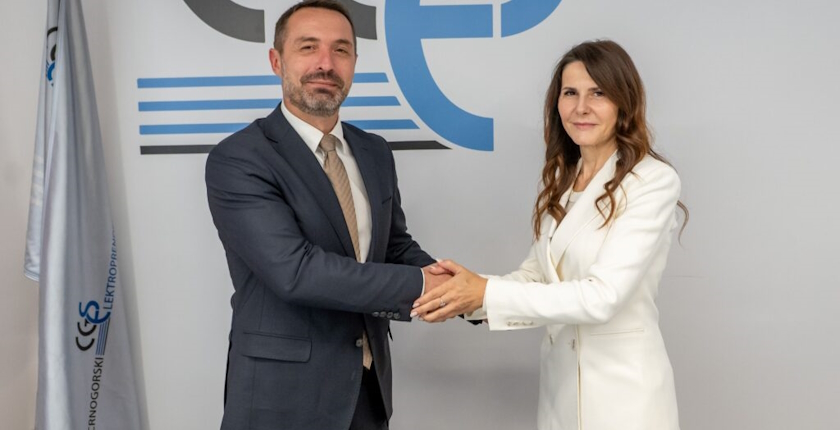
Contract was signed by CEOs Jelena Matejić, Ivan Asanović

CGES will become the owner of the parts of EMS’s interconnector power lines of 220 kV and 110 kV that are located in Montenegro, they said, without revealing the purchase sum.

CGES is taking over the parts of EMS’s interconnector power lines that are on the territory of Montenegro

The contract was signed by General Manager of EMS Jelena Matejić and Executive Director of CGES Ivan Asanović. The two companies explained that they have initiated the search for a sustainable solution for interconnector power lines of 220 kV from Pljevlja in Montenegro to Bajina Bašta in Serbia and from Pljevlja to Bistrica in Serbia, and the one from Pljevlja 1 to Potpeć in Serbia, of 110 kV, all owned by EMS, and for CGES’s internal overhead power line Mojkovac-Pljevlja of 220 kV, which has a section in neighboring Serbia.

Deal aimed at simplifying operations, greater legal clarity

They adopted a model under which each TSO is becoming the owner of transmission lines on the territory of its country. It is a principle enabling simpler management, more efficient maintenance and greater legal and operational clarity for transmission systems, the operators said.

“With this contract we are creating a more stable basis for a technically and legally regulated transmission system, additionally strengthening the reliability and safety of the electricity grid in the region,” Jelena Matejić stated.

The companies showed that they are able to solve complex issues jointly and in the interest of both countries and all users of the electricity system, according to CGES head Ivan Asanović.

Of note, EMS has a 15% share in CGES, while the Government of Montenegro controls 55.4%. Jelena Matejić is a member of the board of directors. Italian TSO Terna owns 22.1%.

by in News

GridFlex to install standalone BESS in Serbia

GridFlex plans to install a standalone battery energy storage system with a capacity of 125 MWh near the city of Leskovac, in southern Serbia. The investment is estimated at EUR 17 million.

Serbia doesn’t have any utility-scale batteries, but many are in the project pipeline. GridFlex is one of 11 companies in the process of obtaining approvals from transmission system operator (TSO) Elektromreža Srbije (EMS) for the connection of planned standalone battery energy storage systems (BESS) to the network.

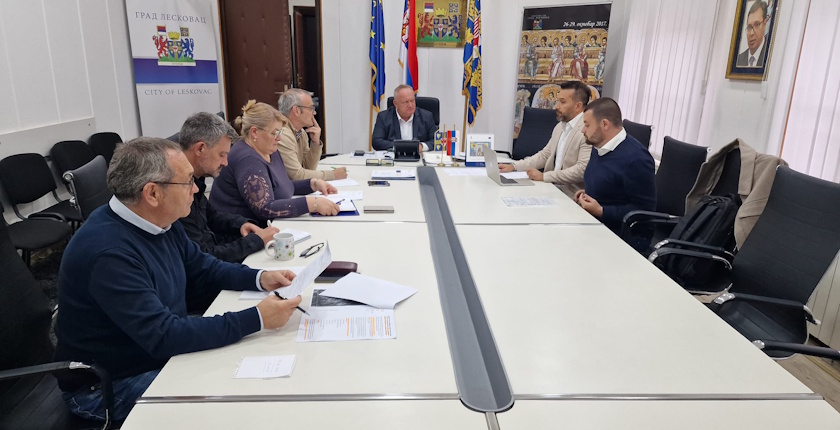
Mayor of Leskovac Goran Cvetanović met with representatives of Turkish company GridFlex, which has an office in Belgrade.

Battery systems provide flexibility to the system

The company is developing a project for a BESS that would provide system flexibility, support the integration of renewable energy sources, and contribute to the local economy, the city authority said.

GridFlex plans to invest EUR 17 million in the installation of an energy storage facility in Leskovac, the update revealed.

Owner and CEO of GridFlex Alkin Yaman participated in the meeting.

The deadline for completing the construction is the end of 2026

The planning and technical documentation for the facility is under development. The deadline for completing the facility is the end of 2026, while commissioning is expected in early 2027, the city stressed.

The battery would be installed on 1.5 hectares of privately owned land that the firm purchased near the Leskovac 2 substation.

The city will provide assistance to GridFlex for project implementation.

Three co-owners

The investment will secure numerous benefits for the city – the possibility of new investments, weakened load and voltage fluctuations in the power system, and an increase in the capacity for connecting new local consumers and producers to the grid, the local authority stressed.

According to data from the Business Registers Agency, the owners of GridFlex are Alkin Sevket Yaman, Sirin Cem, and Denis Severinov Karamov.

Of note, investors in Serbia are in the process of obtaining approvals for connecting their planned BESS facilities of an overall 2,021 MW and 5,899 MWh to the grid. They would be standalone batteries and ones co-located with power plants.

by in News

Batteries totaling 5,899 MWh in grid connection procedure in Serbia

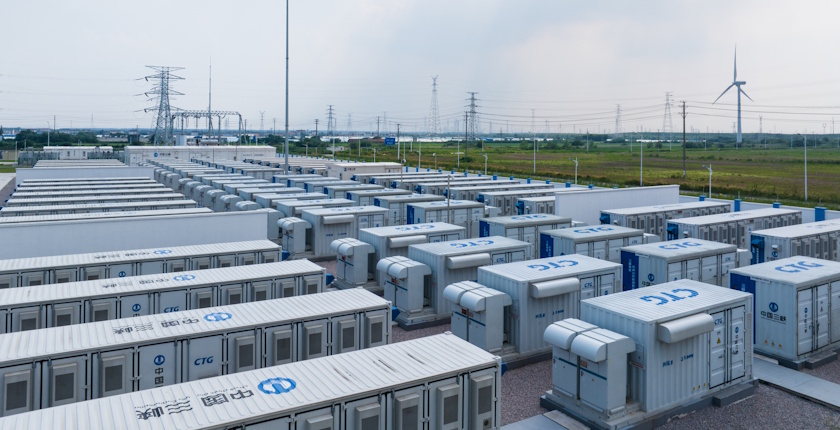
Investors in Serbia are obtaining approvals for connecting their planned battery energy storage systems of an overall 2,021 MW and 5,899 MWh to the grid. The projects are for standalone batteries and ones that would be co-located with power plants.

Battery energy storage systems (BESS) are rapidly expanding worldwide, and Southeast Europe is no exception. European Union member states in the region such as Bulgaria and Romania are making major strides, while the other countries are trying to catch up. For example, Bosnia and Herzegovina, Montenegro, North Macedonia and Serbia.

As of September 29, Serbia’s transmission system operator (TSO) Elektromreža Srbije (EMS) received a total of 12 applications for the development of connection studies for standalone BESS, Nebojša Vučinić, manager of the Development Division of EMS, told Balkan Green Energy News.

Two applications were submitted in January for the study development interval of March 1 to June 30, 2025, and ten more were received for the current interval, which lasts from September 1 to December 31. Out of the first two applications, the one from Green BESS KV is no longer valid, because the firm didn’t submit a bank guarantee.

EMS develops connection studies every year in two intervals.

The following companies are in the process of connecting standalone BESS:

  • MKBDP Energy
  • Green Land New Energy
  • Green Mountain New Energy
  • BP WPP
  • Blue BESS KV
  • Red BESS KV
  • Yellow BESS KV
  • ENLIGHTNES PV OPERATIONS
  • ENLIGHTNES PV PARK
  • Gridflex

As for the status of their applications, MKBDP Energy has submitted a bank guarantee, and the signing of the grid connection contract is expected.

For the other ten requests, the grid connection studies are underway. They are expected to be completed by December 31.

Standalone storage facilities are planned in Valjevo, Vranje, Subotica, Kovačica, Vršac, Leskovac, Kragujevac, Kruševac, Jagodina, and Ćuprija.

A total of 55 battery projects are in the connection procedure

The 11 standalone storage projects amount to 1,072.66 MW and 2,981.98 MWh altogether, Vučinić said.

The 44 storage facilities that would be co-located with power plants utilizing variable renewable energy sources would have 948.46 MW and 2,917.31 MWh, as stipulated in the Law on the Use of Renewable Energy Sources.

All battery storage projects in the grid connection process amount to 2,021.12 MW and 5,899.29 MWh, Vučinić stressed.

MKBDP Energy’s project has advanced the most in the connection process

According to Vučinić, implementation of BESS projects depends on the progress that an investor achieves. Currently, MKBDP Energy’s investment has passed the most milestones in the connection process, he added.

EMS noted that the grid connection process for standalone battery storage is defined by the Law on Energy and bylaws.

The deployment of standalone batteries complements the integration of power plants running on variable renewable sources

The state-owned company sees no obstacles to integrating standalone BESS into the transmission system. The TSO expressed commitment to assisting investors while maintaining the safety of the entire power system’s operation.

EMS also called the increase in applications for standalone batteries a positive development.

The emergence of standalone batteries complements the integration of power plants utilizing variable renewable energy, and since a large number of such power plants are expected to be connected, the integration of standalone storage helps the power system’s flexibility and safety, Vučinić underlined.

by in News

Serbia launches construction of two transmission lines as part of BeoGrid 2025 project

Serbia has launched works as part of the BeoGrid 2025 project, aimed at improving the power transmission infrastructure in Serbia, the region, and Europe, as well as facilitating electricity offtake from renewable energy power plants in the South Banat region of Vojvodina.

The BeoGrid 2025 project, worth EUR 205 million, comprises six distinct components, according to Radoš Popadić, Assistant Minister of Mining and Energy in charge of the power engineering sector. He attended the start of works in Belgrade’s Surčin suburb together with Jelena Matejić, the general manager of Serbia’s transmission system operator, Elektromreža Srbije (EMS).

“Construction is being launched today on two new high-voltage transmission lines that will connect Belgrade and Novi Sad, with a total value of around EUR 22 million,” he said, adding that work on a substation in Belgrade is also expected to begin soon.

The project is valued at EUR 205 million

The substation will be connected to the Čibuk 1 substation [wind farm Čibuk 1] by a new 83-kilometer transmission line, ensuring a stable transmission of electricity produced from renewable energy sources in South Banat, as well as reducing strain on the existing network, Popadić explained.

Radoš Popadić and Jelena Matejić (photo: Ministry of Mining and Energy/Danilo Mijatović)

Two single-circuit 400 kV transmission lines, intended for connecting transmission line 450 (switching station Mladost – substation Novi Sad 3) to the future 400/110 kV substation Beograd 50, will have a total length of 25.5 kilometers.

EMS General Manager Jelena Matejić said that BeoGrid 2025 is of particular importance for Serbia, but also part of the broader North Continental South East (CSE) Corridor project, which includes doubling the existing 400 kV interconnection between hydropower plant Đerdap 1 and Portile de Fier in Romania.

Matejić: The North CSE Corridor is part of the European ten-year network development plan, TYNDP 2020

The North CSE Corridor project is part of the European ten-year network development plan (TYNDP 2020) and the regional investment plan (RgIP 2020). It is supported by the Romanian transmission system operator, Transelectrica, as well as the German development bank KfW, with a feasibility study.

The North CSE Corridor is of regional importance as it increases the transmission capacity between Serbia and Romania, helping create an integrated European electricity market, Matejić pointed out, adding that BeoGrid 2025 is also important for additional backup power supply for the EXPO 2027 project.

The project aims to enable the transmission of electricity generated from renewable sources in the South Banat region and to ease the load on the 220/110/35 kV Beograd 5 substation, which supplies a large part of Belgrade, particularly parts of New Belgrade and Zemun, EMS stated.

Popadić: The total value of all planned projects is EUR 1 billion

Photo: Ministry of Mining and Energy/Danilo Mijatović

Radoš Popadić recalled that large investments in the transmission network are underway.

“Serbia has recognized the importance of investing in the power transmission system to enable the integration of more renewable energy capacity, increase the exchange of electricity with neighbors, and ensure a secure, stable, and efficient supply to consumers. That is why we launched investments in interconnection with the transmission systems of eight neighboring countries, with EUR 500 million to be invested in priority projects by the end of the decade. The total value of all planned projects will amount to around one billion euros,” said Popadić.

BeoGrid 2025 is financed partly from the Serbian budget, as well as from EMS’ own funds. The project consists of six distinct components, or investments:

  • 400/110 kV substation Beograd 50;
  • Two-circuit 400 kV transmission line between substation Beograd 50 and Čibuk 1, including the installation of a 400 kV bay at switching station Čibuk 1;
  • Single-circuit 400 kV transmission lines for the integration of transmission line 450 (switching station Mladost – substation Novi Sad 3) into substation Beograd 50;
  • Two double-circuit 110 kV transmission lines for the integration of transmission line 104/8 (substation Stara Pazova – substation Inđija 2) into substation Beograd 50;
  • two double-circuit 110 kV transmission lines for the integration of transmission line 1178 AB (substation Beograd 5 – substation Beograd 9) into substation Beograd 50;
  • Double-circuit 110 kV cable between substation Beograd 50 and substation Beograd 49 (Airport).

Photo: Ministry of Mining and Energy/Danilo Mijatović

by in News

Serbia’s power demand soars 20%

Electricity consumption in Serbia has increased by 15% to 20% over the past three weeks compared to the same period last year, according to Dragan Rakić, the head dispatcher of Serbia’s transmission system operator Elektromreža Srbije.

The main reason for the rise in electricity consumption is the increased use of air conditioning units due to the heat wave, which began as early as mid-June this summer.

Dragan Rakić, the head dispatcher of TSO Elektromreža Srbije (EMS), told public broadcaster RTS that the system remains stable despite high temperatures and the reduction of electricity production in hydropower plants.

The record high for summer electricity consumption was set on July 17 last year

Daily consumption in recent days has been 92 GWh to 95 GWh, with the peak of 98.5 GWh reached on June 26. Rakić recalled that the all-time summer consumption record was 105.8 GWh on July 17 last year.

The highest consumption occurs in major cities such as Belgrade, Novi Sad, and Niš. Air conditioners are on even at night, both at home and at work, he added.

Rakić stressed that the electricity supply situation is stable, although hydrological conditions are negatively affecting electricity production in hydropower plants, and partially coal-fired power plants, which require water for cooling.

He added that much of Europe was affected by the dry spell.

EMS is also prepared for extreme weather events

Meanwhile, European think tank Ember noted that record solar power production, backed by energy storage capacity, helped maintain the stability of the electricity system in Europe during the latest heatwave.

Temperatures across Europe jumped to more than 40 degrees Celsius, triggering an increase in electricity demand as the use of air conditioners soared. Daily electricity demand on July 1 was up to 6% higher in Germany, 9% in France, and 14% in Spain than on June 24.

Rakić claimed EMS is ready for extreme weather conditions as well as other emergencies. The company has emergency power line towers and crews on standby when a red weather alert is issued, he explained.

by in News

WISE Serbia mentorship program successfully completed: trust, support, and personal growth

The first mentorship program of the WISE Serbia women’s network, focusing on sustainable energy, the green economy, and climate action, and implemented with the support of German development cooperation GIZ, was successfully concluded with an event held in Belgrade. Over six months of intensive collaboration, seven mentor-mentee pairs built mutual trust, exchanged knowledge, and developed leadership potential, demonstrating the vital role of support in career development.

The WISE Serbia mentorship program brought together 14 remarkable women. Seven experienced leaders from the energy and environmental sectors shared their extensive knowledge with seven young network members in the early stages of their careers.

The mentorship pairs included:

  1. Maja Adamović, Director of the Transmission System Maintenance Division at Serbia’s electricity transmission system operatorElektromreža Srbije (EMS), and Jelena Perović, ESG Consultant at Deloitte Advisory d.o.o.;
  2. Ivona Milić, Senior ESG Specialist for Corporate Clients at Raiffeisen Bank, and Marija Rošulj, Credit and Environmental Risk Officer at ProCredit Bank;
  3. Maja Turković, Executive Vice President at CWP Europe, and Marina Arsenijević, Project Manager at Voltiza Inc.;
  4. Aleksandra Lukić, Chief Engineer in the thermal energy production department at municipal heating utility JKP Novosadska toplana in Novi Sad, and Bojana Petrović Raičević, Senior Specialist for Energy and Environmental Law at NIS a.d. Novi Sad;
  5. Svetlana Cerović, Head of Specialized Financing at UniCredit Bank, and Ana Minić, Technical Consultant for Renewable Energy and Energy Efficiency at MACS Energy & Water;
  6. Ankica Barbulov, Director of Negawatt Solutions, and Milica Vujošević, Energy Efficiency Manager at Delta Holding;
  7. Nataša Zdravković, Investment Manager at Ezpada Group, and Sara Ostojić, Lawyer at SOG a.o.d. in cooperation with Kinstellar.

The closing event was held in partnership with and under the patronage of Kinstellar, one of the leading law firms in Belgrade, operating across Central and Eastern Europe, Southeastern Europe, and Central Asia.

Founded in 2008, Kinstellar now operates in 12 countries and employs more than 300 lawyers. In Serbia, it is particularly recognized for its work in the energy and infrastructure sectors, advising on some of the region’s largest energy investments, including wind farms, mining projects, and renewable energy transactions.

Photo (Balkan Green Energy News): Radovan Grbović, Partner at Kinstellar, welcomes program participants

One of the mentees, Sara Ostojić, is an attorney at Kinstellar and Head of the Energy Sector in Serbia. She expressed great satisfaction that her firm was hosting the closing event.

Radovan Grbović, partner and attorney with over 20 years of experience, addressed the participants, emphasizing the importance of mutual support and a stronger role for women in sustainable energy and the green transition.

Mentorship is about sharing life experience

The program’s outcomes were presented by Nataša Vukmirović, professional mentorship coach from the International Institute for Coaching and Mentoring, who highlighted that the program’s goals had been fully achieved. She noted that strong relationships of trust had been built and that most participants had expressed a desire to continue engaging in similar initiatives.

“Through evaluation and facilitation of joint sessions, I had the opportunity to witness meaningful knowledge exchange and feel the power of support, trust, and shared learning. The program demonstrated that developmental mentoring is a valuable approach in the sustainable energy and green economy sectors and can significantly impact participants’ career development,” said Vukmirović.

According to her, the program goes beyond education—it is based on values that empower individuals and protect the common good. This is echoed in the positive experiences of participants.

Marija Rošulj emphasized that her positive experience with Ivona Milić inspired her to become a mentor herself. “Mentorship is not just about work, but about a person’s character and sharing life experience, not just professional experience.”

The pair plans to continue working together and develop a joint project beyond the formal program.

Photo: (Balkan Green Energy News) mentorship pair Marija Rošulj, ProCredit Bank, and Ivona Milić, Raiffeisen Bank

“One of the things I appreciated most was that my mentor helped me achieve a deeper reflection on my career path and supported the development of my emotional intelligence and effective communication,” said Ana Minić, whose mentor was Svetlana Cerović, last year’s recipient of the Female Leader in Sustainable Energy 2024 award.

Photo (Balkan Green Energy News): Ana Minić, MACS Energy & Water

Mutual learning – the heart of the program

Mentors noted the process was reciprocal, and that through working with young women, they carried out a kind of introspection of their career paths. “It was especially interesting to identify what made me successful, which I could share with Milica, who also works in renewables and energy efficiency. I tried, by talking about my career, my development path, my ups and downs, to identify the golden thread that has kept me afloat and thanks to which I can say that I am doing well in business today,” said Ankica Barbulov, co-founder and director of Negawatt Solutions and the first to introduce the ESCO financing model in Serbia.

Mentee Milica Vujošević said that her mentor was an inspiration and that working with her was a great honor.

Photo (Balkan Green Energy News): Mentorship pair Milica Vujošević, Delta Holding, and Ankica Barbulov, Negawatt Solutions

Aleksandra Lukić, Chief Engineer and one of the first women in the thermal energy production department at heating utility JKP Novosadska Toplana, emphasized that she and her mentee, Bojana Petrović Raičević, are very different and that this was a strength in their relationship.

“At first, I wondered how I could help someone from a completely different profession. I’m a mechanical engineer, and Bojana is a lawyer. But our differences allowed for deeper exchange, not only about careers but also life values, work-life balance, and personal development. In the end, I think we both gained more than we expected.”

Bojana added: “Aleksandra helped me clarify my goals and map out a plan for my career, both short-term and long-term steps. I’m grateful she was my mentor.”

Photo (Balkan Green Energy News): Mentorship pair Aleksandra Lukić, JKP Novosadska Toplana, and Bojana Petrović Raičević, NIS

Maja Adamović, Director at Elektromreža Srbije, saw the program as an opportunity to learn and improve future programs. She highlighted progress in strengthening women’s networks in the energy sector, citing the launch of the Women in Energy section within CIGRE Serbia as a great example of women’s growing interest in connection, empowerment, and collective impact.

Photo (Balkan Green Energy News): Maja Adamović, Elektromreža Srbije

Maja Turković, Executive Vice President of CWP Europe and co-founder of WISE Serbia, also served as a mentor. “Marina and I worked on identifying her potential in line with her education, interests, and labor market trends, as well as on shaping her career profile. I think we have defined a direction for her professional development and competencies she can further build on,” said Turković, adding she would gladly be a mentor again.

Marina Arsenijević, her mentee, said the program came at the right time: “After this program, I’m more aware of who I am and what I want to do in the next five or ten years.”

Photo (Balkan Green Energy News): Mentorship pair Maja Turković, CWP Europe, and Marina Arsenijević, UGT Renewables

Throughout the program, mentors generously shared knowledge, experiences, and insights, while mentees showed openness to learning and a willingness to build their leadership capacities. All mentors expressed great satisfaction with participation in the program, highlighting mutual learning as one of its most valuable aspects.

The WISE Serbia program demonstrated how important mentorship is for women’s professional and personal development in green industries. Through experience-sharing, knowledge transfer, and mutual support, participants not only strengthened their capacities but also contributed to creating a strong community of women working on a more sustainable and equitable future.

by in News

Serbia’s EMS starts construction of third section of Trans-Balkan Corridor

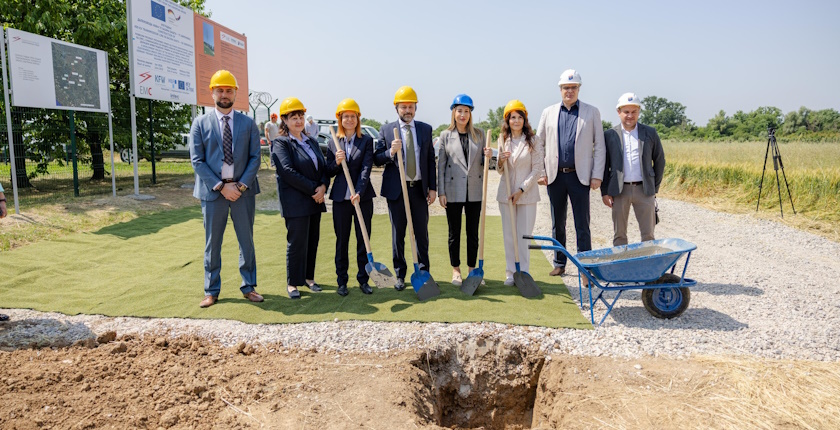
The foundation stone was laid today in Serbia for the third section of the Trans-Balkan Electricity Corridor. The investment amounts to EUR 100 million. It entails a high-voltage overhead power line of 109 kilometers between Obrenovac and Bajina Bašta, equipping two new switchyards in the Obrenovac transformer substation and upgrading the Bajina Bašta substation to 400 kV. The fourth and last section, with the interconnections with Bosnia and Herzegovina and Montenegro, is planned to be completed in 2028.

Serbian Minister of Mining and Energy Dubravka Đedović Handanović said at the groundbreaking ceremony for the third section of the Trans-Balkan Corridor that it is the most important project for the transmission system not only in the country but in Southeastern Europe.

“What highways are for transportation, high-voltage power lines are for energy, and today we are beginning the works on the new part of the most important energy highway,” she said in Obrenovac and added that the segment would enhance the security of supply for consumers in western Serbia.

The third section of the Trans-Balkan Electricity Corridor involves the construction of an overhead power line of 109 kilometers on 309 towers, equipping two new switchyards in the Obrenovac substation and lifting the voltage level in the Bajina Bašta substation to 400 kV.

The project is financed with a EUR 64.5 million loan from Germany’s KfW Development Bank, a grant from the European Union via its Western Balkans Investment Framework (WBIF) of approximately EUR 21 million, and own funds of the Serbian transmission system operator Elektromreža Srbije (EMS), according to the state-owned company’s announcement. The third section is worth EUR 100 million, of which EUR 71 million is for the overhead power line.

“With the completion of the entire project, we will additionally strengthen the links with Bosnia and Herzegovina and Montenegro and beyond, with Italy,” Đedović Handanović stated.

She recalled that significant transmission grid investments are planned in the next five years, including the construction of the Pannonian Corridor toward neighboring Hungary. The priority projects in the segment are worth EUR 500 million in total, the minister revealed.

“I expect the contractors not to be late with the works, so that the project is completed within two and a half years, as it is planned,” Đedović Handanović stressed.

Matejić: Final section to be finished in 2028

General Manager of EMS Jelena Matejić said the construction of the entire Trans-Balkan Corridor is worth more than EUR 200 million. She noted that it includes 323 kilometers of 400 kV power lines, voltage level upgrades for two transformer stations and switchyards in three of them.

The investments in the Trans-Balkan Corridor are estimated at more than EUR 200 million altogether

“Except this section, the third one, we will also have the fourth, for which the funds have been secured, and it will be finished in 2028,” Matejević asserted.

The old lines in western Serbia of 220 kV will be replaced with new, 400 kV systems, which will create possibilities for connecting the planned Bistrica pumped storage hydropower plant to the grid, according to EMS. The contractor is Kodar Energomontaža, and the works are expected to be completed by 2027.

EU donated EUR 38.3 million for Trans-Balkan Electricity Corridor

Head of the EU Delegation in Serbia Emanuele Giaufret pointed out that the funds the EU has earmarked for the current section are part of wider support.

“The EU has secured a EUR 38.3 million donation for the whole Trans-Balkan Corridor, together with KfW’s favorable loans. Over the years, the EU has earmarked more than EUR 1 billion for the energy sector in Serbia. This project is important for the rest of Europe as well, because it will contribute to the creation of a wider, integrated system, which will enable a more stable supply to consumers on the entire continent, as well as to avoid problems in the future,” he stated, as quoted by EMS.

The first section of the Trans-Balkan Corridor, from the city of Pančevo near Belgrade to the Romanian border, was finished in 2017. The second one, between Kragujevac and Kraljevo in central Serbia, is operational since 2022. It included substation upgrades in the two cities. The fourth section needs to connect Bajina Bašta with nearby Višegrad in Bosnia and Herzegovina, and with Pljevlja in Montenegro.

by in News

BEF 2025: Digitalization, open markets, time are major preconditions for flexibility services mainstreaming

Digitalization and massive use of data are crucial for providing flexibility services that bring benefits for transmission system operators and renewable energy producers. Aggregators and software firms have developed the technological solutions. However, the process, together with the introduction of flexibility platforms, requires a long time. The reforms also have to be accompanied by market liberalization and end consumers acting as active buyers, according to the participants of Belgrade Energy Forum 2025.

The panel on flexibility services called Market Flexibility: The Backbone of a Resilient Energy System was one of eight that were held at Belgrade Energy Forum 2025 (BEF 2025).

The conference, organized by Balkan Green Energy News, welcomed four hundred participants from more than 30 countries from the region, Europe, and beyond.

“Flexibility has been promoted in Europe as a buzzword, sometimes reflected as demand-side flexibility, but it represents so much more. It includes supply-side flexible assets like hydro, biomass, storage, as well as grid-side flexibility,” according to panel moderator Elena Boškov Kovacs, co-founder and CEO of Blueprint Energy Solutions, and a leading voice on market flexibility in Europe.

Serbia will introduce a flexibility services market

Elena Boškov Kovač and Roman Bernard (photo: Balkan Green Energy News)

Serbia’s transmission system operator (TSO) Elektromreža Srbije (EMS) is preparing to liberalize the ancillary services market. The country adopted the Law on Energy in November and implemented a large proportion of the European Union’s Electricity Integration Package (EIP) while the remaining parts will be transposed through bylaws.

“The balancing capacity market will be liberalized from next year. We will have new participants – active buyers and independent aggregators,” said Marko Zarić, Head of the Market Operations sector of EMS.

He stressed that the TSO is trying to ensure that no market participant is impaired by engaging flexibility resources or demand side response or a balancing service.

“EMS has finished drafting the new market code, which envisages dual balancing responsibility. We will launch a public debate on the act. The TSO estimates that it is the best solution to open the market of flexibility services,” he noted.

Bernard: Technology is on our side

NGEN CEO Roman Bernard expressed the opinion that the region is moving in the right direction, and suggested to regulators to look around and implement best practices. If the participants in the market are motivated, things will go forward, he added.

Back in 2019-2020, when NGEN started its operations in Slovenia, flexibility services were a pioneering job. The Slovenian energy company, the technology sponsor of the BEF 2025 conference, specializes in premium battery energy storage systems (BESS) and smart energy solutions.

According to Bernard, the balancing services market in the EU is well developed thanks to balancing platforms MARI (Manually Activated Reserves Initiative) and PICASSO (Platform for the International Coordination of Automated Frequency Restoration and Stable System Operation).

“We have 150 employees, and we can do everything. Technology is on our side and the sky’s the limit,” he stressed.

For example, NGEN solutions can provide monetization of battery energy storage systems (BESS), and the only thing that is needed is investors in such facilities.

Digitalization is the only way forward

Roman Bernard, Luka Renko and Magdolna Tokai (photo: Balkan Green Energy News)

The representatives of aggregators KOER and Alteo and software company CyberGrid all agreed that digitalization and the use of data are crucial for the energy transition.

Compared to NGEN and its use of BESS, Croatia-based KOER, a pioneer in virtual power plants in the region, is utilizing existing assets, like diesel generators, or employing the flexibility intrinsic to most manufacturing companies; for example, cement factories and wood manufacturers.

Existing assets work well, not just batteries, KOER COO Luka Renko stressed.

The only problem, in his words, is digitalization. The majority of the said firms aren’t ready to connect to the platform to be automatically switched on and off. The markets are getting faster and faster, so digitalization is the only way forward, Renko claimed.

Alteo, a leading Hungarian aggregator, also believes in lots and lots of data, which back up its scheduling and contribute to the security of supply.

Tokai: Alteo is looking for partners in the region

“Our superpower is providing scheduling services with the support of AI, including lots of data,” said Magdolna Tokai, Deputy CEO for International Relations and Corporate Services of Alteo.

Hungary has experienced a photovoltaic boom in the past four or five years, with the installation of almost 8,000 MW. It’s good for greening power production, but not from the perspective of a TSO, and that is where aggregators come into the picture, she added.

Alteo is combining conventional resources like gas-fired power plants with renewables. It currently has 140 MW in renewable resources, it manages 2,000 MW of third-party solar, and operates two virtual power plants. The company is providing the service to small photovoltaic facilities and the TSO.

Alteo is integrating solar energy in a product that is close to baseload, and placing it on the market. It translates to lower balancing costs for solar and a more stable product for the TSO, she explained.

Serbia is facing a challenge from the upcoming 1.2 GW of solar power

Alteo has just started implementing its new strategy for regional growth by exporting know-how on balancing services and providing flexibility to market players.

According to Nikolaj Candellari, Project Manager and Market Intelligence of CyberGrid, real-time data gives a TSO and other market participants the possibility to understand where they are.

He recalled that, over the years, the market went from 15-minute time stamps, down to one minute, and that now it is only two seconds. The improvement helps dealing with challenges, and CyberGrid knows a lot about such issues.

“For Serbia, the challenge comes with 1.2 GW of solar, which will be installed next year. So if you don’t see it as a challenge, ask yourself who needs 1.2 GW of energy at noon on Sunday,” Nikolaj said.

Over its 15 years of existence, CyberGrid developed good examples of how to exchange data with assets and TSOs.

“Assets are always the same, no matter the country, but to have this data exchange with TSOs, or even market platforms, that is something I think we need to do in the future in Southeastern Europe,” he stressed.

How to get to the future: properly liberalize markets

Luka Renko, Magdolna Tokai and Nikolaj Candellari (photo: Balkan Green Energy News)

Elena Boškov Kovač (Blueprint Energy Solutions) asked the panel participants what the solution is for addressing different types of flexibility assets including prosumers.

“How do we avoid getting stuck in the easy-to-commercialize part of the aggregation, and postpone the true demand response, which is needed to avoid the issues with negative pricing and electricity market swings?” she asked.

There is no dilemma for Nikolaj Candellari (CyberGrid): “I think we can connect everything, including households.”

It is something futuristic, he said. “We have to try to go as low as possible and connect everybody because, in the end, it’s not different if you have a 1 MW battery or 100 smaller residential ones” of 1 MW combined, Candellari asserted.

His company is currently implementing a project to integrate 150 batteries of 2 MW overall and put them on the market.

The batteries can drive the prices for end users down by 25% within five years

Candellari and Roman Bernard (NGEN) alike highlighted the factor of market motivation.

Bernard said motivation is created by the market. The imbalance price can go up to EUR 15,000 per MWh, and it is the signal and the motivation to fix everything, in his opinion.

He is convinced that batteries can lower the prices for end users by 25% within five years if dynamic prices are applied.

According to Nikolaj Candellari, participants will come to the market, as long as it’s not too regulated. As an example of a non-functional market, he mentioned Bulgaria, where the capacity price for downward regulation is zero.

“So, why would anybody join the market, if the capacity price is zero? Get the market running and you will get participants and capacity needed to balance it,” he said.

Tokai: We need a proper energy mix

Magdolna Tokai (Alteo) has a slightly different view of the markets. She recalled that episodes of negative prices are happening in Hungary, while that last August and September very high prices were recorded on HUPX, up to EUR 1,000 per MWh, and above EUR 500 per MWh in Croatia and Serbia.

“We have to be prepared for that, which is data, data, data, and the cooperation of all the market players, providing the proper energy mix, and the proper product for the TSO,” she pointed out.

Marko Zarić (EMS) stressed time as a vital ingredient for developing markets. A transition from the regulated market to the truly open market envisages multiple steps that take time, he said.

Flexibility platforms need time for implementation

Nikolaj Candellari and Marko Zarić (photo: Balkan Green Energy News)

Another big change are the balancing platforms developed by aggregators. Traditionally, TSOs were buying the same kind of standardized product, for example, SCADA, EMS, and other market applications, with more or less the same kind of functionalities.

Elena Boškov Kovač (Blueprint Energy Solutions) brought up the question of a more standardized approach. “Before we start talking about interoperability and connecting with everything else, would it be good to at least have platforms with similar kinds of functionalities and services provided?” she asked.

According to Luka Renko (KOER), every platform is structured in line with the needs of the operator. The communication platforms are more or less standardized, but it depends on what one needs in the background and what kind of assets they drive.

Piloting a flexibility platform can take years

The two aggregators, KOER and Alteo, developed their platforms because they couldn’t find a ready-made solution on the market.

A platform must have the ability to communicate with any other solution and to integrate new types of power plants and customers, Magdolna Tokai (Alteo) added.

Elena Boškov Kovač (Blueprint Energy Solutions) recalled that her company has implemented flexibility platforms since 2019, at the dawn of the opening of the flexibility market in Europe, and added that pilot projects for them take a long time.

“They require an immense amount of data. There’s a multitude of different stakeholders that need to support this, unlock the data, provide data resources. Piloting is incredibly important, and it can take years,” she pointed out.

Luka Renko (KOER) added that it took his company three to four years to start working as an aggregator in Croatia.

The future is bright, but we need to work on it

The panelists with Branislava Jovičić, Founder and Editor of Balkan Green Energy News (photo: Balkan Green Energy News)

Summarized, here are the messages of the session’s participants:

Bernard (NGEN): The end consumer will start acting as an active buyer.

Zarić (EMS): We see changes in the future.

Candellari (CyberGrid): Open the markets.

Tokai (Alteo): Give a chance to all market participants and types of production.

Renko (KOER): Digitalization will help.

Elena Boškov Kovač (Blueprint Energy Solutions) praised the companies that had their representatives at the panel for starting to develop solutions ahead of the market reform.

“It’s also a good message to the system of sometimes sleepy energy companies waiting for their proprietary vendors to offer them solutions,” Boškov Kovač stated.

by in News

Battery storage market in SEE emerging, Western Balkans lagging behind with positive prospects

The deployment of battery energy storage systems (BESS) across Southeast Europe is progressing at an uneven pace. State subsidies and financing mechanisms have enabled the rapid implementation of BESS solutions in Greece, Romania and Bulgaria, while markets in the Western Balkans are lagging behind. However, the outlook remains positive, as experiences from neighboring markets and best practices from other parts of the European Union can help overcome initial challenges and streamline the deployment process. This was highlighted by participants of the panel dedicated to BESS at the Belgrade Energy Forum.

Among the technologies required for the energy transition, battery energy storage systems (BESS) stand out as a key factor for integrating electricity from intermittent renewable sources – wind and solar power – into the grid. There are few such facilities in Southeastern Europe and the segment is yet to even be fully regulated in the narrower Western Balkans region. The panelists at a session called Energy storage system market in SEE: trends and forecasts, at Belgrade Energy Forum (BEF 2025), outlined the trends in the budding market.

There are more and more cases of low and negative hourly prices in the wholesale electricity market in the region, providing a clear business case for BESS investments. In addition, the grid is often overloaded on weekends and holidays when solar and wind power production is high, given the weak demand.

Managing Director of Go2Power Consulting Goran Vukojević, who moderated the discussion, warned that negative prices may jeopardize system stability as well, if operators of power plants disconnect them from the grid at the same time, to avoid costs.

He highlighted the preparations in Serbia’s transmission system operator Elektromreža Srbije (EMS) for auctions for ancillary services and praised the company for transparency in regulating the competitive process. The other option for battery operators is to participate in the open market.

Managing Director of Go2Power Consulting Goran Vukojević moderated the panel discussion

Region seen with 9 GW of BESS operating power in 2030

Ioanna Barouni from Aurora Energy Research said a total of 40 GW of solar and wind power is expected to be online at the end of 2025 in the SEE region, comprising 12 countries, including Hungary. In 2030, the level is expected to reach 70 GW, which is expected to be doubled to 145 GW by mid-century. As for BESS, projections stand at 9 GW in 2030 and 25 GW in 2050.

Barouni: We miss flexibility and ancillary services for transmission and distribution system operators

The countries of the region are retiring power plants that use fossil fuels, a firm capacity, in Barouni’s words, while adding renewables. “It’s not very easy to predict how the generation profile is going to be during the day, so we miss flexibility and we miss ancillary services for TSOs and DSOs,” she said.

The gap between power prices for midday and the evening is gradually increasing. Barouni explained that batteries “create some artificial demand and absorb these low prices.” At peak demand and with less renewables, a battery can replace expensive fossil fuels, lowering the price.

Ioanna Barouni from Aurora Energy Research (pictured left) and Head of Specialized Lending at UniCredit Bank Serbia Svetlana Cerović

Serbia preparing auctions for ancillary services

Division Manager of transmission system operator (TSO) EMS Nikola Tošić acknowledged that Serbia is preparing auctions for ancillary services. He revealed that there would probably be one auction for 70% of the needed reserve in the first year. The next rounds would be more frequent, shifting toward daily auctions for balancing capacity.

In the verification process, EMS’s System Operation Department will first test the battery, Tošić added. State-owned power utility Elektroprivreda Srbije (EPS) already provides ancillary services to the TSO, so it won’t require tests, he asserted.

Serbian law defines ancillary services the same as European Union does

EMS drafted the new grid code, and it will publish the draft balancing market code for public discussion soon, according to Tošić. He said the domestic law defines ancillary services in the same way as the EU defines them in its legislation. One part is balancing services: frequency containment reserve (FCR, primary), automatic frequency restoration reserve (aFRR, secondary) and manual frequency restoration reserve (mFRR, tertiary). The other part are non-frequency services – energy.

“We think that it would be good to incentivize the periods of the year or periods of day when the needed amount of reserve is more attractive or more in demand,” Tošić said.

Market Division Manager of EMS Nikola Tošić

Fortis Energy moving ahead with battery investments regardless of government support schemes

Fortis Energy’s Chief Executive Officer for Eastern Europe Nikola Oklobdžija considers the lack of regulation to be the biggest challenge for developers. An investor can currently only focus on charging the batteries when the prices are low and sell when they are high, he underscored.

The Turkey-based company develops photovoltaic, wind power and BESS projects in the region. The first bigger investments in renewable electricity plants with energy storage are the ones that will break the ice, in Oklobdžija’s opinion.

“Of course, it helps if you have a CfD contract, so the banks will look at it more favorably,” he stated. Oklobdžija added that companies need to be able to present revenue to the lenders and what the fees are for renting the capacity or providing different services.

Bankability depends on state support and PPA contracts, cash flow models and insurance

In the meantime, Fortis is examining the experiences in Bulgaria and Greece, which have already held auctions for standalone batteries. Financing a project is easier with a CfD – contract for difference, but the company is determined to push ahead anyway, Oklobdžija stressed.

In North Macedonia it commissioned a solar power plant in Oslomej and recently contracted a BESS to be added to the facility. Oklobdžija said it wasn’t a requirement but that Fortis opted for energy storage because of market pressure with prices and occasional curtailments, like during Easter last month.

The introduction of ancillary services would facilitate the development for standalone battery systems, he explained.

Fortis Energy’s CEO for Eastern Europe Nikola Oklobdžija

Cerović: First there will be more projects for colocated BESS units than for standalone facilities

Head of Specialized Lending at UniCredit Bank Serbia Svetlana Cerović highlighted the intensive activity in Germany and Italy, for instance, but also in neighboring Romania. UniCredit is present in those markets and is analyzing the development of the battery storage market, she pointed out, arguing that the best practices in the EU are the best way for building and financing battery storage.

Cerović said there would first be more projects in the region for BESS colocated with renewable energy plants than standalone units.

She suggested that the proposed investments that include storage should be better pondered at the next renewable energy auction in Serbia. It is in the country’s interest to enable providing flexibility and to support the projects, she said.

There may be a rationale for subsidizing prosumers to add storage in Serbia, Cerović said. Turning to small-scale projects, she expressed the belief that power purchase agreements (PPAs) are “convenient” for them. She is recommending dedicating a certain capacity for the category at the next auction in the country.

The first projects in Serbia, conditioned by energy storage requirements for a grid connection, are in the process of negotiating financing, according to Cerović.

Fire protection is especially significant for insurers

Renewable Energy Insurance Broker (REIB) has insured some 4 GWh of energy storage capacity in Bulgaria and just as much elsewhere in the world, Business Development Manager Dimitar Dimitrov said. Developers should contact insurance companies when the design is done, as well as for cargo insurance, he suggested and added it is particularly important for projects that get subsidies.

“We’re not only insurance brokers, but we’re also investors, which helps us understand a bit more about the clients’ needs, and what we can definitely do more in cases of coverage. Understanding clients’ needs helps us also prevent risks that could occur during certain stages,” Dimitrov stated.

Most insurers prefer at least a six-meter distance between containers or rows of three to four containers holding batteries, he said. It is the most important factor in fire protection, in Dimitrov’s opinion. When the distance is shorter than three meters, a firewall is required for insurance, he explained.

REIB’s Business Development Manager Dimitar Dimitrov

The next segment is construction insurance. For insurance companies, it is not a higher risk profile, Dimitrov asserted. Next, he recommended operational risk insurance including coverage for business disruption, and insurance against cyberattacks. In such events, the grid connection can be damaged, the company’s representative pointed out. “Insurance policies are definitely bankable,” he added.

Bulgaria has completed its tenders for state support to BESS combined with renewable energy plants, and for standalone units. But even before subsidies, batteries have been delivered and facilities are under construction, Dimitrov stressed. Many photovoltaic projects in Bulgaria have emerged in the past few months and most of them include BESS, he said.

  • 1
  • 2